
Slope Stabilisation & Soil Nailing: Submission Workflows for Temporary Hillside Excavations

Key Takeaways A defensible hillside excavation submission connects the ground model, temporary works design, authority requirements, and construction controls from the beginning. Define the temporary and permanent works interfaces before design responsibility becomes unclear. Investigate soil, rock, groundwater, drainage, adjacent assets, and existing utilities proportionately to risk. Verify soil nailing against local and global failure […]
Common Reasons BCA Rejects Temporary ERSS Submissions (And How to Avoid Them)

Key Takeaways Temporary ERSS submissions are commonly returned when the technical evidence, drawings, design assumptions, and authority responses do not form one clear and verifiable package. Confirm that every required form, report, calculation, drawing, and supporting record is included. Base the ERSS design on current site investigation, groundwater, utility, and neighbouring-structure information. Show the design […]
The Annex C & Annex E Workflow: On-Site ERSS Compliance During Execution

Key Takeaways ERSS compliance during execution depends on disciplined supervision, clear authority, and records that connect site actions to approved design and monitoring requirements. Annex C controls the construction and inspection workflow for ERSS works. Annex E provides the monitoring, threshold, and response framework. The RE, RTO, and Site Manager need distinct but coordinated responsibilities. […]
The Cost of ERSS Submissions in Singapore: Breakdown of Consultant Fees, Checking Fees, and Testing

Key Takeaways ERSS costs depend on the excavation, ground conditions, design responsibility, checking requirements, and the level of construction-stage support needed. A useful budget separates professional fees from testing, monitoring, authority coordination, and risk allowances. ERSS is a temporary earth-retaining system used to support excavations and control ground movement. Consultant fees rise with excavation depth, […]
Eurocode 7 (SS EN 1997) for Singapore ERSS: Ultimate Limit State (ULS) vs. Serviceability Limit State (SLS)
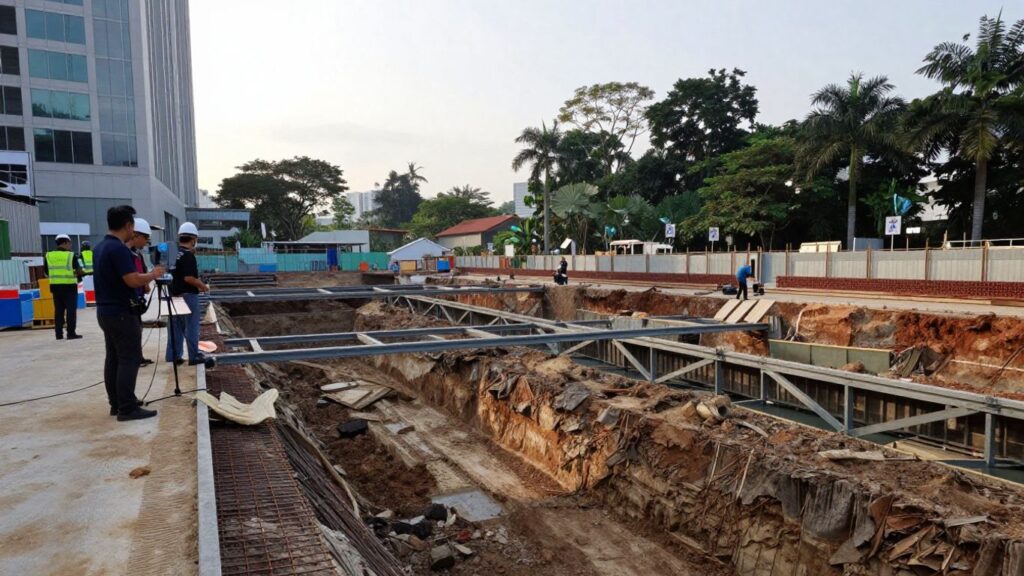
Key Takeaways Eurocode 7 provides the limit-state framework for Singapore ERSS, but a compliant design also depends on local ground conditions, construction stages, and movement control. ULS checks resistance against collapse, instability, hydraulic failure, and structural failure. SLS checks movements, settlement, deformation, and effects on neighbouring assets. Groundwater and soil variability must be reflected in […]
Sheet Piles vs. Contiguous Bored Piles (CBP) vs. Secant Piles: Choosing the Right Temporary Wall Type
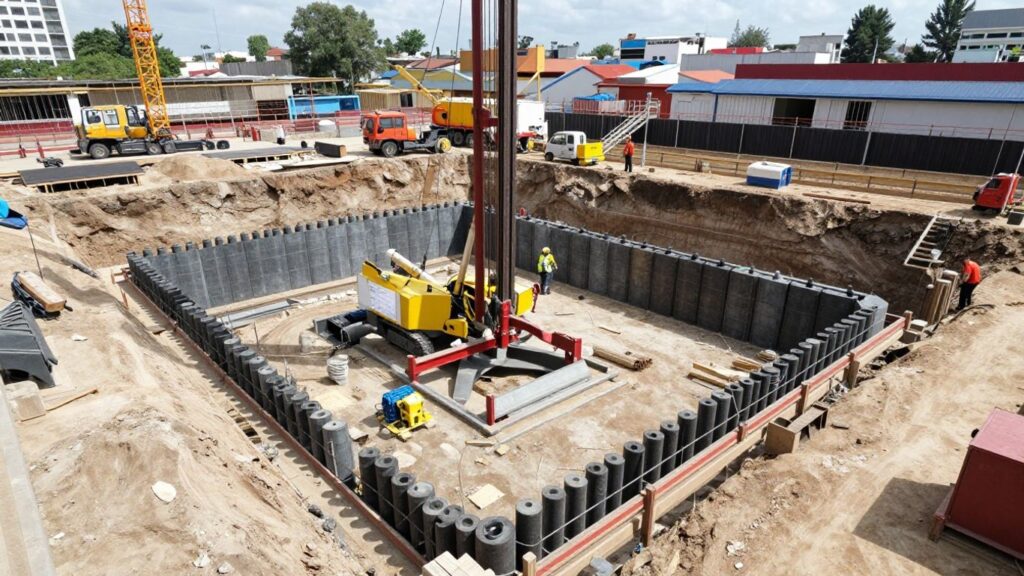
Key Takeaways Temporary excavation walls should be selected from the interaction of soil, groundwater, depth, neighboring assets, access, and construction sequence—not from wall type alone. Sheet piles can suit fast, reversible works where driving disturbance and water control are manageable. Contiguous bored piles provide reinforced concrete support but leave drainage gaps between piles. Secant piles […]
Temporary King Post and Strutting Systems: Structural Detailing for BCA Approval
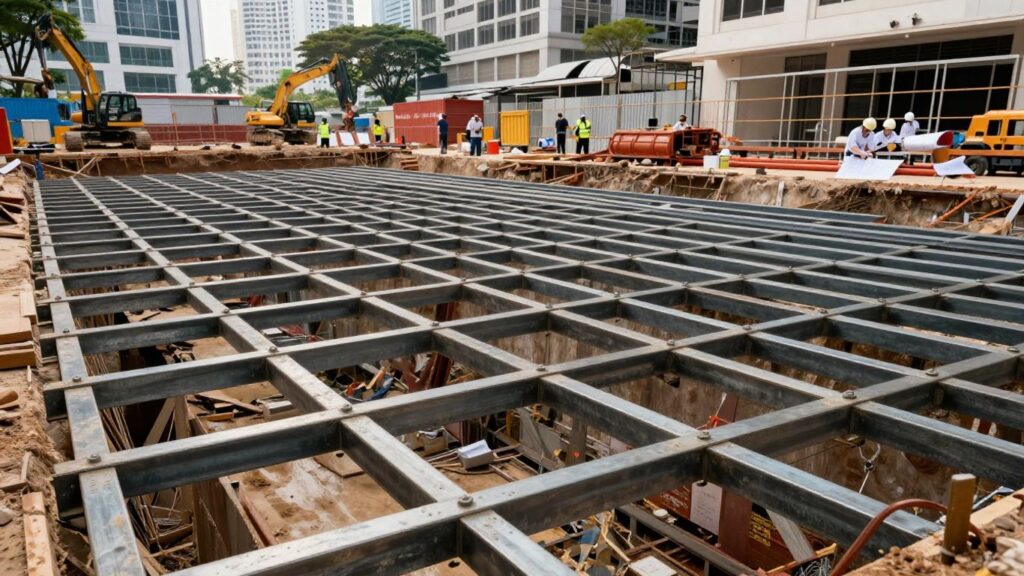
Key Takeaways A temporary king post and strutting system is only as reliable as its design basis, connections, construction sequence, and site control. BCA approval depends on a coordinated package that explains both the engineering and how the system will be built. Define the ground, loading, geometry, and construction stages before detailing steel. Check member […]
Roof extension regulations in Singapore: Structural limits you must know

Key Takeaways Adhering to Singapore’s strict building codes is essential for any roof extension project, requiring careful planning and professional oversight to remain compliant. BCA approval remains the primary requirement for all structural additions. Proper calculation of dead and live loads ensures long-term safety. Professional Engineers must endorse all structural analysis documentation and plans. Climate […]
Essential structural guidelines for building a swimming pool in your landed home

Key Takeaways Designing a swimming pool for a landed property involves navigating a complex landscape of regulatory, geotechnical, and engineering requirements to ensure long-term stability and safety. Adhere to site-specific setbacks and zoning rules mandated by planning authorities. Prioritize professional soil investigations to determine appropriate foundation design. Model structural integrity through advanced analysis before starting […]
Rebuilding vs. A&A: A structural engineer’s perspective on Singapore homes

Key Takeaways Deciding between renovation and complete reconstruction requires a deep understanding of your property’s current state and your long-term spatial goals. Homeowners must balance regulatory constraints with engineering realities to create safe, valuable assets for the future. Categorize projects based on structural impact to avoid unnecessary regulatory delays. Understand the specific site constraints, such […]