
Key Takeaways
ERSS compliance during execution depends on disciplined supervision, clear authority, and records that connect site actions to approved design and monitoring requirements.
- Annex C controls the construction and inspection workflow for ERSS works.
- Annex E provides the monitoring, threshold, and response framework.
- The RE, RTO, and Site Manager need distinct but coordinated responsibilities.
- Hold points, baseline readings, and approved documents should be established before excavation progresses.
- Complete records make defects, changes, and final handover easier to verify.
Understanding the Annex C and Annex E workflow for ERSS works
Annex C and Annex E should be treated as connected parts of the execution control system, not as documents consulted only when an inspection is due. Annex C guides how the earth retaining and stabilising system is constructed and checked. Annex E links site conditions to instrumentation, assessment, and response. Together, they help the project team maintain control as excavation conditions change.
What ERSS compliance covers during construction
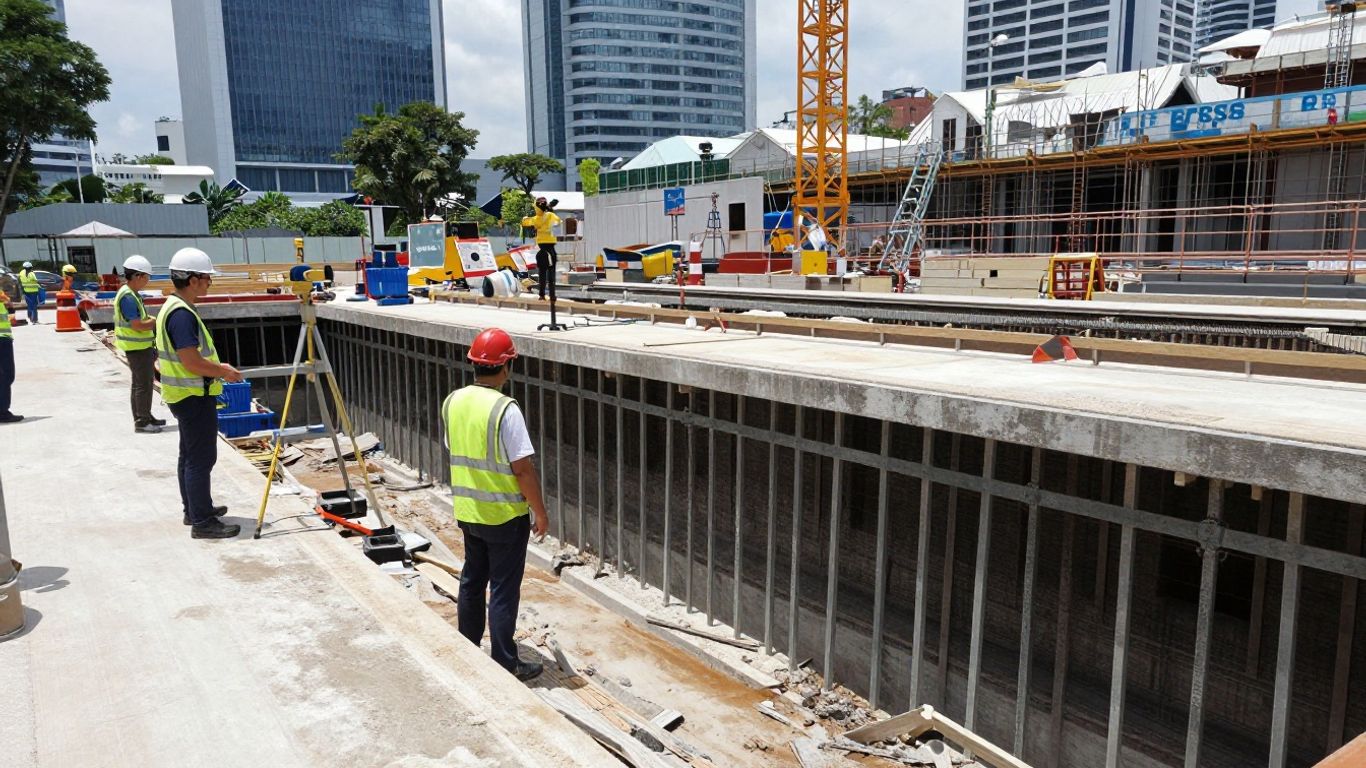
ERSS compliance covers more than whether a retaining wall appears to match a drawing. It includes the suitability of the approved design, the sequence of excavation and support installation, material and workmanship checks, temporary stability, instrumentation, and the response to observed movement or groundwater changes. The practical test is whether the work being carried out remains consistent with the approved engineering intent and the project’s stated controls.
For deep excavations, the design must address soil, groundwater, adjacent structures, construction methodology, and possible failure modes. The project team should therefore review both physical construction evidence and the information being generated by monitoring. A technically sound installation can still require attention if site readings or surrounding conditions move outside the expected pattern.
How Annex C and Annex E fit into the project control system
Annex C is most visible at construction stages: preparation, installation, excavation, propping, inspection, and release to the next activity. Annex E becomes active through the monitoring plan, baseline readings, trigger levels, review frequency, and response arrangements. The two workflows meet at each stage gate, where the team confirms that the physical work and observed ground behaviour support continuation.
A useful control system gives each decision a clear owner. It also records what was inspected, which information was reviewed, what limitations remained, and why work was allowed to proceed. That approach is consistent with the wider role of RE and RTO services, which includes site supervision, quality control, progress monitoring, technical problem-solving, and documentation.
Which documents govern the site team’s actions
The site team should work from the latest approved drawings, design calculations, specifications, method statements, inspection and test plans, monitoring plan, risk assessments, permits, and relevant correspondence. The contractual requirements and authority conditions also matter, as do approved revisions and instructions issued through the project’s document-control process.
The governing documents should be easy to identify at the workface. Superseded drawings must be removed from active use, while queries and clarifications should be traceable to the affected activity. This prevents a common failure in temporary works: a technically correct instruction being applied to an outdated arrangement.
Why project-specific requirements must be verified before work starts
No two ERSS sites have exactly the same combination of excavation depth, soil profile, groundwater, nearby assets, access limitations, and construction sequence. Generic expectations are useful for planning, but they cannot replace the approved project requirements. The RE and technical team should confirm the applicable design assumptions, trigger levels, inspection frequency, and escalation route before mobilisation.
Singapore projects may also draw on requirements such as the Building Control Act and Regulations, Singapore Standards, and SS EN 1997 for geotechnical design. The relevant documents should be identified for the particular project rather than assumed from a previous site. Aman Engineering Consultancy’s broader engineering practice is grounded in adherence to standards including ACI, BS, SS, and Eurocode, but the project team must still verify the exact instruments and approvals governing each ERSS work package.
Assigning responsibilities to the RE, RTO, and Site Manager
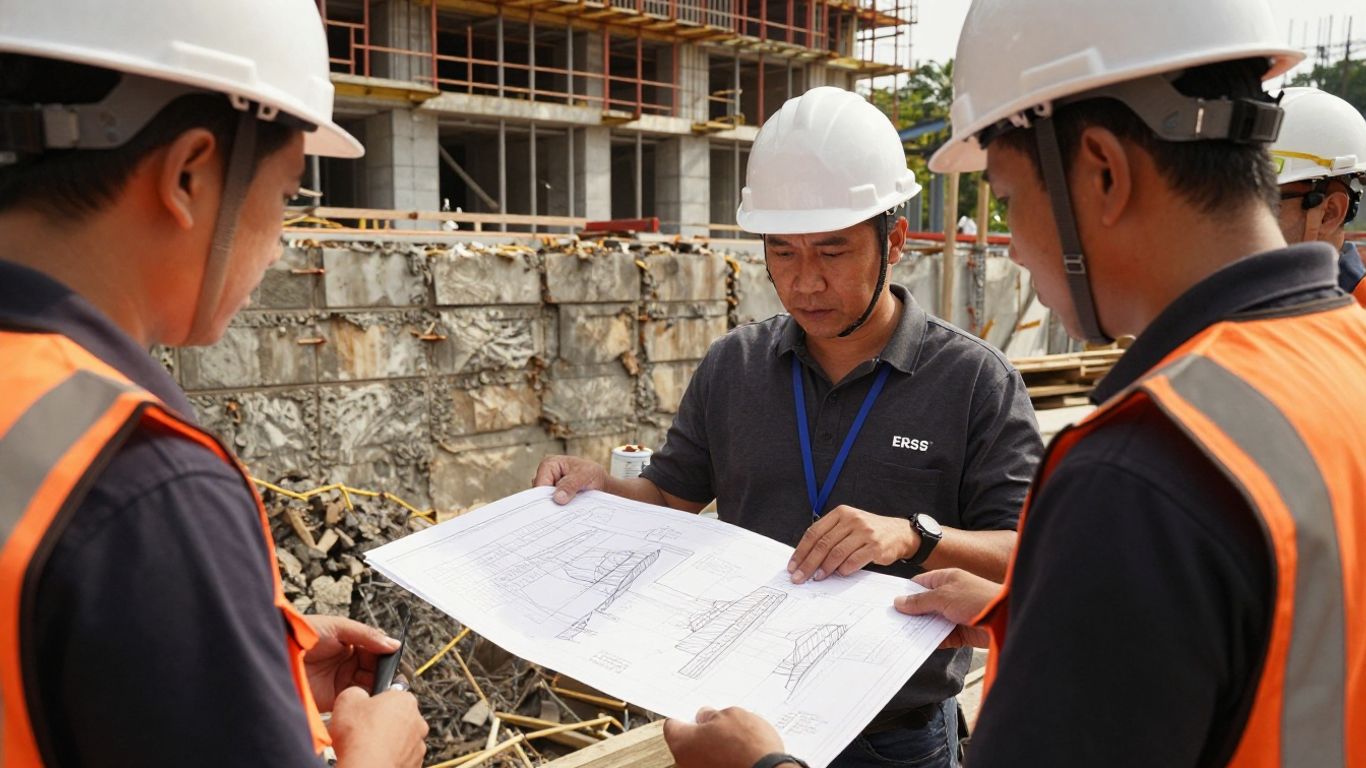
Good ERSS control depends on people knowing who observes, who verifies, who decides, and who acts. The RE brings professional judgment and overall supervision; the RTO performs detailed technical checks and records evidence; the Site Manager coordinates the contractor’s resources and sequence. These roles overlap in communication, but they should not become interchangeable.
The RE’s role in overall supervision and professional judgment
The RE provides the professional oversight needed to judge whether construction remains aligned with the approved design, specifications, and applicable requirements. This includes reviewing technical queries, coordinating clarifications, assessing the significance of deviations, and bringing matters to the PE or other responsible designer when the issue exceeds site-level authority.
The RE also maintains the wider view of progress, quality, safety observations, and documentation. Primary safety responsibility remains with the contractor under the Workplace Safety and Health Act, while the RE supports and monitors safety compliance and reports concerns. Clear professional judgment is especially important when a reading, defect, or proposed change does not fit neatly into a checklist.
The RTO’s role in technical inspections and verification
The RTO concentrates on the detailed technical evidence produced during execution. This may include checking dimensions, installation conditions, material delivery information, test results, temporary supports, excavation stages, and compliance with inspection and test plans. The RTO should record observations promptly, with enough detail for another professional to understand what was seen and what remained outstanding.
Verification is stronger when it is tied to a defined acceptance criterion. Instead of recording only “checked,” the inspection record should identify the relevant drawing or specification, the location inspected, the result, and any action required. The RTO then provides the RE with reliable information for stage decisions.
The Site Manager’s role in coordinating safe execution
The Site Manager turns the approved sequence into coordinated site activity. This involves arranging labour, plant, materials, access, exclusion zones, temporary works, communication, and the timing of inspections. The Site Manager should not allow a crew to move into the next stage simply because the programme is under pressure if an inspection, approval, or hold point remains open.
The Site Manager also coordinates immediate site responses. If an excavation condition changes, a support member is damaged, or monitoring indicates an unexpected trend, the area may need to be controlled while the technical team assesses the situation. Prompt communication is more useful than waiting for a routine meeting.
How the PE, Accredited Checker, contractor, and instrumentation team interact
The PE and Accredited Checker provide design and checking functions that are distinct from daily site coordination. The contractor is responsible for carrying out the work safely and in accordance with approved documents. The instrumentation team installs, reads, maintains, and reports monitoring equipment in accordance with the approved monitoring arrangements, while the RE and PE interpret results in the context of construction.
A practical responsibility matrix can identify the lead party, reviewer, and notification route for each activity. It should cover installation checks, hold-point release, monitoring review, abnormal readings, technical submissions, and emergency contact. The matrix does not replace professional communication, but it reduces uncertainty when decisions must be made quickly.
Preparing the site before ERSS execution begins
Preparation is where many avoidable execution problems can be removed. Before excavation or support installation begins, the team should confirm that the approved information is complete, the work sequence is understood, and the physical site can support the planned method. The RE, RTO, Site Manager, contractor, and instrumentation personnel should attend a coordinated pre-start review.
Confirming approved designs, drawings, and method statements
The team should establish a controlled register of approved ERSS drawings, calculations, specifications, method statements, risk assessments, and inspection documents. Each document needs a revision status and an identifiable relationship to the work package. Design assumptions that affect construction, such as support levels, installation tolerances, groundwater conditions, or temporary loading, should be understood by the people supervising the work.
Method statements should explain how the contractor will install, inspect, protect, and sequence the system. Where the proposed method differs from the approved information, the difference should be resolved before work starts, not rationalised after the installation is complete.
Checking permits, temporary works details, and construction sequencing
The pre-start review should cover permits, access, lifting arrangements, excavation support, temporary platforms, drainage, dewatering, and interfaces with permanent works. Temporary works often impose loads on partially completed permanent structures, so the interface must be addressed in design and sequencing.
The sequence should be discussed in physical terms: what is installed first, what is inspected, which support is active, how excavation advances, and what conditions prevent the next stage. This makes the control plan usable by supervisors rather than leaving it as a document held only by the design team.
Establishing hold points, inspection points, and acceptance criteria
A hold point prevents the next activity from proceeding until a defined inspection or approval is complete. An inspection point allows verification at a planned stage, with the required evidence recorded. Both should be stated clearly in the inspection and test plan, including who performs the check and who may release the work.
The project team should identify the stages that require particular control, such as completion of a retaining element, installation of a prop or anchor, excavation to a specified level, or preparation for a change in support configuration. Acceptance criteria should be measurable wherever possible and linked to the approved documents.
Setting up instrumentation, survey references, and baseline readings
Instrumentation must be installed, protected, identified, and commissioned before readings are needed for comparison. Survey references should be stable and accessible, while baseline readings should be taken under known site conditions and checked for plausibility. The monitoring plan should state the reading frequency, responsible personnel, data review process, and notification route.
Baseline information has little value if the team cannot connect it to the construction sequence. The date, excavation stage, weather, groundwater condition, nearby works, and any unusual site event should accompany the initial readings. That context becomes important when later movement or settlement trends are investigated.
Applying Annex C controls during ERSS construction
Annex C controls are applied through disciplined inspection of the work as it is built. The team verifies readiness before installation, checks the completed stage against approved requirements, records deviations, and controls release to the next operation. These actions are most effective when inspections occur at the right time, while the work remains visible and can still be corrected.
Verifying materials, plant, and installation readiness
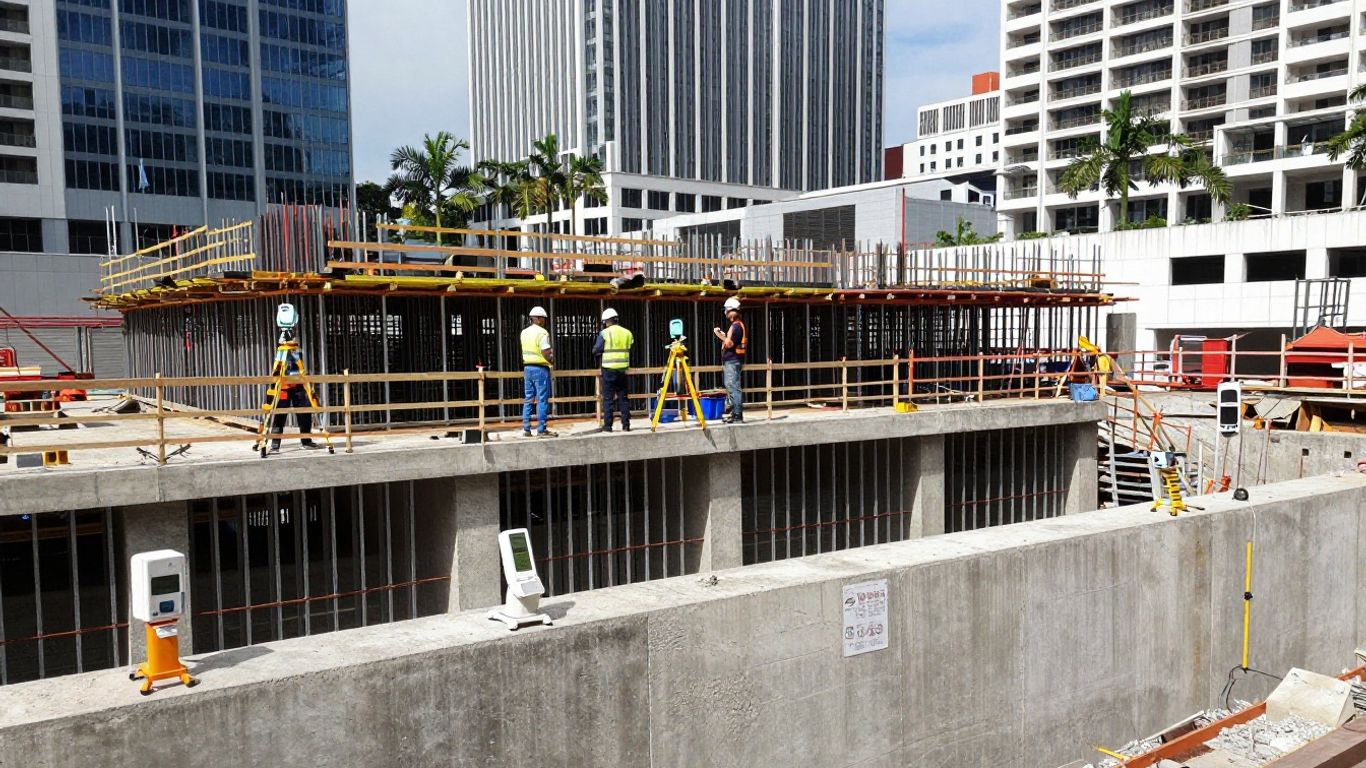
Before work begins, the RTO and Site Manager should confirm that materials are approved and identifiable, plant is suitable and available, and the installation area is ready. Checks may include delivery records, material certificates, equipment condition, access, working platforms, lifting plans, and the protection of existing services or adjacent assets.
Readiness also includes the competence and coordination of the work crew. A correct detail can fail in practice if installation tolerances, sequence, plant limitations, or temporary stability have not been explained. Any unresolved issue should be recorded and referred through the agreed technical route.
Inspecting excavation, retaining elements, and temporary supports
Excavation inspections should consider the current depth, exposed ground, water conditions, wall condition, support installation, access and egress, and nearby structures or services. Retaining elements should be checked against the approved arrangement, including alignment, level, connection details, and visible damage. Temporary supports require attention to their condition, bearing, connections, protection, and loading.
High-risk excavation work calls for more than a quick visual walk-through. The inspector should compare the physical condition with the stage-specific drawing and method statement, then document anything that could affect stability or safe continuation. Where conditions differ materially from the design assumptions, the matter should be escalated without delay.
Recording workmanship, tolerances, and deviations from the approved design
Records should describe what was inspected and where, rather than relying on general statements. Photographs, measurements, test results, delivery information, and marked-up drawings can collectively show whether the completed work meets its requirements. A deviation should identify the affected element, the likely consequence, the temporary control, and the person responsible for resolution.
The following sequence keeps deviation management practical and traceable:
- identify the location and describe the observed condition;
- compare it with the current approved drawing or specification;
- assess whether the next activity can safely proceed;
- refer design-related matters to the RE, PE, or relevant designer; and
- record the decision, corrective action, and verification of closure.
This sequence prevents a small field observation from disappearing into informal messages. It also gives the RE a sound basis for deciding whether the issue is a minor defect, a nonconformity, or a change requiring formal review.
Managing hold-point releases before the next construction stage
A hold point should be released only after the required inspection evidence is complete and outstanding matters have been addressed or formally accepted. The release should identify the stage, date, inspected documents, restrictions, and approving person. If work proceeds without release, the record should state why and who authorised the departure.
Hold points are not administrative obstacles. They are moments to confirm that the system is ready for the next change in load, geometry, or ground exposure. The Site Manager should build adequate time for them into the programme, while the RE and RTO should avoid releasing work on incomplete evidence.
Applying Annex E controls through monitoring and response
Annex E controls turn observations about ground and structure behaviour into managed decisions. Monitoring should be planned around the risks identified for the project, with reliable instruments, consistent readings, and defined thresholds. The value lies not in collecting numbers alone, but in understanding what the numbers mean at the current stage of construction.
Collecting and validating movement, settlement, and groundwater data
Readings should be checked for instrument identity, date, time, location, units, calibration status, and unusual jumps. The reviewer should distinguish a genuine change from a reading error, damaged equipment, altered survey conditions, or a change in reference point. Missing readings also require explanation because gaps can conceal a developing trend.
Movement, settlement, groundwater, and other observations should be considered alongside excavation level, support installation, dewatering, rainfall, nearby works, and complaints or visible damage. The monitoring record becomes substantially more useful when it is connected to these site events.
Comparing readings against alert, action, and critical thresholds
Thresholds should be stated in the approved monitoring plan and understood by everyone receiving the reports. An alert may require closer observation or confirmation; an action level may require investigation and mitigation; a critical level may require immediate escalation and control of work. The exact response must remain project-specific rather than being inferred from a generic table.
The review should consider both an individual exceedance and the rate or direction of change. A reading below a threshold can still warrant attention if it forms part of a persistent trend. Conversely, an isolated questionable result may need validation before it drives a major construction decision.
Investigating abnormal trends and site conditions
When a trend is abnormal, the team should first preserve the evidence and check the data quality. The next step is to inspect the relevant area and compare the reading with current excavation, support, water, weather, and adjacent construction conditions. The investigation should be documented even when the result is ultimately attributed to an instrument or survey issue.
The response may include additional readings, a repeat survey, equipment checks, local inspection, temporary restriction of work, or technical review of the design assumptions. The purpose is not to force the result back within an expected range, but to understand the condition and control the risk.
Escalating exceedances to the RE, PE, and relevant stakeholders
An exceedance should follow the notification route set out in the approved plan. The RE should coordinate the initial technical response, while the PE or relevant designer should assess matters affecting design intent, stability, or required mitigation. The contractor and Site Manager need clear instructions on immediate controls, and affected stakeholders may need timely notification.
Escalation records should state the reading or observation, threshold involved, time of notification, people contacted, interim controls, investigation status, and next review time. This makes the response auditable and reduces the chance that a critical message is lost among routine progress updates.
Managing inspections, nonconformities, and changes on site
Inspections are most useful when they lead to decisions and verified action. ERSS works can change quickly, so the project team needs a consistent way to distinguish an observation from a nonconformity and a construction-stage design change. The same discipline should apply whether the issue is found during a planned inspection, a safety walk, or monitoring review.
Conducting daily inspections and stage-specific technical checks
Daily inspections provide continuity between formal stage checks. They should cover active work, access, excavation condition, temporary supports, housekeeping relevant to stability, water management, and any changes since the previous shift. Stage-specific checks then address the technical acceptance requirements for the particular excavation or support sequence.
The RE and RTO should coordinate their records so that routine observations do not duplicate or obscure critical checks. A short, precise record made at the right time is generally more useful than a long report prepared after site conditions have changed.
Issuing observations, deficiency notices, and corrective actions
An observation records a condition that deserves attention; a deficiency notice identifies a requirement that has not been met; a corrective action states what must be done, by whom, and by when. The classification should be proportionate, but the action should always be clear. Photographs and location references help prevent disagreement about the issue.
Corrective actions should remain open until someone verifies the completed work. If a proposed correction changes the approved arrangement, it should not be accepted merely because the physical defect has been covered. It may require technical review, revised documents, or a formal instruction.
Reviewing contractor proposals and construction-stage design changes
Contractor proposals can be valuable when site conditions, access, materials, or sequencing make the original method impractical. They must nevertheless be reviewed against stability, load paths, groundwater, adjacent assets, constructability, monitoring requirements, and the effect on permanent works. The Site Manager should not treat a proposal as approval to proceed.
The RE should route design-related changes to the PE, Accredited Checker, or other responsible party according to the project’s approval system. The accepted change should be reflected in controlled drawings, method statements, risk assessments, inspection requirements, and monitoring arrangements before implementation.
Deciding when work must stop, be made safe, or be redesigned
Work may need to stop when there is an immediate threat to stability or safety, when a critical monitoring threshold is exceeded, when a support arrangement is damaged, or when work is proceeding without the required approval. The initial response should make the area safe and prevent further change while the responsible technical parties assess the condition.
A stop-work decision is not a conclusion about fault. It is a control measure that creates time for evidence-based review. Restart should follow a recorded decision confirming the necessary repairs, revised controls, design review, monitoring checks, and communication to the affected workforce.
Maintaining the ERSS compliance record from execution to completion
The compliance record should be built during execution, not reconstructed at handover. It needs to show what was approved, what was constructed, what was monitored, what changed, and how outstanding matters were closed. A well-organised record supports inspections and technical decisions while the work is active, then provides a reliable basis for completion.
Organizing inspection forms, photographs, and approved documents
Document control should provide a clear structure for daily reports, inspection forms, photographs, test certificates, material approvals, method statements, drawings, calculations, correspondence, monitoring records, and instructions. File names and location references should be consistent. Photographs should include enough context to identify the element, stage, and direction of view.
The record should separate approved current information from superseded versions while retaining revision history. This is particularly important where a temporary support, excavation level, or monitoring arrangement has changed during the works.
Linking monitoring results to construction activities and site events
Monitoring data should be plotted or reviewed with construction milestones and site events so that trends can be interpreted in context. The record may link a movement change to excavation, prop installation, dewatering, rainfall, nearby piling, traffic, or an observed defect. The link does not prove causation by itself, but it identifies the questions that require technical review.
A simple event log can connect the monitoring report to the daily site record. This helps the RE, PE, and instrumentation team work from the same chronology rather than comparing isolated documents prepared by different parties.
Tracking closure of defects, deviations, and outstanding actions
Each open item should have an owner, target date, status, supporting evidence, and verification record. The register should distinguish temporary controls from permanent closure. Items carried forward between stages should be visible at the next pre-start meeting and should not disappear merely because the related activity is complete.
A weekly review is often sufficient for routine actions, with immediate escalation for matters affecting stability, safety, or monitoring thresholds. The focus should be on evidence of closure: a reinspection, test result, approved revision, photograph, or written technical acceptance.
Preparing final records for authority inspections and project handover
Completion records should be assembled progressively into a coherent package. They may include final inspection reports, approved as-built information, test certificates, monitoring summaries, defect closure evidence, correspondence, and records of changes or concessions. The exact submission and handover requirements depend on the project and authority conditions.
A final review should check that the record tells the same story as the constructed work. Aman Engineering Consultancy can support engineering consultancy and endorsement work across Singapore and international settings, with attention to standards such as ACI, BS, SS, and Eurocode; however, the project’s appointed professionals remain responsible for confirming the required ERSS completion records and approvals. For teams maintaining professional currency, the RE/RTO renewal courses page is also a relevant reference for training on regulations, temporary works supervision, and safety requirements.
Conclusion
Effective Annex C and Annex E compliance is a continuous site discipline: approved information guides the work, inspections verify it, monitoring tests the response of the ground and surrounding assets, and records preserve the reasoning behind each decision. When Resident Engineers (RE), Resident Technical Officers (RTO), and Site Managers understand their separate responsibilities and communicate through defined hold points and escalation routes, ERSS execution becomes more controlled, reviewable, and ready for final handover.
Frequently Asked Questions
What is the purpose of Annex C in ERSS execution?
Annex C supports control of the physical ERSS construction process through approved methods, inspections, workmanship checks, stage controls, and hold-point releases.
What is the purpose of Annex E?
Annex E supports monitoring and response by setting out how readings and observations are collected, reviewed against project thresholds, investigated, and escalated.
Who is responsible for construction safety on an ERSS site?
The contractor retains primary responsibility for workplace safety, while the RE and RTO support monitoring, reporting, and communication of safety concerns within their professional roles.
When should a hold point be released?
A hold point should be released only after the required inspection evidence is complete and the authorised person confirms that the acceptance criteria and outstanding actions are adequately addressed.
What should happen after a monitoring threshold is exceeded?
The team should follow the approved notification and response procedure, validate the reading, inspect relevant site conditions, apply interim controls where necessary, and escalate the matter to the responsible technical parties.
How should a construction-stage design change be managed?
The change should be technically reviewed, approved through the project’s document-control process, and reflected in affected drawings, method statements, risk assessments, inspection requirements, and monitoring arrangements before implementation.
What records are needed for ERSS handover?
Typical records include approved drawings and calculations, inspection reports, photographs, test certificates, monitoring data and summaries, change records, corrective-action evidence, final inspections, and relevant authority or handover documentation.