Week 1-2: Project Initiation
Initial consultation, contract signing, document review, and project planning. Site survey and access assessment conducted.

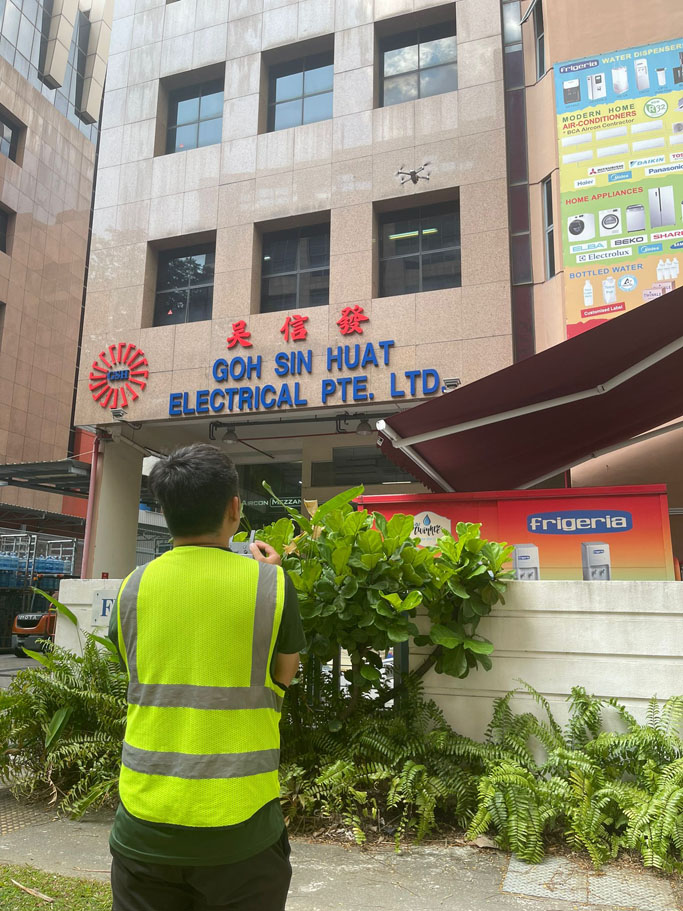
The Building and Construction Authority (BCA) Periodic Facade Inspection (PFI) is a mandatory safety requirement in Singapore designed to ensure the structural integrity and safety of building facades. This comprehensive inspection system was implemented to prevent facade-related accidents and maintain the safety of Singapore’s urban environment.
The PFI requirement applies to all buildings that are 13 years old and above, with inspections required every 7 years thereafter. This systematic approach ensures that building facades remain safe and structurally sound throughout their operational lifespan.
Our expert consultancy services provide comprehensive PFI solutions, from initial assessments to detailed reporting and compliance documentation. We work with building owners, property managers, and developers to ensure full compliance with BCA regulations while maintaining the highest safety standards.
Prevent facade elements from falling and causing injury to pedestrians or property damage. Regular inspections identify potential hazards before they become dangerous.
Meet BCA regulatory requirements and avoid penalties, legal issues, or building closure orders. Compliance is mandatory for all qualifying buildings.
Maintain building integrity and market value through proactive maintenance and early detection of structural issues.
Identify and address minor issues before they escalate into major, costly repairs or safety hazards.
Develop strategic maintenance schedules based on comprehensive inspection findings and professional recommendations.
Prolong the operational life of building facades through systematic inspection and preventive maintenance programs.
Duration: 1-2 weeks
We begin with a comprehensive review of building documentation, previous inspection reports, and maintenance records. Our team conducts a preliminary site visit to understand the building’s unique characteristics, facade systems, and access requirements.
Duration: 1 week
Detailed preparation phase involving the compilation of all necessary documentation, permits, and safety protocols. We coordinate with building management to ensure minimal disruption to occupants and operations.
Duration: 2-5 days
Comprehensive visual examination of all facade elements from ground level and accessible vantage points. This includes detailed photography, dimensional measurements, and condition assessment using advanced inspection tools.
Duration: 3-7 days
Detailed close-up examination of facade elements using specialized access equipment such as gondolas, scaffolding, or rope access systems. This phase involves hands-on testing and detailed condition assessment.
Duration: 1-3 days
Advanced testing procedures for areas of concern identified during visual and close-up inspections. May include non-destructive testing, material sampling, and structural analysis.
Duration: 1-2 weeks
Comprehensive analysis of all collected data, photographs, and test results. Our engineers evaluate findings against safety standards and develop prioritized recommendations for any required remedial work.
Duration: 1-2 weeks
Preparation of comprehensive PFI report meeting all BCA requirements. The report includes detailed findings, photographic evidence, engineering assessments, and specific recommendations for maintenance or repairs.
Duration: 1-2 weeks
Submission of completed PFI report to BCA and ongoing liaison to address any queries or additional requirements. We ensure full compliance and provide ongoing support throughout the approval process.
Initial consultation, contract signing, document review, and project planning. Site survey and access assessment conducted.
Permit applications, safety protocol development, equipment procurement, and detailed inspection methodology finalization.
Visual and close-up facade inspection conducted. Specialized testing performed for areas of concern. Comprehensive documentation and photography.
Engineering analysis of inspection findings, risk assessment, and development of remedial recommendations. Laboratory testing results incorporated.
Comprehensive PFI report preparation, client review, and final submission to BCA. Ongoing liaison for regulatory compliance.
Registered Professional Engineer (Civil or Structural) with BCA, possessing relevant experience in building facade inspection and assessment.
Demonstrated expertise in facade systems, building materials, structural analysis, and safety assessment methodologies.
Current participation in professional development programs and staying updated with latest inspection techniques and regulations.
Adequate professional indemnity insurance to cover potential liabilities associated with inspection services.
Frequency: Found in 32% of inspections
Concrete spalling occurs when the concrete surface breaks away, often due to corrosion of reinforcing steel. This is particularly common in Singapore due to high humidity and chloride exposure.
Remedial Actions: Concrete repair, reinforcement replacement, protective coatings
Frequency: Found in 26% of inspections
Water infiltration through facade systems can cause significant structural damage and create health hazards through mold growth. Singapore's heavy rainfall makes this a critical concern.
Remedial Actions: Sealant replacement, waterproofing renewal, drainage improvements
Frequency: Found in 18% of inspections
Structural sealants and expansion joints are critical for facade performance. UV exposure and thermal cycling in Singapore's climate accelerate sealant degradation.
Remedial Actions: Complete sealant replacement, joint redesign, improved materials
Frequency: Found in 14% of inspections
External cladding systems, including curtain walls, stone panels, and metal cladding, can develop various issues affecting both aesthetics and structural integrity.
Remedial Actions: Panel replacement, bracket repair, connection strengthening
Frequency: Found in 12% of inspections
Protective coatings deteriorate under constant UV exposure and high humidity, leading to aesthetic issues and potential substrate damage.
Remedial Actions: Surface preparation, coating system renewal, improved materials
Frequency: Found in 8% of inspections
Building settlement, thermal expansion, and seismic movement can cause facade elements to shift, crack, or separate from the main structure.
Remedial Actions: Structural assessment, joint modification, movement accommodation
Complex architectural features, multiple facade systems, and unique design elements increase inspection time and costs
Buildings requiring specialized access equipment (gondolas, scaffolding, rope access) incur additional setup and operational costs
Poorly maintained buildings with extensive defects require more detailed inspection and documentation, increasing costs
Non-destructive testing, material sampling, and laboratory analysis add to base inspection costs
Extensive photographic documentation, detailed reporting, and CAD drawings increase project scope and costs
Rush projects or tight deadlines may require additional resources and premium pricing
Custom mobile applications streamline data collection, ensure consistent documentation, and enable real-time collaboration between field teams and engineers.
Benefits: 50% faster data collection, improved accuracy, reduced transcription errors
Advanced thermal imaging technology reveals hidden moisture infiltration, thermal bridging, and insulation defects not visible to the naked eye.
Benefits: Early moisture detection, comprehensive building envelope assessment
Sophisticated NDT equipment allows comprehensive material assessment without damaging building elements.
Benefits: Comprehensive material assessment, no structural damage, reliable data
High-precision 3D laser scanning creates detailed digital models for accurate dimensional analysis and change detection.
Benefits: Permanent digital record, precise measurements, future comparison capability
AI-powered analysis tools enhance defect detection accuracy and automate preliminary assessment processes.
Benefits: Improved detection accuracy, consistent assessment, predictive insights
| Maintenance Activity | Frequency | Key Focus Areas |
|---|---|---|
| Visual Facade Assessment | Annual | Overall condition, visible defects, safety concerns |
| Sealant Inspection & Maintenance | Every 2-3 years | Joint integrity, adhesion, weatherproofing |
| Drainage System Cleaning | Bi-annual | Gutter clearance, downpipe function, water flow |
| Window & Door Seal Maintenance | Annual | Weatherstripping, gaskets, operating mechanisms |
| Facade Cleaning & Washing | Quarterly | Surface contamination, biological growth, appearance |
| Concrete Repair & Protection | As needed (every 5-7 years) | Spalling repair, protective coatings, carbonation |
| Paint & Coating Renewal | Every 5-8 years | Protective coatings, aesthetic maintenance, UV protection |
| Structural Element Inspection | Every 3-5 years | Connections, brackets, support systems |
Preventive maintenance typically costs 20-30% of reactive repair costs. Early intervention prevents minor issues from becoming major expensive problems.
Regular maintenance identifies and addresses safety risks before they become critical, protecting occupants and reducing liability exposure.
Well-maintained buildings retain higher market values and command premium rents compared to poorly maintained properties.
Systematic maintenance can extend facade lifespan by 30-50%, delaying major renovation requirements and capital expenditure.
Buildings with good maintenance records typically have fewer issues during PFI, resulting in faster compliance and lower inspection costs.
Proper maintenance improves energy efficiency, reduces material waste, and supports sustainable building operation practices.