

Key Takeaways
ERSS costs depend on the excavation, ground conditions, design responsibility, checking requirements, and the level of construction-stage support needed. A useful budget separates professional fees from testing, monitoring, authority coordination, and risk allowances.
- ERSS is a temporary earth-retaining system used to support excavations and control ground movement.
- Consultant fees rise with excavation depth, structural complexity, difficult ground, and incomplete site data.
- Checking fees should be priced separately from design fees, with exclusions clearly stated.
- Testing and monitoring allowances should reflect both the proposed system and nearby assets.
- Developers, Quantity Surveyors (QS), Commercial Managers should compare scope, deliverables, and assumptions rather than headline prices.
1. What an ERSS submission covers in Singapore
An ERSS submission brings together the engineering design, supporting calculations, drawings, construction assumptions, and approval coordination for temporary earth-retaining works. It is not simply a drawing package: the design must be capable of being built, checked, monitored, and adjusted safely as excavation progresses. The commercial effect is equally practical, because omissions at submission stage often become variations or programme pressure later.
Earth retaining and stabilising structures explained
Earth Retaining Stabilising Systems support vertical or near-vertical excavated soil faces, helping prevent collapse and control ground movement around a site. Typical arrangements include sheet pile walls, contiguous or secant pile walls, diaphragm walls, soil nail walls, and ground anchors. The appropriate arrangement depends on excavation depth, soil and groundwater conditions, adjacent structures, available working space, and the construction method.
An ERSS design normally considers both structural and geotechnical behaviour. It must address stability, wall and support forces, groundwater effects, deformation, sequencing, and the interaction between temporary and permanent works. That interface matters where anchors, brackets, embedments, or other temporary supports affect the partially completed permanent structure.
When an ERSS submission is required
An ERSS submission is generally relevant where a project involves deep or constrained excavation and the stability of the excavation face could affect workers, neighbouring property, roads, utilities, or existing infrastructure. The exact submission pathway depends on the project and applicable Singapore requirements, so the Qualified Person should confirm the need and scope early.
Early review is particularly useful where the site has a high groundwater level, limited boundary clearance, nearby basements, or a dense underground utility network. Existing investigation data should be tested against the proposed excavation rather than assumed to be complete.
The roles of the developer, Qualified Person, QS, and commercial manager
The developer sets the project objectives, risk appetite, procurement route, and budget. The Qualified Person coordinates the engineering submission and professional responsibilities, while the structural and geotechnical consultants develop the design information required for review. The QS translates that scope into a measurable cost plan and tender package; the commercial manager tracks exposure, interfaces, changes, and contractual consequences.
A practical Quantity Surveying approach is to identify ERSS as its own workstream instead of burying it inside a broad excavation allowance. The commercial manager can then distinguish a consultant instruction from a construction variation, while the QS maintains a clearer basis for tender comparison and valuation.
Authorities and project interfaces involved in the approval process
ERSS work can interface with BCA and with agencies responsible for roads, drainage, utilities, land, and environmental matters. Depending on the project, coordination may involve LTA, PUB, URA, JTC, NEA, SCDF, or other authorities. The design team must also coordinate with the architect, civil and structural consultants, utilities specialists, contractor, monitoring team, and neighbouring stakeholders.
The submission programme should show who prepares each document, who endorses it, who checks it, and who responds to comments. Aman Engineering Consultancy documents authority submissions to agencies including BCA, LTA, PUB, URA, and JTC among its professional services; any appointment should still define the precise ERSS scope and responsibility matrix in writing.
2. The main cost components of an ERSS submission
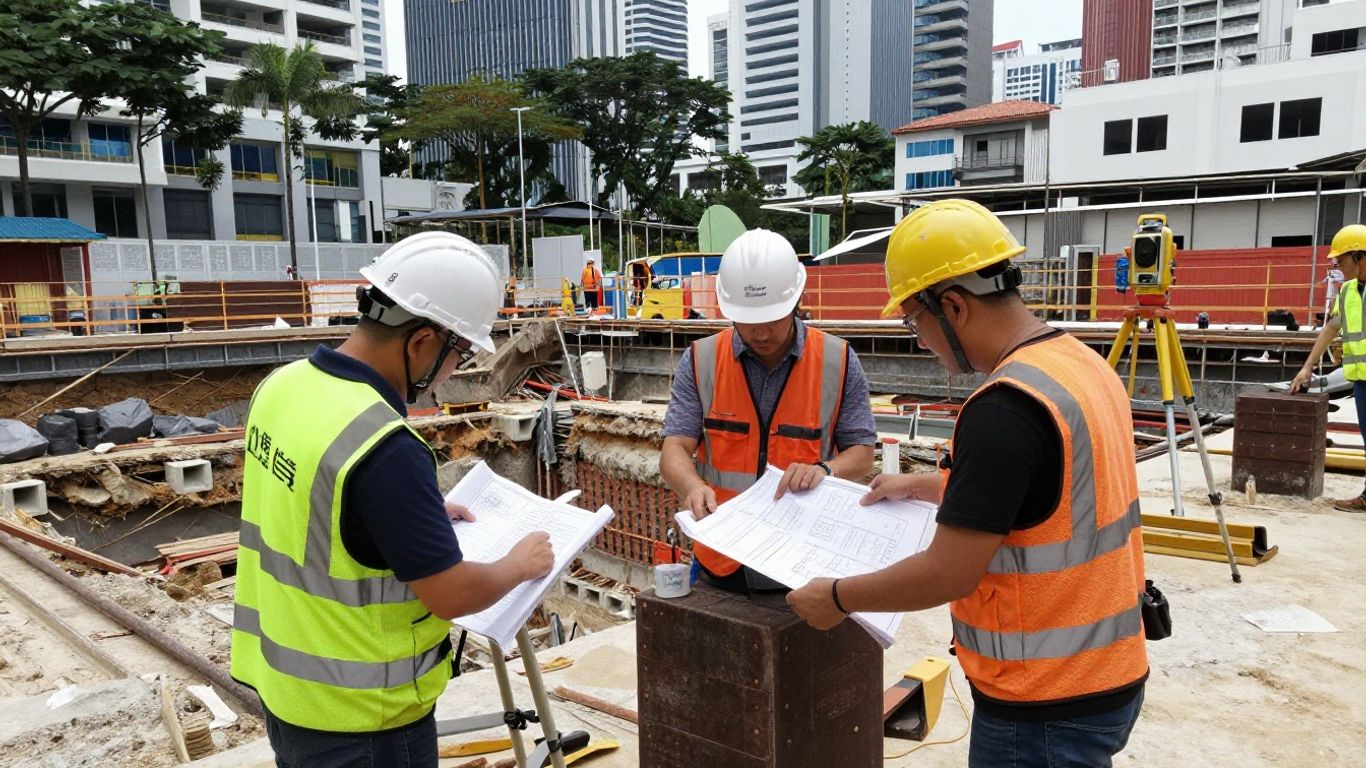
The total ERSS allowance is usually a group of related costs rather than a single consultant invoice. Design, submission coordination, independent checking, site support, testing, and monitoring may be procured from different parties or combined under one appointment. Separating them makes it easier to see what is fixed, what is provisional, and what may change with construction progress.
Structural and geotechnical design consultant fees
Design fees cover the engineering work needed to select, analyse, detail, and document the retaining system. They may include geotechnical assessment, structural calculations, design drawings, temporary works details, construction stages, and responses to technical queries. The quotation should state whether site visits, design risk reviews, and coordination with permanent works are included.
A fee for structural and geotechnical engineering consultation may be appropriate where both ground behaviour and support-member design need to be considered together. Aman Engineering Consultancy lists structural and geotechnical engineering consultation and design of temporary structures, including ERSS, within its professional services. The exact deliverables remain a matter for the project brief.
Submission, coordination, and authority liaison charges
Submission charges may cover document preparation, portal or administrative work, coordination meetings, responses to comments, and liaison with the relevant authority or Qualified Person. These activities can be modest on a straightforward site but significant where comments arrive in stages or several agencies have overlapping requirements.
The appointment should say whether one submission cycle is included and how subsequent comments are treated. It should also identify whether the consultant attends meetings, revises drawings, updates calculations, or merely transmits information prepared by others.
Independent checking fees for design and calculations
Checking is a separate professional activity from producing the design. A checker reviews the assumptions, analysis, calculations, drawings, detailing, and stated compliance basis, then records findings and any required actions. The price depends on the material supplied and on the extent of the review required for the project.
Because a checking fee can appear low when its exclusions are broad, the QS should request a schedule of deliverables. It should distinguish a document review from a complete independent design check and state whether one consolidated comment cycle is included.
Site supervision, inspection, and certification costs
Construction-stage fees may cover attendance during installation, inspection of critical stages, review of site records, responses to unexpected conditions, and certification or reporting duties assigned to the consultant. The required frequency depends on risk, excavation sequence, contractor capability, and the monitoring regime.
Resident Engineer and Resident Technical Officer services can include site supervision, progress reporting, technical problem-solving, authority liaison, structural works supervision, geotechnical monitoring, and quality testing coordination. These should be priced against a defined attendance schedule rather than an open-ended assumption of full-time presence.
Testing, instrumentation, and monitoring expenses
Testing and monitoring are often treated as construction costs, but they should be visible in the ERSS budget from the start. They may include additional soil investigation, material tests, pile or wall testing, survey work, instruments, readings, data interpretation, and reports. A low design fee does not compensate for an unpriced monitoring obligation.
The following breakdown helps a project team distinguish the main cost buckets before requesting quotations:
| Cost component | Typical scope | Main pricing driver | Budget treatment |
|---|---|---|---|
| Design | Analysis, drawings, calculations, sequencing | Complexity and data quality | Professional fee |
| Checking | Independent review and comments | Risk and submission extent | Separate professional fee |
| Submission | Coordination and authority responses | Number of interfaces and revisions | Fixed allowance or staged fee |
| Monitoring | Instruments, readings, surveys, reports | Frequency and trigger regime | Measured or provisional sum |
The table is most useful when each allowance is tied to a deliverable and an assumption. That gives the commercial team a defensible basis for moving money between design, checking, and construction-stage support as the project develops.
3. How consultant fees for ERSS design are calculated
There is no reliable single rate for an ERSS design because the work is shaped by site-specific risk. A shallow excavation with clear access and good investigation data may require a very different effort from a deep basement beside sensitive structures. Fee proposals should therefore be read as descriptions of professional input, not just as numbers to rank.
Scope of design work and complexity of the excavation
The consultant first considers the size and geometry of the excavation, the number of stages, support levels, access restrictions, and the proximity of affected assets. A design that must accommodate several excavation sequences or temporary load cases will require more modelling and coordination than a simple arrangement.
The brief should identify whether the fee includes concept options, detailed design, construction drawings, calculations, temporary-permanent works interfaces, method statement review, and construction support. Otherwise, apparently comparable quotations may be pricing different scopes.
Ground conditions, site constraints, and available investigation data
Ground conditions are central to both design effort and risk. Soil variability, groundwater, fill, weak layers, obstructions, and uncertain boundaries can require more interpretation, supplementary investigation, or sensitivity checks. In Singapore’s urban setting, existing utilities and neighbouring structures add another layer of constraint.
A consultant can price more confidently when borehole records, laboratory results, groundwater observations, as-built information, utility surveys, and neighbouring property details are available. Where those inputs are missing, the fee may include assumptions or provisional work that should be made explicit.
Retaining systems, temporary works, and construction sequencing
The selected retaining system affects calculations, drawings, installation methodology, and monitoring. Sheet piles, bored pile walls, diaphragm walls, anchors, and struts each bring different detailing and construction interfaces. The sequence also matters: support installation, excavation stages, dewatering, slab casting, and removal of temporary elements can all change the design actions.
Design responsibility should extend to the temporary condition that the contractor is expected to build. If the contractor later proposes an alternative system, the appointment should state whether redesign, checking, and authority resubmission are included or treated as additional services.
Lump-sum, hourly, and stage-based fee structures
A lump sum gives budget certainty when the scope and inputs are stable. An hourly arrangement can be more suitable for preliminary consultation, site inspections, or uncertain advisory work. A stage-based fee divides the appointment across concept, submission, checking responses, construction, and completion, which can align payment with actual deliverables.
The commercial manager should check the assumptions behind each structure. A low lump sum with narrow exclusions may carry more cost risk than a transparent staged fee, especially where authority comments or contractor changes are likely.
Factors that increase fees for revisions and resubmissions
Revisions commonly arise from changed excavation geometry, utility discoveries, access limitations, contractor proposals, authority comments, or discrepancies between drawings and site conditions. Each revision can require renewed analysis, updated drawings, coordination, checking, and submission work.
A clear quotation should define the number of included revision cycles and the hourly or lump-sum basis for additional work. It should also state whether revisions caused by the consultant, the client, the contractor, or an authority are treated differently.
4. Understanding ERSS checking fees
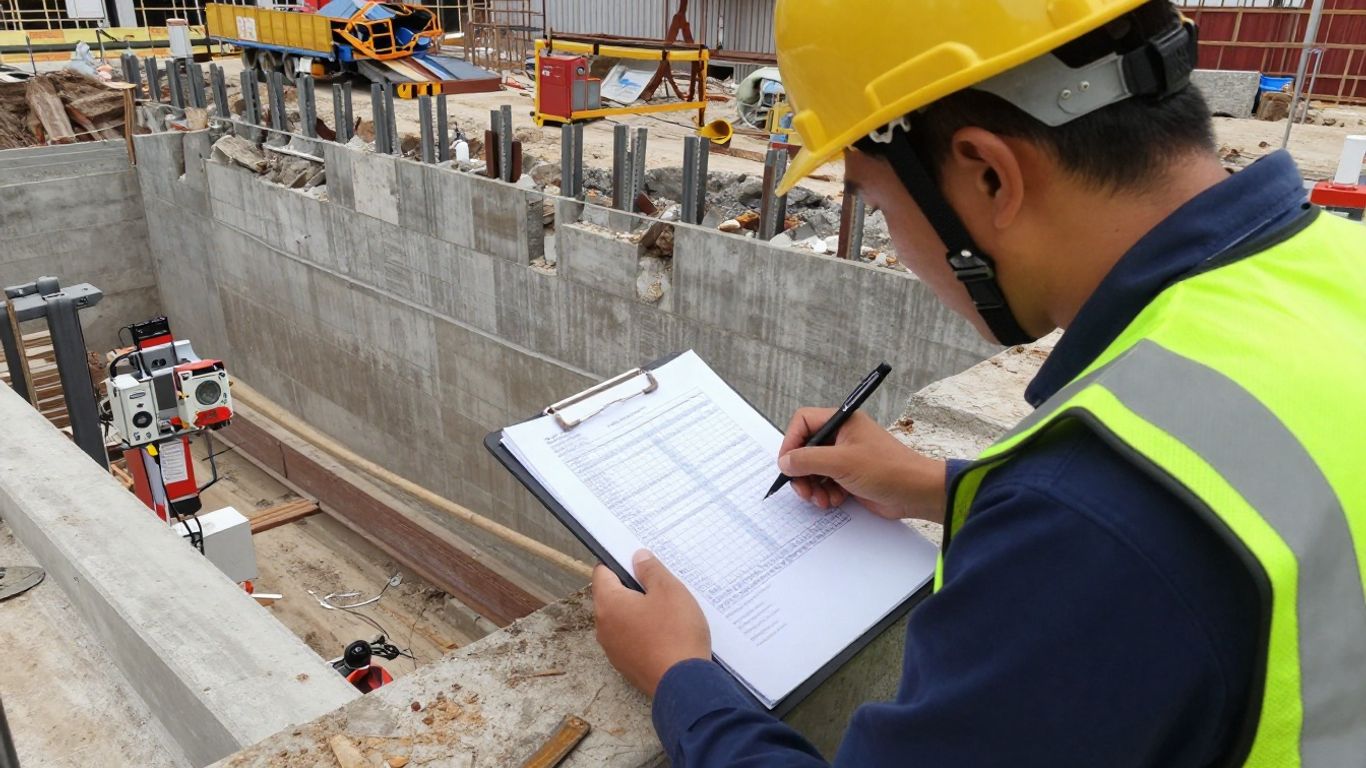
An independent design check provides a separate review of whether the proposed system is adequately reasoned, documented, and compliant with the applicable requirements. It should not be confused with proofreading or a general design meeting. The checking proposal must be read alongside the submission scope, because the quality and completeness of the design package directly affect the checker’s effort.
When an independent design check is needed
The requirement for an independent check depends on the project category, applicable regulations, and the role assigned to the checker. For structural work, the source material describes the Qualified Person submitting structural plans and calculations to an Accredited Checker before a building permit application, where the regulatory framework requires it. ERSS-specific obligations should be confirmed for the particular project.
Even where a formal check is not prescribed, an independent review may be commercially sensible for a deep, constrained, or high-consequence excavation. It can expose unclear assumptions before they become a site instruction or resubmission.
What the checker reviews in drawings, calculations, and assumptions
The checker may review design loads, load combinations, structural analysis, geotechnical assumptions, stability checks, support reactions, movement criteria, drawings, details, specifications, and code references. The review should also consider whether the proposed sequence matches the calculations and whether the temporary works interface has been addressed.
The appointment should identify the documents to be checked and the form of the output. A certificate, formal report, comment schedule, or design-check statement may have different implications for the submission and should not be treated as interchangeable.
How project size and risk affect checking fees
Checking effort tends to increase with excavation depth, number of support stages, ground uncertainty, groundwater sensitivity, neighbouring assets, and the amount of analysis required. Complex numerical modelling or a large drawing and calculation package may also require more review time.
Risk is not measured only by site area. A compact excavation beside a sensitive structure can demand a more careful check than a larger site with generous clearance and straightforward ground conditions.
Common exclusions from a checking fee proposal
Exclusions may include redesign, preparation of missing calculations, site inspections, construction monitoring, meetings beyond an allowance, review of contractor alternatives, and responses to additional authority comments. Some proposals also exclude checking after a material design change.
The QS should ask for exclusions before comparing prices. A concise scope matrix can show whether each bidder has included one review cycle, coordination meetings, marked-up drawings, final close-out, and any site-based verification.
Why early checking can reduce delay and rework costs
A check carried out while the design is still developing gives the designer time to resolve fundamental issues without disrupting procurement or excavation. It also gives the developer a clearer view of residual technical risk before the work is committed.
The value is greatest when the checker receives a coordinated package rather than isolated calculations. Early review does not remove all site risk, but it can reduce avoidable rework and clarify decisions before they become programme-critical.
5. Testing and monitoring costs for ERSS works
Testing and monitoring translate the design assumptions into evidence from the actual site. They help the project team understand soil behaviour, installation quality, groundwater response, and movement during excavation. The budget should cover both the physical equipment and the people needed to collect, interpret, report, and act on the information.
Soil investigation and site characterization tests
Investigation may include boreholes, in-situ tests, laboratory testing, groundwater monitoring, and review of existing records. The required programme depends on the geological model, excavation depth, proposed system, and uncertainty in the available data.
If the original investigation is sparse or old, additional testing may be needed before the design can be finalised. This is often a better budget decision than pricing a detailed design around unsupported assumptions.
Pile, diaphragm wall, strut, anchor, and material testing
Testing may be required to verify installation quality, material properties, capacity, alignment, integrity, or performance. The exact programme depends on the retaining and support system, specifications, applicable standards, and the requirements imposed by the design or authority.
Testing should be coordinated with the construction sequence. A test that is planned too late may delay the next excavation stage, while a test allowance that is too broad may obscure the basis of the tender price.
Instrumentation for ground movement and adjacent structures
Instrumentation can monitor ground movement, wall response, groundwater levels, support behaviour, and the condition of nearby structures or infrastructure. The arrangement should reflect the assets at risk and the decisions that readings are meant to support.
Equipment cost is only one part of the allowance. Installation, baseline readings, calibration, data collection, interpretation, maintenance, and replacement should also be considered when preparing the ERSS budget.
Survey monitoring, trigger levels, and reporting frequency
Survey monitoring provides a practical record of movement at selected points, while trigger levels define when the project team must investigate or respond. Reporting frequency may change as excavation moves through more sensitive stages or when readings indicate a developing trend.
The monitoring plan should name the responsible party, reporting route, response time, and escalation process. Without those details, the project may have instruments in place but no agreed method for turning readings into action.
Allowances for additional tests after unexpected site conditions
Unexpected obstructions, seepage, soil variability, damaged instruments, or unplanned movement can require supplementary testing. A sensible contingency is not a substitute for design discipline, but it prevents every investigation request from becoming a commercial emergency.
A provisional allowance can be linked to defined events and approval thresholds. This lets the commercial manager control expenditure while preserving the ability to investigate conditions that were not reasonably visible at tender stage.
6. Additional costs that affect the ERSS budget
The design fee is only one part of the exposure. ERSS works interact with utilities, traffic, neighbours, permanent structures, authority requirements, and the contractor’s programme. These interfaces can create costs that are difficult to see in a short consultancy quotation but material in the overall project budget.
Design changes caused by utility, access, or boundary constraints
A utility survey may reveal a service that prevents an anchor line or changes the wall alignment. Restricted access may affect installation equipment, while a tight boundary may require a stiffer system or a different support sequence. Each change can affect design, approvals, procurement, and construction productivity.
The tender information should identify known constraints and clearly separate confirmed conditions from assumptions. This gives bidders a fairer basis for pricing and helps the QS track changes when assumptions are disproved.
Coordination with BCA, LTA, PUB, URA, and other authorities
Authority coordination can involve technical comments, protection requirements, road or drainage interfaces, utility clearances, and submission sequencing. The relevant agencies depend on the project location and scope, so an allowance should not be based on a generic list alone.
Aman Engineering Consultancy lists authority submissions to BCA, LTA, PUB, URA, JTC, NEA, SCDF, and other agencies among its services. For any appointment, the developer should confirm which agency interfaces are included, who owns the response, and whether resubmissions are charged separately.
Temporary works, traffic management, and neighboring property protection
The ERSS budget may need to sit alongside hoarding, access arrangements, traffic management, protection measures, condition surveys, temporary drainage, dewatering, and safeguards for neighbouring property. Some items are designed by the ERSS consultant; others belong to the contractor or specialist subcontractor.
The cost plan should show these interfaces rather than assuming they are absorbed into the retaining wall rate. Clear responsibility reduces the risk of duplicated allowances or gaps between design and construction packages.
Construction-stage inspections and responses to site conditions
Excavation is where assumptions meet physical conditions. Inspection, monitoring reviews, technical queries, emergency attendance, and design responses may all be needed as the work progresses. The required support should be linked to hold points and excavation stages.
A resident engineering or technical supervision appointment can provide a defined route for site observations and technical coordination. It should still preserve the contractor’s responsibility for safe means and methods and should state the consultant’s authority to instruct, advise, inspect, or certify.
Resubmission, extension, and programme-related costs
A delayed approval, revised design, extension of the excavation period, or change in contractor sequence can increase professional attendance and monitoring duration. Equipment hire and reporting costs may also continue beyond the original programme.
Commercial managers should include time-related allowances and identify the event that activates them. This is more reliable than applying an unexplained percentage to the total ERSS cost.
7. How developers, QSs, and commercial managers should budget ERSS fees
ERSS should enter the feasibility budget as soon as the project’s excavation strategy becomes credible. The allowance can then mature through concept design, investigation, authority engagement, tender, and construction. Developers, Quantity Surveyors (QS), Commercial Managers need a cost structure that is technically meaningful and commercially auditable.
Building an ERSS cost breakdown into the feasibility budget
Start with separate lines for design, checking, submission coordination, construction-stage support, testing, instrumentation, monitoring, and contingency. Add known interfaces such as utility surveys, neighbouring condition surveys, traffic measures, and temporary access. The early estimate will be broad, but the categories should remain stable as prices are refined.
A Commercial Manager can use this structure to connect the technical risk register with procurement and contract strategy. The aim is not false precision; it is visibility of the assumptions that could move the budget.
Comparing quotations on scope rather than headline price
Quotation comparison should test deliverables, assumptions, attendance, response times, revision cycles, and exclusions. A short price may exclude checking, authority meetings, contractor alternatives, or construction-stage attendance that another bidder has included.
Use a simple scope comparison before recommending an appointment:
- Confirm the design stages, drawings, calculations, and specifications included.
- Check the number of authority and checking review cycles allowed.
- Identify site attendance, monitoring, testing coordination, and reporting duties.
- Record assumptions about ground data, utilities, sequencing, and contractor changes.
After comparison, convert the differences into a normalised cost plan. That makes the recommendation easier to explain and reduces the chance that a low headline price wins by leaving essential work unpriced.
Separating professional fees, authority charges, testing, and contingencies
Professional fees should be separated from third-party charges, testing subcontractors, monitoring equipment, and project contingencies. This helps the QS measure committed cost accurately and allows the developer to see whether a forecast increase comes from design development, physical work, or risk response.
Contingency should have a stated purpose and approval route. It may cover uncertain ground information or additional monitoring, but it should not quietly compensate for an incomplete scope or an unrealistic programme.
Recommended documentation for tender and cost control
The tender package should include the latest drawings, design basis, investigation information, monitoring requirements, specifications, sequence assumptions, authority conditions, and responsibility matrix. The commercial file should retain quotation clarifications, exclusions, revisions, instructions, test results, monitoring reports, and approval records.
This documentation supports tender analysis, interim valuation, variation assessment, and final account review. It also gives the project team a traceable record when the built sequence differs from the original ERSS proposal.
Questions to ask consultants before appointing them
Before appointment, ask who will be the Qualified Person or design lead, what disciplines are included, how the design will be checked, and which authority interfaces the consultant will manage. Ask how site conditions, contractor alternatives, monitoring results, and urgent technical queries will be handled.
Also request the fee basis for additional services and the expected turnaround for revisions. Those details often matter more to the final cost than a small difference between initial quotations.
Conclusion
The cost of an ERSS submission in Singapore is shaped by technical complexity and by the quality of commercial planning around it. A clear scope, independent checking allowance, realistic testing and monitoring budget, and documented responsibility matrix help developers, QSs, and commercial managers control exposure from feasibility through construction.
Frequently Asked Questions
What does ERSS mean in Singapore?
ERSS means Earth Retaining Stabilising System. It is a temporary works arrangement that supports excavated ground and helps control movement around an excavation.
What is normally included in an ERSS submission?
A submission may include design drawings, engineering calculations, design assumptions, stability assessments, construction sequencing, monitoring requirements, and supporting documents required for the applicable approval process.
Who pays for ERSS checking fees?
The project budget normally carries the checking cost, either as a separate professional fee or within a wider temporary works appointment. The contract and appointment should state who engages and pays the checker.
Are ERSS design and checking fees the same?
No. The designer develops the proposed system and documentation, while the independent checker reviews the design and records whether issues require resolution. They are distinct scopes and should be priced separately unless clearly combined.
What testing may be needed for ERSS works?
Testing may include soil investigation, groundwater observations, wall or pile testing, anchor or strut testing, material tests, instrumentation, and survey monitoring. The actual programme depends on the site and selected system.
Why can ERSS costs increase during construction?
Costs can increase because of unexpected soil or groundwater conditions, utilities, design changes, contractor proposals, authority comments, additional monitoring, or a longer excavation programme.
How should a developer compare ERSS consultant quotations?
Compare the scope, deliverables, assumptions, checking arrangements, authority coordination, revision allowance, site attendance, exclusions, and additional-service rates. The lowest initial fee is not necessarily the lowest total cost.