Call Us/Whatsapp Us: +65 8385 9933 | Email: aman@amanengineering.com.sg for inquiry and free quotation

Erosion Control Measure (ECM)

What is a Qualified Erosion Control Professional (QECP)?

A Qualified Erosion Control Professional (QECP) is a certified expert who specializes in planning, implementing, and monitoring erosion and sediment control measures for construction projects. In Singapore, QECPs are recognized by the Building and Construction Authority (BCA) and play a crucial role in ensuring that construction activities comply with environmental regulations and minimize their impact on surrounding areas.

The QECP certification represents a comprehensive understanding of erosion control principles, regulatory requirements, and practical implementation strategies specific to Singapore’s unique tropical climate and urban environment. These professionals bridge the gap between regulatory compliance and practical site management, ensuring that construction projects proceed smoothly while protecting our environment.
The Importance of QECP in Singapore's Construction Sector

Singapore’s tropical climate, characterized by heavy rainfall throughout the year, presents unique challenges for construction projects. The average annual rainfall of approximately 2,400mm, with intense thunderstorms capable of delivering over 100mm of rain in a single event, makes erosion control not just a regulatory requirement but a practical necessity.

The role of QECP has become increasingly important due to several factors:

1. Regulatory Compliance

The Building and Construction Authority (BCA) requires all construction projects above certain thresholds to have proper ECM plans prepared and endorsed by a QECP. This requirement is part of Singapore's commitment to sustainable development and environmental protection. Non-compliance can result in stop-work orders, fines, and project delays that can cost developers significant amounts of money and time.

2. Environmental Protection

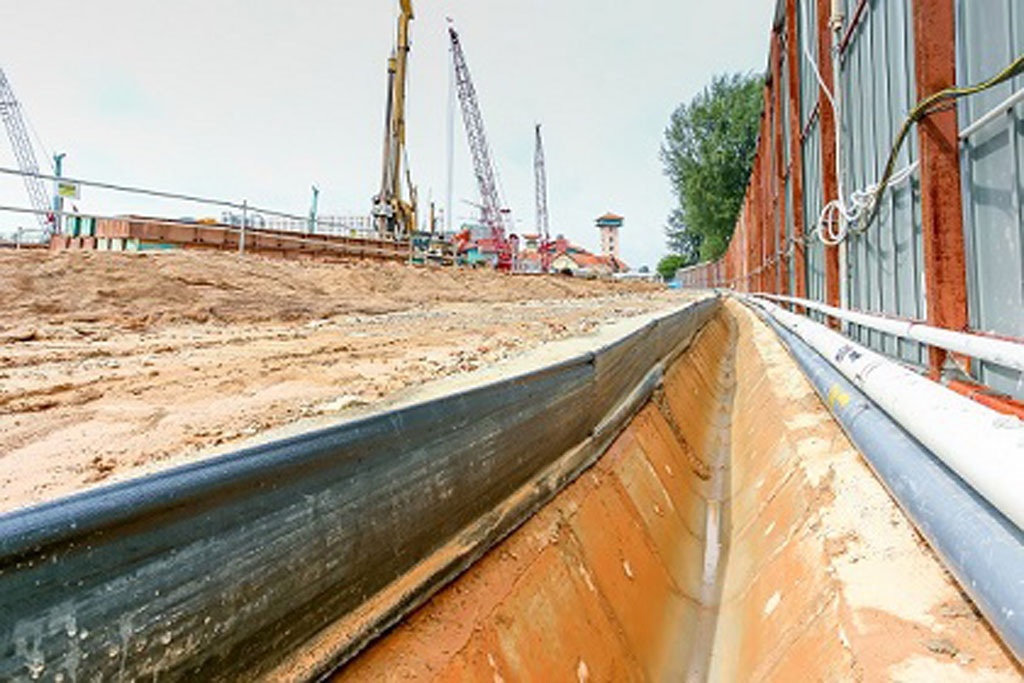
Singapore's limited land area and high population density mean that construction sites are often located near residential areas, water bodies, and sensitive ecosystems. Proper erosion control prevents sediment-laden runoff from entering drainage systems, canals, and eventually, our reservoirs and marine environment. This protection is crucial for maintaining water quality and protecting aquatic ecosystems.

3. Public Safety and Infrastructure Protection

Uncontrolled erosion can lead to slope failures, foundation undermining, and damage to adjacent properties. It can also cause flooding by clogging drainage systems with sediment. QECPs ensure that these risks are identified and mitigated through proper planning and implementation of control measures.

4. Cost Savings

While implementing ECM measures requires initial investment, the cost of remediation, fines, and project delays due to erosion-related issues far exceeds the cost of proper planning and implementation. QECPs help optimize ECM solutions to be both effective and cost-efficient.

Comprehensive QECP Consultancy Services

ECM Plan Development

Comprehensive erosion and sediment control plans tailored to your project's specific requirements and site conditions.

Site Assessment & Analysis

Detailed evaluation of site conditions, soil types, slopes, and drainage patterns to identify erosion risks.

Implementation Supervision

On-site supervision and guidance during ECM measure installation to ensure proper implementation.

Monitoring & Reporting

Regular site inspections, monitoring, and comprehensive reporting to maintain compliance throughout the project.

Training & Education

Comprehensive training programs for site personnel on ECM best practices and maintenance procedures.
Detailed Scope of QECP Consultancy Services

1. Pre-Construction Phase Services

Site Investigation and Risk Assessment: Our QECP consultants begin with a comprehensive site investigation to understand the unique characteristics of your project location. This includes:

  • Topographical analysis to identify slopes, drainage patterns, and potential erosion hotspots
  • Soil testing and classification to determine erosion susceptibility
  • Hydrological assessment to understand rainfall patterns and runoff characteristics
  • Identification of sensitive receptors such as water bodies, residential areas, and protected habitats
  • Review of adjacent land uses and potential cumulative impacts

ECM Plan Development and Design: Based on the site assessment, our QECPs develop comprehensive ECM plans that include:

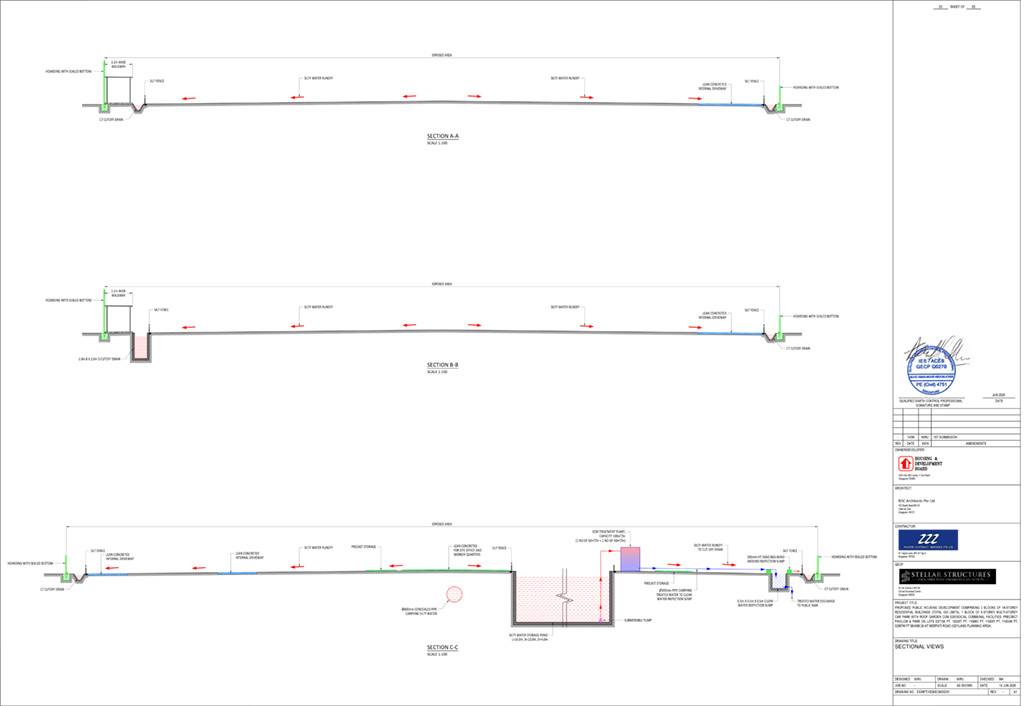
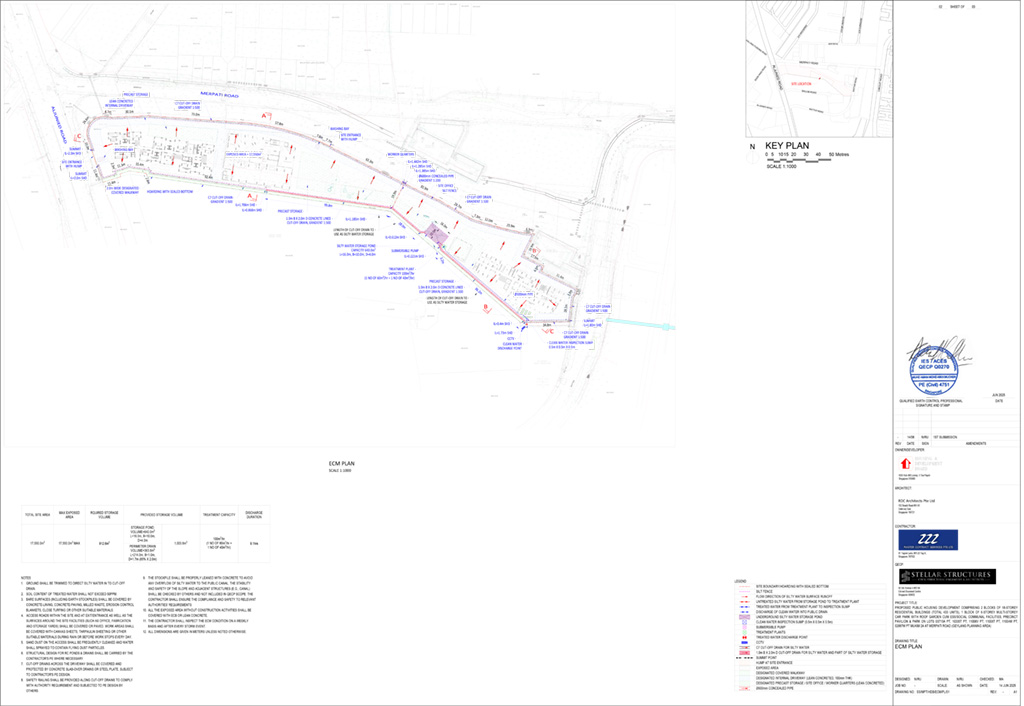
  • Detailed drawings showing the location and specifications of all ECM measures
  • Phasing plans that coordinate ECM implementation with construction activities
  • Technical specifications for ECM devices and materials
  • Maintenance schedules and procedures
  • Emergency response procedures for extreme weather events
  • Cost estimates for ECM implementation and maintenance

Regulatory Submission and Approval: We handle all aspects of regulatory compliance, including:

  • Preparation of submission documents in accordance with BCA requirements
  • Liaison with regulatory authorities to address queries and concerns
  • Revision of plans based on regulatory feedback
  • Obtaining necessary approvals and permits

Implementation Oversight: During construction, our QECPs provide critical oversight to ensure proper implementation of ECM measures:

  • Pre-construction meetings with contractors to review ECM requirements
  • On-site supervision during installation of ECM measures
  • Quality control inspections to ensure compliance with specifications
  • Coordination with site supervisors and contractors to address challenges
  • Documentation of installation through photographs and inspection reports

Regular Monitoring and Inspection: Continuous monitoring is essential for maintaining ECM effectiveness:

  • Weekly site inspections during active construction periods
  • Post-rainfall event inspections to assess ECM performance
  • Water quality monitoring at discharge points
  • Photographic documentation of site conditions
  • Identification of maintenance needs and deficiencies

Key Regulatory Bodies and Their Requirements

Building and Construction Authority (BCA)

The primary regulator for construction-related ECM requirements in Singapore.

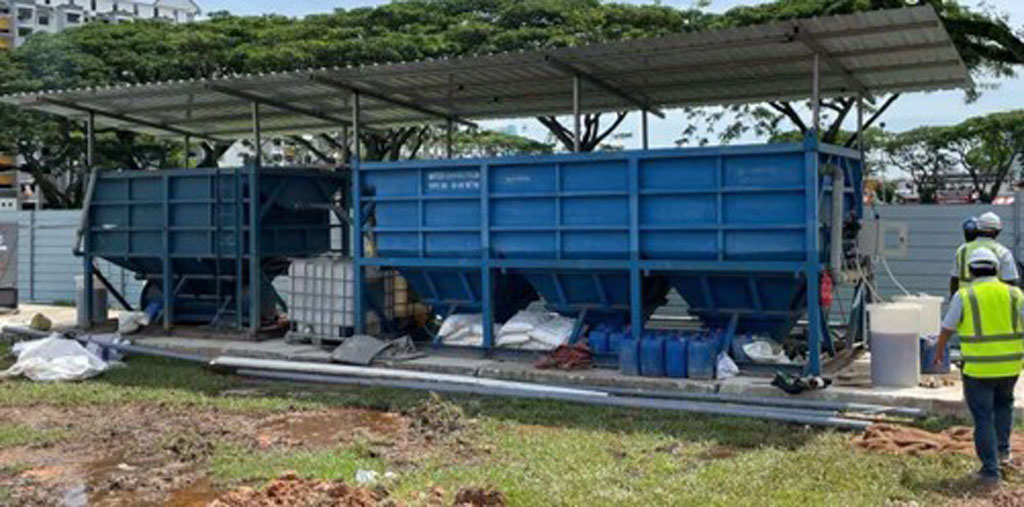
  • Mandatory ECM plan submission for projects exceeding 0.2 hectares
  • QECP endorsement required for all ECM plans
  • Regular compliance inspections and audits
  • Enforcement actions for non-compliance

National Environment Agency (NEA)

Oversees environmental protection aspects of construction activities.

  • Water pollution control requirements
  • Trade effluent discharge regulations
  • Environmental impact assessments for major projects
  • Coordination with PUB on water quality issues

Public Utilities Board (PUB)

Singapore’s national water agency with jurisdiction over drainage and water quality.

  • Surface water discharge quality standards
  • Protection of water catchment areas
  • Drainage system protection requirements
  • ABC Waters design guidelines integration

BCA's Earth Control Measures (ECM) Requirements

The BCA’s Earth Control Measures form the cornerstone of Singapore’s construction site erosion control framework. Key requirements include:

1. Mandatory ECM Plan Submission:
  • Required for all building projects with gross floor area ≥ 5,000 m²
  • Required for all projects with site area ≥ 0.2 hectares
  • Required for all projects involving earthworks ≥ 50 m³
  • Plans must be endorsed by a QECP before submission
  • Approval required before commencement of any earthworks

2. ECM Plan Content Requirements:

  • Site layout plan showing all ECM measures
  • Construction phasing and ECM staging plans
  • Technical specifications for all ECM devices
  • Maintenance schedules and procedures
  • Emergency response plans for severe weather
  • Monitoring and inspection protocols

3. Performance Standards:

  • Maximum allowable turbidity: 50 NTU above background
  • Maximum total suspended solids: 50 mg/L
  • pH range: 6.0 – 9.0
  • No visible oil, grease, or floating debris
  • No adverse impact on receiving waters

Factors Influencing Erosion in Singapore

1. Rainfall Characteristics:

Singapore’s equatorial climate presents unique challenges for erosion control:

Jan Feb Mar Apr May Jun Jul Aug Sep Oct Nov Dec 0 100 200 300 400 Average Monthly Rainfall (mm)
  • High rainfall intensity: Up to 100mm/hour during thunderstorms
  • Frequent rainfall events: Average 167 rain days per year
  • Seasonal variations: Northeast Monsoon (Dec-Mar) and Southwest Monsoon (Jun-Sep)
  • Short duration, high intensity storms characteristic of convective rainfall
  • Year-round erosion risk requiring continuous vigilance

2. Soil Characteristics:

Singapore’s soil types vary significantly across the island, affecting erosion susceptibility:

Residual Soils

Weathered from underlying granite and sedimentary rocks. Generally well-drained but susceptible to erosion when disturbed.

Marine Clay

Found in coastal areas and reclaimed land. High erosion potential when exposed, requiring special handling.

Fill Materials

Variable composition in reclaimed areas. Erosion characteristics depend on source material and compaction.

Advanced ESC Technologies and Methods

Modern erosion control goes beyond traditional methods, incorporating innovative technologies and sustainable practices:

Hydrological Analysis

Design Storm Intensity-Duration-Frequency (IDF) Curves

100-year 50-year 10-year 5 10 20 30 45 60 120 0 50 100 150 200 250 Duration (minutes) Intensity (mm/hr) Singapore IDF Curves for ECM Design

Key Design Parameters:

  • Design storm selection based on project size and risk level
  • Time of concentration calculations for catchment areas
  • Runoff coefficient determination based on surface conditions
  • Peak flow calculations using Rational Method or SCS method
  • Volume calculations for sizing sediment basins

Erosion Rate Estimation

Quantifying potential erosion helps in designing appropriate control measures:

Universal Soil Loss Equation (USLE)

A = R × K × LS × C × P
  • R: Rainfall erosivity factor
  • K: Soil erodibility factor
  • LS: Slope length and steepness factor
  • C: Cover management factor
  • P: Support practice factor

Modified USLE for Singapore

Adapted parameters for tropical conditions:

  • R-factor: 9,000-11,000 MJ.mm/ha.h.yr
  • K-factor: 0.10-0.40 for local soils
  • C-factor: 1.0 for bare soil, 0.01 for grass
  • P-factor: 0.5-0.9 for various practices

Sediment Basin Design

Proper sizing of sediment control facilities is critical for effectiveness:

Design Criteria

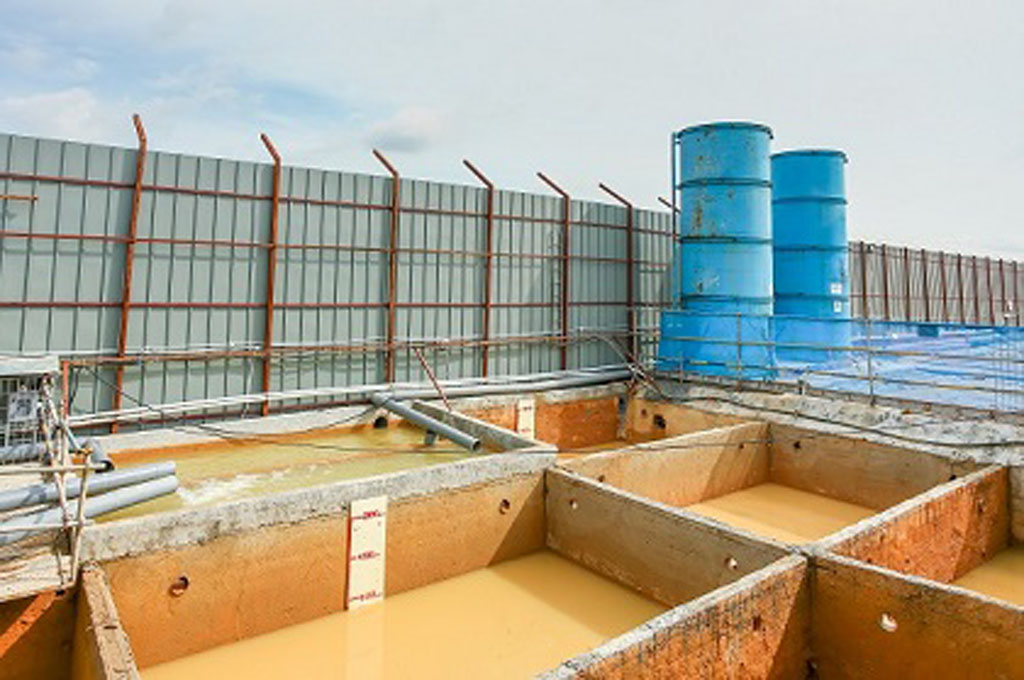
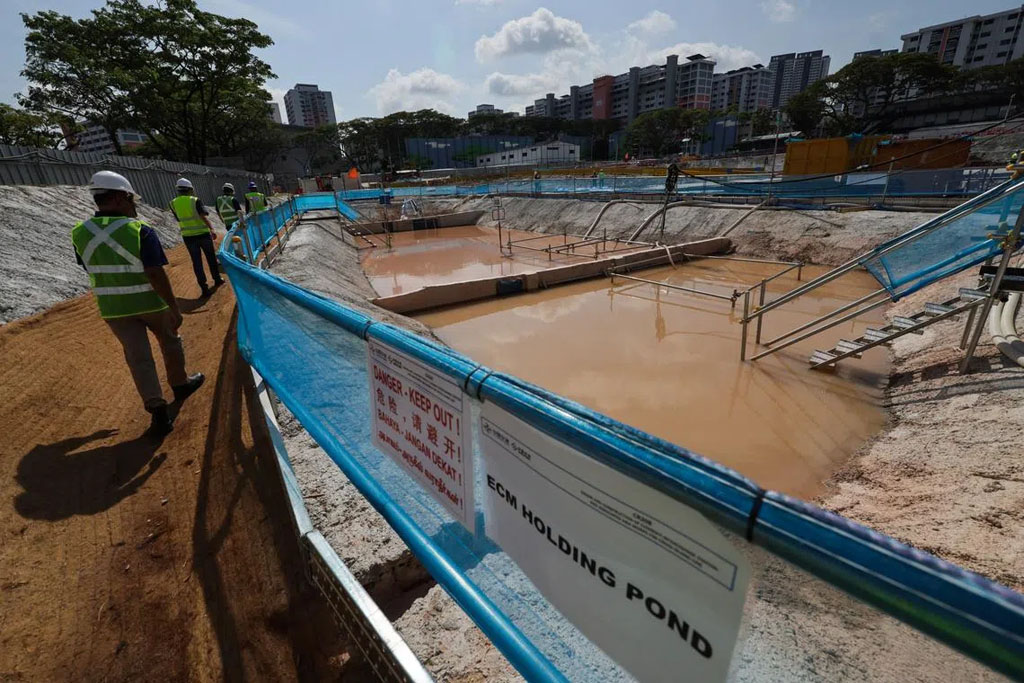
  • Minimum volume: 250 m³ per hectare of disturbed area
  • Settling velocity: Based on target particle size removal
  • Surface area: Calculated for required detention time
  • Depth: 1.5-3.0m typical, with safety considerations
  • Length to width ratio: Minimum 2:1 for flow distribution
  • Outlet design: Skimmer or perforated riser for clarity