
Rebuilding vs. A&A: A structural engineer’s perspective on Singapore homes

Key Takeaways Deciding between renovation and complete reconstruction requires a deep understanding of your property’s current state and your long-term spatial goals. Homeowners must balance regulatory constraints with engineering realities to create safe, valuable assets for the future. Categorize projects based on structural impact to avoid unnecessary regulatory delays. Understand the specific site constraints, such […]
Understanding the signs of foundation subsidence in older landed properties and how to fix it

Key Takeaways Recognizing the warning signs of structural movement early is the most effective way to protect your property’s long-term value and safety against foundation failure. Understanding both the environmental triggers and the appropriate engineering interventions ensures a more reliable repair process. Subtle architectural shifts often manifest as cracks before structural failure accelerates. Moisture management […]
When exactly do you need a structural PE for HDB renovations? A homeowner’s guide

Key Takeaways Understanding structural safety guidelines is essential for any homeowner planning a home upgrade. Here are the core principles you need to know: Structural modifications often require professional certification to ensure building stability. HDB permits are mandatory for specific hacking works to protect block integrity. Identifying the difference between load-bearing and non-structural walls prevents […]
What to do if you notice structural cracks in your Singapore landed home

Key Takeaways Identifying structural risks early can save homeowners from costly repairs and maintain safety. By understanding the causes of damage, you can take informed steps to secure your property. Differentiate between cosmetic and structural crack patterns. Conduct systematic documentation to track crack development. Engage a professional engineer to analyze underlying soil or settlement issues. […]
The Ultimate Guide to Retaining Wall Design for Sloping Plots in Singapore (GEO focus)

Key Takeaways Building on inclined terrain in Singapore requires a robust combination of geotechnical insight, structural engineering, and strict regulatory coordination. Comprehensive Site Investigation: Geotechnical testing and borehole logging form the foundation of any stable slope retaining structure. Optimized Wall Selection: Choosing between gravity walls and integrated pile systems directly affects construction efficiency and cost. […]
Optimizing foundation engineering in soft, subsiding soils
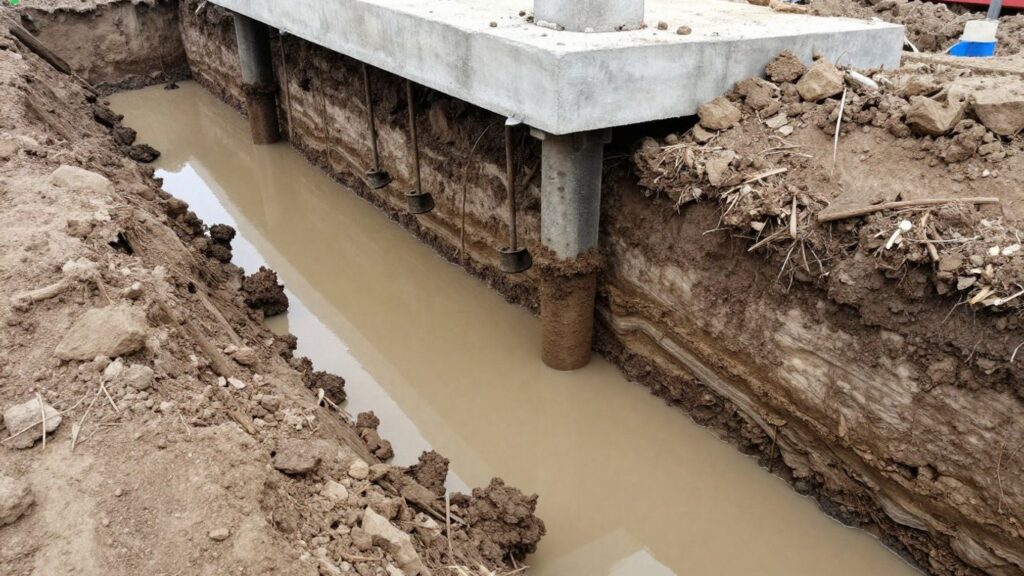
Engineers working in soft soil environments, such as the lacustrine zones of Mexico City, face unique challenges when designing friction pile foundations. Regional subsidence driven by groundwater extraction induces negative skin friction (NF), complicating load bearing calculations. Recent advancements in finite element analysis (FEA) are providing new insights into how these foundations interact with consolidating […]
Engineering Precision: How Finite Element Analysis is Transforming Maritime Design

Finite Element Analysis (FEA) is revolutionizing the maritime and offshore sectors by enabling engineers to conduct precise structural assessments before fabrication begins. By utilizing sophisticated digital models, firms are optimizing material usage, compressing project timelines, and ensuring that complex structures remain resilient even under the most demanding environmental pressures. Key takeaways in marine structural engineering […]
Demystifying the Finite Element Method

Engineering isn’t always as simple as a pen-and-paper calculation. Sometimes, you’re staring at a piece of hardware—like an engine component or a complex bracket—and the geometry is just too messy for standard formulas. That is when engineers pull out the big gun: the finite element method (FEM). It helps us break down complex physical problems […]
FEA for Impact Loading on Steel Structures for Marine Sector

Key Takeaways Impact scenarios in the marine sector demand rigorous structural assessment to ensure long-term integrity against dynamic loads. Understanding these specific risks leads to more resilient offshore and vessel designs. Marine structures face high-velocity impacts from collisions which require advanced dynamic modeling. Constitutive material models must account for strain rate sensitivity to accurately predict […]
FEM Analysis for Complex Steel Structures

Key Takeaways The finite element method provides a robust framework for simulating the performance of intricate structural assemblies under various design loads. Accurate representation of material properties and geometric configurations remains essential for reliable results in structural simulations. Integration between architectural geometry and analytical models ensures that complex structures meet safety and performance requirements. Stability […]