
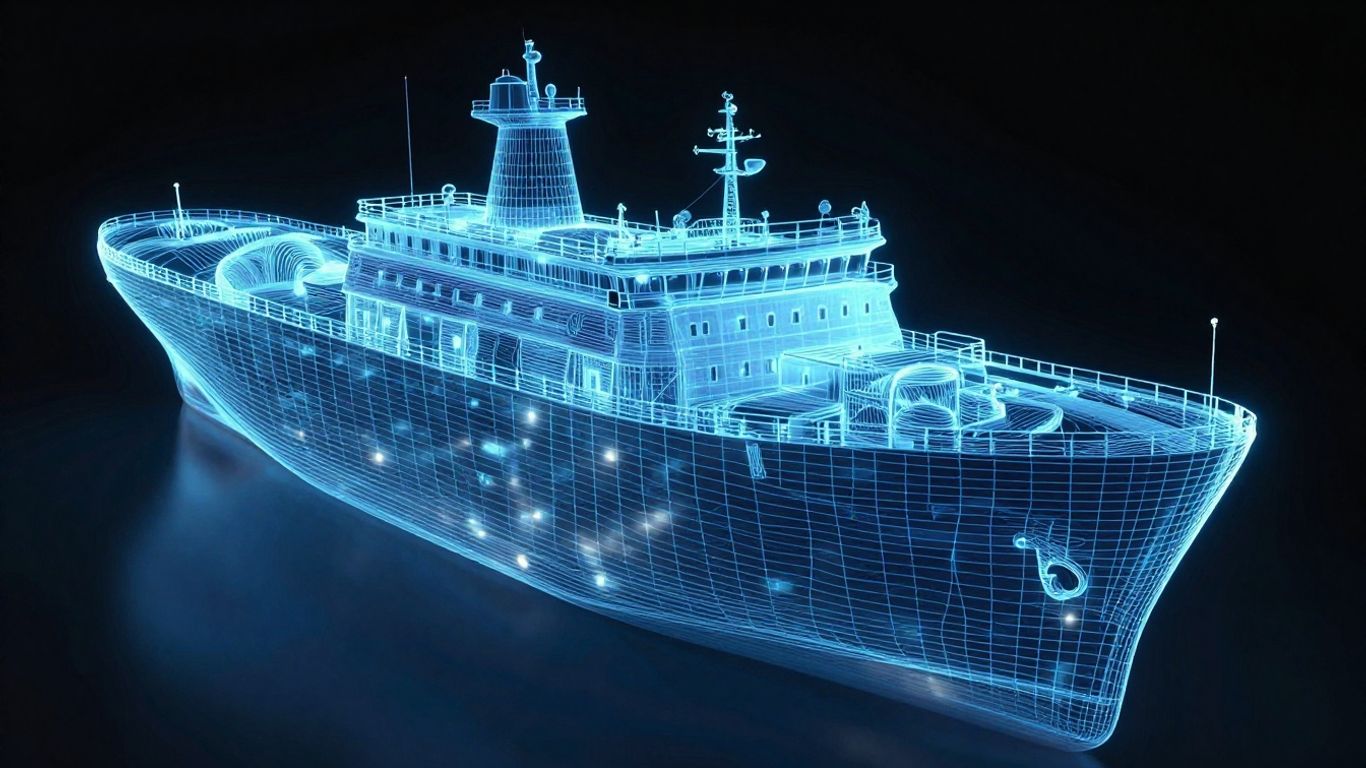
Finite Element Analysis (FEA) is revolutionizing the maritime and offshore sectors by enabling engineers to conduct precise structural assessments before fabrication begins. By utilizing sophisticated digital models, firms are optimizing material usage, compressing project timelines, and ensuring that complex structures remain resilient even under the most demanding environmental pressures.
Key takeaways in marine structural engineering
- FEA significantly reduces production time and material waste while maintaining high safety standards.
- Advanced simulation platforms now model fluid-structure interactions, which are essential for assessing offshore equipment reliability.
- Strategic software integration bridges the gap between initial 3D conceptual design and detailed structural analysis, avoiding redundant modeling work.
Efficiency through digital simulation
Modern marine design requires a delicate balance between structural integrity and material efficiency. For instance, in complex natural gas infrastructure projects, shipyards have utilized FEA to build robust barges capable of carrying massive industrial equipment—such as 180-ton excavators—while reducing the overall volume of steel required. By simulating various load combinations, including wave surge and operational weight, engineers successfully optimized support components like spud legs without compromising safety. Such practices demonstrate the clear economic and structural advantages of moving from traditional design methods to detailed stress and buckling analysis.
Addressing challenges in harsh environments
As offshore wind energy expands into colder regions, the structural crashworthiness of monopile-supported turbines has become a critical research priority. Engineers are now employing advanced fluid-structure interaction (FSI) modeling to predict how drifting ice impacts these foundations. By analyzing factors such as ice speed, shape, and size, researchers can better anticipate structural responses and prevent damage. These studies have highlighted that while factors like ice speed have the greatest influence on impact force, the shape of the ice—whether cubical or spherical—significantly alters the vibrational response of the tower, providing vital data for future design criteria.
The evolution of collaborative engineering
To meet the increasingly strict requirements of classification societies, the industry is shifting toward more integrated design environments. Collaborative efforts between software developers of 3D modeling systems and analytical platforms now allow engineers to automatically transfer geometric data into FEM software. This breakthrough eliminates the time-consuming process of rebuilding models in different systems. By streamlining the workflow from early-stage design to final code compliance checks, these integrated toolsets allow marine architects to focus on maximizing structural effectiveness while dramatically reducing administrative and engineering man-hours.
Sources
- Shipbuilders Design Pipeline Dredging Barge With FEA Software, Tech Briefs.
- Numerical study on crashworthiness of monopile-supported offshore wind turbine due to iceberg
considering fluid-structure interaction, Frontiers. - Client Challenge, Nature.
- Client Challenge, Nature.
- AVEVA, DNV GL’s Sesam Integration Cuts Cost, Marine News Magazine.