
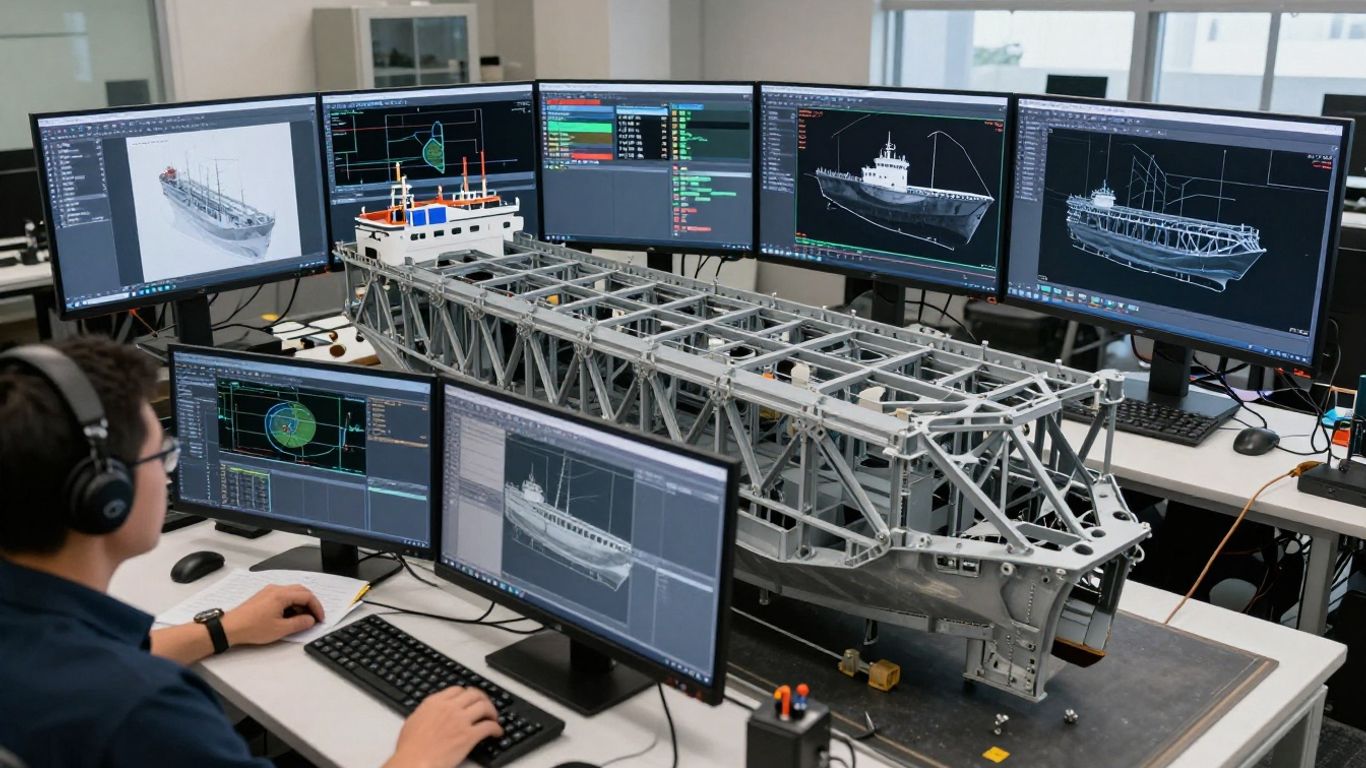
Key Takeaways
Impact scenarios in the marine sector demand rigorous structural assessment to ensure long-term integrity against dynamic loads. Understanding these specific risks leads to more resilient offshore and vessel designs.
- Marine structures face high-velocity impacts from collisions which require advanced dynamic modeling.
- Constitutive material models must account for strain rate sensitivity to accurately predict steel failure.
- Nonlinear structural dynamics are best managed through explicit time integration for short-duration events.
- Proper boundary conditions, including fluid-structure interaction, significantly influence the reliability of FEA simulations.
- Verification and validation protocols prevent modeling errors by benchmarking results against known experimental tests.
Fundamentals of impact loading in the marine sector
Marine structures are frequently exposed to accidental collisions with supply vessels, floating debris, or iceberg impact inarctic regions. These events introduce impulsive forces that can lead to local damage or large-scale structural instability if not properly addressed during the design phase.
Analyzing common impact scenarios
When structural engineers assess collision scenarios, they typically categorize the events by the relative kinetic energy and the angle of approach between interacting bodies. Vessel berthing and minor accidental contacts generally represent low-velocity events, whereas head-on collisions involve significant structural penetration and energy dissipation. The industry relies heavily on Finite Element Analysis to simulate how specific members react when sudden forces exceed their elastic limit, ensuring that deformation remains contained within defined safety zones.
Energy absorption and structural dissipation mechanics
Structures dissipate energy through a combination of plastic deformation, tearing of components, and specialized crumple mechanisms designed into the sacrificial plating of the vessel. The efficiency of this process is heavily reliant on the material’s ability to maintain integrity while shifting into a post-yield state. Engineers must evaluate current practices, often utilizing Finite Element Method approaches to determine the ultimate load-carrying capacity of the hull frames.
Significance of strain rate sensitivity in marine steel
High-speed impacts cause a dramatic increase in the rate of material strain, which historically shifts the yield stress of mild steel higher than static values. This phenomenon is critical because ignoring the increased strength during rapid contact often results in overly conservative models that lack predictive accuracy for real-world failures. By applying dynamic strain rate amplification factors, designers can prevent underestimating the penetration depths observed during actual maritime accident simulations where steel ductility is challenged under intense pressure.
Modeling techniques for nonlinear structural dynamics
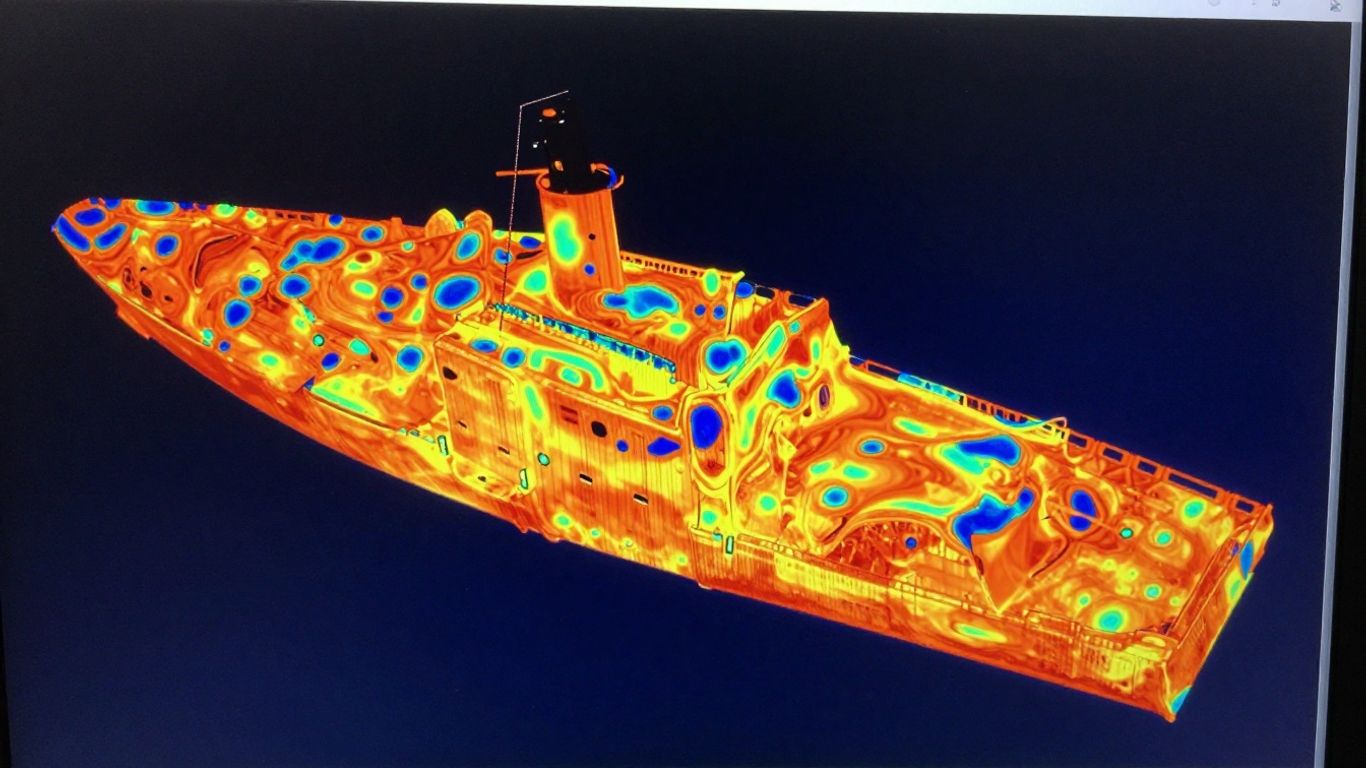
Nonlinear dynamics software enables engineers to recreate the unpredictable nature of marine collisions with high precision. By choosing the correct solvers, simulation outcomes can reveal potential failure points in complex weldments before any physical assembly occurs.
Choosing between explicit and implicit time integration
Explicit solvers are highly effective for capturing intense, short-duration events where stress waves propagate through the structure. In contrast, implicit solvers are better suited for static or slow-moving problems because they offer unconditional stability but struggle with high-frequency dynamic oscillations. Choosing the correct solver ensures computational efficiency when simulating structural impacts that occur over mere milliseconds.
Managing large deformations and adaptive meshing
Structural members undergoing severe impact often experience folding or buckling that exceeds the range of a stationary mesh. Adaptive meshing allows the computational grid to refine itself in areas of high strain, ensuring that the model captures the curvature of torn steel plates. This level of detail is vital for understanding accurately how structural geometry modifies the energy distribution during the collision process.
Implementing robust contact definitions for collisions
Accurate collision modeling requires sophisticated algorithms that manage the interaction between surfaces without non-physical penetration. We must define penalty-based or constraint-based contacts to ensure the force between a striking object and a fixed platform is transitioned smoothly through the structural assembly.
Material behavior under high-velocity impact
Steel responds to high-velocity events with unique metallic flow properties that are difficult to replicate through simple static tensile testing. Determining the correct failure criteria is essential for accurate impact predictions.
Utilizing constitutive models for steel ductility and failure
The choice of material models in FEA software determines whether the simulation will accurately predict the separation of metals during an impact. Models such as the Johnson-Cook formulation are standard because they account for the combined effects of plastic strain, strain rate, and temperature. Such models differentiate between brittle fracturing and ductile rupturing of hull steel under extreme load conditions.
Accounting for strain-rate effects on yield stress
During an impact, the material resistance typically increases as the deformation rate rises, a behavior referred to as strain-rate hardening. Designers must input precise material property tables to ensure the model reflects the actual yield response observed during testing. This process allows engineers to evaluate if a material will maintain structural integrity during an sudden collision.
Managing thermal-mechanical coupling during contact events
Friction acting on the surface of an object during a deep penetration or shearing event generates significant heat that alters local material properties. While often neglected in slow-speed models, thermal-mechanical coupling becomes necessary in high-energy collision simulations to track degradation in strength. This prevents the inaccurate assumption that material performance remains constant regardless of the heat generated by geometric tearing.
Boundary conditions and dynamic constraints
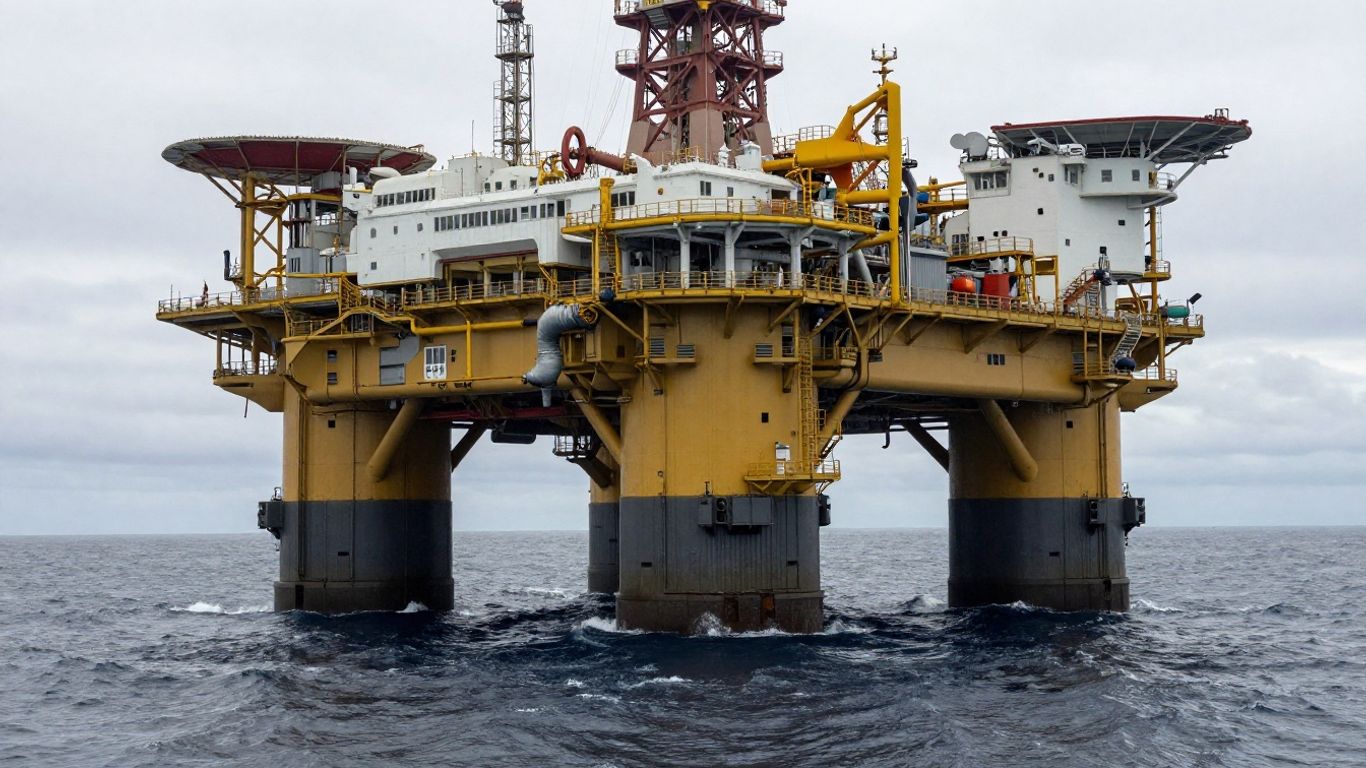
Properly enclosing a model within its environment requires defining boundaries that accurately reflect the surrounding water and supporting seabed. These inputs often dictate whether a structure appears rigid or flexible in the face of incoming dynamic loads.
Simulating fluid-structure interaction in marine environments
Water surrounding an offshore structure provides non-negligible added mass that influences the frequency and oscillation of the system. This interaction must be included in the numerical model; otherwise, the natural modes of the structure will be incorrect. Advanced solvers often utilize Eulerian-Lagrangian coupling to capture the water’s displacement alongside the steel structure’s deformation.
Defining the interaction between moving objects and fixed structures
When a vessel approaches an offshore facility, the interface constraints determine how energy moves through the contact point. Using appropriate interface laws ensures the platform does not artificially absorb energy through unrealistic damping effects, allowing the model to focus on true structural dissipation.
Incorporating structural flexibility and dampening in offshore platforms
Offshore platforms oscillate under wind and wave action, and this inherent flexibility serves as a buffer during impact. Incorporating structural damping ratios ensures the response to an impact is not overly stiff, which could otherwise lead to inaccurate stress concentrations in the primary load-bearing columns.
| Assessment Parameter | Standard Practice | Typical Sensitivity |
|---|---|---|
| Strain Rate | Johnson-Cook Model | High |
| Damping Ratio | Rayleigh Coefficients | Moderate |
| Mesh Density | Global-Local Refinement | High |
By comparing these parameters in different configurations, we establish a range of predictable responses for the structure under various environmental loads during the installation phase.
Addressing marine-specific environmental challenges
Marine environments impose harsh operational conditions that degrade structural steel over several decades. Modeling these long-term factors alongside dynamic impact events is required for complete safety assessment.
Evaluating the impact of long-term corrosion on energy absorption
Corrosion reduces the cross-sectional area of load-bearing members, which drastically lowers the overall energy absorption capacity over time. If the hull plating is thinner than design specifications, the structural response to an equal-energy collision will be significantly different from a pristine structure. Numerical models must account for these varying material thicknesses to provide a realistic outlook on the structure’s end-of-life status.
Mitigating brittle fracture risks in extreme cold climates
Low temperature reduces the impact toughness of steel, making it susceptible to brittle fracture even under moderate load levels. Designers utilize specific steel grades in arctic conditions to prevent instantaneous cracking. Understanding this dependency involves FEA studies that simulate crack propagation pathways under low-ductility conditions to ensure no catastrophic separation occurs.
Assessing hydrostatic pressure effects on secondary buckling modes
Hydrostatic pressure creates a preexisting stress field in submerged structures that modifies how they resist external impacts. For thin-walled members, this pressure can trigger secondary buckling modes during a collision that would not appear in atmospheric conditions. Incorporating these stresses into the initial state of the numerical model is essential for capturing the true structural collapse sequence.
Verification and validation of FEA models
Numerical simulations are only as valuable as the confidence we have in their output data. Verification confirms the mathematical accuracy, while validation aligns the virtual model with the physical reality.
Conducting convergence studies for energy balance verification
Engineers perform convergence studies by systematically refining the mesh until the output results, such as displacement and stresses, are no longer affected by the element size. Achieving energy balance conservation is the litmus test for any dynamic model, ensuring that the work of external forces matches the internal plastic energy dissipation and kinetic energy changes. A balanced energy profile is the primary indicator of a robust simulation.
Benchmarking simulation results against standard experimental drop tests
It is essential to compare model predictions against drop-weight impact testing of controlled structural specimens. When simulations align closely with experimental drop-test data, the modeling methodology can be applied to full-scale platform or ship designs with high confidence. This benchmarking practice bridges the gap between small-scale laboratory samples and real-world maritime safety.
Performing sensitivity analysis on material and geometric variables
Designers must test how variations in steel yield or plate thickness affect the final impact result. Through this analysis, we identify which parameters are the most sensitive drivers of structural failure. Common sensitivity factors include:
- Steel yield strength variations typical of batch manufacturing tolerances.
- Initial geometric imperfections that influence the initiation of local member buckling.
- Variations in hydrostatic loading depending on the depth of the submerged structure.
- Damping values selected for specific hydrodynamic conditions during installation.
This systematic approach prevents designers from relying on single-point estimates that fail to account for the reality of manufacturing inconsistencies.
Conclusion
Modern marine structural design hinges on the accurate application of nonlinear simulation methods to predict behavior during intense impact events. By mastering the integration of material sensitivity, environmental factors, and rigorous verification processes, engineers can create high-confidence designs that withstand the most demanding offshore conditions. As computational capabilities continue to improve, the move toward data-backed structural reliability will remain a core component of sustainable and safe maritime engineering.
Frequently Asked Questions
How does FEA improve structural safety in marine environments?
FEA software provides a predictive look at how structures withstand complex loading before moving to the fabrication stage, allowing for the early identification of weak points that could fail during a collision or environmental disaster.
Which factors most strongly influence the results of a marine impact simulation?
Key factors typically include the chosen constitutive material model, the correct handling of strain-rate effects on steel resistance, and the accuracy of the predefined mesh in areas where high deformation is expected.
Why is the explicit solver preferred for ship collision analysis?
Explicit time integration is optimized for transient physical problems, enabling software to accurately track the fast-paced stress waves and rapid geometric changes associated with physical collision impacts.
How is corrosion accounted for in an offshore structural model?
Engineers typically model corrosion by reducing the nominal thickness of structural segments based on estimated degradation rates to see how the reduced material strength affects the load-carrying capacity of the whole assembly.
What is the role of sensitivity analysis in FEA design?
sensitivity analysis identifies which variables, like steel thickness or load variability, have the most significant impact on the output, allowing designers to focus their safety efforts on the most volatile components.
How do boundary conditions change for an offshore versus a coastal structure?
Offshore structures require complex fluid-structure interaction constraints to represent the added mass of the surrounding water and dynamic wave loading, whereas coastal structures may depend more on fixed soil-structure interaction model constraints.
What are the limits of using simulation software for impact design?
While highly effective, simulations depend on the accuracy of input material data and professional judgment when simplifying complex physical geometries, meaning they must always be complemented by experimental validation and expert review.