
High-Strength Steel (S460 to S690) in Singapore Construction: Opportunities and FEA Challenges
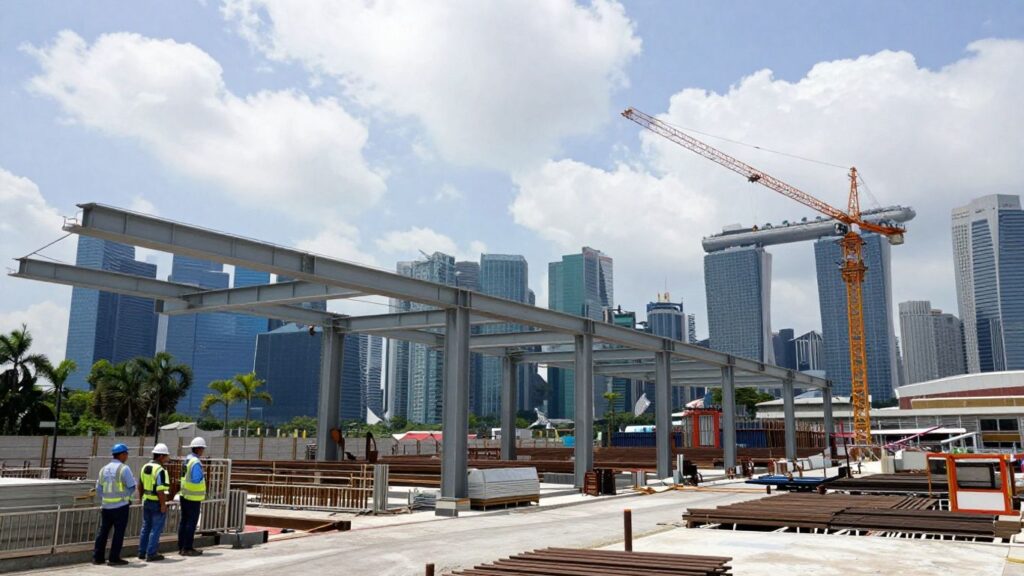
Key Takeaways High-strength steel can reduce structural weight and support ambitious spans, but its benefits depend on disciplined design, detailing, procurement, and analysis. S460 through S690 grades offer increasing yield strength, with corresponding questions about ductility, toughness, and weldability. Smaller members can improve usable floor area and reduce lifting or handling demands, although fabrication costs […]
Design of Long-Span Roof Trusses and Canopies for Singapore’s Tropical Climate
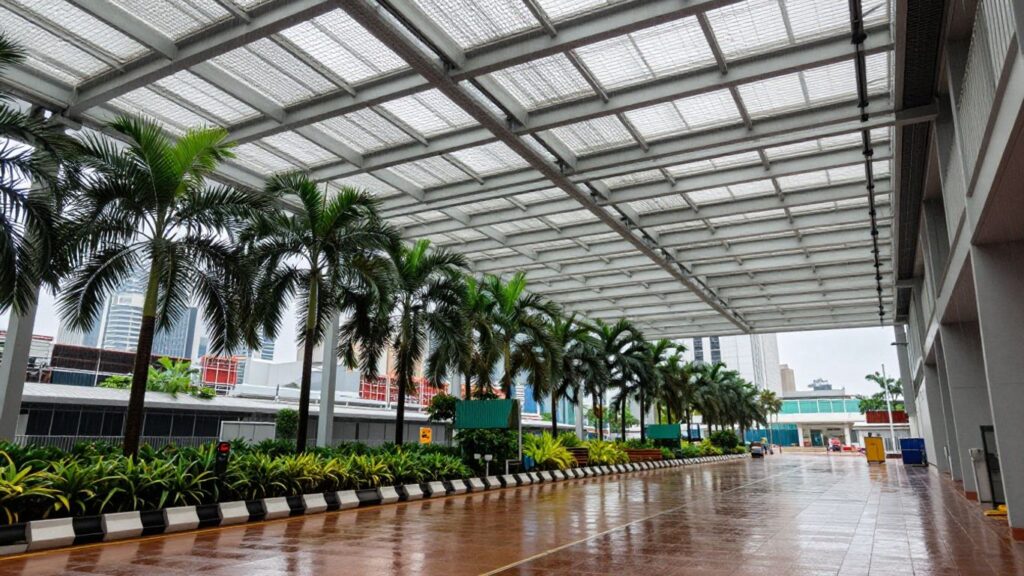
Key Takeaways Long-span roofs and canopies in Singapore demand more than a strength check. Their design must respond to wind, intense rainfall, humidity, fire safety, drainage, construction sequencing, and long-term access. Establish the roof’s function, geometry, exposure, working life, and regulatory basis before analysis. Apply SS EN 1991-1-4 using appropriate wind velocity, terrain, pressure, edge-zone, […]
Buckling Analysis Techniques: Linear Eigenvalue vs. Non-Linear Imperfection (GMNIA)
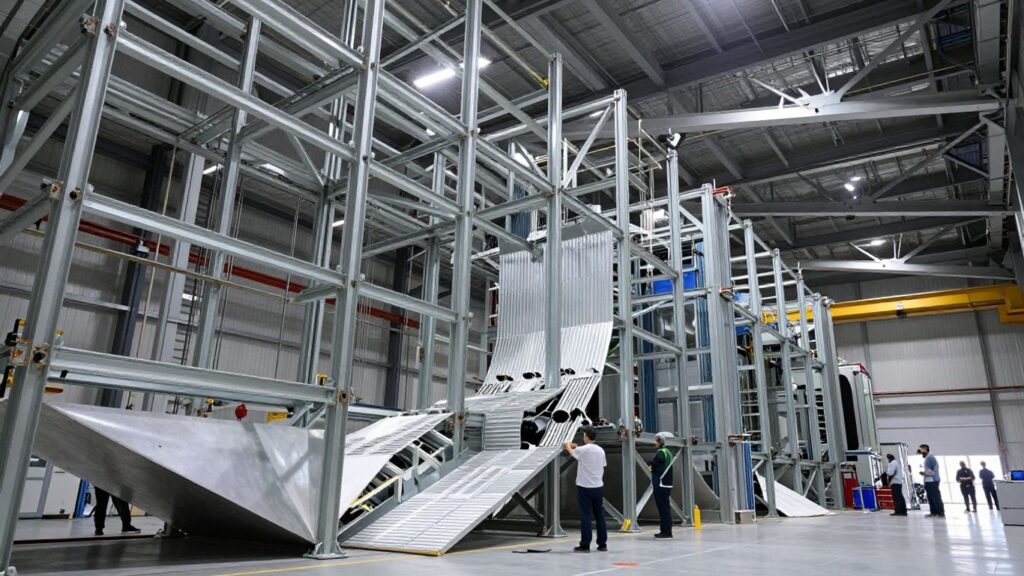
Key Takeaways Linear eigenvalue analysis is a fast elastic stability check, while GMNIA follows structural response with geometric and material nonlinearity and defined imperfections. Used together, they provide a clearer basis for buckling assessment and design decisions. Eigenvalue analysis identifies idealized critical load factors and likely buckling modes. GMNIA can account for large displacements, yielding, […]
FEA Applications in PPVC and MET Steel Modules for Singapore Megaprojects
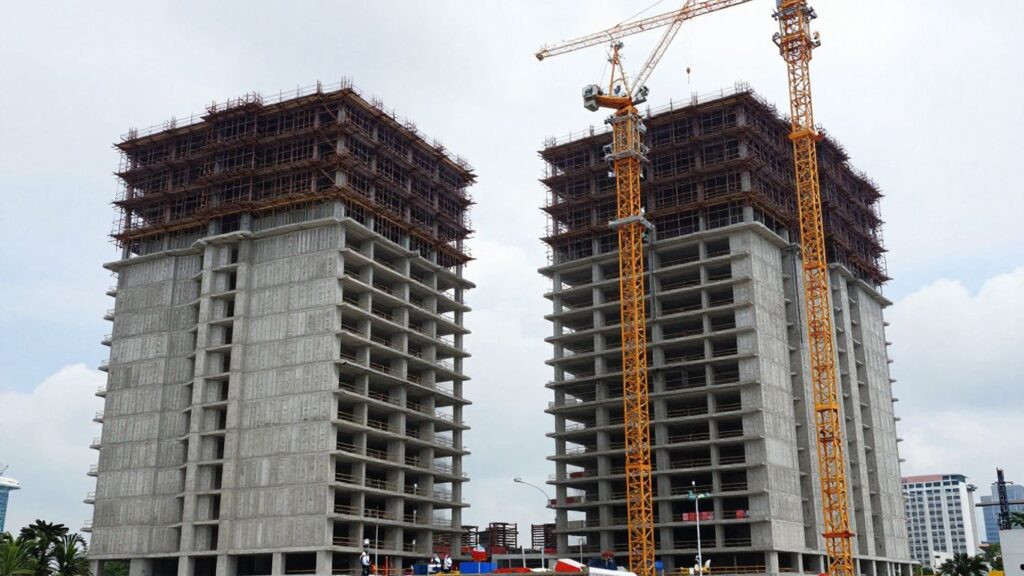
Key Takeaways Finite element analysis (FEA) helps modular construction teams test structural behavior before fabrication, lifting, transport, and installation. In Singapore, its value is greatest when it is connected to DfMA decisions, authority requirements, and practical fabrication constraints. FEA links structural design with manufacturing and assembly decisions. PPVC and MET steel modules require different modeling […]
Protecting Adjacent Sensitive Structures: Dilapidation Surveys and Building Impact Assessments (BIA)

Key Takeaways Adjacent structures can be affected by excavation, vibration, groundwater changes, temporary works, and construction loading. A carefully planned survey and building impact assessment creates a factual baseline for protection, monitoring, and fair resolution of disputes. Record existing conditions before construction begins. Assess both the building and the proposed construction effects. Give vulnerable structures […]
Setting Alert, Action, and Limit (AAL) Levels for ERSS in Urban Singapore

Key Takeaways A defensible ERSS AAL framework turns monitoring data into timely, proportionate decisions. It must be grounded in the design, the site baseline, Singapore’s regulatory setting, and clear responsibilities. Establish movement objectives before selecting trigger values. Build the baseline risk profile before excavation begins. Match instruments and thresholds to each receptor and construction stage. […]
Slope Stabilisation & Soil Nailing: Submission Workflows for Temporary Hillside Excavations

Key Takeaways A defensible hillside excavation submission connects the ground model, temporary works design, authority requirements, and construction controls from the beginning. Define the temporary and permanent works interfaces before design responsibility becomes unclear. Investigate soil, rock, groundwater, drainage, adjacent assets, and existing utilities proportionately to risk. Verify soil nailing against local and global failure […]
The Annex C & Annex E Workflow: On-Site ERSS Compliance During Execution

Key Takeaways ERSS compliance during execution depends on disciplined supervision, clear authority, and records that connect site actions to approved design and monitoring requirements. Annex C controls the construction and inspection workflow for ERSS works. Annex E provides the monitoring, threshold, and response framework. The RE, RTO, and Site Manager need distinct but coordinated responsibilities. […]
The Cost of ERSS Submissions in Singapore: Breakdown of Consultant Fees, Checking Fees, and Testing

Key Takeaways ERSS costs depend on the excavation, ground conditions, design responsibility, checking requirements, and the level of construction-stage support needed. A useful budget separates professional fees from testing, monitoring, authority coordination, and risk allowances. ERSS is a temporary earth-retaining system used to support excavations and control ground movement. Consultant fees rise with excavation depth, […]
Eurocode 7 Application: Sizing Permanent ERSS using SS EN 1997-1 Singapore National Annex

Key Takeaways Permanent ERSS design in Singapore requires more than selecting a wall section. It depends on a clear design basis, reliable ground and groundwater information, correct Eurocode 7 design approaches, and coordinated construction-stage controls. Define the retaining system, design life, design situations, and movement criteria before sizing members. Build characteristic soil and groundwater parameters […]