
Structural Health Monitoring and Retrofitting of Existing Steel Structures in Singapore
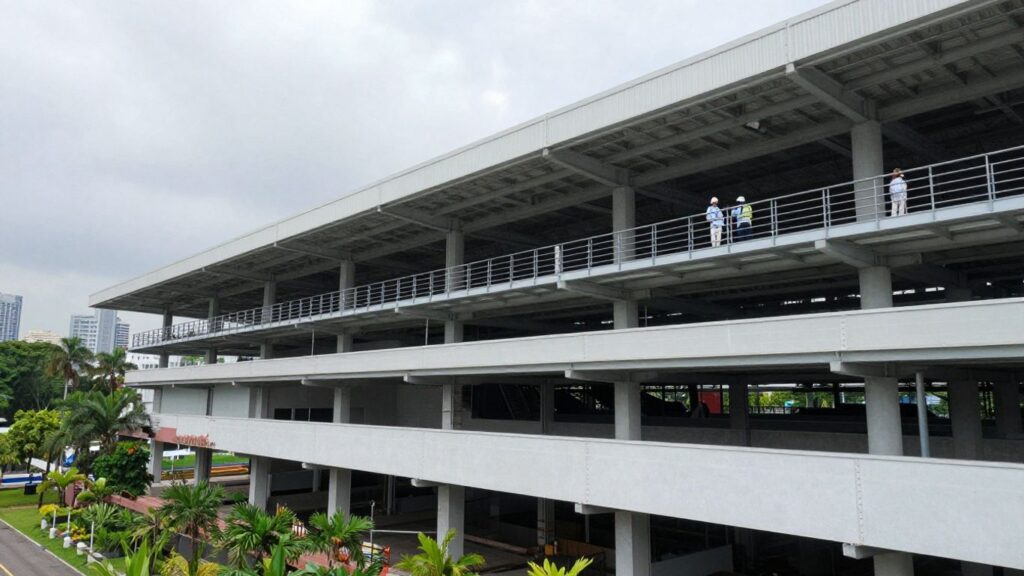
Key Takeaways Existing steel buildings need periodic assessment because corrosion, changing loads, fatigue, and alterations can gradually reduce their safety margins. A practical programme combines engineering judgment, targeted monitoring, sound records, and carefully sequenced retrofit work. Establish a documented baseline before deciding what to repair or monitor. Consider Singapore’s heat, humidity, rainfall, and coastal exposure […]
High-Strength Steel (S460 to S690) in Singapore Construction: Opportunities and FEA Challenges
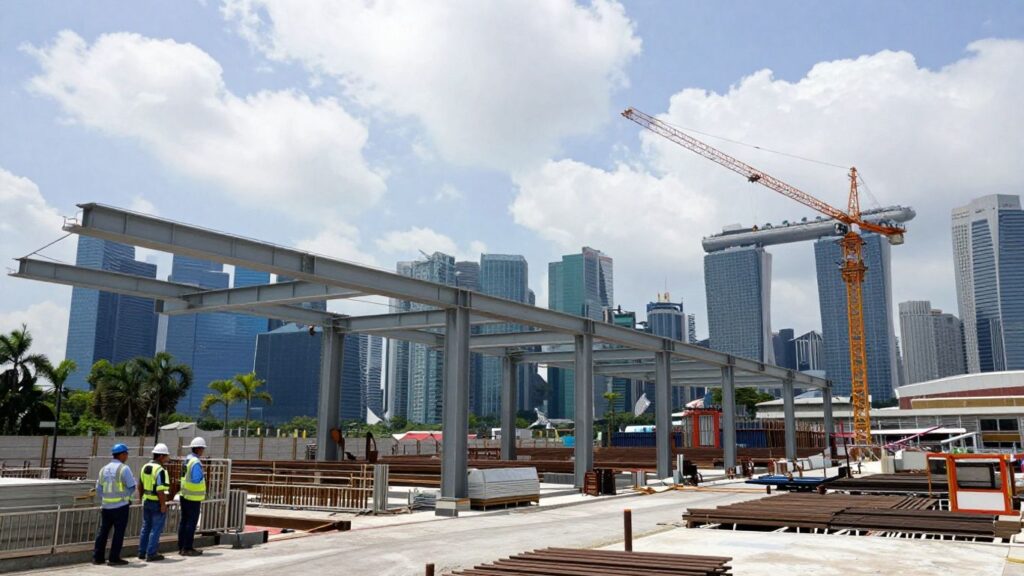
Key Takeaways High-strength steel can reduce structural weight and support ambitious spans, but its benefits depend on disciplined design, detailing, procurement, and analysis. S460 through S690 grades offer increasing yield strength, with corresponding questions about ductility, toughness, and weldability. Smaller members can improve usable floor area and reduce lifting or handling demands, although fabrication costs […]
Fatigue Analysis of Welded Steel Joints in Infrastructure Projects
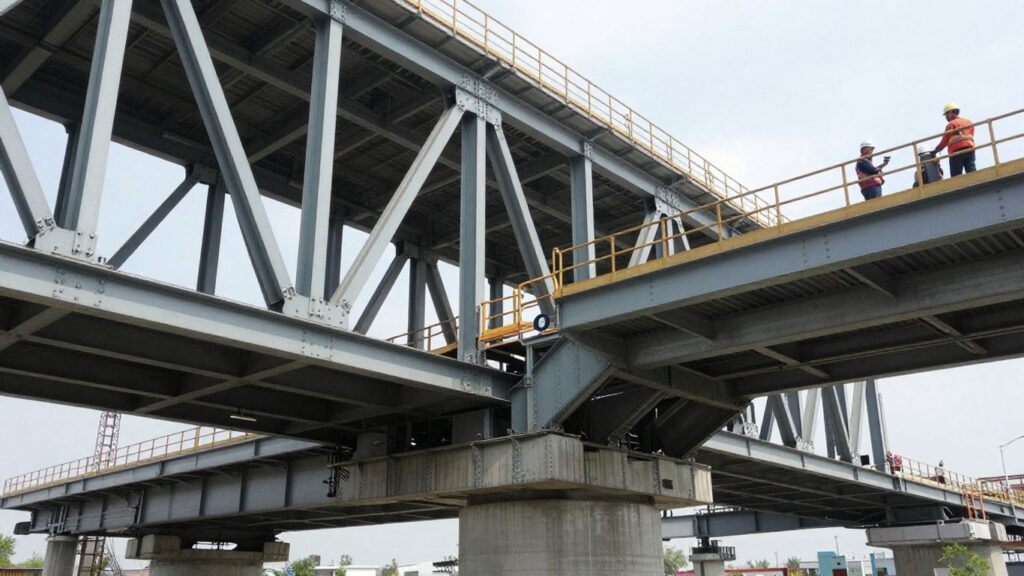
Key Takeaways Fatigue assessment of welded steel infrastructure depends on the relationship between repeated loading, local stress, weld geometry, fabrication quality, and inspection evidence. Repeated stress ranges, rather than static strength alone, often govern service life. Weld toes, roots, attachments, and terminations require careful fatigue classification. Stress concentration factors help explain local amplification but do […]
FEA Verification & Validation for BCA Submissions: What Checking Engineers Look For
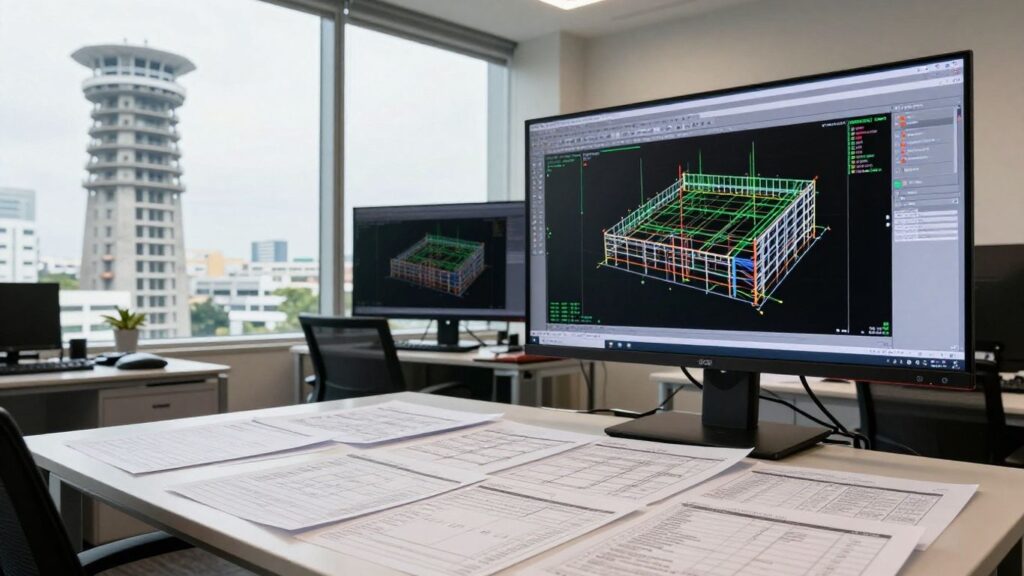
Key Takeaways A credible finite element analysis submission is more than a colourful model or a long output file. It should allow the design and checking engineers to follow the assumptions, test the model’s behaviour, and connect the results to code-compliant construction details. Define the structural system, restraints, materials, and load paths clearly. Verify loads, […]
Slope Stabilisation & Soil Nailing: Submission Workflows for Temporary Hillside Excavations

Key Takeaways A defensible hillside excavation submission connects the ground model, temporary works design, authority requirements, and construction controls from the beginning. Define the temporary and permanent works interfaces before design responsibility becomes unclear. Investigate soil, rock, groundwater, drainage, adjacent assets, and existing utilities proportionately to risk. Verify soil nailing against local and global failure […]
Common Reasons BCA Rejects Temporary ERSS Submissions (And How to Avoid Them)

Key Takeaways Temporary ERSS submissions are commonly returned when the technical evidence, drawings, design assumptions, and authority responses do not form one clear and verifiable package. Confirm that every required form, report, calculation, drawing, and supporting record is included. Base the ERSS design on current site investigation, groundwater, utility, and neighbouring-structure information. Show the design […]
The Annex C & Annex E Workflow: On-Site ERSS Compliance During Execution

Key Takeaways ERSS compliance during execution depends on disciplined supervision, clear authority, and records that connect site actions to approved design and monitoring requirements. Annex C controls the construction and inspection workflow for ERSS works. Annex E provides the monitoring, threshold, and response framework. The RE, RTO, and Site Manager need distinct but coordinated responsibilities. […]
Formulating an Instrumentation & Monitoring (I&M) Plan for BCA ERSS Approval

Key Takeaways A sound I&M plan connects ERSS design assumptions with measurable site behaviour and clear decisions. It should be prepared as a working safety document, not merely as an attachment to an approval submission. Define the plan’s purpose, scope, responsibilities, and approval pathway before construction. Base monitoring locations and instrument types on ground conditions, […]
Eurocode 7 (SS EN 1997) for Singapore ERSS: Ultimate Limit State (ULS) vs. Serviceability Limit State (SLS)
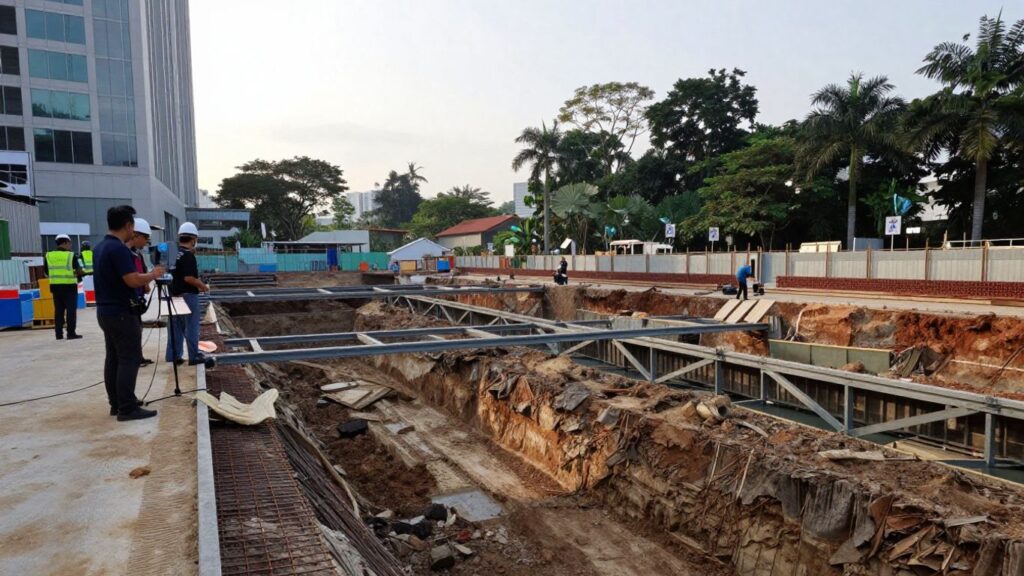
Key Takeaways Eurocode 7 provides the limit-state framework for Singapore ERSS, but a compliant design also depends on local ground conditions, construction stages, and movement control. ULS checks resistance against collapse, instability, hydraulic failure, and structural failure. SLS checks movements, settlement, deformation, and effects on neighbouring assets. Groundwater and soil variability must be reflected in […]
Temporary King Post and Strutting Systems: Structural Detailing for BCA Approval
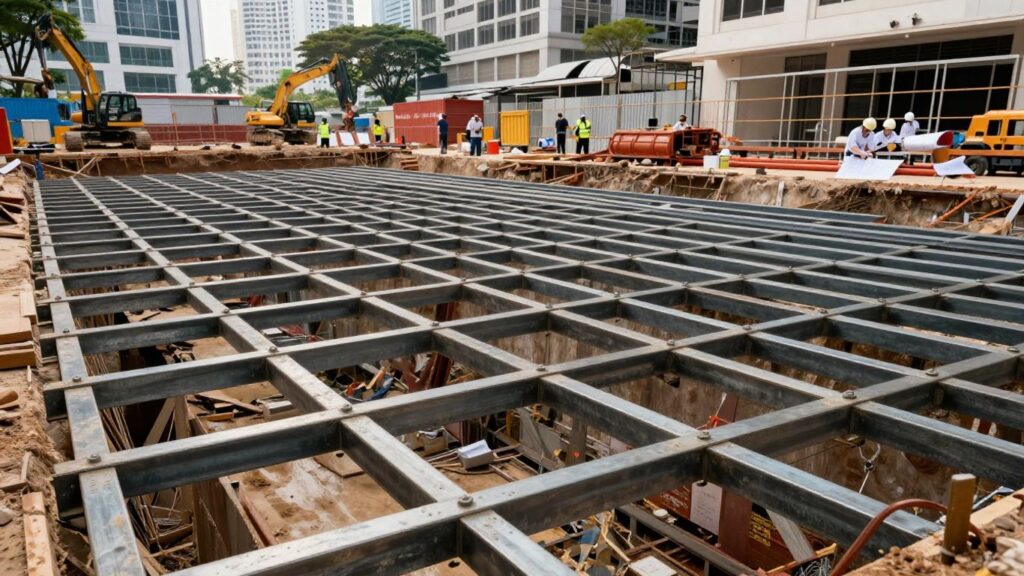
Key Takeaways A temporary king post and strutting system is only as reliable as its design basis, connections, construction sequence, and site control. BCA approval depends on a coordinated package that explains both the engineering and how the system will be built. Define the ground, loading, geometry, and construction stages before detailing steel. Check member […]