
Fatigue Analysis of Welded Steel Joints in Infrastructure Projects
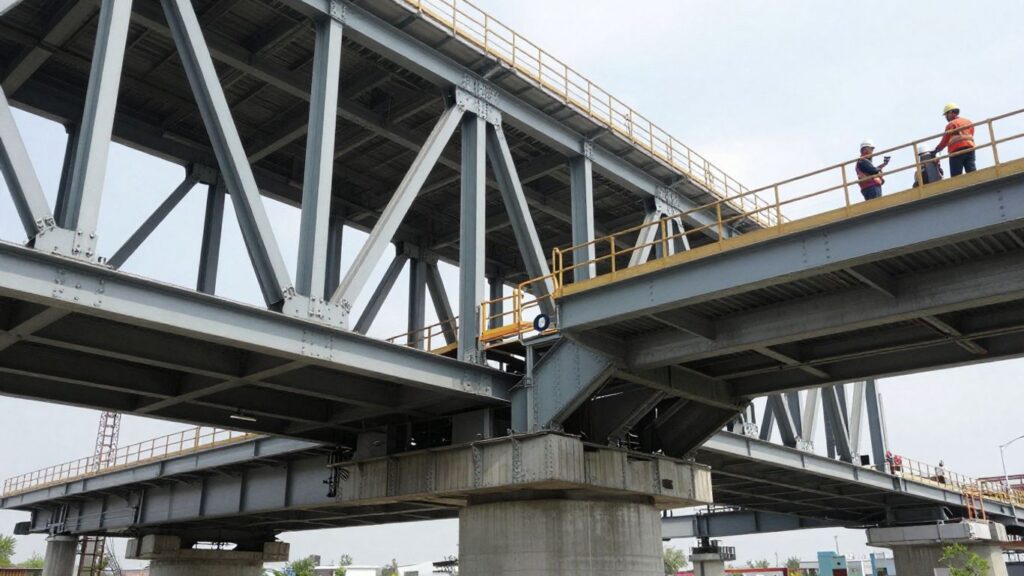
Key Takeaways Fatigue assessment of welded steel infrastructure depends on the relationship between repeated loading, local stress, weld geometry, fabrication quality, and inspection evidence. Repeated stress ranges, rather than static strength alone, often govern service life. Weld toes, roots, attachments, and terminations require careful fatigue classification. Stress concentration factors help explain local amplification but do […]
Design of Long-Span Roof Trusses and Canopies for Singapore’s Tropical Climate

Key Takeaways Long-span roofs and canopies in Singapore demand more than a strength check. Their design must respond to wind, intense rainfall, humidity, fire safety, drainage, construction sequencing, and long-term access. Establish the roof’s function, geometry, exposure, working life, and regulatory basis before analysis. Apply SS EN 1991-1-4 using appropriate wind velocity, terrain, pressure, edge-zone, […]
Plate Buckling and FEA Mesh Refinement in Deep Steel Girders
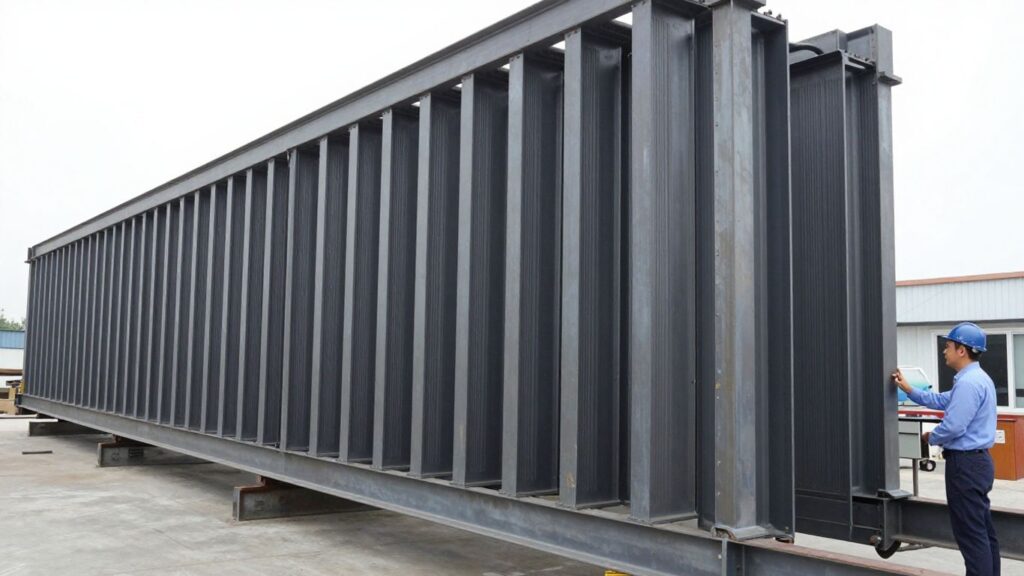
Key Takeaways Deep steel girders are especially sensitive to plate instability because slender webs can buckle before the overall member reaches its full strength. A credible analysis therefore depends on the physical model, the FEA Mesh, nonlinear assumptions, and a disciplined convergence study. Web slenderness, aspect ratio, stiffeners, and load introduction all influence buckling behavior. […]
Buckling Analysis Techniques: Linear Eigenvalue vs. Non-Linear Imperfection (GMNIA)
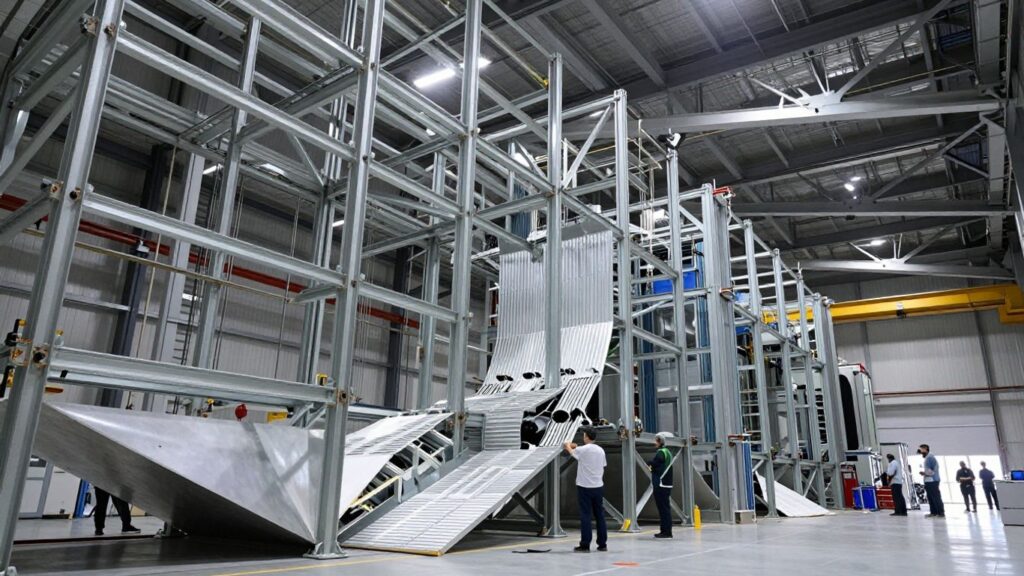
Key Takeaways Linear eigenvalue analysis is a fast elastic stability check, while GMNIA follows structural response with geometric and material nonlinearity and defined imperfections. Used together, they provide a clearer basis for buckling assessment and design decisions. Eigenvalue analysis identifies idealized critical load factors and likely buckling modes. GMNIA can account for large displacements, yielding, […]
FEA Verification & Validation for BCA Submissions: What Checking Engineers Look For

Key Takeaways A credible finite element analysis submission is more than a colourful model or a long output file. It should allow the design and checking engineers to follow the assumptions, test the model’s behaviour, and connect the results to code-compliant construction details. Define the structural system, restraints, materials, and load paths clearly. Verify loads, […]
Design of Structural Steelwork for Fire Resistance to SS EN 1993-1-2
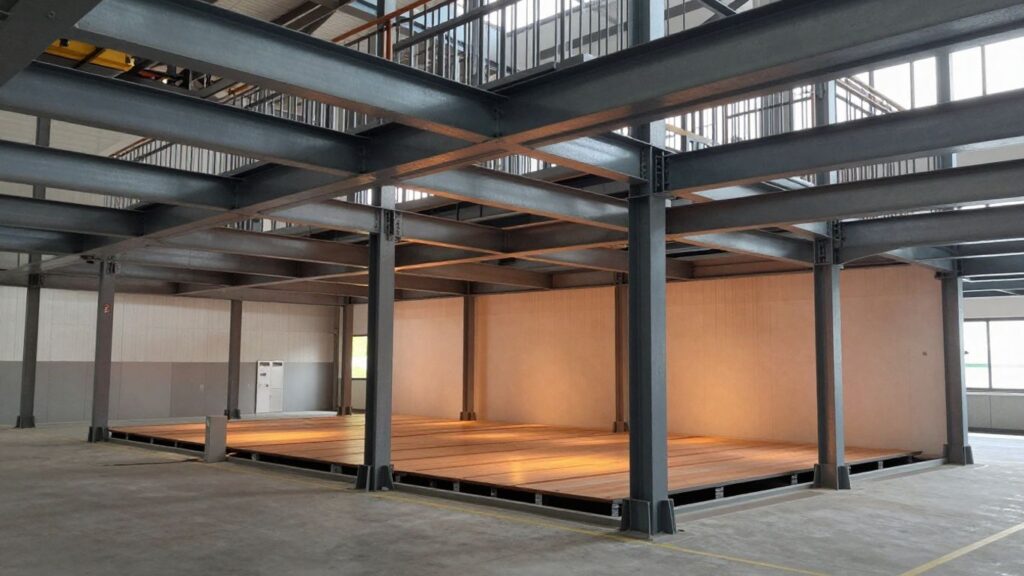
Key Takeaways Fire design for steelwork requires more than applying a fire rating to a member. The engineer must connect the design fire, material response, structural resistance, protection system, and site documentation into one coherent basis. Define the required fire resistance period and design fire before checking members. Use temperature-dependent steel properties and verified section […]
Eurocode 3 vs. SS EN 1993: Navigating Singapore’s Structural Steel Design Standards

Key Takeaways Eurocode 3 and SS EN 1993 share the same technical foundation, but Singapore projects must be designed and approved within the local regulatory framework. Eurocode 3 is the European framework for designing steel structures, while SS EN 1993 is Singapore’s adopted series. Singapore National Annexes and locally recognized requirements can alter the design […]
Modelling Steel Connection Rigidity in FEA: Pinned, Rigid, or Semi-Rigid?
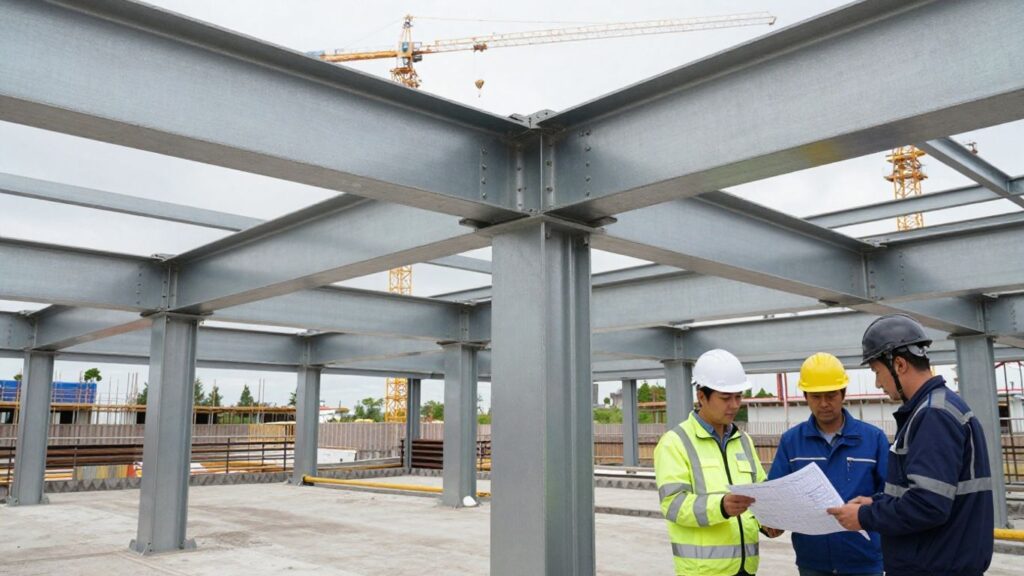
Key Takeaways Connection rigidity is a modeling choice that can materially change stiffness, force distribution, and predicted failure behavior. A defensible FEA model connects that choice to the real joint, the design standard, and the evidence available for validation. Pinned, rigid, and semi-rigid idealizations describe different moment–rotation behaviors. Rotational stiffness affects frame drift, member moments, […]
Eurocode 4 Composite Steel-Concrete Design in High-Rise Singapore Construction

Key Takeaways Eurocode 4 provides the framework for designing composite steel-concrete structures, but successful Singapore projects depend on coordinated code selection, detailing, construction planning, and statutory review. Establish the applicable Singapore Standard, National Annex, and design situations before analysis begins. Confirm composite action through suitable materials, shear connectors, effective widths, and staged analysis. Design floors, […]
FEA Applications in PPVC and MET Steel Modules for Singapore Megaprojects
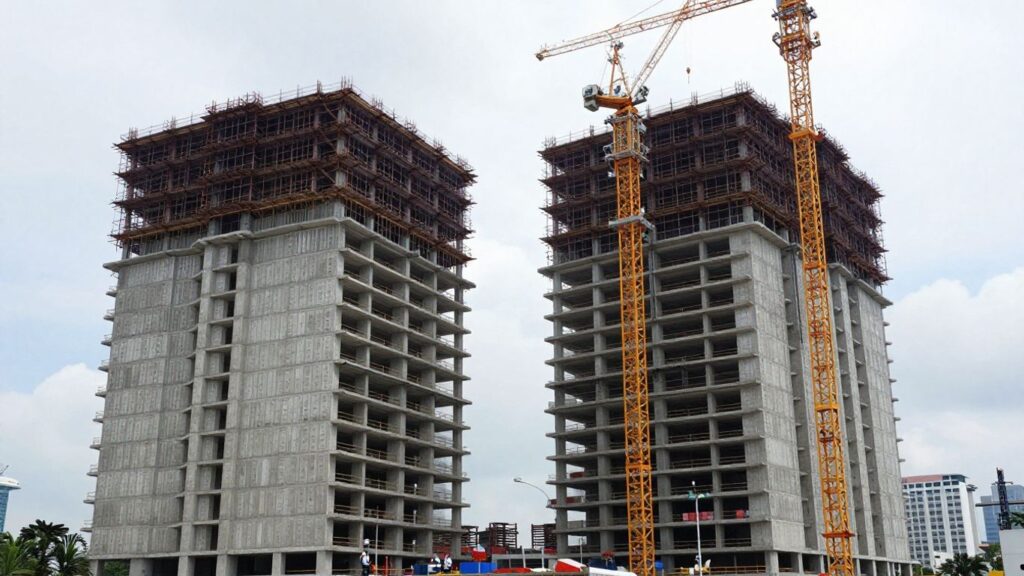
Key Takeaways Finite element analysis (FEA) helps modular construction teams test structural behavior before fabrication, lifting, transport, and installation. In Singapore, its value is greatest when it is connected to DfMA decisions, authority requirements, and practical fabrication constraints. FEA links structural design with manufacturing and assembly decisions. PPVC and MET steel modules require different modeling […]