
Slope Stabilisation & Soil Nailing: Submission Workflows for Temporary Hillside Excavations

Key Takeaways A defensible hillside excavation submission connects the ground model, temporary works design, authority requirements, and construction controls from the beginning. Define the temporary and permanent works interfaces before design responsibility becomes unclear. Investigate soil, rock, groundwater, drainage, adjacent assets, and existing utilities proportionately to risk. Verify soil nailing against local and global failure […]
Common Reasons BCA Rejects Temporary ERSS Submissions (And How to Avoid Them)

Key Takeaways Temporary ERSS submissions are commonly returned when the technical evidence, drawings, design assumptions, and authority responses do not form one clear and verifiable package. Confirm that every required form, report, calculation, drawing, and supporting record is included. Base the ERSS design on current site investigation, groundwater, utility, and neighbouring-structure information. Show the design […]
The Annex C & Annex E Workflow: On-Site ERSS Compliance During Execution

Key Takeaways ERSS compliance during execution depends on disciplined supervision, clear authority, and records that connect site actions to approved design and monitoring requirements. Annex C controls the construction and inspection workflow for ERSS works. Annex E provides the monitoring, threshold, and response framework. The RE, RTO, and Site Manager need distinct but coordinated responsibilities. […]
Eurocode 7 (SS EN 1997) for Singapore ERSS: Ultimate Limit State (ULS) vs. Serviceability Limit State (SLS)
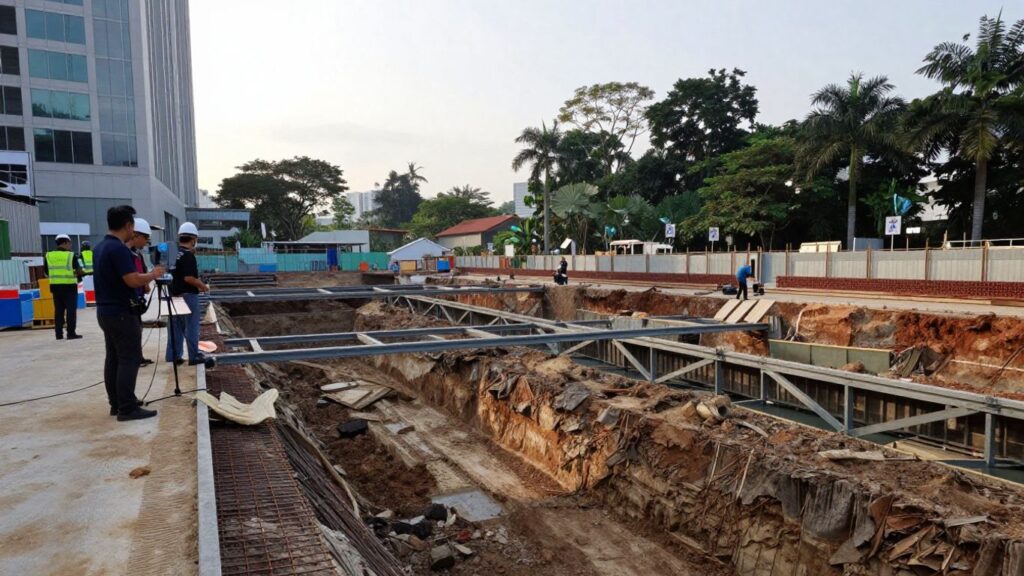
Key Takeaways Eurocode 7 provides the limit-state framework for Singapore ERSS, but a compliant design also depends on local ground conditions, construction stages, and movement control. ULS checks resistance against collapse, instability, hydraulic failure, and structural failure. SLS checks movements, settlement, deformation, and effects on neighbouring assets. Groundwater and soil variability must be reflected in […]
Temporary King Post and Strutting Systems: Structural Detailing for BCA Approval
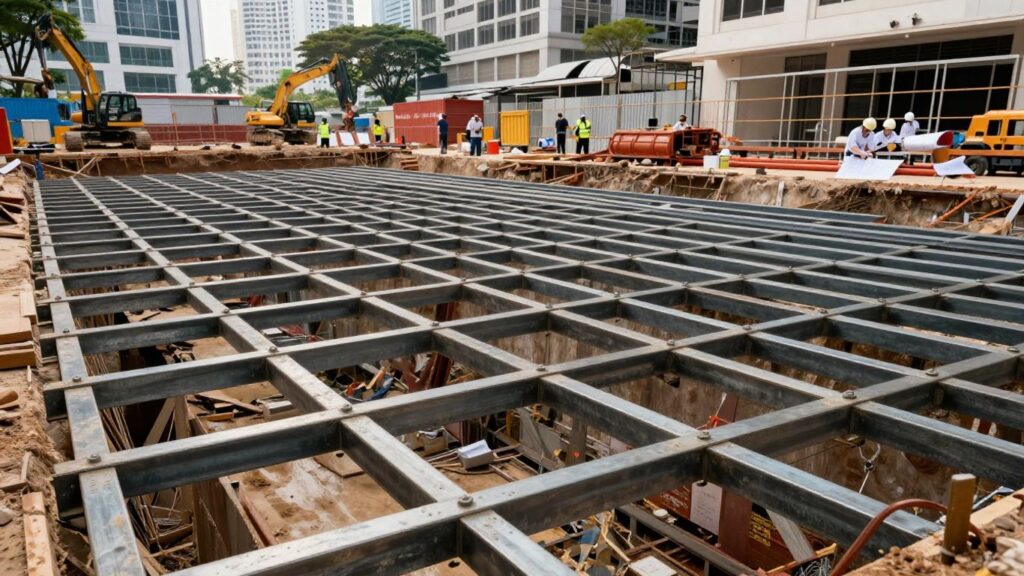
Key Takeaways A temporary king post and strutting system is only as reliable as its design basis, connections, construction sequence, and site control. BCA approval depends on a coordinated package that explains both the engineering and how the system will be built. Define the ground, loading, geometry, and construction stages before detailing steel. Check member […]
Temporary Ground Anchors vs. Strutting Systems: Selection Criteria and BCA Approval Constraints
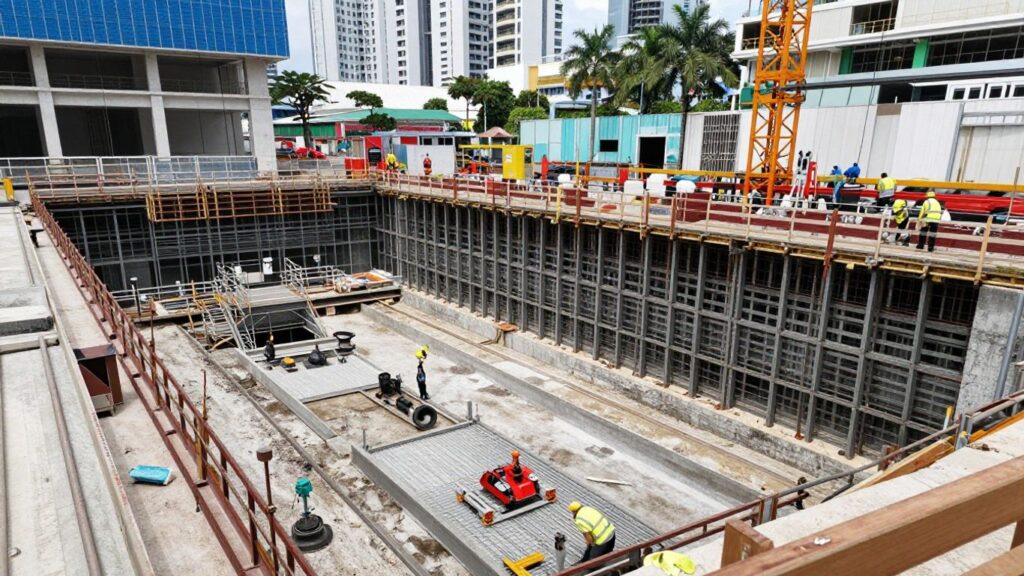
Key Takeaways Temporary excavation support should be selected from the ground model, movement limits, land rights, and construction sequence—not from price alone. The Technical Directors, C&S Consultants, Estimators must align the engineering, approval, and commercial decisions early. Anchors preserve internal excavation space but require suitable ground and legal rights beyond the site boundary. Strutting keeps […]
Structural requirements for solar panel installation on Singapore roofs: A professional guide

Key Takeaways Structural assessments for solar installations must account for existing roof capacity before project initiation. Compliance with the Building and Construction Authority is mandatory for all rooftop photovoltaic systems. Adherence to Eurocodes and Singapore National Annexes ensures mounting systems meet regional safety standards. Proper wind and drainage design is critical to prevent structural failure […]
Roof extension regulations in Singapore: Structural limits you must know

Key Takeaways Adhering to Singapore’s strict building codes is essential for any roof extension project, requiring careful planning and professional oversight to remain compliant. BCA approval remains the primary requirement for all structural additions. Proper calculation of dead and live loads ensures long-term safety. Professional Engineers must endorse all structural analysis documentation and plans. Climate […]
Periodic Facade Inspection (PFI) Singapore: A compliance guide for aging buildings

Key Takeaways Staying ahead of regulatory maintenance is vital for property owners managing aging building stock. This overview summarizes critical steps, roles, and technical considerations involved in maintaining safe, compliant structures in Singapore. Mandatory PFI applies to buildings over 13 years old, requiring inspection every 7 years. Qualified Persons (QP) are legally responsible for conducting […]
Essential structural guidelines for building a swimming pool in your landed home

Key Takeaways Designing a swimming pool for a landed property involves navigating a complex landscape of regulatory, geotechnical, and engineering requirements to ensure long-term stability and safety. Adhere to site-specific setbacks and zoning rules mandated by planning authorities. Prioritize professional soil investigations to determine appropriate foundation design. Model structural integrity through advanced analysis before starting […]