Design for Safety Professional (DfSP) for MRT and Rail Projects: Scope of Services and Deliverables
Introduction
A Design for Safety Professional (DfSP) for MRT and rail projects is the specialist responsible for integrating workplace safety into every design decision-from tunnel alignment selection through to revenue service-and the scope of services and deliverables they produce determines whether safety risks are eliminated at the drawing board or inherited as costly problems during construction and operations. This guide is written specifically for Singapore’s MRT, LRT, and mainline rail infrastructure, fully aligned to the WSH (Design for Safety) Regulations 2015 and LTA’s project requirements.
In practical terms, a design for safety professional identifies risks during design phases, facilitates structured DfS review meetings across all disciplines, maintains the Design for Safety Register documenting identified risks, and produces the essential safety documents that developers, contractors, and operators rely on throughout the asset lifecycle. Key deliverables include the DfS Register, hazard workshop outputs, stage-gate review reports, BIM safety review artefacts, and handover documentation for operations and maintenance teams. Research consistently shows that 80% of construction accidents stem from design decisions, making early hazard identification and proactive risk elimination during the design phase far more effective-and cheaper-than fixing safety issues on the construction site.
This article is intended for developers, rail asset owners, LTA-registered contractors, multidisciplinary design consultants, and project managers involved in Singapore’s construction industry and broader ASEAN rail schemes. The scope covers design-phase safety integration, typical service scope by project stage, documentation and deliverables, rail-specific safety risks, BIM integration, and coordination workflows. It does not cover generic site safety officer duties or non-Singapore regulatory regimes.
By reading this guide, you will:
- Understand how DfSP services differ for MRT and rail versus building projects
- Know what DfSP deliverables to require in tenders and consultancy appointments
- See how DfSP integrates with LTA stages and interdisciplinary design reviews
- Learn common DfSP challenges on tunnelling, viaducts, and stations-and how to address them
- Recognise how AMAN Engineering Consultancy Pte Ltd can support rail owners as DfSP
Understanding Design for Safety in MRT and Rail Projects
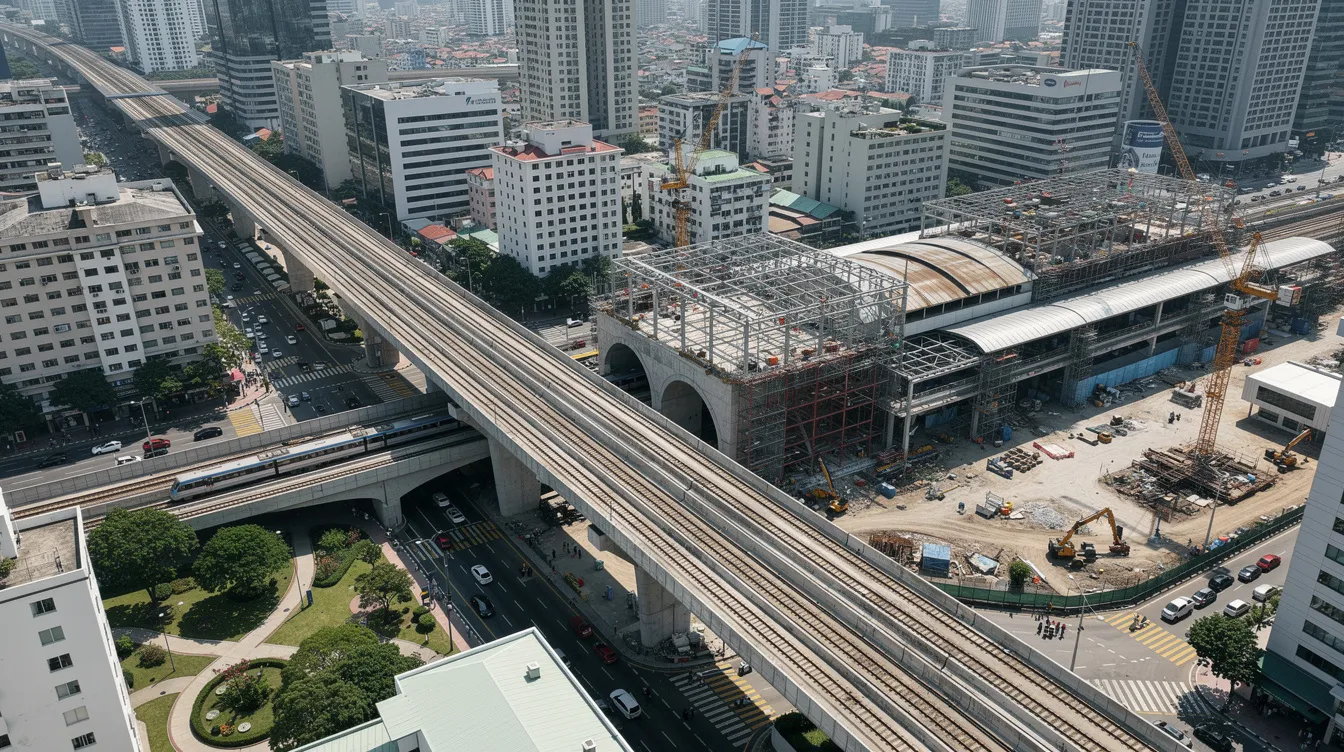
Design for Safety (DfS) in the context of MRT and rail infrastructure is the systematic practice of identifying, assessing, and eliminating or reducing foreseeable design risks before construction begins. Unlike conventional building projects, rail schemes involve linear assets-tunnels stretching kilometres underground, elevated viaducts crossing multiple jurisdictions, and complex station boxes-that expose workers, passengers, operators, and emergency responders to hazards that span every phase of an asset’s multi-decade lifespan.
DfS is particularly critical for MRT, elevated rail, and depot projects because of the inherent complexity: confined underground spaces requiring deep excavations and diaphragm walls, live electrification systems carrying lethal voltages, 24/7 operational demands that restrict maintenance windows to a few hours at night, and high passenger occupancy that drives demanding evacuation and fire safety requirements. Safety integration at the design phase reduces accidents by addressing risks early, long before steel is cut or concrete is poured.
Rail DfS extends well beyond construction safety. From 2026 onwards, with updated LTA Infrastructure Design Criteria and growing emphasis on lifecycle safety, the DfSP scope must address passenger safety under normal and degraded operating modes, maintainer safety during track possessions and equipment replacements, operator safety in signalling and traction substations, and emergency responder access to underground stations and tunnel cross-passages. This lifecycle perspective is what distinguishes rail DfS from its application in typical building construction projects.
Regulatory and Standards Framework for Rail DfS in Singapore
The legal backbone for design for safety in Singapore is the WSH (Design for Safety) Regulations 2015, enacted under the Workplace Safety and Health Act. The WSH (Design for Safety) Regulations 2015 apply to projects over S$10 million, and the DFSP role is mandatory for construction projects valued at S$10 million or more. These regulations impose duties on developers to ensure designers and contractors eliminate or reduce foreseeable design risks, hold DfS review meetings, and maintain a Design for Safety Register throughout the project lifecycle. Regulation 8 allows developers to delegate duties to a DfSP, who then becomes responsible for convening DfS review meetings and creating essential safety documents.
The primary reference documents and authorities governing rail DfS include:
- WSH (DfS) Regulations 2015 and MOM guidelines – establishing the legal framework, roles, and minimum safety requirements for all qualifying construction projects
- LTA Infrastructure Design Criteria (IDC) – particularly Volume B: Rail Infrastructure (Revision A2, August 2026), setting detailed design standards for stations, viaducts, tunnels, and depots
- LTA Civil Design Criteria (CDC) – Revision A3 (December 2025), mandating compliance with Singapore Standards (SS), European Standards (SS EN), British Standards, and endorsement by registered professional engineers and Accredited Checkers
- Rail-specific standards – such as SS TR 97:2021 “Safety management in a rapid transit system” defining minimum risk management requirements; BS EN rail standards; and NFPA 130 for fixed guideway transit fire protection where adopted by LTA
- Local codes – SCDF Fire Code and LTA/SCDF Standard for Fire Safety in Rapid Transit Systems, BCA building control codes, and PUB drainage standards applicable to underground stations and depots
Under this framework, roles and legal duties are distributed across multiple parties. The developer or asset owner (typically LTA) must ensure designers and contractors meet their safety responsibility. Designers must eliminate hazards or reduce risks through design choices. Contractors must cooperate and implement safe construction methods. The DfSP, often appointed under delegated authority, coordinates the entire process-facilitating risk assessment, maintaining the safety register, and ensuring safety communication among all relevant stakeholders. DfSP documentation feeds directly into LTA’s Rapid Transit System Safety (RTSS) and Project Safety Review (PSR) processes, as well as SCDF approvals for fire safety certificates.
What Makes Rail and MRT DfS Different from Building Projects
MRT and rail projects introduce safety considerations that fundamentally expand the DfSP scope beyond what is typical for building facades and MEP services. These differences stem from the nature of the assets, their operational environment, and the interfaces between multiple complex systems.
Linear assets crossing multiple interfaces. A single MRT line may traverse dozens of geological zones, cross beneath existing buildings and utilities, and span elevated sections over live roads. Tunnels, viaducts, and track plinths extend hazards across many adjacent properties and jurisdictions, requiring the DfSP to coordinate risk assessment across far more stakeholders than a single-site building project demands. MRT projects require assessments of hazards associated with deep excavations and tunnelling activities, including TBM operations, diaphragm wall construction, and station box excavation-each carrying significant risks to ground stability, adjacent structures, and utility networks.
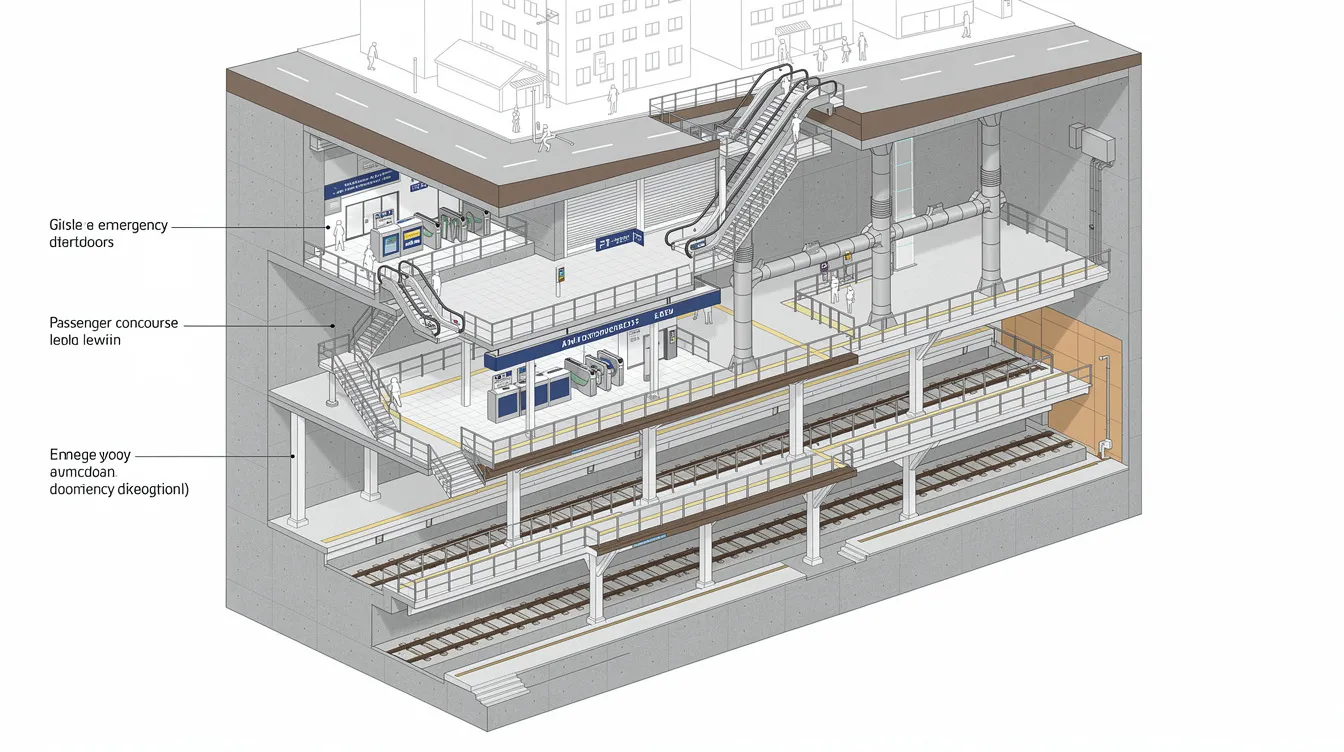
Complex underground stations. Deep stations combine high passenger occupancy with constrained evacuation routes, demanding smoke control and firefighting systems, and multiple levels of plant rooms requiring safe access. The DfSP must address crowd flow modelling, refuge areas, platform edge screens, emergency ventilation, and fire suppression-all governed by SCDF/LTA codes that are far more stringent than those for typical commercial buildings.
Electrification and systems interfaces. Third rail or overhead catenary systems, traction substations, signalling equipment rooms, and SCADA networks introduce electrical safety risks including arc flash, stray currents, and high-voltage hazards in confined spaces. The DfSP must ensure that designs allow safe access to these systems, adequate shielding, and safe isolation procedures for maintenance.
Operational constraints on live lines. When extending existing MRT lines or upgrading operational stations, construction happens within very short night possession windows alongside live tracks carrying passengers during the day. These brownfield and live line interface constraints demand dedicated safety reviews, temporary barriers, and segregated access routes-none of which exist in conventional greenfield building projects. Designing for safe night work within tight possession windows becomes a core DfSP concern.
Lifecycle maintenance demands. With asset lifespans of 50–100 years, rail infrastructure must be designed so that every component-from tunnel lining segments to signalling racks to bridge bearings-can be inspected, maintained, and replaced safely. The DfSP must consider maintenance or structural weaknesses that may only manifest decades after construction, ensuring that access strategies, walkways, and equipment removal paths are integral to the design rather than afterthoughts.
These factors collectively mean that rail DfS requires a safety professional with deep technical knowledge spanning civil, structural, architectural, mechanical, electrical, and rail systems engineering-making it among the most demanding DfSP appointments in Singapore’s construction industry.
The Role of the Design for Safety Professional in MRT and Rail Projects
The DfSP on an MRT or rail project functions as the coordinator and facilitator of design-stage risk management, operating from feasibility studies through detailed design, construction, testing and commissioning, and into revenue service. Unlike a regular safety officer focused on site-level compliance, the DfSP works at the strategic level-ensuring that safety implications of design decisions are identified, assessed, and addressed before they become embedded in construction documents.
AMAN Engineering Consultancy typically acts as an independent DfSP to support developers and lead consultants, providing the neutral positioning and regulatory expertise needed to reconcile competing design priorities while maintaining safety objectives across the entire project team.
Core Responsibilities Across the Rail Project Lifecycle
Concept and alignment selection. At the earliest stage, the DfSP advises on safer alignments, portal locations, station siting, and depot layouts. This includes early hazard identification workshops covering strategic risks-flood zones, soft ground tunnelling, heritage structures, existing utility diversions-and feeding safety and maintenance risk into option evaluation matrices alongside cost and ridership projections. A Design for Safety Professional manages safety risks in construction projects from this earliest possible point, ensuring that safety considerations carry appropriate weight in decisions that become extremely difficult to reverse later.
Preliminary and detailed design. During the design phase, the DfSP conducts structured hazard identification sessions organised by asset type: tunnels, stations, cut-and-cover boxes, viaducts, depots, stabling yards, and interface structures. Design risk assessments focus on foreseeable risks for construction, operation, and decommissioning phases. The DfSP reviews design submissions across disciplines-civil, structural, architectural, mechanical, electrical, and rail systems-and advises on constructability and temporary works hazards including launch shafts, TBM break-in/break-out sequences, precast segment erection, and hoisting heavy items over live roads or tracks.
Construction and testing. During the construction phase, the DfSP reviews contractor method statements where they interact with design safety assumptions, conducts site walkdowns to verify that permanent safety features-walkways, refuge areas, emergency stairs, access hatches-are built as designed, and ensures as-built safety information is captured. DfSPs facilitate Design for Safety review meetings throughout project phases to address emerging safety concerns and close out design-stage actions.
Operation, maintenance, and future modification. The DfSP documents residual risks and safe access methods, generates maintenance access matrices for track, stations, viaducts, and depots, and ensures handover of safety documentation to facility managers and operators. DfSPs must maintain the Design for Safety Register documenting identified risks through to trial running and revenue service commencement, and ensure that future modifications trigger appropriate safety reviews.
Strategic Positioning vs Other Safety Roles on Rail Jobs
Understanding how the DfSP relates to other safety roles on rail projects prevents gaps and overlaps:
- DfSP (design-phase, strategic, multi-disciplinary and lifecycle-focused): Operates from the drawing board through handover, focusing on eliminating hazards through design choices and documenting residual design risks that cannot be designed out. The DfSP is fundamentally a safety detective-investigating designs to uncover hidden risks before they materialise.
- WSH Officer / Safety Supervisor (construction site-focused): Monitors day-to-day construction safety, ensures compliance with method statements and safe work procedures, and manages site-level incidents. This regular safety officer role does not influence design decisions.
- Rail Systems Assurance & Safety Case Engineers (system-level): Perform system-wide hazard analysis, SIL allocation for signalling and rolling stock, RAMS assessments, and prepare the overall safety case for LTA’s Project Safety Review process.
The DfSP interfaces closely with systems assurance teams on issues like evacuation modelling, fire and life safety strategy, and safe maintenance access to traction substations and signalling equipment rooms. Safety reviews in MRT projects must involve various design disciplines and stakeholders, and the DfSP serves as the connective tissue ensuring that safety issues identified in one discipline are communicated to all others. AMAN’s experience coordinating among these functions for Singapore and ASEAN rail schemes enables seamless integration of design safety with broader project safety management frameworks.
Competencies Required for Rail DfSP Appointments
Technical capabilities required for MRT and rail DfSP appointments include:
- Strong grasp of tunnelling, bored piles, diaphragm walls, deep excavation support, and viaduct construction methodologies
- Understanding of rail systems-traction power, signalling, communications, SCADA-sufficient to identify design-stage hazards in equipment rooms and trackside installations
- Familiarity with constrained maintenance regimes, track access planning, and safe work within live rail corridors
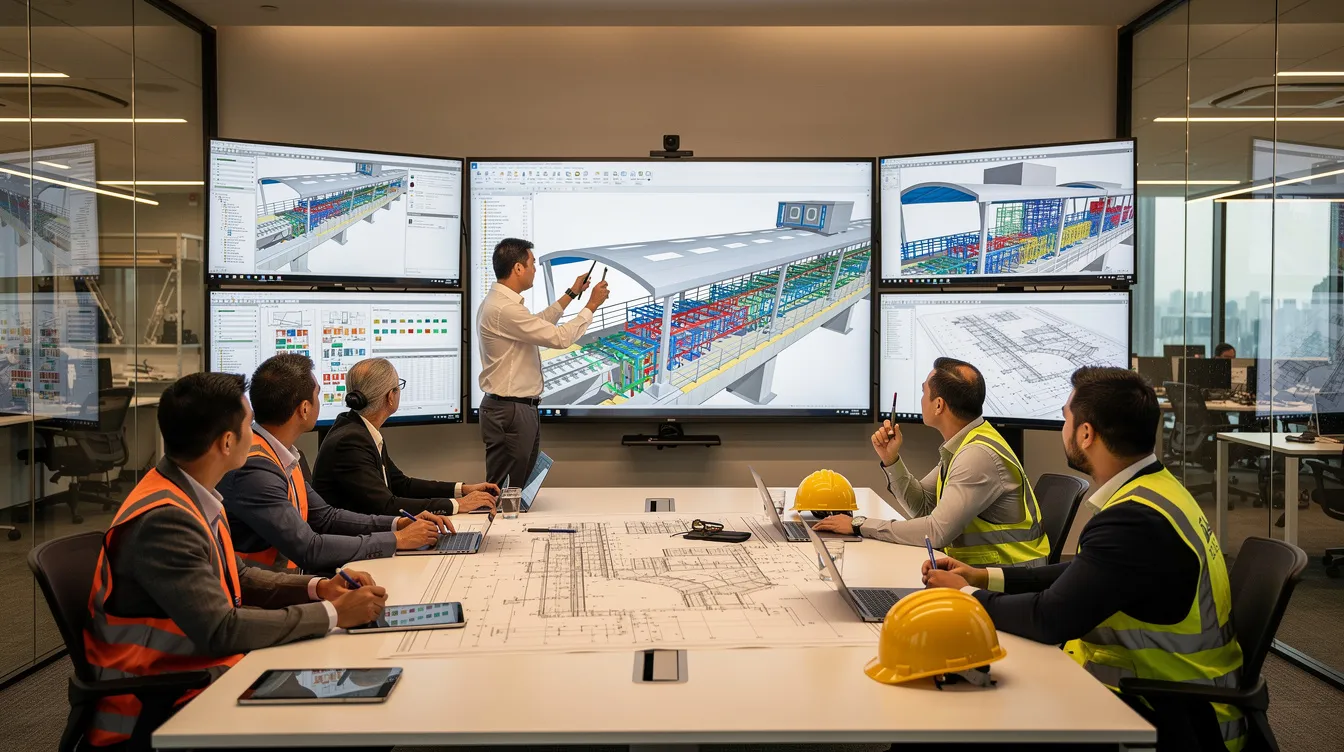
- Proficiency with BIM and 3D coordination tools (Revit, Civil 3D, Navisworks, Tekla) to visualise and communicate safety issues to the design team and project stakeholders
- Capability in writing specifications that embed safety requirements into tender and construction documents
A DfSP must be a registered Professional Engineer or Architect with a valid practicing certificate, or possess equivalent qualifications recognised by relevant professional bodies such as the Professional Engineers Board. Ten years of relevant experience is required for DfSP candidates, of which at least five years must involve design or supervision of structural work. DfSP candidates must complete mandatory training courses-specifically the “Perform DfSP Duties” course available through approved training providers on the SSG Training Provider Gateway-covering legal requirements and risk management. Beyond these baseline requirements, LTA’s SHE Specifications expect the DfSP to demonstrate a rail-specific project track record, combining classroom training with practical experience on complex projects.
These competencies translate directly into the concrete services and deliverables that rail project owners should expect-and explicitly specify-in their consultancy appointments.
Scope of DfSP Services for MRT and Rail Projects
DfSP scope for MRT and rail projects is typically defined in consultancy contracts or developer tender requirements, structured around the project’s design and construction milestones. For new lines, line extensions, and depot upgrades, the scope must cover every phase from feasibility through revenue service commencement, with clearly mapped deliverables at each stage gate.
The service scope is broader than what most building-sector DfSP appointments require. Rail projects demand continuous DfSP engagement across multiple concurrent contract packages-civil, systems, architectural-each with its own design team, contractor, and interface hazards. Integrating safety in design is cheaper than fixing issues later, making early and comprehensive DfSP involvement a sound early safety investment.
Phase-Based Service Scope Aligned to Rail Project Stages
The following breakdown groups DfSP services by the major stages of an MRT or rail project:
Concept / Feasibility:
- High-level hazard workshops covering alignment options, station depth, portal siting, and depot location alternatives
- Preliminary risk assessment register for route-wide issues-soft ground tunnelling, existing utility diversions, heritage structures, flood-prone areas
- Input to option evaluation matrices to factor in safety and maintenance risk alongside cost and ridership projections
- DfSP should facilitate the identification of hazards for underground stations and tunnels at this strategic stage
Preliminary & Detailed Design:
- Structured DfS review sessions by asset type: tunnels, stations, cut-and-cover boxes, viaducts, depots, stabling yards, and interface structures
- Development of design strategies for safe access, egress, ventilation, and firefighting in underground spaces
- Advising on constructability and temporary works hazards: launch shafts, TBM retrieval chambers, precast segment erection, lifting over live roads and lines
- DFSPs apply systematic risk assessment methodologies during design phases to ensure all disciplines address identified risks
Pre-Construction & Tender:
- Finalisation of the DfS Register for inclusion in tender documents and Employers’ Requirements
- DfS input to method-statement assumptions and contractor pre-qualification criteria relating to key risks
- Clarifying residual design risks to be priced and managed by contractors
Construction, Testing & Commissioning:
- Review of contractor method statements where they interact with design safety assumptions-temporary supports, temporary track layouts, possession planning
- Site walkdowns focused on verifying buildability of permanent safety features: walkways, refuge areas, emergency stairs, access hatches
- Closing out design-stage actions and ensuring as-built safety information is captured for asset operators
- Documentation for design safety management is crucial during all stages of MRT projects
Discipline-Specific DfSP Focus Areas on Rail Projects
A comprehensive DfSP scope must explicitly cover all main disciplines to ensure no safety issues fall between the cracks:
Civil & Structural:
- Safe excavation and tunnelling sequences, minimising risk to adjacent buildings and utilities through risk reduction strategies and careful staging
- Safe inspection and maintenance access for viaducts, bridge bearings, track plinths, and tunnel linings-addressing potential maintenance or structural weaknesses before they are built into the permanent works
Architectural & Station Planning:
- Passenger flow, crowding, evacuation routes, and signage under normal and emergency modes
- Safe cleaning and maintenance of station finishes, ceilings, platform edge screens, and façades
Mechanical, Electrical & Rail Systems:
- Safe access for heavy equipment replacement-chillers, traction transformers, UPS, signalling racks
- Protection against arc flash, stray currents, and high-voltage equipment in confined spaces
Operations & Maintenance:
- Trackside access strategies including walkways, refuges, cross passages, and maintenance laybys
- Designing for safe night work within tight possession windows, developing practical solutions for constrained operational envelopes
These services must be backed by structured processes and clear deliverables-the subject of the next section.
Key DfSP Deliverables for MRT and Rail Projects
Clearly defined deliverables are critical for LTA, asset owners, and main contractors because they form the auditable evidence trail for safety case submissions, regulatory compliance, and operational readiness assessments. DfSP services include documentation management and regulatory compliance support, and every deliverable should be specified in appointments and aligned with project stage gates-whether those are LTA’s IDC/CDC gateways, Project Safety Review milestones, or testing and commissioning stages.
A Design for Safety Professional maintains the DfS Register documenting identified risks, but the full set of deliverables extends well beyond this single document. Regulatory submission compliance is essential within the DfSP’s responsibilities, and deliverables must demonstrate to LTA and other authorities that safety has been systematically addressed from concept through handover.
Design for Safety Register for Rail Assets
The Design for Safety Register is the primary output of the DfSP, customised for rail projects to cover:
- Line-wide hazards – power systems interfaces, signalling integration risks, flood risk, stray current protection
- Asset categories – tunnels, stations, viaducts, ancillary buildings, depots, stabling yards
Each entry in the register should contain:
- Description of hazard and affected lifecycle phase (construction, operation, maintenance, decommissioning)
- Risk assessment using likelihood and consequence ratings in accordance with LTA’s SHE GS-A-240 risk matrix (likelihood rated 1–5 from “Very Unlikely” to “Almost Certain”; consequence rated 1–5 from minor to “Extreme/Catastrophic”; risk score = likelihood × consequence)
- Control measures documented in accordance with the hierarchy of controls: elimination, substitution, engineering, administrative, PPE
- Responsible party (designer, contractor, operator) and status tracking through to closure
- Residual risks clearly stated for handover
Risk assessments are documented in the Design for Safety Register, and handover-ready versions must be completed by trial running and revenue service commencement. The DFSP must maintain the Design for Safety Register throughout the project lifecycle, ensuring it remains a live document updated as design evolves and construction proceeds.
DfS Meeting Records and Workshop Outputs
The DfSP should produce:
- Formal agendas, attendance lists, and minutes for each DfS review meeting, tagged to relevant contract packages (e.g., C810, C821A) for traceability
- Hazard identification workshop outputs-HIRARC and HAZOP-style worksheets-for high-risk elements like TBM drives, segmental launching, and deep excavation sequences
- Action logs with due dates, responsible disciplines, and closure evidence
Consistent formatting across all records supports LTA audits and MOM inspections. DFSPs facilitate DfS review meetings to identify safety risks, and the documented outputs of these meetings constitute legal records demonstrating that shared safety ownership has been exercised by the entire project team.
Design Safety Integration Notes and Review Reports
Expected narrative reports include:
- Concept-stage Design Safety Strategy Note – explaining key design philosophies for safety, such as single versus twin-bore tunnels, cross-passage spacing, and ventilation strategy
- Stage-gate DfS Summary Reports at major design milestones (30%, 70%, Issued for Construction) – outlining top risks, measures taken, and residual issues
- Construction-phase DfS verification reports – summarising site observations linked back to the design register
Each report should include a short executive summary for senior decision-makers, enabling project safety governance without requiring detailed technical review at every level.
BIM and 3D Safety Review Artefacts
For complex multi-level stations and depots, DfSP output should include:
- Annotated BIM views or clash detection reports highlighting safety-related access issues, headroom constraints, and emergency routes
- 3D visualisations or snapshots showing safe equipment removal paths, maintenance routes, and refuge areas
- Exported data-schedules of access hatches, ladders, and platforms-supporting the DfS Register entries
AMAN’s BIM and Tekla 3D modelling capabilities directly support these deliverables, enabling design teams to visualise safety issues that are difficult to identify on 2D drawings alone.
Handover and Operations-Focused Deliverables
Deliverables specifically for operators and facility managers include:
- Operations & Maintenance Safety Information Pack – summarising major residual risks by asset and location
- Access and Maintenance Matrix – mapping all critical equipment to its safe access method (permanent platform, gantry, MEWP, or ladder)
- Inputs to SCDF fire safety certificates and emergency response plans relating to station and tunnel design
These outputs ensure that design intent is understood by future maintenance teams years after completion, preventing the gradual erosion of safety provisions that occurs when operational teams lack clear documentation of the original safety considerations.
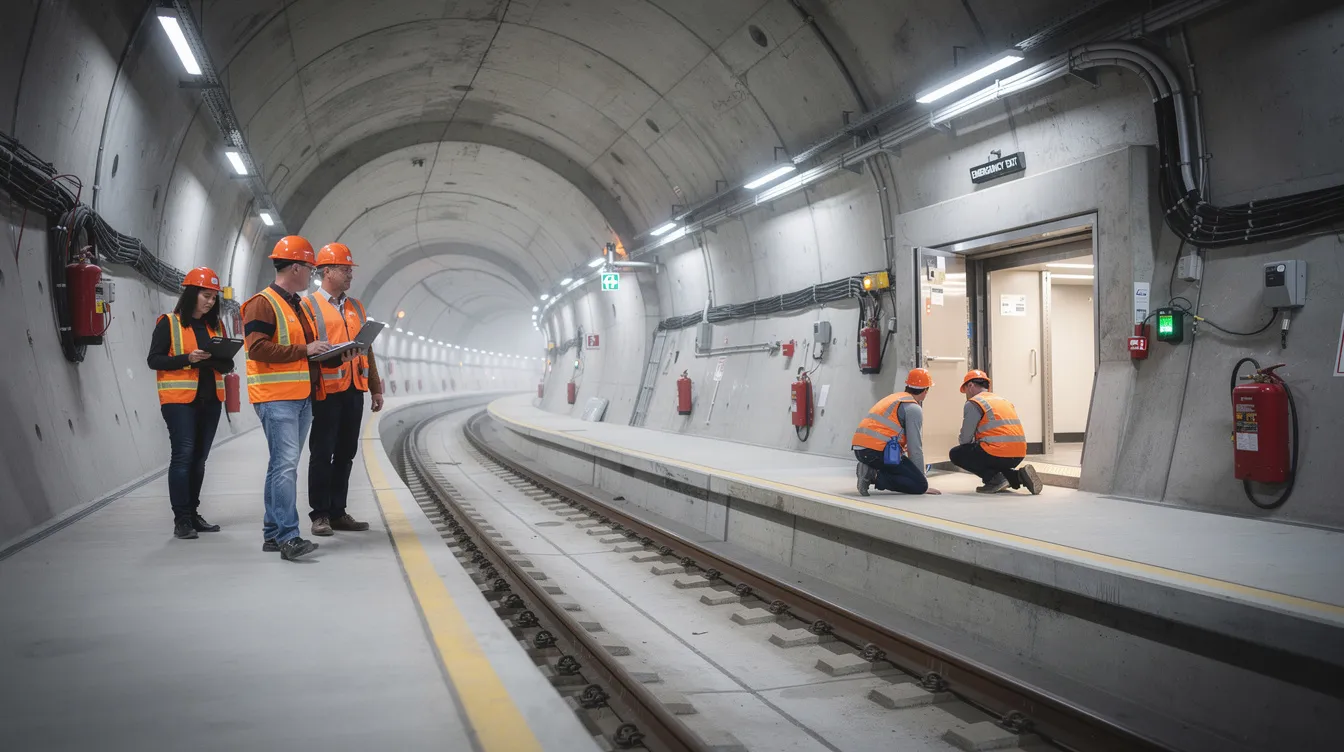
Implementing DfSP Processes on MRT and Rail Projects
Embedding DfSP workflows within the overall project management and design processes from Day 1 is essential-retrospective safety reviews consistently deliver inferior outcomes compared to safety integrated from the outset. The DfSP’s schedule must align with the main consultant’s design programme and LTA review cycles, ensuring that safety inputs arrive when design decisions are still malleable.
A Design for Safety Professional facilitates risk elimination in MRT projects most effectively when their process is structured, predictable, and integrated into design coordination routines rather than treated as an add-on administrative exercise.
Step-by-Step DfS Facilitation Process for Rail Schemes
The following numbered procedure provides a practical implementation framework that project managers can adapt to their specific rail project:
- Appointment of DfSP at project inception with clear terms of reference and rail-specific scope covering all asset types and lifecycle phases
- Initial review of alignment, station locations, and early engineering studies to identify strategic safety issues before key decisions are locked
- Development of a DfS Implementation Plan setting out workshops, reviews, and documentation milestones aligned to design completion percentages
- Discipline-based and integrated DfS workshops at defined design stages (e.g., 30%, 60%, 90%) covering civil, structural, architectural, ME, and rail systems
- Integration of DfS comments into design change management and BIM coordination cycles, ensuring that identified risks are tracked through to design resolution
- Pre-tender DfS consolidation for each contract package, including residual risk statements for contractor pricing
- Construction-phase DfS verifications focused on high-risk activities and permanent safety installations, with site walkdowns and method statement reviews
- Finalisation and handover of DfS Register and O&M-focused safety documentation before trial running and revenue service commencement
Coordination and Communication Across Multi-Contract Rail Projects
MRT projects typically involve multiple civil, systems, and architectural packages running concurrently along a line, each with its own design team and contractor. This creates significant interface hazards-where one package’s tunnel meets another’s station, where civil works interface with rail systems installation, or where depot operations connect to the mainline.
DfSP coordination mechanisms for these complex projects include:
- Regular multi-contract DfS coordination meetings to address interface hazards, ensuring safety communication flows across package boundaries
- Use of a centralised DfS Register and issue-tracking platform accessible to all design teams and the client
- Standardised risk classification so that emerging safety issues on one package can be communicated to all relevant stakeholders across other packages
The DfSP’s neutral positioning is critical here. As an independent specialist rather than a member of any single design team, the DfSP can reconcile conflicting project objectives without bias, ensuring that a collaborative effort toward safety is maintained even under commercial pressure.
Comparing DfSP Delivery Models for Rail Owners
Rail owners have two primary options for procuring DfSP services, each with distinct advantages:
| Criterion | DfSP Within Lead Design Consultant | Independent Specialist DfSP (e.g., AMAN) |
|---|---|---|
| Independence | Limited-may face conflicts between design efficiency and safety challenge | Full independence from design decisions |
| Integration with design team | Seamless access to design data and meetings | Requires formal coordination protocols |
| Cost | Often bundled into design fee | Separate appointment with dedicated scope |
| Rail experience | Depends on consultant’s portfolio | Specialist can be selected for rail track record |
| Suitability | Smaller station upgrades with single design team | New lines, multi-package projects, brownfield extensions |
For new MRT lines with multiple contract packages, an independent DfSP engaged directly by the developer or LTA provides stronger governance and clearer accountability. For smaller station upgrade projects with a single design team, embedding the DfSP within the lead consultant may offer practical efficiencies-provided independence is contractually protected.
Understanding these delivery models is important context for the challenges that frequently arise when applying DfS processes on live rail projects.
Common Challenges and Practical Solutions in Rail DfS
Even with a clear scope and competent appointments, DfS on MRT and rail projects frequently faces time, budget, and operational pressures that can undermine its effectiveness. The following challenges are drawn from experience on Singapore-style projects and similar ASEAN urban rail schemes, along with actionable solutions that project teams can implement immediately.
Late DfSP Engagement on Alignment and Station Concept
Problem: The DfSP is brought in after alignment, station depths, and portal locations are already fixed-sometimes as late as detailed design. This prevents influence over key safety drivers like evacuation strategy, shaft locations, and constructability of deep station boxes.
Impact: Limited ability to perform proactive risk elimination at the strategic level, leading to more residual risks that must be managed expensively during construction and operations.
Solutions:
- Mandate DfSP involvement in feasibility studies and option selection workshops-safety integration reduces accidents by addressing risks early
- Incorporate DfS checkpoints into early LTA approval gateways
- Use rapid, high-level risk screening tools to support early decisions within tight programme constraints
Underestimating Maintenance and Access Risks
Problem: Designs are optimised for construction efficiency and operational performance but not for safe long-term maintenance of track, equipment rooms, façades, and roofs. Health risks and safety and health issues arising from poor access design may not become apparent until years after handover.
Impact: Unsafe access requiring heavy reliance on MEWPs, frequent track possessions disrupting revenue service, and elevated O&M costs across the asset’s lifecycle.
Solutions:
- Involve operators and maintenance representatives in DfS workshops from the preliminary design stage onward
- Use BIM-based simulations to review maintenance paths, lifting routes, and access envelopes
- Specify minimum access provisions and equipment replacement strategies in design briefs and Employers’ Requirements
Brownfield and Live Line Interface Constraints
Problem: Upgrading existing MRT stations or adding infill stations and turnouts to operating lines creates risks that do not exist on greenfield projects-very short work windows, stringent SCDF and operator requirements, and limited space for temporary works.
Impact: Elevated safety risks for workers operating alongside live electrified tracks, with potential for service disruptions if safety incidents occur.
Solutions:
- Dedicated DfS reviews focusing exclusively on live line interfaces and staged construction sequences
- Close collaboration with the operator’s safety and operations teams to understand operational envelopes and rules
- Incorporation of temporary barriers, segregated access routes, and modular pre-fabrication to cut possession times
Commercial Pressures and Value Engineering Conflicts
Problem: Cost and schedule-driven value engineering leads to deletion or reduction of safety features-fewer emergency exits, shorter walkways, simplified ventilation-undermining design safety intent.
Solutions:
- DfSP documenting the safety implications of proposed changes clearly in the DfS Register and VE reports
- Quantifying lifecycle safety and availability impacts-longer closures, increased maintenance risk, potential service reliability reduction
- Proposing alternative, lower-cost design tweaks that retain core safety performance while achieving cost savings
Conclusion and Next Steps
DfSPs are essential in ensuring that MRT and rail infrastructure in Singapore and the region are safe to build, operate, and maintain. Their value lies not in abstract safety philosophy but in structured services-phased hazard workshops, disciplined registers, coordinated reviews-and robust deliverables that serve developers, designers, contractors, and operators throughout the asset lifecycle. DfS Regulations apply to projects over S$10 million, making professional DfSP engagement a legal requirement for virtually every rail project in Singapore.
Immediate actions by reader type:
- Developers and asset owners: Define DfSP scope and deliverables explicitly in upcoming MRT/rail RFPs; ensure early appointment before alignment freeze; require handover documentation as a contract milestone
- Design consultants: Integrate DfSP workflows with design coordination and BIM review meetings; allocate discipline leads for DfS actions; treat the DfS Register as a live design management tool
- Contractors: Use DfS documentation to plan safer construction methods and to price residual risks realistically; engage with the DfSP during method statement development rather than after the fact
Related topics readers may wish to explore include BIM-based safety reviews for stations, structural and façade inspections for rail infrastructure, authority submissions to SCDF, BCA, and LTA for rail works, and Railway Protection Zone submissions for projects adjacent to MRT lines.
AMAN Engineering Consultancy offers DfSP services, BIM coordination, structural design, and authority submission expertise specifically geared to infrastructure and rail projects in Singapore and ASEAN. If you are planning an MRT line, station upgrade, or depot project, contact us with your project details to discuss how we can support your design for safety requirements.
Additional Resources and Reference Materials
This section provides a concise list of high-value references for further reading rather than a comprehensive bibliography:
- WSH (Design for Safety) Regulations 2015 – the primary legislation governing DfSP appointments, duties, and register requirements for projects over S$10 million
- MOM/WSHC DfS Guidelines – the WSH Guidelines on Design for Safety provide practical guidance on implementing DfS processes
- LTA Transport Infrastructure Design Criteria and Specifications – IDC and CDC documents that define design standards influencing DfS scope for rail projects
- LTA SHE General Specification GS-A-240 – contains the standard risk matrix and hazard register structure used for safety submissions
- NFPA 130: Standard for Fixed Guideway Transit and Passenger Rail Systems – international fire protection standard referenced in Singapore rail projects for underground station and tunnel fire safety
- AMAN internal checklists and templates – including MRT station DfS review checklists, viaduct maintenance access checklists, and DfS requirements guides that can be customised for specific client projects
Diagrams and sectional sketches illustrating typical safety features-tunnel cross-passages, trackside walkways, equipment removal paths, and station refuge areas-can be developed by AMAN’s team to support project-specific DfS documentation.
Frequently Asked Questions About DfSP Scope and Deliverables for MRT/Rail
The following FAQ addresses common questions AMAN receives from owners and consultants involved in Singapore infrastructure projects.
What is the minimum DfSP involvement required for a new MRT line under WSH (DfS) Regulations 2015? DfSPs are required for projects valued at S$10 million or more, and virtually all MRT lines exceed this threshold. At minimum, the DfSP must facilitate DfS review meetings, maintain the Design for Safety Register documenting identified risks, and ensure that foreseeable design risks are communicated to contractors. For MRT projects, this minimum scope expands significantly due to the complexity of assets-tunnels, stations, depots-and the need for multi-disciplinary safety reviews across civil, structural, architectural, ME, and rail systems.
How early should we appoint a DfSP for a rail extension or infill station project? Appointment should occur at project inception, ideally during feasibility studies before alignment and station concepts are frozen. A Design for Safety Professional identifies risks during design phases most effectively when engaged early enough to influence strategic decisions. Appointment after detailed design has commenced severely limits the DfSP’s ability to perform proactive risk elimination.
Can one DfSP cover multiple contract packages along a line, or should each package have its own? A single DfSP can cover multiple packages and often should, to ensure consistency of risk classification and effective coordination of interface hazards. However, for very large programmes with many concurrent packages, the DfSP team may need multiple qualified professionals engineers to maintain adequate coverage, with a lead DfSP ensuring standardisation.
How does the DfS Register for an MRT project differ from that of a typical building project? An MRT DfS Register must cover linear assets (tunnels, viaducts, track) in addition to nodal assets (stations, depots), address rail-specific hazards (electrification, signalling, live line works), and document risks across a much longer lifecycle including operations and maintenance phases. The register typically has far more entries, spans multiple contract packages, and must interface with LTA’s PSR safety case documentation.
What additional DfSP deliverables are expected when using BIM and 3D coordination for stations and tunnels? Beyond the standard register and reports, DfSPs should produce annotated BIM views highlighting safety-related access issues and emergency routes, 3D visualisations of equipment removal paths and maintenance routes, and exported schedules of access features. These artefacts make safety concerns tangible for the entire project team and support more effective DfS review meetings.
How does AMAN Engineering Consultancy integrate DfSP services with other offerings like authority submissions and structural inspections? AMAN’s integrated service model means that DfSP deliverables are coordinated with authority submissions to LTA, SCDF, and BCA, structural design reviews, and BIM coordination workflows. This ensures that safety register entries align with submission requirements, structural inspection findings feed back into risk assessments, and BIM models serve both design coordination and safety review purposes-eliminating duplication and ensuring consistency.
For project-specific questions not covered here, contact AMAN Engineering Consultancy with your project details for tailored guidance on DfSP scope, deliverables, and implementation strategy.