
Introduction
DLP in construction stands for the Defects Liability Period – the contractual window after a building project is completed during which the contractor remains responsible for fixing construction defects at their own cost. In Singapore, the standard defects liability period lasts 12 months and is a cornerstone of contract management across virtually every type of construction project, from HDB flats and private condominiums to government infrastructure.
This article focuses specifically on DLP meaning in construction contracts for Singapore building projects. It does not cover “data loss prevention” or other uses of the DLP acronym. The target audience includes developers, main contractors, subcontractors, facility managers, strata councils (MCSTs), and property buyers who need clarity on their contractual obligations, practical workflows, and risk exposure during this critical phase.
In short: The DLP begins immediately after practical completion or handover of a project – triggered by a Practical Completion Certificate, Temporary Occupation Permit (TOP), Certificate of Statutory Completion (CSC), or Vacant Possession date – and typically runs for 12 months in Singapore. During this liability period, the contractor must rectify any defects arising from poor workmanship, defective material, or non-conformity with specifications, at no additional cost to the employer or buyer.
By reading this article, you will:
-
Understand the legal and practical meaning of DLP in construction contracts
-
Know how DLP works across different building types and standard forms in Singapore
-
Learn what types of defects are covered versus excluded during the DLP
-
See how to manage inspections, documentation, and rectification efficiently
-
Discover how AMAN Engineering Consultancy Pte Ltd supports clients through the DLP phase
Throughout, we include suggested diagrams and site photos to illustrate key concepts – from DLP timeline graphics to real-world inspection scenarios.
Understanding Defects Liability Period (DLP) in Construction
The defects liability period is a defined post-completion period written into construction contracts that requires contractors to fix defects after handover. It bridges the gap between the moment a building is handed over and the point at which the employer accepts it as fully complete and free of apparent defects. The DLP serves as a quality assurance tool for both clients and contractors – giving the employer time to identify issues while incentivising the contractor to deliver work to a high standard of workmanship.
The DLP exists primarily for risk allocation. During construction, the contractor controls the site, materials, and process. Once the project reaches completion and is handed over, the employer or occupant takes possession – but it would be unreasonable to expect them to discover every fault on day one. The DLP provides a reasonable period for defects to become apparent under normal use.
Critically, DLP is a contractual mechanism, not a statutory warranty. Its duration, scope, and procedures are defined by the specific contract between the parties. Different standard form contracts – including the SIA Building Contract, PSSCOC (Public Sector Standard Conditions of Contract), REDAS forms, and FIDIC-based contracts used on international projects – each phrase DLP obligations differently.
Key Elements of a DLP Clause
A well-drafted DLP clause in a Singapore construction contract typically addresses these core components:
-
Duration: Commonly 12 months, though specialist systems such as waterproofing or façade works may carry longer defect or warranty periods of 18–24 months, as defined in the contract.
-
Start trigger: The date from which the DLP commences – typically the Practical Completion Certificate, TOP, CSC, Vacant Possession date, or sectional completion date for phased works.
-
Scope of defects covered: Workmanship defects, defective materials, and non-conformity with drawings or specifications.
-
Notification procedures: Written defect notices submitted within the period, often via forms, email, or digital platforms, with defined deadlines.
-
Obligation to rectify and timeframe: The contractor must fix reported defects within a specified schedule (e.g. one month under standard SPAs).
-
Consequences of non-rectification: If the contractor fails to act, the employer may appoint another company to carry out the repairs and deduct reasonable costs from retention money or bonds.
These elements directly impact project management and cash flow. The contractor’s retention money – commonly 5% of the contract sum – is withheld by clients until the DLP concludes and defects are rectified. This gives employers financial leverage but also means contractors have a strong incentive to complete rectification promptly to release their funds. Delays in resolving defects can hold up the final account and, in some cases, trigger disputes or penalties that complicate project closure.
What Counts as a “Defect” During the DLP?
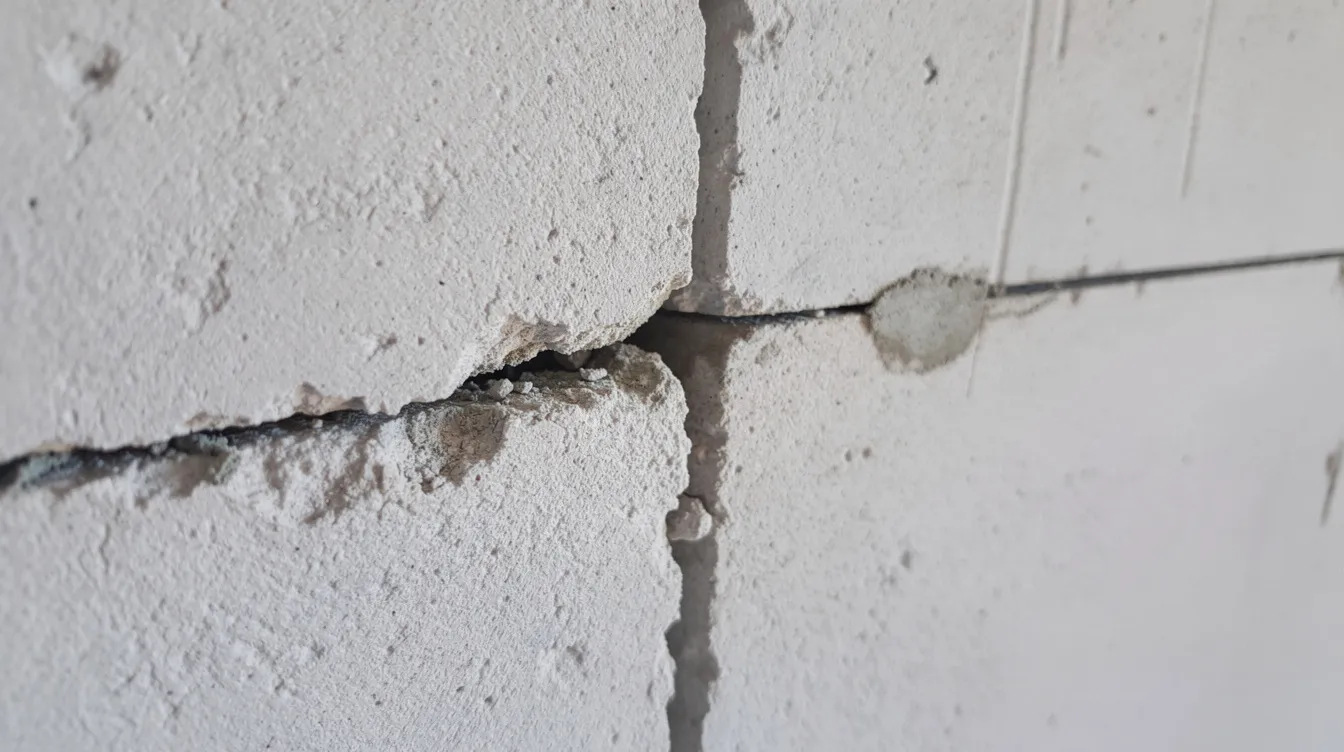
In a construction context, a “defect” is any aspect of the completed works that does not conform to the contract, drawings, specifications, or statutory requirements. Contractors are responsible for fixing defects arising from poor workmanship during the DLP. Common examples include:
-
Water seepage through walls, roofs, or window frames
-
Hollow or cracked tiles, ponding on balconies or flat roofs
-
Misaligned doors or windows, loose handrails, façade sealant failures
-
MEP issues such as non-functioning lights, tripping circuits, or intermittent plumbing leaks
However, not everything reported during the DLP qualifies as a defect. Normal wear and tear or damage caused by the property owner is not covered under the DLP. Similarly, damage resulting from unauthorised renovation works or negligent use by occupants falls outside DLP obligations. It is also important to distinguish between DLP-covered defects and latent or structural issues that may be subject to longer limitation periods or specific warranties beyond the standard 12-month window.
Understanding DLP conceptually is essential – but the real complexity emerges when you look at how it is applied across different project types in Singapore practice.
DLP in Practice: How It Works Across Singapore Project Types
Actual DLP implementation varies significantly depending on the asset type, the contracting authority, and the form of contract used. The 12-month standard holds across most Singapore construction contracts, but the trigger dates, reporting channels, and administrative process differ between residential, commercial, and infrastructure projects.
DLP for Residential Projects (HDB, Private Condos, ECs, Landed)
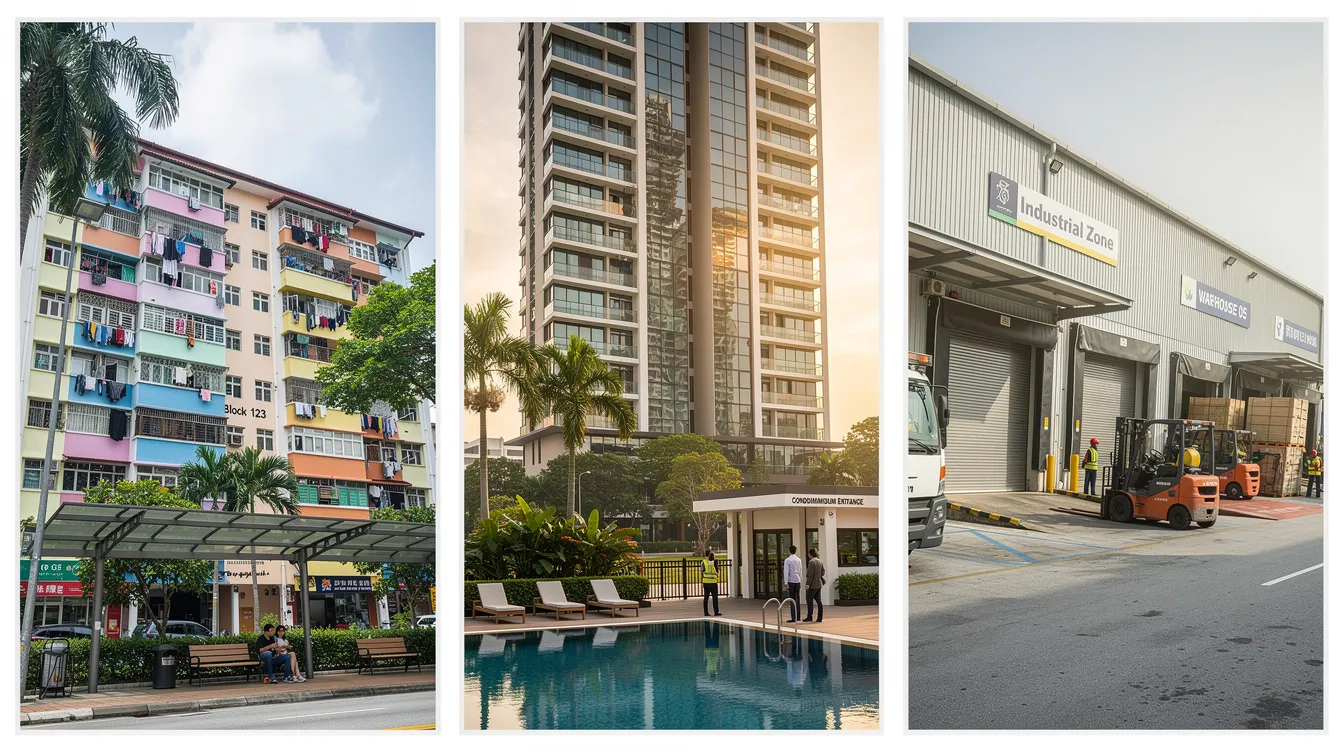
HDB flats have a 1-year DLP from key collection. Owners report defects through HDB’s Building Service Centres using standardised forms. Beyond the general one-year DLP, HDB provides extended warranties for specific defect types: 5 years for ceiling leakages, 5 years for external seepage, and 10 years for spalling concrete. These extended periods sit outside the standard DLP and address specific structural or weather-related liabilities.
Private condominiums and Executive Condominiums (ECs) follow the Housing Developers Rules – specifically Form 5 for strata-titled units under the Sale & Purchase Agreement. The DLP lasts 12 months, and private homes have a DLP starting from vacant possession – or more precisely, whichever is earlier: the date the developer actually delivers vacant possession or the 15th day after the purchaser receives certain documents specified in the payment schedule. Defects must be reported within one month of key collection. Under clause 17 of the standard SPA, the developer must make good any defect that becomes apparent within this period at their own cost and expense.
For landed properties in developer-built estates, the typical 12-month DLP applies with specific contractual wording in each SPA. Buyers should always verify the exact start date by reviewing their S&P Agreement rather than assuming it aligns with the key collection date.
MCSTs and strata councils play a critical role for common areas during DLP. They are responsible for compiling defect reports across common property – lobbies, car parks, swimming pools, façades – and coordinating with the main contractor and building defect investigation consultants to ensure systematic rectification before the DLP ends.
DLP for Commercial, Industrial and Institutional Buildings
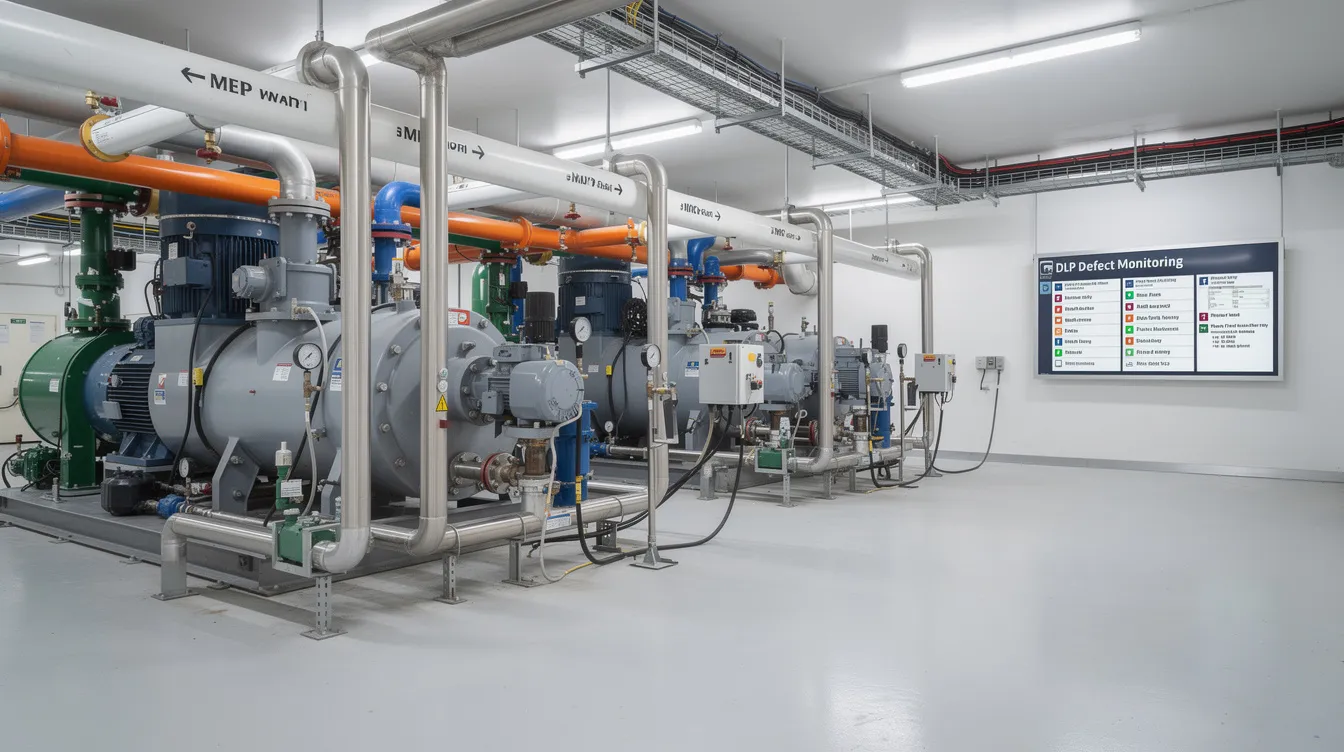
Office buildings, industrial facilities, schools, data centres, and healthcare projects in Singapore typically follow similar 12-month DLPs, but the complexity of systems involved raises the stakes considerably. These projects feature more intricate M&E installations – chillers, building management systems, fire protection, façade access systems – where testing and commissioning issues may only become apparent during early occupancy.
Employer profiles also differ: REITs, corporate owners, and government agencies like JTC, MOE, and MOH each bring their own contract management requirements and quality expectations. DLP obligations are often split between base building works (covered by the main contract) and tenants’ fit-out works (covered by separate agreements), which can create confusion about who is responsible for specific defects.
Authority submissions to SCDF, BCA, and PUB often continue into the early DLP period. Performance tests for fire safety systems, drainage capacity, or barrier-free access features may reveal non-compliances that the contractor must rectify as part of their DLP obligations – linking regulatory compliance directly to defect rectification.
DLP for Infrastructure and Public Sector Projects
Infrastructure projects – roads, bridges, MRT works, utilities – often involve longer defects notification periods and performance-based criteria written into the contract. For pavement works, acceptable levels of rutting or settlement must be maintained; for tunnels, water tightness standards must be met over time. These performance measures extend the practical scope of what counts as a “defect” during the DLP.
Public sector contracts under PSSCOC specify a 12-month DLP from the Date of Substantial Completion (unless otherwise stated in the Appendix), with phased works each having their own DLP commencement. LTA and PUB contract conditions follow similar structures but may layer additional maintenance obligations for specific elements.
AMAN Engineering frequently supports public-sector clients with inspection and certification during and after DLP, particularly where structural or façade issues require specialist evaluation.

Regardless of asset type, the core DLP meaning and obligations remain consistent: a time-limited, contractually defined period during which the contractor must fix qualifying defects. The next section examines the detailed procedures and documentation that govern this process.
Contractual Details, Procedures and Documentation During DLP
Effective DLP administration depends on aligning contract clauses with practical workflows and, increasingly, digital tools. The DLP facilitates the transition from construction to long-term asset operation, and managing it well protects both parties from unnecessary disputes, delays, and cost overruns.
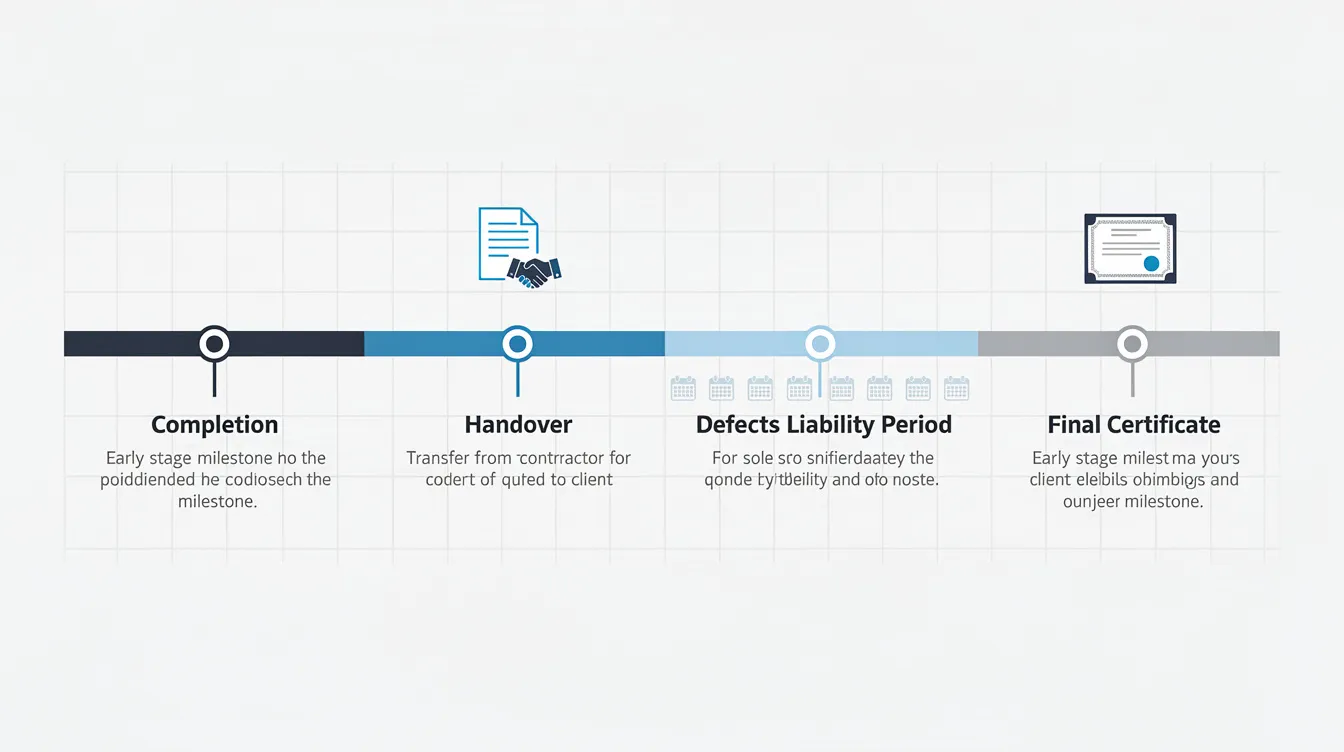
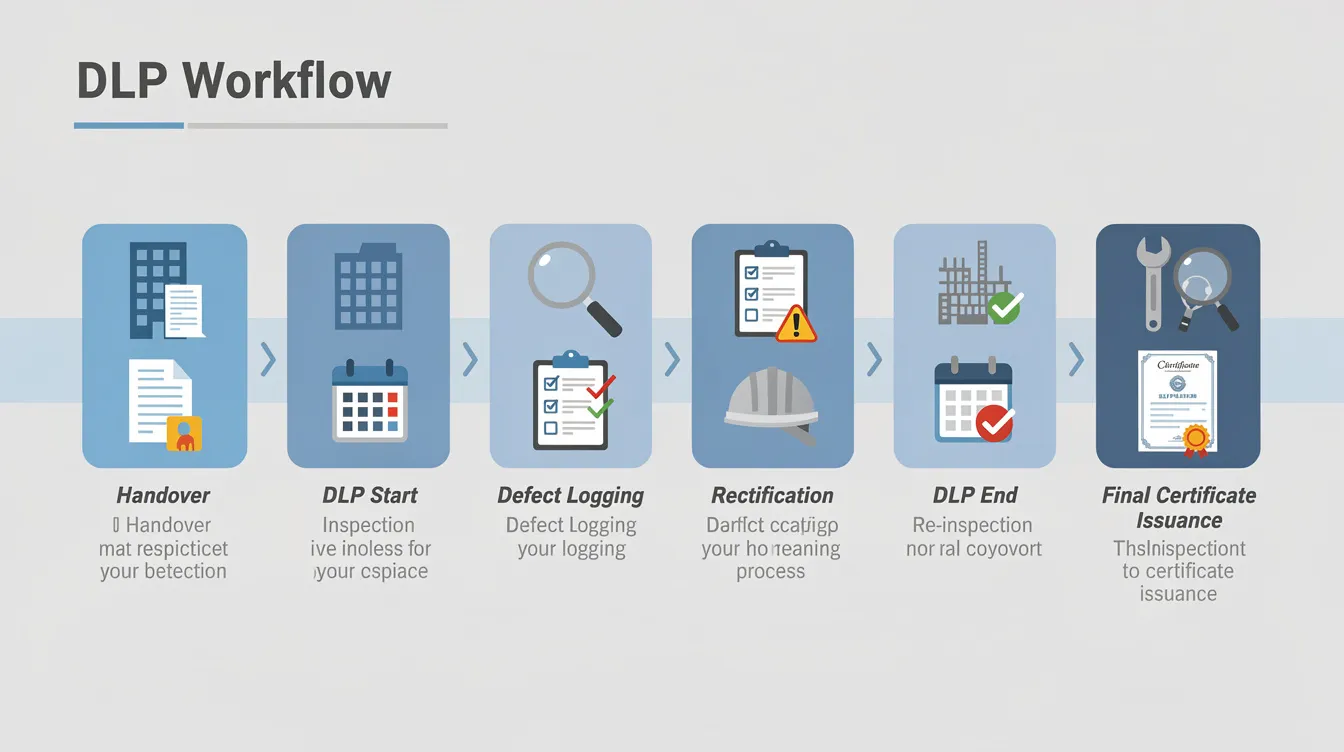
Typical DLP Workflow: From Handover to Final Completion
For new builds and major addition-and-alteration projects in Singapore, the DLP process follows a defined sequence of milestones:
-
Issue of Practical Completion Certificate / TOP / CSC and handover to owner. The project reaches completion and is certified as substantially complete by the Superintending Officer or architect. The Singapore case Liang Huat Aluminium Industries Pte. Ltd. v Hi Tek Construction Pte. Ltd. confirmed that a Completion Certificate under a building contract triggers the commencement of the maintenance/defects liability period.
-
Commencement of DLP and partial release of retention. The DLP begins on the date defined in the contract. In standard practice, half of the retention money (typically 2.5% of the contract sum) may be released at this stage, with the remainder held until the end of the DLP.
-
Ongoing monitoring by owner, facility manager, or MCST. Defects during the DLP should be logged and formally notified to the contractor. Occupants, facility teams, and strata councils actively monitor for issues that become apparent during normal use.
-
Submission of defect notices to contractor. Written notices are submitted via forms, email, portals, or mobile apps. Each notice should document the defect location, description, photos, and date of discovery.
-
Joint inspections with contractor and consultant. Both parties inspect the reported defects, agree on classification (genuine defect vs. maintenance issue), and establish a rectification plan with deadlines.
-
Rectification works, re-inspection, and sign-off. The contractor carries out repairs, and the works are re-inspected. Completed items are formally signed off and closed in the defect register.
-
End of DLP, issuance of Final Completion Certificate, and release of remaining retention. The end of the DLP typically triggers the issuance of a Final Certificate and project closure. The remaining retention money is released once all defects have been satisfactorily rectified.
Notification, Response Timeframes and Access Arrangements
Defect notification is almost always required to be in writing. Under private residential SPAs, once notice is given, the developer typically has one month to rectify the defect. If the developer fails to act, the purchaser may send a second notice and, after 14 days, engage their own contractor to fix the issue and recover the reasonable cost – supported by a quotation from the third-party contractor.
For public sector contracts under PSSCOC, rectification must be carried out “with due expedition and without delay” during the DLP and even up to 14 days after its expiration, according to certain clauses.
Practical management during the DLP also involves:
-
Scheduled inspection rounds, particularly a comprehensive 11-month inspection before DLP expiry to catch remaining defects. This is arguably the most important milestone in the DLP schedule.
-
Coordinated access to occupied units or tenanted spaces, balancing rectification needs with occupants’ schedules.
-
Health and safety, security clearances, and noise control during rectification works in occupied buildings.
Example: A homeowner notices water seepage from the ceiling seven months after key collection. They submit a written defect report with photos and a floor plan marking the location. The developer has one month to inspect and fix the leak. If no action is taken, the homeowner issues a second notice with a quotation from an independent contractor. After 14 days without response, the homeowner engages the independent contractor and deducts the cost from the retention sum held by the stakeholder.

Retention Money, Bonds and Financial Implications of DLP
Retention money is often withheld by clients until the DLP concludes and defects are rectified. In Singapore construction contracts, the standard retention is commonly 5% of the contract sum, split into two tranches: half released upon Practical Completion and the remainder at the end of the DLP. For private development SPAs, the retention may be held by the Singapore Academy of Law as stakeholder.
The DLP directly affects:
-
Contractor cash flow: Tied-up retention money creates a strong financial incentive to rectify defects promptly and achieve final completion.
-
Employer leverage: Holding retention gives the employer security to ensure defects are resolved before making final payment and closing the final account.
-
Alternative instruments: Some projects use performance bonds or defects liability bonds instead of cash retention, shifting risk profiles.
|
Criterion |
Cash Retention |
Defects Liability Bond |
|---|---|---|
|
Cash flow impact on contractor |
Significant – money withheld |
Minimal – bond premium paid upfront |
|
Risk protection for employer |
Direct access to funds if contractor defaults |
Must call on bond; may face disputes |
|
Administrative complexity |
Simple deduction from progress payments |
Requires bond arrangement, documentation |
|
Release mechanism |
Released at DLP completion milestones |
Bond expires at defined date |
Misunderstandings about DLP scope, defect classification, and responsibilities are among the most common sources of disputes in Singapore construction – the next section addresses these directly.
Common DLP Issues, Misunderstandings and How to Handle Them
Many disputes in Singapore construction arise from unclear expectations about DLP coverage, timing, and who bears responsibility for specific issues. Disputes arise when warranty, DLP, and workmanship are confused. Clear documentation, objective inspections, and early involvement of qualified consultants can significantly de-risk this phase.
Misunderstanding 1: Confusion Over When the DLP Starts and Ends
One of the most frequent points of contention is the exact date the DLP commences. Buyers often believe the DLP starts when they physically collect keys, but the SPA may specify an earlier date – for instance, the 15th day after the purchaser receives certain documents under the payment schedule. In mixed-use developments, different components may have different completion certificates, creating further confusion.
Guidance: Always refer to the exact wording in your contract or S&P Agreement. Do not assume that the TOP date, CSC date, or key collection date automatically corresponds to the DLP start date. In [2010] SGHC 253, the court held that the date of substantial completion as certified governs the commencement of DLP, and this must be determined by reference to the contract provisions.
Actionable tip: Maintain a DLP calendar or Gantt chart from day one of handover, shared among the project team, facilities management team, and MCST. Mark the exact start date, the 11-month inspection window, and the final expiry date with clarity.
Misunderstanding 2: Disputes Over What Is a DLP Defect vs Maintenance Issue
Owners sometimes try to claim wear-and-tear, user damage, or consequences of deferred maintenance as DLP defects. Conversely, contractors may label genuine defects as “maintenance issues” to avoid rectification obligations. Workmanship refers to the quality of installation and execution – and separating a workmanship defect from normal degradation requires objective assessment.
Recommended approach:
-
Maintain clear photographic records and site inspection reports from the completion date to establish baseline conditions.
-
Engage independent professional inspections – architectural, M&E, structural, or façade – to classify issues objectively and produce documented evidence.
Brief example: An air-conditioning unit fails during the DLP. If failure is due to the owner’s neglect of filter cleaning, it is a maintenance issue. If the condenser unit does not meet the design capacity defined in the specifications, it is a genuine defect covered under the DLP – the contractor is responsible for fixing it.
Misunderstanding 3: Latent Defects and Long-Term Structural or Façade Issues
Some serious structural or façade defects may only become apparent after the standard DLP ends. The DLP ends the developer’s obligation to fix defects – but this does not mean the owner is without recourse. Claims may proceed under common law principles (negligence or breach of contract), subject to statutory limitation periods that typically begin from the date of accrual – often aligned with practical completion, as reaffirmed in Millenia Pte Ltd v Dragages Singapore (2018).
Warranty covers product and manufacturing defects, and warranties from manufacturers for specific materials or systems may extend well beyond the DLP. Contracts often define warranty periods but may overlook workmanship – making it essential to understand what each document actually covers.
Early Periodic Structural Inspections (PSI) and Periodic Façade Inspections (PFI) as buildings age in Singapore can detect and document latent issues, creating records that protect owners’ ability to pursue claims even after the DLP has expired.
How AMAN Engineering Consultancy Supports You Through the DLP
AMAN Engineering Consultancy Pte Ltd is a Singapore-based specialist that helps developers, owners, and contractors manage the DLP phase technically and procedurally. Now that the meaning, challenges, and risks of the defects liability period are clear, here is how professional consultancy adds value.
Technical Inspections and Defect Identification
AMAN provides a full range of inspection services relevant to DLP:
-
Architectural and interior defect inspections for new units and common property, covering finishes, fittings, and visible workmanship issues.
-
Structural inspections, including Periodic Structural Inspections (PSI) of key elements that may reveal early defects such as concrete spalling or cracking.
-
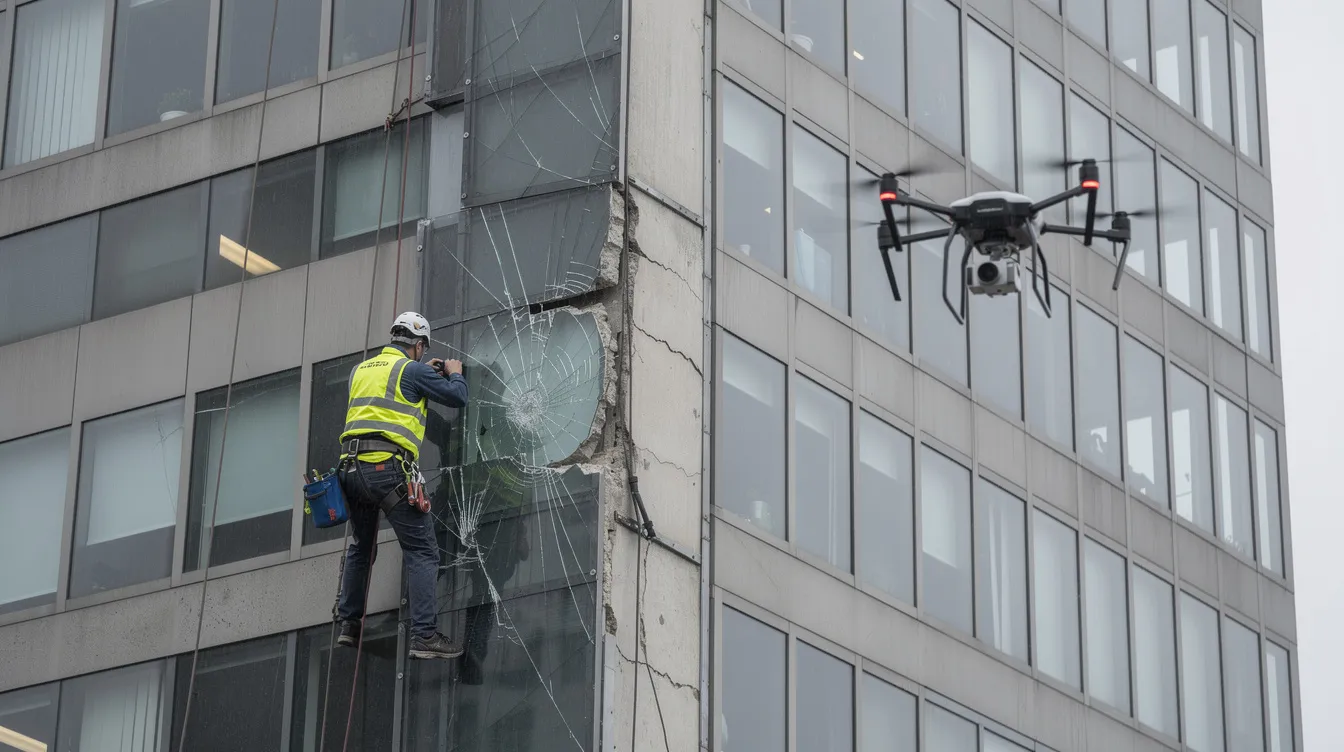
Façade inspections and Periodic Façade Inspections (PFI) to detect water ingress, cracks, corrosion, and cladding failures using methods including drone-based assessment.
-
MEP checks for critical systems – fire protection, ACMV, electrical, plumbing – near the end of the DLP, ensuring all systems perform to specifications.
AMAN uses BIM and digital tools to log, locate, and track defects systematically – pinpointing each issue within the building model for precision reporting and efficient coordination.

Authority Submissions, Compliance and Certification
Some DLP-related rectifications require follow-up submissions or liaison with Singapore authorities (BCA, SCDF, PUB, LTA, NEA, NParks), particularly for:
-
Fire safety defects affecting Fire Safety Certificate status
-
Drainage or sewer issues flagged by PUB
-
Barrier-free accessibility non-compliances noted by BCA or building users
AMAN’s role includes advising on rectification solutions that satisfy authority requirements, preparing and submitting the necessary documentation and drawings for approvals, and ensuring that rectified works remain compliant with current codes – not just the original contract specifications. This is especially important when regulatory standards have been updated since the project’s original signing and design phase.
Digital DLP Management, BIM Integration and Value Engineering
AMAN uses BIM and 3D models (including Tekla and Revit) to pinpoint defect locations in complex buildings, assess possible root causes using clash detection and system layouts, and coordinate rectification details across architectural, structural, and M&E disciplines. This digital approach transforms DLP management from a reactive, paper-based process into a structured, data-driven workflow.
Value engineering during rectification goes beyond minimum fixes. By analysing why defects occurred – whether due to material selection, detailing, or installation practice – AMAN can recommend upgrades that improve long-term performance, reduce future maintenance costs, and prevent recurrence. For instance, replacing a repeatedly failing sealant system with a more durable specification addresses the root cause rather than just the symptom, delivering lasting value to the building owner.
Conclusion and Next Steps
The defects liability period is a defined post-completion period where contractors remain responsible for rectifying contractual defects – and it is central to quality assurance in every Singapore construction project. The DLP typically lasts between 6 to 24 months depending on project complexity, with 12 months being the standard in Singapore across HDB, private, EC, and public sector contracts.
Key takeaways:
-
Know precisely how your contract defines DLP start date, end date, and scope – the exact clause wording matters more than general assumptions
-
Document defects systematically with photos, location data, dates, and formal written notices using proper reporting channels
-
Plan at least one comprehensive inspection round before DLP expiry – ideally at the 11-month mark
-
Engage professional consultants for complex, structural, or façade issues, and where authority compliance is involved
Actionable next steps:
-
Review existing contracts and S&P Agreements to confirm DLP clauses, trigger dates, and notification requirements
-
Set up a DLP defect log and shared calendar for each project with clear deadlines
-
Schedule a professional inspection 2–3 months before DLP expiry to verify all defects have been identified and reported
-
Contact AMAN Engineering for a consultation on DLP inspection, authority compliance, and digital defect management
Readers may also wish to explore related topics: periodic structural and façade inspection requirements in Singapore, fire safety certification processes, and BIM-based facility management for long-term asset operations.
Frequently Asked Questions About DLP Meaning in Construction
These FAQs address the most common practical questions owners and contractors ask about DLP in Singapore, with direct, stand-alone answers.
How long is the typical DLP in Singapore construction contracts?
The DLP lasts for 12 months in Singapore under most standard contracts, including private residential SPAs, EC agreements under Housing Developers Rules, and public sector contracts under PSSCOC. However, specialist systems such as waterproofing, structural elements, or façade works may carry longer defect or warranty periods – sometimes 18 to 24 months – depending on the specific terms negotiated and stated in the contract appendix. For HDB flats, while the general DLP is one year, extended coverage exists for ceiling leakages (5 years), external seepage (5 years), and spalling concrete (10 years).
Is DLP the same as a warranty?
No. The DLP is a contractual obligation requiring the contractor to rectify defects in workmanship, materials, or non-conformity with specifications that become apparent after completion. A warranty, by contrast, typically covers product and manufacturing defects and is issued by the manufacturer or supplier of a specific product or system. Both can run in parallel – for example, a window system may be covered by the contractor’s 12-month DLP and a separate manufacturer’s warranty of 10 years – but they have distinct procedures, scopes, and enforcement mechanisms. Contracts often define warranty periods but may overlook workmanship, so understanding each document’s coverage is essential.
Can owners fix defects themselves and back-charge the contractor during DLP?
Under most Singapore SPAs and standard construction contracts, the owner must first give the contractor written notice and a reasonable opportunity to rectify – typically one month under private residential SPAs. Only if the contractor fails to act within the specified timeframe may the owner issue a second notice and, after a further 14-day period, engage an independent contractor to carry out the repairs and recover the reasonable cost, supported by a third-party quotation. Following the exact contractual steps is critical; skipping the notification process can weaken the owner’s ability to claim costs. Legal advice is recommended before exercising self-help remedies.
What happens if defects appear after the DLP ends?
The DLP ends the developer’s obligation to fix defects under the standard contractual mechanism. However, owners may still have recourse under common law principles for latent defects – particularly through claims in negligence or breach of contract – subject to statutory limitation periods that typically run from the date of practical completion or discovery of the defect. Specific warranties from manufacturers or separate latent defect insurance (where arranged) may also provide coverage beyond the DLP. Professional investigation, such as a structural inspection or façade assessment, is often needed to assess the nature of the defect and the available legal options.
When should I engage a consultant like AMAN Engineering for DLP matters?
Engage a specialist consultant at three key stages:
-
Before handover, to clarify DLP clauses, establish an inspection strategy, and set up a defect management system
-
Shortly after occupation, to conduct initial inspections, create a baseline record of the building’s condition, and implement defect logging workflows
-
About 2–3 months before DLP expiry, for a comprehensive inspection covering architectural, structural, façade, and MEP elements – ensuring all defects are formally reported before the period closes and the contractor’s obligations under the DLP end