
Introduction
Drone facade inspection uses unmanned aerial vehicles equipped with high-resolution and thermal cameras to assess building exteriors for defects, deterioration, and safety hazards – replacing much of the dangerous, labour intensive, and time consuming work traditionally done from scaffolding or rope access. For building owners and facility managers in Singapore, this technology directly addresses the dual pressure of meeting strict regulatory compliance under the Building and Construction Authority (BCA) framework while keeping inspection costs and safety risks manageable.
This guide covers everything property owners, facility managers, and engineering consultants need to know about drone-based building façade inspection in Singapore: the technology behind it, BCA’s periodic facade inspection regime requirements, accredited drone inspection service options within Singapore’s compliance context, the step-by-step implementation process, cost and efficiency comparisons with traditional methods, and how to navigate the unique challenges of deploying drones in a dense urban environment.
In short: drone facade inspections use UAVs equipped with high-resolution and thermal cameras to inspect building exteriors and identify defects. AI algorithms can stitch images into 3D models and identify defects – delivering faster, safer, and more consistent results than conventional manual methods.
By the end of this article, you will understand:
-
How drone technology works for building facade inspection and what sensors are involved
-
What Singapore’s periodic façade inspection requirement and related regulations require and how drones fit within them
-
The concrete cost, time, and safety advantages drones offer over traditional inspection methods
-
How to implement a compliant drone inspection from pre-flight planning to final report
-
Common challenges in drone facade inspections and practical solutions for each
Understanding Drone Facade Inspection Technology
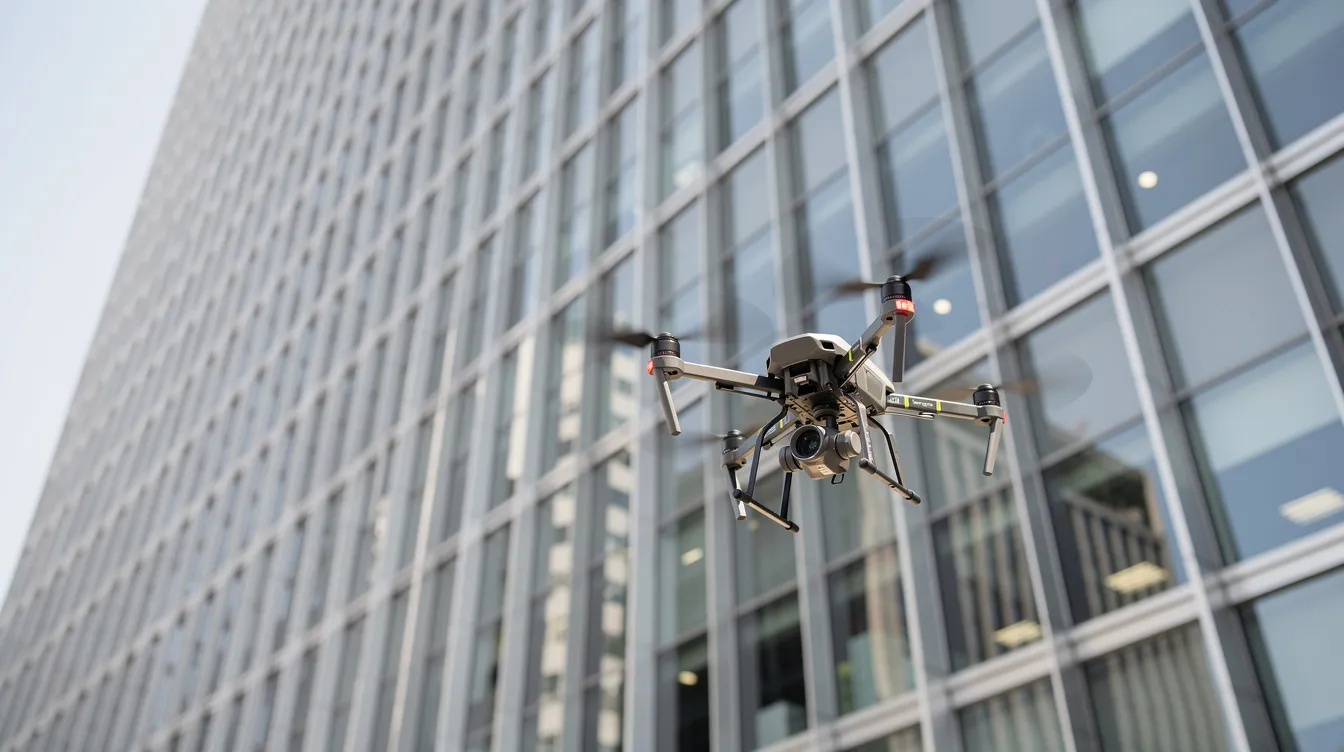
Drone facade inspection is the systematic use of unmanned aircraft systems (UAS), equipped with visual and thermal sensors, to survey and assess the condition of a building facade – its cladding, glazing, sealant joints, fixtures, and structural attachments. In modern building maintenance, it replaces much of the physically challenging and costly manual inspection work previously done via boom lifts, gondolas, or rope access.
In Singapore’s context, this technology has become especially relevant since the periodic facade inspection regime took effect on January 1, 2022. The Building and Construction Authority BCA mandates regular inspections for qualifying buildings, and drone technology offers a compliant, efficient way to meet those requirements. Agencies like BCA, HDB, and Enterprise Singapore have actively sponsored R&D and open innovation calls – including the Smart Drones initiative with Garuda Robotics – through which drone- and AI-based facade inspection systems were developed for Singapore’s high rise buildings.
Core Technology Components
The foundation of any drone building facade inspection is its sensor payload. High-resolution cameras (RGB) capture close-detail imagery of sealant lines, cracks, spalling concrete, glazing joints, and surface deterioration. Drone technology captures high-resolution images for accurate defect detection, and these images are typically taken with an image overlap of 70% to 80%, which is recommended for accurate 3D modeling and comprehensive coverage.
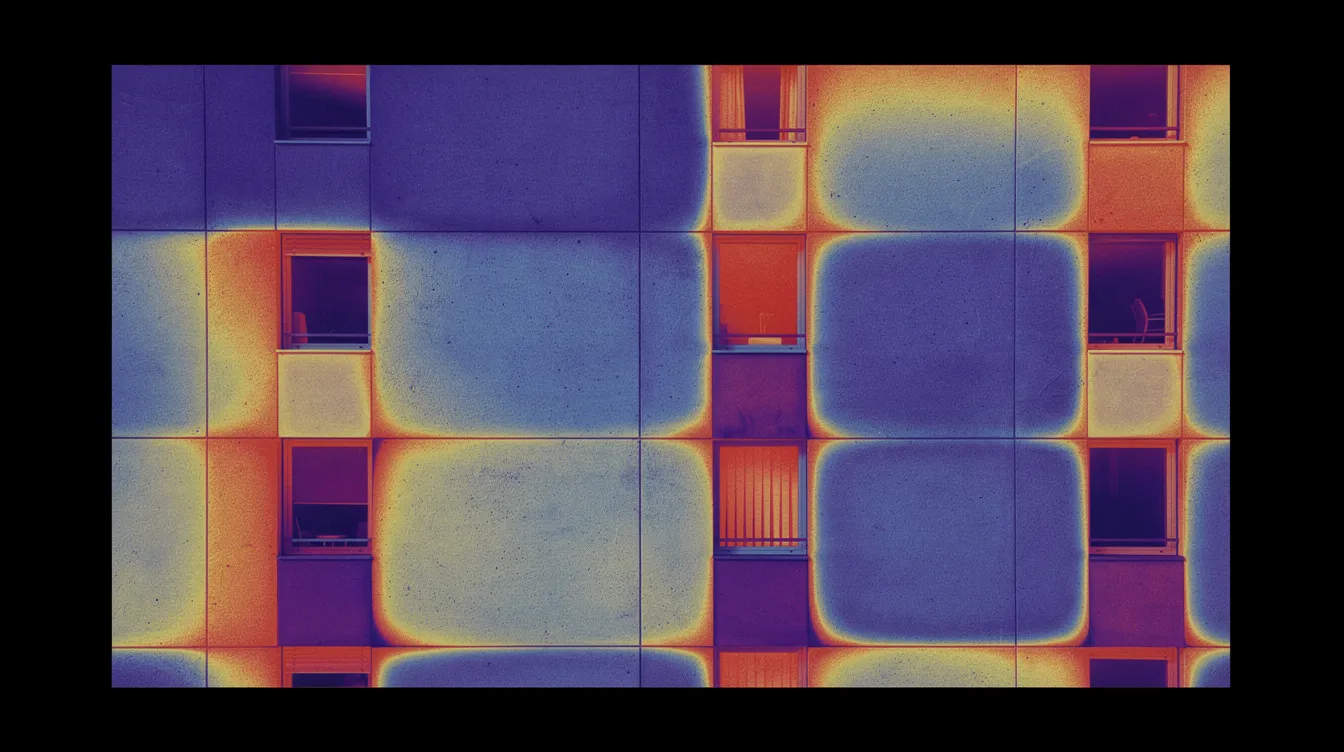
High-resolution cameras and thermal sensors can jointly detect various facade issues. Thermal or infrared imaging sensors reveal hidden defects invisible to the naked eye: failed insulated glass units, moisture trapped behind opaque panels, water ingress paths, and air leakage patterns. These thermal signatures, when combined with visual data captured by the drone, give inspectors a far richer diagnostic picture than any single method alone.
Autonomous drones capture overlapping high-resolution photos or thermal data along pre-planned flight paths, ensuring every square metre of each elevation is covered. Drones can capture high-resolution images in real time, and the data is processed using AI-powered software – convolutional neural networks and machine learning models – that can detect and classify common facade defects automatically. AI can reduce unexpected issues by up to 25%, making the entire process more reliable and predictable.
Types of Building Facade Inspection Supported
Drone facade inspections support different types of assessment needs. Visual facade assessment covers surface-level defects: cracks, paint blistering, plaster deterioration, corrosion of metal elements, and weathering damage. Drones can cover complex building geometries that are hard to access traditionally, including curved facades, setback levels, overhanging elements, and areas around each window line that scaffolding cannot easily reach.
Beyond visual assessment, thermal imaging enables detection of concealed moisture, delamination of finishes, and insulation failures – defects that traditional inspectors would need specialized equipment and extended access time to identify. Drones provide 100% visual inspection for facade assessments, fulfilling the coverage requirements that manual methods often struggle to achieve consistently.
These capabilities build directly on, rather than replace, traditional expertise. The data captured by drones enhances what trained inspectors and engineers can accomplish, giving them a comprehensive digital record to work from. Understanding this technology foundation is essential before examining how it fits within Singapore’s specific regulatory framework.
Singapore Regulatory Requirements and Compliance
With drone technology capabilities established, the critical question for building owners in Singapore is: how does this technology align with BCA’s compliance framework? The answer lies in the intersection of the periodic facade inspection regime and accredited drone inspection services.
BCA Periodic Façade Inspection (PFI) Standards
Periodic facade inspections are mandated by the Building Control Act as part of Singapore’s periodic façade inspection obligation. The BCA enforces compliance with facade inspection standards in Singapore through the PFI regime, which requires facade inspections every seven years for buildings over 20 years old. Buildings must be taller than 13 meters to require facade inspections. Landed houses and temporary buildings are exempt from facade inspection requirements.
This means that most commercial buildings, condominiums, industrial facilities, and HDB blocks in Singapore will eventually fall under PFI obligations. Drones can conduct facade inspections every seven years in line with these requirements, and understanding what triggers periodic facade inspection is the first step toward planning a compliant assessment.
The technical standards underpinning drone use are codified in TR 78-1 (Building Façade Inspection using UAS) and TR 78-2 (Quality Management and Application of AI). Since 12 July 2023, the Singapore Accreditation Council (SAC) has offered accreditation for building facade inspection using drones under the Inspection Bodies (IB) Scheme, ensuring quality and consistency across the industry.
Competent Person Certification Requirements
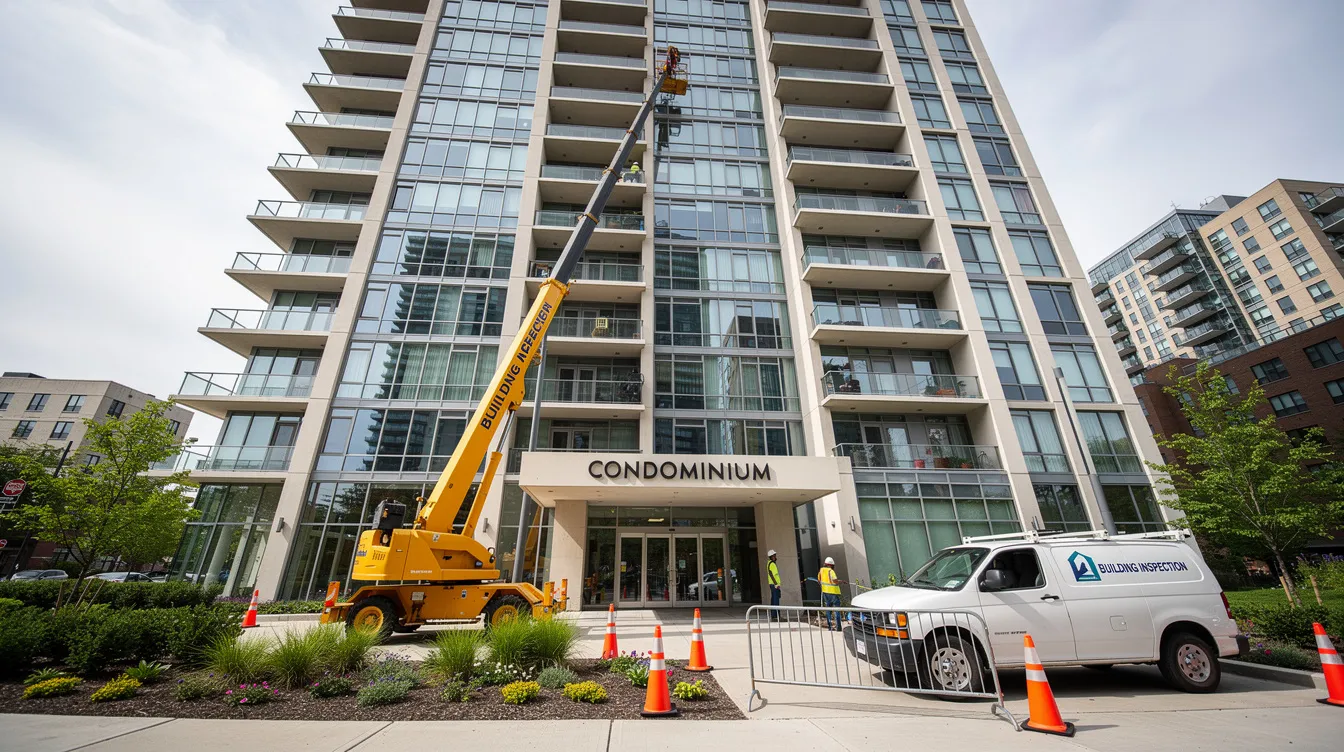
A Competent Person must oversee facade inspections as per regulations. The CP must be either a professional engineer (Civil & Structural) or a Registered Architect who holds specific façade inspection training credentials, including the Certificate in Facade Inspection. The CP may delegate field work to a Façade Inspector (FI), but only under the CP’s direct supervision.
When drones are used, the CP must notify the Commissioner of Building Control with UAS details before the inspection begins. All output images, video, and data must be personally reviewed by the CP. AI-driven inspections ensure compliance with PFI standards, and AI models assist in delivering compliant inspection reports, but human professional oversight remains non-negotiable. For a comprehensive understanding of the facade inspection rules, the CP’s role is central.
Personnel operating the drones must also meet specific qualifications. Under SAC’s FI-01 Technical Note, UAS pilots require a valid Unmanned Aircraft Pilot License (UAPL) and at least 40 flight hours in relevant infrastructure inspection contexts. Inspectors should maintain visual line of sight with the drone during operations at all times.
Privacy and Safety Compliance
Regulatory compliance and safety protocols are critical when using drones in urban areas. Singapore’s TR78:2020 requires adherence to the Personal Data Protection Act (PDPA). Building owners must provide at least three days’ advance notice to building occupants, specifying the inspection date, approximate areas, purpose, and how data is handled.
Data capture should avoid sensitive information such as faces, license plates, and building interiors. Any accidental capture must be securely stored and handled according to data protection protocols. Drones are subject to local aviation regulations and require appropriate permits from CAAS (Civil Aviation Authority of Singapore), particularly in Singapore’s constrained urban airspace.
Key compliance points for property owners:
-
Appoint an accredited inspection body and qualified CP
-
Ensure three-day advance notice to all affected occupants
-
Verify drone operator licensing and SAC accreditation
-
Confirm data handling procedures comply with PDPA
These regulatory requirements set the framework. The next consideration is how a drone facade inspection actually unfolds in practice.
Drone Inspection Implementation Process
With regulatory requirements clear, the practical question becomes: what does a drone facade inspection look like from start to finish? The process combines careful pre-flight planning, systematic aerial capture, and rigorous post-flight analysis – all under the oversight of a qualified CP.
Inspection Methodology
Drone inspection is most effective for buildings with large facade areas, complex geometries, or heights that make traditional access methods costly and challenging. Here is the typical end-to-end process:
-
Pre-flight planning and site assessment: The team conducts a thorough site assessment, identifying access constraints, establishing safety zones, and evaluating environmental factors. Pre-flight planning must assess environmental factors affecting drone operation, including wind speed, weather conditions (critical in Singapore’s tropical climate), airspace restrictions, and proximity to sensitive installations. CAAS flight permissions are secured, and flight paths are programmed to ensure systematic coverage of every building elevation.
-
Systematic aerial photography coverage: The drone executes predetermined flight paths at consistent standoff distances, capturing high-resolution imagery of each facade elevation. Drones enhance accuracy in capturing facade images by maintaining uniform overlap and consistent angles. Using drones reduces setup time and logistical challenges associated with heavy equipment – no scaffolding, no boom lifts, no gondola installation required.
-
Close-range verification inspection: PFI requirements mandate a minimum 10% close-range inspection (via rope access, borescope, or similar methods) for each elevation. This addresses defects that drones cannot resolve sufficiently – fine sealant cracks, internal component conditions, and material testing needs. Drone inspections should be followed by on-site assessments for critical defects.
-
Post-flight analysis using AI-powered defect detection: Captured imagery is processed through AI software that classifies defects – cracks, corrosion, glazing failures, spalling – and can measure defect dimensions (crack width, spalling area). AI detects and classifies common facade defects automatically, and some systems integrate findings into BIM platforms for 3D visualization and trend tracking.
-
Professional engineer report compilation: Engineers review processed data to create actionable maintenance reports. The CP assesses defect severity (safe versus unsafe), prioritises remedial works, recommends rectification methods, and submits the report according to BCA templates. Any unsafe defects require immediate action and reporting. For guidance on how to pass facade inspection without delays, proper documentation at this stage is essential.
-
Follow-up remediation and monitoring: Building owners schedule facade rectification works based on the CP’s recommendations. Drones provide extensive digital records that can be archived for monitoring across inspection cycles, supporting trend analysis and predictive maintenance planning.
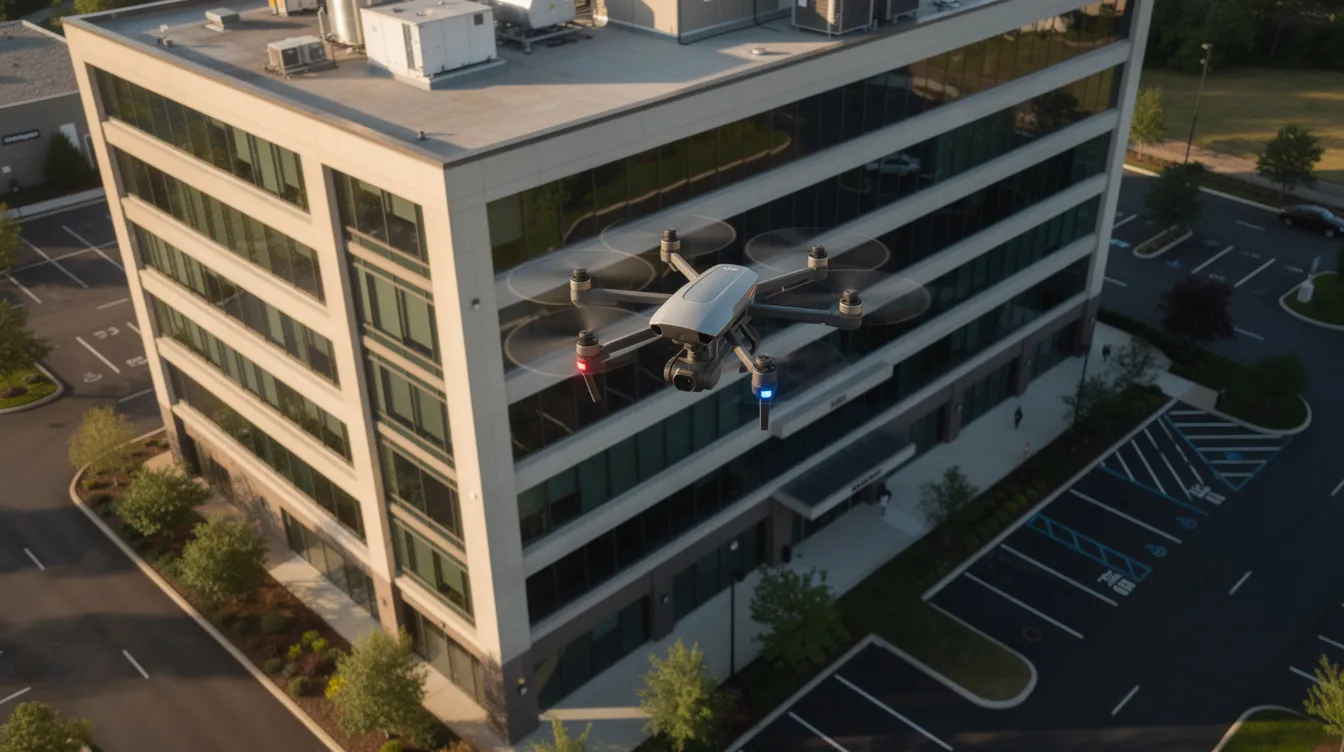
Real-world performance data: In the JTC Summit pilot project, drones reduced inspection time from four weeks (traditional methods) to just eight days. At Biopolis (one-north), a drone-based capture with AI processed 2,692 images with a capture effort of approximately 120 man-hours across four personnel and a processing turnaround of about five days. Drones can complete facade inspections in one day for many standard buildings, and drone inspections can significantly speed up facade scans compared to traditional methods.
Traditional Labour Intensive vs Drone Inspection Comparison
|
Criterion |
Manual Inspection |
Drone Inspection |
|---|---|---|
|
Safety Risk |
High – scaffolding, boom lifts, building maintenance unit access, and rope access required; inspectors physically exposed at height |
Minimal – using drones maintains safety by keeping operators on the ground |
|
Inspection Time |
3–5 weeks for large/complex facades |
Hours for capture; days for processing and reporting |
|
Cost Impact |
High – equipment rental, labour, safety gear, permits, setup time; costs increase with height |
Drone inspections reduce maintenance costs by up to 25%; lower recurring costs as investment amortises |
|
Coverage & Consistency |
Limited – some areas inaccessible; variable image quality; dangerous zones often under-inspected |
Drones provide 100% visual inspection as required by regulations; consistent multi-angle coverage |
|
Data Richness |
Visual survey only; limited digital traceability; no thermal unless specialists engaged separately |
Visual + thermal + spatial data; AI classification; digital mosaics; BIM integration |
|
Disruption to Occupants |
Significant – scaffolding blocks access, noise, extended timelines |
Drones minimize disruption by operating quietly and reducing ground obstruction |
Drone technology reduces the need for scaffolding in inspections, and the cost savings compound over multiple inspection cycles. For property owners and MCSTs deciding between methods, the drone approach is especially compelling for high rise buildings with complex facades, recurring inspection obligations, and tight maintenance budgets. Drone inspections can identify critical defects quickly, enabling faster remedial response.
That said, no method is without obstacles. Understanding the common challenges helps ensure smooth implementation.
Common Challenges and Solutions
Despite clear advantages, drone facade inspection in Singapore presents unique challenges that require proactive management. Here are the most common obstacles and how experienced teams address them.
Weather and Environmental Constraints
Singapore’s tropical climate – frequent rain, high humidity, strong sunlight, and wind gusts – directly impacts flight safety, sensor performance (especially thermal accuracy), and image clarity. Thermal imaging readings can be skewed by solar loading and surface emissivity variations.
Solution: Schedule inspections during optimal weather windows, typically early morning or during dry spells between monsoon seasons. Use real time weather monitoring to make go/no-go decisions. Flexible scheduling across multiple shorter capture sessions is more reliable than planning a single extended flight day. Experienced providers build weather contingency into every project timeline.
Privacy Concerns from Building Occupants
Building occupants understandably worry about drone cameras near their windows. Privacy non-compliance under PDPA can result in legal consequences, and public resistance can delay or disrupt inspections.
Solution: Comprehensive pre-inspection communication is essential – the mandated three-day advance notice should clearly explain the purpose, scope, and data handling procedures. Modern AI processing includes automated face-masking and license plate blurring for any incidental captures. Data captured during inspections is stored securely with restricted access, encryption, and defined retention periods. Transparency builds trust and prevents complaints.
Data Management and Storage Compliance
Drone facade inspections powered by modern sensors generate massive datasets – thousands of high-resolution images per building, thermal data, processed mosaics, AI classification results. Managing this volume across multiple inspection cycles creates storage, security, and audit trail challenges.
Solution: Use secure cloud-based platforms with automated data retention and deletion protocols. Define clear data governance procedures: who has access, how long data is retained, backup schedules, and anonymization requirements. Versioning and audit trails are critical for demonstrating compliance during future PFI submissions. Some providers integrate data directly into facility management systems for streamlined lifecycle tracking.
AI Accuracy and False Positives
While artificial intelligence dramatically accelerates defect detection, no AI system is perfect. False positives waste remediation budgets; false negatives create safety risks. AI tools require continuous retraining with quality labelled datasets.
Solution: Always maintain human CP oversight. Cross-validate AI findings with the mandatory 10% close-range inspection results. Run pilot datasets on representative facades before full deployment. Work with providers whose AI tools are validated against TR78 standards and continuously improved with local facade data.
These challenges are manageable with the right provider and planning. They underscore why choosing an experienced, accredited inspection team matters.
Conclusion and Next Steps
Drone facade inspection has fundamentally changed how Singapore’s buildings are assessed and maintained. It delivers safer operations by minimising manual high-risk exposure, more thorough coverage through systematic flight paths and thermal imaging, quicker turnaround measured in days rather than weeks, and richer data that supports both immediate remediation and long-term maintenance planning. For building owners subject to the periodic facade inspection requirements, drones offer a compliant, efficient, and cost-effective solution.
Looking ahead, the industry is moving toward even greater automation: autonomous drones executing pre-defined inspection paths without manual piloting, multi-sensor fusion combining LiDAR with photogrammetry and thermal data, and predictive maintenance models that forecast when specific facade elements will need attention. Town councils and HDB estate managers are already adopting these systems at scale, and BCA’s regulatory framework will likely continue evolving to accommodate these advances.
Your immediate next steps:
-
Assess your building’s eligibility – determine if your property falls under PFI requirements (over 20 years old, taller than 13 metres, not a landed house or temporary building)
-
Review your compliance timeline – identify when your next seven-year inspection is due
-
Engage an accredited provider – verify SAC accreditation under the Building Façade Inspection using Drones scheme and confirm CP qualifications
-
Request a site assessment – evaluate your building’s specific facade system, access constraints, and inspection scope
For professional support with facade inspection in Singapore, including both drone-based and comprehensive building assessment services, AMAN Engineering Consultancy provides end-to-end inspection, reporting, and rectification management to keep your building safe and compliant.
Additional Resources
-
BCA Periodic Facade Inspection official page – PFI regime details, submission forms, and FAQ
-
SAC Accreditation for Building Facade Inspection using Drones – accreditation requirements and inspection body listings
-
Best facade inspection checklist for buildings – practical preparation guide for property owners
-
Drone building inspection services (Non-BCA PFI) – for buildings requiring assessment outside the PFI regime
-
Maximizing building safety with expert facade inspection services – comprehensive overview of professional inspection capabilities