
Introduction
Planning 2027 CapEx budgeting for PSI in Singapore commercial buildings means forecasting and reserving capital for both the statutory Periodic Structural Inspections mandated by BCA and the downstream structural remediation works those inspections typically uncover. For asset owners closing FY2026 books and preparing FY2027 capital expenditures, getting this right now is the difference between controlled, phased spending and costly emergency interventions later.
The scope of this article covers commercial assets-offices, shopping complexes, business parks, hotels, and mixed-use developments-across Singapore. It addresses the PSI regulatory framework, how to separate CapEx from OpEx treatment in structural inspection programmes, and how to integrate PSI-driven spending with wider compliance and asset strategy, including fire safety, façade inspections, and ESG commitments. For private residential buildings and condominiums, the inspection regime differs, and those are addressed elsewhere.
Why does this matter in 2026–2027? Regulatory scrutiny from BCA is tightening, with recent circulars demanding higher professional engineer accountability. Many buildings in the CBD, Orchard, and suburban commercial zones are now 25–40+ years old, entering the age band where carbonation, chloride attack, and deferred maintenance compound repair costs. ESG and insurance pressures demand documented structural resilience. Meanwhile, cost inflation on scaffolding, specialist labour, and materials means that budget estimates based on 2022–2024 data may understate actual 2027 costs by 20–40%. Separating CapEx from OpEx is critical in budgeting for PSI, and delayed planning only amplifies financial exposure.
This article is written for building owner teams, REIT managers, facility managers, CFOs, and project directors planning FY2027 and 2027–2029 capex projects. By the end, readers will understand how to size PSI-related CapEx using building-specific metrics, time inspections around lease and fit-out cycles, reduce unplanned structural repair costs through risk-based prioritisation, coordinate PSI with fire safety and façade programmes, and work with consultants like AMAN Engineering Consultancy Pte Ltd to translate technical findings into defensible budget lines.
Understanding CapEx Budgeting for PSI in Singapore
Capital expenditure in the context of structural inspections covers not just the cost of engaging a professional engineer for the inspection itself, but the significant downstream investment in access equipment, non-destructive testing, structural strengthening, façade remediation, and authority submissions that PSI findings frequently trigger. For many buildings, the inspection fee is a fraction of the total PSI-driven spend; the remediation and strengthening works form the bulk of capex investments that must be planned across a 3–5 year horizon.
The distinction matters: routine visual checks and minor maintenance items are typically operating costs (OpEx), while major rehabilitation projects-column strengthening, slab repair, corrosion protection systems, waterproofing overhauls-cross the capitalisation threshold and sit firmly in CapEx plans. Understanding this boundary is essential for accurate budget planning, board reporting, and financial analysis under FRS or IFRS standards. Capital investments in PSI should be distinct from routine maintenance costs to ensure proper accounting treatment and strategic alignment with long term investments.
BCA’s Periodic Structural Inspection requirements form the regulatory backbone. But beyond compliance, insurers increasingly condition coverage on documented structural risk assessment, and Green Mark or ESG frameworks require lifecycle safety disclosures. For high-occupancy commercial properties-where the occupant load may reach thousands daily-the stakes of non compliance extend well beyond fines.
What is a Periodic Structural Inspection (PSI)?
A Periodic Structural Inspection is a statutory inspection mandated under the Building Control Act (Cap 29) and the Building Control (Periodic Inspection of Buildings and Building Facades) Regulations 2021. Its purpose is to assess the structural safety of existing buildings and identify defects-cracking, spalling, corrosion, settlement, deflection-that could compromise load-carrying capacity or occupant safety.
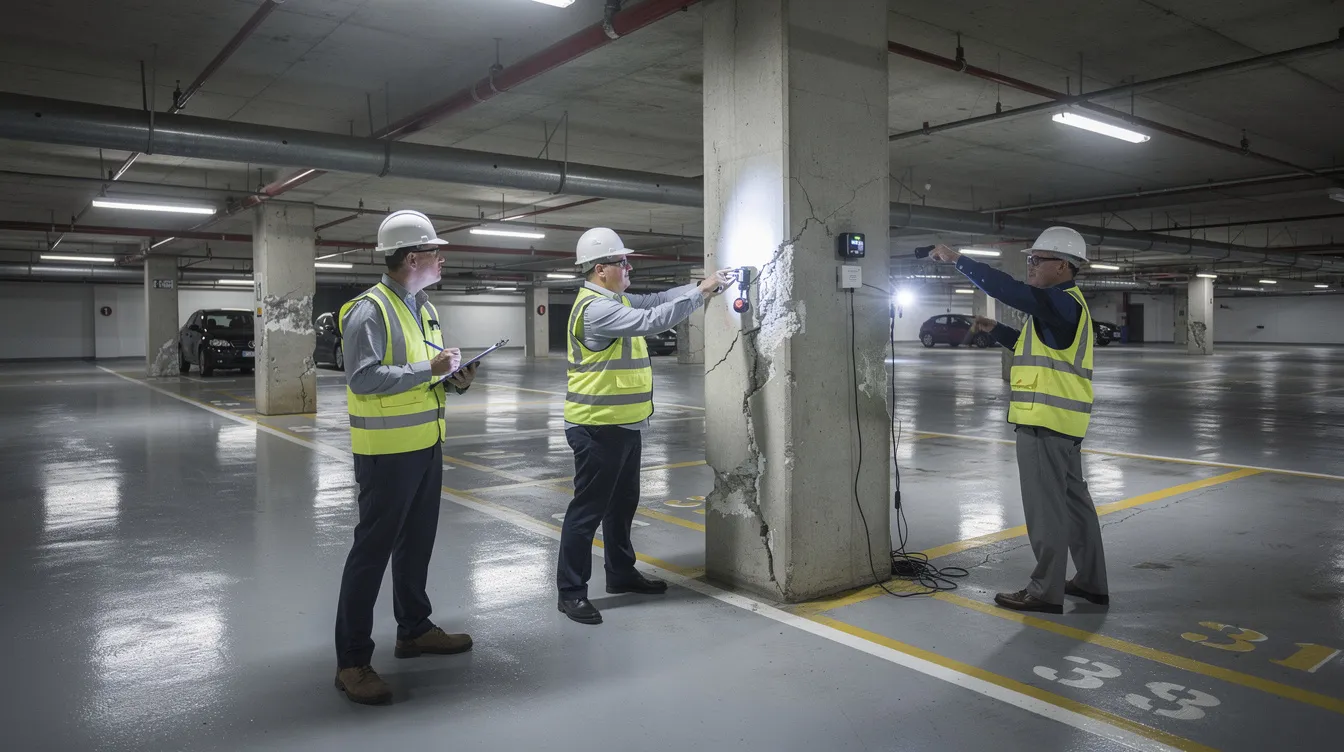
For commercial and industrial buildings, the typical PSI scope includes visual inspection of columns, beams, slabs, foundations (where accessible), roof structures, basements and carparks, lift shafts, canopies, and any structural elements concealed behind finishes. Non-destructive tests-rebound hammer, corrosion potential mapping, ultrasonic pulse velocity-may be deployed during Stage 1 or reserved for Stage 2 when Stage 1 reveals defects of concern. BCA guidelines help identify structures due for mandatory PSI cycles, and documenting chemical hazards and process technology is essential for PSI in buildings with specialised uses.
Inspection frequency is every 5 years for non-residential and commercial buildings, commencing once a building reaches 13 years of age. For buildings with a change of use, signs of structural distress, or post-incident conditions, inspections may be triggered outside the regular cycle. PSI recommendations often lead to significant repair, strengthening, or façade access works that must be planned in the capex budget well ahead of the statutory deadline.
How PSI Relates to CapEx Planning
When PSI costs are bundled into a larger structural rehabilitation or strengthening project-or when Stage 2 investigations reveal the need for major remediation-those costs are CapEx. Routine Management of Change updates are typically classified as OpEx, while major PSI generation and digitization belong in CapEx plans. The dividing line is materiality: if the work extends the useful life of the building, increases its load capacity, or rectifies a structural deficiency that would otherwise reduce its value, it is capital expenditure.
PSI findings directly influence long-term capital planning for structural strengthening, retrofitting for heavier loads (e.g., rooftop PV arrays or green roofs), re-waterproofing, façade replacement, and change-of-use upgrades. Each of these items needs to be reflected in the 2027–2029 capex budget with realistic cost escalation assumptions.
PSI also interacts with other capital-heavy safety compliance items. Fire safety works-including fireproofing of structural steel members, fire suppression systems, emergency lighting, and fire alarm upgrades-may be triggered when structural modifications alter the building’s fire safety plans. Periodic Façade Inspections (PFI), M&E retrofits, and accessibility enhancements share access requirements and site mobilisation costs with PSI-driven works. Understanding these interdependencies is essential before building a 2027 PSI CapEx roadmap for a commercial portfolio.
Key Drivers of 2027 CapEx for PSI in Commercial Buildings
The pipeline of inspections due in 2027, combined with regulatory updates and shifting market expectations, creates a specific set of cost pressures that commercial building owner teams must anticipate. Understanding these drivers is the foundation for realistic capex planning-not just for PSI inspection fees, but for the remediation works and compliance investments that follow.
Regulatory and Compliance Requirements Up to 2027
BCA requires commercial buildings aged 13 years and older to undergo PSI every 5 years. PSI Notices are issued approximately 12 months before a building becomes due, and non compliance is an offence under the Building Control Act. Building owners must appoint a PEB-registered professional engineer, provide access, and submit previous inspection reports and structural layout drawings. Regulatory scrutiny can delay plant startups if PSI is incomplete, and accuracy of PSI documentation is frequently cited as a regulatory deficiency-good PSI is vital for compliance with applicable safety standards.
In March 2026, BCA issued circulars reminding the industry of “Proper Conduct of Periodic Structural Inspections and Professional Standards Expected of Structural Engineers,” signalling stricter consequences for errors or omissions. The 2026 BCA policy updates reinforce this direction.
Beyond PSI, URA change-of-use approvals, JTC lease conditions, and Singapore Civil Defence Force (SCDF) fire safety requirements can indirectly drive structural checks. The SCDF Fire Safety Certificate is mandatory before occupancy, and owners or occupiers of a public building must obtain it before use and renew it annually; the SCDF processes applications within 3 working days, but only qualified professionals can apply. Operating without a valid fire certificate is illegal, and expired Fire Safety Certificates can lead to hefty fines or even business closure. Aligning PSI timing with fire safety certificate (FSC) renewals and PFI schedules avoids duplicated access and downtime.
Ageing Commercial Stock and Asset Repositioning
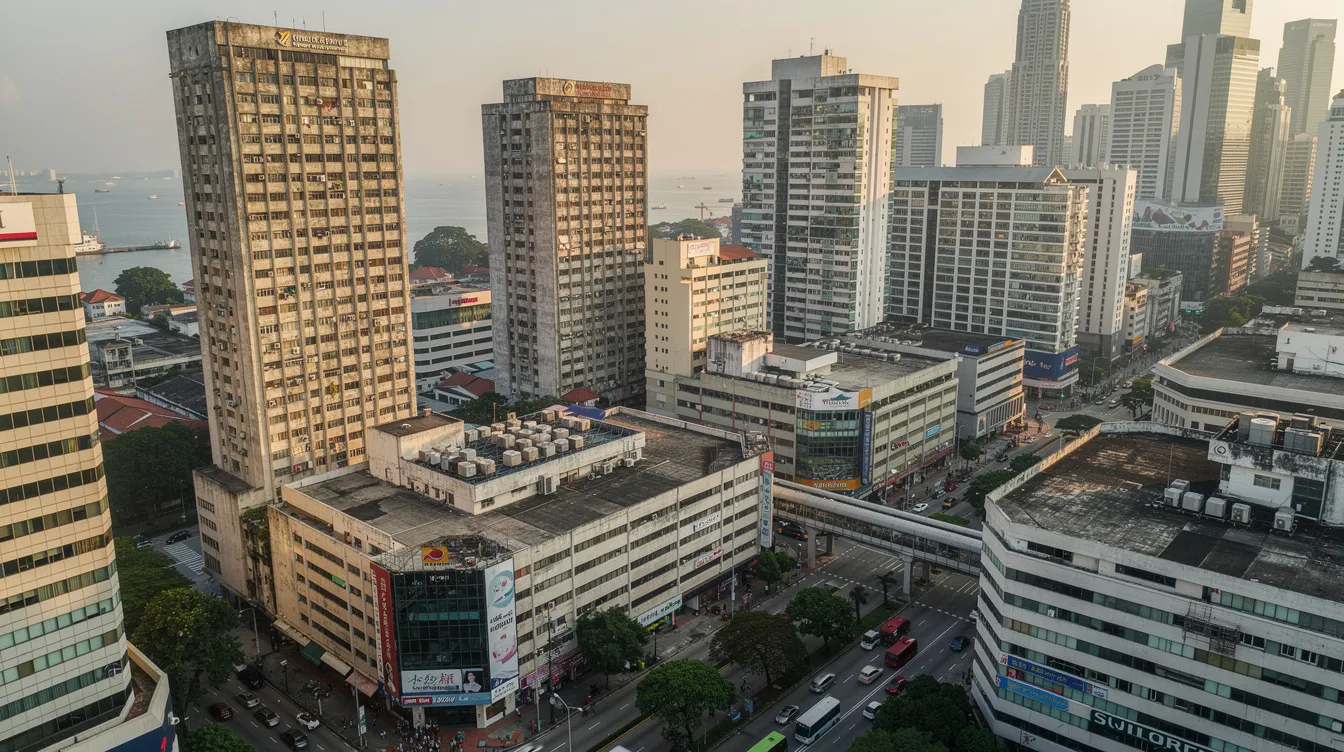
Many commercial towers along Shenton Way, Raffles Place, Orchard, and suburban centres were built between the 1980s and early 2000s. By 2027, many buildings in these districts will be 25–40+ years old-well into the age band where reinforcement carbonation, chloride attack (particularly for coastal-proximal locations), and fatigue in concrete and steel become material concerns. Previous ad-hoc alterations by successive tenants can alter load paths in ways that complicate PSI and increase the scope of Stage 2 investigations.
Asset repositioning amplifies this: upgrading older office towers to Grade A specification, converting strata shopping complexes, or adding landscape decks and PV installations all demand structural reviews during or after PSI. These changes often trigger structural assessment and, potentially, major renovations that must be reflected in CapEx. A suburban mall built in the early 2000s, for example, may face PSI inspection costs of roughly SGD 10,000, but roof deck waterproofing and façade anchorage remediation could run to SGD 200,000–400,000 depending on condition and access.
ESG, Green Mark and Insurance Pressures
Investors, lenders, and insurers increasingly demand documented structural resilience and lifecycle planning for major assets. PSI outputs feed directly into ESG reporting, Green Mark re-certification, and risk-based insurance pricing by demonstrating quantified structural risk management. Budgeting should align with the 2027 corporate strategy and ESG metrics to ensure that structural safety measures are positioned as strategic goals, not just regulatory overhead.
Insurance claims may be denied without a valid Fire Safety Certificate, and insurers may view buildings without recent PSI or with deferred defects as higher risk-potentially increasing premiums or making coverage conditional. Integrating PSI with other ESG-driven upgrades (heavier PV installations requiring structural checks, green roofs, energy-efficient façade systems) ensures that 2027 budgets reflect the full investment picture.
Cost Escalation, Access and Operational Constraints
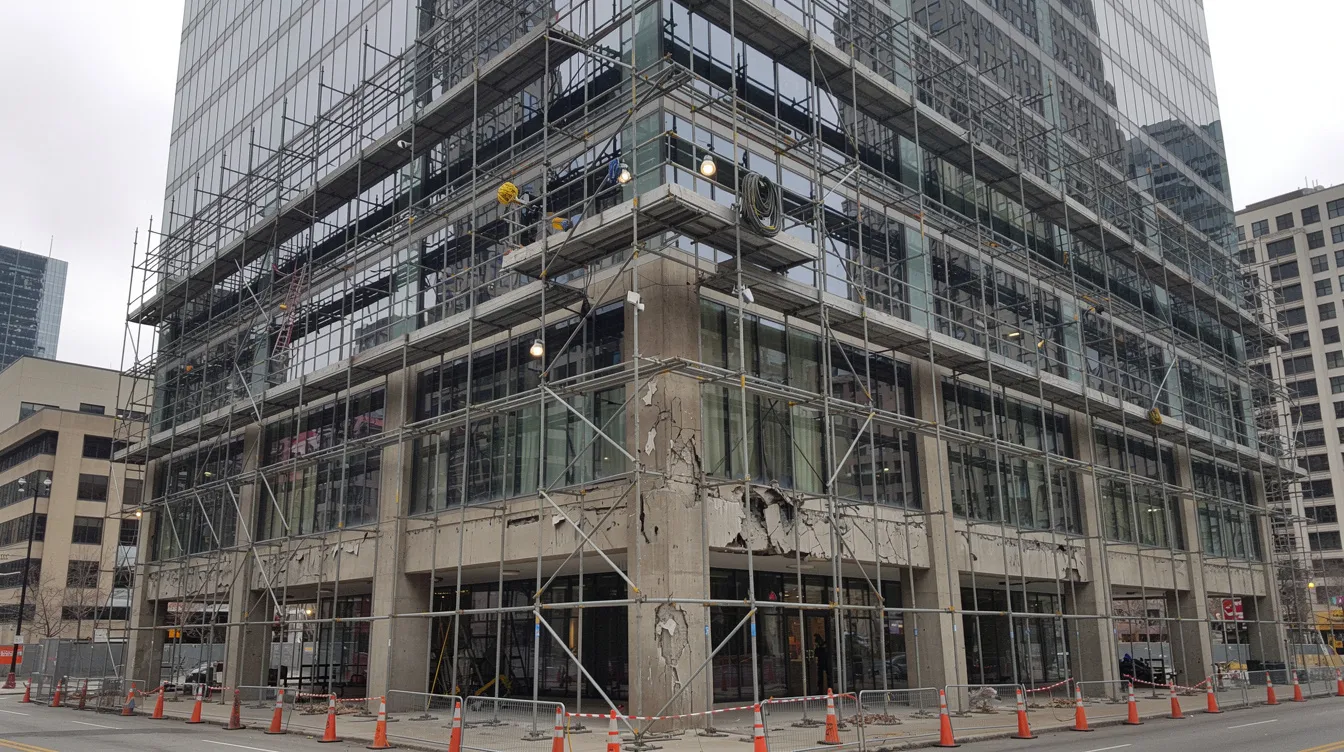
The BCA Tender Price Index rose by 41% between 2018 and 2025, and material shortages, specialist labour constraints, and scaffolding cost inflation show no signs of abating. Historical repair quotes from earlier years may understate current costs by 30–50%. Field verification and laser scanning are common PSI cost drivers, and access costs-scaffolding, mast climbers, rope access-are non-trivial for multi-storey commercial buildings with complex façades.
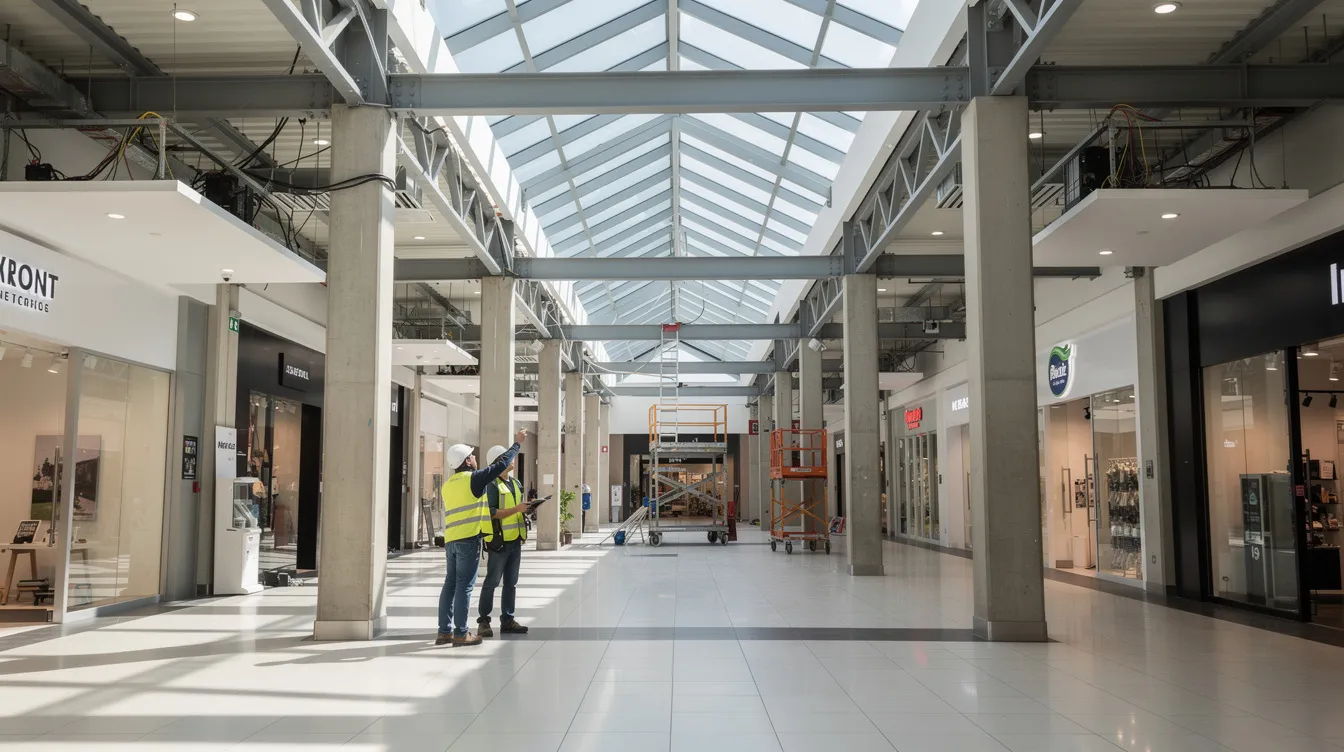
Working in live malls and offices adds further cost premiums: night works, phased closures, tenant management, and safety supervision can add 10–30% to baseline project costs. 79% of CapEx projects experience cost overruns, and 52% of CapEx projects suffer delays compared to original estimates-facts that underscore the need for realistic contingency in every PSI-related budget line.
Key cost multipliers to carry into 2027 budgets include:
-
Access complexity (height, public interface, heritage constraints)
-
Building age and prior defect history
-
Operational restrictions (trading hours, tenant sensitivity)
-
Material and labour inflation (~5–10% per annum)
-
Authority submission and compliance fees
With these drivers mapped, the next section translates them into a practical roadmap.
Designing a 2027 PSI CapEx Roadmap for Your Commercial Portfolio
Translating cost drivers into a concrete 2027–2029 PSI CapEx roadmap requires structured portfolio assessment, scope definition, and cross-disciplinary coordination. This roadmap should sit alongside-and integrate with-broader structural, façade, M&E, fire safety, and digital/BIM investment plans. A clear path from risk assessment to budget line ensures that every proposed project is defensible and aligned with strategic goals.
Portfolio Assessment and Prioritisation
Start by mapping all commercial properties in the portfolio with key attributes: building age, gross floor area (GFA), structure type (reinforced concrete, steel, composite, post-tensioned), prior structural issues, PSI history (when last inspected, whether Stage 2 was triggered, severity of findings), environmental exposure, and tenant mix. A building owner managing a portfolio of 10+ assets needs this metadata in a structured format-spreadsheet or asset information system-to enable risk-based prioritisation.
Risk assessment should weight high-occupancy assets (regional malls, Grade A offices), buildings with known defects or heavy rooftop loads (chillers, PV, sky gardens), and properties in aggressive environments (coastal, industrial). Classify assets into PSI waves: 2027 for those due by regulation (5-year cycle aligning with 2022 PSI) or high-risk; 2028–2029 for moderate-risk or those where lease expiry timing allows easier access. Aligning inspection windows with lease breaks and planned fit-out cycles minimises disruption and cost.
Scoping PSI and Associated CapEx Items
For each building, scope the PSI and associated CapEx as a structured package. Typical cost components include:
-
PSI Stage 1 inspection, reporting, and BCA submissions – visual survey, defect mapping, photography, as-built submission
-
Stage 2 investigations (if triggered) – non-destructive testing, core sampling, load testing, structural re-analysis
-
Access and safety – scaffold rental, mast climbers, rope access, temporary protection, permits
-
Design, consultancy, and authority fees – structural PE, CORENET-X plan submissions, URA or JTC coordination
-
Remedial/repair CapEx – structural patching, rebar replacement, corrosion protection, strengthening, waterproofing, façade anchorage upgrades
-
Contingency – budget for 15%-25% contingency primarily for safety infrastructure remediation and hidden defects
For large commercial buildings (malls, high-rise offices), remediation works can translate into millions of SGD. Published GeBIZ contracts for façade repair alone have ranged from approximately SGD 469,000 to over SGD 5.16 million depending on building height and complexity. Presenting PSI scope and follow-on works as a single structured package per building avoids fragmented small approvals and gives finance teams a clear business case for executive approval.
Coordinating PSI with Façade, Fire Safety Systems and M&E Work
Bundling PSI with Periodic Façade Inspections (PFI), fire safety upgrades, and major plant replacement can share access and minimise disruption. For example, the same mast climbers used for façade survey can serve external beam and column checks; a stair pressurisation upgrade for SCDF’s requirements can coincide with stairwell structural checks. Fire safety should be integrated early in design phases-adding fire safety features late increases costs and risks.
However, PSI and PFI require separate submissions and independent inspection teams. A registered inspector for fire safety and a qualified person for façade work operate under distinct regulatory frameworks. Registered Inspectors verify compliance with fire safety regulations, conduct inspections of fire safety measures, and issue certificates confirming fire safety compliance-inspections by Registered Inspectors occur annually for active fire systems. Coordinating these distinct regimes under a single mobilisation programme requires a multi-disciplinary team experienced in building code compliance across BCA, URA, JTC, and SCDF.
AMAN’s multi-disciplinary team-covering structural, fire, M&E, architectural, and landscape engineering-can design integrated project scopes that reduce duplication while maintaining regulatory separation. This is especially valuable for shopping complexes and mixed-use developments where fire safety systems, structural remediation, and façade works intersect.
From Roadmap to 2027 Budget Lines
Translate the roadmap into distinct 2027 budget lines:
-
PSI investigations – assured spend for Stage 1; allowances for Stage 2 based on risk profile
-
Structural remediation works – projected from past PSI findings or known deferred maintenance
-
Design and authority submission fees – PE engagement, drawing preparation, CORENET submissions
-
Access and safety costs – scaffold, rope access, traffic management
-
Contingency allowances – 20–30% for hidden defects and scope growth
Multi-year phasing is standard for larger properties: allocate PSI investigations in 2027, detailed design and authority approvals in 2027–2028, and construction/strengthening in 2028–2029. This smooths cash flow across financial years, reduces capex budget spikes, and allows competitive market tendering. Formal approval processes must validate proposed PSI expenditures-a clear roadmap increases predictability and supports board/CFO approval of safety-critical CapEx.
Implementing a Robust 2027 PSI CapEx Planning Process
With the roadmap defined, the focus shifts to governance: who is involved, what process to follow, and how consultants like AMAN plug into the workflow. Establishing a dedicated budget for emergency PSI updates and discrepancies ensures the organisation can respond to unexpected events without derailing the broader plan.
Step-by-Step 2027 PSI CapEx Planning Workflow
-
Engage a structural PE and authority submissions specialist early – ideally 6–9 months before FY2027 budget lock-in (Q1–Q2 2026 for December year-ends). Early engagement yields more accurate cost ranges and realistic programme durations.
-
Conduct portfolio risk screening – compile building inventory with PSI due dates, age, structure type, prior defect history, and environmental exposure. BCA guidelines help identify structures due for mandatory PSI cycles.
-
Develop preliminary cost models – use building-specific data (GFA, height, access complexity) to produce order-of-magnitude CapEx estimates. Allocate a percentage of installation cost for PSI documentation across all major assets.
-
Hold internal stakeholder workshops – bring together asset management, facilities, finance, and business units to validate priorities, align on phasing, and confirm available capital. This ensures strategic alignment between safety compliance spending and other capex investments.
-
Refine scope and cost – incorporate findings from any pilot investigations or desktop risk reviews. Apply zero-based budgeting principles where needed-zero-based budgeting requires justification for every budget item, which strengthens the business case.
-
Finalise budget submission and secure executive approval – present phased budget with clear risk/benefit framing. 79% of CapEx projects experience cost overruns, so realistic contingency is essential.
-
Pre-qualify inspection and works contractors – avoid delays by tendering early. Supply of qualified structural PEs, remediation contractors, and scaffolders is constrained; late procurement risks premium pricing.
-
Set up rolling forecasts – rolling forecasts allow quick adaptation to unexpected events and ensure the budget remains current as PSI findings emerge through the year.
CapEx Evaluation: Safety, Risk Assessment, Compliance and ROI
Evaluation criteria for PSI-driven CapEx extend beyond net present value or payback period. Regulatory risk reduction, avoidance of catastrophic failures, insurance premium impact, and enabling future revenue (e.g., higher-grade repositioning for new markets) all factor into financial viability assessment.
|
Criterion |
Reactive Repairs After Incident |
Planned PSI-Driven CapEx |
|---|---|---|
|
Total Cost |
2–5× higher (emergency mobilisation, expedited materials) |
Controlled, phased, competitively tendered |
|
Downtime |
Extended, unplanned closures; lost rental revenue |
Scheduled around low-traffic periods and lease expiries |
|
Compliance Risk |
Potential BCA enforcement, fines up to SGD 50,000+, legal penalties for non compliance can include business closure |
Proactive compliance; documented safety measures |
|
Insurance |
Claims may be denied; premiums escalate |
Lower risk profile; favourable underwriting |
Effective management of PSI paves the way for accurate hazard assessments. Quantifying “value-at-risk” makes structural safety investments comparable with other CapEx priorities competing for 2027 budget. A commercial tower with overdue PSI risks not just penalties, but the catastrophic consequences of structural failure-falling façade elements, ceiling collapse-which dwarf any inspection or remediation cost.
Digital Tools: BIM, Scan-to-BIM and Asset Information Models
Using 3D laser scanning and BIM/Tekla models can substantially improve PSI effectiveness and cost forecasting for complex commercial structures. Scan-to-BIM creates accurate digital twins of existing buildings, enabling precise quantity take-offs and scenario planning for remediation options. Digital document management systems improve version control and accessibility-critical when gaps in PSI can arise from outdated documentation or incomplete verification.
Combining structural inspection data with BIM-based models supports accurate CapEx estimates across multiple buildings and allows asset owners to compare repair vs. replacement vs. retrofit options before committing. Allocate funds for fixed software licensing fees when upgrading PSI systems, and treat major PSI digitisation as CapEx. AMAN’s BIM and value engineering capabilities allow clients to test structural strengthening options and optimise 2027 CapEx before committing to construction.
Common Challenges in 2027 PSI CapEx Planning and How to Address Them
Many commercial building owners face similar pitfalls when trying to budget for PSI and related structural works. Recognising these challenges early and building mitigation into the capex planning process is the balancing act that separates well-managed portfolios from reactive ones.
Underestimating the Scale of Follow-On Structural Works
PSI often uncovers hidden deterioration-rebar corrosion behind cover concrete, water ingress through failed waterproofing, structural alterations by previous tenants-that demands far more extensive works than the initial design or visual survey suggested. This is especially true for industrial buildings with heavy loading or older office towers with incomplete as-built drawings.
Solutions: Include realistic contingencies (20–30% over visible scope), carry a “PSI outcome reserve” in 2027–2028 budgets, and run intrusive pilot investigations on high-risk areas before finalising repair costing. Establish a dedicated budget for emergency PSI updates and discrepancies. Budgeting for PSI should prioritize regulatory compliance and engineering integrity above all else.
Poor Coordination with Tenants and Mall/Office Operations
Uncoordinated PSI and remedial works lead to tenant disputes, night work premiums (often 10–30% above day rates), and lost rental revenue. In live malls and offices, fire hazards from construction activities, noise, and access restrictions compound the disruption.
Solutions: Integrate tenant communication plans into capex planning from the outset. Align major works with lease expiries or planned A&A to reduce operational impact. Sequence zonal works to keep trading areas open. Build operational cost premiums into the budget rather than treating them as surprises. Fire safety measures must align with building’s intended use during and after works-SCDF reviews building plans for fire safety compliance, and any structural modification may trigger reassessment of fire safety requirements.
Fragmented Budgets Across Departments
Structural, façade, M&E, and fire upgrades are often budgeted separately by different business units, duplicating access and mobilisation costs. One department pays for scaffolding for façade works while another separately funds the same scaffold for structural beam checks. Fire safety works and structural fireproofing may be planned independently.
Solutions: Establish a cross-functional capital planning committee. Use integrated CapEx views where PSI-driven items are grouped by building or project, not department. This aligns with construction cost planning best practice and ensures that the total investment per asset is visible to decision-makers. Budgeting for Process Safety Information requires a hybrid approach that bridges departmental boundaries.
Inadequate Allowance for Authority Submissions and Compliance
Building owners sometimes overlook design, authority submission, and certification costs when budgeting PSI-related CapEx. Plan-submission fees, coordination with URA or JTC, conservation board requirements for heritage buildings, and the application process for fire safety compliance all add time and cost. The SCDF Fire Safety Certificate for a public building is valid for 12 months, and annual renewal is mandatory in Singapore, so these recurring costs must be factored alongside structural compliance.
Solutions: Engage an experienced Singapore PE and consultancy early to scope statutory pathways and include realistic fees and timelines in 2027 budgets. Engaging a Registered Inspector is legally required for many buildings. Qualified Persons ensure fire safety meets SCDF standards. Allow for 2–3 review cycles in authority submission timelines, and account for the cost of reconstructing missing building plans or structural drawings for older buildings.
Conclusion and Immediate Next Steps for 2027 PSI CapEx
Proactive 2027 CapEx planning for PSI is not optional for ageing or high-profile commercial assets in Singapore-it is a regulatory, financial, and safety imperative. Integrating PSI into the 2027 budget cycle reduces structural risk, supports compliance across the Building Control Act and fire safety act obligations, protects long-term asset value, and positions portfolios favourably for ESG reporting and insurance negotiations. The key takeaways are clear: plan early, budget realistically, coordinate across disciplines, and engage specialist support before budget lock-in.
Immediate next steps:
-
Compile your building inventory and PSI due dates – identify which assets require PSI in 2027 by cross-referencing BCA Notices and prior inspection records.
-
Commission preliminary risk screening – use building age, structure type, defect history, and environmental exposure to categorise assets into priority waves.
-
Schedule a scoping workshop with AMAN Engineering – align technical scope, authority submission pathways, and CapEx estimates across structural, façade, and fire safety disciplines.
-
Draft a 2027–2029 PSI roadmap – present phased budget lines covering inspection, design, remediation, and contingency, with annual allocations that smooth cash flow.
-
Pre-qualify contractors and consultants – avoid delays and price inflation from constrained supply by tendering early for inspection, scaffolding, and remediation contracts.
-
Establish continuous monitoring and rolling forecast protocols – ensure budgets adapt as PSI findings emerge, with regular audits of spend against scope.
Related topics readers may explore next include façade inspection (PFI) budgeting and compliance, integrating fire safety CapEx with structural programmes, and digital asset twin strategies using BIM.
For a portfolio-level PSI and CapEx planning review tailored to your commercial assets, contact AMAN Engineering Consultancy Pte Ltd to schedule an initial desktop assessment and site walkdown.
Additional Resources for 2027 PSI and CapEx Planning
-
BCA PSI Guidelines for Structural Engineers (Sep 2024) – the latest official technical requirements covering stages of inspection, qualified person qualifications, report format, and submission timelines.
-
Building Control (Periodic Inspection of Buildings and Building Facades) Regulations 2021 – the legislative framework defining PSI and PFI legal requirements for building owners.
-
BCA/SCDF Circulars on Structural and Fire Safety – IES Agency Circulars page for the latest directives on inspection standards and professional conduct.
-
PSI Preparation Checklist for Facility Managers – compile previous PSI reports, structural layout drawings, records of A&A works, tenant alteration approvals, and environmental exposure data before engaging a structural PE.
-
Data to Gather Before Engaging a Structural PE – building age, GFA, structure type, number of storeys and basement levels, roof plant loads, façade type, PSI history, known defect records, and lease schedule.
Typical PSI Cost Ranges by Building Type (indicative, 2025–2026 data):
|
Building Type |
PSI Stage 1 (Inspection + Report + BCA Submission) |
|---|---|
|
Small commercial standalone (≤500 sqm) |
SGD 2,000–4,000 |
|
Mid-rise office (3–10 storeys) |
SGD 5,000–10,000 |
|
Large commercial tower (10–30 storeys) |
SGD 10,000–20,000+ |
|
Shopping complex or mixed-use |
SGD 15,000–25,000+ |
Note: These figures cover Stage 1 inspection and reporting only. Stage 2 investigations and remediation works are additional and may be multiples of these amounts. Estimates made using 2022–2025 data should be adjusted upward by 20–40% for 2027 scope, reflecting the 41% rise in BCA Tender Price Index between 2018 and 2025.
FAQ on 2027 CapEx Budgeting for PSI in Singapore Commercial Buildings
The following questions address common, practical concerns that facility teams and CFOs raise while preparing 2027 budgets for PSI-driven structural works.
How much 2027 CapEx should I allocate for PSI per commercial building?
-
Key cost drivers include GFA, building height and complexity, access method (scaffold vs. rope vs. mast climber), number of basement levels, and whether non-destructive testing or lab sampling is needed. The occupant load and live operational constraints also affect pricing.
-
Indicative bands: a mid-rise office may need SGD 5,000–10,000 for Stage 1 inspection; a large regional mall or high-rise tower, SGD 15,000–25,000+. Remediation CapEx can range from SGD 200,000 for moderate façade and waterproofing repairs to over SGD 1 million for major structural strengthening in large commercial towers.
-
Start with order-of-magnitude allowances in Q4 2026 and refine figures with a PE-led scoping study before budget lock-in. An annual investment allowance should be sized to cover the following criteria: statutory deadlines, risk profile, and available capital.
Can I spread PSI-related CapEx over multiple financial years?
-
Yes. Common phasing allocates PSI investigations in 2027, design and authority approvals in 2027–2028, and construction/strengthening in 2028–2029. This is standard practice for large-scale remediation and supports financial viability by smoothing annual spend.
-
Authorities focus on timely risk mitigation, so works sequencing should align with risk profile and statutory requirements. High-severity defects may require accelerated remediation regardless of phasing preferences.
-
Coordinate with finance to set up multi-year project codes for major structural rehabilitation programmes. This allows accurate tracking of capital expenditures across fiscal years and supports interest rates and net present value analysis for larger investments.
How do PSI works interact with Periodic Façade Inspections (PFI) and Fire Safety projects?
-
While PSI, PFI, and fire upgrades are distinct regimes, they can share access equipment, design resources, and site supervision. Bundling programmes may increase one-year CapEx but reduces total lifecycle spend and disruption across the building.
-
Fire safety requirements often intersect with structural works: fireproofing of exposed steel members, upgrading suppression systems, or modifying fire safety plans when structural layouts change. An SCDF Fire Safety Certificate for a public building is valid for 12 months, and annual inspections by Registered Inspectors are required for active fire systems—timing these alongside PSI avoids repeated mobilisation.
-
Recommend integrated planning meetings between structural, façade, fire safety, and M&E consultants ahead of 2027 budgeting. The fire code and fire safety regulations must be respected as independent compliance obligations even when works are bundled.
When should I engage a structural PE or consultancy for 2027 PSI CapEx planning?
-
Engage at least 6–9 months before the start of FY2027 budgeting-by Q1–Q2 2026 for companies closing books in December 2026. This timeline allows preliminary site walkdowns, desktop risk reviews, and high-level CapEx models that feed directly into the budget cycle.
-
Early input delivers more accurate cost ranges, realistic programme durations, and identification of buildings needing urgent attention. It also allows time for the application process for any authority submissions that may precede inspection works.
-
AMAN Engineering Consultancy Pte Ltd can provide initial desktop reviews, site walkdowns, and high-level CapEx models to feed budgeting cycles-positioning the firm as a partner for both plan and execution.
What happens if PSI-driven structural works are not budgeted for 2027?
-
Risks include non compliance with BCA requirements, exposure to structural failures that could endanger occupants, potential enforcement actions (fines, forced closure), and insurance complications. Legal penalties for non-compliance can include business closure in severe cases.
-
Deferring works inflates later costs: deterioration accelerates, and emergency mobilisation premiums can push remediation costs 2–5× above planned levels. 52% of CapEx projects suffer delays compared to original estimates, and deferred PSI compounds this problem.
-
Maintain a dedicated safety/compliance CapEx reserve for unanticipated high-priority structural works arising from PSI findings. This protect occupants, preserves asset value, and ensures the building owner meets its duty of care under the regulatory framework.