Introduction
BIM companies in Singapore are specialized consultancies that deliver Building Information Modeling services for construction projects, handling everything from 3D model creation to regulatory submissions under the CORENET X framework mandated by the Building and Construction Authority (BCA). As of October 2026, any new project with a gross floor area (GFA) of 5,000 m² or above must submit BIM models through CORENET X, making the choice of BIM partner a compliance decision as much as a technical one.
This guide covers the BIM service landscape in Singapore: what these firms do, how their specializations differ, what regulatory standards they must meet, and how to evaluate them against your project requirements. It is written for architects, contractors, developers, and project managers who need a BIM implementation partner for Singapore-based construction projects or infrastructure projects.
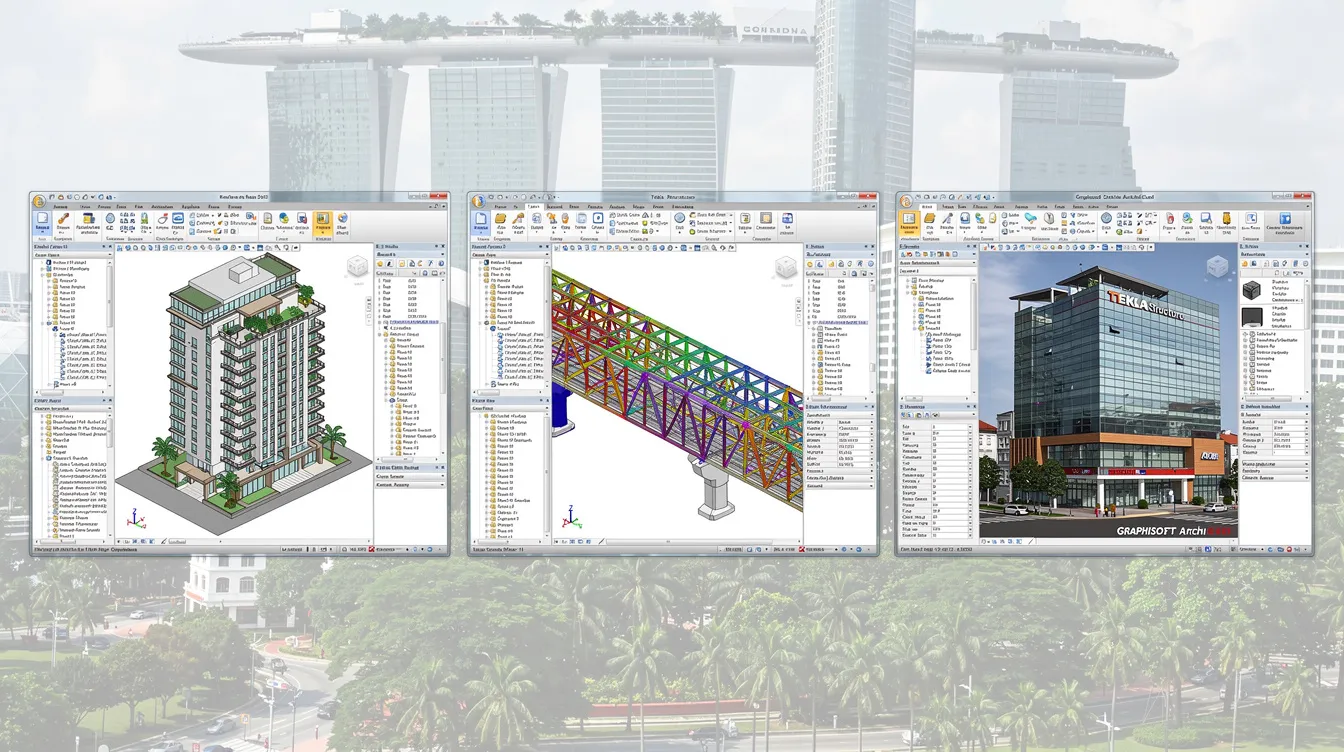
Singapore hosts over 50 specialized BIM companies, ranging from boutique consultancies like AMAN Engineering and AcePLP to divisions within international firms such as Surbana Jurong and AECOM. Their services span 3D modeling through 6D facility management data, with regulatory compliance for BCA, URA, SCDF, PUB, LTA, NEA, and NParks submissions.
After reading this guide, you will be able to:
-
Distinguish between core BIM service categories and match them to your project needs
-
Understand CORENET X compliance requirements and IFC-SG submission standards
-
Evaluate BIM companies using concrete criteria tied to project outcomes
-
Identify pricing structures and engagement models that fit your project scope
-
Avoid common pitfalls when engaging BIM service providers in Singapore

Understanding BIM Services in Singapore
Building Information Modeling is the process of creating and managing digital representations of a building’s physical and functional characteristics across its entire project lifecycle. In Singapore, BIM is not optional for most mid-to-large projects. The BCA’s Integrated Digital Delivery (IDD) framework covers design, fabrication, construction, and asset management, and approximately 53% of firms surveyed have already implemented IDD across some of their projects.
CORENET X, co-created by BCA and URA, transformed regulatory approval workflows by requiring BIM-based digital submissions. From 1 October 2025, projects with GFA ≥ 30,000 m² had to submit via CORENET X. As of 1 October 2026, this threshold dropped to GFA ≥ 5,000 m². BIM models must comply with CORENET X submission standards, be delivered in IFC-SG format (an IFC 4-based extension adapted for Singapore’s regulatory needs), and include geo-referencing in the SVY21 coordinate system with Singapore Height Datum for elevation.
Core BIM Service Categories
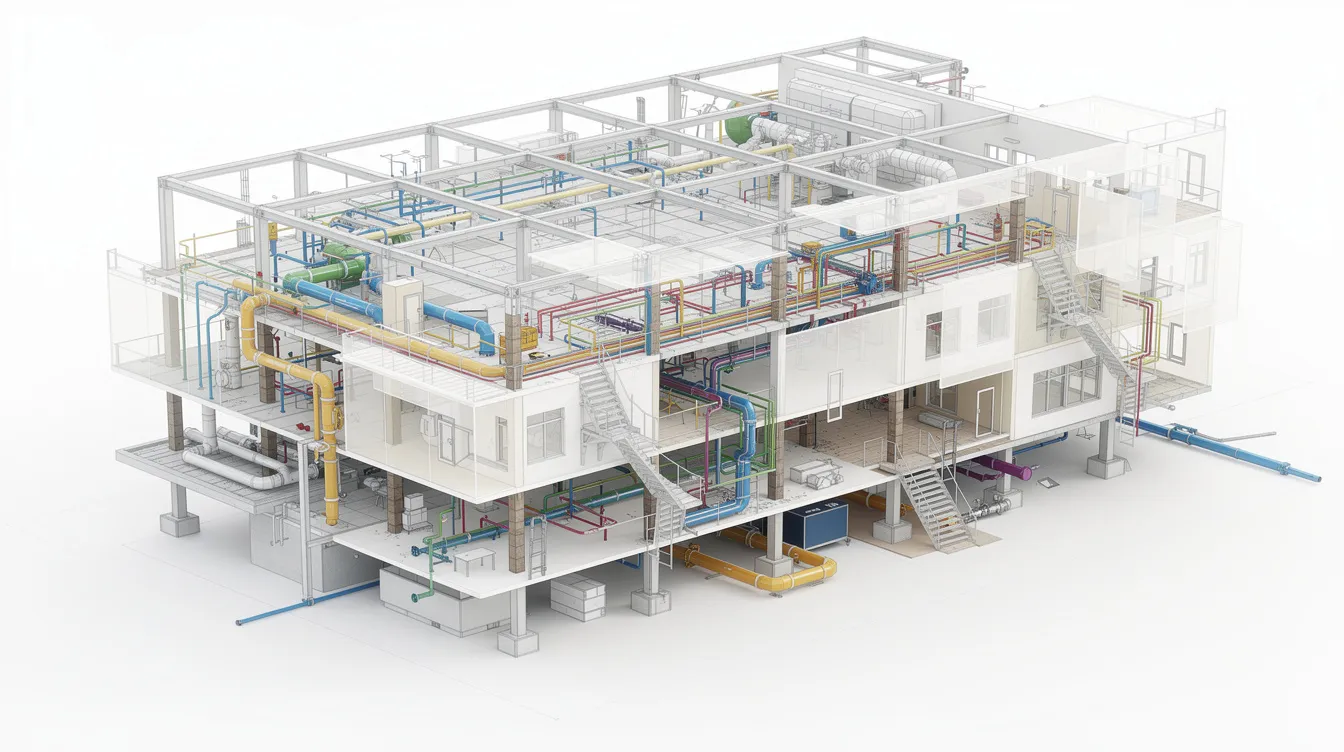
BIM services in the Singapore market break into distinct capability tiers. 3D BIM modeling covers architectural, structural, and MEP disciplines, producing coordinated digital models that support architects, engineers, and contractors working on the same project. MEP BIM services handle mechanical, electrical, and plumbing systems integration, which is where most interdisciplinary clashes occur in complex buildings.
Beyond geometry, BIM can include 4D construction simulations and 5D quantity takeoffs. 4D scheduling ties model elements to construction sequences, letting project teams visualize build order and identify logistics conflicts before they happen on site. 5D cost estimation attaches unit costs to model quantities, producing real-time budget tracking as designs change. 6D modeling embeds operations and maintenance data for facility management handover.
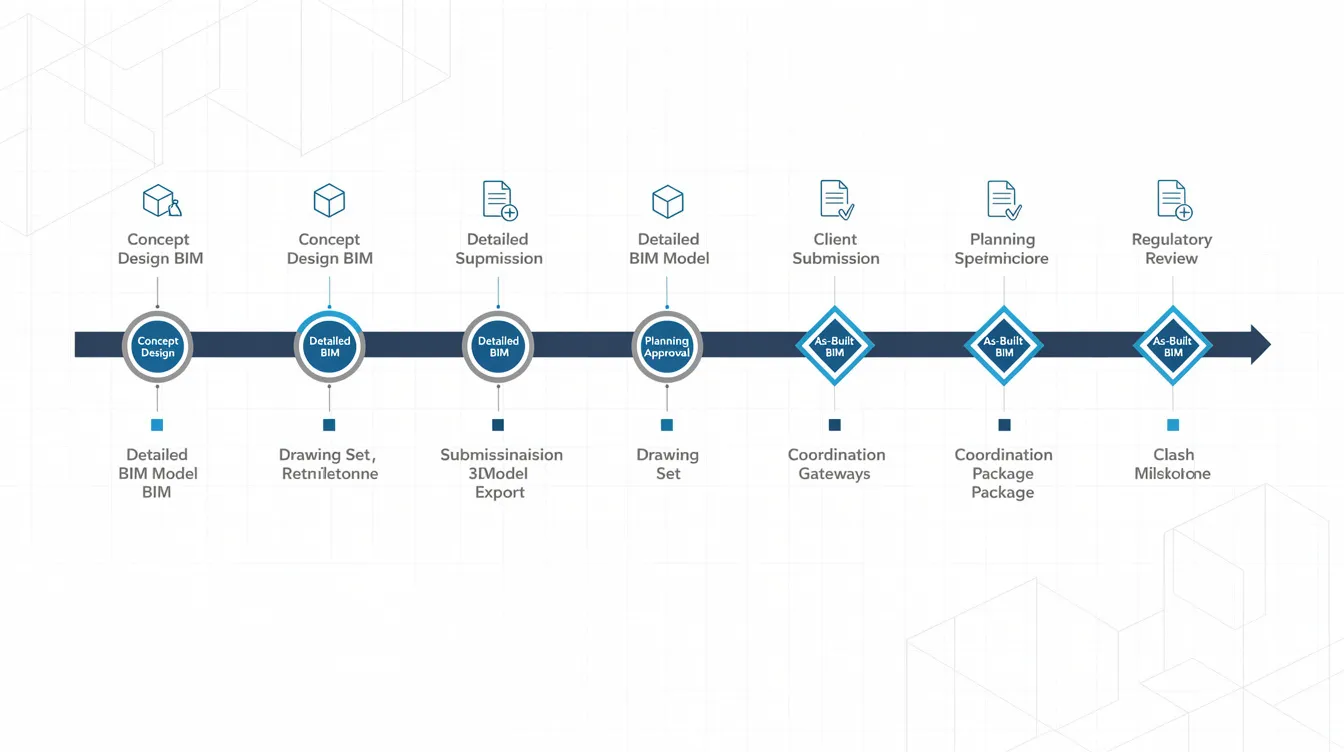
Each tier connects directly to regulatory compliance. BIM Execution Plans (BEPs) are essential for outlining how BIM will be implemented in projects. Under CORENET X, the BEP must define model scope, deliverables, discipline division, and timing of submissions across Design, Construction, and Completion Gateways.
Regulatory Compliance Services
BIM models must include parameters for URA, LTA, PUB, SCDF, and NEA. Authority submissions in Singapore require compliance with BCA standards, and experience with BCA’s digital delivery requirements is crucial for submissions. A BIM company handling regulatory compliance must coordinate clearances across multiple agencies, embedding the specific compliance information each authority requires into the model itself.
For fixed installations such as lifts, escalators, and mechanized car parking systems, BCA has published Revit template families (.rfa files) that must be used in submissions. Model files exceeding 800 MB must be split into parts; zipped submissions are not accepted. BIM service providers must be familiar with local regulatory standards and capable of producing IFC-SG models that retain all required attributes without data loss during export.
The built environment sector in Singapore is moving toward automated compliance checking, with model checker tools progressively introduced to verify submissions against the CORENET X Code of Practice before they reach authorities. Firms that have invested in these verification workflows deliver higher first-time approval rates.
Understanding these compliance layers sets the foundation for evaluating what specific service specializations a BIM company should offer.
Key BIM Service Specializations
The regulatory compliance foundation described above determines the minimum capabilities any BIM company in Singapore must have. What separates firms is the depth and breadth of their specializations across the project lifecycle.
Design Development and Coordination
BIM coordination is vital for resolving interdisciplinary clashes in construction projects. In a typical multi-story mixed-use development, architectural BIM services produce the spatial layout, structural models define the load-bearing framework, and MEP models route ductwork, piping, and cable trays through the same spaces. Without BIM coordination services, conflicts between these systems emerge only during construction, when fixing them costs 10 to 50 times more than resolving them in the model.
Architectural design enhances project outcomes through improved collaboration, communication, and coordination among project stakeholders. 3D models improve design review processes and stakeholder engagement; at JTC’s CleanTech Two Block B project, VR-enabled design reviews cut design stage review time by approximately 30%. Architectural design services can reduce costly errors and rework, and effective architectural design requires clear communication among all parties involved in the project. BIM coordination enhances architectural design efficiency and resource allocation by centralizing all discipline models in a Common Data Environment, which is crucial for effective BIM project management across teams.
Model federation pulls individual discipline models into a single coordinated view. The BIM coordinator checks for spatial conflicts, clearance violations, and constructability issues; the BIM manager oversees the overall model strategy and ensures alignment with the BEP. BIM improves project efficiency by reducing rework throughout the design development phase.

Construction Phase Services
During construction, BIM services shift from design intent to field execution. As-built modeling captures actual conditions on site, and scan-to-BIM technology creates accurate as-built models from point cloud data captured by 3D laser scanning. 3D laser scanning captures large amounts of site data in hours rather than the weeks required for manual surveying.
Quantity takeoffs extracted from 5D models feed directly into cost estimation and material tracking. At the CleanTech Two Block B project, integrating BIM with construction progress monitoring achieved approximately 25% time savings in construction and safety documentation. Woh Hup, a major Singapore contractor, trained internal staff as BIM Master Trainers, producing a 10% overall productivity improvement and redesigning 14 job roles to incorporate digital workflows.
Construction sequencing support through 4D scheduling lets project teams simulate installation order, crane positioning, and material staging. This is where shop drawing production connects directly with BIM models, ensuring fabrication drawings match the coordinated digital model.
Facilities Management Integration
The final stage of BIM value delivery happens at handover. COBie (Construction Operations Building Information Exchange) data preparation structures equipment specifications, warranty information, material details, and maintenance schedules for import into facility management systems. BCA’s BIM Guide for Asset Information Delivery, launched in 2018, defines what asset information must be included at handover for long-term operations.
Digital twins are increasingly adopted in the construction sector to enhance project lifecycle management, connecting the as-built BIM model with IoT sensors, building management systems, and real-time operational data. Among BCA’s 19 IDD essential use cases, “Asset Model Handover” and “Smart FM” require BIM providers to structure data so building owners can use it for ongoing operations without rebuilding the information from scratch.
Approximately 38.71% of organizations in Singapore reported implementing IDD across all four project phases (design, fabrication, construction, asset management), and 64.52% plan IDD implementation for approximately 191 upcoming projects in the next three years, representing a projected 28.2% growth in project count adopting IDD.
These lifecycle services form the complete value proposition of a BIM consulting engagement. The next question is how to choose the right provider.
How to Choose the Right BIM Company in Singapore
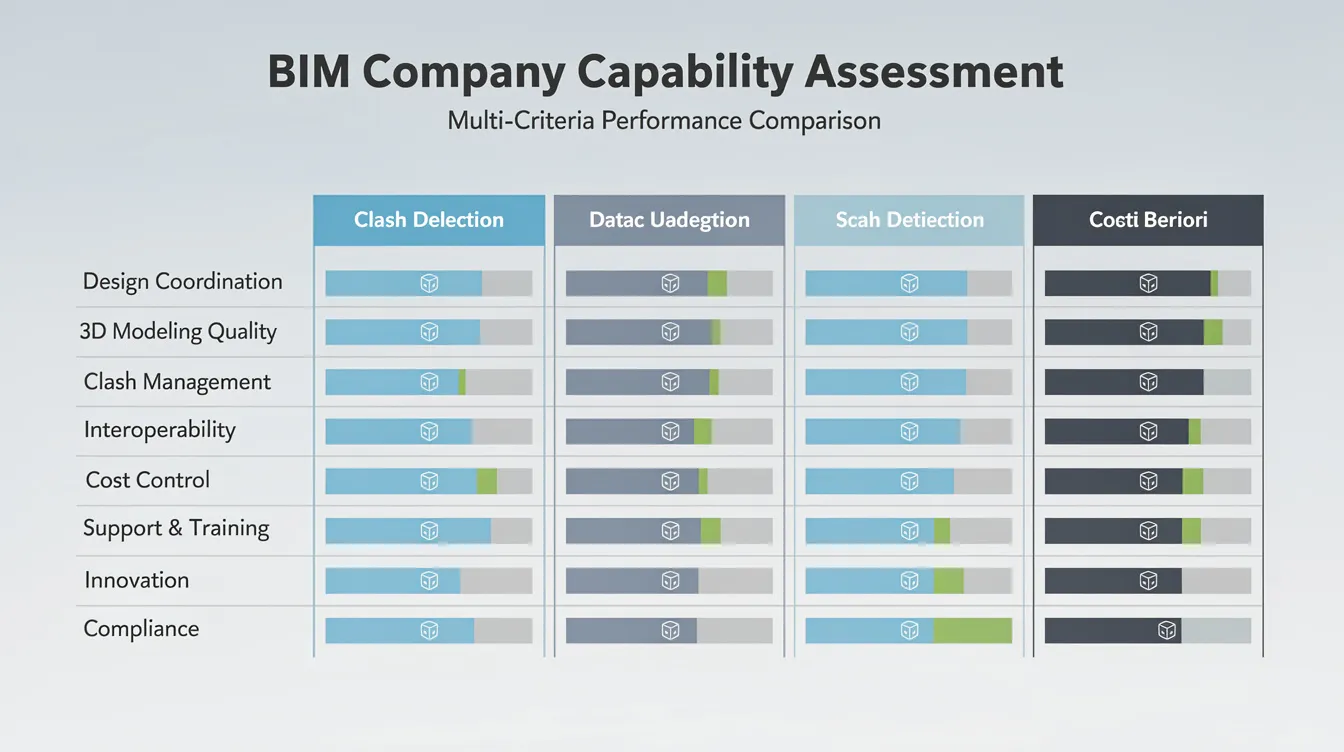
Selecting a BIM partner requires matching their technical capabilities to your project deliverables, regulatory requirements, and internal team capacity. BIM implementation fails most often at the selection stage, when companies hire based on price alone without confirming regulatory experience or discipline-specific depth.
Evaluation Criteria and Process
Companies need external BIM support when their in-house BIM team lacks CORENET X submission experience, when project complexity spans multiple authority approvals, or when specialized services like Tekla 3D structural steel modeling or M&E engineering coordination fall outside internal capabilities.
Follow this evaluation sequence:
-
Confirm CORENET X compliance experience. Ask for specific submission records. A firm that has navigated BCA plan submissions across Design, Construction, and Completion Gateways will understand IFC-SG export requirements, geo-referencing in SVY21, and the specific data attributes each authority checks.
-
Evaluate discipline-specific expertise. A project needing architectural BIM, structural steel detailing, and MEP coordination requires a firm experienced in all three, or a firm that manages federated models from specialist subcontractors. ISO 19650, the international standard for managing information using BIM, provides a framework for evaluating how firms organize their information delivery processes.
-
Review portfolio relevance. A BIM project for a 40-story residential tower differs from a logistics warehouse or an MRT station. Ask for case studies in your building type and GFA range.
-
Confirm certified personnel. Check for Certified Digital Delivery Managers (DDMs) on staff, which BCA requires for government projects. The availability of accredited professionals directly affects submission quality and approval timelines.
-
Analyze pricing models against project delivery scope. Fixed-fee models work for well-defined scopes; retainer models suit multi-phase projects with evolving requirements.
Service Model Comparison
|
Service Model |
Embedded Staff |
Project-Based |
Hybrid Approach |
|---|---|---|---|
|
Cost Structure |
Monthly retainer |
Fixed project fee |
Scaled service levels |
|
Control Level |
Direct management by client |
Outcome-focused delivery |
Flexible oversight |
|
Best For |
Large ongoing projects (>24 months) |
Defined-scope work with clear deliverables |
Multi-phase projects with variable intensity |
|
Risk |
Staff utilization gaps during slow phases |
Change orders if scope shifts |
Requires clear phase definitions |
Among top BIM companies in Singapore, AMAN Engineering Consultancy combines regulatory submission, inspection (PSI/PFI), structural and facade inspection, value engineering, and overseas PE endorsements under one roof. Value engineering reduces project costs by 10-30%, identifies unnecessary costs without affecting function, involves a multi-disciplinary team for effective solutions, and can enhance project delivery timelines. This breadth matters for developers and SMEs that do not maintain large in-house BIM teams.
Other established providers include AcePLP (over 200 BIM specialists; supports ArchiCAD, Revit, and Tekla), Atlas Industries (BIM modelling and management since 2013), and larger consultancies like Surbana Jurong and Arcadis that handle major government and infrastructure projects. The Shared Services Provider programme run by BCA and STAS helps smaller firms access trained BIM manpower without building full internal departments.
Your decision depends on whether you need a specialist for a single discipline, a generalist for end-to-end project coordination, or a capacity supplement through the Shared Services model.
Common Challenges and Solutions
Engaging BIM companies in Singapore produces four recurring problems. Each has a tested response.
CORENET X Submission Delays
Submissions fail when models contain incorrect IFC-SG attributes, missing geo-referencing data, or oversized files that were not split according to BCA specifications. Select companies that can demonstrate first-time approval records for CORENET X submissions and use automated model checking tools before submission. Firms encouraged to run pilot submissions before mandatory deadlines have built the experience to avoid these delays. Impact assessments evaluate potential environmental effects of projects, help ensure compliance with local regulations and standards, identify risks and mitigation strategies early in project planning, and can reduce project delays and costs when integrated into BIM workflows from the outset.
Mid-Project Staff Changes
When a BIM coordinator leaves mid-project, model continuity breaks. The replacement must understand the BEP, the model’s naming conventions, and every clash resolution decision made to date. Establish continuity clauses in contracts that require documented handover procedures and backup coordinator availability. Common Data Environments help here; they preserve the decision trail regardless of staff turnover. Structural inspections ensure compliance with local building codes, help identify potential safety hazards in construction projects, and are critical for maintaining building integrity. Regular structural inspections can prevent costly repairs later, and the Building and Construction Authority mandates structural inspections in Singapore, so your BIM partner must integrate inspection findings into the model throughout the project.
Cost Overruns and Scope Creep
A BIM project that begins as “3D modeling” often expands to include clash detection, authority submissions, construction sequencing, and FM data without corresponding contract adjustments. Define clear project deliverables upfront. Specify exactly which model elements, LOD levels, and submission gateways are included. Establish change order procedures with pre-agreed rates. Fixed-price models for well-defined scopes protect both parties; hybrid models with capped variable components handle evolving requirements without open-ended exposure.
Integration with Existing Workflows
Project teams accustomed to 2D CAD workflows resist BIM adoption when it disrupts established processes. Choose companies that offer training support and phased implementation. Woh Hup’s approach, training internal staff as BIM Master Trainers and redesigning job roles, produced measurable productivity gains and brought subcontractors into BIM workflows. Impact assessments are crucial for sustainable construction practices and should be embedded in project planning to support seamless coordination between existing processes and new digital workflows.
These challenges are solvable with the right contractual structures and provider selection. Success depends on specificity: specific deliverables, specific personnel commitments, and specific compliance targets.
Conclusion and Next Steps
Singapore’s BIM landscape in 2026 offers options across the full spectrum, from local specialists handling single-discipline modeling to firms delivering end-to-end digital delivery compliance. The critical differentiator is regulatory capability; a BIM company that cannot produce compliant IFC-SG models, navigate multi-agency submissions, and deliver structured asset data at handover will create more problems than it solves. Building Information Modeling is essential for regulatory compliance in Singapore, and the lowered CORENET X threshold (GFA ≥ 5,000 m² as of October 2026) means this applies to a wider range of projects than ever before.
Take these steps to select and engage your BIM partner:
-
Define your project’s BIM requirements: which disciplines, which authorities, which submission gateways, and whether you need FM handover data
-
Request portfolios from 3-5 companies with documented experience in your project type and GFA range
-
Conduct capability assessments focused on CORENET X submission history, certified DDM availability, and IFC-SG export proficiency
-
Negotiate a pilot phase or trial project scope to evaluate working relationship, communication cadence, and deliverable quality before committing to the full engagement
For deeper exploration, consider reviewing BCA approved document standards, URA planning permission processes, and SCDF building safety requirements that intersect with BIM submission workflows.
Additional Resources
-
CORENET X Code of Practice (First Edition) covering model content requirements, IFC-SG specifications, and submission gateway definitions
-
BCA IDD Technical Guide listing all 19 essential IDD use cases with implementation guidance
-
BCA BIM Guide for Asset Information Delivery defining handover data requirements for facility management
-
STAS Shared Services Provider directory for firms seeking BIM manpower and professional services support
-
Professional associations: Singapore Institute of Architects, Association of Consulting Engineers Singapore (ACES), and BCA-registered BIM user groups