
Core Drilling vs. Non-Destructive Methods: Finding the Balance in Structural Audits
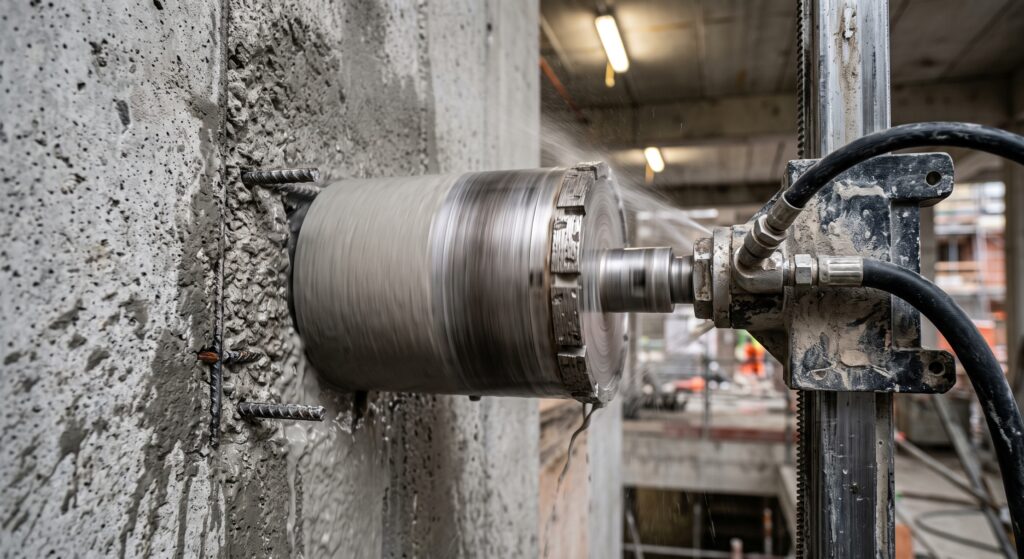
The Paramount Importance of Comprehensive Structural Audits Navigating the incredibly complex landscape of modern structural engineering requires a profoundly nuanced understanding of exactly how environmental degradation, continuous mechanical loading, and subtle chemical alterations progressively compromise the long-term integrity of aging reinforced concrete structures1. Across the rapidly developing global landscape, structural engineers, regulatory authorities, and extensive […]
Diagnostic Frameworks for Rebar Mapping and Subsurface Anomaly Detection
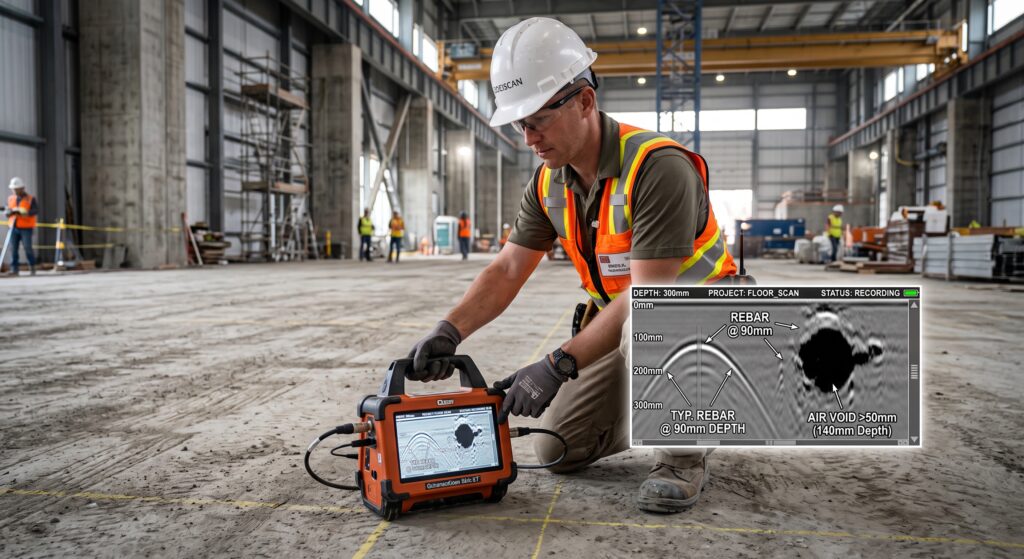
The Imperative of Advanced Non-Destructive Testing in Complex Modern Infrastructure Ground Penetrating Radar (GPR) has unequivocally established itself as an absolutely indispensable non-destructive testing methodology utilized heavily by structural engineers and geophysical technicians across the globe for the meticulous evaluation of aging concrete infrastructure prior to the commencement of invasive coring, cutting, or anchoring operations1. […]
Concrete Diagnostics : UPV vs. Rebound Hammer Testing
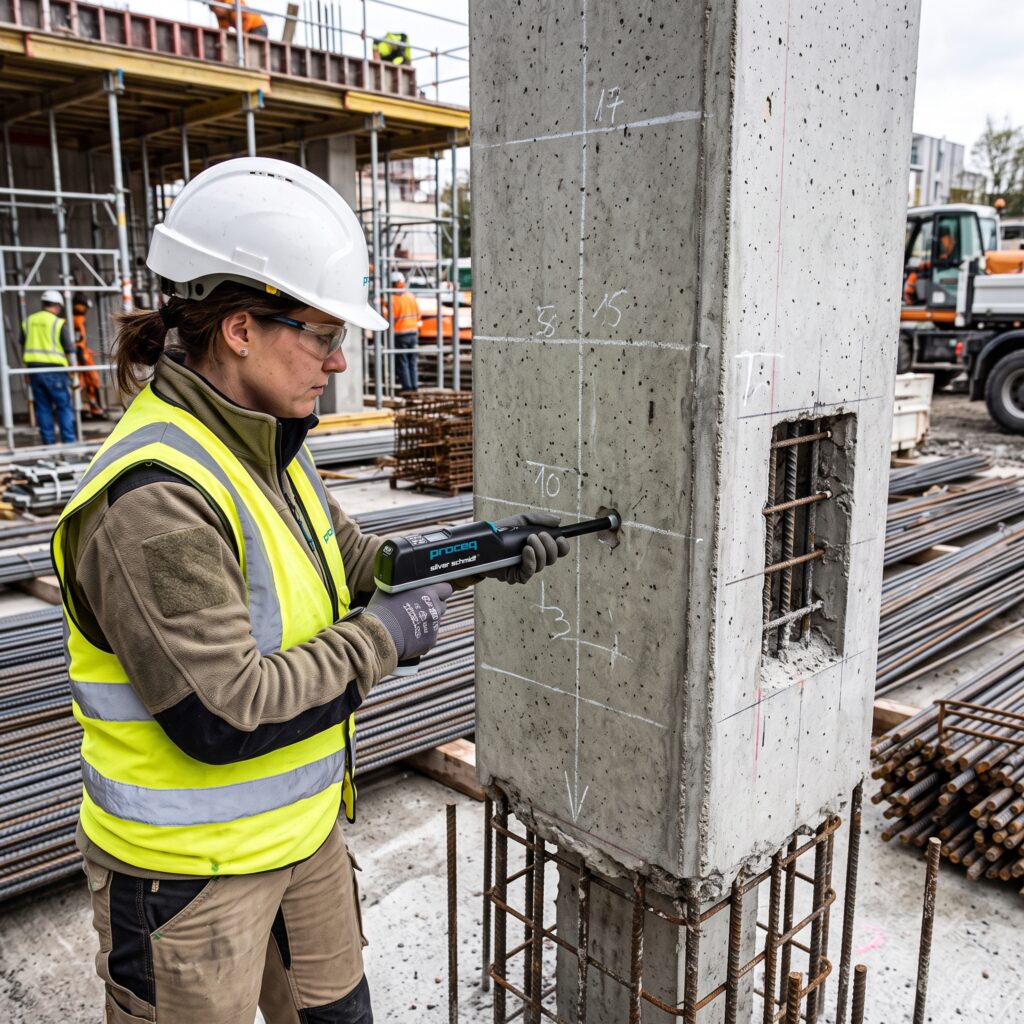
The Fundamentals of Structural Health and Non-Destructive Testing The built environment is the foundation of modern economic and societal operation, heavily reliant on the structural integrity, durability, and longevity of reinforced concrete. Despite its historical reputation as a highly durable and relatively maintenance-free material, concrete is fundamentally porous and continuously subjected to a barrage of […]
Structural Health Monitoring and Retrofitting of Existing Steel Structures in Singapore
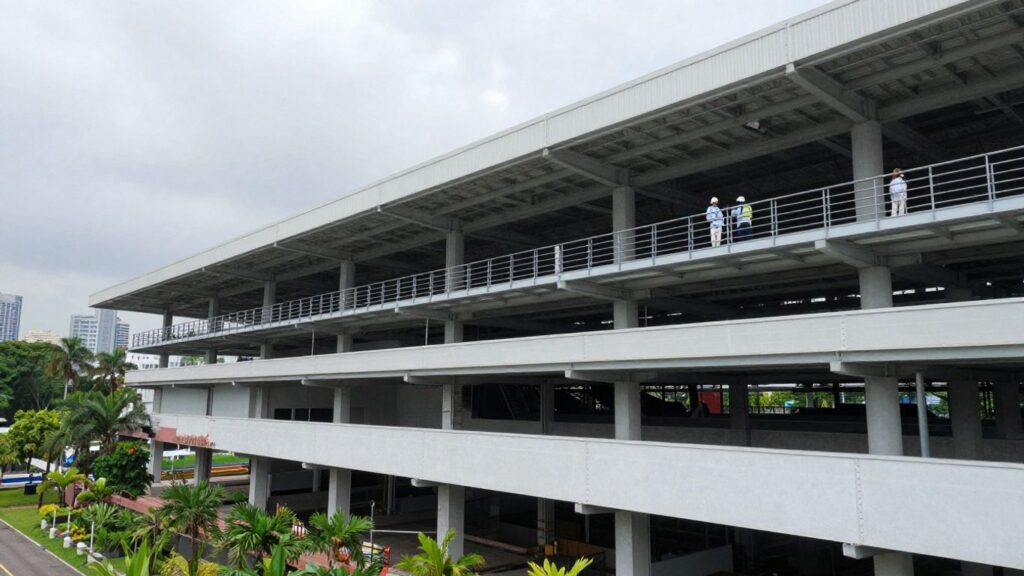
Key Takeaways Existing steel buildings need periodic assessment because corrosion, changing loads, fatigue, and alterations can gradually reduce their safety margins. A practical programme combines engineering judgment, targeted monitoring, sound records, and carefully sequenced retrofit work. Establish a documented baseline before deciding what to repair or monitor. Consider Singapore’s heat, humidity, rainfall, and coastal exposure […]
Integrating BIM (Tekla/Revit) with FEA Solvers (SAP2000/ANSYS/ETABS): Workflow Best Practices
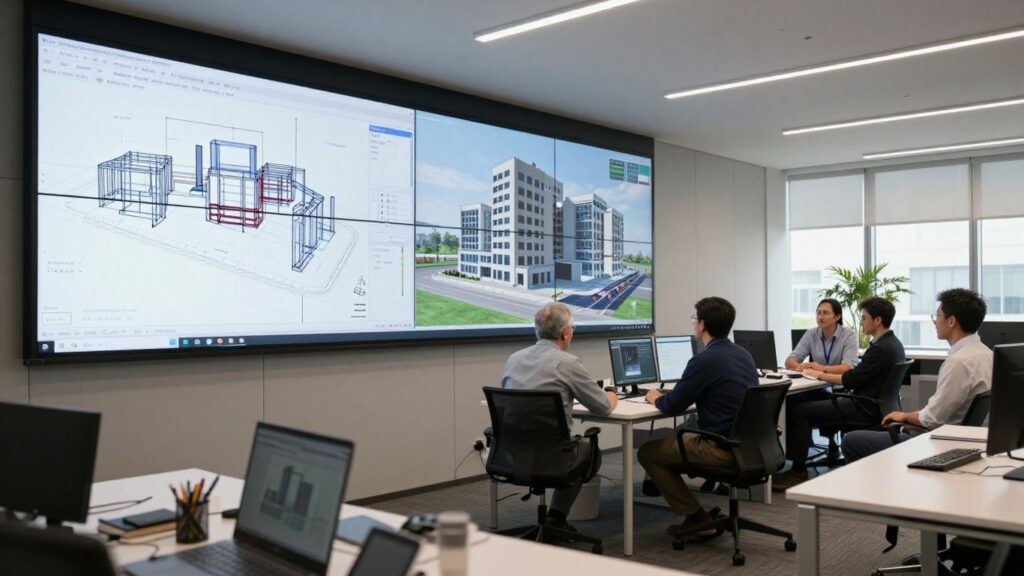
Key Takeaways A reliable BIM to FEA workflow depends less on a perfect file exchange than on clear engineering decisions before, during, and after the transfer. Define analysis objectives, responsibilities, model uses, and exchange rules before modeling begins. Separate physical BIM geometry from the simplified analytical geometry required by the solver. Check coordinates, connectivity, materials, […]
Generative Design and Topology Optimization for Structural Steel Components
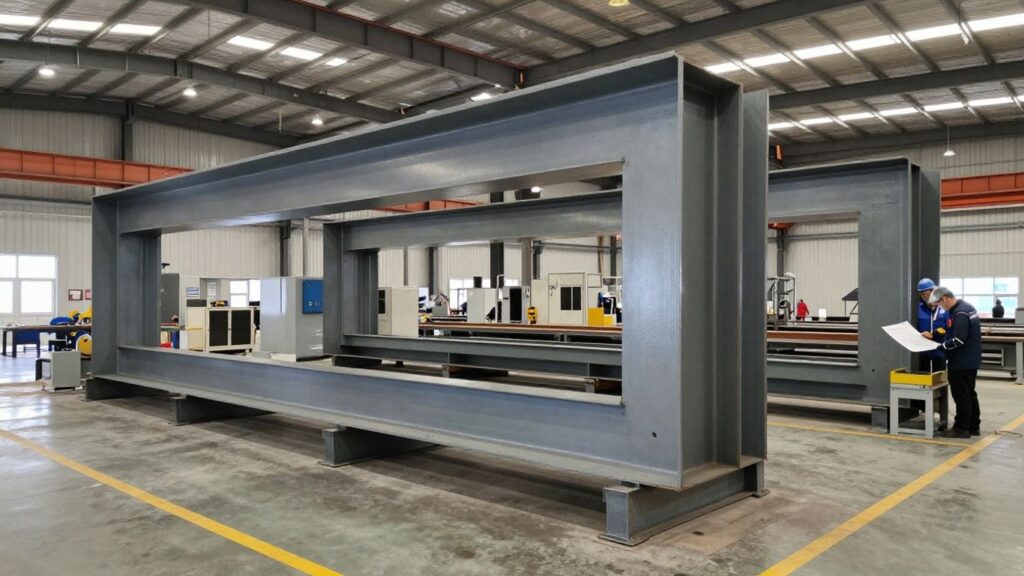
Key Takeaways Generative design can widen the range of structural steel concepts considered, but it does not replace engineering judgment or code-based verification. AI and FEA-driven topology optimization connects computational exploration with structural performance checks. Reliable results depend on accurate loads, supports, material data, mesh settings, and design boundaries. Steel-specific connection, stability, fabrication, and erection […]
High-Strength Steel (S460 to S690) in Singapore Construction: Opportunities and FEA Challenges
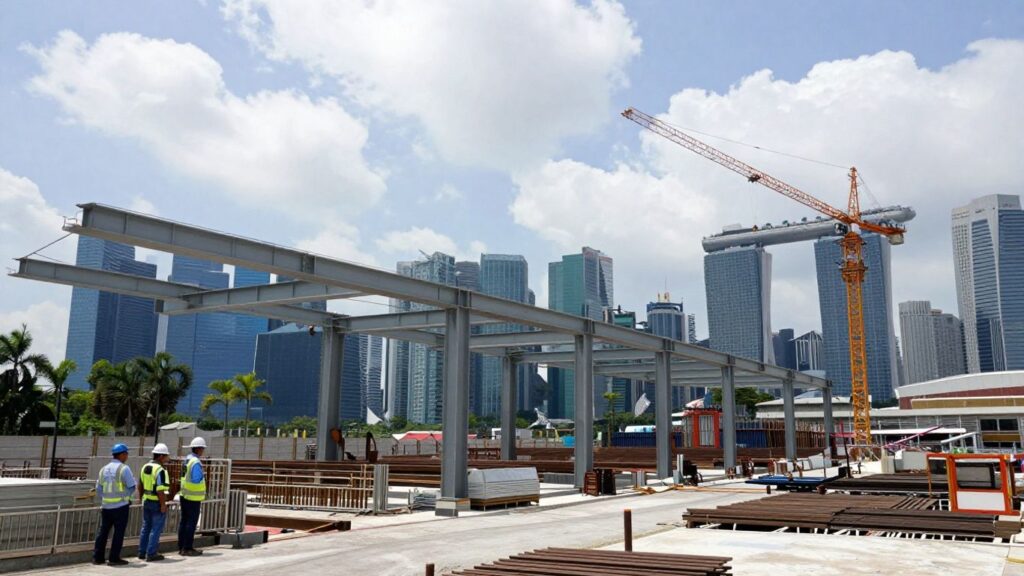
Key Takeaways High-strength steel can reduce structural weight and support ambitious spans, but its benefits depend on disciplined design, detailing, procurement, and analysis. S460 through S690 grades offer increasing yield strength, with corresponding questions about ductility, toughness, and weldability. Smaller members can improve usable floor area and reduce lifting or handling demands, although fabrication costs […]
Common Pitfalls in Structural Steel FEA Modeling (And How to Avoid Them)
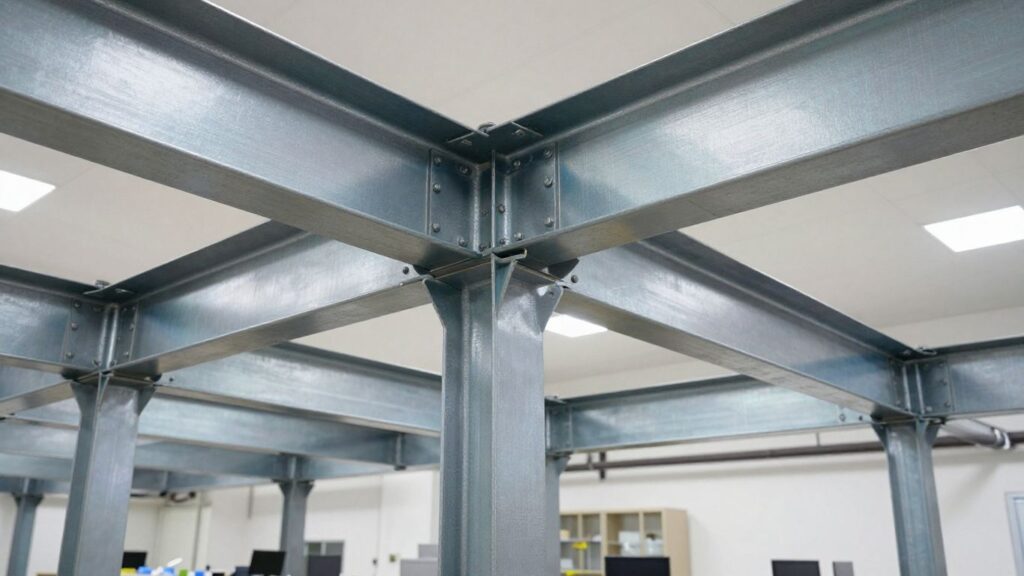
Key Takeaways Reliable FEA modelling depends less on visual complexity than on sound engineering judgment. The most useful model is one that represents the real load path, material behavior, restraints, imperfections, and limitations clearly. Idealize the structure according to the behavior being investigated. Use verified steel grades, section properties, and nonlinear material data. Apply supports, […]
Human-Induced Vibration Analysis in Long-Span Steel Pedestrian Bridges in Singapore

Key Takeaways Human-induced vibration is primarily a serviceability issue, but it must be assessed alongside strength, stability, durability, and constructability. A disciplined FEA workflow helps connect pedestrian behaviour, structural dynamics, comfort criteria, and practical design decisions. Slender steel bridges can respond noticeably to ordinary pedestrian activity. Natural frequencies, mode shapes, damping, and mass distribution govern […]
Seismic and Wind Dynamic Response of Tall Steel Structures in Singapore

Key Takeaways Tall steel buildings in Singapore are usually governed by wind-induced movement, acceleration, and occupant comfort rather than earthquake demand alone. A dependable design therefore connects local environmental data, code interpretation, dynamic analysis, constructability, and monitoring from the outset. Wind assessment should address along-wind, across-wind, and torsional effects. Singapore’s low seismicity still requires a […]