
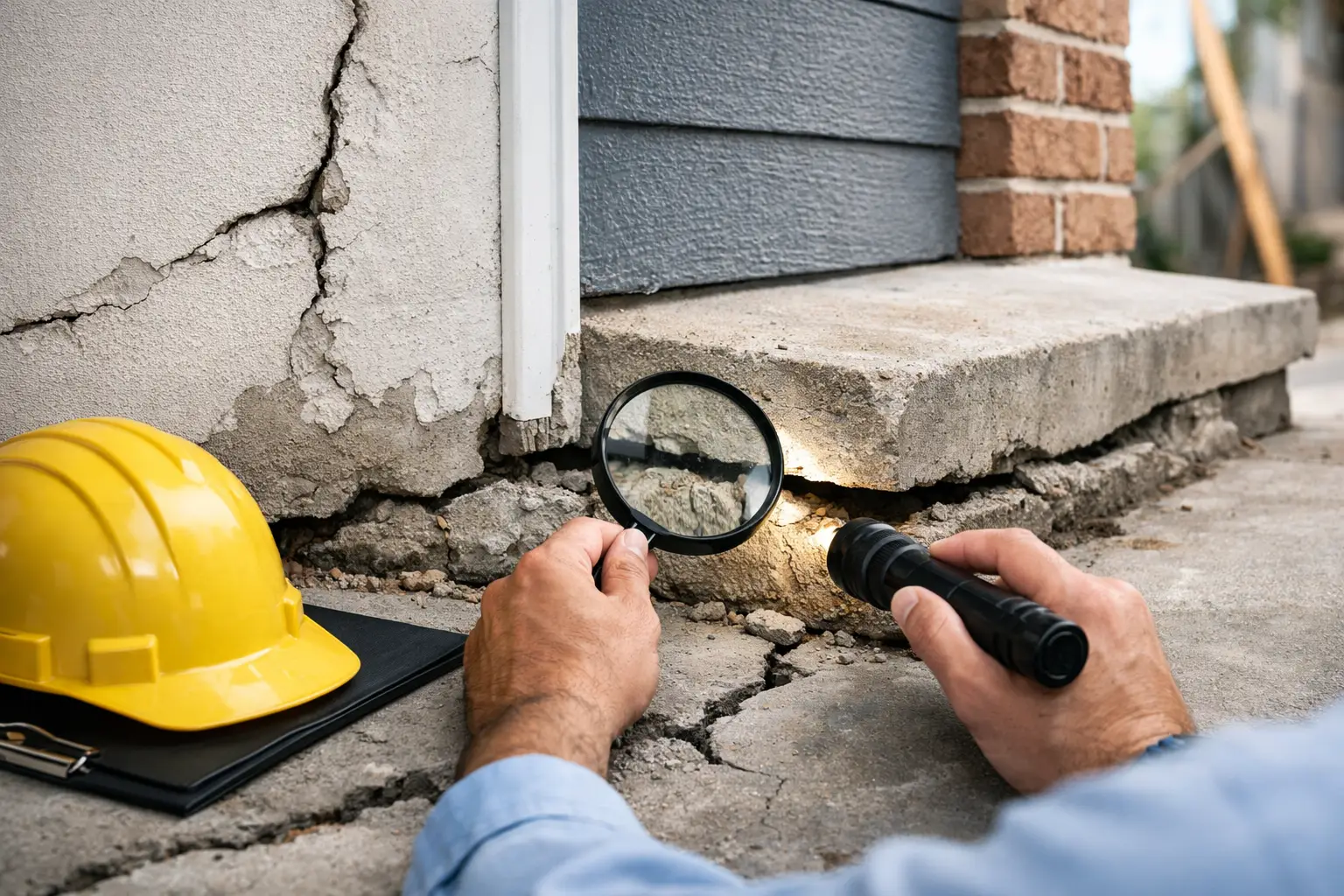
A hairline crack above a door is easy to ignore. A door that suddenly starts sticking during humid weather may seem minor too. But when these changes appear together, or keep getting worse, they can point to larger building movement. Knowing the top signs of structural distress helps owners, buyers, and facility teams act before a repair becomes a safety issue, a project delay, or a compliance problem.
Structural distress is not a single defect. It is a condition where a building element shows evidence that loads, movement, deterioration, or poor detailing are affecting its performance. Sometimes the cause is age. Sometimes it comes from water ingress, unauthorized alterations, settlement, corrosion, impact, overloading, or changes made during renovation. The visible symptom matters, but the pattern, location, and rate of change matter more.
What structural distress actually looks like
The most common mistake is treating every crack as structural, or assuming none of them are. In practice, some defects are cosmetic, while others are early warnings of movement or capacity issues. The difference usually comes from context. A thin plaster crack at a stable wall finish is different from a widening diagonal crack running from a window corner, especially if it appears with sloping floors or gaps at frames.
Structural distress often shows up as movement, separation, deformation, or material breakdown. In concrete buildings, this may include spalling, rust staining, exposed reinforcement, deflection, or persistent cracking. In masonry, it may present as stepped cracks, bulging, or separation at joints. In steel members, corrosion, distortion, and failed connections can be red flags. In timber structures, decay, insect damage, and sagging are common indicators.
Top signs of structural distress in buildings
Cracks are usually the first thing people notice, but not all cracks carry the same level of concern. Diagonal cracks near openings, cracks that continue through finishes into the substrate, or cracks that widen over time deserve professional review. Vertical and horizontal cracks can also be significant, particularly in retaining walls, columns, and load-bearing walls. If multiple cracks appear in different parts of the building, that may indicate broader settlement or load redistribution rather than a localized surface defect.
Uneven floors are another common sign. If a floor feels sloped, bouncy, or sunken, the issue may involve slab settlement, deflected beams, or weakening support elements below. In residential properties, occupants often notice this when furniture no longer sits level or doors swing open on their own. In commercial and industrial spaces, uneven floors can also affect equipment alignment, storage systems, and operational safety.
Doors and windows that no longer open or close properly can point to frame distortion caused by movement in surrounding structural elements. This is especially relevant when the problem appears suddenly, affects several openings at once, or is paired with visible wall cracking. Seasonal movement can cause minor changes, so this is one of those areas where it depends on severity and repeat behavior. A single sticking door may be maintenance-related. Several distorted openings across one elevation may not be.
Concrete spalling should never be dismissed as only a finish problem. When concrete breaks away and exposes reinforcement, the underlying issue is often corrosion, water ingress, inadequate cover, or long-term deterioration. Once steel reinforcement rusts, it expands and pushes the concrete outward, accelerating further damage. This is common in façades, balconies, beam soffits, car parks, and wet areas. Beyond structural capacity concerns, loose concrete also becomes a public safety hazard.
Rust stains, damp patches, and persistent water ingress can be early indicators of hidden structural deterioration. Water is one of the most destructive factors in building performance because it does not only affect finishes. It can corrode reinforcement, weaken connections, damage masonry, and contribute to mold and material breakdown. The source may be a failed waterproofing layer, plumbing leak, façade defect, roof issue, or poor drainage. Identifying the structural consequence is just as important as stopping the leak.
Deflection or visible sagging is a higher-risk sign. Beams, slabs, canopies, lintels, and roof members should not show unusual downward movement, bowing, or misalignment. Some deflection is anticipated in design, but visible or increasing sag is a warning that the member may be overstressed, deteriorated, or altered beyond its intended loading. This is particularly important after renovations, equipment installation, mezzanine additions, or changes in occupancy that increase imposed loads.
Separation between building elements can also signal structural movement. Gaps between walls and ceilings, walls and columns, stair landings and adjacent slabs, or façade elements and the main structure may indicate settlement, thermal movement, differential movement, or failed connections. These details are often overlooked because they develop gradually. However, progressive separation should be documented and assessed before it affects stability or weather tightness.
When the signs point to urgent risk
Some conditions require immediate action rather than routine monitoring. Rapidly widening cracks, falling concrete, severely deflected members, sudden floor settlement, or visible movement after impact or construction works nearby should be treated as urgent. The same applies if a retaining wall is leaning, a column shows crushing or major spalling, or a structural element has been cut, drilled, or modified without engineering review.
Buildings do not always fail dramatically. More often, they show a sequence of warnings. The risk increases when defects appear in combination. For example, cracking plus water ingress plus corrosion plus deflection is far more serious than any one symptom in isolation. Occupants and managers should also take complaints seriously when they come from multiple users in the same area, because repeated observations often reveal a real pattern.
Why structural distress happens
There is rarely a single universal cause. Settlement may result from soil movement, nearby excavation, drainage changes, or poor ground conditions. Cracking may come from thermal expansion, shrinkage, overloading, or differential movement between materials. Concrete deterioration may be driven by carbonation, chloride exposure, insufficient cover, or long-term moisture penetration.
Alterations are another frequent source of problems. Openings cut into walls, new rooftop equipment, platform extensions, heavy storage loads, or unauthorized renovations can change the original structural behavior. In many cases, the distress appears months later, which makes the connection less obvious. That is why a proper assessment should consider not just what is visible now, but also what changed before the symptoms started.
What a proper structural assessment should cover
If you notice the top signs of structural distress, the next step should be a methodical engineering review, not guesswork. A qualified structural consultant will typically inspect crack patterns, measure movement, review loading conditions, assess material deterioration, and determine whether immediate stabilization is needed. Depending on the case, this may involve photographic records, crack gauges, hammer sounding, cover meter testing, concrete testing, corrosion assessment, or a review of as-built drawings and renovation history.
For managed properties, the assessment should also consider compliance and documentation requirements. Commercial, industrial, and multi-unit buildings may need formal reports, repair recommendations, façade or structural inspection coordination, and support for authority-facing documentation where required. If the issue affects safety, occupancy, or planned renovation works, delay can create both technical and regulatory complications.
Aman Engineering Consultancy typically sees this in projects where an owner first notices a visible defect, but the real challenge is coordinating inspection, rectification, and approval pathways together. That joined-up approach matters because a technically correct repair still needs to align with actual building conditions, project use, and statutory obligations.
What owners and managers should do right away
Start by documenting the condition clearly. Record the location, date, size, and any recent changes. Photographs taken from the same position over time are useful, especially for cracks, spalling, and separation. If a defect appears active, avoid loading the affected area further until it has been reviewed.
Do not cover the defect before assessment unless there is a safety reason to isolate it. Painting over cracks, patching spalled concrete without diagnosis, or forcing misaligned doors shut can hide evidence that helps identify the cause. Temporary repairs have their place, but only after the condition is understood.
If there is any concern about falling material, restricted access, occupant safety, or compromised structural elements, isolate the area and arrange an inspection promptly. Fast action usually reduces both repair scope and project disruption.
Small defects do not always mean major danger. But visible change in a building is information, and buildings rarely improve by being ignored. The right response is not alarm. It is early, competent assessment that turns uncertainty into a clear repair and compliance plan.