
Demystifying the Finite Element Method

Engineering isn’t always as simple as a pen-and-paper calculation. Sometimes, you’re staring at a piece of hardware—like an engine component or a complex bracket—and the geometry is just too messy for standard formulas. That is when engineers pull out the big gun: the finite element method (FEM). It helps us break down complex physical problems […]
FEA for Impact Loading on Steel Structures for Marine Sector

Key Takeaways Impact scenarios in the marine sector demand rigorous structural assessment to ensure long-term integrity against dynamic loads. Understanding these specific risks leads to more resilient offshore and vessel designs. Marine structures face high-velocity impacts from collisions which require advanced dynamic modeling. Constitutive material models must account for strain rate sensitivity to accurately predict […]
FEM Analysis for Complex Steel Structures

Key Takeaways The finite element method provides a robust framework for simulating the performance of intricate structural assemblies under various design loads. Accurate representation of material properties and geometric configurations remains essential for reliable results in structural simulations. Integration between architectural geometry and analytical models ensures that complex structures meet safety and performance requirements. Stability […]
FEM Analysis for Complex Steel Structures

Key Takeaways The finite element method provides a robust framework for simulating the performance of intricate structural assemblies under various design loads. Accurate representation of material properties and geometric configurations remains essential for reliable results in structural simulations. Integration between architectural geometry and analytical models ensures that complex structures meet safety and performance requirements. Stability […]
Importance of Finite Element Analysis for Buckling of steel structures

Key Takeaways Finite Element Analysis serves as a critical mathematical tool for predicting the stability and performance of modern steel structures. Numerical simulation allows engineers to identify buckling modes that traditional closed-form formulas often overlook. Geometric imperfections and residual stresses are essential parameters for accurate structural modeling. Nonlinear solution methods capture complex post-buckling behavior that […]
Formwork Design: Building Stronger Structures, Smarter
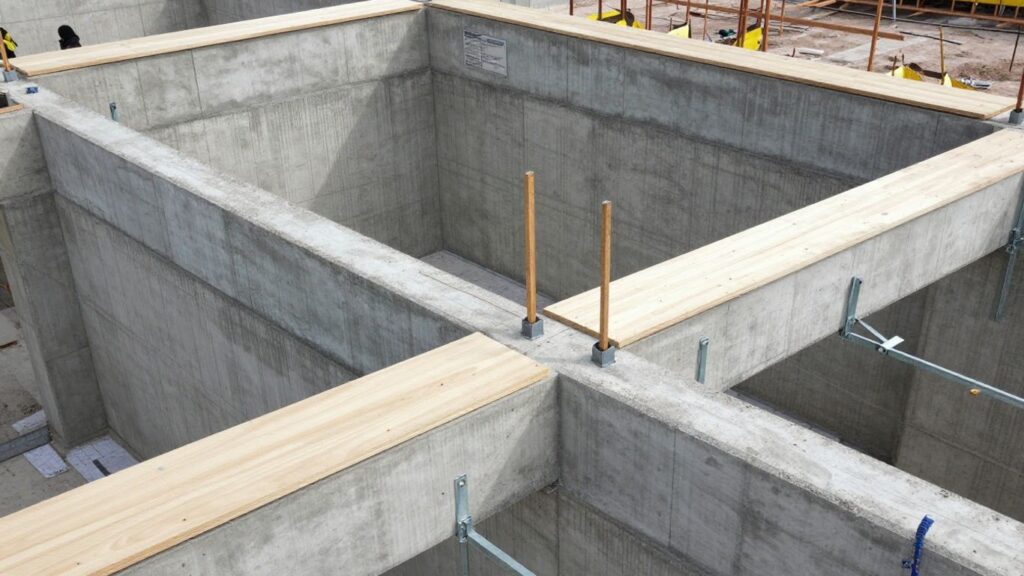
Formwork is the backbone of any concrete construction project, giving shape to wet concrete as it hardens. For taller buildings, the supporting structures, known as centering or scaffolding, are just as important. Think of them as the temporary helpers that allow the permanent parts of a structure to take shape. While smaller jobs often rely […]
Building Safely: A New Approach to Construction Design

Singapore has a big goal: to create a safe and healthy workplace for everyone. They’re aiming not just to match the safety records of developed countries, but to be among the best in the world. One way they’re working towards this is with new guidelines for designing buildings and structures safely. These guidelines focus on […]
RMF Requirements for LTA, PUB, CAG, and Public Infrastructure projects and its role for identifying Risk and Mitigation measures

Working on big projects for places like LTA, PUB, and CAG in Singapore means you really need to get a handle on risks. It’s not just about building stuff; it’s about making sure everything is safe, secure, and follows all the rules. This is where a Risk Management Facilitator becomes super important. They help teams […]
Essential 2024 Fire Code

Impact of the 2023 and 2024 Fire Code Updates: Key Changes Every Structural Engineer Needs to Know The Dawn of a New Regulatory Paradigm The transition from legacy building standards to the 2023 and 2024 editions of the International Building Code (IBC), International Fire Code (IFC), and International Existing Building Code (IEBC) represents a watershed […]