
Key Takeaways
Finite Element Analysis serves as a critical mathematical tool for predicting the stability and performance of modern steel structures.
-
Numerical simulation allows engineers to identify buckling modes that traditional closed-form formulas often overlook.
-
Geometric imperfections and residual stresses are essential parameters for accurate structural modeling.
-
Nonlinear solution methods capture complex post-buckling behavior that is vital for assessing structural reserve capacity.
-
Integrating computational simulations with regulatory standards ensures safer design outcomes for slender and high-strength sections.
-
Proper peer review and verification processes are necessary to validate advanced simulation results before project execution.
The fundamental role of Finite Element Analysis in steel stability
Understanding buckling mechanisms in steel members
Steel members often face instability long before they reach their theoretical material yield strength. Understanding how these elements deform under compression or bending is essential for ensuring long-term structural integrity. Engineers rely on analytical frameworks to visualize internal stresses, which helps in preventing unexpected collapses in steel frames.
Limitations of traditional analytical methods for slender sections
Conventional design equations are typically developed for standard member shapes and simple support conditions. When architects push boundaries with high-slenderness ratios or non-standard profiles, these simplified approaches often fail to account for complex behavior. Professionals must look beyond manual calculations to simulate how members behave under intense load scenarios.
Transitioning from linear to non-linear analysis
Moving away from linear assumptions allows designers to account for changing geometries and material behaviors during loading. While linear models provide a snapshot of stress at low load levels, non-linear techniques provide a higher degree of predictive confidence in structural resilience that linear models cannot match. This step is vital for predicting catastrophic failure phases accurately.
Predictive accuracy in complex steel assemblies
Finite Element Analysis is fundamental for ensuring that large steel assemblies perform as intended in the virtual environment before fabrication begins. By utilizing sophisticated numerical platforms, engineers can evaluate how connections and adjacent members interact under stress. This digital foresight effectively minimizes the need for expensive physical testing prototypes.
Technical Concepts Simplified
Eigenvalue buckling analysis
This is a quick, preliminary test to see the theoretical buckling shapes of a structure. It calculates the load at which a perfect structure would theoretically buckle, helping designers identify weak points early in the process.
P-Delta effects
Imagine a column under a load. When it bows, the load creates extra bending momentum because it is no longer perfectly vertical. P-Delta accounts for this additional stress caused by the structure’s own deformation during loading.
Non-linear analysis
Standard analysis assumes structures behave in simple, predictable ways within a set range. Non-linear analysis is more realistic because it tracks how a structure changes its shape, material strength, and stiffness as it actually bends and deforms under heavy loads.
Modeling geometric imperfections and residual stresses
Simulating initial out-of-straightness and out-of-plumbness
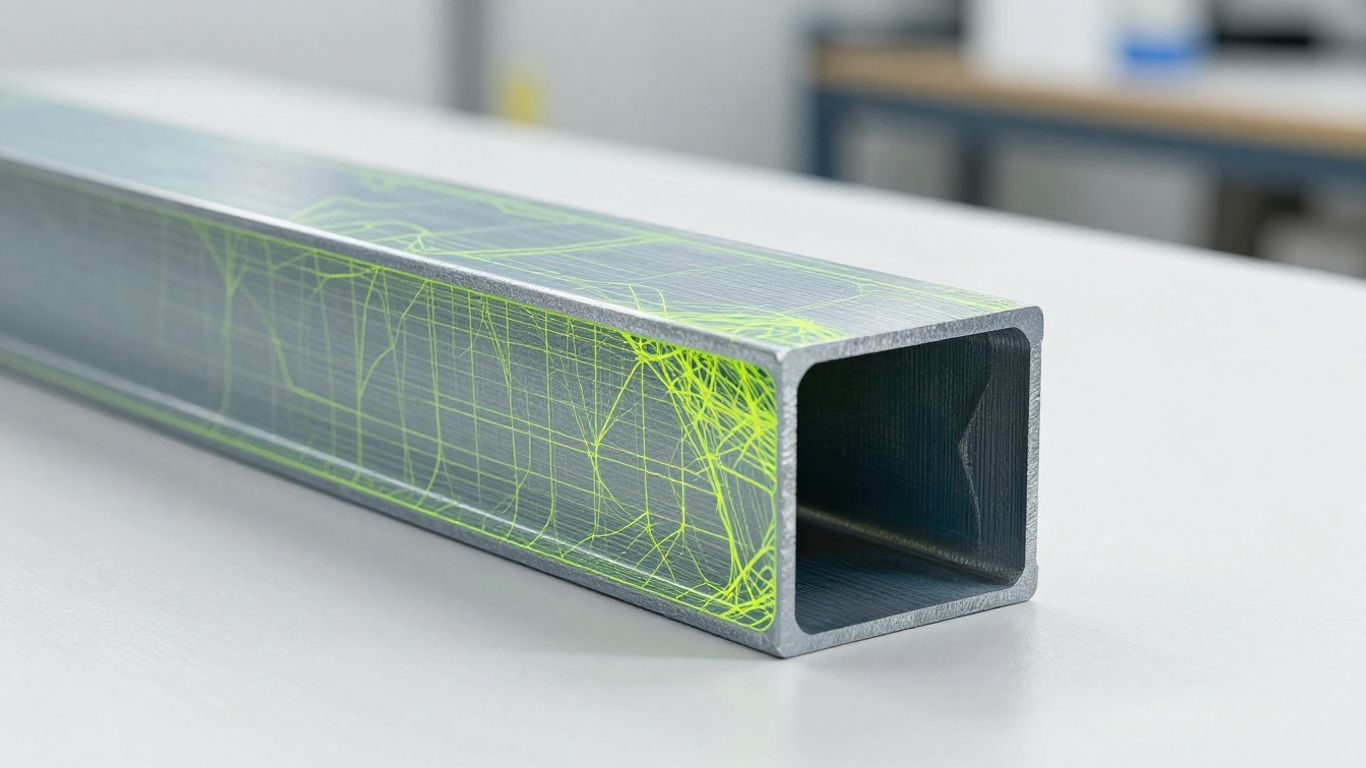
Real-world steel sections are never perfectly straight or perfectly plumb, despite theoretical assumptions. Modeling these inherent geometric imperfections directly into the simulation significantly improves its correlation with reality. Designers often introduce specific tolerance shapes derived from fabrication standards to ensure the structure meets safety thresholds under real-world conditions.
Incorporating residual stresses from fabrication and welding
Fabrication processes, particularly heavy welding, introduce locked-in stresses that dramatically impact member stability. Failing to account for these localized stress fields often leads to an overestimation of the buckling capacity. Advanced workflows automatically apply residual stress patterns to account for these manufacturing influences during the cold-forming or rolling stage.
Eigenvalue buckling analysis for mode shape identification
Eigenvalue analysis helps engineers quickly identify the theoretical modes at which a structure may become unstable. This process generates Eigenvalues that represent the critical load factors and corresponding deformation shapes. By evaluating these shapes, engineers can optimize member stiffness to avoid early-stage buckling that might otherwise trigger global collapse.
Mitigating errors through mesh sensitivity studies
Mesh refinement is a fundamental step in ensuring the numerical convergence of a structural simulation. Practitioners must verify their results through rigorous studies, documenting how results change as the element density increases. The table below outlines how common simulation parameters impact internal load assessments.
|
Parameter Refinement |
Accuracy Impact |
Sensitivity Level |
|---|---|---|
|
Coarse Grid |
Moderate |
Low |
|
Refined Mesh |
High |
Critical |
|
Sub-element Division |
Very High |
Necessary |
Analyzing complex buckling modes in steel structures
Distinguishing between local, distortional, and global buckling
Structural stability is multi-dimensional, ranging from localized plate waves to full-frame instability. Local buckling affects individual walls of a section, while distortional buckling often involves the rotation of flange elements. Globally, the entire member translates or rotates. Identifying which mode dominates the failure mechanism is vital for effective design.
Capturing interaction between coupled instability modes
Modern steel codes recognize that buckling modes rarely occur in isolation. In slender members, the interaction between plate instability and global member sway creates a complex nonlinear response. Advanced simulation helps engineers determine if these interactions reduce the overall load-bearing efficiency by a degree that threatens structural stability.
Analyzing lateral-torsional buckling in I-beams
I-beams are particularly susceptible to lateral-torsional buckling when the compression flange lacks sufficient bracing. Analytical software tools allow engineers to evaluate various bracing spacing configurations without committing to permanent construction. This allows for the selection of the most efficient restraint locations to prevent the beam from rolling under gravity loads.
Investigating plate buckling in thin-walled steel sections
Thin-walled sections often reach their limit state through plate buckling, where specific elements of the section buckle before the entire assembly exhausts its strength. Using a comprehensive SimScale guide to structural behavior, engineers gain access to standard simulation workflows that isolate these plate-level deformations for better design optimization.
Comparing nonlinear finite element analysis with code-based design
Why prescriptive rules can be overly conservative
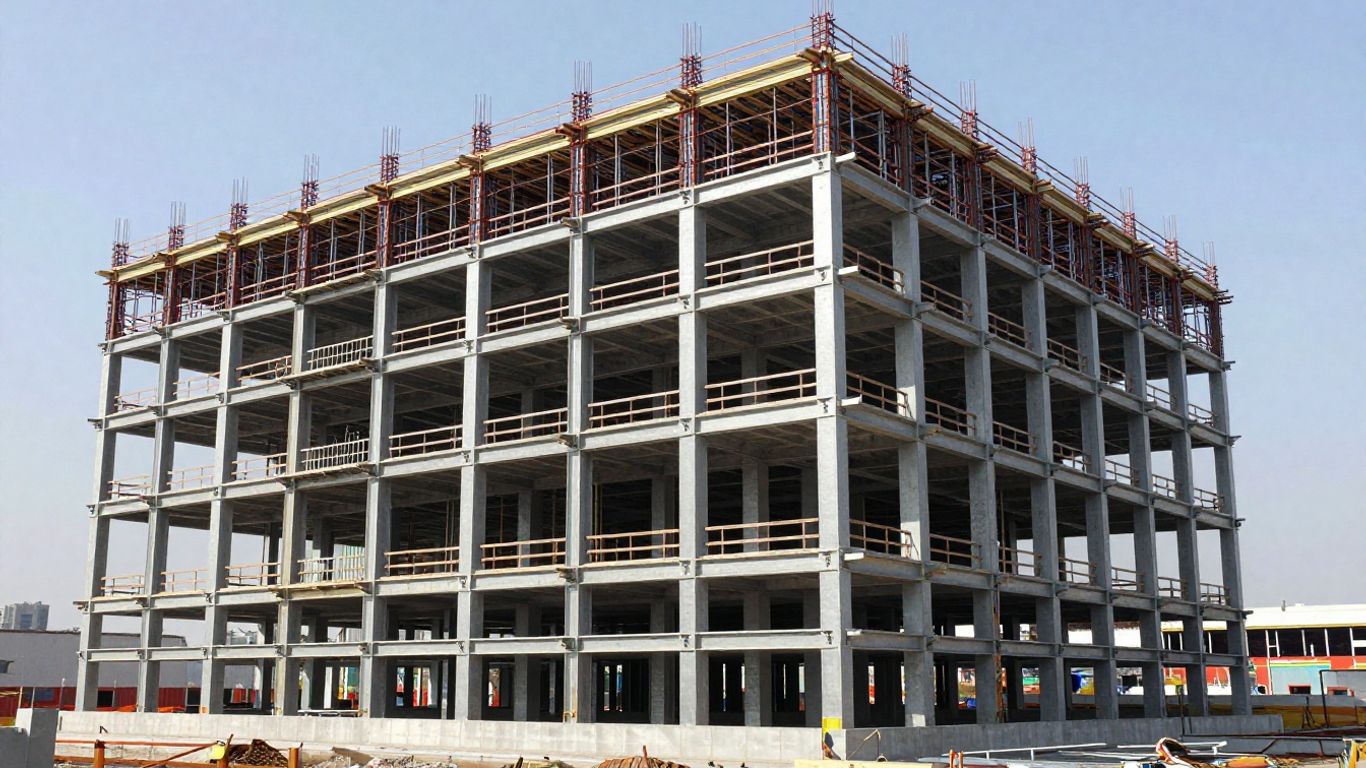
Code-based prescriptive rules are designed to be safe across a vast range of scenarios, which can force unnecessary material thickness in specific unique projects. By utilizing simulation tools, engineers can demonstrate that a structure is stable even if it deviates from code-based “simple” formulas. This often leads to more sustainable material usage through efficient optimization.
Handling P-Delta and P-small-delta effects in FEA
Structural simulations must accurately account for the interactions between vertical loads and lateral displacements. P-Delta effects consider the global frame movement, while P-small-delta accounts for the member-level bowing. Advanced software packages incorporate these second-order effects automatically to avoid underestimating the bending moments that arise during structural drift.
Validating finite element simulations against experimental data
Simulation results are most reliable when benchmarked against full-scale lab testing. Engineers compare virtual outputs like displacement plots and load-deflection curves with historical test data to ensure the simulation parameters are calibrated. This validation loop forms the foundation of a trustable engineering practice and ensures that the model reflects physical reality.
Balancing computational efficiency and engineering precision
Efficiency in modeling does not mean sacrificing precision. Engineers must choose the right element types and solver algorithms that fit the problem scale. Below are key steps taken by engineers to maintain high fidelity in long-term structural assessments:
-
Selecting the appropriate element library for non-linear behavior.
-
Iteratively testing the model under various load case increments.
-
Monitoring convergence rates at each significant displacement step.
-
Documenting all assumptions regarding material properties and boundary constraints.
Evaluating post-buckling behavior and reserve capacity
Assessing the stable post-buckling range of slender shells
Slender shells often retain significant capacity even after the initial critical load has been exceeded. This post-buckling stability is highly dependent on geometric configuration and imperfection sensitivity. Engineers evaluate this range to determine if a structure can safely redistribute loads to secondary components.
Identifying failure paths beyond critical buckling loads
Failure is rarely a single event; it is usually a progression of local buckling events leading to a global state of instability. By mapping the failure path, teams can identify which members are most likely to collapse first. This information helps in reinforcement strategies designed to stop progressive collapse.
Designing for safety in extreme force events
In extreme events like seismic activity or wind gusts, a structure’s reserve capacity is its best defense. Ensuring the design remains ductily compliant rather than brittle ensures that energy is dissipated effectively. Simulations demonstrate exactly where plastic hinges will form, allowing for localized strengthening or damping.
Impact of plasticity on structural ductility after buckling
Steel possesses inherent ductility, but the spread of plastic behavior is restricted by buckling geometry. When buckling limits the range of plastic rotation, structural ductility drops. Computational analysis helps designers understand how to maximize section ductility to improve the safety margin during heavy overloading.
Regulatory compliance and verification standards
Aligning FEA workflows with Eurocode 3 and AISC standards
Regulatory bodies set rigorous requirements for how simulation software should handle material non-linearity and buckling configurations. Following standardized workflows ensures that reports are acceptable for public building permits. Engineers verify that their simulation outputs map directly onto the verification clauses specified in legal frameworks.
Requirements for non-linear material modeling in steel
Steel models must accurately represent stress-strain curves beyond the proportional limit, including the strain-hardening phase. Regulatory standards demand that constitutive models account for temperature effects and cold-working where relevant. These material models are the primary inputs for calculating structural ductility correctly.
Best practices for documentation and verification of results
Detailed reporting provides the necessary evidence that an analytical simulation is trustworthy. This includes summaries of software verification, mesh sensitivity benchmarks, and documentation of all material models used. A complete record ensures that the design process can be audited by third-party reviewers or local authorities.
Role of professional peer review in complex FEA structural assessments
Independent reviews of complex structural designs ensure that assumptions made by the design team are sound. Peer reviewers check both the primary model and secondary calculations to identify potential oversights in boundary condition definition. This external accountability contributes to the highest safety standards in urban construction.
Conclusion
Finite Element Analysis has transformed how engineers approach the buckling of complex steel components, moving the industry toward a safer and more efficient design future. By leveraging non-linear techniques and addressing realistic constraints like residual stress and imperfections, professionals create frameworks that ensure structural integrity in even the most ambitious projects. As software capabilities evolve, the integration of these sophisticated numerical models into standard practice remains the most effective way to optimize material usage while maintaining rigorous safety standards in modern steel design.
Frequently Asked Questions
How does finite element analysis improve steel structure design?
It allows engineers to simulate complex buckling modes and post-buckling behavior more accurately than simple manual formulas by accounting for real-world geometry and non-linear properties.
What are the most common buckling modes observed in steel members?
The primary modes are local, distortional, and global buckling, which often interact in slender sections, requiring specific attention during the stability verification stage.
Why are geometric imperfections considered in numerical simulations?
Real steel structures are never perfectly straight or plumb; including these deviations in a simulation provides a predicted performance that is significantly closer to actual physical behavior.
What is the advantage of using non-linear analysis over linear analysis?
Non-linear analysis accounts for changing geometry and material plasticity as a load increases, which is critical for identifying potential failure points that linear models might overlook.
Can finite element analysis reduce the cost of steel structures?
Yes, by identifying where structural members are over-designed, FEA allows for more precise material optimization, which can significantly reduce steel consumption on large projects.
How do engineers validate their simulation results?
Validation involves benchmarking simulation outputs against full-scale physical testing and ensuring that the model follows established regulatory standards for material properties and load combinations.
What role does mesh refinement play in simulation accuracy?
Mesh refinement ensures that the numerical solution converges to a stable value, preventing errors that arise from placing elements that are too coarse in regions of high stress gradients.
“, “changed”: true}