
Engineering: A practical guide to disciplines, design, and professional practice

Key Takeaways Engineering turns practical needs into solutions that can be designed, checked, built, and maintained. Its disciplines overlap, but each brings a distinct body of knowledge to a project. Engineering choices connect performance, safety, cost, and long-term use. Built-environment disciplines address structures, ground, building services, and water or environmental systems. Site information and clear […]
High-Strength Steel (S460 to S690) in Singapore Construction: Opportunities and FEA Challenges
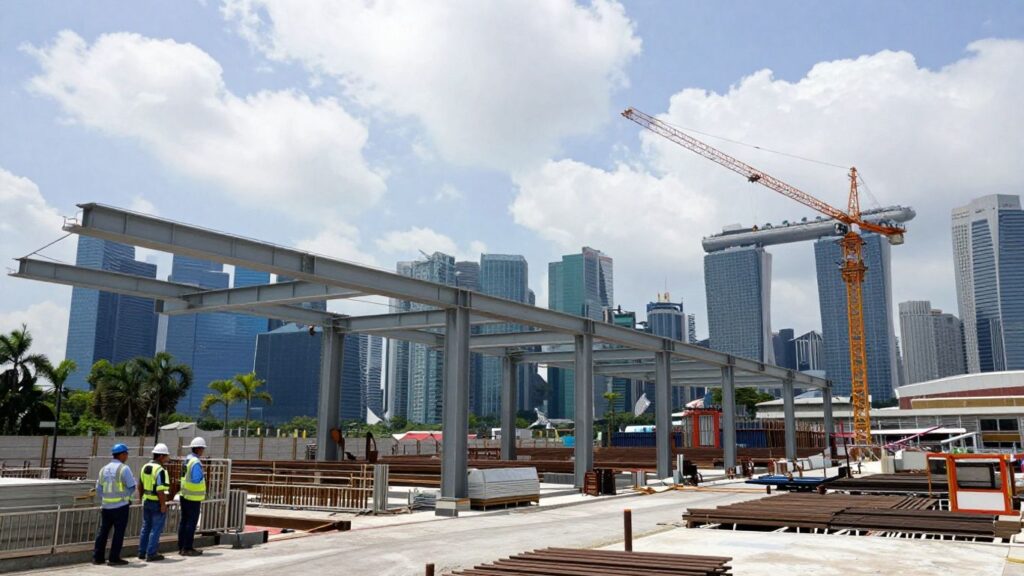
Key Takeaways High-strength steel can reduce structural weight and support ambitious spans, but its benefits depend on disciplined design, detailing, procurement, and analysis. S460 through S690 grades offer increasing yield strength, with corresponding questions about ductility, toughness, and weldability. Smaller members can improve usable floor area and reduce lifting or handling demands, although fabrication costs […]
Seismic and Wind Dynamic Response of Tall Steel Structures in Singapore

Key Takeaways Tall steel buildings in Singapore are usually governed by wind-induced movement, acceleration, and occupant comfort rather than earthquake demand alone. A dependable design therefore connects local environmental data, code interpretation, dynamic analysis, constructability, and monitoring from the outset. Wind assessment should address along-wind, across-wind, and torsional effects. Singapore’s low seismicity still requires a […]
Design of Long-Span Roof Trusses and Canopies for Singapore’s Tropical Climate

Key Takeaways Long-span roofs and canopies in Singapore demand more than a strength check. Their design must respond to wind, intense rainfall, humidity, fire safety, drainage, construction sequencing, and long-term access. Establish the roof’s function, geometry, exposure, working life, and regulatory basis before analysis. Apply SS EN 1991-1-4 using appropriate wind velocity, terrain, pressure, edge-zone, […]
Buckling Analysis Techniques: Linear Eigenvalue vs. Non-Linear Imperfection (GMNIA)
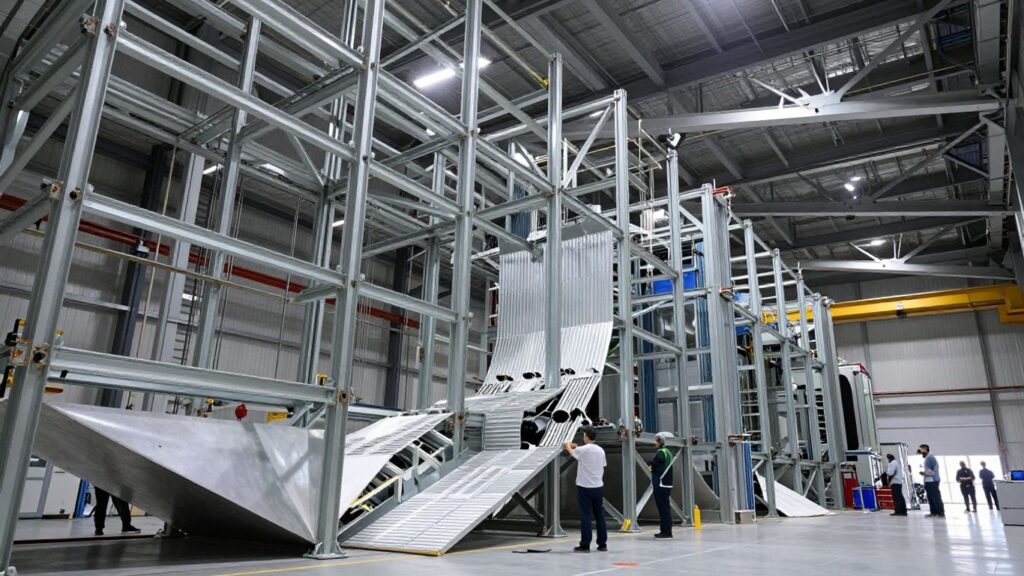
Key Takeaways Linear eigenvalue analysis is a fast elastic stability check, while GMNIA follows structural response with geometric and material nonlinearity and defined imperfections. Used together, they provide a clearer basis for buckling assessment and design decisions. Eigenvalue analysis identifies idealized critical load factors and likely buckling modes. GMNIA can account for large displacements, yielding, […]
Modelling Steel Connection Rigidity in FEA: Pinned, Rigid, or Semi-Rigid?
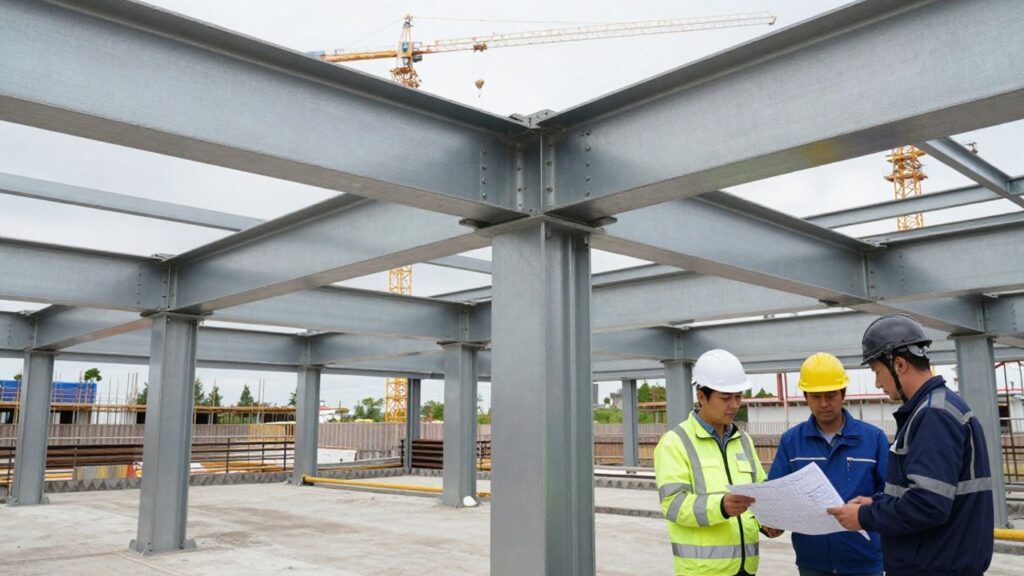
Key Takeaways Connection rigidity is a modeling choice that can materially change stiffness, force distribution, and predicted failure behavior. A defensible FEA model connects that choice to the real joint, the design standard, and the evidence available for validation. Pinned, rigid, and semi-rigid idealizations describe different moment–rotation behaviors. Rotational stiffness affects frame drift, member moments, […]
Setting Alert, Action, and Limit (AAL) Levels for ERSS in Urban Singapore

Key Takeaways A defensible ERSS AAL framework turns monitoring data into timely, proportionate decisions. It must be grounded in the design, the site baseline, Singapore’s regulatory setting, and clear responsibilities. Establish movement objectives before selecting trigger values. Build the baseline risk profile before excavation begins. Match instruments and thresholds to each receptor and construction stage. […]
Slope Stabilisation & Soil Nailing: Submission Workflows for Temporary Hillside Excavations

Key Takeaways A defensible hillside excavation submission connects the ground model, temporary works design, authority requirements, and construction controls from the beginning. Define the temporary and permanent works interfaces before design responsibility becomes unclear. Investigate soil, rock, groundwater, drainage, adjacent assets, and existing utilities proportionately to risk. Verify soil nailing against local and global failure […]
The Annex C & Annex E Workflow: On-Site ERSS Compliance During Execution

Key Takeaways ERSS compliance during execution depends on disciplined supervision, clear authority, and records that connect site actions to approved design and monitoring requirements. Annex C controls the construction and inspection workflow for ERSS works. Annex E provides the monitoring, threshold, and response framework. The RE, RTO, and Site Manager need distinct but coordinated responsibilities. […]
Eurocode 7 (SS EN 1997) for Singapore ERSS: Ultimate Limit State (ULS) vs. Serviceability Limit State (SLS)
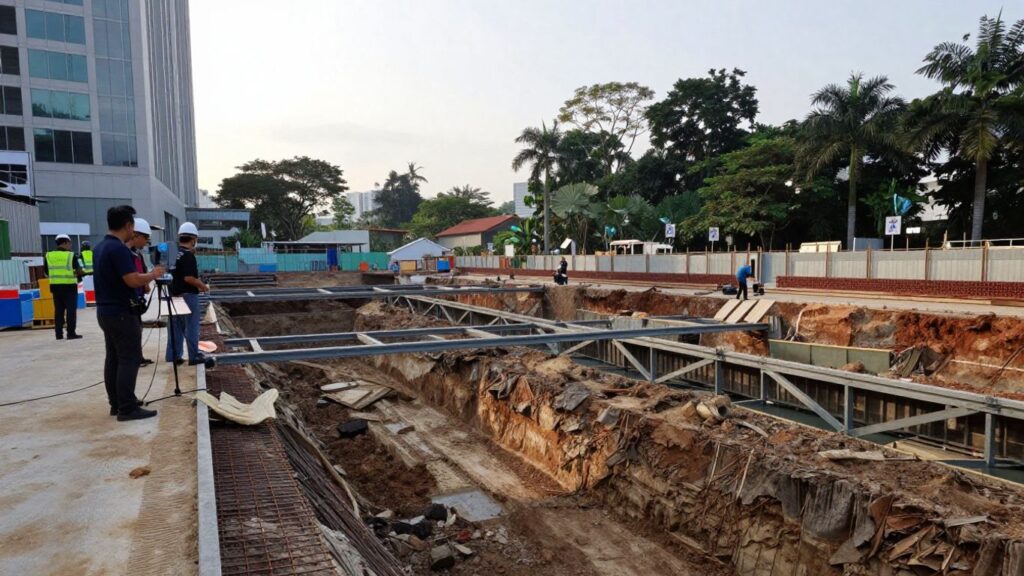
Key Takeaways Eurocode 7 provides the limit-state framework for Singapore ERSS, but a compliant design also depends on local ground conditions, construction stages, and movement control. ULS checks resistance against collapse, instability, hydraulic failure, and structural failure. SLS checks movements, settlement, deformation, and effects on neighbouring assets. Groundwater and soil variability must be reflected in […]