
Introduction
For an eligible office tower in Singapore, Periodic Façade Inspection (PFI) is required every 7 years once the building is more than 20 years old and taller than 13 metres. This statutory obligation is set under the Building Control Act and enforced by the Building and Construction Authority (BCA). Buildings over 20 years old require inspection every seven years – no exceptions for commercial towers that meet height and age criteria.
This article focuses specifically on commercial office towers – the kind found in Singapore’s CBD, business parks, and suburban commercial hubs – rather than landed residential properties or temporary buildings. Periodic Façade Inspection (PFI) is the regulatory regime requiring building owners to engage a certified competent person to systematically assess all exterior features and building façades for defects that could pose falling hazards or create safety risks. It is distinct from Periodic Structural Inspection (PSI), which addresses load-bearing structural elements.
Direct answer: For a qualifying office tower in Singapore, PFI is legally required every 7 years once the building is more than 20 years old (measured from the Temporary Occupation Permit or Certificate of Statutory Completion), unless it falls within specific exempted categories such as landed houses or temporary buildings.
This guide covers:
-
Exact frequency rules – the 7-year cycle and how it is triggered
-
How BCA PFI Notices work – what happens when the formal notification arrives
-
What qualifies as an “office tower” under the PFI regime
-
Practical planning strategies – synchronising PFI cycles with maintenance and retrofits
-
How AMAN Engineering supports end-to-end compliance for commercial building owners
Target readers: Building owners, REIT managers, MCST councils, facility managers, and asset managers responsible for office towers over 13 m in Singapore.
Understanding Periodic Façade Inspection Frequency in Singapore
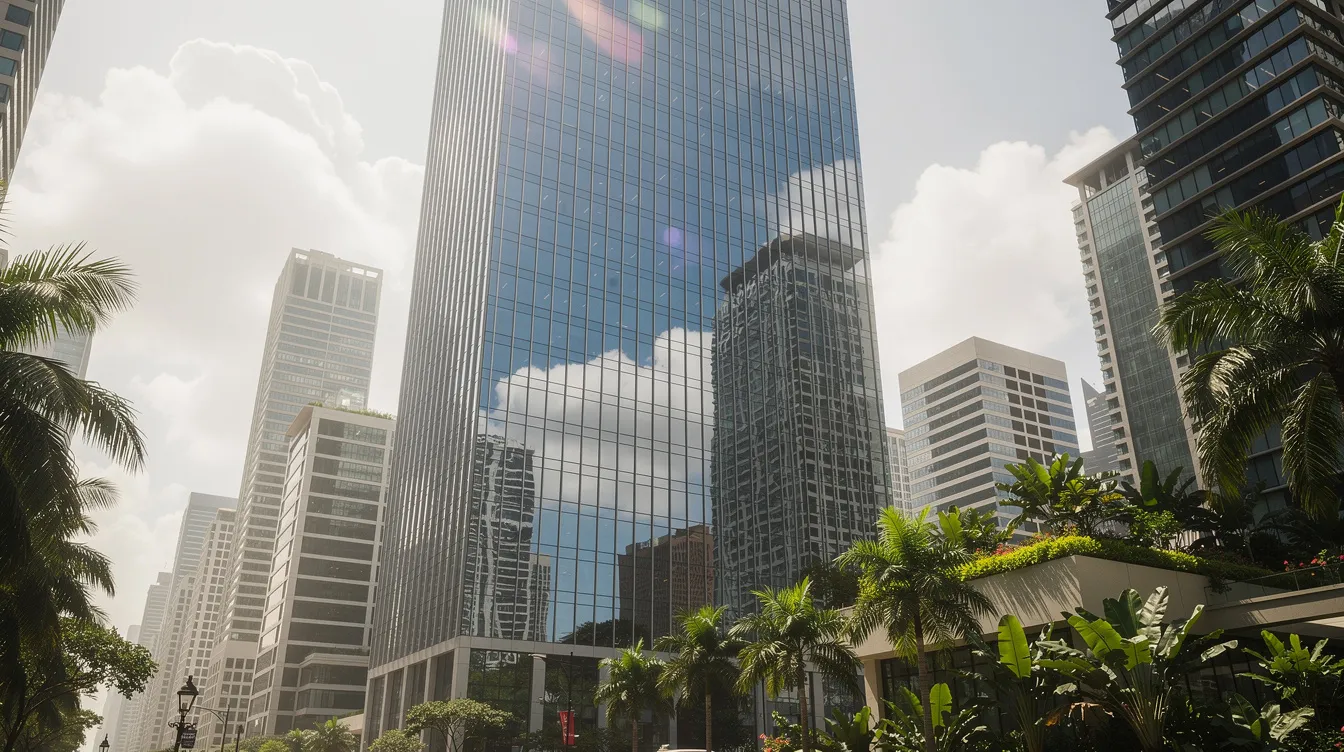
Periodic façade inspection is a legal requirement under Singapore’s Building Control Act mandating that building owners of eligible structures engage qualified professionals to assess every external element of their building façades for deterioration, defects, and safety risks at prescribed intervals. The question of “how often” is directly tied to two measurable criteria: the building’s age (more than 20 years from TOP/CSC) and its height (above 13 metres).
The PFI regime was introduced via Building Control Act amendments in 2020 and became mandatory in Singapore on January 1, 2022. Further refinements to the regime took effect on 1 October 2025 under Regulation S 594/2025, which tightened independence requirements for the facade inspector role. Office towers are a key segment of the PFI regime because of their height, facade complexity, curtain wall systems, and high public exposure around podiums and street-level areas.
Key Legal Triggers: Age, Height, and Use
PFI applies to an office tower when all of the following conditions are met:
-
The building is taller than 13 metres (roughly four storeys and above). Buildings must be taller than 13 meters for PFI to be required.
-
The building is more than 20 years old, counted from the date the last temporary occupation permit (TOP) was granted for the entire building, or from the Certificate of Statutory Completion (CSC) if no TOP was issued.
-
The building is not in an exempt category – exemptions apply only to detached, semi-detached, terraced, or linked houses used for residential purposes, and to temporary buildings.
Example: An office tower with a TOP issued in 2000 would first qualify for PFI in 2020 and enter the 7-year inspection cycle from that point forward. BCA triggers a PFI cycle through formal notification to building owners, so the actual inspection date depends on when the PFI Notice is served.
It is important to distinguish between the age threshold (20 years, which determines eligibility) and the inspection interval (7 years, which governs recurrence). These are separate mechanisms. The building’s use as an office does not change the 7-year cycle, but it significantly affects the scope and practical planning of each inspection – large curtain walls, sky terraces, signage arrays, and architectural fins all increase facade complexity.
What “Every 7 Years” Actually Means in Practice
BCA uses a 7-year periodicity across an initial national cycle (the first cycle spanning 2022–2029), aiming to inspect all eligible buildings once per cycle. BCA estimated approximately 30,000 buildings need facade inspection by 2029, with more than 4,000 buildings inspected each year in the initial years.
Building owners do not pick a random year for their periodic inspection. They must comply within the timeframe stated on the PFI Notice issued by BCA. The typical sequence works as follows:
-
BCA issues a PFI Notice to the office tower owner or MCST when the building becomes eligible or during the ongoing cycle. Owners typically receive an advisory at least one year ahead of the formal notice.
-
The owner must appoint a Competent Person (CP) – a registered professional engineer or registered architect with a practising certificate who has completed BCA’s Certificate in Façade Inspection – within two months of the notice.
-
The inspection and report must be completed within 6 months from the date of the notice.
-
The next PFI is due 7 years after the year in which the previous notice was given.
The 7-year requirement is recurring, not a one-off event. Each completed PFI report resets the clock for the next cycle, and BCA will issue subsequent notices accordingly.
How PFI Frequency Relates to Other Inspection Regimes
PFI is distinct from Periodic Structural Inspection (PSI), which covers structural elements such as columns, beams, and load-bearing components. Periodic Structural Inspections are required every 5 years for non-residential buildings, and structural inspections begin after a building’s 13th year of age – a different cadence from PFI’s 20-year/7-year framework. Although intervals may occasionally overlap, PFI focuses exclusively on non-structural external elements – facade cladding, curtain walls, precast concrete panels, sealant joints, and exterior features – while PSI addresses primary load-bearing integrity.
Owners of office towers often coordinate PFI timing with repainting cycles (typically 7–10 years for commercial towers), roof waterproofing works, or major façade access equipment servicing. This synchronisation can yield significant cost and disruption savings over the building’s life.
To plan properly, owners need to understand exactly when their specific tower first becomes due and what schedule applies over its life cycle.
PFI Timing and Cycles for an Office Tower in Singapore
While the law gives baseline rules – 20 years of age, above 13 m, every 7 years – actual timing for a specific commercial office tower depends on the building’s TOP year, when BCA serves the first PFI Notice, and when the first inspection is completed. Understanding these variables is essential for facility managers and building owners responsible for compliance.
Calculating When Your Office Tower’s First PFI Is Due
Follow this step-by-step logic to determine your building’s first PFI obligation:
-
Check the TOP or CSC date from BCA records, building files, or CORENET submissions.
-
Add 20 years to estimate when the tower enters the PFI regime.
-
Understand that BCA may issue the first PFI Notice any time after the building becomes eligible, typically aligned to the 7-year national cycle and BCA’s scheduling priorities.
Concrete examples:
-
TOP in 1999 → eligible from 2019 → might receive a PFI Notice between 2022 and 2025 depending on BCA scheduling, with inspection due within the notice window.
-
TOP in 2005 → eligible from 2025 → likely to receive a first PFI Notice between 2025 and 2029.
-
TOP in 2002 → eligible from 2022 → PFI Notice could arrive as early as 2022, with inspection and report due within 6 months.
Building owners cannot postpone PFI beyond the compliance deadline indicated in the notice, even if they recently completed voluntary façade repairs or repainting. The statutory obligation is tied to the notice, not to the owner’s judgment of façade condition.
Typical PFI Timeline Once a Notice Is Issued
For a high-rise office tower, the end-to-end inspection process from BCA Notice to completed submission typically spans 4–6 months, though complex towers may push closer to the statutory limit. Here are the key time blocks:
-
Appointment of CP and planning (weeks 1–8): A competent person (CP) – who must be a registered professional engineer or registered architect – is appointed. The CP assembles the façade inspection team, reviews previous inspection reports, building plans, and maintenance records, and plans access logistics. A Competent Person must be appointed for the inspection, and as of September 2021, there were 149 registered Competent Persons in Singapore.
-
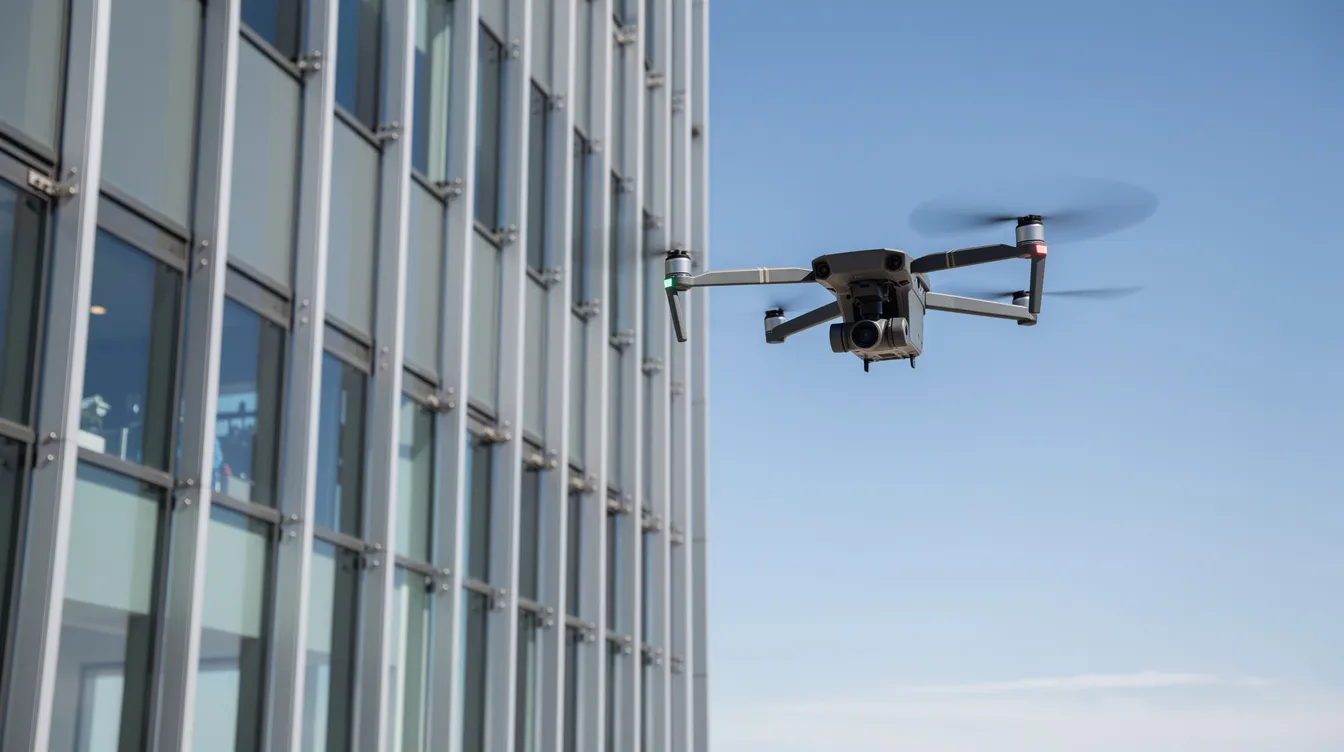
Drone and visual scanning, plus close-range access setup (weeks 4–12): A full visual inspection covering 100% of all elevations is conducted. Drones are approved for visual façade inspections in Singapore through accredited UAS service providers, which support visual inspection of upper zones. Access arrangements must be coordinated for inspection logistics, including rope access, gondola, or BMU systems.
-
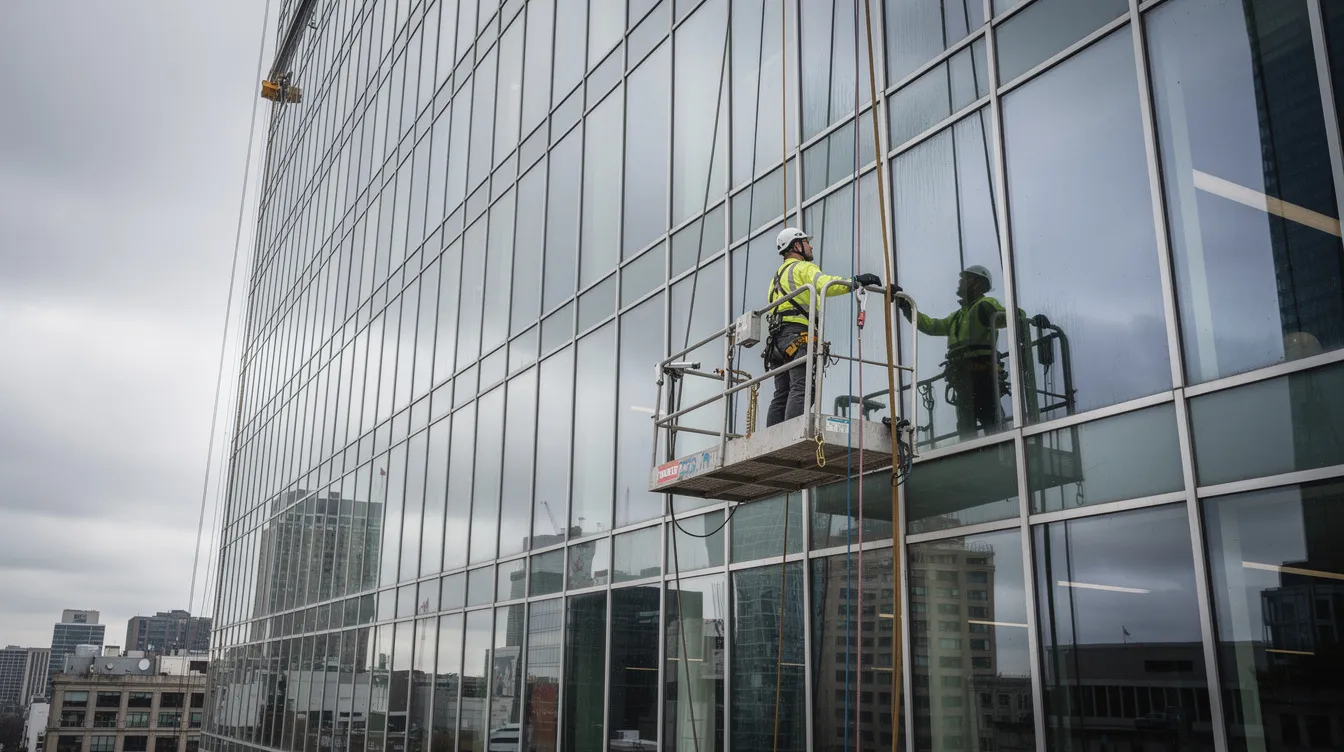
On-site close-range inspections and testing (weeks 6–18 for large towers): At least 10% of each elevation must undergo close-range inspection. Inspection tools include drones, moisture meters, and tapping rods. Close-range inspections use rope access or gondola systems for detailed checks of sealant joints, brackets, anchorage systems, and precast concrete panels.
-
Reporting, BCA submission, and rectification planning (weeks 10–24): The facade inspection report documenting inspection findings, defect maps, and rectification priorities is compiled and submitted to BCA. If unsafe defects are discovered, they must be reported within six hours to BCA, and competent persons must notify authorities of unsafe defects immediately.
Delays from weather, tenant coordination, or access equipment breakdown can impact the schedule, so an early start is strongly recommended. Pre-inspection study includes reviewing past reports and building plans, and documentation of known façade issues is essential before inspection begins.
How Subsequent 7-Year Cycles Are Managed
After the first PFI is completed and accepted by BCA, the next statutory inspection will generally be scheduled 7 years later. BCA and the appointed competent person may recommend shorter intervals if the façade is in poor condition or there are ongoing safety concerns requiring monitoring.
Example timeline for a 1998 office tower:
-
First PFI completed in 2023 → next PFI expected around 2030 → subsequent cycles in 2037, 2044, and so on, assuming no major regime change.
Record-keeping is critical: maintaining past PFI reports, repair records, and maintenance records makes each subsequent 7-year cycle faster, more focused, and more cost-effective. Routine maintenance checks are advised between statutory PFI cycles to catch facade deterioration before it escalates.
Understanding the cycle is only useful if owners also understand what exactly is checked each time and how the inspection scope interacts with the office tower’s specific façade configuration.
How PFI Frequency Interacts with Office Tower Façade Scope
The 7-year inspection cycle covers all relevant façade zones and exterior features – not just the visible glazing on the main tower. PFI checks all external building envelope elements. For office towers, each cycle will systematically revisit the same broad areas, with close-range inspection areas updated each time based on risk assessment and previous inspection findings.
Façade Zones Revisited Every 7 Years
Key office-tower zones that must be considered in every PFI cycle include:
-
Podium and retail frontage – canopies, stone cladding, glazing, entrance features
-
Main tower curtain wall and window bands – curtain wall systems, mullion caps, spandrel panels
-
Sky terraces, balconies, and transfer floors – balustrades, planter boxes, drip edges
-
Roof parapets, rooftop signage, and skysigns – mounting brackets, weathering seals
A PFI involves 100% visual inspection and 10% close-range inspection. While full visual inspection of the entire building façade is required every cycle, close-range tactile checks focus on at least 10% of each elevation, with areas selected based on past defect patterns and newly identified risk zones. Visual inspections cover 100% of all elevations of the façade. Recurring problem areas – such as a leaking podium corner or cracked precast concrete panels – may be targeted more intensively within each cycle.
External Features and Attachments Checked Each Cycle
PFI covers all exterior elements that could pose a falling hazard. Typical attachments that come under the periodic façade inspection PFI scope every 7 years include:
-
Skysigns, advertising billboards, LED screens
-
Sunshades, fins, and architectural features
-
External CCTV mounts, façade lighting brackets, maintenance catwalks
-
PFI includes checks for brackets and anchorage systems securing these elements
Even if these façade elements were installed after the building turned 20, they will be captured in subsequent PFI cycles. Building owners should inform their appointed competent person whenever such features are added between cycles so that they are properly documented and assessed.
Office Tower Complexity vs PFI Interval
Office towers differ substantially from simpler low-rise commercial buildings in inspection effort:
-
Office towers: High glass ratio, complex curtain walls, numerous attachments, and significant height mean more intensive inspection methodology, specialised access equipment, and longer on-site duration – yet the statutory interval remains 7 years.
-
Low-rise commercial buildings: Simpler facades but the same legal frequency applies if height and age criteria are met.
BCA currently does not shorten the legal interval simply because a building has greater facade complexity. However, CPs may advise interim condition checks or a full facade investigation between formal PFIs for high-risk towers where façade deterioration is progressing rapidly. This is where proactive owners gain an advantage – by treating the 7-year PFI not as a standalone event but as part of a continuous building safety programme.
Planning and Implementing a 7-Year PFI Cycle with AMAN Engineering
At AMAN Engineering Consultancy, we help owners of commercial office towers map out current and future PFI requirements as a structured, multi-cycle programme rather than treating each inspection as a one-off compliance exercise. Our expertise spans facade inspections, authority submissions, BIM integration, and structural advisory – all critical to managing the inspection process efficiently for complex commercial buildings.
Step-By-Step PFI Planning for a Typical Office Tower
-
Confirm eligibility and next due date. We review TOP/CSC records and any existing PFI reports to establish the building’s position in the 7-year cycle and verify inspection dates.
-
Assess façade access options. We evaluate BMU availability, gondola capacity, rope access feasibility, and drone inspection suitability, accounting for façade access constraints such as adjacent MRT lines, bus lanes, or neighbouring structures.
-
Develop a PFI plan within the notice window. We design the inspection methodology to fit within the BCA Notice timeline while minimising disruption to tenant operations – including night and weekend work windows where necessary.
-
Execute inspections. Our façade inspection team conducts 100% visual scanning using accredited UAS service providers (unmanned aircraft systems) and ground-level vantage points, plus at least 10% close-range tactile checks per elevation under the CP’s direct supervision. Inspection covers curtain walls, cladding, sealant joints, and all exterior features.
-
Compile regulator-ready reports. We produce the PFI report with defect maps, inspection findings, material testing results where applicable, and rectification priorities, then submit to BCA within the statutory deadline.
-
Set up the next cycle. We use findings to plan facade rectification works and establish digital records – including BIM/3D façade models – that streamline all future 7-year cycles.
Synchronising PFI with Maintenance, Repainting, and Retrofits
Smart building owners align the 7-year PFI with complementary maintenance activities:
-
External repainting cycles (often 7–10 years for commercial towers) – scheduling PFI first identifies defects that should be rectified before repainting
-
Roof and façade waterproofing renewal – combining assessments reduces scaffolding and access costs
-
Façade access system overhauls – BMU track and cradle servicing can be coordinated with inspection access setup
-
Energy retrofit projects – glazing upgrades or shading device installations benefit from PFI data on existing façade systems
This bundling strategy – inspect first, then combine rectification with planned works – is one of the most effective ways to reduce total inspection costs and minimise tenant disruption across each cycle.
Comparing Proactive vs Last-Minute PFI Approaches
|
Criterion |
Proactive Planning (Start 12–18 Months Before Deadline) |
Last-Minute Response (Start <6 Months Before Deadline) |
|---|---|---|
|
Access costs |
Lower – early booking of BMU/gondola/rope access at standard rates |
Higher – premium rates for urgent mobilisation |
|
Contractor availability |
Wide choice of accredited facade inspectors and CPs |
Limited availability; may compromise quality |
|
Disruption to tenants |
Minimal – phased scheduling around operations |
Significant – compressed timeline forces disruptive work hours |
|
Coordination with other works |
Full alignment with repainting, waterproofing, retrofits |
No time to bundle; separate mobilisations needed |
|
Risk of non-compliance |
Very low – buffer time for weather delays and follow-ups |
High – fines for non-compliance can reach up to S$10,000 |
Proactive planning within each 7-year inspection cycle consistently reduces cost, disruption, and regulatory risk. Office towers face specific obstacles that can derail schedules if not anticipated early.
Common Timing Challenges for Office Tower PFI (and How to Solve Them)
Knowing “every 7 years” is only half the story. Operational realities in Singapore’s dense commercial districts can make it difficult to hit deadlines without careful advance planning. Below are the most frequent timing challenges we see on office tower projects and how AMAN Engineering mitigates them.
Challenge 1: Limited Façade Access in Dense CBD Locations
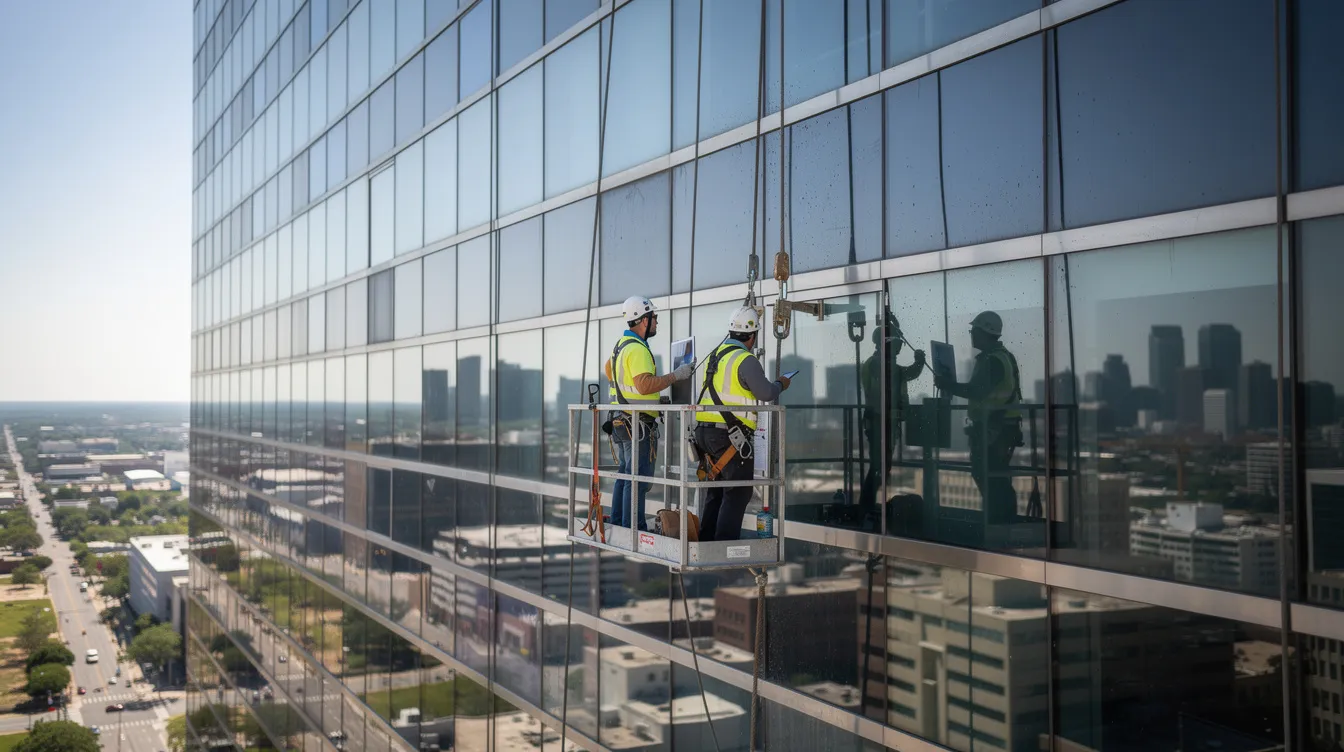
High-rise office towers in the CBD often face severe façade access constraints: road closures, bus lanes, MRT entrances, and neighbouring towers restrict when and where gondola or rope access equipment can be deployed. These constraints compress available work windows and can delay the visual survey and close range inspection phases.
Solutions:
-
Early coordination with LTA, building neighbours, and mall operators to secure access windows months in advance
-
Use of accredited UAS service providers (drones) for upper zones where physical access is time-limited – drones support visual inspection effectively and reduce reliance on mechanical access
-
Starting the inspection process well before the final months of the PFI Notice period to absorb scheduling disruptions
Challenge 2: Coordinating PFI Around Tenant Operations
Office towers housing 24/7 data centres, trading floors, or ground-floor F&B tenants may resist noisy or visually intrusive works during business hours. This creates scheduling friction that can push the inspection beyond the BCA deadline if not managed proactively.
Solutions:
-
Phased façade access by building stack, with off-peak and weekend work windows planned around tenant requirements
-
Clear communication plans issued to tenants 2–4 weeks in advance, detailing inspection dates, expected noise levels, and safety measures
-
Assigning a dedicated project coordinator to manage real-time scheduling adjustments
Challenge 3: Missing Records and Unclear Past Repairs
Older office towers – especially those built in the 1980s and 1990s – may lack complete façade drawings, previous inspection reports, past rectification details, or accurate records of façade modifications. This forces the CP to spend additional time on baseline assessment, potentially stretching the timeline.
Solutions:
-
Conducting a comprehensive baseline survey and documentation exercise during the first PFI cycle
-
Creating a digital façade asset register – including defect history, repair records, and material specifications – for use in all future 7-year cycles
-
Leveraging AMAN Engineering’s BIM and 3D modelling services to reconstruct façade information where original drawings are unavailable
Overcoming these challenges helps building owners stay safely within the mandated 7-year frequency and avoid compliance penalties.
Conclusion and Next Steps for Singapore Office Tower Owners
Office towers over 13 metres tall and older than 20 years in Singapore must undergo periodic façade inspection every 7 years, as directed by BCA PFI Notices served under the Building Control Act. This frequency is fixed by regulation – building owners control how early they plan within each cycle, but they cannot extend or opt out of the interval.
Synchronising PFI with maintenance and retrofits transforms the 7-year requirement from a compliance burden into an asset-management tool that extends façade life, reduces long-term costs, and protects public safety.
Actionable next steps:
-
Check your office tower’s TOP/CSC date and height to confirm PFI eligibility
-
Verify whether a BCA PFI Notice has been issued or is expected in the current cycle
-
Audit current façade access capabilities – BMU condition, gondola availability, rope access readiness, drone provider relationships
-
Gather existing façade repair records and past reports into a single archive to streamline future inspections
-
Engage AMAN Engineering to map out a compliant PFI schedule and inspection plan ahead of the statutory deadline
Related compliance topics – including PSI for commercial buildings, fire safety certification, and authority submissions – can be integrated into a broader asset compliance plan for the tower, reducing duplication and coordinating inspection dates across regimes.
Additional Resources and How AMAN Engineering Consultancy Can Help
Official resources for building owners:
-
BCA PFI Guidelines – published by the Building and Construction Authority, these guidelines detail owner obligations, CP qualifications, inspection methodologies required tools, and report submission procedures under the PFI regime
-
Building Control Act and subsidiary legislation – the primary legal framework covering façade safety, periodic inspection requirements, and enforcement penalties
-
BCA circulars on facade inspector requirements – updated guidance effective 1 October 2025 on independence requirements and duties of facade inspectors under CP’s direct supervision
AMAN Engineering’s relevant services:
-
End-to-end PFI coordination for office towers, from CP appointment support through drone and close-range inspection management to final facade inspection report submission
-
Authority submissions and BCA liaison for PFI reports, follow-up actions, and any required façade investigation or full façade investigation scoping
-
BIM/Tekla 3D façade modelling to integrate inspection data into long-term asset management and support tender documentation for rectification works
-
Structural and façade engineering support for rectification design following PFI findings, including addressing structural integrity concerns at façade-to-structure connections
FAQ: PFI Frequency for Office Towers in Singapore
Below are concise answers to the most common questions about PFI timing and frequency for commercial office towers.
How often is PFI required for an office tower in Singapore?
Every 7 years, once the building is more than 20 years old and over 13 metres tall, subject to BCA PFI Notices. This interval is set by regulation under the Building Control Act and applies regardless of whether the building is fully occupied, partially vacant, or undergoing refurbishment. Buildings over 20 years old require inspection every seven years.
When does the 7-year PFI cycle start for my office tower?
The cycle effectively starts when the building becomes eligible (20 years from the temporary occupation permit or CSC date) and BCA serves its first PFI Notice. The exact inspection deadline is stated in the notice – it is not chosen unilaterally by the owner. BCA typically issues an advisory approximately one year before the formal notice.
Can I do PFI less often than every 7 years if my façade looks fine?
No. Building owners cannot extend beyond the 7-year legal interval. A facade that appears to be in good condition does not exempt the building from the statutory requirement. Voluntary interim checks between official PFIs are optional but recommended for high-risk façades where facade deterioration may progress between cycles.
Do recent façade upgrades reset the PFI clock?
Recladding, major repairs, or glazing replacements do not reset the building age for PFI purposes. The 7-year statutory regime still applies from the original age threshold and notice schedule. However, competent persons will account for new materials and façade systems in subsequent PFI cycles, which may affect the inspection method and close range inspection areas selected.
Can I combine PFI with PSI or other mandatory inspections on the same schedule?
While building owners can coordinate timing for convenience, PFI and PSI remain separate regimes with their own reporting requirements, qualified personnel (registered on the Professional Engineers Board or as a registered architect), and submission deadlines. Fines for non-compliance can reach up to S$10,000 for each regime independently. AMAN Engineering can help owners calendar these obligations to minimise disruption over multi-year cycles.