
Introduction
Only a Professional Engineer (Civil or Structural discipline) registered with Singapore’s Professional Engineers Board (PEB) and holding a valid current practising certificate can legally carry out periodic structural inspection for an office building in Singapore. No other professional, regardless of experience, is authorised to certify a PSI report that BCA will accept.
This guide is written for commercial building owners, REIT asset managers, management corporation (MCST) councils, facilities managers, and property directors responsible for office towers, business parks, strata-titled developments, and mixed-use commercial buildings. It does not cover exempt homes such as detached houses, semi-detached residences, or linked houses. If you have received a BCA PSI notice-or expect one soon-you need to know exactly who is qualified, who is not, and how to appoint the right person efficiently.
The direct answer: BCA only accepts PSI reports signed by a Singapore-registered PE (Civil or Structural) with a current practising certificate. PSI is a recurring statutory requirement at fixed intervals, not a one-off inspection. Inspections cannot be delegated to unregistered staff, foreign consultants, architects, or contractors. Only a PEB-registered Civil or Structural Professional Engineer can act as the Qualified Person for inspections.
Here is what you will learn from this article:
-
Legal requirements for who can carry out periodic structural inspection PSI in Singapore
-
The difference between “any engineer” and a BCA-recognised PSI PE
-
Roles of the building owner, MCST, managing agent, and registered professional engineer
-
How to verify and choose the right PE for your office building
-
How AMAN Engineering supports PSI compliance for commercial assets
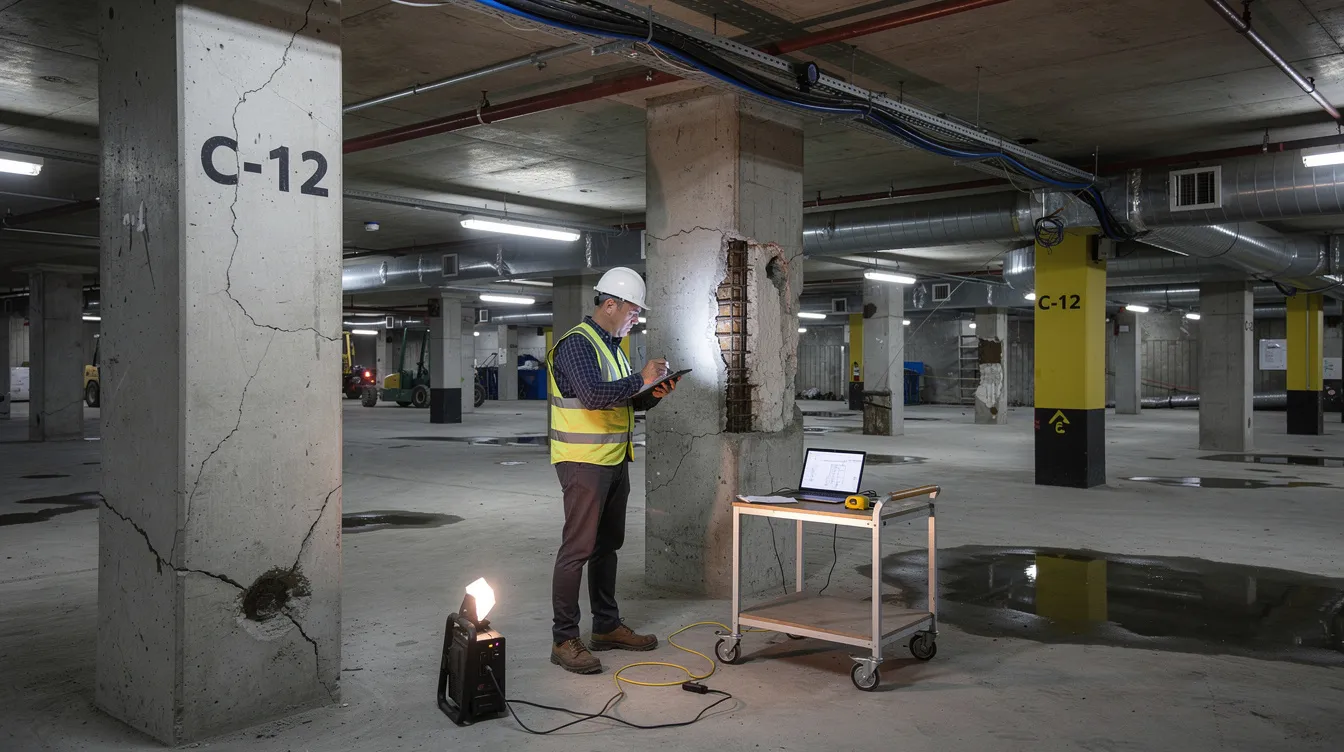
Understanding Who Is Legally Allowed to Carry Out PSI in Singapore
The Building Control Act governs structural safety in Singapore, and it specifies exactly who is competent and authorised to perform periodic structural inspection. “Carrying out PSI” means both physically inspecting the structural elements on site and certifying the inspection report submitted to BCA. The certifying PE bears full legal responsibility for the findings-civil and criminal liability included.
What Is Periodic Structural Inspection (PSI) in the Context of Office Buildings?
In Singapore, a periodic structural inspection is required for non-residential buildings starting from their 13th year after the Temporary Occupation Permit (TOP) or Certificate of Statutory Completion (CSC). The first PSI is due in the 13th year after TOP, and office buildings then undergo PSI at fixed intervals. Office buildings require PSI every 5 years after that, while residential buildings undergo PSI every 10 years. This is separate from hdb blocks, where PSI is managed by HDB rather than by individual office-building owners. This office-focused guide does not cover residential-only property types such as detached houses, semi-detached homes, and linked houses, which are generally treated differently under PSI rules.
For office buildings, PSI is a mandatory regime focused on assessing the condition of columns, beams, slabs, core walls, load bearing walls, transfer girders, and other visible structural elements. Office buildings present more demanding inspection conditions than homes: they have heavier and more dynamic loads, large floor plates, deep basements, data centres, server rooms, and structural elements frequently concealed behind suspended ceilings and raised floors. Spalling concrete, corrosion, cracking, and unauthorised structural modifications all need to be identified. Temporary buildings are generally outside the standard PSI cycle, so the schedule discussed here applies to permanent office buildings.
Because of these safety risks, the Building and Construction Authority requires a specific level of professional qualification-not just “any engineer,” but a licensed structural engineer registered with PEB.
Regulatory Framework and Building and Construction Authority Governing Who Can Conduct PSI
Section 28 of Singapore’s Building Control Act, passed in 1989, mandates periodic inspections for older buildings. This statutory regime was strengthened in the wake of the 1986 Hotel New World collapse, a major structural failure that remains a clear reminder of why preventive inspections matter. The building control regulations require the building owner, upon receiving a formal notice from BCA, to appoint a registered professional engineer to inspect the building and submit the inspection report. The Act requires building owners to appoint a registered Professional Engineer-specifically one registered in the Civil or Structural discipline.
BCA will only accept PSI reports submitted via CORENET-X by a PE (Civil/Structural) holding a valid practising certificate under the Professional Engineers Act. Reports signed by anyone else-regardless of their technical experience-are rejected outright.
Understanding the regulatory framework makes it clear exactly which qualifications and titles to look for when appointing someone for your office building’s PSI.
The Qualified Person: Who Can Carry Out PSI for an Office Building?
Not every technical professional is allowed to carry out PSI. Supervisors, contractors, interior designers, and even engineers from non-structural disciplines cannot legally sign off on a PSI report. The “Qualified Person” for structural work in this context is exclusively a Professional Engineer registered in the Civil or Structural engineering discipline.
Professional Engineer (Civil/Structural) – The Only Person Who Can Certify PSI
Only a PE (Civil or Structural) registered with the Professional Engineers Board Singapore (PEB) and holding a current practising certificate can:
-
Plan and conduct the periodic structural inspection for office buildings
-
Sign and submit the PSI report to BCA via CORENET-X
-
Accept legal civil and criminal liability for the inspection findings and recommendations
The PE must have up-to-date knowledge of Singapore Codes (Eurocodes, SS EN standards) and the latest BCA PSI guidelines, especially for commercial buildings with complex structural systems. The appointed engineer cannot have conflicting interests related to the building’s design or construction-this ensures independent professional judgment.
As of March 2026, BCA has restated in a circular that the structural engineer must be physically present during inspections-this is non-negotiable and cannot be substituted with remote supervision. At AMAN Engineering, all PSI work for commercial and industrial buildings is led by such registered PEs, with junior staff supporting but never replacing the PE’s role.
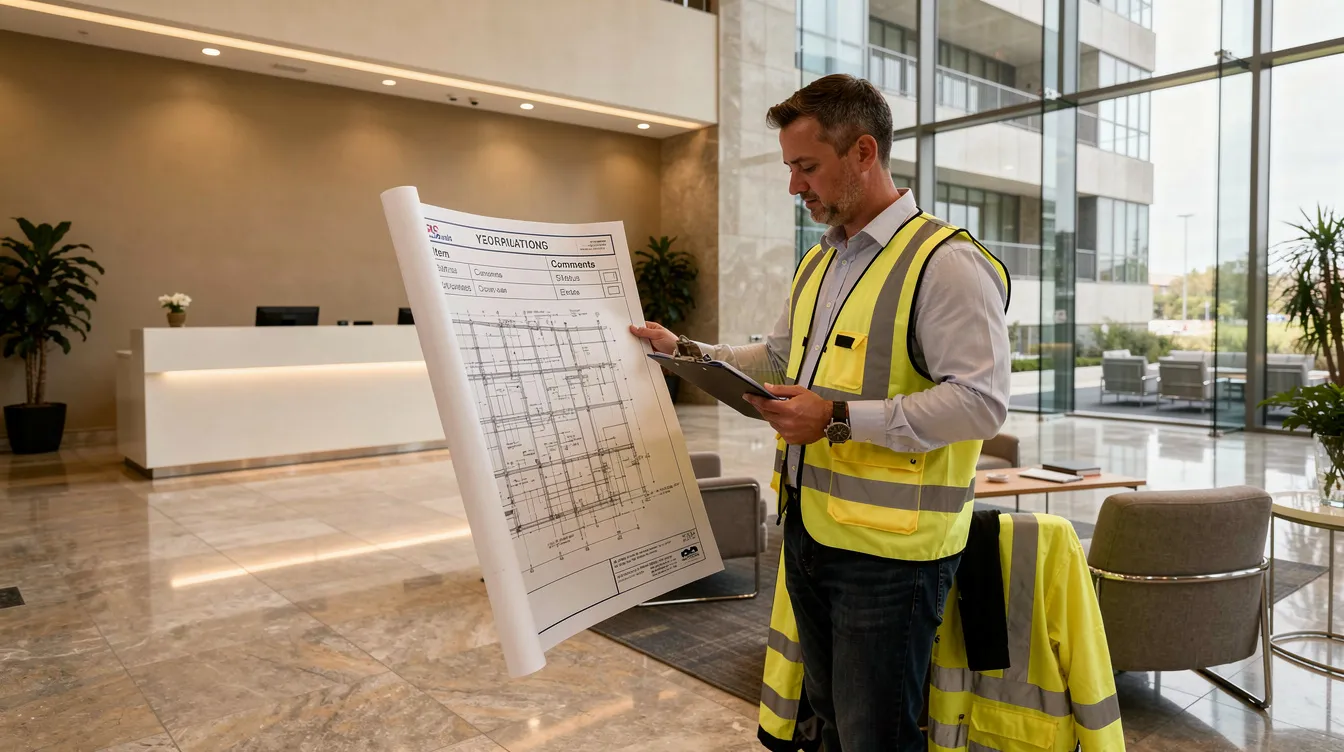
Other Roles Around PSI: Who Can Help but Cannot Sign
Several professionals and teams play important supporting roles during the PSI process, but none can substitute for the PE:
-
Resident engineers and site inspectors: May assist with measurements, crack width readings, and photo documentation, but cannot replace the PE’s personal inspection or signature on the inspection report.
-
Facilities and maintenance teams: Help with site access, background documents, and identifying known defect locations, but their internal condition surveys do not satisfy BCA’s mandatory inspections.
-
Managing agents and MCSTs: Coordinate logistics, provide structural drawings, previous PSI reports, and tenant stacking plans, but cannot act as the Qualified Person unless separately registered as a PE (Civil/Structural) with PEB.
BCA’s 2026 circular specifically prohibits the absorption of PE duties by assistants, and the reuse of older documentation or photographs from prior PSI cycles has led to report rejections.
Who Is Explicitly Not Allowed to Carry Out PSI?
The following cannot independently perform or sign off PSI for office buildings, regardless of their experience:
-
Unregistered engineers or foreign engineers without PEB registration-even if they hold equivalent qualifications overseas
-
Architects without PE (Civil/Structural) registration-they may be QP(Arch) under the Architects Act but are not recognised as the structural PE for PSI purposes
-
M&E engineers, geotechnical specialists, or professional engineers registered in other disciplines
-
Contractors, interior designers, and renovation companies
-
Building owners or in-house maintenance staff, even if technically experienced
BCA will reject PSI submissions not signed by the appropriate PE. Non-compliance with the Building Control Act can incur fines up to S$20,000, and building owners face criminal liability for failing to comply. BCA can impose daily fines of S$500 for ongoing non-compliance.
Office-Building Specifics: Matching the Right Engineer to Your Asset
All professional engineers conducting PSI for non residential buildings must meet the same legal threshold. But office buildings benefit substantially from PEs who have direct experience with high-rise and complex commercial structures. This section helps owners understand what makes a PE “suitable” beyond merely “legal.”
Types of Office Buildings and Why They Need Experienced PSI PEs
Common office building types in Singapore each present different structural and logistical challenges:
-
CBD Grade A office towers (40+ storeys): Deep basements, complex transfer girders, post-tensioned slabs, and heavily serviced core walls-all often concealed behind architectural finishes
-
Business park buildings and tech campuses: Large spans, vibration-sensitive floors, data halls with significantly elevated floor loads
-
Strata-titled office blocks: Multiple small owners, MCST involvement, fragmented access and coordination challenges across different tenants
-
Older buildings and converted premises: Building age introduces additional risks such as carbonation, reinforcement corrosion, and unauthorised structural modifications from previous fit-outs
Each type affects the choice of PE, team size, and the differentiated PSI approach needed. For example, a PE unfamiliar with transfer girders in a 50-storey tower may miss critical mid-span deflection that an experienced commercial PSI engineer would flag immediately.
What Makes a PE “Suitable” for Office PSI (Beyond Legal Minimum)?
Beyond basic PEB registration, look for:
-
Proven track record inspecting large commercial buildings and office towers in Singapore
-
Experience with concealed structural elements under suspended ceilings, raised floors, and facade cladding
-
Familiarity with tenant fit-out loads-archives, compactors, server rooms-and change-of-use scenarios where actual imposed loads may differ from original design
-
Coordination ability with MCSTs, REIT managers, and multiple tenants in occupied buildings where tenant operations must not be unnecessarily disrupted
-
Digital tools competence-AMAN Engineering, for example, integrates BIM/Tekla models where available to understand complex structures before the site visit begins
Key Responsibilities of the Appointed PSI PE for Office Buildings
The qualifying PE must personally handle these core tasks:
-
Pre-inspection review of BCA-approved structural drawings, as built drawings, and latest TOP/CSC records
-
Planning and leading site walks, covering core walls, roof levels, basements, carparks, and typical office floors-including accessible structural elements and areas where finishes must be removed
-
Initial assessment during Stage 1, which involves a visual inspection of accessible elements across minimum coverage thresholds set by BCA
-
Deciding if Stage 2 testing is needed-non-destructive testing, concrete core sampling, load tests-and specifying the scope if structural defects are found
-
Compiling, interpreting, and signing the PSI report for report submission to BCA via CORENET-X, including defect classification and remedial recommendations
Support staff may assist under direct supervision, but the PE’s professional judgement cannot be replaced. Report preparation must reflect the PE’s own observations and analysis.
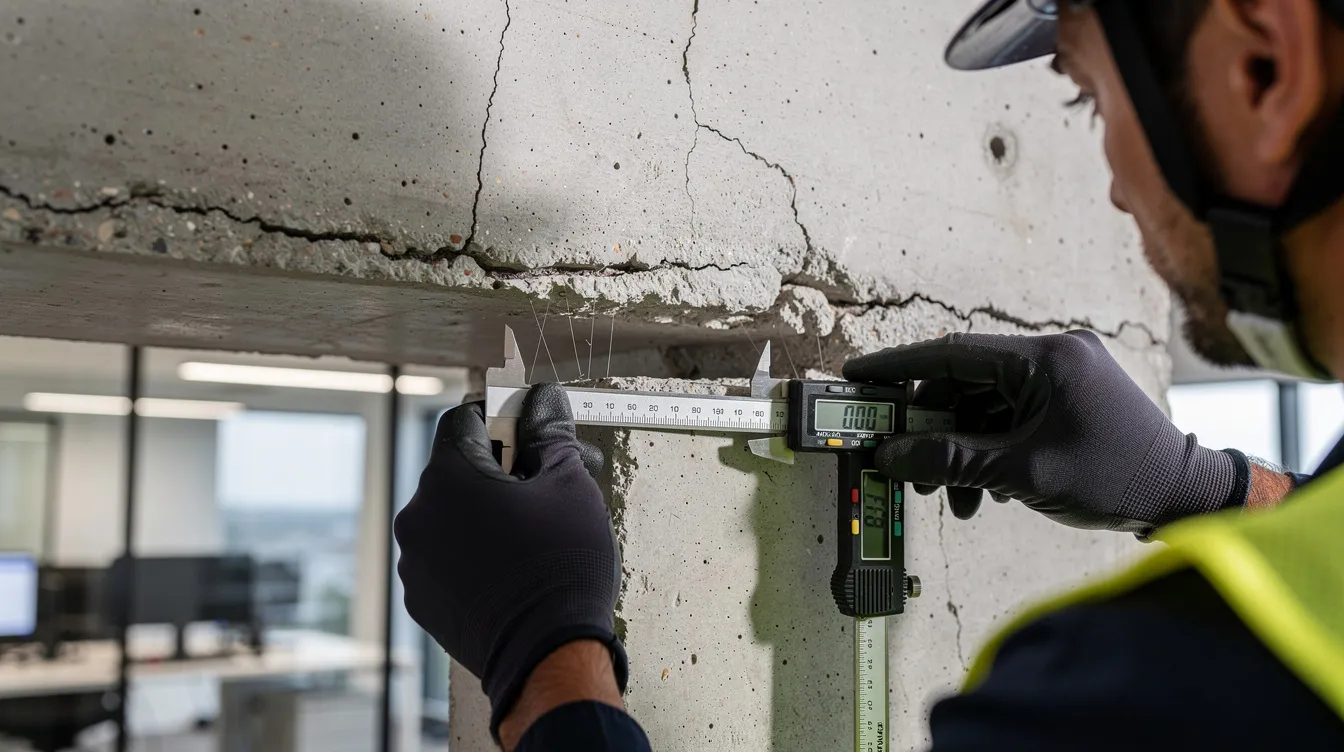
Practical Implementation: Appointing the Right Person to Carry Out PSI
Once a BCA PSI notice arrives-PSI notices are issued approximately 12 months before due dates-the owner or MCST must move quickly through a clear sequence: confirm responsibilities, shortlist PEs, verify credentials, and formally appoint. Building owners must appoint a Structural Engineer within 1–2 months of receiving the formal notice. Engineers then submit the inspection report to BCA within 3–6 months.
Step-by-Step: How an Office Owner Should Appoint a PSI PE
-
Confirm who is the legal “owner” for PSI purposes-single owner, MCST for strata titled developments, or REIT trustee-based on land title and BCA records.
-
Gather key documents: BCA PSI notice, structural drawings, previous PSI reports, TOP/CSC dates, and tenant stacking plans.
-
Shortlist 2–4 structural consultancy firms with demonstrable office PSI experience. Include firms like AMAN Engineering that specialise in commercial PSI.
-
Verify each proposed PE’s PEB registration and practising certificate status on the official PEB register.
-
Evaluate proposals on scope, methodology, timeline, and fee-not just lowest price. Ensure proposals cover both Stage 1 and potential Stage 2 investigations. PSI fees range from S$1,500 to S$8,000 for most buildings. Medium-sized buildings typically cost S$3,000 to S$5,000 for PSI, while large commercial buildings often exceed S$8,000. Stage 2 investigations can cost S$1,500 to S$20,000. PSI for small properties starts from S$1,500. For office PSI, commercial fees are not fixed by BCA and can vary by building size, inspection scope, complexity, access requirements, and scheduling.
-
Formally appoint the chosen PE in writing, set inspection dates, coordinate tenant access, and arrange safety permits. Owners must provide site access for the Structural Engineer’s assessment.
How to Verify a PE Is Properly Registered and Allowed to Perform PSI
Performing due diligence is straightforward:
-
Ask for the person’s full name and PEB registration number as a PE (Civil/Structural)-not a different discipline
-
Look them up on the PEB online register and confirm they have a valid practising certificate for the current year (not expired or suspended)
-
Also confirm the building’s PSI status and submission deadline from your BCA notice or internal records, especially if you are checking documents for sale or refinancing due diligence
-
Request examples of at least 2–3 PSI reports for comparable commercial or office projects (with confidential details redacted)
-
Clarify who will physically attend the inspections-the named PE must be personally involved, not just a signatory
-
Confirm conflict-free status-the appointed engineer cannot have conflicting interests related to the building’s design or construction
AMAN Engineering provides PEB registration details and sample anonymised PSI scopes on request to prospective clients.
Comparing Different Types of Service Providers for Office PSI
When shortlisting firms, owners typically consider two main categories:
Small PE practice (one or two PEs): These firms often offer personal attention and direct access to the signing PE. However, for large office portfolios or buildings requiring multi-floor inspections on tight timelines, manpower constraints can become a limitation. Technology depth-such as BIM integration or advanced NDT capability-may also be limited.
Mid-sized multi-disciplinary consultancy (such as AMAN Engineering): These firms bring wider resources, including structural assessment specialists, facade inspection teams, BIM modelling capability, and experienced authority submission coordinators. They are better positioned to handle multi-building portfolios, coordinate with multiple tenants, and mobilise quickly for Stage 2 investigations involving core drilling or non-destructive methods.
General civil PE vs specialist structural inspection/forensic PE: A general civil PE meets the legal minimum, but a PE who specialises in condition assessment and forensic engineering brings deeper diagnostic skill-particularly valuable for older buildings with complex defect histories. PE fees typically range based on building size, complexity, and whether Stage 2 testing is required.
Owners should prioritise experience with office buildings and strong coordination skills over lowest price. PSI compliance depends on the quality and credibility of the report, not just its existence.
Common Misunderstandings About Who Can Carry Out PSI – And How to Avoid Problems
Many building owners misinterpret “engineer” or “inspection” and accidentally engage people who cannot legally sign PSI reports. Others under-estimate the need for the PE’s personal involvement. These mistakes delay PSI compliance and can trigger penalties. Here are the most common pitfalls and how to avoid them.
Problem 1: Assuming Any Engineer or Consultant Can Do PSI
Some owners believe that M&E engineers, geotechnical specialists, or foreign engineers without PEB registration can carry out periodic structural inspection. This is incorrect. BCA will reject any PSI report not signed by a PEB-registered PE (Civil/Structural) with a current practising certificate.
Solutions:
-
Always confirm PEB registration as a PE (Civil/Structural) and practising certificate validity before engagement
-
Include a contractual clause requiring the named PE to personally conduct or directly supervise the PSI site inspections and sign the report
-
Remember that even specialist PE registrations (e.g., geotechnical) do not substitute for a civil/structural practising certificate
Problem 2: Delegating PSI to Managing Agents or In-House Teams
Some MCSTs or property managers assume their internal condition surveys-checking for water leaks, minor defects, or spalling concrete-can substitute for the statutory PSI process. They cannot.
Solutions:
-
Clarify internally that PSI is a mandatory regime under the building control act; only a registered PE’s report satisfies BCA requirements
-
Use in-house inspections to support PSI-flag known crack locations, leak patterns, or areas of concern-rather than replace it
-
Insurance claims may be denied if PSI is overdue, creating additional liability for the management corporation
Problem 3: Appointing a PE Too Late or Without Office-Building Experience
Late appointments result in rushed inspections, inadequate coverage, and PEs unfamiliar with high-rise office layouts or complex fit-outs. This can trigger BCA rejection of the PSI report, forcing re-inspection and further delays in the PSI cycle.
Solutions:
-
Engage a PSI PE 6–9 months before the BCA deadline for medium to large office buildings, especially because PSI deadlines follow fixed intervals and delay can mean missing a statutory cycle, not just a scheduling slot. Early detection of defects gives time for proper remedial planning
-
Ask specific questions about previous office PSI jobs and how the PE plans to handle access to concealed structures, tenant disruptions, and buildings with multiple building types under one title
-
Building owners must implement recommended repairs promptly after PSI. Owners must implement recommended repairs to avoid legal liabilities-don’t wait until the next PSI cycle
Conclusion and Next Steps for Office Building Owners
Only a Singapore-registered PE (Civil/Structural) with a current practising certificate can legally carry out and certify periodic structural inspection PSI for office buildings. This is not discretionary-it is mandated under Section 28 of the Building Control Act, enforced by BCA, and carries real penalties for non-compliance including fines up to S$20,000 and daily penalties of S$500.
Owners, MCSTs, and managers must treat PSI as a statutory obligation tied to public safety and structural integrity-not just a routine maintenance checkbox. The right PE brings not only legal authority but practical expertise in assessing the unique challenges of commercial buildings: concealed structures, heavy tenant loads, complex structural systems, and coordination across occupied floors.
Your actionable checklist:
-
Confirm your building’s TOP/CSC date, building age, and any existing BCA PSI notices or upcoming PSI frequency milestones
-
Identify who is legally responsible: owner entity, REIT trustee, or MCST
-
Shortlist and verify an appropriate PE (Civil/Structural) through the PEB online register
-
Prepare structural drawings, as built drawings, past inspection reports, and tenant information for the appointed PE
-
Act early-do not wait for the formal notice deadline to begin the appointment process
Related topics you may want to explore next: periodic facade inspections (PFI), SCDF fire safety certificates, and BIM-based asset information models for long-term maintenance planning.
How AMAN Engineering Consultancy Carries Out PSI for Office Buildings in Singapore
AMAN Engineering is a Singapore-based engineering and architectural consultancy specialising in commercial PSI, periodic facade inspections, structural assessment, and authority submissions for office towers, business parks, and mixed-use commercial developments.
What AMAN provides:
-
Registered Professional Engineers (Civil/Structural) lead and sign every PSI for commercial assets-from single office blocks to multi-building REIT portfolios
-
Integrated services: structural inspection, facade inspection, BIM/Tekla modelling, and value engineering to address recurring structural issues identified during the PSI process
-
Authority liaison with BCA via CORENET-X, plus coordination with URA, SCDF, and other regulators where needed for complex projects
Minimising disruption to tenant operations:
-
Phased inspection strategies-floor-by-floor, after-hours, or weekend scheduling-aligned with tenant schedules so that office buildings remain structurally inspected without shutting down business operations
-
Digital tools, clear photographic documentation, and structured reporting to support owners’ long-term maintenance decisions and ensure the building is properly maintained between PSI cycles
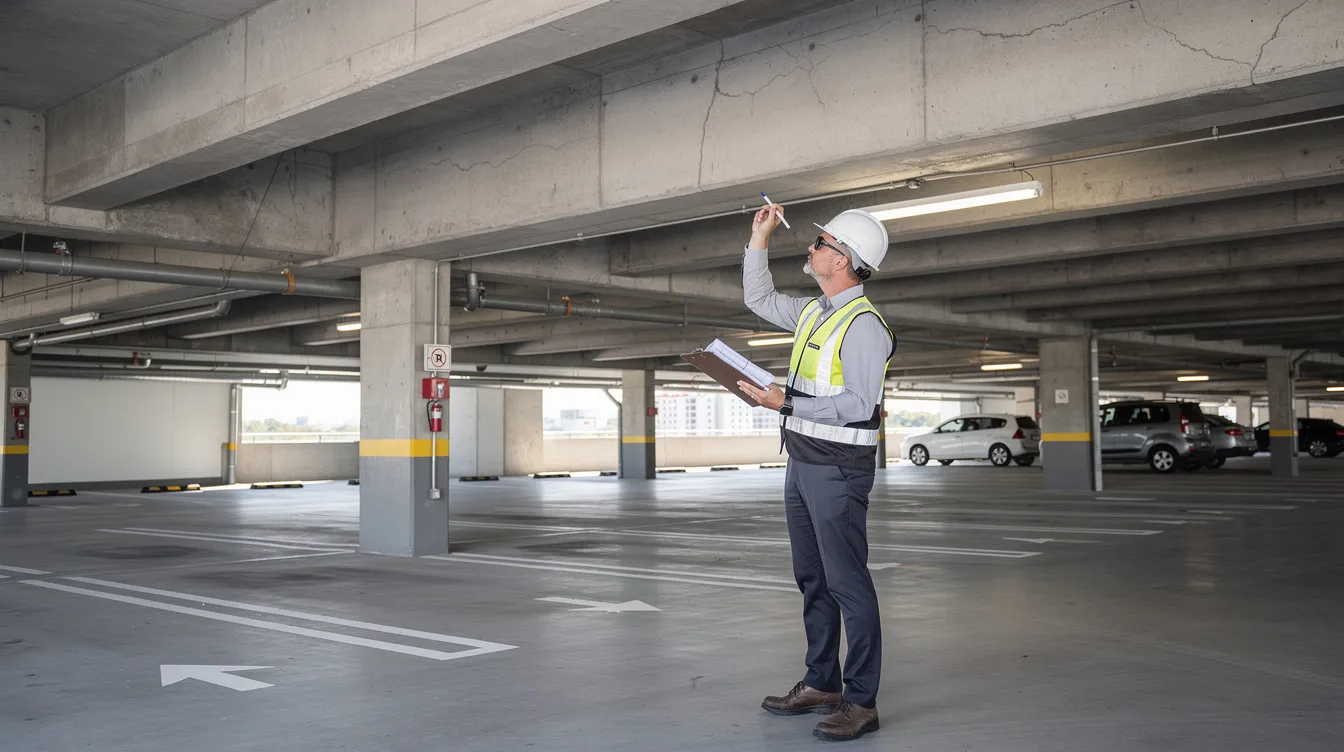
If you have received a BCA notice or your office building is approaching its next PSI cycle, contact AMAN Engineering with your building details and BCA PSI notice for a tailored proposal and a fixed fee quote covering Stage 1 inspection and report submission.
FAQ: Who Can Carry Out PSI for an Office Building in Singapore?
These are the most common questions facility managers and building owners ask about who is authorised to perform PSI.
Can my in-house engineer or foreign consultant carry out PSI if they are experienced?
No. Only a PE (Civil/Structural) registered with PEB Singapore and holding a current practising certificate can legally carry out and certify PSI reports accepted by BCA. Foreign qualifications and in-house experience-regardless of how extensive-do not satisfy the requirements of Singapore’s building control act. Structural Engineers conduct PSI to assess building conditions, and only PEB-registered PEs hold the legal authority to do so.
Does an architect qualify to perform PSI for my office building?
Architects registered with the Board of Architects are not recognised as the structural PE for PSI. Even if they are a Qualified Person under the Architects Act, that registration does not authorise structural engineering work. An architect would need to be separately registered as a PE (Civil/Structural) with PEB to qualify.
Can a Professional Engineer delegate the physical inspection to junior staff?
While assistants may support with measurements, photography, and logistical tasks, BCA expects the named PE to personally conduct or closely supervise site inspections. The PE takes responsibility for all observations recorded in the PSI report. Delegation of the entire periodic inspection to non-registered individuals is not permissible and has led to rejected reports in past PSI cycles.
Is there a difference between a PE who designs structures and a PE who does PSI?
All must be registered PEs (Civil/Structural) with PEB. However, PEs who focus on PSI specialise in condition assessment, defect diagnosis, early detection of deterioration, and forensic engineering. This experience is particularly valuable for older buildings or complex office assets with concealed elements, where the difference between identifying and missing a critical defect can affect structural integrity and public safety.
How do I quickly check if someone is allowed to carry out PSI?
-
Ask for the person’s full name and PEB registration number as a PE (Civil/Structural)
-
Look them up on the official PEB online register and confirm they have a valid practising certificate for the current year
-
Verify the building’s PSI status and due date from the BCA notice or past records before relying on the consultant’s timeline
-
If in doubt, consult BCA directly or engage a firm like AMAN Engineering that can provide verifiable credentials upfront and guide you through PSI compliance from appointment to report submission