
Introduction
Qualified person supervision for piling works is a statutory obligation under Singapore’s Building Control Act (Cap. 29) that ensures every pile driven or bored into the ground meets approved structural and geotechnical designs. A Qualified Person for Supervision acts as a statutory guardian of safety and compliance on-site, bearing personal legal accountability for verifying that foundation elements are constructed correctly, safely, and in full regulatory compliance. Without effective QP supervision, piling works-classified as critical structural works-cannot proceed lawfully, and projects risk failing to obtain a temporary occupation permit or certificate of statutory completion.
This guide focuses exclusively on the scope of services and deliverables that a QP(S) must provide for piling works, covering bored cast-in-situ piles, driven steel and precast piles, micropiles, and barrettes on building and infrastructure projects across Singapore. It is written for developers, main contractor teams, piling subcontractors, and project managers who must appoint a qualified person and clearly understand the supervision duties, documentation outputs, and statutory submission requirements that come with that appointment.
In short, the QP(S) for piling is responsible for coordinating with contractors, engineers, and regulatory bodies to ensure piles are installed in accordance with approved plans and regulations. Key deliverables include a comprehensive site supervision plan, detailed site records (pile logs, inspection reports, load test reviews), C forms (C1 certificate of supervision and completion, C3 record structural plans), and as built piling records-all of which feed directly into completion certifications for project completion.
By reading this article, you will:
-
Understand the legal duties and professional accountability of a QP(S) specifically for piling works under the building control regulations
-
Know the typical scope of services structured by project phase-from pre-piling planning through installation to close-out
-
See a comprehensive checklist of piling deliverables required for BCA submissions and TOP/CSC applications
-
Learn how to manage common piling supervision challenges such as unexpected ground conditions and deviation from approved plans
-
Gain insight into service models, coordination strategies, and digital tools that improve supervision outcomes
Understanding Qualified Person Supervision for Piling Works
A qualified person QP for supervision of piling works is a registered professional engineer holding a valid practising certificate issued by the Professional Engineers Board in Singapore, appointed to ensure that deep foundations are constructed safely, accurately, and in strict conformity with approved structural plans and geotechnical designs. Piling is treated as a critical risk activity in singapore’s construction industry because it involves irreversible installation of key structural elements deep below ground, where errors cannot easily be inspected or rectified after construction.
The QP(S) sits at the intersection of regulatory authorities, design engineers, and piling contractors. A piling works supervisor is responsible for coordinating with contractors, engineers, and regulatory bodies compliance, translating design intent into verified construction reality, and producing the statutory documentation that proves the work was done correctly. This section provides the foundational context before the article moves into detailed scope, deliverables, and practical challenges.
Legal and Regulatory Context for Piling Supervision in Singapore
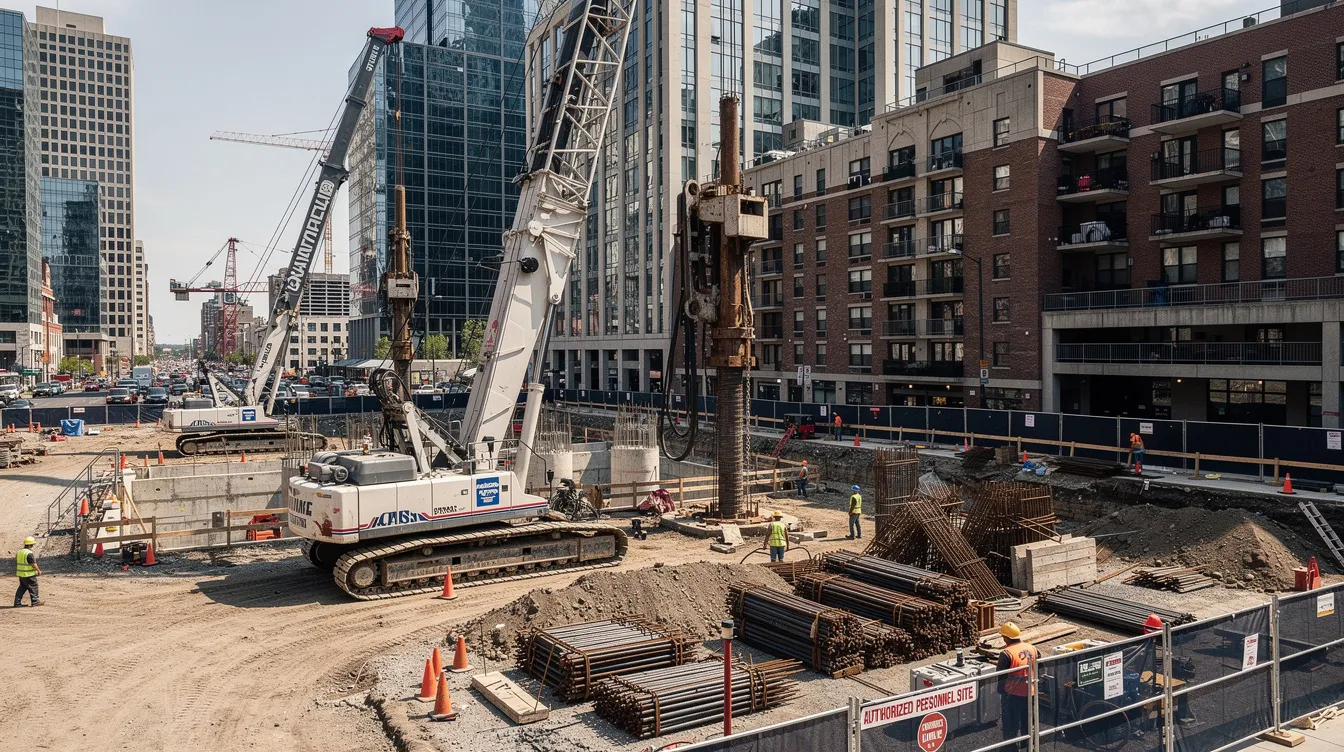
The primary legislation governing QP supervision is the Building Control Act (Cap. 29). Section 8 mandates appointing a qualified person for structural works, while Section 7(c) specifically identifies “concreting, piling, … or other critical structural works” as activities requiring immediate supervision by an appropriate QP or a site supervisor working under a QP’s direction. The building control regulations 2003 further prescribe record-keeping obligations: approved structural plans, pile installation records, load test records, and deviation documentation must all be maintained at the construction site.
Piling works typically fall under both “structural works” and “geotechnical building works,” triggering mandatory appointment of a Professional Engineer (Civil) as QP(S). Qualified Persons for Supervision are typically Professional Engineers registered with the Professional Engineers Board in Singapore, and a qualified person must hold a valid practising certificate issued annually to practise in this capacity. The Workplace Safety and Health (Construction) Regulations further classify piling as “high-risk construction work,” imposing additional safety regulations including permit-to-work requirements and certified supervisor appointments.
Key statutory concepts recur throughout the QP(S) engagement: the requirement to take “reasonable steps and due diligence,” the obligation to develop and maintain a site supervision plan with defined hold points, and the mandatory submission of C forms (C1 and C3) upon completion. Singapore Standard SS 515:2021 provides a code of practice for supervision of structural works including piling, offering detailed guidance on how these statutory duties translate into practical supervision activities. QP(S) must also report any contraventions of the Building Control Act immediately-a statutory duty that underscores the gravity of the role.
While the regulatory framework differs slightly between building projects and infrastructure works (for example, LTA or JTC may impose additional conditions imposed on foundation design near rail corridors), the QP(S)’s personal professional accountability remains the common thread across all project types.
What Makes Piling Works High-Risk Activities
Piling works interact with deep soil layers whose properties can vary significantly from borehole to borehole. Deep foundations require execution in accordance with approved structural and geotechnical plans, yet the actual ground conditions encountered during installation-boulders, cavities, artesian water pressures, or marine clay of variable thickness-may diverge materially from geotechnical investigation assumptions. This inherent uncertainty makes continuous, competent supervision essential.
Singapore’s dense urban environment amplifies piling risk. Piles are frequently installed adjacent to existing buildings, live MRT tunnels, major utilities, and settlement-sensitive structures such as hospitals or heritage buildings. Methods commonly used-bored cast-in-situ piles, driven steel H-piles, precast prestressed spun piles, micropiles, barrettes, and diaphragm walls-each introduce different supervision challenges. Bored piles demand verification of bore cleanliness and rock socket integrity. Driven piles require careful monitoring of blow counts, set criteria, and vibration levels. Barrettes and diaphragm walls involve complex temporary works, trench stability checks, and reinforcement cage handling in deep trenches.
Poor piling supervision can lead to long-term differential settlement, structural distress in the completed building, ground movement affecting neighbouring infrastructure, and potential service disruptions. The consequences extend beyond construction quality to legal liability: court rulings in Singapore have confirmed that the supervising QP is legally accountable for the entire team’s work and cannot avoid responsibility through absence or delegation without proper oversight.
These risk characteristics directly shape the need for a clearly defined QP(S) service scope with calibrated supervision intensity, structured hold points, and robust documentation-topics covered in the sections that follow.
Roles and Responsibilities of the Qualified Person (Supervision) for Piling
This section examines what the QP(S) for piling is actually responsible for on a day-to-day and milestone basis. On many projects, a single qualified person covers both piling and superstructure supervision, but piling supervision has distinct activities, inspection points, and deliverables that warrant separate attention. Understanding these responsibilities helps developers and contractors set realistic expectations and allocate resources correctly.
Distinguishing QP (Design) and QP (Supervision) Roles for Piling
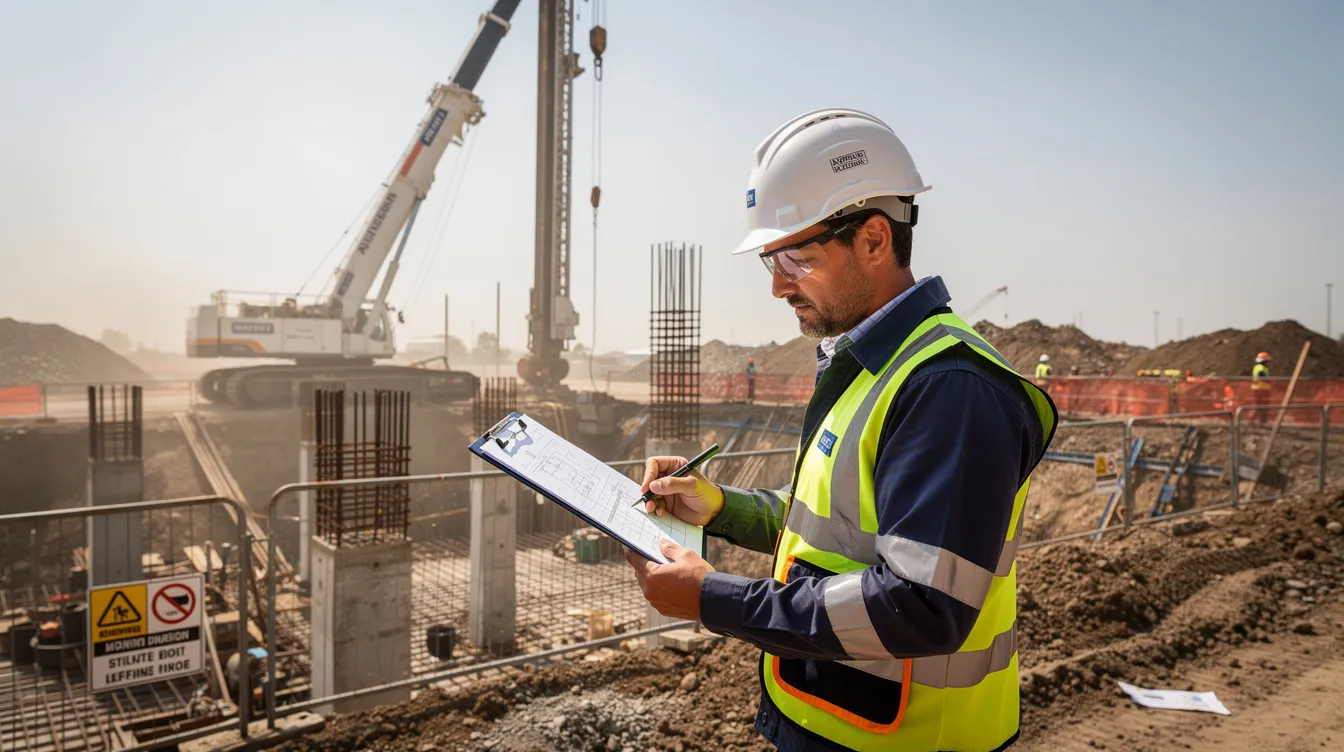
The QP for Design (QP(D)) is responsible for pile layout, design capacity calculations, geotechnical interpretation, load transfer mechanisms, and performance criteria. The QP(D) determines what the piles must achieve-bearing capacity, settlement limits, embedment depths-and produces the approved building plans and design calculations submitted to BCA’s Commissioner of Building Control.
The QP(S) has a complementary but distinct role: verifying that constructed piles-their locations, lengths, diameters, reinforcement detailing, concrete quality, and test results-match the approved piling plans and any conditions imposed by the construction authority. QP(S) must ensure compliance with approved plans and regulations throughout execution, not just at completion.
Key differences between QP(D) and QP(S) include:
-
Accountability focus: QP(D) is accountable for design adequacy; QP(S) is accountable for construction conformity and supervision completeness
-
Time of involvement: QP(D) is most active pre-construction; QP(S) is most active during and immediately after piling installation
-
Interaction with contractor: QP(D) reviews design queries and amendment plans; QP(S) inspects physical works, witnesses tests, and endorses site records
-
Key deliverables: QP(D) produces structural plans, design calculations, and C3 record plan submissions; QP(S) produces the site supervision plan, inspection reports, C1 certificate, and as built piling records
-
Legal exposure: Both carry statutory duty, but misalignment between the two can cause pile redesigns, programme delays, or non-compliance at C-Form stage
This is why early coordination between QP(D) and QP(S) is critical-ideally before piling tender documents are finalised, so supervision assumptions align with design intent. For more on distinguishing these roles, refer to our guide on QP vs PE Submission.
Interaction with Resident Engineers, RTOs, and Piling Contractors
The QP(S) leads the supervision team but does not work alone. Resident Engineers (REs) and resident technical officers (RTOs) provide continuous or frequent site presence, maintaining daily logs, verifying routine installation parameters, and flagging anomalies for QP(S) review. Projects over S$7.5 million require full-time supervision by QP-implemented through dedicated RE/RTO appointments scaled to project value. For very large projects exceeding S$75 million, BCA may require one RE plus two RTOs during the piling and foundation stage alone.
The QP(S) sets inspection frequencies, defines hold points (such as pile toe inspection before concreting, reinforcement cage checks, and load test witnessing), and reviews the RE/RTO’s detailed site records for accuracy and completeness. QP(S) intervenes directly at critical moments: resolving design ambiguities, endorsing non-conformance dispositions, and making decisions on whether deviations are acceptable or require revised designs.
Practical coordination touchpoints with piling subcontractors typically include:
-
Pre-piling start-up meeting: Reviewing method statements, plant specifications, sequence, and trial pile arrangements
-
Trial pile review meeting: Assessing trial pile performance, load test results, and confirming production piling criteria
-
Mid-production review: Evaluating installation records to date, addressing obstructions or deviations, and confirming programme alignment
-
Completion and record plans meeting: Reconciling as-built data, finalising record piling plans, and preparing C-Form submissions
Risk-Based Supervision Approach for Different Pile Types and Sites
QP(S) conducts risk-based inspections during construction phases, calibrating supervision intensity to the specific hazards of each project. Factors that drive risk classification include soil profile complexity, pile type and capacity, proximity to sensitive adjacent structures, and project importance category.
Higher-risk scenarios demanding more frequent QP(S) attendance include:
-
Deep bored piles in marine clay or Old Alluvium with variable weathering profiles
-
Barrettes or diaphragm walls adjacent to existing retaining structures or deep excavation works
-
Piles near live MRT tunnels, major trunk sewers, or heritage buildings requiring ground movement monitoring
-
Micropiles in confined spaces with limited access for inspection
By contrast, lower-risk contexts-such as shallow driven piles for low-rise industrial sheds on well-characterised ground-may permit the QP(S) to rely more heavily on RE/RTO daily supervision with defined QP(S) checkpoints at key milestones only. These risk considerations directly shape the agreed scope of services and the supervision deliverables that the QP(S) must produce.
Scope of Services for QP Supervision of Piling Works
This is the core section outlining what a comprehensive QP(S) scope should cover, from pre-piling planning through active installation to completion and C-Form submission. At AMAN Engineering Consultancy, we typically structure piling QP(S) services into clear phases so that clients can see exactly what is included at each stage and how deliverables build upon one another.
Pre-Piling Planning and Design Coordination
Before the first pile is installed, the QP(S) undertakes a series of planning and review tasks that establish the supervision framework for the entire piling phase:
-
Review of approved piling plans and geotechnical reports: The QP(S) studies the approved structural plans, geotechnical investigation findings, and design assumptions to understand pile capacities, soil parameters, bearing strata characteristics, groundwater conditions, and construction tolerances. Piling supervisors must conduct pre-construction reviews to assess risks and quality control.
-
Coordination with QP(D) and Accredited Checker: The QP(S) liaises with the design qualified person and, where applicable, the Accredited Checker to clarify design intent, discuss residual risks from ground variability, and confirm whether piles are classified as geotechnical building works requiring specialist accreditation. Where design assumptions appear inconsistent with available soil data, the QP(S) advises whether amendment plans are needed before construction begins.
-
Method statement review: The QP(S) reviews or endorses the piling contractor’s method statements covering plant selection, installation sequence, concrete specifications, groundwater management, noise and vibration mitigation measures, and trial pile procedures. Piling operations must adhere to relevant Eurocodes for construction standards and local BCA requirements.
-
Development of the Site Supervision Plan: QP(S) must develop a site supervision plan for projects-specifically the piling-related portion of the SSP. Site Supervision Plans must designate critical inspection stages and hold points for foundation works, such as setting-out verification, bore cleanliness, reinforcement cage placement, concreting commencement, and load test witnessing. The SSP also defines documentation templates, inspection frequencies, and responsibilities of the supervision team.
-
Authority coordination: The QP(S) confirms whether piling plans have received prior approval under BCA’s structural plan submission process, checks for any clearance requirements from technical agencies (e.g., railway protection zone restrictions, JTC conditions), and clarifies BCA expectations on C1/C3 submission requirements and timing. Submissions are made through the CORENET-X gateway, as detailed in our CORENET X Submission Guide.
Supervision During Pile Installation and Testing
During the active construction phase, the QP(S) performs the most intensive supervision work. Piling supervisors are responsible for monitoring installation conformance with design specifications, and this translates into specific inspection activities for each pile type.
Setting-out and pre-installation checks: The QP(S) verifies pile positions against approved layout plans, confirms cut-off levels, checks pile diameters, and reviews survey records before installation proceeds. Any discrepancy identified at this stage is far cheaper to correct than after a pile is in the ground.
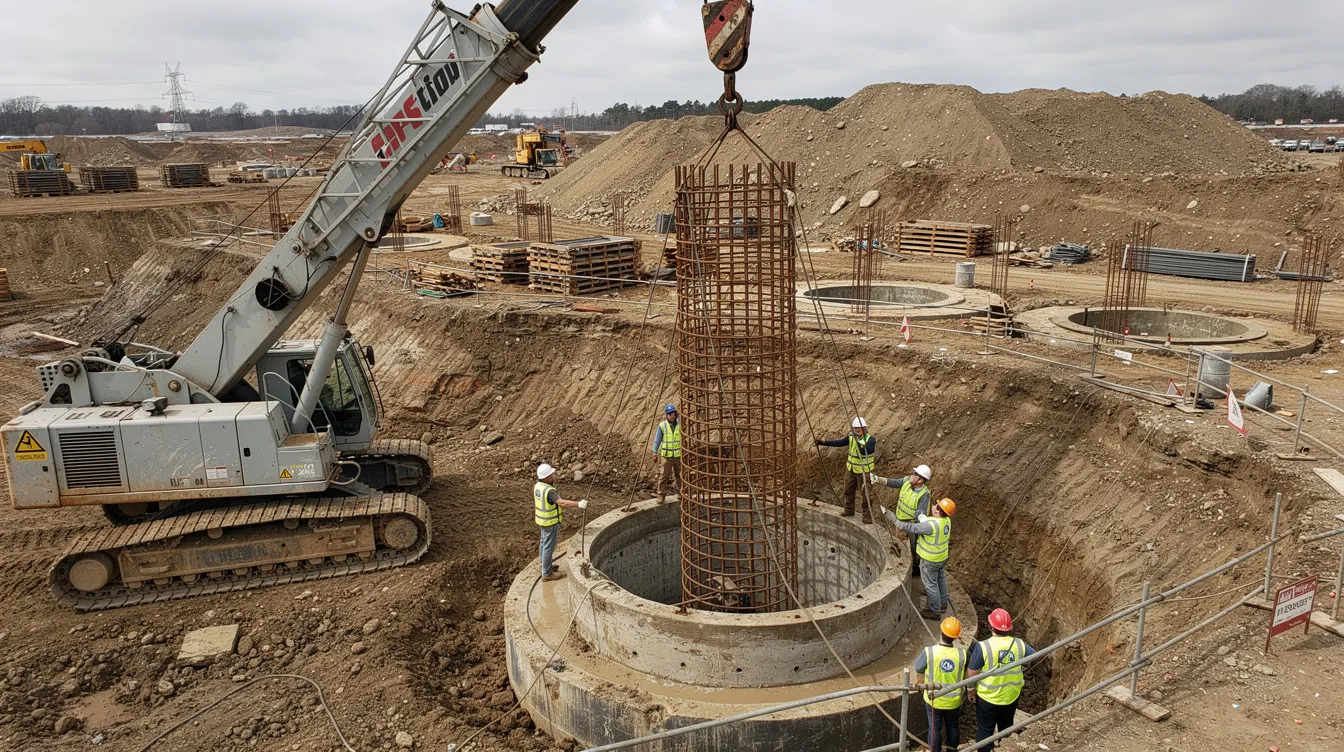
Bored and barrette pile inspections:
-
Borehole cleanliness and stability before cage lowering
-
Rock socket depth verification and confirmation of embedment into bearing strata
-
Reinforcement cage positioning, alignment, concrete cover, and splicing details
-
Tremie concreting procedures including concrete quality checks (slump, mix design, test cubes) and volume reconciliation
-
Temporary works adequacy: casing stability, bentonite quality for barrettes
Driven pile inspections:
-
Hammer type and energy verification against method statement
-
Blow count recording and set criteria compliance
-
Pile damage checks, cushion adequacy, and alignment monitoring
-
Splicing or welding quality for extended piles
-
Pile head protection during driving
Load testing oversight: Testing oversight includes witnessing mandatory pile load tests and verifying structural capacities. The QP(S) witnesses static maintained load tests, dynamic tests (PDA), and Osterberg cell tests where specified. Quality assurance involves validating materials compliance and witnessing specified tests during piling operations. The QP(S) reviews test data against design criteria, checks adequacy of test instrumentation, examines laboratory reports, and provides technical comments. If a load test fails to demonstrate adequate capacity, the QP(S) coordinates with QP(D) for redesign, additional testing, or mitigation measures.
Deviation and non-conformance management during installation: When piles encounter obstructions, refuse at unexpected levels, or deviate from planned positions, the QP(S) must document the issue immediately, evaluate whether the deviation falls within acceptable tolerances, and-if not-coordinate with QP(D) for revised design calculations or acceptance assessments. Non-Conformance Reports document deviations from approved plans and outline corrective actions required. Amendment plans are required for material changes to approved plans, while minor deviations are captured in record plans.
Post-Installation Verification, Non-Conformance Management, and Record Plans
After production piling is complete but before submission of completion certificates, a critical close-out phase begins.
The QP(S) verifies final pile cut-off levels, inspects exposed pile heads, and checks pile cap interfaces to confirm alignment with structural design. Where piles have been truncated above design depth or show defects (honeycombing, necking, or misalignment), the QP(S) assesses the structural impact and coordinates remedial measures-pile cropping, strengthening, additional piles, or revised pile cap designs.
Non-conformance resolution follows a structured process: the contractor proposes remedial actions, the QP(S) reviews them in coordination with QP(D), and the agreed disposition is formally recorded. Every non-conformance must be documented with clear references to the relevant approved plans, the nature and magnitude of the deviation, the engineering assessment, and the final outcome.
The QP(S) coordinates with surveyors to produce as-built pile position surveys-horizontal coordinates, vertical levels, penetration depths, and embedment into bearing strata. This data feeds into record piling plans that show actual versus designed pile locations, numbering, key dimensions, and test pile performance. Record plans must show all immaterial changes after construction, while material changes require the QP(S) and QP(D) to submit amendment plans through BCA before proceeding.
All of this supervision activity must be captured in formal deliverables, which the next section describes in detail.
Key Deliverables from QP Supervision for Piling Works
Beyond being physically present on site, the QP(S) is ultimately judged by the quality and completeness of documentation and statutory submissions. These deliverables serve three purposes: demonstrating regulatory compliance, providing an auditable trail of due diligence, and supporting the project’s TOP/CSC application. This section breaks them into planning documents, ongoing supervision records, and final completion submissions.
Planning and Supervision Framework Documents
The following documents are produced or endorsed by QP(S) before or at the start of piling works:
-
Comprehensive site supervision plan (piling portion): Defines QP(S) and RE/RTO visit frequencies, inspection hold points for each pile type, documentation templates, escalation protocols, and responsibilities-providing continuity of supervision expectations across all parties
-
Risk assessment notes: Focused on ground conditions, groundwater risks, proximity to sensitive structures, and instrumentation data requirements for adjacent building protection
-
Endorsed method statement: QP(S) review comments or formal endorsement of the piling contractor’s method statement, confirming alignment with approved plans and relevant regulations
-
Pre-condition survey endorsement: Where piles are near sensitive structures, QP(S) endorses the pre-construction condition survey scope and baseline monitoring reports
-
Trial pile and load test plan: Specifying test pile locations, test types, acceptance criteria, and instrumentation arrangements
-
Technical agency clearance log: Confirmation that required clearances (e.g., LTA railway protection, PUB drainage proximity) have been obtained with prior approval
Site Supervision Records and Technical Reports
Throughout the piling construction phase, the QP(S) compiles an extensive body of supervision records that collectively demonstrate that reasonable steps were taken to verify construction quality:
-
Signed inspection checklists for each critical stage: bore cleanliness verified, reinforcement cage checked before lowering, concreting authorised, driven pile set criteria confirmed
-
Photographic records at mandatory photo points: cage in bore before concreting, tremie pipe placement, pile head after driving, load test setup
-
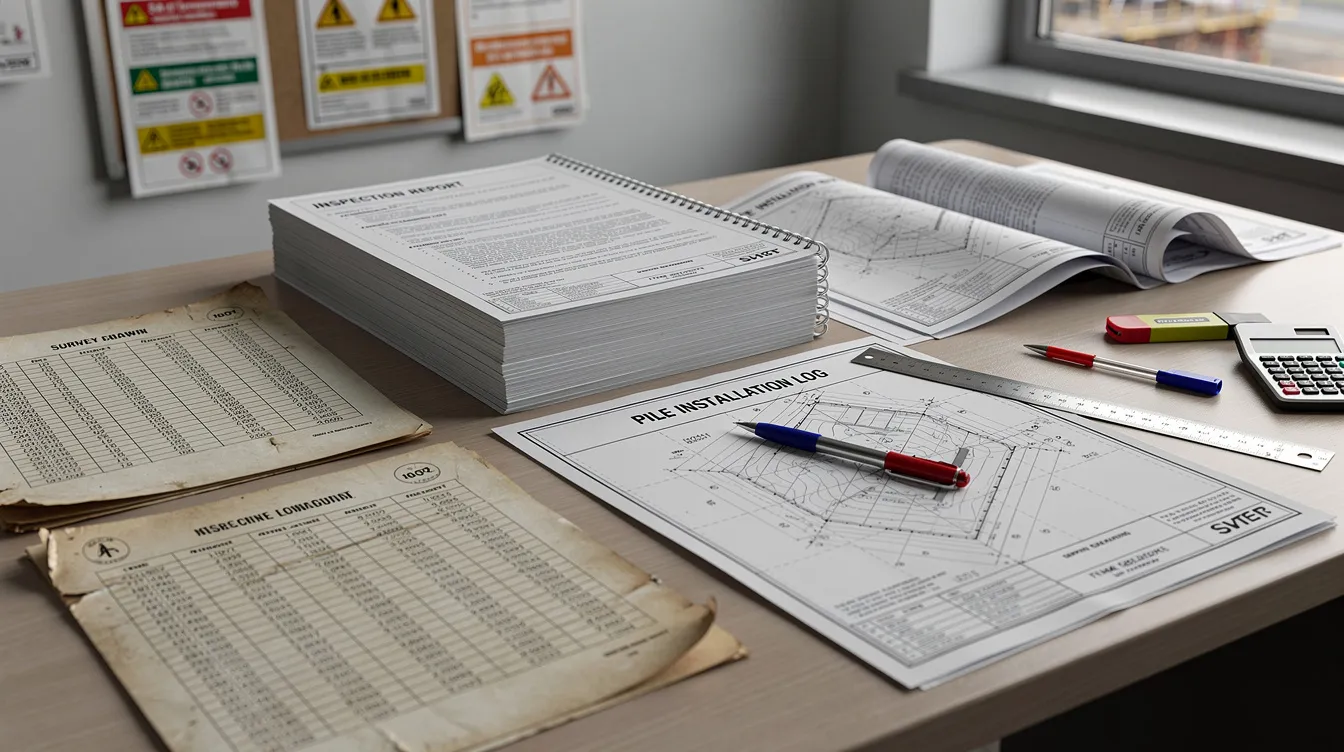
Pile installation logs endorsed by QP(S), recording pile number, date, depth, bearing stratum encountered, concrete volume (bored piles) or blow count/set (driven piles), and any anomalies
-
RE/RTO daily progress reports summarised and periodically reviewed by QP(S)
-
Load test reports with QP(S) technical comments comparing measured performance against design criteria
-
Summary memos on obstructions, unusual ground conditions, or instrumentation data anomalies
-
Non-conformance reports with documented follow-up actions, QP(D) dispositions, and closure records
-
Monitoring reports where piling near sensitive structures requires settlement or ground movement tracking
At AMAN, we prefer digital, date-stamped records-photographs with GPS metadata, cloud-based pile log databases, and real-time dashboards-to support traceability and strengthen the QP(S)’s defence of due diligence during any future audit or dispute.
C-Forms, Record Piling Plans, and Final Certifications
Statutory compliance requires formal submission of structural works supervision certificates for project completion. The two primary C forms for piling are:
Form C1 (QPCTPW / QPCTPW-GBW): The Certificate of Supervision of Piling Works and Notice of Completion is signed by the supervising QP to certify that pile installation was supervised in accordance with approved plans (or approved amendments), that deviations have been recorded and appropriately resolved, and that non-conformances have been mitigated. Qualified Persons must submit completion certifications within 14 days after works are completed. The QP certifies compliance with the Building Control Act through this form.
Form C3 (CTASST): The record structural plans or record geotechnical building works plans and calculations are submitted by the design QP. Record plans must be lodged within 28 days of completion of piling works. These show final pile numbering, actual capacities, penetration depths, embedment into bearing strata, test pile locations, and any layout changes versus the originally approved structural plans.
The relationship between amendment plans and record plans is important to understand: material changes-such as significant pile relocations, capacity reductions, or type substitutions-require the QP(D) to submit amendment plans through BCA and receive approval before construction continues. Immaterial changes-minor positional shifts within tolerance, slight depth variations-are captured in record plans without requiring fresh approval. QP(S) and QP(D) must coordinate closely to ensure consistency between the C1 certification and the C3 record plan submission.
Completion deliverables include as-built documentation reflecting final installation conditions and test results. AMAN’s typical closing deliverable pack for piling includes the C1 form, relevant portions of C3, record piling drawings, all load test reports, and a short summary memo on overall piling performance and any residual risks noted for the superstructure design team.
Service Models, Fees, and Coordination for Piling QP Supervision
Many clients need clarity on how QP(S) services for piling are packaged and priced, not just what they technically involve. This section outlines common engagement structures while noting that all fee arrangements must remain compliant with Singapore’s professional practice rules and ethical guidelines established by the Professional Engineers Board.
Full-Time vs Immediate Supervision for Piling Works
The building control regulations establish two supervision concepts relevant to piling phases. “Full-time supervision” involves dedicated RE/RTO presence on site during all piling activities, while “immediate supervision” refers to QP(S) site visits at defined intervals-typically aligned with hold points in the comprehensive site supervision plan.
Full-time RE/RTO presence is standard for large foundation works: high-rise residential towers, major infrastructure projects, or any building works where the estimated project value exceeds BCA’s S$7.5 million threshold. For very large complex projects, BCA’s requirements on site supervisors may mandate multiple resident technical officers during the piling stage.
Smaller industrial or ancillary building projects may permit part-time supervision where the QP(S) attends defined hold points (trial piles, load tests, critical concreting operations) while the RE/RTO covers daily monitoring. However, even in these cases, the QP(S) retains personal statutory duty for supervision adequacy and must ensure the RE/RTO is competent and properly briefed.
At AMAN, we document the chosen supervision model clearly in appointment letters, the site supervision plan, and scope-of-services agreements to prevent disputes about attendance expectations later.
Typical Engagement Structures Used by AMAN Engineering Consultancy
AMAN structures piling QP(S) engagements to match project scale and complexity:
-
Baseline statutory supervision package: Covers minimum QP(S) site visits during piling (aligned with SSP hold points), review of pile logs and material certificates, load test witnessing and interpretation, and preparation of C1 form and coordination with QP(D) on C3 submission. Suited to straightforward projects with well-characterised ground conditions.
-
Enhanced digital supervision package: Adds structured photographic documentation protocols, digital pile log dashboards, periodic documentation audits, and detailed monitoring reports for projects near sensitive structures. Includes additional QP(S) visits for mid-production reviews and virtual inspections of RE/RTO records between physical site visits.
-
Integrated design + supervision + BIM package: Combines QP(D) and QP(S) roles with BIM coordination, so pile locations are verified against 3D models, as built piling records are incorporated directly into the project BIM, and all regulatory submissions flow through a single consultancy for consistency.
Fees are typically phased: a planning phase component (SSP development, method statement review), an active piling phase component at highest intensity, and a close-out/documentation phase for record plans and C-Form preparation. Engaging the QP(S) early-ideally before tender or mobilisation-ensures supervision scope and deliverables can be reflected in the main contractor’s programme and subcontract clauses.
Coordination with Other Professional and Authority Services
Piling QP(S) work interfaces directly with several other professional services. At AMAN, piling supervision connects seamlessly with our authority submissions (BCA, LTA, JTC), structural and geotechnical design, building impact assessments, and BIM modelling capabilities.
Benefits of coordinating these services through a single consultancy include:
-
Smoother BCA correspondence where the same team manages both design submissions and supervision certifications
-
Consistent pile data across BIM models, structural drawings, and as built piling records
-
Coordinated structural inspections when transitioning from piling to pile cap and superstructure phases
-
Integrated monitoring data management when piling occurs adjacent to deep excavation or earth retaining structures
The QP(S) also collaborates with third parties-independent Accredited Checkers, instrumentation specialists, fixed installation inspectors, and licensed surveyors-and consolidates their inputs into the final deliverable package. This consolidation role is particularly valuable on complex projects where multiple specialist contractors generate data that must be reconciled before C-Form submission.
Common Challenges in Piling Supervision and How to Address Them
Many piling problems stem from poorly defined supervision scope, inadequate documentation practices, or misreading of ground conditions. Each challenge below is paired with a concise, practical solution relevant to QP(S), contractors, and developers.
Unexpected Ground Conditions and Obstructions
Geotechnical investigations, no matter how thorough, cannot reveal every subsurface anomaly. Common surprises include boulders in Old Alluvium, cavities in limestone formations, artesian water pressures exceeding predictions, weaker rock than assumed, or contaminated fill not identified in the soil investigation.
The QP(S) response protocol is clear: conduct an immediate site visit, log the issue comprehensively, review findings with the QP(D) or geotechnical engineer, and implement temporary mitigation measures to prevent instability-such as maintaining casing, adjusting drilling fluid, or pausing adjacent piling. Where ground conditions deviate materially from design assumptions, the QP(S) must trigger review of method statements and, if necessary, require the QP(D) to prepare revised design calculations or amendment plans. BCA must be notified if statutory thresholds or assumptions underpinning the approved plans have changed. Detailed documentation at every step protects all parties and supports future foundation movement investigations if needed.
Deviation from Approved Piling Layout, Levels, or Termination Criteria
Examples include piles installed off-grid beyond tolerance, shorter penetration due to premature refusal, piles terminated above design toe level, or unapproved substitution of pile types. These deviations can compromise structural integrity if not properly assessed.
QP(S) actions must be immediate and documented: require as-built surveys, insist on design checks by QP(D) confirming adequacy or identifying the need for remedial works, and reject unsafe deviations outright. Material changes must go through amendment piling plan submission and BCA approval before continuation-the QP(S) cannot simply accept a contractor’s assurance that a deviation is acceptable. Immaterial deviations must still be captured accurately in record plans. The record plan becomes the permanent record of what was actually built versus what was designed.
Incomplete or Poor-Quality Site Records
Missing blow count logs, absent cage placement photographs, ambiguous load test data, or unsigned pile installation records fundamentally undermine the QP(S)’s ability to sign the C1 form honestly. QP(S) is legally accountable for the entire team’s work, so gaps in documentation create both professional and legal exposure.
Practical mitigation measures include:
-
Standardised pile log sheets with mandatory fields that cannot be submitted incomplete
-
Mandatory photo points at defined stages, with digital tools or apps enabling real-time uploads and timestamp verification
-
RE/RTO training on documentation standards at project commencement
-
Periodic documentation audits during piling-AMAN’s practice is to conduct these at regular intervals to catch gaps early, not discover them at completion when remediation is difficult
Misalignment of Expectations Between Client, Contractor, and QP(S)
Typical misunderstandings arise around the number of site visits expected, responsibility for load test interpretation costs, whether QP(S) will attend night shifts or weekend piling, and who bears the cost of additional supervision when unexpected conditions extend the piling programme.
Solutions centre on clarity at engagement stage: a detailed scope-of-services schedule specifying visit frequencies, a defined deliverables list with submission milestones, an escalation protocol for emergencies or after-hours piling, and an agreed process for additional services and associated fees. Clients should align the piling programme with QP(S) availability and factor supervision needs explicitly into the main contract and piling subcontract clauses. This avoids the common situation where the piling contractor proceeds through critical hold points without QP(S) attendance, creating compliance risks that surface only at C-Form submission.
Conclusion and Next Steps
Effective QP supervision for piling works is a structured, legally mandated service that protects structural safety, regulatory compliance, and project viability. The QP(S) is not merely an inspector who visits site occasionally-the role demands active engagement across planning, installation, testing, and close-out phases, producing a comprehensive chain of documentation that proves each pile was constructed in accordance with approved plans and relevant regulations.
The link between clearly defined QP(S) scope, robust documentation-especially C1 completion certifications and record piling plans-and smoother pathways to temporary occupation permit and statutory completion cannot be overstated. Projects that invest in early QP(S) appointment, structured supervision frameworks, and digital record-keeping consistently experience fewer surprises at the C-Form stage and faster regulatory approvals.
Suggested next steps for project teams:
-
Identify whether upcoming building works include piling, ground improvement, or deep foundation elements that trigger QP(S) duties under the building control act
-
Prepare design and ground information-soil investigation reports, preliminary piling design, and geotechnical parameters-before approaching a QP(S) consultancy
-
Agree on a written piling supervision scope and deliverables schedule with your consultancy, covering all three phases and specifying submission requirements clearly
-
Set up digital workflows early to capture piling records, test data, and photographic documentation in real time
-
Ensure the main contractor’s programme reflects QP(S) hold points and allows adequate notice for inspections
Related topics that readers involved in piling decisions may wish to explore include QP(S) supervision for basement excavation and earth retaining structures, structural inspection of existing foundations where new piling occurs adjacent to existing buildings, and BIM-based foundation coordination for integrated design and supervision workflows.
Additional Resources and Piling Supervision Checklist
This final section provides a practical checklist summarising what project teams should confirm before, during, and after piling works. For detailed regulatory guidance, refer to BCA’s guidelines on structural plan applications, the BCA e-Guide for C-Forms, SAC CT-32 requirements for piling company accreditation, and the BCA Guidebook for Site Supervision Plans. Qualifications for piling supervisors include a degree in Civil Engineering or related disciplines and specialized training in piling operations, as detailed in IES/BCAA Certified Piling Professionals scheme documentation.
-
Before piling starts: QP(S) appointed in writing with clear scope; piling plans approved by BCA; comprehensive site supervision plan in place with hold points defined; method statements reviewed and endorsed; trial pile and load test regime agreed; pre-condition surveys completed for adjacent structures; basement excavations deeper than 1.5 m have received formal submissions where applicable
-
During piling: Site logs maintained daily by RE/RTO and reviewed by QP(S); QP(S) attends all defined hold points per SSP; deviations documented through non-conformance reports with corrective actions; load tests witnessed and interpreted against design criteria; material test certificates (concrete, steel, welds) verified; monitoring data reviewed where adjacent structure protection is required; progress reports issued at agreed intervals
-
After piling: As-built survey completed for all pile positions and levels; record piling plans updated showing actual versus designed conditions; C1 form prepared and submitted within statutory timelines; C3 record structural plans coordinated with QP(D) and submitted within 28 days; all documentation archived in project completion file for TOP/CSC application; residual risks communicated to superstructure design and supervision team
AMAN Engineering Consultancy can help clients review existing piling documentation, set up full QP(S) supervision frameworks for upcoming projects, or provide integrated design and supervision services across foundation and superstructure phases in Singapore and the region.