
Introduction: SCDF Fire Safety Submissions for Data Centres in Singapore
Every new data centre and major A&A (additions and alterations) project in Singapore must obtain fire safety plan approval from the Singapore Civil Defence Force before operations can begin. Fire safety submissions must adhere to the SCDF Fire Code, and data centres must submit fire safety plans to SCDF as part of the building plan process. The SCDF fire safety certificate is mandatory for certain buildings, including industrial-scale data centres.
This article explains exactly which documents are needed for an SCDF fire safety submission for data centres and how the approval process works end-to-end. Whether you are developing a new hyperscale facility or retrofitting an existing colocation site, the submission requirements are detailed and unforgiving.
AMAN Engineering Consultancy Pte Ltd is a Singapore-based authority submission specialist experienced with industrial and mission-critical facilities. Our focus here is on data centres with high power density, raised floors, critical cooling, and complex M&E systems. The examples reference SCDF Fire Code 2018/2023 editions, CORENET X, and typical 2024–2026 submission practice, but do not replace official guidance.

Regulatory Framework: Fire Safety Act, Fire Code and SCDF Roles
Understanding the legislative landscape is the first step toward a compliant submission. Here are the key pillars:
-
The Fire Safety Act (Cap. 109A) legally requires all fire safety works in data centres to be designed, submitted, and supervised by a qualified person. Regular fire risk assessments are required under the Fire Safety Act.
-
The Singapore Fire Code (2018 edition with 2023 amendments) is the primary technical reference for means of escape, fire protection systems, fire compartmentation, and hazard classification. FSSD submissions require compliance with the Singapore Fire Code.
-
SCDF’s Fire Safety and Shelter Department (FSSD) is the approval authority for plan approval, inspections, Temporary Fire Permit, and fire safety certificate issuance. FSSD regulates fire safety standards for commercial and industrial buildings in Singapore, and FSSD submission is essential for obtaining necessary certifications.
-
Related Singapore Standards apply: SS 575 (sprinkler/fire hydrant), SS 634 (fire alarm), SS 532 (storage of flammable liquids, relevant for diesel tanks), and SS 667 (energy storage systems for battery rooms).
-
Deviations from prescriptive Fire Code clauses require formal waiver applications or performance-based designs supported by fire engineering analysis, peer review, and SCDF in-principle agreement.
Non-compliance with FSSD regulations can lead to financial losses and legal action, making early regulatory alignment critical.
Data Centre-Specific Fire Safety Risks and Design Considerations
Data centres are treated as high-value, mission-critical industrial facilities from a fire safety management perspective. Even while high-rise buildings often lack updated fire safety technology, modern data centres face a distinct set of hazards that demand specialised design.
Key risk factors include:
-
Very high electrical load from servers, switchgear, UPS, and battery banks creating arc flash and electrical fire risk
-
Continuous 24/7 operation with no planned shutdown windows
-
Diesel backup generators and fuel storage tanks requiring fire-rated separation, ventilation, and spill containment
-
UPS battery systems that require specific fire safety measures based on their chemistry, especially lithium-ion
-
Emergency power off systems, which are essential for fire safety in data centres, enabling rapid de-energisation
-
Extensive cable penetrations through fire-rated barriers and deep floor plates with limited natural ventilation
-
Fire compartmentation is critical in data centres to prevent fire spread between server halls and ancillary spaces
Travel distances to emergency exits must comply with SCDF regulations – typically 25 m one-way and 60 m two-way with sprinkler protection. Common SCDF queries include smoke venting for halls exceeding 8,000 m², separation between generator rooms and IT halls, and fire appliance access.
Properly scoped submission documents must clearly address these risks to avoid delays in the approval timeline.
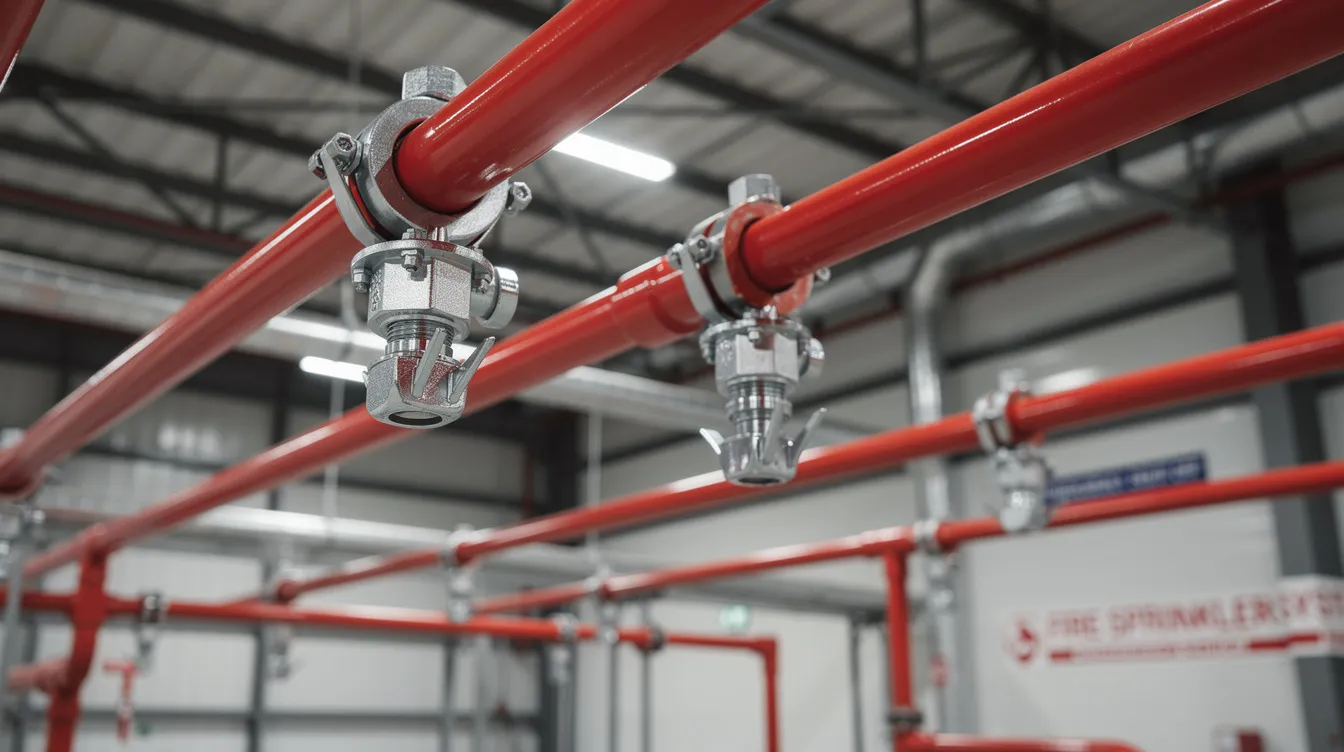
Key Stakeholders and Roles in the SCDF Approval Process
Fire safety in data centre projects is a multidisciplinary effort involving multiple stakeholders with clearly defined accountability. All fire safety submissions require a qualified person to prepare them.
-
Qualified Person (QP): A registered architect or professional engineer who leads the SCDF submission. The QP for Architectural handles layout, compartmentation, and egress; the QP for M&E addresses fire protection systems, ventilation, and electrical. A qualified person submits fire safety plans on behalf of the project team.
-
Fire Safety Engineer (FSE): Engaged when performance-based solutions are used, such as CFD smoke control modelling or egress simulations for large server halls. Prepares the Fire Safety Engineering Design Brief and Report.
-
Fire Safety Manager (FSM): Required for data centres exceeding regulatory thresholds. The FSM develops the emergency response plan, conducts fire drills, and oversees ongoing fire safety management.
-
Building owner / developer / facility manager / main contractor: Provide project information, ensure construction aligns with approved plans, and support documentation and inspections.
-
Registered Inspector (RI): A registered inspector verifies fire safety systems post-installation, testing sprinklers, alarms, clean agents, and smoke control before FSC application.
AMAN Engineering Consultancy coordinates these parties and manages communication with SCDF, ensuring resource allocation is efficient and accountability is clear across the team.
Overview of the SCDF Approval Process and Evaluation Stages
The lifecycle of a data centre fire safety submission follows a defined process: Fire Safety Plan Approval → Temporary Fire Permit (TFP) → Fire Safety Certificate (FSC) → ongoing fire safety management. Post-construction approval requires a fire safety certificate or temporary fire permit before any occupation.
The evaluation stages within SCDF practice are:
-
Preliminary consultation (optional but recommended for complex layouts)
-
Formal plan submission by QP via CORENET / CORENET X
-
Screening for completeness of forms, fees, and declarations
-
Active evaluation against Fire Code clauses
-
Clarification Letters (CLs) for queries or inconsistencies
-
Conditional approval with conditions to fulfil during construction
-
Final decision and approval issuance
The approval process differs from the approval workflow: process is the sequence of technical evaluation stages; workflow is the routing via CORENET X and internal review chains.
Typical approval timelines for well-prepared industrial submissions are 3–6 weeks for first-cycle plan approval. Multiple rounds of clarifications can add several weeks each. Well-prepared, complete document sets significantly shorten the approval timeline and reduce pending approvals.
Document Set for Fire Safety Plan Submission (Building Plan Stage)
This section is the core document checklist for an initial SCDF fire safety submission for a new data centre. Data centre submissions require a detailed package of architectural and fire safety plans. Qualified persons must prepare fire safety plans for certification.
Architectural fire safety drawings:
-
Site plan showing fire engine access (which must accommodate the heavy infrastructure of data centres), vehicular turning radii, and building setbacks
-
Floor plans with purpose groups, occupant load factors, exit staircases, travel distances, and fire compartment lines
-
Architectural and layout plans must detail fire safety provisions for submission
Fire protection system drawings:
-
Automatic sprinkler layouts, including pre-action or double-interlock types for server halls
-
Fire hydrant and hose reel systems
-
Fire alarm and detection zoning – fire detection systems in data centres often integrate advanced technologies like VESDA (Very Early Smoke Detection Apparatus)
-
Data centres typically use specialised clean agent gas suppression systems such as FM-200, Novec 1230, or IG-541 for server rooms
-
Fire safety measures include installing alarms and sprinkler systems
M&E fire-related plans:
-
Mechanical ventilation and smoke control layouts, pressurisation systems
-
Diesel generator ventilation, fuel transfer pipe routing
-
Battery room exhaust and explosion relief provisions
-
Certain fire safety systems must interface with ventilation and emergency power systems
Calculation notes and reports:
-
Occupant load calculations, egress and travel distance computations
-
Water storage capacity and fire pump sizing
-
Smoke extraction calculations and fire resistance rating schedules
-
Engineering calculations are necessary to demonstrate compliance with fire safety standards
-
Performance-based fire engineering reports if alternative solutions are proposed
-
Documentation must include evidence of fire-rated construction in data centres
Textual documents:
-
Fire Safety Report (FSR) and fire strategy narrative
-
List of proposed regulated fire safety products under the Product Listing Scheme (PLS)
-
Waiver or appeal submissions with justification
All documents must be submitted digitally via CORENET / CORENET X. The CORENET E-Submission System streamlines FSSD applications in Singapore, but correct project references and clear file naming remain essential for efficient evaluation stages.

Temporary Fire Permit (TFP) and Fire Safety Certificate (FSC) Documentation
After construction and testing, a Temporary Fire Permit may be needed to bring in IT equipment or allow partial operations before full completion. Building owners must submit plans to obtain a fire safety certificate. The SCDF fire safety certificate is mandatory for certain buildings, including data centres.
Documents for TFP:
-
As-built fire safety plans reflecting installed systems
-
QP certification forms confirming compliance with approved plans
-
Test and commissioning reports for fire alarm, sprinkler, hose reel, hydrant, clean agent, and smoke control systems
-
Schedule of any pending minor works
Additional documents for FSC:
-
Updated as-built drawings
-
Registered Inspector inspection reports and Form 1/Form 2 certificates
-
System commissioning certificates
-
Cause-and-effect matrix for fire alarm integration with suppression and ventilation
-
Evidence of rectification of SCDF’s TFP inspection comments
FSC is only issued when SCDF is satisfied that all fire safety works comply with the approved plans and the Fire Code. Fire Safety Certificates usually last for 12 months, though some Fire Safety Certificates will last for 36 months starting April 2026. AMAN typically compiles a consolidated “FSC dossier” to streamline this final approval stage.
Emergency Response Plan (ERP) and Ongoing Fire Safety Management
The Fire Safety Act does not stop at construction – it governs ongoing fire safety management in operating data centres. Building owners must conduct regular fire risk assessments for compliance. SCDF conducts audits on selected commercial and industrial buildings to verify ongoing adherence.
A data centre-specific emergency response plan should cover:
-
Fire incident response procedures and critical IT equipment protection priorities
-
Evacuation strategy for staff and contractors
-
Interaction with SCDF ground forces and use of fire extinguishers at first response
-
Communication protocols and escalation chains
The FSM’s duties include conducting fire drills, maintaining fire safety registers, supervising testing of fire systems, training the Company Emergency Response Team (CERT), and liaising with SCDF on fire safety incidents. Fire safety inspections must be documented and maintained regularly.
Required documentation for ongoing compliance includes maintenance records for fire protection systems, annual RI inspection reports, and updated floor plans when layout or rack configurations change materially.
Robust fire safety management reduces operational risk and supports insurability and client audits for colocation and hyperscale data centres.
Approval Workflow, Timelines and Typical SCDF Queries for Data Centres
This section guides you on what to expect during evaluation stages and how to keep approval timelines predictable.
The standard approval workflow within CORENET X follows this sequence: submission by QP → SCDF screening → allocation to reviewing officers → issuance of Clarification Letters or approval with or without conditions. The CORENET E-Submission System streamlines FSSD submissions in Singapore, reducing paperwork and enabling digital tracking of progress and status.
|
Submission Quality |
Expected Timeline |
Notes |
|---|---|---|
|
Complete, well-prepared |
3–6 weeks |
First-cycle approval likely |
|
Minor gaps or queries |
6–10 weeks |
1–2 clarification rounds |
|
Incomplete or inconsistent |
10–16+ weeks |
Multiple rounds, possible rejection |
Common SCDF queries for data centres include justification of occupancy load, adequacy of exits from large data halls, smoke detection strategy under raised floors, fire separation of electrical rooms and UPS/battery rooms, and PLS certification of fire doors and clean agent systems.
Best practices: seek early pre-consultation with SCDF for unusual layouts, prepare clear fire strategy narratives, and provide fast, consolidated responses to all queries in each clarification cycle.
Common Compliance Pitfalls and How to Avoid Them
Most delays reflect avoidable issues in design coordination and documentation rather than SCDF processing time. Non-compliance with FSSD regulations can lead to financial losses, project delays, and legal consequences.
Technical pitfalls:
-
Missing or inconsistent fire compartment lines across architectural and M&E drawings
-
Unprotected openings between data halls and ancillary spaces
-
Undersized fire water storage for combined sprinkler and hose reel demands
-
Non-compliant diesel tank separation distances per SS 532
Documentation errors:
-
Mismatched drawing revisions between disciplines
-
Incomplete calculation notes or omission of product certificates under PLS
-
Unclear legends or symbol usage that slow evaluation
Process issues:
-
Late engagement of QP, treating fire safety as a late-stage check
-
Not aligning the project’s internal approval workflow with SCDF submission windows
-
Submitting a prescriptive design that actually needs performance-based corrections
To mitigate: conduct early multi-disciplinary coordination workshops, run design reviews referencing the latest Fire Code clauses, and appoint a single point-of-contact to manage authority submissions and define scope clearly.
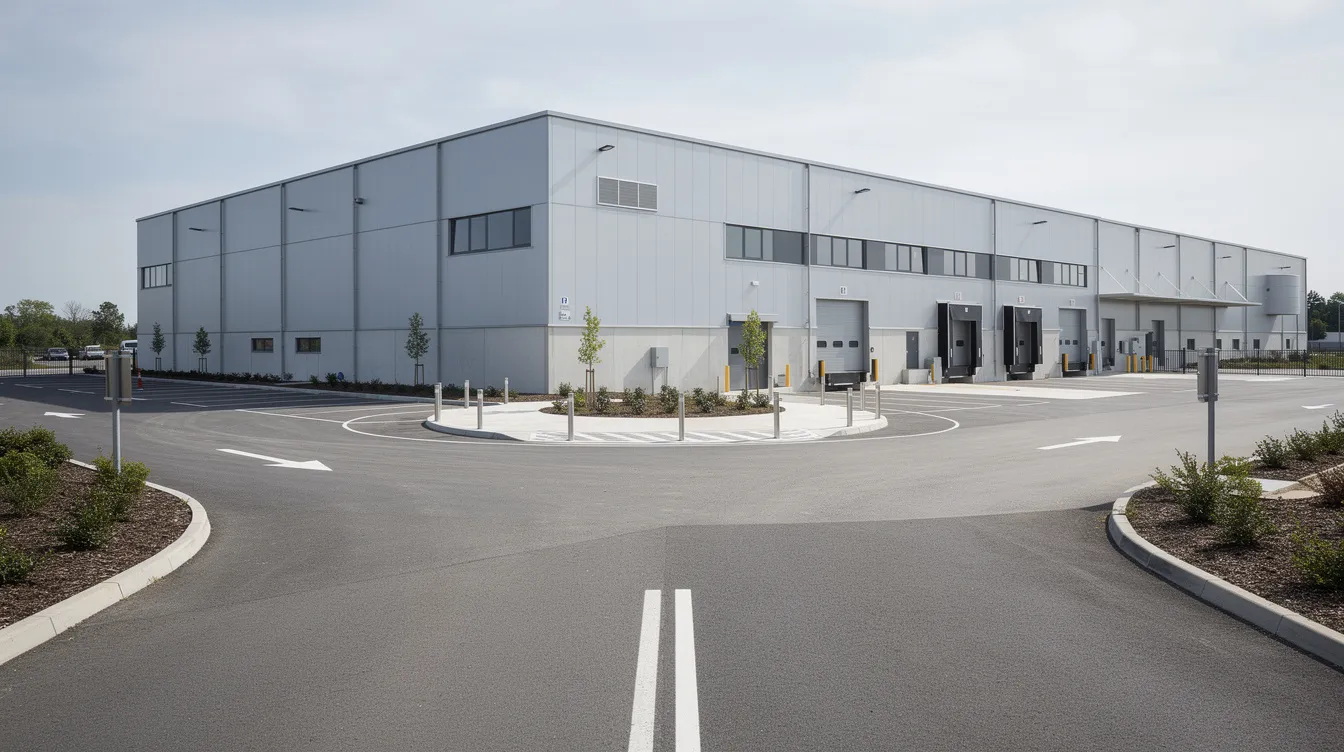
How AMAN Engineering Consultancy Supports Data Centre Fire Safety Submissions
We are a B2B engineering and architectural consultancy focused on industrial and data centre projects in Singapore. Our fire safety submission services cover the full scope of SCDF requirements.
Our services for data centre clients include:
-
Fire Safety Plan preparation and Fire Safety Report drafting
-
Authority liaison, waiver application support, and end-to-end management of the approval process until final authorization
-
Performance-based design coordination with FSEs and peer reviewers
-
BIM workflows are vital for digital submissions and coordination in fire safety – our BIM modelling capability helps detect clashes between fire systems, structure, and M&E before submission
-
Structural and façade inspections, M&E endorsements, and value engineering to meet Fire Code while optimising cost and buildability
We manage TFP and FSC inspections with pre-inspection mock checks, documentation collation, and systematic closure of SCDF comments. Our technology-enabled workflow helps streamline implementation and keep your project informed at every stage.
If you are developing or retrofitting a data centre in Singapore, engage AMAN early in the design stage. Early involvement minimises approval timelines, reduces compliance risk, and keeps your project on schedule and within budget.
Annex: Practical Checklist of SCDF Fire Safety Submission Documents for Data Centres
This is a concise, at-a-glance checklist for quick reference by project managers and facility teams. Use it to track progress, but always cross-check SCDF’s latest circulars and Fire Code updates before submission.
Pre-submission:
-
[ ] Appointment of QP (Architectural and M&E)
-
[ ] Confirmation of occupancy type and purpose groups
-
[ ] Collation of site constraints and masterplan requirements
-
[ ] Finance and resource allocation confirmed
Building Plan Submission:
-
[ ] Architectural fire plans (site plan, floor plans, sections)
-
[ ] M&E fire system drawings (sprinkler, alarm, clean agent, smoke control)
-
[ ] Calculation reports (occupant load, egress, water storage, smoke extraction)
-
[ ] Fire Safety Report and fire strategy narrative
-
[ ] Waiver or performance-based design applications
-
[ ] Schedule of regulated fire safety products (PLS)
TFP / FSC Stage:
-
[ ] As-built drawings signed by QP
-
[ ] QP certifications and declarations
-
[ ] RI inspection reports and commissioning records
-
[ ] Cause-and-effect matrix for alarm and suppression integration
-
[ ] SCDF inspection correspondence and rectification evidence
Operational Documents:
-
[ ] Emergency response plan
-
[ ] Fire Safety Manual and Instruction Manual
-
[ ] FSM appointment records
-
[ ] Fire drill records and CERT training logs
-
[ ] Maintenance logs for all fire protection systems
The total number of documents varies by project complexity, but even a mid-scale data centre proposal will typically generate 30–50 individual submission items. A systematic approach to document management – with clear version control and a single coordination point – is the difference between a smooth approval and months of delays.