
Introduction
BCA Periodic Structural Inspection (PSI) for factories is a statutory obligation that every industrial building owner in Singapore must fulfil. Under Singapore’s Building Control Act and the Building Control (Periodic Inspection of Buildings and Building Façades) Regulations 2021, factory buildings that are 13 years or older must undergo PSI, and the inspection cycle repeats every 5 years thereafter. Reports must be prepared and certified by a registered professional engineer (Civil or Structural discipline) and submitted to the Building and Construction Authority (BCA) within prescribed deadlines.
This article focuses exclusively on periodic structural inspection PSI as it applies to industrial and factory buildings in Singapore – covering applicability, inspection frequency, statutory roles, the reporting workflow, timelines, penalties, cost drivers, and how AMAN Engineering Consultancy supports factory owners and occupiers through the entire PSI process. Façade-only inspections (PFI) and new-build structural design topics fall outside this article’s scope.
If you own, manage, or occupy a factory, flatted factory, warehouse, or logistics facility in Singapore, PSI compliance is your direct responsibility. Failing to respond to a BCA PSI notice can result in fines up to SGD 20,000, prosecution, and serious safety risks to workers and tenants. Building owners face personal liability for PSI compliance failures.
After reading this article, you will be able to:
-
Determine whether your factory building must undergo PSI and when the next inspection is due
-
Understand what BCA expects in terms of inspection scope, report contents, and submission deadlines
-
Plan inspections around production schedules to minimise operational disruption
-
Assemble the documents and structural drawings your professional engineer will need
-
Choose a competent PE and understand the full cost picture for industrial PSI
Understanding BCA Periodic Structural Inspection (PSI) for Factories
Periodic structural inspection is a statutory structural “health check” of factory buildings. It focuses on the structural integrity of load-bearing elements – columns, beams, slabs, roof structures, and foundations – rather than day-to-day maintenance items like paintwork, lighting, or plumbing. The goal is to detect deterioration, structural defects, unauthorised structural modifications, and signs of poor maintenance before they compromise building safety or public safety.
The same legislation applies across all building types island-wide, but factories carry specific risk profiles that make the PSI process more complex. Heavy equipment loads, vibration from machinery, chemical exposure, storage racking, and frequent layout alterations all create conditions that accelerate structural deterioration. These factors demand that the structural engineer conducting the inspection has genuine industrial experience.
PSI should not be confused with other statutory inspections common in factories – such as SCDF fire safety certificates, MOM lifting equipment inspections, or pressure vessel surveys. While inspection schedules may overlap, PSI addresses the building structure itself and is governed exclusively by the Building Control Act.
Legal Definition and Regulatory Framework
The PSI regime is mandated under Section 28 of the Building Control Act (Cap. 29). This section empowers the Commissioner of Building Control to issue PSI notices requiring building owners to engage a structural engineer and submit an inspection report within prescribed timelines. The Building Control (Periodic Inspection of Buildings and Building Façades) Regulations 2021 further codify requirements for inspection frequency, who is qualified to perform PSI, and what the report must contain.
Several key statutory terms are important for factory owners to understand. A “structural inspection” under PSI refers to a systematic assessment of building structures – not routine facility maintenance. The appointed professional engineer must be registered with the Professional Engineers Board (PEB) in the Civil or Structural engineering discipline and hold a valid practising certificate. The term “full structural investigation” refers to Stage 2 detailed testing, triggered only when visual inspection reveals concerning defects.
BCA issues PSI notices based on building age records and use class. Industrial classifications – B1, B2, B2-White, warehouse, flatted factory – all fall within scope. It is critical to understand that this statutory inspection regime is separate from JTC’s lease conditions or insurer requirements, even when timelines happen to overlap. Statutory PSI compliance must follow BCA’s requirements specifically.
How PSI Differs for Industrial / Factory Buildings
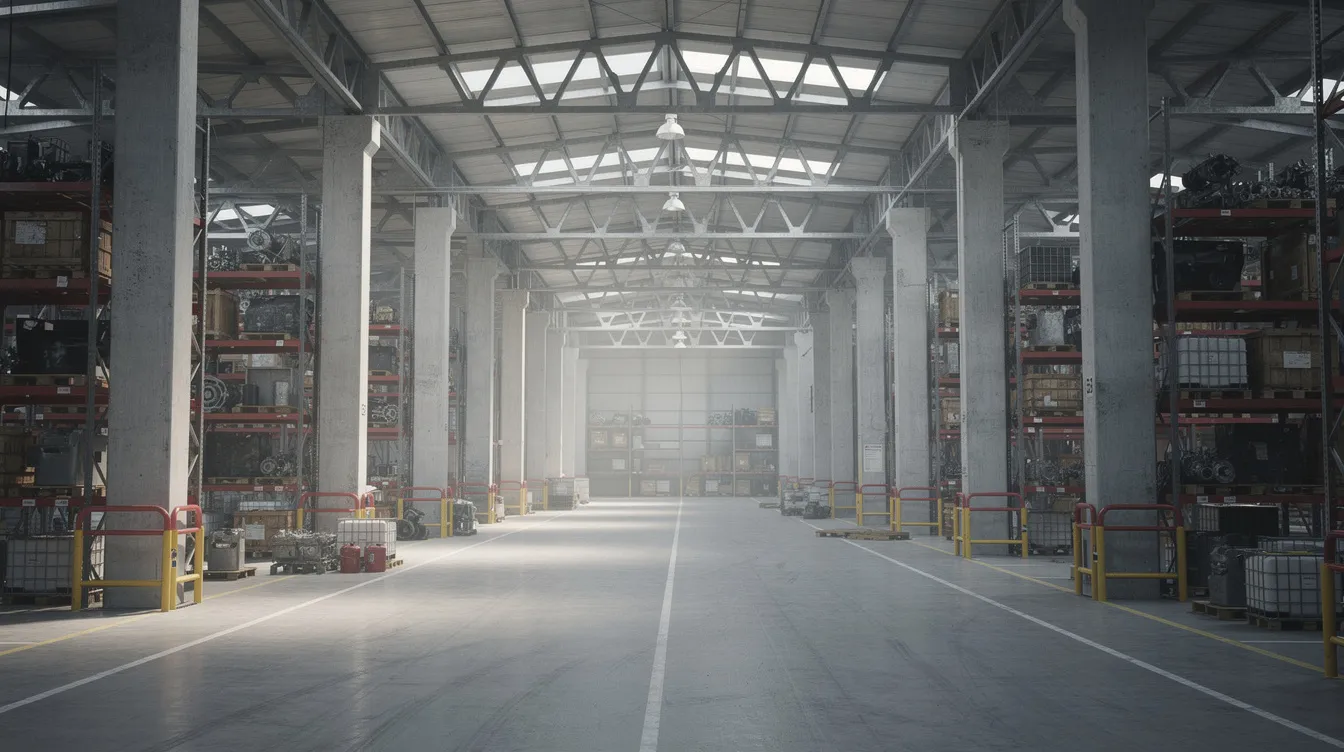
Factories present a fundamentally different structural environment compared to commercial buildings or residential developments. Live loads in factories are often significantly higher and more dynamic: heavy CNC machines, moulding presses, storage racking loaded with pallets, overhead cranes, and process-related vibration all stress building structures in ways that office or residential buildings never experience.
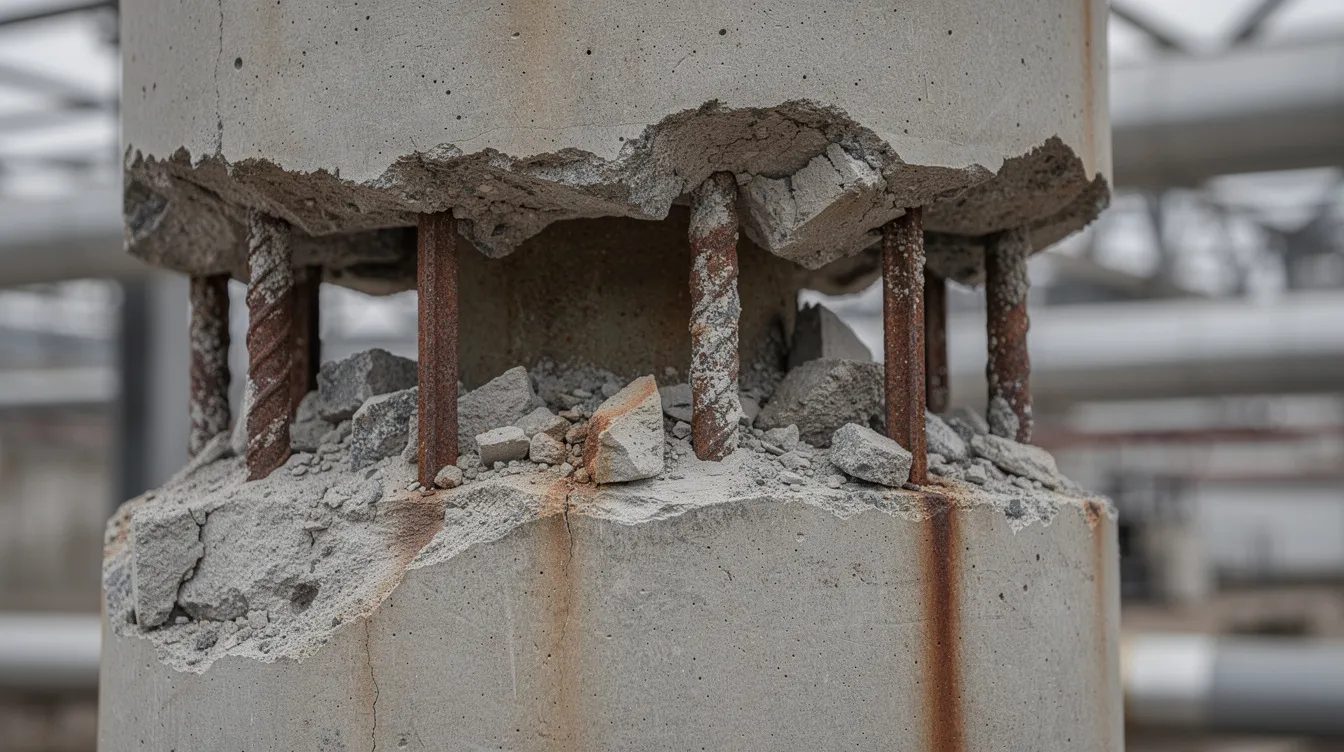
The inspection scope for industrial PSI extends to floor loading capacity, vibration effects on structural connections, penetrations cut through beams and slabs for services or piping, chemical exposure to concrete and steel elements, and unauthorised mezzanines or platforms added without BCA approval. Corrosive environments – such as those found in chemical processing, food manufacturing, or marine-adjacent facilities – can accelerate rebar corrosion and spalling concrete far faster than in standard buildings.
Ancillary structures commonly found in industrial premises are also included in the PSI. Linkways, loading bays, canopies, gantry beams, crane runway girders, silos, chimneys, tank foundations, process pits, and retaining walls all require assessment. These elements are often neglected during routine maintenance but can present significant safety risks if deterioration goes undetected.
Understanding these factory-specific factors is essential to determining if and when PSI is required for your premises – and how to prepare for it.
Applicability, Frequency, and Trigger Points for PSI in Factories
Not every industrial structure is inspected annually, but most private factory buildings above the prescribed building age threshold fall under the mandatory 5-year inspection cycle. PSI is a recurring obligation throughout a building’s life – it does not end after the first round. Many older industrial estates built before 2013 are already in their second or third PSI cycle as of 2026.
Which Factory Buildings Must Undergo PSI?
PSI is mandatory for buildings 13 years or older under BCA regulations. For industrial premises, this covers factories, flatted factories, industrial warehouses, logistics hubs, food processing plants, and cleanroom facilities. The Building and Construction Authority regulates periodic structural inspections in Singapore and determines applicability based on use class and building age, not solely gross floor area.
Common exclusions are limited. Fully landed detached houses, semi-detached houses, terraced or linked houses used solely as residences, and temporary buildings are exempt. Small site offices classified as temporary structures are also excluded. However, virtually all standard B1 and B2 factory buildings older than 13 years will eventually receive BCA notices.
Mixed-use industrial buildings – for example, a factory with an ancillary dormitory, showroom, or office component – require careful classification. The non-residential portions trigger PSI obligations. Owners of such premises should confirm their building’s classification with BCA to determine the correct inspection regime.
To gauge when PSI is likely due, check your building’s Temporary Occupation Permit (TOP) or Certificate of Statutory Completion (CSC) year and current use class. If your factory received TOP in 2013 or earlier, PSI is already applicable.
Inspection Frequency and Timeline for Industrial Buildings
Non-residential buildings require PSI every 5 years. Residential buildings require PSI every 10 years, but this longer cycle does not apply to industrial premises. For factories, the first PSI is typically triggered in the 13th year after TOP/CSC, with subsequent inspections every 5 years thereafter.
BCA PSI notices are issued approximately 12 months before inspections are due. However, factory owners should track building age proactively rather than relying solely on the notice. BCA notices arrive based on the authority’s records and scheduling, and delays in receiving a notice do not relieve the owner of the obligation to keep the building properly maintained and structurally inspected.
Inspection frequency may be affected by major change-of-use applications, significant structural A&A (Alteration & Addition) works, or specific concerns raised by BCA – for example, after a structural incident or complaint. In such cases, BCA can escalate non-compliance to formal investigation notices and direct an earlier structural investigation.
Factory owners should also consider coordinating PSI timing with other statutory checks. PFI (Periodic Façade Inspection) typically applies to buildings over 20 years old, SCDF fire certificate renewals follow their own cycle, and MOM lifting equipment inspections are annual. Aligning these inspection schedules where possible reduces cumulative disruption to operations.
Key Statutory Trigger Events for Factories
Several events can trigger the PSI process for factory buildings:
-
BCA PSI notice issuance – the most common trigger, sent to the registered building owner
-
Financing bank requests during refinancing or loan review, where structural condition reports are required
-
Lease renewal requirements from landlords such as JTC or industrial REITs, who may require current PSI status before extending tenancies
-
Enforcement following reported defects – if serious structural damage, overloading, or incidents are reported at the factory, BCA may direct an earlier investigation regardless of the regular cycle
Even without a formal BCA notice, the Commissioner can require an immediate structural investigation if there is reason to believe that building safety is at risk. This is particularly relevant for factories where operational changes – such as installing significantly heavier machinery or converting storage areas to production floors – alter the loading conditions.
Once applicability and timing are clear, factory owners need to understand what actually happens during the PSI process on-site.
Scope, Methodology, and On-Site Process of PSI for Factory Buildings
The end-to-end PSI process for a factory spans from initial appointment of the professional engineer through on-site inspection, testing (if needed), report preparation, and formal submission to BCA. For operational factories with ongoing production, the process demands careful coordination between the PE team, factory management, and safety personnel.
This section walks through what engineers inspect, how they access areas in active industrial environments, what tests may be performed, and how findings are documented with photographs and annotated plans.
What Structural Elements Are Covered in an Industrial PSI?
The inspection process involves primarily visual assessments and may require full structural investigations if defects are found. Inspections must cover structural elements for signs of distress and unauthorized works. For factory buildings, the structural elements assessed include:
-
Main frames, portal frames, precast and in-situ columns and beams
-
Floor slabs – including heavy-duty ground-bearing slabs designed for forklift traffic and storage loads
-
Mezzanine floors, stair cores, and lift cores
-
Roof trusses, purlins, and steel platforms
-
Retaining walls and boundary structures
Industrial-specific features requiring assessment include crane beams and runway girders, rack-supported floors, process pits, silos, chimneys, tanks and their foundations, loading docks, and ramps. Inspectors look for cracks, spalling concrete, corrosion of steel members, deflection, settlement, impact damage from forklifts or cranes, and signs of overloading such as slab cracking beneath heavy racking systems.
At Stage 1, PSI is primarily visual and non-destructive. Intrusive tests are only required when visual inspection reveals deterioration that cannot be assessed by surface examination alone.
Stage 1: Visual Structural Inspection Under Normal Operations
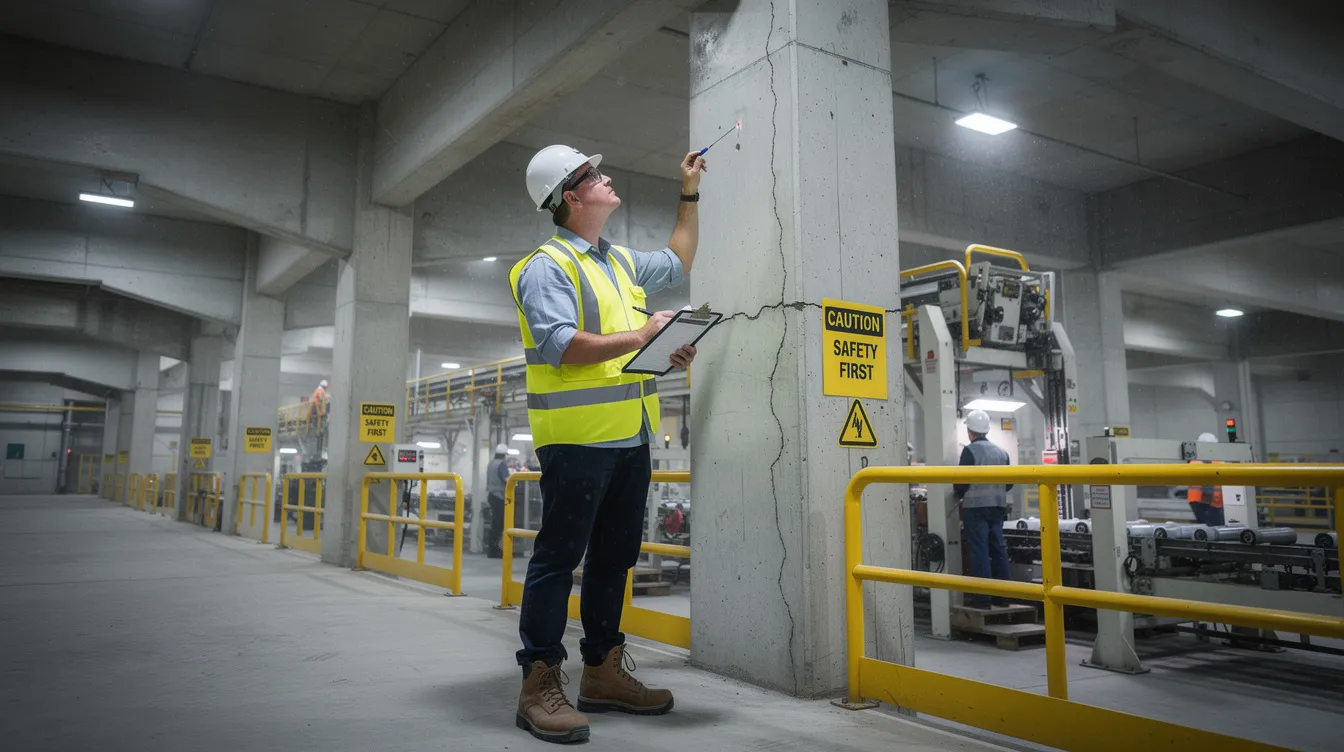
During Stage 1, the PE and inspection team conduct systematic walkthroughs of the factory, often while parts of the facility remain in operation. The visual inspection covers all accessible structural elements, with the team using access equipment – mobile elevated work platforms (MEWPs), ladders, or scaffolding – to reach elevated or concealed areas.
Typical duration ranges from 1–2 days for a single-storey factory to up to a week or more for a multi-storey flatted factory or large logistics complex, particularly those with extensive storage racking that must be partially cleared. Photographs, measurements, and sketches are taken systematically. Obvious unauthorised structural modifications – such as added mezzanine decks, beams cut for services, or relocated openings – are recorded and flagged.
Inspectors may need to temporarily clear storage areas, remove ceiling boards at prescribed intervals (BCA guidelines require accessing suspended ceilings at least every 500 m² for indoor areas), or access roof catwalks and plant rooms. This requires advance coordination with production and EHS teams to ensure safe access without unnecessary operational disruption.
Stage 2: Detailed Investigation and Testing (If Required)
Stage 2 is only triggered if Stage 1 identifies concerning defects or unknown conditions that cannot be assessed visually. This escalation is common in older factories where structural deterioration has progressed beyond surface-level signs.
Typical tests relevant to factory PSI include hammer sounding to detect delamination, carbonation testing to assess concrete durability, cover meter surveys around heavily loaded areas to verify rebar cover depth, concrete core sampling in distressed slabs or beams, rebar corrosion potential mapping, and load assessments for heavily racked or machinery-loaded areas. AMAN’s engineers also employ non-destructive methods alongside core drilling to balance accuracy with minimal disruption.
Some tests may require temporary shutdown of production lines, removal of equipment, or coring through floor finishes. Stage 2 investigation costs can reach SGD 8,000 to SGD 20,000 depending on the extent of testing required. Careful planning with operations and safety teams is essential.
Stage 2 findings inform whether structural strengthening, load restrictions, or repair works are necessary before the PE can certify the building’s structural integrity.
Documentation and Use of Digital Tools (Including Pictures)
A robust PSI report for factories includes clear defect descriptions, location plans, and abundant photographs. AMAN typically embeds high-resolution pictures, annotated floor plans, and defect schedules in every report to meet – and exceed – BCA’s enhanced Standard PSI Report Template introduced in September 2024.
For hard-to-access areas, drones can capture roof or high façade views, 360° cameras document congested plant areas efficiently, and BIM/Tekla 3D models can overlay defect locations with structural members for precise reference. These digital tools are particularly valuable in large industrial complexes where traditional sketches alone cannot convey the full picture.
Including before-and-after images where interim repairs are carried out prior to final certification is best practice, especially for critical defects in production areas that must be addressed urgently.
Once the on-site work is done, owners must comply with formal reporting and submission procedures to BCA.
Statutory Reporting and Submission Requirements to BCA
The PSI is only complete when the certified report is submitted to and accepted by BCA – not when the site inspection ends. Factories often face tight operational schedules, so understanding reporting timelines, required forms, and the submission workflow is crucial for PSI compliance.
Required PSI Forms, Contents, and Structure of the Report
PSI reports for factories must be prepared and signed by a professional engineer (Civil) with a valid practising certificate. The appointed structural engineer must have a valid practicing certificate and be registered in civil or structural engineering with the Professional Engineers Board.
The inspection report must contain:
-
Executive summary and overall conclusion on structural safety
-
Description of the factory building, its use, and structural system
-
Inspection methodology and coverage summary
-
Defect list with photographs, severity classification, and location references
-
Annotated structural plans and sketches
-
Recommended remedial measures and timelines
-
Reference to previous PSI reports where applicable
For industrial buildings with cranes, heavy process equipment, or special structures, the report should include specific discussion on crane beams, vibration effects, heavy loads, and any load limitations. BCA’s enhanced guidelines require reporting after PSI to include the building’s condition and recommendations for remedial works if needed.
Submission Workflow and Deadlines
PSI reports must be submitted via the CORENET-X portal, BCA’s current e-submission platform. Building owners must appoint a structural engineer within 2 months of receiving the BCA notice. The submission deadline is typically 3 to 6 months after notice, as stated in the PSI notice itself.
The factory owner is responsible for complying with PSI notices and executing any required rectifications within specified timeframes. This means engaging the PE early enough, providing structural drawings and building history promptly, and signing any owner declarations required by BCA. Structural engineers submit PSI reports to BCA within deadlines, and BCA reviews submitted reports within 2 to 4 weeks.
Incomplete reports, missing photos, or unclear recommendations can trigger BCA queries and delay acceptance. Late submission of PSI reports can incur fines up to SGD 10,000.
Follow-Up Reporting After Rectification
If significant structural defects are identified, BCA may require confirmation that repairs are completed and effective. This may be addressed within the same PSI report cycle or via a supplemental submission, depending on the severity and timeline.
PEs typically issue a follow-up certification with updated photos and records after repairs. For factories where structural strengthening or slab repairs were required, this documentation demonstrates that the building has been returned to a safe condition. Some repairs – such as new beams, addition of bracing, or reconstruction of platforms – may require separate structural plan submissions and approvals before work can commence.
Roles, Responsibilities, and Coordination for Factory PSI
PSI is a shared effort among owner, tenant, PE, contractors, and sometimes the landlord (for leased factories). However, legal responsibility sits squarely with the “building owner” as defined under the Building Control Act.
Factory Owner, Landlord, and Tenant Obligations
For PSI purposes, the “owner” is the freehold or leasehold title holder, industrial REIT, or JTC. For strata-titled developments and strata titled developments with multiple industrial units, the management corporation strata title (MCST) bears the obligation. MCSTs are legally responsible for compliance with PSI regulations. MCST must notify BCA of PE appointment within 7 days.
In practice, building owners handle the PSI engagement, but major tenants must cooperate by providing access, facilitating temporary shutdowns, and removing stored goods or equipment where necessary. PSI clauses should be included in lease agreements – for example, requiring tenants to permit access for structural inspections, not to overload the structure beyond its design capacity, and to notify the landlord of any structural damage.
Ultimate legal responsibility for missing PSI deadlines rests with the owner, not the tenant, even if operational delays caused by tenant non-cooperation are the root cause.
Professional Engineer’s Duties and Liabilities
The professional engineer conducting factory PSI must be registered with PEB Singapore in the Civil or Structural engineering discipline and hold a valid practising certificate. The PE’s obligations include conducting an independent assessment, documenting inspection findings honestly, recommending appropriate tests and repairs, and certifying structural safety without undue influence from the owner or tenant.
The PE bears personal professional and legal responsibility for the accuracy of the certified report under the Building Control Act. Non-compliance with PSI regulations can lead to prosecution and fines under the Building Control Act for both owners and engineers who fail to meet their obligations.
AMAN’s engineers approach every factory PSI with independence, transparent communication, and practical recommendations tailored to industrial operations.
Site Coordination with Operations, Safety, and Contractors
Factory PSI demands coordination with facility management, EHS officers, and safety supervisors. Permits-to-work must be obtained for areas requiring working at height, confined space entry, or hot work (where coring or testing is needed). Managing vibration and access in manufacturing environments requires familiarity with industrial safety protocols.
Planning around production schedules is essential. Night or weekend inspections, staged access by production zones, and temporary rerouting of material handling paths are common approaches. Creating an internal PSI coordination team – comprising FM, EHS, production managers, and a landlord representative – helps resolve access and safety issues quickly and keeps the inspection process on track.
Common Structural Issues in Factories and Typical Rectification Paths
Factories face recurring structural problems due to heavy loads, impacts, chemical exposure, and frequent layout changes. These issues are commonly flagged during PSI inspections. Early rectification is usually cheaper and less disruptive than waiting for defects to worsen or for BCA to issue enforcement orders.
Frequent Defects Found in Industrial PSI
The most common structural defects identified during PSI inspections of industrial buildings include:
-
Cracked or settled floor slabs under heavy racking or machinery loads
-
Crane beam fatigue including weld cracking and connection distress
-
Spalling concrete around process pits, chemical storage areas, and drainage channels
-
Corrosion of steel members in humid, salt-laden, or corrosive environments
-
Column damage from forklift impact – a pervasive problem in warehouse and logistics facilities
-
Roof leaks leading to rebar corrosion in roof slabs and degradation of steel trusses
-
Ponding on roof decks with plant loads exceeding design assumptions
Unauthorised structural modifications are also frequently discovered: added mezzanines without approval, beams cut to accommodate services or piping, relocated openings, and excessive storage loading well above designed floor capacities. These findings complicate the inspection and may require regularisation with BCA.
Rectification Strategies for Factory Structures
Typical structural remedies include localised slab repairs using epoxy injection or polymer-modified mortar, underpinning or strengthening beams with bonded steel plates or carbon fibre reinforcement, concrete jacketing for damaged columns, replacing corroded steel members, strengthening crane runway beams, and installing impact protection bollards around vulnerable columns.
Phasing repairs to maintain production is critical. Zone-by-zone repair programmes, working outside peak shifts, and temporary propping with maintained access corridors allow factories to continue operating during rectification. When repairs involve new structural members, additional bracing, or reconstruction of platforms, separate structural plan approval and Qualified Person submissions to BCA are required.
Budgeting and Cost Drivers for Industrial PSI and Repairs
The main PSI cost drivers for factories include building size and height, number of blocks, complexity of the structural system (steel portal frame vs multi-storey reinforced concrete), access constraints, need for specialist tests, and safety measures such as MEWP hire, scaffolding, or confined space entry protocols.
PSI fees range from SGD 3,500 to SGD 25,000+ for industrial buildings. A modest single-storey factory at the lower end, while a large multi-storey or multi-block industrial complex with crane beams and extensive racking will be at the higher end. PE fees typically range based on these factors, and factory owners should request detailed scoping from their engineer before engagement.
Budget planning should include contingency for Stage 2 testing (SGD 8,000 to SGD 20,000 where required) and any follow-up strengthening works identified by the inspection. Incorporating these costs into capital and maintenance planning avoids unpleasant surprises.
Practical Implementation: Planning PSI Around Factory Operations
Well-planned PSI minimises downtime, protects ongoing safety, and reduces stress on production teams. The key is starting early and building coordination into your project timeline.
Recommended Timeline and Checklist for Factory PSI
A practical timeline for factory PSI compliance follows these milestones:
12–9 months before BCA deadline: Confirm your factory’s building age and upcoming PSI due date by checking the TOP/CSC records. Secure budget approval and begin shortlisting professional engineers with industrial PSI experience.
9–6 months before deadline: Appoint the PE formally. Prepare original structural drawings, maintenance records, and past A&A approval documents. Work with the PE to outline inspection zones and access methods, identifying areas that will require production coordination.
6–3 months before deadline: Carry out the Stage 1 visual inspection. Determine whether Stage 2 testing is needed based on initial findings. Coordinate any production shutdowns or temporary access arrangements required for detailed investigation.
3–1 month before deadline: Complete all tests, finalise the PSI report, and agree on immediate safety measures and short-term repairs for any critical defects identified. Review the draft report for completeness.
Before deadline: The PE submits the report to BCA via CORENET-X. Plan and execute non-urgent strengthening works based on the report’s recommendations.
Key documents to assemble for your PE include: structural drawings, past A&A approvals, equipment layout plans, load calculations for racking and machinery, prior incident reports, previous PSI reports, and maintenance logs.
Coordinating Access, Safety, and Photography
Plan safe routes for inspectors through production areas, including lock-out/tag-out protocols where required. Obtain necessary permits for working at height, confined space entry, and use of aerial platforms. A structured approach to site inspections ensures that no critical areas are missed.
Schedule photo documentation when areas are cleared of obstructions. Visible structural elements – floors, columns, beams, connections – must be clearly photographed for the inspection report. Defects obscured by equipment or stored goods cannot be properly assessed or documented.
Communicate inspection plans to factory staff through toolbox briefings, noticeboards, and emails. Clear communication prevents misunderstandings, reduces delays, and ensures cooperation from production teams during the inspection process.
Using PSI Outcomes in Long-Term Asset and Risk Management
PSI findings provide valuable data that extends well beyond compliance. Factory owners can feed inspection results into 5–10 year asset management plans, including slab upgrade programmes, roof replacement cycles, crane beam refurbishment schedules, and plant relocation strategies.
Integrating PSI findings with EHS risk registers, business continuity plans (BCP), and insurer discussions on risk improvements strengthens the overall management of industrial premises. Insurers increasingly look at PSI status and structural condition when assessing risk and setting premiums.
AMAN can convert PSI data into BIM/3D models and digital defect maps, providing a living record of a factory’s structural condition that supports ongoing safety and informed decision-making for future inspections.
Common Challenges Factory Owners Face with PSI and How to Address Them
Industrial properties often struggle with record gaps, time pressures, complex tenancies, and operational constraints during structural inspections. Recognising these challenges early – and having a plan – prevents compliance failures.
Missing Structural Information and Historical Records
Many factory owners, particularly those who acquired older industrial premises, lack original structural drawings, complete A&A records, or documentation of past mezzanine additions and openings. Without this information, the PE cannot fully assess whether current loads and configurations comply with the building’s design.
Practical steps include requesting archived plans from BCA or the original design consultants, recreating structural information from site measurements, and performing targeted investigations where critical data is absent. AMAN can assist in reconstructing structural models and developing engineering assumptions for older factories where records are incomplete.
Production Disruption and Access Limitations
Factories that run 24/7, handle hazardous materials, or operate cleanrooms present access challenges that standard commercial buildings do not. The inspection process must accommodate these constraints without compromising inspection coverage or quality.
Solutions include after-hours and weekend inspection campaigns, isolating production lines sequentially rather than shutting down entire facilities, and using remote visual tools – borescopes, inspection cameras, and drones – where physical entry is difficult or hazardous. Early engagement with production planners and EHS teams to lock in inspection windows is essential. Understanding how long a structural engineer inspection takes helps set realistic expectations.
Tenanted Spaces and Multi-User Industrial Buildings
Multi-tenant factories and flatted industrial buildings present coordination complexities. Some units may be locked, heavily racked, or occupied by tenants who are unresponsive to access requests. The management corporation or landlord must obtain tenant cooperation to ensure full inspection coverage.
Standardised communication templates with clear deadlines for clearing access routes, combined with escalation processes for non-cooperative tenants, help manage this challenge. Poor tenant cooperation can delay PSI completion and risk BCA non-compliance for the owner – a serious concern given that building owners are legally responsible regardless of tenant behaviour.
Budget Constraints and Competing Capex Priorities
Factories often prioritise production-related investments – new machinery, line upgrades, automation – over structural inspections and strengthening. This is understandable but risky. Failure to conduct PSI can lead to serious safety risks, and non-compliance can lead to fines up to SGD 20,000 or prosecution.
Phasing repair works based on risk levels, bundling structural repairs with planned shutdowns or plant relocation, and using PSI results to justify budgets to management or the board are effective strategies. Delaying mandatory PSI or critical repairs invariably leads to higher long-term costs and potential enforcement penalties under the Building Control Act.
Conclusion and Next Steps for Factory PSI Compliance
Periodic structural inspection for factories in Singapore is a statutory requirement aimed at preventing structural failures in industrial environments characterised by heavy loads, complex operations, and frequent alterations. PSI is mandated under the Building Control Act, and compliance demands early planning, competent professional engineers with industrial experience, and robust reporting with comprehensive photo documentation. The consequences of non-compliance – fines, prosecution, and genuine building safety risks – make proactive engagement essential.
Immediate next steps for factory owners:
-
Confirm your factory’s TOP/CSC year and industrial classification (B1, B2, warehouse, etc.)
-
Check for any existing or upcoming BCA PSI notices and map out the next deadline – BCA issues PSI notices 12 months before inspection due
-
Assemble key documents: structural drawings, A&A approvals, equipment layout plans, maintenance records, and any previous PSI reports
-
Engage a qualified PE with industrial PSI experience 3–6 months before the BCA deadline
-
Plan inspection and, if needed, repair works around production schedules to minimise disruption
Related topics factory owners may wish to explore include periodic façade inspection (PFI) for industrial buildings, structural assessment before installing new heavy equipment, and BIM modelling for brownfield factories.
AMAN Engineering Consultancy provides end-to-end support for factory PSI – from assessing applicability and conducting thorough inspections to designing rectification works, preparing BCA and JTC authority submissions, and integrating findings into BIM/3D documentation. Contact AMAN to discuss your factory’s PSI requirements.
Frequently Asked Questions on BCA PSI for Factories in Singapore
Is Periodic Structural Inspection (PSI) mandatory for all factory buildings?
PSI is mandatory for most industrial buildings in Singapore that are 13 years or older. This includes standard B1 and B2 factory buildings, flatted factories, warehouses, and logistics facilities. Very small structures explicitly exempted by BCA, temporary buildings, and landed residential homes are excluded. Most standard factory buildings will eventually receive a BCA notice requiring them to undergo PSI once they reach the prescribed building age.
How often must an industrial or factory building undergo PSI?
Factories in Singapore must undergo periodic structural inspections every 5 years. Non-residential buildings require PSI every 5 years after the first inspection, which is typically triggered in the 13th year after TOP/CSC. Residential buildings follow a different schedule of every 10 years. The specific inspection date will be stated in your BCA PSI notice, and owners should track their building’s age proactively.
Who pays for PSI and subsequent structural repairs in a leased factory?
Statutory responsibility – and therefore legal responsibility – rests with the building owner or landlord, not the tenant. However, cost-sharing arrangements and scope of responsibility may be governed by lease agreements. Building owners and tenants should review their contracts early and discuss obligations before a BCA notice arrives to avoid disputes during the PSI process.
Can our in-house engineering team conduct the PSI instead of a Professional Engineer?
No. Only a PEB-registered professional engineer (Civil or Structural discipline) with a valid practising certificate can certify the statutory PSI report. In-house engineers can play a valuable supporting role in report preparation, coordination, document assembly, and facilitating access, but the statutory certification must come from a qualified external PE.
What happens if serious structural defects are found in my factory during PSI?
The PE may recommend immediate risk mitigation measures such as temporary propping, load restrictions, or cordoning off affected areas. This is followed by Stage 2 detailed investigation to determine the full extent of the problem, and then permanent repair or strengthening works. BCA may be informed depending on severity, and compliance with rectification timelines is mandatory. Failure to act on identified structural defects exposes owners to enforcement action and ongoing safety risks.
How early should we start planning PSI for a large industrial complex?
For large or multi-block factories, start planning at least 6–12 months before the BCA deadline. This lead time accommodates PE appointment, document preparation, staged inspections across multiple units or zones, any Stage 2 testing, shutdown coordination with production teams, and thorough report preparation and submission. Starting early is the single most effective way to avoid compliance stress and operational disruption.
How can AMAN Engineering Consultancy help with PSI for factories?
AMAN provides full-service PSI support for industrial and factory buildings: assessing applicability, performing Stage 1 and Stage 2 inspections with comprehensive photo documentation, advising on rectification strategies, preparing structural designs and BCA/JTC authority submissions, and integrating inspection findings into BIM/3D models for long-term asset management. AMAN’s engineers have direct experience with the unique challenges of factory PSI – from crane beams and chemical exposure to multi-tenant coordination and production-sensitive scheduling.