

Submitting to the Urban Redevelopment Authority (URA) is a mandatory legal requirement for any development, building works, or material change of use in Singapore. Known formally as obtaining URA planning permission, this process is the foundation upon which every compliant construction or redevelopment project must be built. Without it, developers and investors face enforcement actions, construction stoppages, and financial penalties that can derail entire projects. Understanding why submit to URA matters is not merely a procedural concern. It is a prerequisite for project viability, financing eligibility, and long-term asset value in Singapore’s tightly regulated property market.
Why submit to URA: the primary reasons and benefits
URA planning permission is legally mandatory for any development or material change of use, and failure to secure it before commencing works triggers enforcement actions and costly delays. This is not a procedural formality. It is the legal authorization that allows a project to proceed at all.
The strategic benefits of submitting to URA extend well beyond basic compliance:
- Legal authorization. Planning permission prevents fines, demolition orders, and construction stoppages that arise when works proceed without approval.
- Land use alignment. URA approval confirms that the proposed use or development aligns with Singapore’s Master Plan zoning controls, protecting the developer from future regulatory conflicts.
- Financing and investor confidence. Banks and institutional investors require official URA approval before releasing construction financing. An approved application signals regulatory certainty to all stakeholders.
- Access to fast-track schemes. Qualifying projects can use the Change of Use Lodgment pathway, which offers instant approval at reduced fees. This is a material advantage for eligible developers who need to move quickly.
- Coordination with other agencies. URA submission triggers parallel reviews by the Singapore Civil Defence Force (SCDF), the National Environment Agency (NEA), and the Public Utilities Board (PUB), consolidating multi-agency clearances within one process.
Pro Tip: Verify eligibility for Change of Use Lodgment before preparing a full application. Qualifying projects receive instant approval, which can reduce your pre-construction timeline by weeks.
The URA approval process also establishes a formal record of permitted use for the property. This record becomes critical during subsequent transactions, lease renewals, or asset disposals.
What are the key submission requirements and documents needed?
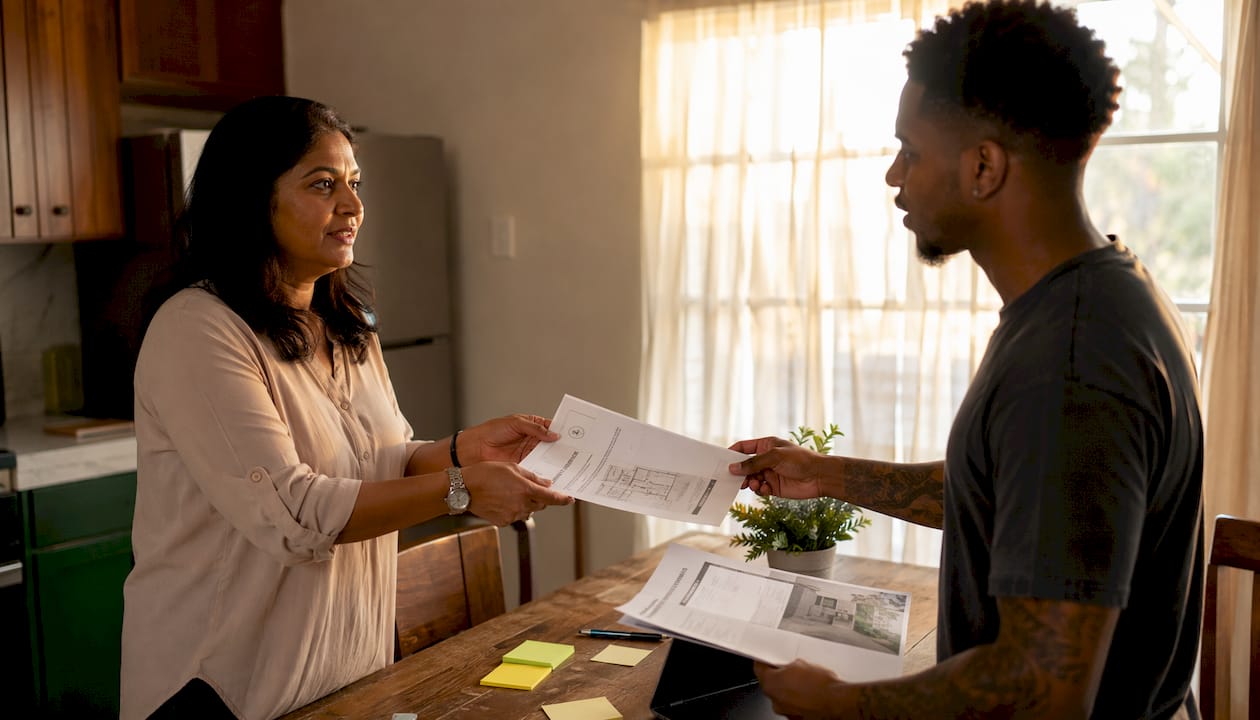
A complete URA application requires specific documents prepared to defined standards. Incomplete submissions are a leading cause of processing delays and outright rejections. File names must not exceed 130 characters and must use only permitted characters. That technical requirement alone causes avoidable rejections for unprepared applicants.
The core documents required for a Change of Use application are as follows:
- Summary cover letter. This document describes the proposed development or change of use, the subject property, and the applicant’s basis for the application. It must be clear, accurate, and free of ambiguity.
- Written consent from property or unit owners. URA requires documented authorization from the relevant property owner or management corporation before processing the application.
- Relevant agency clearances. Depending on the proposed use, applicants must obtain and submit clearances from SCDF (Fire Safety Certificate), NEA (environmental approvals), and PUB (drainage and utilities), among others.
- Supporting plans and drawings. Floor plans, site plans, and elevation drawings must be prepared to URA’s technical specifications and submitted in the correct file formats.
- Correct file naming and formatting. All documents must follow URA’s prescribed naming conventions. Files that exceed character limits or use prohibited characters are rejected at the point of submission.
Developers who engage a qualified submission consultant reduce the risk of document errors significantly. The cost of a rejected submission, measured in processing delays and resubmission fees, consistently exceeds the cost of professional preparation.
Submissions can be made by individuals with a valid Singpass account, businesses registered with a Unique Entity Number (UEN), or authorized third-party filers. This flexibility allows developers to delegate submission responsibilities to professional consultants without losing accountability.
How does the Land Betterment Charge affect URA submissions?
The Land Betterment Charge (LBC) is a tax imposed on the increase in land value that results from URA granting planning permission. Applicants must address the LBC to prevent approval delays. The Singapore Land Authority (SLA) automatically assesses the charge based on URA’s approval and contacts applicants directly with a Liability Notice.
| LBC Stage | Responsible Party | Action Required |
|---|---|---|
| Pre-submission estimate | Developer / Consultant | Use SLA’s LBC estimator for budget planning |
| URA approval granted | URA | Triggers SLA assessment automatically |
| Liability Notice issued | Singapore Land Authority | Developer receives notice with payment details |
| Payment settlement | Developer | Pay LBC before development proceeds |
Developers who skip the pre-submission LBC estimate regularly encounter budget shortfalls after approval. The LBC estimator tool is publicly available and takes minimal time to use. There is no justification for proceeding without it.
Pro Tip: Run the SLA LBC estimator before finalizing your project budget. An unplanned LBC liability can materially affect project feasibility and financing terms.
The LBC applies specifically to situations where planning permission grants a higher-value use or increased development intensity. Not every URA submission triggers an LBC liability. Projects involving like-for-like use changes or works within existing approved parameters may not attract the charge at all. Confirming this early preserves budget certainty and avoids surprises during the approval stage.
What is the typical URA submission process timeline?
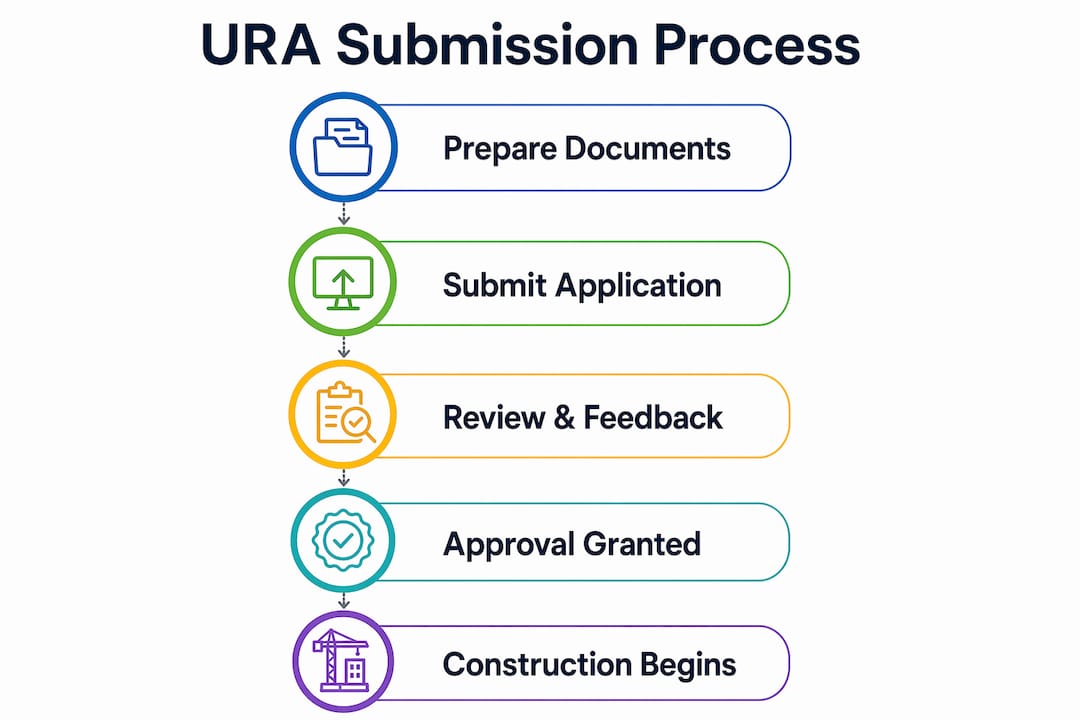
The URA submission process follows a defined sequence, and understanding each stage allows developers to align approval milestones with construction scheduling. Change of use applications typically take about 10 working days to process. Development applications have variable timelines depending on scope and complexity.
The standard process proceeds as follows:
- Pre-submission preparation. The developer or consultant assembles all required documents, confirms agency clearances, and verifies file naming compliance. This stage is entirely within the applicant’s control and is where most delays originate.
- Online submission. Applications are submitted through URA’s online portal by an authorized filer. The portal validates basic document requirements at the point of submission.
- URA review and agency coordination. URA reviews the application and coordinates with relevant agencies such as SCDF, NEA, and PUB. Complex applications requiring multiple agency inputs take longer to process.
- Approval or request for information. URA issues either an approval, a conditional approval, or a request for additional information. Incomplete submissions at this stage reset the processing clock.
- Post-approval obligations. Developers must address any conditions attached to the approval, pay applicable fees, and satisfy LBC obligations before commencing works.
| Submission Type | Typical Processing Time | Fee |
|---|---|---|
| Change of Use Lodgment | Instant (qualifying cases) | Reduced fee |
| Change of Use Application | Approximately 10 working days | S$500 |
| Development Application | Variable by scope | Variable by scope |
Timely and complete submissions align approval milestones with construction scheduling and reduce the risk of project delays. A developer who submits a complete application at the outset controls the approval timeline. A developer who submits an incomplete application surrenders that control entirely. The planning approval process for Singapore developers provides detailed guidance on managing each stage effectively.
Key Takeaways
URA planning permission is a non-negotiable legal prerequisite for any development or change of use in Singapore, and complete, well-prepared submissions are the single most reliable way to protect project timelines and budgets.
| Point | Details |
|---|---|
| Legal obligation | URA planning permission is mandatory before any development or material change of use proceeds. |
| Document completeness | Incomplete submissions or incorrect file naming cause rejections and reset processing timelines. |
| LBC budget planning | Use SLA’s LBC estimator before submission to avoid unplanned financial liabilities post-approval. |
| Fast-track eligibility | Change of Use Lodgment provides instant approval for qualifying projects at reduced fees. |
| Professional submission | Authorized third-party filers reduce documentation errors and protect project schedules. |
Aman’s perspective: why thorough URA preparation is non-negotiable
Having worked across dozens of development and change of use projects in Singapore, I have seen one pattern repeat itself without exception. The projects that encounter the most serious delays are not the ones with complex designs or difficult sites. They are the ones where the submission was treated as an administrative afterthought rather than a technical discipline.
Developers often underestimate how much a single missing document or a file-naming error can cost. A rejected submission does not simply mean resubmitting the same package. It means restarting the processing clock, potentially losing coordinated agency clearances, and in some cases, missing financing drawdown windows. The financial consequences of a two-week delay on a mid-size commercial project are not trivial.
The LBC is another area where I consistently see developers caught off guard. The SLA estimator is a free, publicly available tool. Yet I regularly encounter project budgets that have no LBC provision at all. Running the estimate takes less than an hour. Failing to do so can create a six-figure liability that appears only after URA approval has been granted.
My strongest recommendation is to engage a professional consultant who specializes in URA planning submissions before the design is finalized. Early engagement allows the submission strategy to inform the design, not the other way around. That sequence change alone eliminates the most common and most expensive submission errors I have seen in practice.
— Aman
How Com supports your URA submission and project approvals
Com, Aman Engineering Consultancy, provides end-to-end support for URA submissions, from document preparation and agency coordination to LBC assessment and post-approval compliance. Developers and investors working with Com benefit from structured submission processes that reduce rejection risk and protect construction schedules.
Com’s team manages the full scope of statutory submission requirements, including cover letter preparation, owner consent documentation, multi-agency clearances, and file formatting compliance. For projects requiring design integration, Com’s value engineering service aligns architectural and structural decisions with URA planning controls from the earliest project stage. This coordination reduces costly redesigns and keeps approval timelines on track. Contact Com to discuss your project’s URA submission requirements.
FAQ
What is URA submission in Singapore?
URA submission is the formal process of applying to the Urban Redevelopment Authority for planning permission before commencing any development, building works, or material change of use. It is a legal requirement under Singapore’s Planning Act.
Why is submitting to URA mandatory?
URA planning permission is legally required to confirm that proposed development or use changes comply with Singapore’s Master Plan zoning controls. Proceeding without approval triggers enforcement actions, fines, and construction stoppages.
How long does a URA change of use application take?
Change of use applications typically take about 10 working days to process. Qualifying projects using the Change of Use Lodgment pathway receive instant approval at reduced fees.
What documents are required for a URA submission?
A complete submission requires a summary cover letter, written owner consent, relevant agency clearances from bodies such as SCDF and NEA, supporting plans, and documents formatted to URA’s file-naming specifications.
What is the Land Betterment Charge and does it affect all URA submissions?
The Land Betterment Charge is a tax on land value increases resulting from URA planning permission, assessed and collected by the Singapore Land Authority. Not all submissions trigger an LBC liability. Projects involving like-for-like use changes or works within existing approved parameters may not attract the charge.