
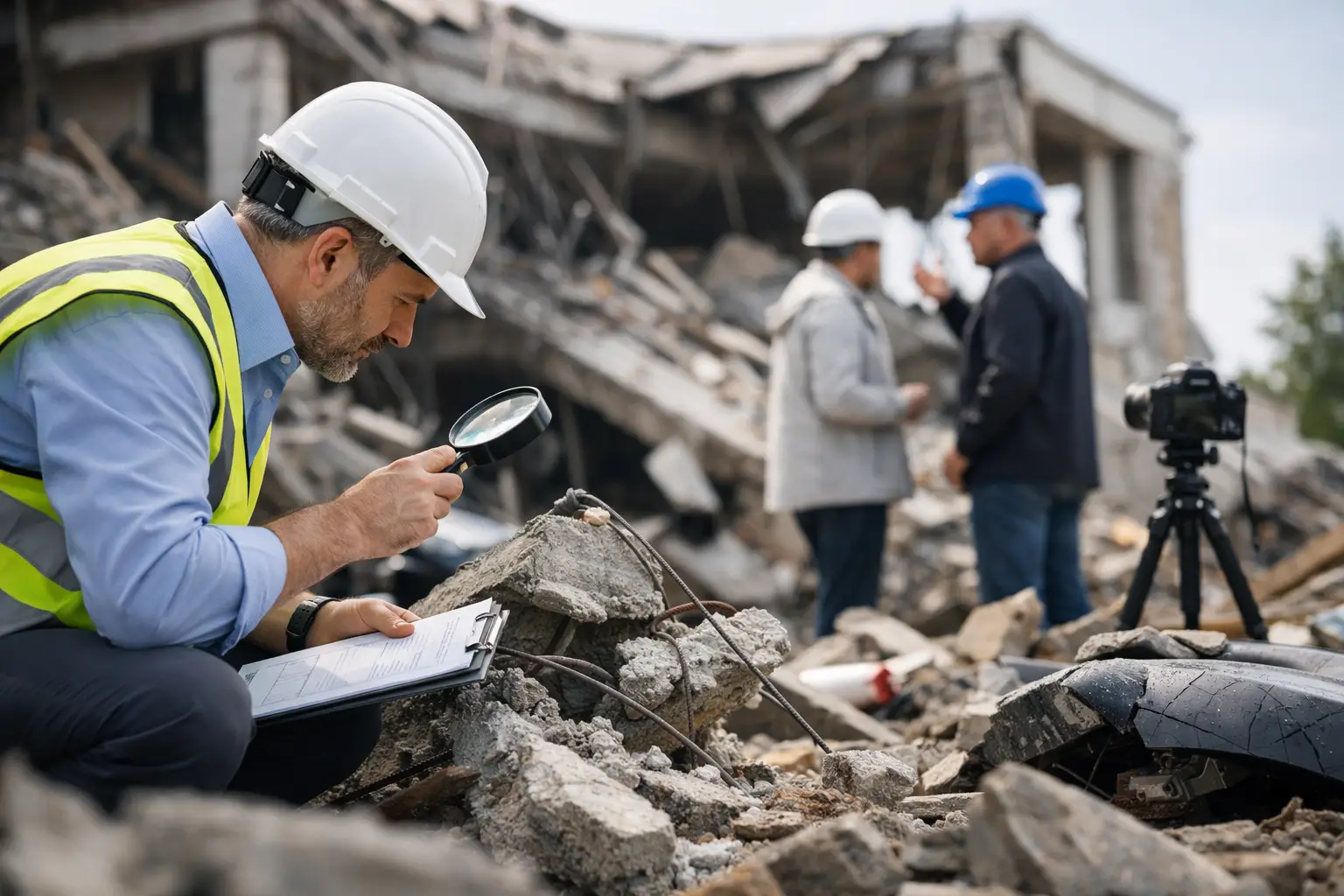
A crack above a window, recurring water intrusion, unexpected settlement, or a partial structural failure rarely stays a minor issue for long. In most cases, forensic engineering services are brought in when owners, developers, contractors, or building managers need one thing fast – a technically defensible answer to what happened, why it happened, and what needs to be done next.
Unlike routine design work, forensic engineering starts with a problem that already exists. The task is not to imagine a future building condition but to investigate an actual one, establish causation, assess risk, and define corrective action. That distinction matters because the findings often affect repair scope, contractor liability, insurance positions, authority submissions, tenant safety, and project timelines.
What forensic engineering services actually cover
Forensic engineering services involve the systematic investigation of building or infrastructure defects, damage, distress, and failures. The work may relate to structural movement, concrete deterioration, steel corrosion, façade defects, water seepage, fire damage, construction defects, vibration concerns, or performance issues that do not align with the original design intent.
In practical terms, the scope usually begins with a site inspection and records review. Engineers examine drawings, prior approvals, method statements, maintenance records, test reports, and photographs. They compare documented conditions against what is observed on site. If the issue is active or difficult to diagnose, the investigation may extend to monitoring, material testing, non-destructive testing, intrusive opening-up works, or analytical checks.
The output is not just a statement that something is wrong. A proper forensic assessment should identify the most likely root cause, separate primary causes from secondary symptoms, comment on the seriousness of the condition, and recommend rectification or risk mitigation measures. Where required, it may also support statutory coordination, technical submissions, or expert reporting.
Why owners and project teams call for forensic engineering services
Most clients do not ask for this service because they are curious. They ask because a defect is delaying a sale, a tenant complaint is escalating, a renovation has exposed hidden structural concerns, or a regulator, insurer, or legal adviser needs an independent technical opinion.
For a property owner, the trigger may be visible distress such as slab cracking, spalling concrete, façade looseness, ponding, persistent leaks, or doors and windows going out of alignment. For a developer or contractor, the issue may be a dispute over whether the defect came from design, workmanship, sequencing, loading, or later modifications. For a building manager or industrial operator, the concern is often continuity of operations and public safety.
There is also a timing issue. Calling an engineer too late can increase remediation cost because conditions worsen, evidence is altered by patch repairs, and the chain of causation becomes harder to establish. Calling too early, before enough information is available, can also be inefficient. The right moment is usually when a defect is recurring, spreading, safety-related, commercially significant, or likely to affect compliance and approvals.
Common situations that require investigation
Structural cracking is one of the most common triggers, but not every crack means the same thing. Hairline plaster shrinkage is very different from diagonal cracking linked to movement, overloading, or support distress. The role of the forensic engineer is to distinguish cosmetic issues from structural ones through pattern recognition, measurements, load-path review, and material behavior assessment.
Water ingress is another frequent problem. Leaks are often treated as waterproofing failures, but the actual cause may involve façade detailing, movement joints, slab falls, pipe penetrations, failed sealants, or condensation. If the diagnosis is wrong, repair work often fails and the problem returns.
Fire-affected buildings present another category of forensic work. Heat can change the properties of concrete and steel, damage protective systems, and affect serviceability even where collapse has not occurred. A post-incident assessment may be needed to determine residual capacity, required repair methodology, and whether replacement is more appropriate than rehabilitation.
Construction and renovation defects also require careful review. Unauthorized alterations, cut slabs, removed walls, overloaded platforms, poorly executed penetrations, or incompatible retrofits can all create structural or compliance risk. In these cases, the investigation is not limited to the defect itself. It may also need to assess whether the building remains code-compliant and what corrective documentation or authority coordination is required.
The investigation process and what good evidence looks like
A reliable forensic opinion is built on evidence, not assumptions. The process usually starts with a focused briefing to understand the timeline, the known symptoms, prior repair attempts, and the decisions that depend on the outcome. That sounds basic, but many costly delays happen because stakeholders are investigating the wrong question.
From there, the engineer typically carries out a visual inspection and documents crack widths, deflection, moisture patterns, corrosion staining, deformation, connection conditions, and signs of progressive distress. Photographic records matter. So do dimensions, levels, and comparative observations across affected and unaffected areas.
Where visual findings are not enough, testing becomes important. Depending on the issue, that may include rebound hammer testing, cover meter surveys, ultrasonic pulse velocity, core sampling, chloride content testing, pull-out testing, water ponding tests, or movement monitoring. Intrusive investigation can be useful, but it should be controlled. Opening up too much, too early can destroy evidence or create unnecessary reinstatement work.
Analysis is the stage that separates inspection from engineering. Measured conditions need to be checked against design assumptions, loading scenarios, material performance, environmental exposure, and likely failure mechanisms. Sometimes the answer is straightforward. Sometimes there are several plausible causes operating together. Settlement, poor drainage, detailing gaps, and workmanship defects can overlap. A credible report should say so instead of forcing a false single-cause conclusion.
Why root-cause accuracy affects cost, liability, and compliance
The biggest risk in defect remediation is not always the defect itself. It is fixing the wrong thing. If cracking is caused by movement and the response is only surface patching, the damage will return. If façade distress is caused by hidden anchorage issues and the repair addresses only finishes, safety exposure remains. If water intrusion is treated as a roof problem when the defect sits at vertical junctions, the owner pays twice.
Root-cause accuracy also affects commercial responsibility. In projects involving multiple parties, the findings may influence whether remedial works fall under defect liability, maintenance, insurance recovery, or owner-funded capital repair. That does not mean forensic engineers should act as advocates for one side. Their value comes from technical independence and a documented basis for their conclusions.
Compliance can also be part of the picture. Some defects trigger the need for endorsed repair details, safety reviews, façade investigations, fire-related submissions, or structural certifications. In these cases, clients benefit from consultants who can move from diagnosis into rectification strategy and regulatory coordination without losing time between separate parties.
Choosing a consultant for forensic engineering services
Not all engineering consultants approach forensic work the same way. Some are strong in inspection but weak in statutory follow-through. Others can comment on distress but are less equipped to translate findings into repair design, authority submission support, or coordinated project execution.
A good fit depends on the asset type and what is at stake. For a residential owner, the priority may be a clear explanation and a practical repair path. For a commercial or industrial client, the requirement may extend to phased access planning, operational risk control, and documented technical evidence for insurers, lawyers, or regulators. For complex building issues, it helps to work with a consultant that can connect structural assessment, façade review, fire safety implications, civil works, and submission requirements within one technical team.
This is where multidisciplinary capability has real value. When the same consultancy can investigate the defect, define the rectification scope, assess compliance implications, and support approvals, the process is usually faster and less fragmented. That is especially relevant when building issues sit at the intersection of engineering performance and formal authority requirements, which is a common reality in urban asset management.
Aman Engineering Consultancy operates in exactly that space, combining forensic assessment with inspection, rectification support, design coordination, and submission capability for building-related matters that cannot be treated as isolated technical defects.
What clients should prepare before the first site visit
The quality of the investigation improves when the engineer receives the right background information early. Original drawings, renovation records, prior defect reports, photos showing progression, maintenance logs, waterproofing records, and any previous repair invoices can all be useful. If there has been an incident, a simple timeline of what happened and when is often more helpful than a stack of unrelated emails.
It also helps to be clear about the immediate decision that needs support. Is the concern safety, liability, reinstatement cost, a sale transaction, a tenant dispute, or a regulatory response? The technical answer may be the same, but the report format, urgency, and scope of evidence collection can differ.
The best time to investigate a defect is before assumptions harden and before temporary fixes hide the original condition. A clear engineering diagnosis does more than explain a problem – it gives owners and project teams a defensible path forward when uncertainty is the most expensive part of the job.