
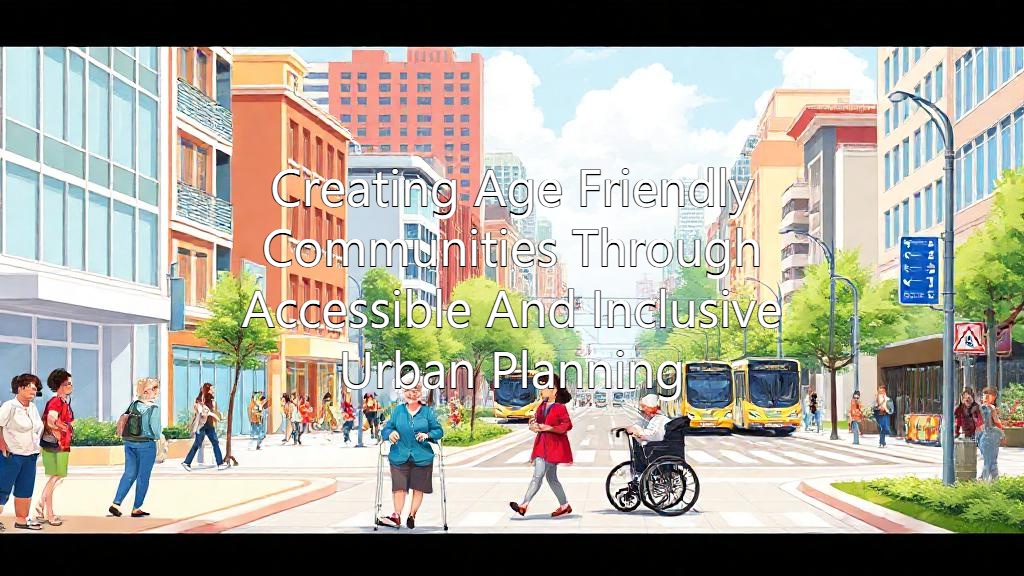
As the world grapples with the challenges of an aging population, cities are faced with the daunting task of transforming themselves into vibrant, age-friendly communities that cater to the diverse needs of their elderly residents.
Imagine a city as a masterfully woven tapestry, where every thread represents a different age group, and the urban planner is the skilled artisan tasked with ensuring that each strand is intricately intertwined to create a rich and inclusive fabric.
According to the World Health Organisation, by 2050, one in six people will be over the age of 65, posing a significant question: how can cities adapt their urban planning strategies to prioritize accessibility, mobility, and social interaction for this burgeoning demographic.
As cities embark on this journey, they must consider the complex interplay between physical infrastructure, social services, and community engagement to create environments that not only support but also empower older adults to thrive.
Designing Inclusive Urban Environments For Age-Friendly Communities Through Accessible Planning
Creating age-friendly communities requires a multifaceted approach that incorporates accessible planning, inclusive design, and a deep understanding of the needs of older adults, ultimately enhancing their overall quality of life and social participation.
This involves designing public spaces, transportation systems, and housing that are accessible, safe, and promote physical activity.
By doing so, cities can foster a sense of community and belonging among all residents, regardless of age.
- Inclusive urban planning is crucial for creating age-friendly communities that promote health, wellbeing, and social engagement among older adults.
- Accessible public transportation systems are essential for ensuring that older adults can easily navigate their cities and participate in community activities.
- Effective age-friendly design can help to reduce social isolation, improve mental health, and enhance the overall quality of life for older adults.
Creating Health Promoting Cities With Diversity Inclusion And Cohesion For All Ages And Capacities
As one walks through a city, they notice the mix of old and new buildings, the sounds of different languages being spoken, and the smells of various cuisines wafting through the air.
Creating health-promoting cities requires a thoughtful approach to urban planning, taking into account the needs of all residents, from children to older adults, and people with disabilities.
This involves designing public spaces that are safe, accessible, and engaging, as well as promoting social connections and community engagement.
By prioritizing diversity, inclusion, and cohesion, cities can become vibrant and thriving places where everyone can live, work, and play.
Implementing Age Friendly Urban Planning Strategies To Foster Solidarity Among Generations And Enable Social Relationships
In the city of Singapore, the Housing and Development Board has implemented age-friendly urban planning strategies, such as building parks and community centers that cater to all ages, to foster solidarity among generations and enable social relationships.
For instance, the HDB’s “Park Connector Network” initiative has created a network of walking and cycling paths that connect parks and residential areas, encouraging residents of all ages to engage in physical activity and socialize.
This initiative has been successful in promoting intergenerational interaction and a sense of community among residents.
Developing Accessible And Safe Road Infrastructure To Support Age Friendly Cities And Communities Worldwide
Creating accessible and safe road infrastructure is crucial for supporting age-friendly cities and communities worldwide, as it enables older adults to maintain their independence, mobility, and social connections, thereby enhancing their overall quality of life.
This can be achieved by implementing various design elements, such as accessible pedestrian crossings, walkable neighborhoods, and public transportation systems that cater to the needs of older adults.
Moreover, the incorporation of smart traffic management systems and intelligent transportation systems can help reduce congestion, decrease travel times, and improve road safety, making it easier for older adults to navigate their surroundings.
Understanding The Importance Of Mechanisms To Reach Out To Older People At Risk Of Social Isolation And Loneliness

Mechanisms to reach out to older people at risk of social isolation and loneliness are crucial in today’s society, as they provide a sense of connection and community.
Older adults are particularly vulnerable to social isolation, which can have severe consequences on their mental and physical health.
Effective mechanisms, such as regular home visits, phone calls, and social activities, can help alleviate feelings of loneliness and disconnection.
Building Age Friendly Cities Through National Programmes And The Global Network For Age Friendly Cities And Communities
Creating age-friendly cities enhances the quality of life for older adults.
- Implementing transportation systems that cater to seniors with limited mobility
- Developing accessible public spaces that promote social interaction
- Providing healthcare services that address the unique needs of older adults
- Fostering community engagement through age-friendly programmes and events
- Creating employment opportunities that value the experience and skills of older workers
Applying Universal Design Principles To Create Inclusive Urban Developments That Benefit Everyone Regardless Of Age Or Ability
Universal design principles can be applied to create inclusive urban developments.
A well-designed urban space: vibrant, dynamic, and accessible to all — no matter their age or ability.
Inclusive urban developments are not just about accessibility, it’s about creating a sense of community.
Everyone deserves to live in a space that is designed with their needs in mind, and that’s what universal design principles aim to achieve.
Overcoming Infrastructure And Design Barriers To Implement Age Friendly City Planning And Create Thriving Urban Ecosystems
Contrary to popular belief, age-friendly city planning is not just about accommodating elderly citizens, but also about creating vibrant and inclusive spaces for all ages.
In fact, many cities are now realizing that age-friendly design can have numerous benefits for the entire community.
By rethinking urban infrastructure, cities can become more livable and sustainable.
Conducting Comprehensive Age Friendly Audits To Identify Areas For Improvement And Ensure Inclusive Urban Planning And Design
Conducting comprehensive age-friendly audits is a crucial step in identifying areas for improvement and ensuring inclusive urban planning and design, as it allows for a thorough assessment of the physical and social environment, including transportation systems, public spaces, and community facilities, to determine their accessibility and usability for older adults.
As we envision the future of urban planning, the importance of creating age-friendly communities becomes increasingly clear, echoing the initial vision of a society where everyone can thrive regardless of age.
By prioritizing accessibility and inclusivity, we can unlock the potential for cities to become vibrant, intergenerational hubs, where the wisdom of older adults is valued and their contributions are cherished.