
When Is a Design for Safety Professional DFSP Required for Projects Valued at 10 Million and Above?
Introduction
A Design for Safety Professional is mandatory for projects over S$10 million in Singapore when three conditions align: the project is undertaken by a developer in the course of business, the construction contract sum reaches or exceeds S$10 million (inclusive of goods and services tax), and the works constitute development under Section 3(1) of the Planning Act. This obligation stems from the WSH (Design for Safety) Regulations 2015, which took effect on 1 August 2016 and are administered by the Ministry of Manpower under Singapore’s Workplace Safety and Health Act.
This article covers the exact triggers for appointing a design for safety professional, how to interpret the S$10 million contract sum threshold, what happens when the requirement is missed, and how modifications to existing structures can trigger obligations even below S$10 million. It is written for developers, owners, architects, registered professional engineers, main contractors, facility managers, and project managers working in Singapore’s construction industry.
80% of fatal accidents occur in projects over S$10 million. That statistic explains why the regulations target larger construction projects with stricter upstream controls. Integrating safety early reduces construction accidents and prevents costly rework during the construction phase.
After reading this article, you will know:
- The three cumulative conditions that trigger a mandatory DfSP appointment for ≥ S$10 million projects
- How “contract sum” is calculated, including cumulative values across phases and term contracts
- When a DfSP is required even for projects below S$10 million
- The penalties for non-compliance, which can reach S$50,000 under the WSH Act
- How AMAN Engineering Consultancy Pte Ltd supports DfS compliance from feasibility through handover
Understanding Design for Safety (DfS) and the DfSP Role
Design for safety is a regulatory framework that shifts safety management upstream, from the construction site to the drawing board. The DfSP role exists because design-stage decisions, such as building massing, plantroom placement, façade access strategy, and structural system selection, lock in safety risks that become expensive or impossible to fix once construction begins.
What Is Design for Safety in Singapore?
The WSH Act mandates safety integration from the design phase. The Design for Safety Regulations 2015 require developers and designers to eliminate or reduce foreseeable design risks before they reach the construction site. DfS is not limited to the construction phase; it covers the full project lifecycle, including operation, maintenance, alterations and additions (A&A), and eventual demolition.
DfS interacts with authority submissions to agencies such as BCA and SCDF. When design for safety review outcomes conflict with submitted plans, redesign and resubmission follow. AMAN integrates DfS with its engineering, architectural, BIM coordination, and inspection services so that safety decisions and authority submissions stay aligned from the start.
Who Is a Design for Safety Professional (DfSP)?
A DfSP must be a registered Professional Engineer or Architect holding a valid practicing certificate. Alternatively, the person must hold a construction-related degree accepted by the Professional Engineers Board (PEB), Board of Architects (BOA), or equivalent body, and possess at least 10 years of relevant experience in design and supervision of construction, with at least 5 years in design including preparing designs and writing specifications. Every DfSP must also complete a WSH-accredited DfSP course, such as the WSQ “Perform Design for Safety Professionals Duties” programme offered by institutions like SCAL Academy.
The DfSP’s core responsibilities include facilitating DfS review meetings with project stakeholders, performing early hazard identification on design documents, maintaining the safety register (formally, the DfS Register), and advising on risk reduction strategies. DfSPs identify and manage safety risks during the design phase, not during day-to-day site operations.
A common misconception: the DfSP is not a regular safety officer. A traditional safety officer enforces safety rules on site during construction. The DfSP works upstream, where the concept for a building’s layout, access systems, and structural form is still flexible enough to change. Think of the DfSP as a safety detective who examines design drawings for hidden hazards before a single pile is driven.
Why Large Projects (≥ S$10 Million) Are Treated Differently
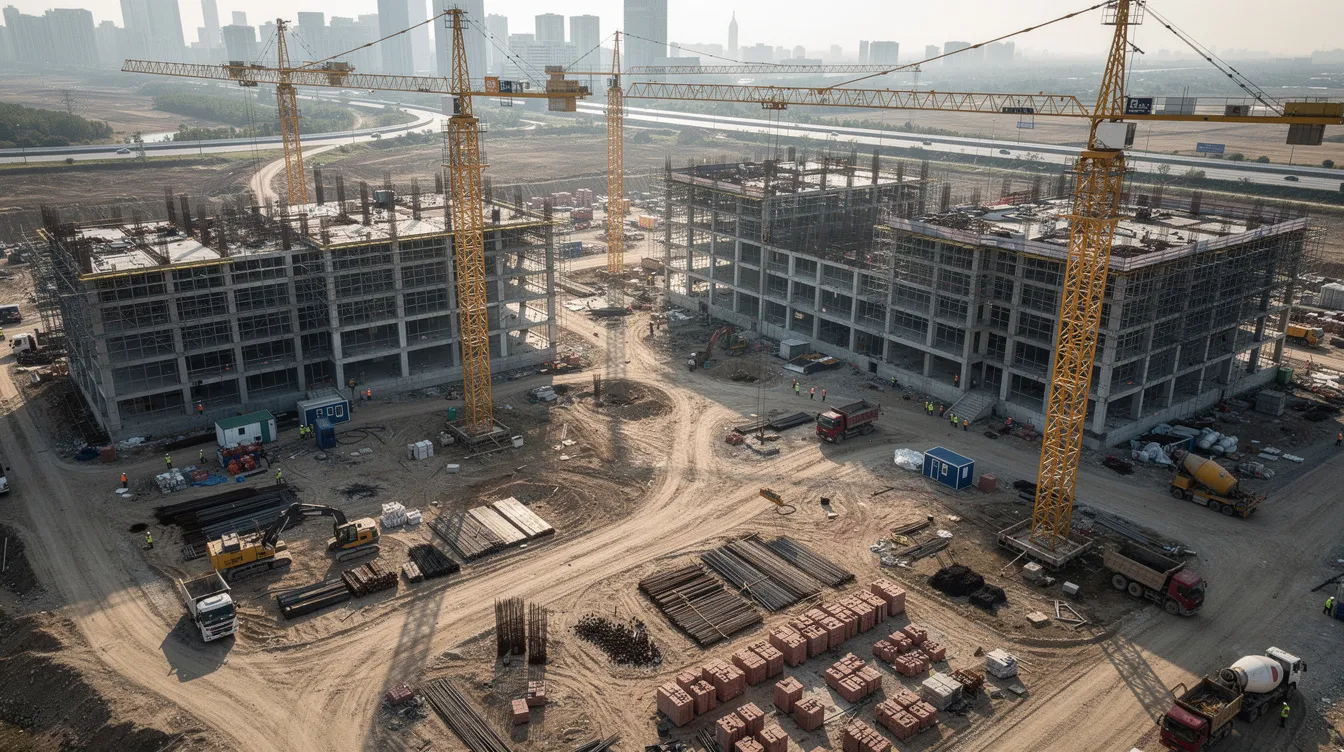
Projects above S$10 million involve more trades, more interfaces between structural, architectural, and M&E systems, and more workers on site simultaneously. 80% of construction accidents occur in projects over S$10 million, according to WSH Council data. The concentration of fatalities and serious injuries in larger works prompted MOM to set the S$10 million contract sum as a risk-based trigger for mandatory DfS compliance.
The legal framework does not assume smaller projects are risk-free. It recognises that projects above S$10 million carry higher systemic safety risks that justify mandatory upstream controls, including the appointment of a qualified safety professional with the regulatory expertise and technical knowledge to influence design decisions.
The phrase “≥ S$10 million” has specific legal meaning. The next section unpacks exactly what counts toward that figure and when the obligation activates.
When Is a DfSP Legally Required for ≥ S$10 Million Projects?
Design for Safety Regulations 2015 apply to projects over S$10 million that meet all three statutory conditions. Below is the precise legal trigger and how it plays out in practice.
The Core Legal Trigger: S$10 Million Contract Sum
For a project to require a DfSP, all three of the following must be true:
- The project is undertaken by a developer in the course of the developer’s business
- The construction contract sum is S$10 million or more (inclusive of GST)
- The project involves development as defined under Section 3(1) of the Planning Act
When all three conditions are met, the developer must appoint a Design for Safety Professional. This requirement has applied to new qualifying projects since 1 August 2016. Projects with designers appointed before 1 August 2016 are exempt from the regulations under the transitional provision in Regulation 3(2), regardless of contract value.
“Contract sum” means the value specified in the construction contract. It includes GST. It excludes land cost. Variation orders issued after contract award are not counted when assessing whether the S$10 million threshold is met. Even if the developer is based overseas, the requirement applies to projects physically located in Singapore.
How to Interpret the S$10 Million Threshold in Real Projects
Single main contracts above S$10 million are straightforward: DfSP appointment is mandatory. The complications arise in other scenarios.
Split contracts under one developer. If a developer awards two contracts of S$6 million and S$8 million for the same development on the same site, MOM can treat these cumulatively. The WSH Guidelines on Design for Safety specify that for term contracts, the aggregate contract sum determines whether the threshold is crossed. Attempting to avoid the obligation by splitting a S$20 million project into smaller packages does not remove compliance duties.
Phased A&A works. A developer carrying out progressive additions to an existing building may cross S$10 million across phases. When later phases push cumulative construction value above the threshold, DfS duties activate for those phases.
Just below the line. A project with an estimated contract sum of S$9.8 million is not legally required to appoint a DfSP. However, if subsequent scope adjustments push the value above S$10 million, the obligation applies retroactively in practical terms, because the developer’s duty crystallises at the point the contract sum meets the threshold.
Developers should assess cumulative contract values early, during feasibility, with their quantity surveyor or consultant. AMAN can perform an early compliance screen based on projected budgets and phasing to confirm whether the threshold will be triggered.
Situations Where DfSP Appointment Is Still Required Even Below S$10 Million
Certain A&A works to existing developments that already have a DfS Register require DfSP involvement regardless of the new contract’s value, provided the modification constitutes “development” under Section 3(1) of the Planning Act.
For example: a S$6 million façade replacement on a high-rise commercial tower that was built under DfS Regulations and has an existing DfS Register still requires the developer to comply with the Regulations. The same applies to structural strengthening, extensive reconfiguration of plant rooms, or changes to fire escape strategies in buildings with active DfS documentation.
MOM and the WSH Council encourage DfS application on all construction projects as good practice, even when not strictly mandated. Appointing a DfSP on complex sub-S$10 million works with deep excavation, work at height, or heavy M&E systems is prudent risk management.
Timing of Appointment: When Must the DfSP Come On Board?
The DfSP should be appointed as early as possible, ideally at concept or schematic design stage, well before tender. Industry practice targets appointment by roughly 30% design completion so that the first DfS review meeting can influence core layout, structural system, access strategies, and construction methods.
Engaging a DFSP early can prevent costly rework during construction. Appointing a DfSP only at detailed design or pre-construction limits the ability to eliminate risks at source, because structural layouts and massing are already fixed. Projects with early safety integration run more smoothly and on schedule.
AMAN prefers to embed DfSP input alongside early BCA/URA authority submission work to avoid contradictions between safety decisions and approved plans.

Practical Tests: Does My Project Need a DfSP?
Many developers and project managers are unsure whether their planned works cross the compliance line. The following checklist and examples provide a quick assessment.
Quick Checklist for Developers and Owners
Run through these questions. If you answer “yes” to questions 1 through 3, a DfSP is mandated. If you answer “yes” to question 5, a DfSP may be required even below S$10 million.
- Is your project located in Singapore and does it require planning permission or written permission under the Planning Act?
- Is the estimated construction contract value (excluding land cost, but including GST) S$10 million or more?
- Are you developing a new building, large-scale A&A, or infrastructure project such as a depot, plant, or interchange?
- Will there be work at height, deep excavation, complex M&E systems, or heavy temporary works?
- Does the existing building already have a DfS Register that must be updated under any modification?
- Is the project being tendered as multiple contracts that, combined, exceed S$10 million?
- Are you a public-sector agency commissioning construction works in Singapore?
- Has the designer been appointed after 1 August 2016?
If questions 1, 2, 3, and 8 are all “yes,” a DfSP appointment is a legal requirement. If question 5 is “yes,” consult a qualified professional to assess whether DfS obligations apply regardless of contract value.
AMAN can perform a brief desktop review of project scope and value to confirm your requirement before formal appointment. Contact the team during feasibility to avoid downstream surprises.
Examples of Projects That Typically Require a DfSP
New 30-storey residential condominium (S$150 million construction cost). Work at height across all trades, complex façade access for maintenance, underground carpark excavation, and fire egress systems for hundreds of units. DfSP involvement from massing stage is required.
Business park campus with multiple office blocks and podium (S$300 million). Multiple design consultants, phased construction, shared basement infrastructure, and extensive M&E plant. The project team spans dozens of firms; DfS review meetings coordinate safety communication across all of them.
Hospital wing extension including operating theatres and M&E upgrades (S$80 million). Medical gas systems, heavy HVAC plant requiring safe replacement routes, infection-control ventilation, and public interface during construction. Maintenance or structural weaknesses in the existing wing must be assessed and documented in the DfS Register.
New logistics hub with automated racking and high-bay warehouse (S$60 million). Heavy crane lifts during construction, long-span steel erection, and automated systems requiring safe maintenance access post-completion. The DfSP must address both construction-phase and operational risks.
MRT station or depot contract worth over S$10 million. Underground works, temporary works design for deep excavation, complex interfaces with live rail operations, and public safety considerations during tunnelling. DfSP involvement is mandatory and starts at preliminary design.
Borderline and Misunderstood Cases
Contract splitting. A developer splits a S$20 million project into two S$10 million contracts awarded to different contractors on the same site. This does not eliminate the obligation. MOM considers the aggregate value of construction works under a single development, and the Regulations address term contracts by using aggregate contract sums.
Interior-only fit-outs. A S$12 million fit-out within an existing shell-and-core building where structural and access systems remain unchanged may not trigger DfS obligations if the works do not constitute “development” under Section 3(1) of the Planning Act. However, if the fit-out involves changes to fire compartmentation, ceiling access to heavy equipment, or safe plant replacement routes, safety concerns arise and DfS applicability should be reviewed.
Industrial plant upgrades just below S$10 million. A S$9.5 million upgrade to a chemical processing facility with high-risk equipment does not legally require a DfSP. Nonetheless, the safety implications of the works justify voluntary appointment. Designing for safety reduces injury rates and project costs even when not mandated.
For ambiguous cases, obtain written professional advice. AMAN can review scope documents and, if needed, clarify applicability with MOM/WSH Council.
What a DfSP Actually Does on ≥ S$10 Million Projects
The legal trigger is the starting point. What follows is a structured, stage-by-stage process where the DfSP integrates safety considerations into every design decision.
Key Activities Across the Project Lifecycle
Concept and feasibility. The DfSP examines massing studies, site access plans, crane positioning options, and temporary works zones. At this stage, relocating a plantroom from a rooftop to a ground-level enclosure can eliminate fall hazards for decades of future maintenance. This is early hazard identification at its most cost-effective.
Detailed design. The DfSP conducts detailed reviews of façade access systems, roof fall protection, plantroom layouts, egress routes, and heavy-lift sequences. BIM models help visualise safe access paths, plant replacement clearances, and maintenance routes that are difficult to assess on 2D drawings alone.
Pre-construction and tender. Residual safety risks that cannot be eliminated through design must be communicated in tender documents. The DfSP ensures contractors receive clear safety information about identified risks and required controls, so that pricing and method statements reflect real site conditions.
During construction. The DfSP is not a site safety officer, but periodic reviews are necessary. When construction methods change or unforeseen ground conditions arise, the DfS Register must be updated. DfSPs facilitate safety review meetings with project stakeholders to address these changes.
Handover. DfSPs maintain a Design for Safety Register documenting identified risks and control measures throughout the project. At completion, this register, along with the Maintenance Strategy Report and safe access documentation, transfers to owners and facility managers so that long-term maintenance, cleaning, and eventual demolition can be carried out safely.
DfS Register and Other Core Documents
The DfS Register is the legally critical document. It records every identified risk, the assessed level of that risk, agreed control measures, residual risks, assumptions made during design, and outcomes of review meetings. The Design for Safety Register documents all identified risks and controls across the project lifecycle.
The DfSP populates the register using structured methods such as the GUIDE process (a systematic hazard identification and risk assessment framework) and HIRARC-type workshops. Creating essential safety documents does not stop at the register. Additional outputs include:
- Maintenance Strategy Reports specifying safe access and maintenance procedures
- Inputs into contractor method statements addressing residual design risks
- BIM safety layers marking fall-hazard zones, heavy-lift paths, and confined spaces
- Notes accompanying authority submissions to BCA, SCDF, and LTA
AMAN leverages BIM modelling and 3D coordination to visualise safe access, plant replacement paths, and façade maintenance routes. This approach converts abstract risk entries in the register into visible, measurable design features.
Coordination with Designers, Contractors, and Authorities
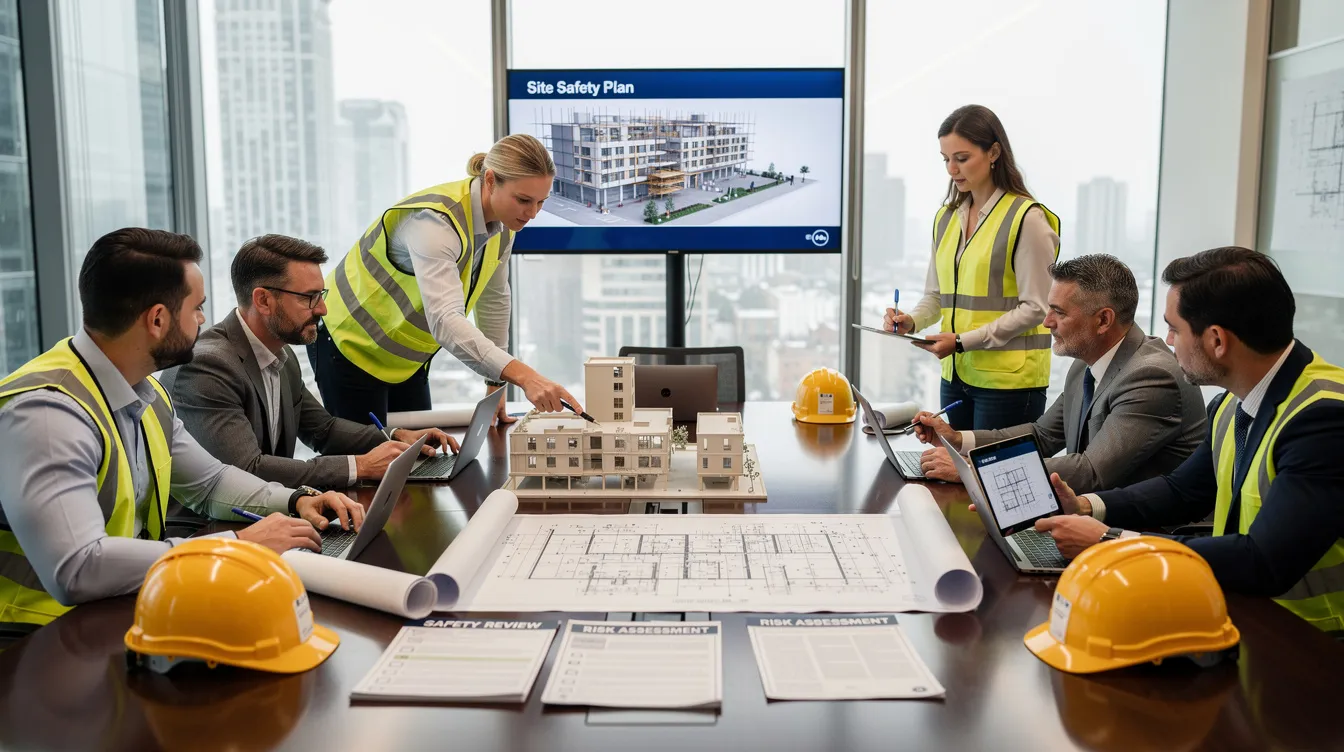
The DfSP chairs multi-disciplinary DfS review meetings. Attendees typically include the architect, C&S engineer, M&E engineer, qualified persons, and sometimes the main contractor. Regular meetings enhance collaboration among project stakeholders for safety. This improves project safety by integrating diverse stakeholder insights. Strong communication skills also help the DfSP explain design risks clearly and turn concerns into practical actions.
A typical meeting flow: the DfSP presents design changes since the last review, highlights high-risk areas identified through updated drawings or BIM models, proposes design modifications or risk reduction strategies, and logs all decisions in the DfS Register. The entire project team benefits from this structured approach because shared input helps surface issues early and supports a stronger safety culture before they become construction-phase conflicts.
The DfSP’s inputs influence shop drawings, temporary works design, and authority submissions. When a SCDF fire safety submission specifies a particular egress configuration, the DfSP verifies that the design can be built and maintained safely. AMAN’s combined engineering and architectural consultancy allows consolidated coordination where structural, M&E, fire safety, and DfS decisions are reviewed in a single workflow.
Common Challenges Around DfSP Requirement and How to Address Them
Three patterns account for most DfS compliance failures: discovering the requirement too late, underestimating risk on non-traditional project types, and treating safety-driven design changes as pure cost additions.
Late Realisation That a DfSP Was Required
The most common failure mode: a contract has been tendered, or construction has started, before anyone confirms that a DfSP should have been appointed months earlier. This happens because developers overlook whether their project falls under Section 3(1) of the Planning Act, or because the quantity surveyor excludes GST when calculating whether the S$10 million threshold is met.
Non-compliance with the Design for Safety regulations can lead to penalties up to S$50,000. Beyond fines, MOM can issue stop-work notices, and the absence of DfS documentation creates liability exposure if an accident occurs.
The remedy: appoint a DfSP immediately upon discovering the gap. Conduct a rapid design risk review covering all completed and in-progress design packages. Document retrospective decisions in the DfS Register with clear timestamps. AMAN has mobilised experienced DfSPs on several projects where compliance gaps surfaced mid-construction, using BIM-supported reviews to recover ground without stalling site progress.
Underestimating Risk on High-Value Fit-Out or M&E Projects
A S$15 million fit-out project in an existing commercial tower may look like “only interior work,” but it can involve complex fire compartmentation changes, ceiling access to heavy HVAC equipment, safe plant replacement routes through occupied floors, and modifications to egress systems. These are safety aspects that require structured review, not assumptions.
Common omissions: no assessment of how 500 kg air-handling units will be replaced when they fail in 15 years; no review of whether ceiling-mounted fire suppression systems can be maintained without scaffolding in occupied spaces; no consideration of how demolition of internal walls affects structural load paths.
Developers should not rely solely on contractor method statements. A structured risk scan by a DfSP or experienced consultant identifies design-phase hazards that contractors may not flag because their focus is construction execution, not lifecycle safety.
Balancing Cost, Programme, and Safety-Driven Design Changes
The perception that safety-driven design modifications always add cost is incorrect when the DfSP is treated as an early safety investment at concept stage. At that point, relocating a chiller plant from a rooftop to a mechanical floor, or specifying permanent davit sockets instead of ad-hoc scaffolding, changes a line on a drawing rather than demolishing built work.
Integrating safety in design is cheaper than fixing safety issues during construction because early safety integration prevents costly rework during construction. DfSPs developing practical solutions alongside the design team can propose cost-neutral alternatives: DfMA (Design for Manufacturing and Assembly) strategies that reduce work at height, simplified access systems that lower both installation and maintenance costs, or modular plantroom layouts that reduce confined-space entries.
The responsible developer retains responsibility for Design for Safety compliance even when delegating duties, and that safety responsibility remains with the developer. Requesting quantified business cases from the DfSP, comparing the cost of a design change against the cost of the risk it eliminates, supports informed decision-making rather than blanket objections. AMAN’s value engineering and DfS teams work jointly to balance structural, architectural, M&E, and safety objectives.
Conclusion and Next Steps
A Design for Safety Professional is mandatory for projects over S$10 million in Singapore when the project constitutes development under the Planning Act and is undertaken by a developer in the course of business. Projects modifying existing structures with a DfS Register may also require DfSP appointment regardless of contract value. Early appointment, at concept or schematic design stage, yields the largest safety and cost benefits because design decisions are still flexible.
To act on this:
- Confirm your estimated contract sum (inclusive of GST, excluding land) and verify whether your project falls under Section 3(1) of the Planning Act
- Conduct a preliminary DfS applicability review with your quantity surveyor or an experienced consultancy
- Shortlist qualified DfSPs or integrated consultancies like AMAN Engineering with relevant project experience across structural, architectural, and M&E disciplines
- Integrate DfS requirements into your design brief, consultancy RFPs, and main contract documents at key project milestones
- Schedule DfS review meetings at concept, detailed design, and pre-construction stages
Related topics worth exploring: the DfS GUIDE process and risk assessment registers, Maintenance Strategy Reports, BIM for safety coordination, and integration with façade and structural inspections.
Additional Resources and Reference Materials
- Workplace Safety and Health (Design for Safety) Regulations 2015. The primary legislation specifying scope, duties, contract sum threshold, and penalties. Available on the Singapore Statutes Online.
- WSH Council “Guidelines on Design for Safety.” Contains practical examples, the GUIDE process description, checklists for developers and designers, and model DfS Register templates. Published by TAL/WSH Council.
- MOM factsheets on DfS threshold and applicability. Summaries explaining the S$10 million trigger, roles of Developers and Designers, and how to verify whether a project qualifies.
- Industry case studies on early DfSP involvement. Projects with early safety integration run more smoothly and on schedule; documented examples show reduced accident rates and lifecycle costs when DfS starts at feasibility.
- AMAN Engineering’s DfS compliance guide. Covers contract sum interpretation, Planning Act assessment, and how to integrate DfS with BIM and authority submissions. AMAN can also provide curated checklists, sample DfS Register structures, and BIM-based risk-visualisation snapshots on request.
FAQ: DfSP Requirements for Projects Valued at S$10 Million and Above
From What Date Did the S$10 Million DfSP Requirement Apply?
- Design for Safety Regulations became effective on August 1, 2016. Any qualifying project with a designer appointed on or after that date must comply.
- Projects with designers appointed before 1 August 2016 are exempt from the regulations, regardless of contract value, under Regulation 3(2).
- Pre-2016 buildings that undergo major A&A works after August 2016 may still require DfS compliance for the new modification scope, particularly if the building already holds a DfS Register.
Does My Project Need a DfSP If the Contract Sum Is S$9.8 Million?
- The legal trigger is S$10 million. At S$9.8 million, the DfSP appointment is not mandated by the regulations.
- MOM may scrutinise whether the project has been artificially split to remain below the threshold. If aggregate construction works under one developer on one development site exceed S$10 million, the obligation applies.
- For projects near the threshold, adopting DfS principles voluntarily reduces health risks and safety risks at minimal additional cost. A professional review by an experienced consultant such as AMAN can confirm applicability.
Who Is Legally Responsible for Appointing the DfSP?
- The primary duty rests with the developer (the person or entity that commissions the construction work), not the main contractor.
- The responsible developer retains responsibility for Design for Safety compliance even when delegating duties such as convening review meetings or maintaining the DfS Register.
- Public-sector agencies developing projects in Singapore must meet the same requirement. There is no government exemption.
Can a Main Contractor or Safety Officer Double Up as DfSP?
- A DfSP must meet specific competency criteria: be a registered Professional Engineer or Architect with a valid practicing certificate, have at least 10 years of relevant experience, including at least 5 years in design, and complete a WSH-accredited DfSP course. This goes beyond a basic safety person role and reflects the legal and statutory requirements tied to design safety practice.
- Role conflict arises when a contractor-appointed person acts as DfSP on a developer’s behalf. The DfSP must be able to recommend design changes that may increase construction cost or complexity; a contractor employee faces an inherent conflict in doing so.
- Appointing an independent, suitably qualified DfSP or a multi-disciplinary consultancy avoids this conflict and satisfies the collaborative effort that DfS demands.
What Are the Penalties for Not Appointing a DfSP When Required?
- Breach of the WSH (DfS) Regulations is an offence under Regulation 12. Non-compliance with the Design for Safety regulations can lead to penalties up to S$50,000 under the WSH Act. MOM can also issue stop-work orders.
- Indirect consequences include increased accident risk, insurance complications, reputational damage, and heightened scrutiny from BCA, URA, and SCDF during subsequent submissions.
- The cost of appointing a DfSP on a S$10 million project is a fraction of 1% of contract value. The cost of a workplace fatality, both human and financial, is incomparably higher.
How Can AMAN Engineering Consultancy Support My DfS Compliance?
- AMAN provides qualified DfSPs with structural, architectural, and M&E backgrounds, covering the full range of safety professional duties required on complex construction projects.
- AMAN’s integrated BIM modelling services visualise and coordinate safe access, maintenance paths, and construction sequencing. This makes it possible to explain complex safety issues to non-technical project stakeholders using 3D models rather than abstract risk tables.
- Authority submissions to BCA, SCDF, and LTA are aligned with DfS decisions from the outset, preventing contradictory documentation.
- Complementary services include façade inspections, periodic structural inspections, fire safety certification, and civil and structural design.
- Engage AMAN during feasibility and budgeting to confirm whether a DfSP is required and to plan DfS milestones into your project programme.