
Introduction
Understanding why SCDF P&FM licence application for utility facilities gets rejected and how a PE fixes it can save facility owners months of delays and significant rework costs. An SCDF P&FM licence – formally a petroleum and flammable materials storage licence issued by the Singapore Civil Defence Force – is the legal permit that allows utility facilities such as data centre diesel farms, district cooling plants, centralised LPG systems, and cogeneration fuel installations to store petroleum and flammable materials above exemption quantities. Without it, storing these fuels is an offence under the Fire Safety Act.
Most rejections trace back to a predictable set of problems: mismatches between approved building plans and actual as-built conditions, incomplete fire safety documentation, or incorrect quantity and classification declarations. A Professional Engineer (PE) can systematically diagnose each of these gaps and design both the engineering fixes and the documentation package that SCDF expects before granting approval.
This article focuses specifically on P&FM storage licence applications for infrastructure and utility facilities – not retail LPG outlets, residential premises, transport and import licensing procedures, or licensing issues tied to imported goods and scheduled products. The target readers are facility managers, plant engineers, asset owners, and EPC contractors responsible for bulk diesel, liquefied petroleum gas, fuel oil, or scheduled chemicals in Singapore utility operations.
By reading through, you will gain:
-
The most common SCDF rejection reasons specific to utility and infrastructure facilities.
-
A clear picture of how the P&FM application process actually works from SCDF’s perspective.
-
Concrete ways a PE diagnoses non-compliance and designs practical fixes.
-
Pre-submission checklists you can use before lodging or re-submitting your application.
-
Insight into how AMAN Engineering Consultancy typically resolves stalled or rejected licence cases for infrastructure clients.
Understanding SCDF P&FM Licensing for Utility Facilities
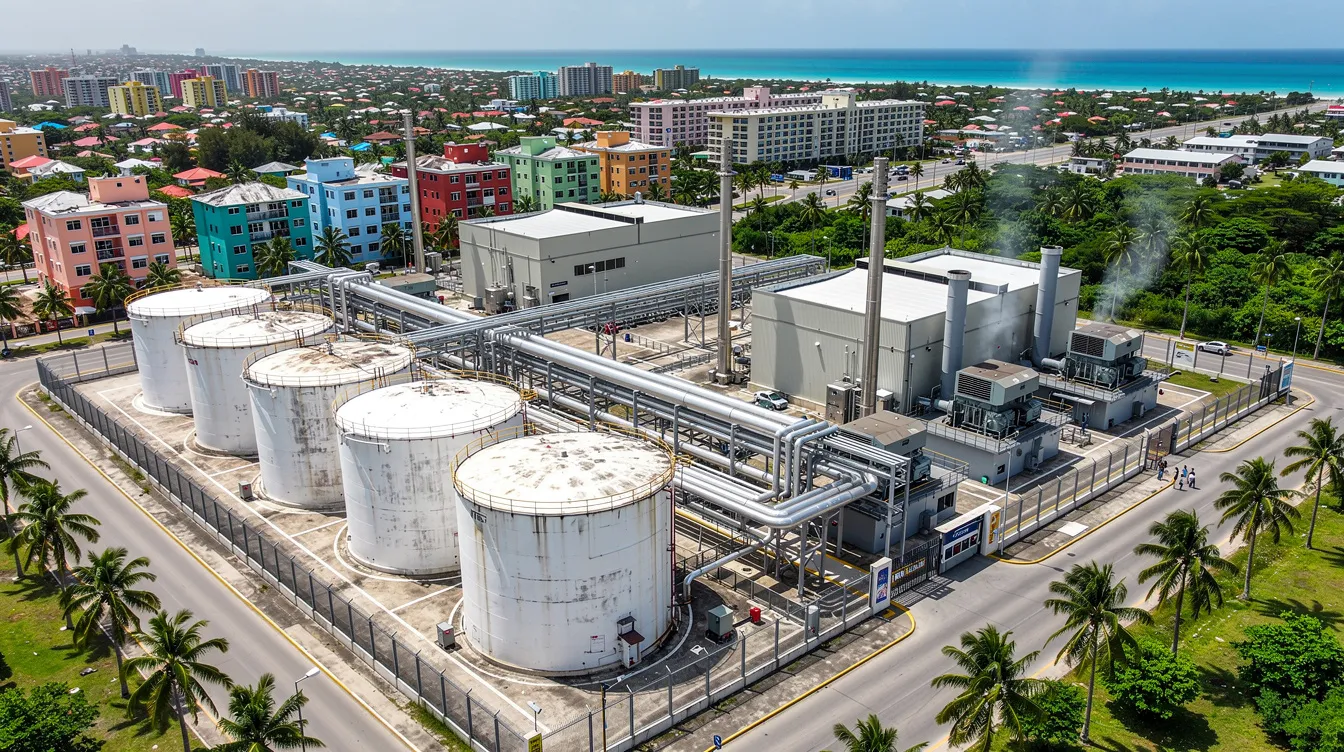
The SCDF P&FM storage licence is the gateway permit for any premises in Singapore storing petroleum products or flammable materials above defined exemption thresholds. While a typical commercial office or retail shop rarely encounters these rules, utility and infrastructure plants are treated as higher-risk by SCDF because they concentrate large fuel inventories, complex piping networks, and hazardous substances in proximity to occupied buildings and public spaces.
The legal foundation sits within Part 6 of the Fire Safety Act and the Fire Safety (Petroleum & Flammable Materials) Regulations. Together, these fire safety regulations define what must be licensed, what safety measures must be in place, and what penalties apply for non-compliance. The SCDF regulates petroleum and flammable materials under the Fire Safety Regulations 2020, and every utility facility that handles fuel or chemical storage must navigate this framework.
What Counts as a “Utility Facility” Under P&FM Rules
Several types of infrastructure installations commonly trigger a P&FM storage licence requirement in Singapore:
-
Emergency generator diesel farms for hospitals, airports, and data centres – often involving tens of thousands of litres of diesel stored in bulk tanks and multiple day tanks feeding separate generator sets.
-
District cooling and heating plants with fuel-fired boilers or absorption chillers, where fuel oil or diesel is stored on-site for continuous operation.
-
Bulk LPG systems feeding central kitchens in large commercial hubs, hotels, or institutional campuses – typically configured as cylinder manifold rooms or bulk tank installations.
-
Fuel oil systems for cogeneration or trigeneration plants in industrial estates such as JTC developments, where fuel supply is integral to combined power and cooling generation.
These installations are frequently embedded within larger infrastructure projects – airports, MRT depots, water treatment plants, university campuses – rather than being standalone storage depots. This means they share boundaries with occupied spaces, public corridors, and emergency vehicle access routes. SCDF views these as critical risk points because of the combination of large storage quantity, proximity to public, and the complexity of interconnected fuel piping and safety systems.
Key Technical Concepts Behind SCDF Decisions
Several technical concepts underpin every SCDF decision on a P&FM licence. Understanding them explains why seemingly minor deviations can trigger rejection.
Petroleum classification by flash point determines the regulatory tier. Class 0 petroleum includes the most volatile products like liquefied petroleum gas (LPG). Class I petroleum has a flash point below 23°C, covering products like petrol and many industrial solvents. Class II ranges from 23°C to 60°C, and Class III covers flash points above 60°C up to 93°C – diesel falls here. Each class carries different exemption quantities, fire safety requirements, and separation distances.
Maximum Allowable Quantity (MAQ) and aggregation rules are where many applications go wrong. SCDF aggregates all petroleum flammable materials on the licensed premises – bulk tanks, day tanks, drums, cylinders, and separate containers – to calculate total stored quantities. Exemption limits differ for liquids, solids, and gases: liquid mixtures must not exceed a total volume of 40 L, solid mixtures must not exceed a total weight of 20 kg, and gaseous mixtures have a total weight limit of around 10 kg before licensing applies. Mixed storage of different states and classes follows specific aggregation formulas. Facilities that count only their main bulk tanks while ignoring day tanks and drums commonly fall into the trap of under-declaration.
Scheduled chemicals add another layer. The Fourth Schedule lists approximately 378 groups of flammable materials that are regulated regardless of petroleum class. Many utility facilities handle solvents, refrigerants, or process chemicals that qualify as scheduled chemicals – and these have no exemption thresholds, meaning any quantity triggers licensing.
These classification and aggregation rules connect directly to the required fire safety certificate, approved fire safety plans, separation distances to occupied buildings and boundaries, and fire protection systems (foam, sprinklers, gas detection, containment). Even a “small” deviation – an extra day tank, a reclassified chemical, a shifted pipe route – can push a facility outside the envelope of its approved plan and into rejection territory.
How SCDF Reviews a P&FM Licence Application
The SCDF’s review process for a P&FM storage licence follows a structured workflow. Applications must be submitted through the GoBusiness portal, accompanied by supporting documents including layout drawings, inventory schedules, safety data sheets, and test reports. A qualified person must prepare and submit storage plans as part of the application package.
SCDF then conducts a desktop review of the submitted plans, verifying capacity declarations, classification of materials, compliance with the fire code, and consistency with any previously approved building plans and fire safety certificate for the premises, including whether access routes remain clear for emergency vehicles. This is followed by an on-site inspection where officers physically verify that the built facility matches the approved design and documentation. SCDF processing of storage license applications typically takes 19 working days once submission and site inspection are in order.
For utility facilities, SCDF focuses heavily on compliance with previously approved fire safety plans, tank and piping test reports, leak detection provisions, secondary containment design, emergency power systems, ventilation, gas detection, and emergency shutdown systems. The inspection is thorough – officers compare what is on-site against what is on the stamped, approved plan.
Understanding this review logic makes the reasons for rejection much more predictable, which is exactly what the next section addresses.
Why SCDF P&FM Licence Applications for Utility Facilities Get Rejected
Most rejection reasons are predictable and repeat across hospitals, data centres, industrial plants, and district utility facilities. Applications for SCDF P&FM licenses can face delays due to technical and documentation issues that experienced facility teams should be able to anticipate. The scenarios below are drawn from common patterns – no actual projects are named, but any PE working in this space will recognise them immediately.
Reason 1: As-Built Utility Layout Does Not Match Approved Fire Safety Plans
This is the single most frequent cause of rejection for utility facilities. During construction or commissioning, site conditions force changes: additional day tanks or buffer tanks are added to meet operational demand, diesel tanks or LPG manifolds are relocated due to clashes with structural elements, or pipe routing is altered to avoid other services. These changes are often made without a revised submission to SCDF.
When SCDF inspectors arrive for their site inspection, they compare the physical installation against the stamped, approved plan. Any discrepancy – even a relocated pump skid or a pipeline rerouted closer to an exit or occupied room – leads to rejection.
Common utility-specific examples include generator rooms in data centres where fuel pipelines have been rerouted above critical IT spaces without fire-rated protection, and district cooling plants where fuel tanks have been shifted closer to boundary walls due to construction sequencing. Incomplete engineering drawings can cause SCDF to reject submissions outright, particularly when the as-built layout has never been formally documented.
Reason 2: Wrong Quantity, Classification, or Aggregation of P&FM
Miscounting total diesel or LPG volume across multiple tanks and day tanks is surprisingly common. A facility might apply as though only 20,000 L of diesel is stored, but SCDF finds 20,000 L in bulk tanks plus four 1,000 L day tanks plus 200 L in drums – bringing actual storage well above the declared figure and potentially into a higher fee or safety tier. Fees for P&FM storage licenses scale with the declared quantity stored rather than a flat rate: a liquid quantity not exceeding 500 liters costs $184, while 5,000–50,000 L costs $413, and larger volumes scale further.
Utility facilities often handle various chemicals including flammable materials and petroleum. Solvents, cleaning agents, refrigerants, or process chemicals in utility plants may actually qualify as scheduled chemicals under SCDF’s Fourth Schedule, but they are frequently overlooked or misclassified. SCDF will not approve if declared quantities do not align with on-site inventory and safety data sheets.
The aggregate weight and volume rules for mixed storage further complicate matters. If a facility stores both liquids and gases of different classes, the aggregation calculation follows specific formulae – getting these wrong means the declared storage quantity is inaccurate, and the application is returned.
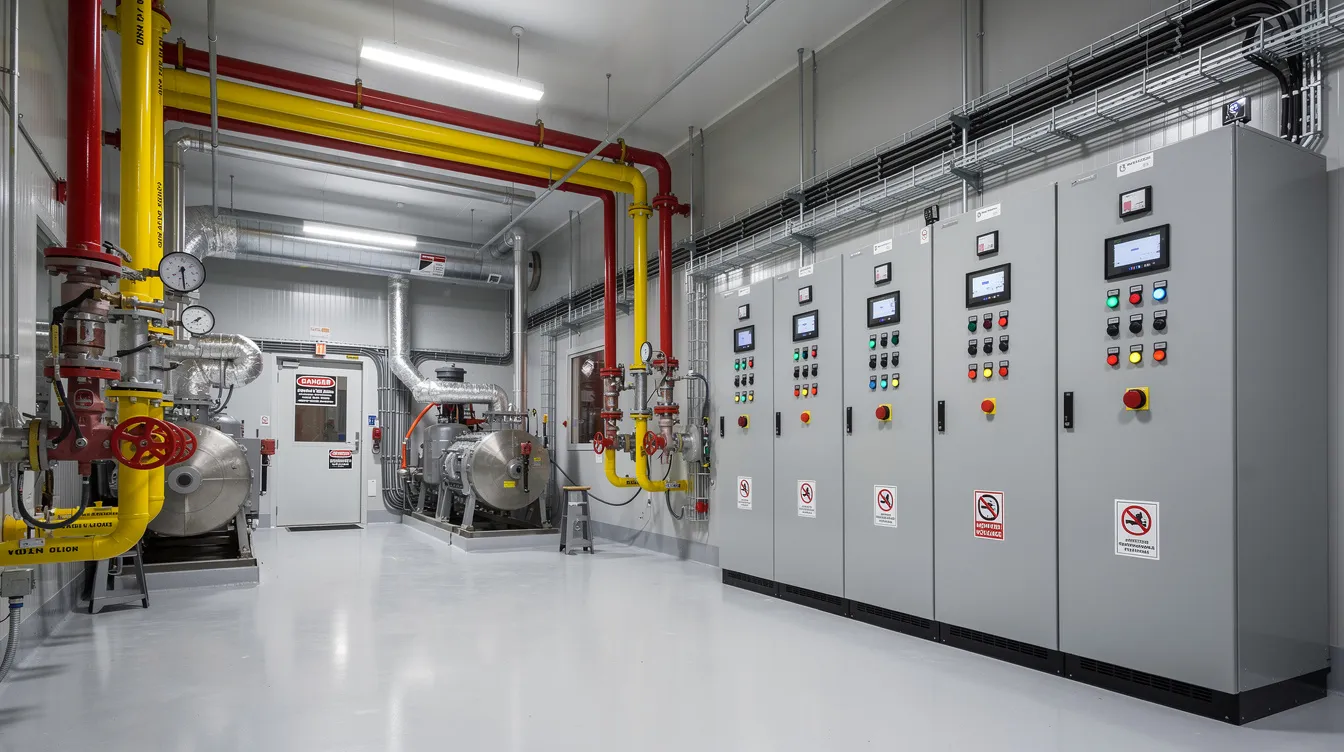
Reason 3: Incomplete or Non-Compliant Fire Safety Systems for Fuel Installations
SCDF expects a comprehensive suite of fire safety works and protective systems for any P&FM installation in a utility facility. Common technical gaps that lead to rejection include:
-
No foam system or inadequate sprinkler density over bulk diesel tanks.
-
Missing or undersized spill containment – secondary containment must hold 110% of the largest container’s volume, and submissions must meet strict secondary containment design requirements to prevent spills.
-
Lack of gas detection and automatic shutdown for LPG utility rooms.
-
Poor ventilation or non-explosion-proof equipment in rooms where flammable vapors may accumulate.
-
Absence of buffer zones between P&FM installations and property boundaries, as mandated by the fire code.
These issues typically surface during SCDF’s on-site inspection and result in either conditional approval with mandatory rectification or outright rejection. Fire protection, ventilation, detection, and spill containment must all be documented and tagged on drawings before SCDF will proceed.
Reason 4: Documentation Gaps – Test Reports, Certificates, and ERP
Even when the physical installation is compliant, documentation gaps can stall an application indefinitely. SCDF requires endorsements from Professional Engineers for hydrostatic and pressure test reports on tanks and buried piping. Factory Acceptance Test (FAT) and Site Acceptance Test (SAT) records must be available for critical safety systems – fire suppression, gas detection, automatic shutdowns.
Utility facilities must maintain up-to-date emergency response plans tailored to their hazards, covering specific P&FM scenarios such as tank leaks, gas releases, and fuel pump fires – not just generic fire drills. The plan and its safety data sheets should be aligned so cert members can use them correctly during a chemical or fuel incident. Calibration records for gas detectors and pressure relief devices must be current and from recognised parties.
SCDF can reject or place applications on prolonged query if documents are inconsistent with the site, are issued by non-recognised laboratories or inspectors, or are simply missing. General requirements include accurate documentation and compliance with local codes and safety standards – there is no shortcut here.
Reason 5: Non-Compliance with Separation Distances and Room Construction
Utility facilities frequently run into separation distance issues. Fuel tanks positioned too close to property boundaries, staircases, or building openings violate fire code clauses that specify minimum distances – for example, filling points for Class I–III petroleum must be in the open air at least 3 m from any building opening or boundary. For larger installations, separation to residential buildings or places of public assembly can be 50 m or 90 m respectively.
LPG utility rooms without proper 2-hour fire-rated enclosures or explosion-relief provisions are another common finding. Shared rooms housing incompatible services – such as fuel tanks and electrical switchgear without required segregation – will not pass inspection regardless of other compliance.
These are structural issues that cannot be resolved with paperwork alone. They typically require engineering redesign – which is precisely where an experienced Professional Engineer steps in.
How a Professional Engineer Diagnoses and Fixes Rejected P&FM Licence Applications
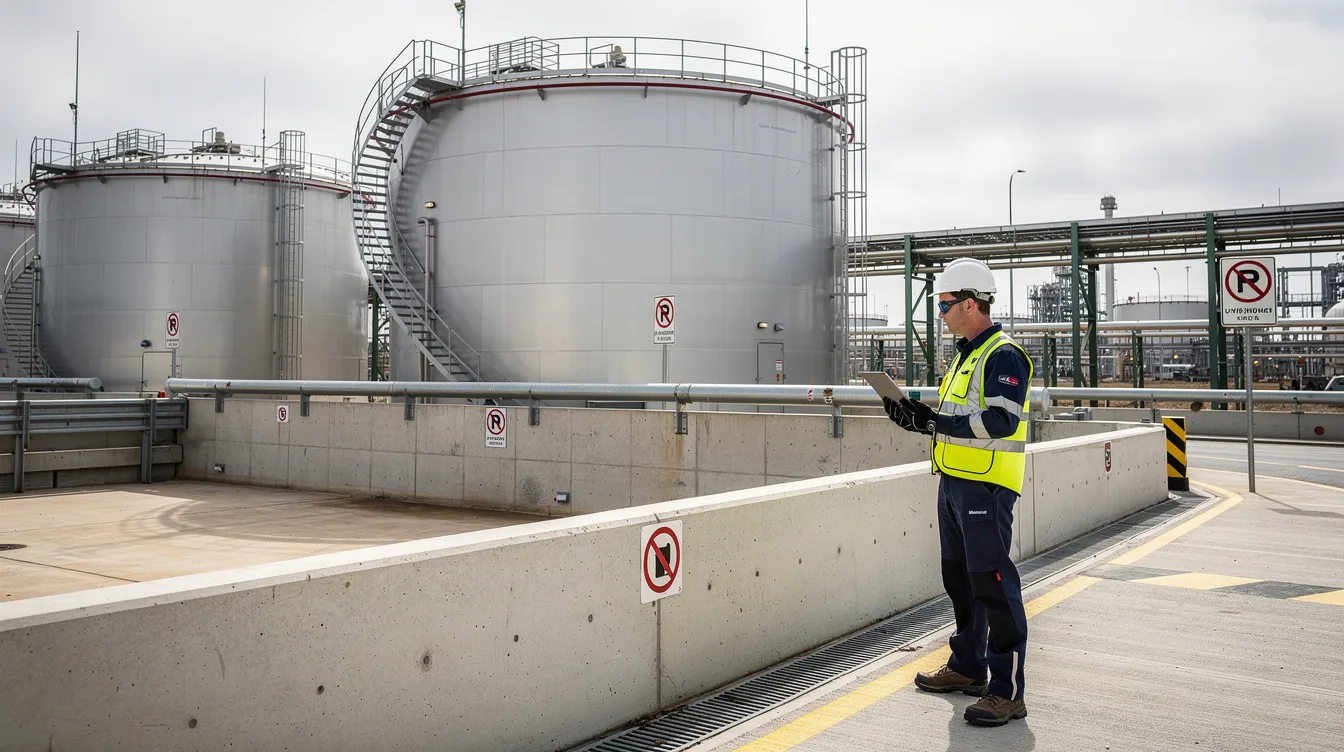
Under the Fire Safety Act and fire code, submissions involving fire protection works and P&FM installations must be prepared by a qualified person – either a registered architect or a Professional Engineer where engineering systems are involved. The PE takes professional liability for the accuracy and compliance of what is submitted. Utilizing professional consultations can mitigate delays in the licensing process significantly.
At AMAN Engineering Consultancy, our PEs follow a structured, four-step process to rescue stalled or rejected P&FM storage licence applications for infrastructure clients.
Step 1: Forensic Gap Assessment Between SCDF Requirements and Existing Facility
The PE begins with a comprehensive document and site review. This involves:
-
Comparing all approved fire safety plans, prior SCDF submissions, fire safety certificate conditions, and fire code provisions against the current as-built layout.
-
Verifying the actual P&FM inventory – every bulk tank, day tank, drum, cylinder, and manifold – and confirming petroleum classes and scheduled chemical classifications against current safety data sheets.
-
Mapping out the complete fuel and gas distribution network in utility buildings, from storage through piping to end-users such as generators, boilers, or process equipment.
The deliverable from this step is a structured gap list, categorised into documentation issues, design non-conformances, and construction or installation deficiencies. Quick-win fixes (such as obtaining missing test certificates) are separated from issues requiring physical redesign or authority consultation. Qualified Persons assess storage facilities for potential hazards as part of this diagnostic phase.
Step 2: Engineering Redesign and Compliance Strategy
With the gap list in hand, the PE develops practical rectification options tailored to the specific utility facility:
-
Resizing or reconfiguring tanks and day tanks to fit within MAQ or separation constraints at appropriate locations.
-
Rerouting fuel or gas pipelines away from escape routes, sensitive rooms, and areas with insufficient fire rating.
-
Adding fire-rated walls, blast relief panels, upgraded spill containment (to meet the 110% rule), or mechanical ventilation systems.
For large infrastructure facilities where strict prescriptive compliance is physically impossible due to site constraints, the PE may perform a quantitative risk assessment (QRA) or performance-based fire engineering analysis to justify equivalent safety protocols. Quantitative risk assessments are required for certain storage quantities of chemicals and fuels, and they allow SCDF to consider alternative solutions backed by robust engineering evidence.
Critically, the PE coordinates with architects, M&E engineers, and facility operators to ensure that proposed fixes are constructible and cause minimal operational downtime – a major concern for 24/7 utility plants like data centres and district cooling facilities.
Step 3: Regularising Plans and Documentation for Re-Submission
The PE then prepares the complete re-submission package:
-
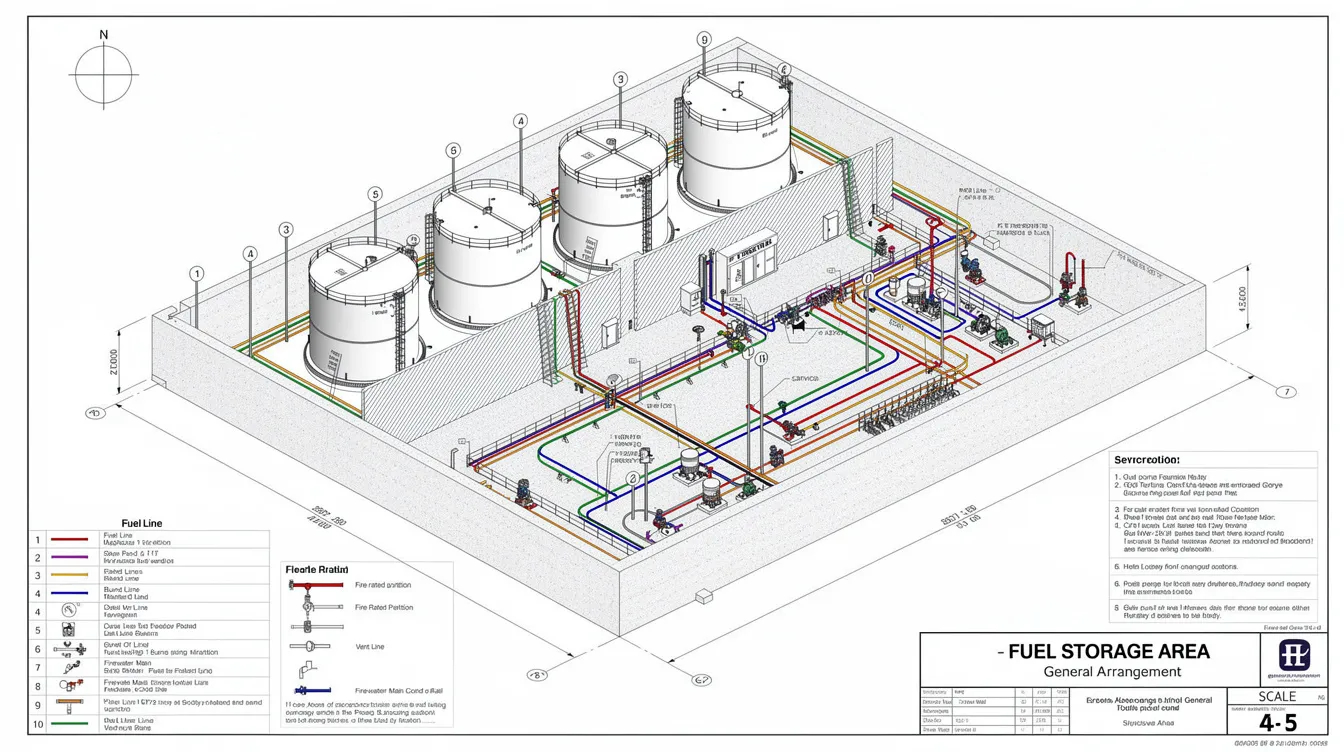
Updated fire safety and P&FM layout drawings in BIM or CAD, accurately integrating utility systems, tank locations, piping routes, and safety equipment.
-
Coordination of new test reports – tank integrity tests (hydrostatic), line pressure tests, functional tests for fire suppression and detection systems – all from accredited laboratories with proper PE endorsement.
-
Revised emergency response plan that reflects corrected P&FM scenarios specific to the utility plant: tank leaks, LPG gas releases, fuel pump fires, spill containment activation.
All documents are endorsed by the PE and, where required, by a registered inspector before final lodging. Plans stamped by the PE become the new approved plan against which SCDF will inspect.
Step 4: Managing Dialogue with SCDF and On-Site Rectification
The PE often serves as the primary technical interface with SCDF’s licensing branch:
-
Responding formally to SCDF’s previous query letters, addressing each rejection point with evidence, revised design, and supporting documents.
-
Attending joint inspections with SCDF officers to walk through key rectifications in plant rooms, fuel farms, and gas manifold areas.
-
Negotiating feasible compliance paths when strict distances or layouts cannot be fully met due to existing infrastructure constraints.
Photographing and documenting all rectification works clearly for SCDF’s records is essential – SCDF inspectors need to see that the as-built condition now matches the re-submitted plans exactly. This collaborative approach typically leads to approval on the next review cycle when issues have been genuinely resolved.
Practical Implementation: From Rejection Letter to Approved Licence
Receiving a rejection letter from SCDF can feel overwhelming, especially when your utility operations depend on the fuel systems in question. This section provides a concrete, step-by-step playbook for facility managers to move from rejection to approval efficiently.
Action Plan for Facility Managers After Receiving an SCDF Rejection
-
Read and classify SCDF’s reasons – group them into design issues, construction deficiencies, documentation gaps, and operational shortcomings.
-
Consolidate all current drawings – gather previous approvals, as-built mark-ups, and any modifications made to your utility areas since the last approved plan.
-
Engage a PE experienced in P&FM and infrastructure – share the full rejection letter, supporting documents, and site access. Firms like AMAN Engineering Consultancy specialise in exactly this type of rescue.
-
Conduct a joint site walk with the PE across all affected plant rooms, tank farms, and gas manifolds – photograph everything.
-
Approve and budget for the rectification plan – prioritise items that must be physically resolved before SCDF’s re-inspection.
-
Schedule re-testing and re-commissioning of systems where modifications are made – hydrostatic tests, leak tests, functional tests of fire systems.
-
Submit revised plans and documents via the GoBusiness portal, accompanied by a clear response matrix referencing SCDF’s earlier comments point by point.
Qualified Persons help avoid application delays by ensuring accuracy at every stage of this process.
Illustrative Example: Fixing a Rejected Diesel Storage Licence for a Data Centre
A 2025-built Tier III data centre with multiple emergency generators was designed for 60,000 L total diesel capacity. The FM storage licence application, with fm storage licence validity after approval typically tied to the facility’s assessed risk level, was rejected for three reasons: four additional 1,000 L day tanks installed during commissioning were not shown on submitted drawings, the spill bund for the largest 30,000 L tank held only 90% of its volume, and leak test reports for buried fuel lines were missing.
The PE conducted a full inventory audit, confirming 60,000 L in bulk tanks plus 4,000 L in day tanks plus 400 L in drums – a total actual storage of 64,400 L. Revised drawings captured every storage point. The bund wall was raised and resealed to contain 110% of the largest tank volume (33,000 L). Fresh hydrostatic and leak tests were commissioned from an accredited lab, with PE endorsement. The emergency response plan was updated to cover a diesel spill scenario specific to the generator hall layout.
Result: the P&FM storage licence was approved after a single re-submission, with no reduction in installed generator capacity and SCDF processing completed within 19 working days.
Illustrative Example: Central LPG Utility for a Large Commercial Kitchen Hub
A large commercial eating place hub installed a centralised LPG manifold room to supply multiple kitchen tenants. SCDF rejected the FM storage licence application because the manifold room was located less than 3 m from an escape staircase, the room relied on natural ventilation only (insufficient for LPG which produces flammable vapors heavier than air), and no gas detection interlock was installed.
The PE designed a fire-rated wall extension to achieve the required separation distance, specified mechanical ventilation with the air change rate mandated by the fire code, installed explosion-relief panels on the external wall, and integrated a gas detection system tied to automatic LPG shutoff valves. Updated P&FM layout drawings and functional test reports were submitted with PE endorsement.
Result: compliance was demonstrated without relocating the entire LPG farm, saving substantial civil alteration and addition costs while meeting all flammable material storage requirements.
Common Challenges and How a PE Solves Them in Utility Context
Certain challenges reappear across infrastructure projects regardless of facility type. Experienced PEs maintain repeatable solutions for each.
Challenge 1: Legacy Utility Systems with No Clear Paper Trail
Older plants – particularly those built before 2010 – may lack complete records of tank tests, original drawings, or fire safety certificate approvals. Without these documents, SCDF cannot verify that the installation ever met approved codes and safety standards.
A PE addresses this by reverse-engineering as-built drawings using physical surveys and BIM modelling, carrying out fresh structural and leak testing to create a new compliance baseline, and proposing staged rectification that allows operations to continue while documentation is regularised. This approach establishes a defensible record for both SCDF and the facility’s insurers.
Challenge 2: Tight Sites with Difficult Separation Distances
Land-scarce Singapore produces countless scenarios where separation distances are difficult to achieve: MRT depot fuel tanks near property boundaries, district cooling plants in basements, or hospital generator farms hemmed in by ward buildings. Buffer zones between P&FM installations and property boundaries are mandated by the fire code, and these cannot simply be waived.
A PE can optimise tank layout, orientation, and shielding walls to maximise effective separation. Where prescriptive distances still cannot be met, performance-based fire engineering or a quantitative risk assessment can justify alternative safety measures – but only with rigorous documentation and evidence. In some cases, the PE works with architects to reclassify neighbouring spaces (converting an office to a store, for example) to ease separation requirements under the fire code’s occupancy-based rules.
Challenge 3: Coordination Between Multiple Stakeholders
Coordination failures are a root cause of many P&FM rejections. Design-and-build contractors alter scope without updating the qualified person or PE. Operators add extra tanks or cylinders after Temporary Occupation Permit (TOP) is obtained. Each change potentially invalidates the approved plan.
A PE-led process addresses this by establishing a single source of truth for P&FM data – covering all stored quantities, locations, and classifications across the licensed premises. The PE implements change-control procedures so that any modification to fuel or gas systems triggers a review and, if needed, an updated SCDF submission. Regular inspections are mandatory for maintaining compliance with P&FM regulations, and a PE-led framework ensures these happen systematically rather than reactively.
Proactive engagement with a PE prevents rejections rather than merely reacting to them – and for infrastructure-scale facilities, this distinction can mean the difference between months of delay and a smooth approval.
Conclusion and Next Steps
SCDF P&FM licence rejections for utility facilities are rarely mysterious. They stem from predictable technical and documentation gaps – mismatched plans, undeclared quantities, missing test reports, and fire safety system shortcomings – that a Professional Engineer can systematically diagnose and resolve. The engineering and regulatory complexity of infrastructure fuel systems makes PE involvement not just helpful but often legally required under Singapore’s fire safety regulations.
Involving a PE early – during design and whenever plant modifications occur – avoids the costly cycle of rejection, redesign, and re-submission that catches so many facility teams off guard. Licence validity can last up to three years before renewal, giving well-prepared facilities a long runway of compliant operation.
Your immediate next steps:
-
Audit current P&FM inventories across all tanks, day tanks, drums, and cylinders, and compare against your approved plans.
-
Compile all existing test reports, fire safety certificate documents, and emergency response plans into a single digital folder.
-
Schedule a preliminary compliance review with a PE for any upcoming licence renewal, capacity change, or new application.
-
Implement an internal checklist for any future changes to fuel or gas systems – ensuring every modification triggers a review against SCDF requirements.
If your infrastructure or utility project has a stalled or rejected P&FM licence application, AMAN Engineering Consultancy provides full-cycle PE support – from forensic gap assessment through redesign, documentation, and SCDF re-submission – to get your licence approved and your operations running compliantly.
Additional Resources and Pre-Submission Checklists
Pre-Submission Checklist for Utility P&FM Licence Applications
Use this checklist before lodging any new or renewed P&FM storage licence application:
-
☐ All P&FM quantities aggregated across bulk tanks, day tanks, drums, cylinders, and separate containers – including any scheduled chemicals and any scheduled products kept within the licensed premises.
-
☐ Material classifications verified against latest safety data sheets and SCDF schedules (Class 0 through Class III, plus Fourth Schedule chemicals).
-
☐ As-built drawings coordinated with architectural, structural, and M&E plans – confirming that actual storage matches the submitted layout.
-
☐ Tank and piping integrity test reports current and PE-endorsed (hydrostatic tests, leak tests, radiographic weld tests where applicable).
-
☐ Fire protection systems (foam, sprinklers, detectors), ventilation, and spill containment documented and tagged on drawings.
-
☐ Emergency response plan updated to include specific P&FM scenarios for the utility plant – not generic fire evacuation only.
-
☐ PE endorsement and registered inspector reports prepared where required.
-
☐ Fees calculated based on total quantity stored and successful payment confirmed.
-
☐ Confirm whether any quantity-based declarations affect fm storage licence validity details shown in the GoBusiness portal.
-
☐ Submission lodged via the GoBusiness portal with all supporting documents attached.
When to Involve a PE vs Handling Internally
A simple rule of thumb:
-
Internal handling may suffice for small quantity changes within existing licensed limits where no physical alteration to tanks, piping, or safety systems has occurred.
-
PE involvement is essential when:
-
New utility plants are being designed or expanded.
-
SCDF has already issued a rejection or multiple queries on your application.
-
There are layout constraints, complex multi-chemical or mixed storage arrangements, separation distance challenges, or storage licensing questions that overlap with dangerous goods compliance.
-
The facility handles scheduled chemicals or stores petroleum above a few thousand litres.
For infrastructure-scale projects, defaulting to PE-led submissions is the most reliable path to approval. Engaging a qualified person is crucial for P&FM licensing – the cost of a PE engagement is almost always far less than the cost of a rejected application, operational delays, and potential risks to safety and insurance coverage.
FAQs on SCDF P&FM Licence Rejections for Utility Facilities
Why was my P&FM licence application rejected even though we passed our Fire Safety Certificate inspection?
The fire safety certificate covers building-wide fire safety compliance – structural fire ratings, means of escape, general fire protection systems. The P&FM storage licence is a separate, additional requirement that applies specifically to the storage of petroleum and flammable materials. Your premises may satisfy all general fire safety requirements but still fail on P&FM-specific conditions such as fuel inventory accuracy, containment sizing, gas detection, or hazardous materials handling protocols. The two assessments evaluate overlapping but distinct sets of safety measures.
How long does it usually take to fix a rejected P&FM licence for a utility plant?
Timelines vary by the nature of the rejection:
-
Simple documentation fixes (missing test reports, updated SDS, corrected inventory declarations): typically a few weeks, plus SCDF’s 19 working days processing.
-
Minor design rectifications (adding gas detectors, upgrading ventilation, resizing a bund wall): 1–3 months including design, installation, testing, and re-submission.
-
Major layout or containment changes (relocating tanks, building fire-rated enclosures, rerouting pipelines): several months including design, construction, commissioning, and SCDF re-inspection.
Can we keep operating our utilities if the P&FM licence is rejected?
Operating without a valid P&FM storage licence exposes the owner and occupier to legal liability under the Fire Safety Act and may void insurance coverage for fire-related incidents; this article does not address separate transport controls that may apply when fuels or chemicals are moved as dangerous goods. Readers should seek formal advice based on their specific situation. In practice, PEs can help design interim risk-reduction measures – such as reducing stored quantities below exemption thresholds or implementing additional safety protocols – when operations cannot immediately cease, but this must be approached carefully and documented.
Is it possible to get waivers on separation distance or tank capacity requirements?
SCDF does not issue blanket waivers, but it may consider performance-based proposals backed by robust fire engineering analysis and quantitative risk assessment. These proposals must demonstrate that the alternative design achieves equivalent or better safety outcomes compared with the prescriptive fire code requirement. This requires specialist PE input with deep experience in fire engineering and is not guaranteed – SCDF evaluates each case on its merits.
How does AMAN Engineering Consultancy support infrastructure and utility clients specifically?
AMAN Engineering Consultancy provides end-to-end PE support for infrastructure and utility P&FM cases:
-
Full-cycle authority submissions to SCDF, BCA, JTC, and other agencies.
-
PE endorsement of P&FM layouts, fire engineering strategies, and test reports for utility plants.
-
BIM modelling of utility rooms and tank farms to resolve clashes and verify separation distances before submission.
-
Coordination of site inspections, test reports, and re-submissions until approval is obtained.
-
Specialist support for complex scenarios including quantitative risk assessment, performance-based engineering, and multi-agency coordination for large infrastructure projects.