
Introduction
When comparing micro fine cement vs epoxy resin injections for foundation crack repair, the correct choice hinges on three measurable factors: crack width, hydrostatic pressure at the crack face, and whether the crack is actively moving or dormant. Get this decision wrong, and you face recurring leakage, accelerated corrosion of reinforcement, and repairs that fail within months of completion.
Micro fine cement injections are preferable when cracks are very fine (≤ 0.3 mm), when surfaces are damp or subject to active water leaks under hydrostatic pressure, or where minor crack movement from thermal cycling or settlement is expected. Epoxy resin injections are the stronger choice when cracks are dormant, structurally significant, moderate in width (approximately 0.1–0.5 mm), and the substrate is dry. Both materials can help restore structural integrity, but neither fixes underlying foundation movement issues – and selecting the wrong material for the wrong condition is one of the most common and costly errors in concrete crack repair.
This article focuses on injection-based repair of reinforced concrete foundations – basement walls, raft slabs, and pile caps – in Singapore and ASEAN’s humid, high-rainfall, high water table environment. It does not cover surface patching, cosmetic plaster repairs, or polyurethane crack injection as a primary method (though polyurethane is referenced for contrast). The target readers are facility managers, developers, contractors, and professional consultants who specify or approve repair methods and must justify them technically and economically under local authority standards.
Poor material selection leads directly to further deterioration: recurring water infiltration during monsoon seasons, chloride and sulphate attack on embedded steel, and structural degradation of foundations that are already under stress. Singapore’s strict oversight by BCA and PUB, combined with its high water table and aggressive exposure conditions, makes disciplined material selection non-negotiable.
By the end of this article, you will understand:
-
How to choose between micro fine cement and epoxy based on crack width bands (hairline < 0.1 mm through wide > 0.6 mm).
-
How hydrostatic pressure and groundwater conditions affect injection material choice and adhesion performance.
-
How active vs dormant crack behaviour determines whether rigid epoxy or mineral-based grouts are appropriate.
-
What a typical professional repair workflow looks like – from on-site assessment through monitoring and documentation.
-
What photographic evidence, crack maps, and records are typically required to satisfy building owners and authorities.
Understanding Injection-Based Foundation Crack Repair
Crack injection refers to forcing material – grout or resin – under controlled pressure through injection ports installed along the crack, driving it deep into the fracture so that crack faces are filled or chemically bonded across their full depth. This is fundamentally different from surface patching or filling, which only covers the visible opening without restoring internal continuity. Crack injection restores structural integrity to damaged concrete by re-establishing load transfer across the fracture plane and sealing the path that allows water, chlorides, and sulphates to reach reinforcement steel.
In reinforced concrete foundations, injection serves dual objectives. The first is structural restoration: concrete cracks disrupt the monolithic behaviour of foundation elements, and injection aims to re-bond crack faces, restore stiffness, and limit propagation – effectively helping to restore structural strength. The second is serviceability and durability: preventing moisture ingress, water leakage, dampness, and corrosion, which is critical in Singapore’s climate where heavy rainfall, coastal exposure, and high humidity accelerate deterioration of concrete structures.
Two key dimensions guide every injection material decision throughout this article:
-
Crack geometry: width (measured in millimetres), depth (surface-only vs through-thickness), orientation, and whether the crack forms an interconnected network or is a discrete, isolated fracture.
-
Crack behaviour: whether the crack is static and dormant (stable over months of monitoring) or actively moving (opening, closing, or propagating due to settlement, thermal cycling, or live loads), and whether live water under pressure is present.
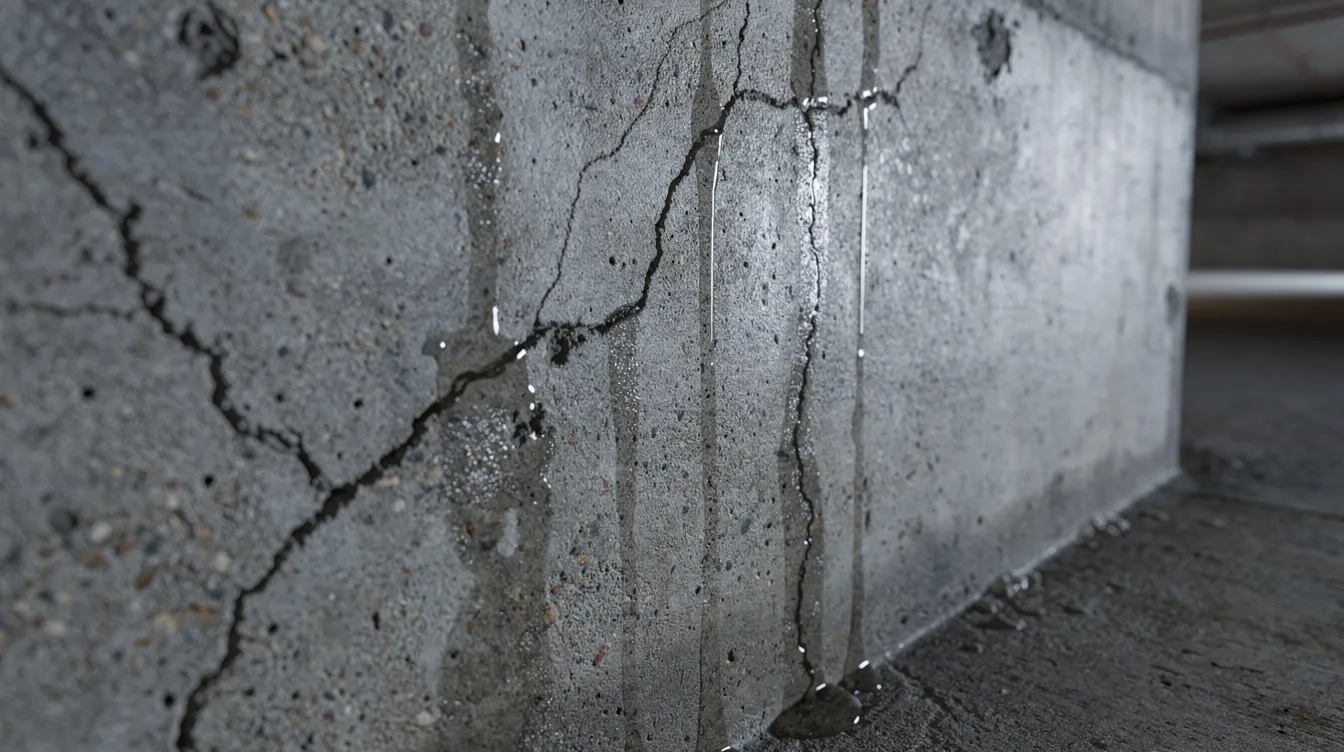
The main material families used in foundation crack repair are epoxy resins (rigid, high-strength bonding agents), micro fine cement grouts (mineral-based, ultrafine suspensions compatible with concrete), and polyurethane foams (flexible, rapidly expanding chemicals primarily used for active leaks). Polyurethane remains flexible after curing and expands upon contact with moisture – polyurethane expands up to 20 times its original volume, making it ideal for actively leaking cracks as a temporary water-stop. However, this article’s primary focus is the comparison between micro fine cement and epoxy resin for permanent foundation repair.
What Are Micro Fine Cement Injections?
Micro-fine cement is made of ultra-small Portland cement particles, ground or classified so that the maximum particle size is typically below 15 µm, with d95 values often under 16–20 µm in standard products and below 12 µm in ultra-fine variants. This extreme fineness allows the grout to penetrate into fractures and pores that conventional Portland cement cannot reach. Micro-fine cement excels at filling extremely fine micro-cracks down to 0.05 mm, and it can fill interconnected voids, improving mass stability in porous structures.
These grouts are mixed with water at water-to-cement ratios typically ranging from 0.5 to 1.5, depending on the target penetration depth and strength requirements. Superplasticizers – usually polycarboxylate-based admixtures – are added to achieve fluidity without bleeding or segregation. The mixed grout is then injected under controlled pressure via packers into foundations, raft slabs, and under base slabs, often in multiple stages when wet or leaking conditions are present.
Key material properties that make micro fine cement relevant for foundation repairs include:
-
Compatibility with existing concrete: similar stiffness, coefficient of thermal expansion, and alkalinity, which means the injected material ages and performs like the host structure rather than creating stress concentrations at the bond line.
-
Penetration capability: effective in micro-cracks and porous zones, especially in old or carbonated concrete where epoxy adhesion may be compromised. Research confirms that ordinary Portland cement grouts struggle in crack widths below 0.5 mm, while micro fine cements can penetrate much narrower fractures.
-
Strength development: moderate early strength, but modern products can reach compressive strengths exceeding 40 MPa at 2 days and over 70 MPa at 28 days. Micro-fine cement cures through a chemical hydration process, similar to standard concrete.
-
Performance under saturation: because it hydrates even in wet conditions, micro fine cement is well suited for water ingress mitigation in soil-contact elements – a frequent requirement in Singapore’s high water table environment.
Within a broader injection strategy, consultancies use micro fine cement for permeability reduction across large crack networks in retaining walls, construction joints, and raft slabs where water control is the primary objective.
What Are Epoxy Injection Resin Injections?
Epoxy injection systems are low-viscosity, two-component thermosetting resins – a resin component mixed with a hardener – designed to bond crack faces and restore monolithic behaviour of the concrete. Epoxy forms a chemical bond that often exceeds the tensile strength of concrete itself, making it the default choice for structural crack repair where load transfer across the fracture must be re-established.
The basic chemistry is straightforward: the resin and hardener are mixed at a precise ratio, initiating a crosslinking reaction with a controlled pot life. At typical Singapore ambient temperatures of 25–30°C, initial cure develops within 12–24 hours, with full cure over several days. Cold conditions slow curing, while excessively high temperatures shorten working time. Ambient-cure and low-temperature systems are available depending on project conditions.
Key material properties of epoxy resin for foundation repairs include:
-
Exceptional bond and tensile strength: epoxy injections provide exceptional strength for structural repairs. Epoxy provides high compressive strength up to 82 MPa, and products like SikaFlow-647 achieve compressive strengths of approximately 70 MPa at 1 day and 103 MPa at 28 days, with tensile bond values of 14–15 MPa. Epoxy provides compressive strength over 10,000 psi, making it among the strongest available crack repair materials.
-
Rigidity: epoxy cures into a rigid material, limiting movement. Elongation at break is typically below 5%, which means the cured resin cannot accommodate ongoing crack movement without risk of re-cracking adjacent to the repair.
-
Sensitivity to moisture and contaminants: epoxy is best for dry substrates. Water or moisture on crack faces can severely reduce adhesion, and contaminants such as oil, dust, or laitance cause delamination. Epoxy is not suitable for actively leaking cracks.
Epoxy fits into the broader repair concept as the preferred material when the crack is dormant and the aim is structural stitching of a foundation element – restoring the concrete to near-original load-carrying capacity. However, to choose between epoxy and micro fine cement, engineers must first classify cracks by width, activity, and water conditions – which the next section covers in detail.
Classifying Foundation Cracks Before Choosing Injection Materials
Material choice must come after a disciplined classification of cracks, not before. Injection materials should be matched to site conditions and the cause of cracking for effective repair – and for foundation cracks, the choice between micro-fine cement and epoxy depends on the crack’s characteristics as measured and documented on site.
At AMAN Engineering Consultancy, standard practice involves a structured crack survey using crack width gauges, moisture meters, and photographic recording before recommending micro fine cement or epoxy. This process ensures that not all concrete cracks receive the same treatment – non-structural cracks may not require injection unless leaking, while structural cracks in load-critical elements demand materials matched precisely to their geometry and behaviour.
Three primary classification axes structure the assessment:
-
Crack width and depth – determining what can physically penetrate the fracture.
-
Hydrostatic pressure and moisture conditions – determining what will bond and cure reliably.
-
Crack activity – determining what will survive long-term without re-cracking.
Crack Width and Depth
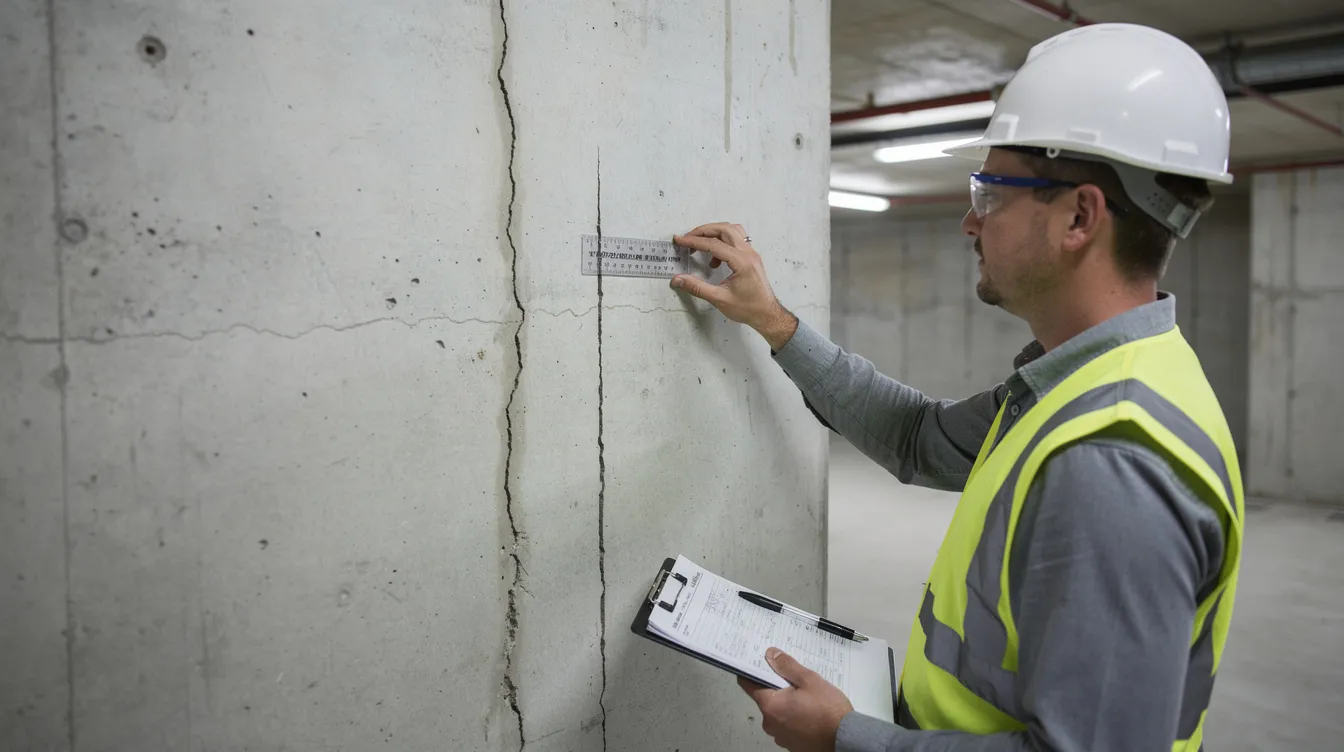
Crack width is the single most referenced parameter in material selection. Typical width bands used in practice are:
-
Hairline cracks: < 0.1 mm – barely visible to the naked eye, often requiring a crack comparator or hand microscope to measure accurately.
-
Fine cracks: 0.1–0.3 mm – visible but narrow, common as shrinkage cracks in raft slabs and walls.
-
Medium cracks: 0.3–0.6 mm – clearly visible, potentially through-thickness, often indicating structural movement or settlement.
-
Wide cracks: > 0.6 mm – significant fractures that may indicate ongoing movement, overload, or foundation distress.
Crack width directly governs injectability. Micro fine cement grouts, with particle sizes classified to d95 values below 16–20 µm, can penetrate cracks down to approximately 0.05 mm when properly designed with superplasticizers. Low-viscosity epoxy resins typically perform best in the 0.1–0.5 mm range; below 0.1 mm, even low-viscosity systems may struggle to achieve full penetration without extremely high injection pressures.
Depth and continuity matter equally. A surface-only crack that does not extend through the wall or slab thickness is primarily a serviceability concern. A through-crack – one that connects the interior face to the exterior or to soil – is far more serious because it creates a direct path for water infiltration, chloride ingress, and reinforcement corrosion. Through-crack detection typically involves core drilling, sounding, or borescope inspection through boreholes drilled adjacent to the fracture. Photographs with scale references and sectional sketches are essential records at this stage, supporting both material selection and structural defect rectification decisions.
Hydrostatic Pressure, Moisture Condition, and Moisture Testing
Singapore’s groundwater table is frequently within 1–3 metres of the surface, and monsoon seasons (particularly November to January) drive sustained hydrostatic pressure against basement walls, lift pits, and below-grade construction joints. Adjacent canals, sea walls, and storm drainage infrastructure add further external water sources. Moisture testing at the crack face is therefore a non-negotiable step before material selection.
Three moisture categories are used in practice:
-
Dry or slightly damp cracks: no visible water, moisture content close to ambient. Both epoxy and micro fine cement perform well in these conditions.
-
Wet but non-pressurised cracks: surface wetness or occasional seepage after rain events. Micro fine cement is generally more reliable here; epoxy adhesion begins to degrade.
-
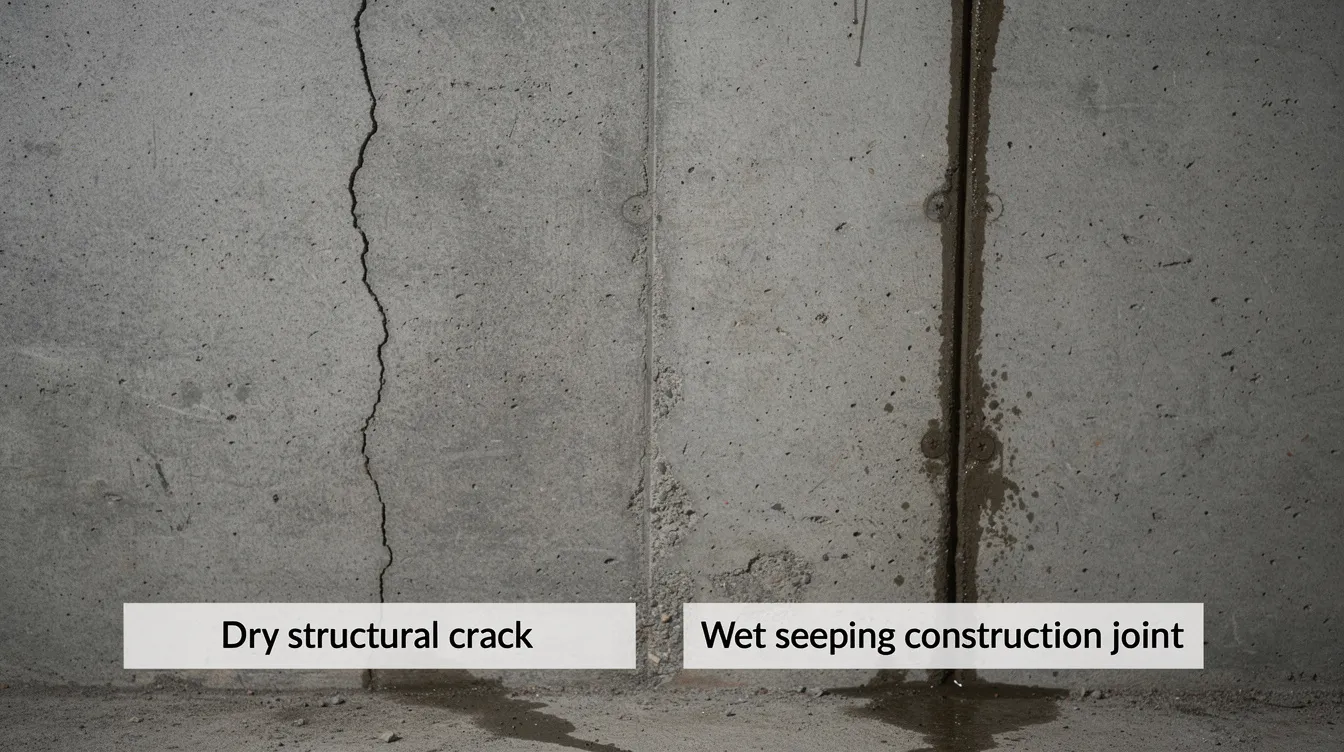
Actively leaking cracks under hydrostatic pressure: steady inflow through the crack, common in basement walls and sumps below the water table. Micro-fine cement is compatible with damp environments and can be injected into wet cracks, though anti-washout admixtures and staged injection are typically required. Epoxy should not be used in these conditions – its bond to wet surfaces is unreliable and the risk of incomplete filling is high.
For epoxy resin, the requirement is clear: the crack face must be dry or at most slightly damp for reliable adhesion and cure. Where the structure is actively leaking, a staged approach – using polyurethane injection or chemical resin foams as a temporary water-stop, followed by permanent injection – is often necessary. Polyurethane expands to seal actively leaking cracks and polyurethane is ideal for actively leaking cracks, but it serves as a preparatory step rather than a permanent structural solution.
Active vs Dormant Crack Behaviour
Dormant cracks are those whose width and length remain essentially stable over a monitoring period of 3–6 months. They are typically caused by shrinkage, early thermal contraction, or one-time settlement events. Once stable, they are ideal candidates for rigid injection materials.
Active cracks open, close, or propagate due to ongoing settlement, temperature cycling, live loading, or external influences such as nearby deep excavation. Common examples include cracks in large basement slabs near construction joints where thermal movement is significant, or in podium decks above active excavation sites. Identifying active cracks requires more than a single site visit – crack monitors (tell-tales or mechanical gauges) installed along the fracture and read at defined intervals (weekly or monthly) provide the data needed to determine whether movement is continuing. Correlation with foundation subsidence monitoring data and adjacent construction timelines strengthens the assessment.
The implication for material selection is direct. Both micro-fine cement and epoxy resin are rigid after curing and are not suitable for actively moving cracks. However, epoxy’s extreme rigidity – with elongation at break often below 5% – means that even minor ongoing movement will cause re-cracking immediately adjacent to the injection plane. Micro fine cement, while also rigid, is sometimes used in combination with movement joints or flexible surface sealants to manage residual movement. Where significant ongoing movement is confirmed, neither material alone is sufficient; the underlying cause must be addressed first through structural intervention.
With these three classification axes established – width, moisture, and activity – the next section applies them systematically to compare micro fine cement and epoxy resin across the dimensions that matter most on site.
Micro Fine Cement vs Epoxy Resin: Crack Repair Application and Performance
This section translates the crack classification framework into practical selection rules. At AMAN Engineering Consultancy, four dimensions are typically evaluated when comparing these materials for a specific project: structural performance, water-tightness under pressure, constructability and site constraints, and lifecycle cost.
Structural Performance and Crack Width Suitability
Epoxy injection is usually the preferred method for repairing damaged concrete when the foundation element is load-critical – column bases, transfer beam supports, core walls bearing on raft slabs – and the crack is confirmed dormant. In these scenarios, epoxy’s ability to restore structural integrity is unmatched: the cured resin achieves bond and tensile strength values that often exceed the concrete’s own capacity. Epoxy provides high compressive strength up to 82 MPa, and bond strengths in push-in tests can reach approximately 5.4 MPa compared to 1.1 MPa for cement grout under equivalent test conditions. Epoxy is best for structural cracks in dry conditions, particularly in the 0.1–0.5 mm width range where penetration and bond are both reliable.
Micro fine cement injection is applied structurally when crack widths are non-uniform – including zones at 0.05 mm or below that still need penetration – or when the engineer prefers mineral-based compatibility with the host concrete. Its slightly lower elastic modulus compared to epoxy can reduce stress concentrations at the injection boundary, which is beneficial in large raft slabs subject to differential settlement. Research on engineered microfine cement grouts shows that mixes with water-to-cement ratios between 0.8 and 1.0, combined with superplasticizers, achieve good penetration and acceptable compressive strength for most foundation repair applications.
For structures where cracks intersect reinforcement or extend through rebar-congested zones, epoxy’s precision injection capability and high bond strength make it the more effective structural repair material. In contrast, micro fine cement’s ability to permeate adjacent porous zones and fill interconnected micro-voids provides broader zone improvement rather than discrete crack stitching.
Water Tightness and Behaviour Under Hydrostatic Pressure
Epoxy resin, when applied in dry dormant cracks, fills the fracture completely and creates an essentially impermeable barrier – near-zero water absorption and permeability. It is an excellent choice to seal cracks and prevent leakage in foundation elements not subject to hydrostatic pressure. However, when live water is present during injection, the risk of washout, pinhole leaks, and incomplete filling increases substantially. Crack injection prevents water intrusion and further damage – but only when the material is matched to the moisture condition.
Micro fine cement performs differently under water. It can be formulated with anti-washout agents specifically designed for use in wet conditions, and its hydration process does not require dry surfaces. In high-pressure leakage zones, staged injections – first reducing the flow rate with a preliminary low-pressure pass, then completing the fill at higher pressure – are standard practice. The mineral grout also densifies the concrete matrix adjacent to the crack, reducing permeability over a larger zone rather than only along the fracture plane itself.
In typical Singapore scenarios – basement retaining walls exposed to constant groundwater head during monsoon, lift pits and sumps in deep basements with chronic seepage – the following general guidance applies:
-
Epoxy: favoured for dry, structurally critical cracks where the primary goal is to restore structural strength and prevent future water ingress.
-
Micro fine cement: favoured for wet foundations, active water leaks, and situations where permeability reduction across a broad zone is needed at the concrete-soil interface.
Constructability, Site Constraints, and Quality Control
Each material’s injection process interacts differently with practical site constraints common in Singapore’s dense urban environment.
Epoxy requires tight control of surface preparation: crack faces must be clean and dry, surface sealing (cap sealing) must be intact before injection begins, and packer spacing is typically closer than for cement grouts. Injection pressures are low to moderate. Ambient temperature must remain above the hardener’s minimum threshold, and the resin mixing ratio must be precise – inaccurate batching leads to incomplete cure. Pot life is limited, especially in Singapore’s 28–32°C ambient conditions.
Micro fine cement typically requires more robust pumping equipment – high-shear or colloidal mixers are common for achieving stable slurries without bleeding or segregation. Superplasticizer dosing must be calibrated carefully. However, the material is more forgiving of damp substrates, and pot life is generally longer than for epoxy systems. Larger volumes may be required if the crack network is extensive or the concrete matrix is porous, increasing pumping time and material consumption.
Quality assurance and quality control measures apply to both materials:
-
Test panels or mock-ups to validate injection pressure and penetration behaviour before production work begins.
-
Batch records documenting mix ratios, temperatures, admixture dosing (for micro fine cement) or resin-to-hardener ratios (for epoxy).
-
Verification through sounding, core samples, or borescope inspection to confirm internal fill quality.
Photographic documentation is essential – close-ups of injection ports with scale references, wide shots showing the area in context, and post-repair images demonstrating dry surfaces over a monitored period. This documentation supports QA records, owner warranty requirements, and authority submissions where structural repairs are involved.
Condensed constructability comparison:
-
Epoxy offers less disruption per discrete crack (smaller volumes, faster functional cure) but demands stricter environmental control.
-
Micro fine cement tolerates wet conditions better but requires more extensive equipment setup and longer hydration periods.
Cost, Durability, and Lifecycle Considerations
Upfront costs differ in predictable ways. Epoxy per litre is significantly more expensive than cement grout, but because it is used in smaller volumes – filling only the crack void in discrete fractures – the total material cost for a localised repair may be manageable. Micro fine cement has a lower unit cost per kilogram, but engineered mixes with ultrafine particles and admixtures add to the price, and permeability reduction work across larger voids or extensive crack networks consumes substantially more material.
Local Singapore contractors indicate that costs for epoxy or PU crack injection in basement walls range from approximately SGD 400–800 per linear metre, depending on crack width, leak severity, and access constraints.
Durability factors diverge based on environment:
-
Epoxy: excellent long-term mechanical performance in stable, dry conditions. Susceptible to heat exposure and UV degradation only if exposed (irrelevant underground). If future movement occurs, the rigid epoxy will crack – meaning the repair lifespan may be limited to the period of structural stability rather than the material’s inherent durability.
-
Micro fine cement: ages similarly to the host concrete, performs well in constantly saturated environments, and is chemically compatible with the alkaline pore solution of concrete. Vulnerable to shrinkage cracking if mix design is poorly engineered, but less susceptible to environmental degradation underground.
Facility managers and asset owners should think in 10–20 year horizons rather than only initial repair cost. A repair that fails within 3 years because epoxy was applied to a wet, active crack will cost far more in the long run – including tenant disruption, interior damage, repeated mobilisation, and reputational impact – than a correctly specified micro fine cement injection that addresses the water condition from the start.
The next section translates this comparison into a step-by-step workflow that can be applied directly on site.
Practical Implementation: Selecting and Applying the Right Injection System
This section converts theory into a decision-making and execution process suitable for real projects in Singapore and the wider ASEAN region. The focus is on the workflow used by professional consultancies such as AMAN Engineering, covering assessment, design, supervision, and documentation – from the first site visit to the final verification report.
Step-by-Step Workflow for Foundation Crack Assessment and Material Selection
A structured process prevents the most common failure mode: choosing a material before properly understanding the crack. The following steps form the typical workflow:
-
Initial site walk-through: Inspect all visible concrete cracks, moisture staining, efflorescence, and any previous repair attempts. Record conditions with baseline photographs including scale references (ruler or crack comparison card).
-
Crack mapping and measurement: Draw crack patterns onto structural plans and elevations. Measure widths using crack comparator gauges or digital micrometers, record lengths, and note each crack’s position relative to structural supports (columns, wall bases, raft junctions).
-
Moisture and leakage assessment: Classify each crack as dry, damp, or actively leaking. Conduct moisture testing using surface meters or calcium chloride tests. Where possible, observe conditions during or immediately after monsoon rainfall events to capture worst-case scenarios.
-
Activity evaluation: Install crack monitors (tell-tales or mechanical gauges) on cracks suspected of movement. Log readings at weekly or monthly intervals. Review settlement monitoring data, building history, and adjacent construction timelines – for example, whether nearby excavation has been active in recent years.
-
Structural significance check: Determine whether each crack affects primary load paths (columns, load-bearing walls, raft slabs under core walls) or is mainly a serviceability issue. This step draws on structural inspection findings and engineering judgement.
-
Material selection matrix: For each crack group (classified by width, moisture, and activity), decide whether epoxy, micro fine cement, or a staged combination (e.g., temporary polyurethane water-stop followed by permanent micro fine cement injection) is appropriate.
-
Method statement and approval: Prepare a detailed written method statement including injection pressures, packer layout, material specifications, mix design, supervision requirements, and a testing/verification plan. Include photographs and sketches. Submit for client approval and, where relevant, for authority review under BCA or PUB requirements.
AMAN Engineering typically incorporates this assessment into broader periodic structural inspections (PSI) or façade inspections (PFI) when appropriate, linking crack repair planning with wider structural and authority compliance strategies.
Comparison Matrix: Micro Fine Cement vs Epoxy Resin for Common Foundation Scenarios
The following table consolidates the material comparison across the criteria most relevant to foundation projects. Use it as a quick-reference decision tool alongside the detailed guidance in earlier sections.
|
Criterion |
Micro Fine Cement Injection |
Epoxy Resin Injection |
|---|---|---|
|
Typical crack width range |
Effective from ≈ 0.05 mm to several mm; excels in hairline cracks and non-uniform fracture networks |
Best from 0.1–0.5 mm; can work up to ≈ 1 mm but risk of voids in wider or irregular cracks |
|
Hydrostatic condition |
Tolerates damp and wet conditions; anti-washout admixtures available; staged injection under moderate pressure |
Requires dry or slightly damp surfaces; adhesion compromised under water; not suitable for actively leaking conditions |
|
Crack behaviour |
More forgiving for dormant cracks with minor residual movement; often paired with movement joints where uncertainty exists |
Excellent for confirmed dormant cracks; rigid cure means re-cracking is likely if movement continues |
|
Primary objective |
Permeability reduction, water cut-off, densification of porous concrete matrix |
Structural stitching, load transfer restoration, high-strength bond across crack faces |
|
Curing / functional performance (28–32°C) |
Initial set within hours; functional waterproofing in days; full strength at 7–28 days |
Initial cure 12–24 hours; substantial strength in 24–48 hours; full cure over several days |
|
Compatibility with old/carbonated concrete |
Good – mineral chemistry is similar; alkalinity beneficial; reliable bond even on carbonated substrates |
Less forgiving – bond to carbonated, contaminated, or damp concrete can be compromised; thorough surface preparation essential |
|
Typical applications |
Retaining walls with seepage, construction joints, lift pits, raft slabs under uplift, permeation into porous concrete |
Column base cracks, beam soffit fractures, structural cracks in slabs, crack stitching where load transfer is critical |
How to interpret this table: When the crack presents both structural significance and water ingress, prioritise water management first with cementitious injection to stabilise the moisture condition, then consider localised epoxy injection for structural strengthening where needed. When in doubt about crack activity, favour the more conservative option – micro fine cement combined with monitoring – over immediate epoxy application.
On-Site Execution Details and Use of Photographic Evidence
Execution techniques are common to both materials, though the details differ:
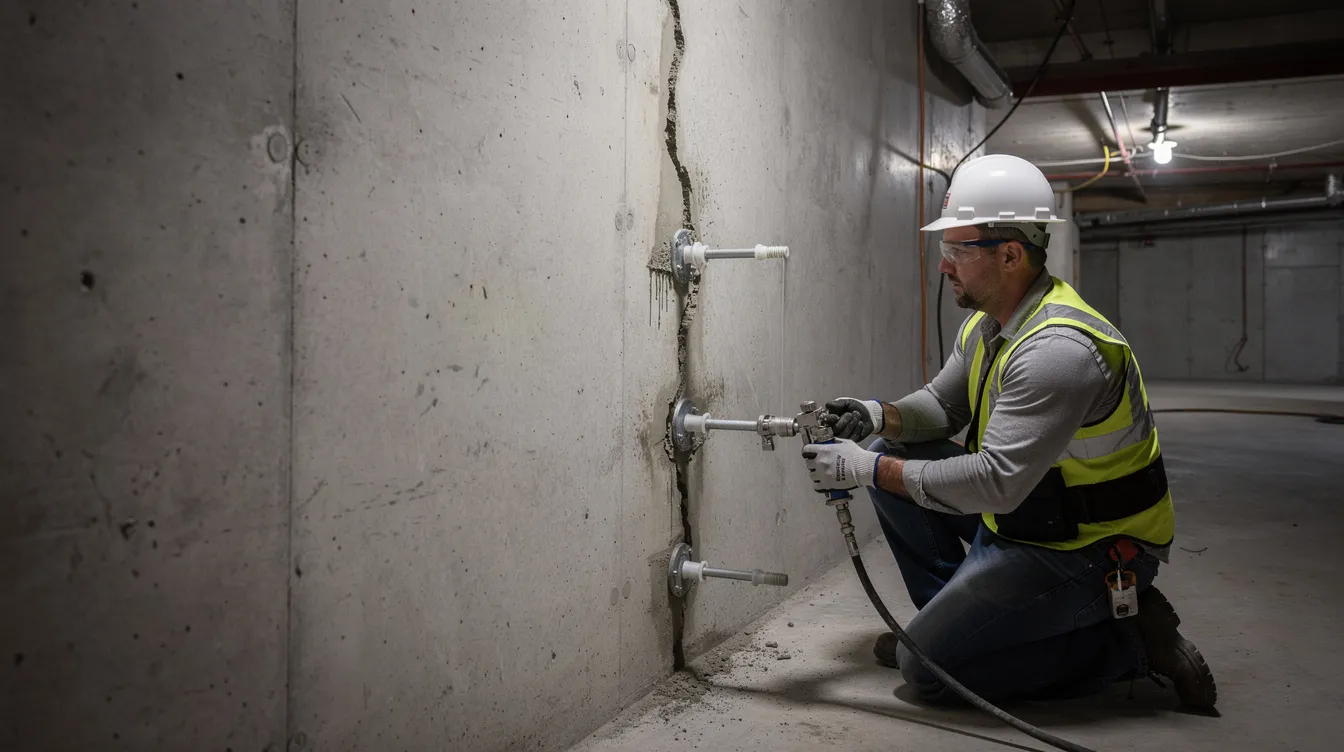
Drilling and packer placement: Injection ports are installed along the crack for material flow, either directly on the crack or staggered at alternating sides. Spacing typically ranges from 150–500 mm depending on wall thickness and crack geometry. In vertical walls, ports are generally installed from the lowest point upward to allow gravity-assisted filling and to displace water progressively.
Controlling injection pressure: Over-pressure risks blow-outs (forcing material through the back face or into finishes), lifting of slabs, or creating new fractures in damaged concrete. Pressure should be increased incrementally, and injection continues until material appears at adjacent downstream ports – confirming the crack is filled. For micro fine cement, rheology must be monitored throughout to detect bleeding or segregation.
Sequential injection: In walls with active leakage, injection proceeds from the lowest elevation upward. In horizontal slabs, work typically moves from the periphery inward. The sequence ensures that material displaces water rather than trapping it.
Photographic documentation supports every stage of the process:
-
Before: Close-up photographs of representative cracks with scale references, wide shots showing the crack in structural context, and images documenting the moisture condition.
-
During: Images of drilling, packer installation, pump setup, injection sequence with visible pressure gauge readings, and any pre-treatment steps such as flushing or polyurethane pre-grouting.
-
After: Cleaned surfaces showing sealed injection points, any surface finishing applied, and evidence that leaks have ceased – documented with dry surface photographs taken over a monitored period, sometimes supplemented with moisture meter readings or thermographic scans.
This documentation is not optional. It supports QA verification, future audits by new facility managers, insurance claims, and authority submissions – particularly where structural repairs must comply with SS 544 or where BCA review is required.
Common Challenges and Solutions in Foundation Injection Projects
Foundation injection projects in Singapore and the region face recurring practical issues: high ambient temperatures that shorten pot life, access constraints in deep basements, limited shutdown windows in operating buildings, and gaps in documentation that create problems years after the repair is completed. The following challenges and solutions are aligned to the comparison of micro fine cement and epoxy discussed above.
Challenge 1: Ongoing Leakage During Injection
Situation: Active water inflow under hydrostatic pressure makes it difficult for epoxy to bond and can wash out fresh micro fine cement grout before it sets.
Solutions:
-
Use a staged approach: first reduce flow with pre-grouting using chemical resin foams or expanding foam (polyurethane expands upon contact with moisture to create a temporary water-stop), then perform micro fine cement injection as the permanent measure.
-
Adjust injection sequence and pressure dynamically – injecting at lower pressures initially to avoid creating new leakage paths, then building pressure as flow diminishes.
-
Where feasible, schedule works during periods of lower groundwater or non-peak rainfall to reduce hydrostatic head during the critical curing window.
Challenge 2: Misclassification of Active Cracks as Dormant
Situation: Rigid epoxy is applied to a crack that subsequently widens or shifts, leading to new cracking adjacent to the repair – effectively wasting the original investment and potentially worsening the condition.
Solutions:
-
Mandate minimum monitoring periods – at least 3–6 months of crack gauge readings – for any crack suspected of activity, especially near heavy construction or where settlement is suspected.
-
Adopt a conservative design philosophy: use micro fine cement injection combined with movement joints or flexible surface sealants where crack behaviour is uncertain. This approach tolerates minor residual movement without catastrophic bond failure.
-
Document monitoring outcomes with dated photographs and measurement logs to create a defensible record supporting the material selection decision.
Challenge 3: Limited Access and Operational Constraints
Situation: Deep basements with crowded plant rooms, 24/7 operations, and no allowance for major demolition or extended shutdowns are common in Singapore’s commercial buildings.
Solutions:
-
Choose injection systems and equipment that fit constrained spaces – compact pumps, short packers, and hose configurations designed for overhead or tight-clearance work.
-
Sequence works during off-peak hours or short shutdown windows, and design injection patterns to be executable in small, independent zones that can be completed and cleaned up within a single work shift.
-
Where extensive surface preparation is impractical, prioritise micro fine cement for permeability reduction over whole zones rather than chasing each minute crack individually with epoxy – an approach that reduces the number of injection points and simplifies logistics.
Challenge 4: Inadequate Documentation for Future Maintenance
Situation: After several years, building owners, new facility managers, or replacement consultants may not know what material was injected, where injection points are located, or what performance was verified – making future maintenance decisions unreliable and increasing the risk of inappropriate re-treatment.
Solutions:
-
Produce clear “as-repaired” drawings and photo logs showing injection points, materials used, mix specifications, and completion dates.
-
Include repair details in asset maintenance manuals and, where available, in digital models. For large assets, AMAN Engineering can integrate injection records into BIM or digital twin models as part of a wider asset management strategy.
-
Label materials and batch data clearly in the project file: type of cement or resin, admixtures, water-cement ratio (for micro fine cement), mixing ratios (for epoxy), curing conditions, and inspection outcomes.
Good planning and record-keeping are ultimately as important as the material choice itself. A perfectly executed injection that goes undocumented creates a knowledge gap that will cost time and money when the structure requires its next assessment.
Conclusion and Next Steps
Micro fine cement and epoxy resin are complementary tools in the foundation crack repair arsenal – not interchangeable alternatives. The correct choice depends fundamentally on three measurable parameters: crack width, hydrostatic pressure at the crack face, and whether the crack is dormant or active. Epoxy delivers superior structural bond strength in dry, dormant conditions and is the default for load-critical elements. Micro fine cement provides reliable performance in wet, pressurised, or porous conditions where water control is the primary objective and mineral compatibility with the host concrete is advantageous.
Wrong material in the wrong crack leads to premature failure, repeated water infiltration, accelerated corrosion of reinforcement, and escalating repair costs. The disciplined classification workflow described in this article – measure, monitor, classify, then select – prevents the most expensive error in concrete crack repair: choosing a material based on habit or availability rather than site-specific evidence.
Clear next steps for different reader profiles:
-
For facility managers: Commission a structured crack survey and monitoring programme before approving any repair works. Require dated photographic evidence and crack gauge readings as prerequisites for material selection approval.
-
For contractors: Align proposed material selection with the classification framework (width, moisture, activity) and be prepared to justify each choice with documented site data – not only material data sheets.
-
For developers and asset owners: Engage a consultancy like AMAN Engineering to integrate crack repair strategies with broader structural, façade, and authority compliance considerations, ensuring that repair decisions support long-term asset value rather than short-term cost minimisation.
Related topics worth exploring next include how façade and structural inspections (PFI/PSI) can identify early-stage cracking before water ingress becomes critical, and how BIM and digital models can be used to track and manage repair histories across large building portfolios.
Additional Resources
The following reference material supports practitioners applying the guidance in this article:
-
Crack width limits from international standards: Eurocode 2 (EN 1992-1-1) specifies maximum allowable crack widths for reinforced concrete based on exposure class – typically 0.3 mm for structures exposed to moisture and 0.2 mm for aggressive environments. Singapore’s SS 544 aligns with these durability principles and should be consulted for local compliance requirements.
-
On-site decision checklist – use the following yes/no questions to quickly screen whether a crack is a candidate for micro fine cement or epoxy injection:
-
Is the crack width confirmed below 0.3 mm? → Micro fine cement is likely effective; epoxy may also work if dry.
-
Is the crack face wet or actively leaking? → Micro fine cement with anti-washout; epoxy is not suitable.
-
Has the crack been confirmed dormant over at least 3 months of monitoring? → Epoxy can be considered for structural repair.
-
Is the primary objective water-tightness rather than structural load transfer? → Micro fine cement is generally preferred.
-
Is the concrete substrate old, carbonated, or contaminated? → Micro fine cement offers better compatibility.
-
-
Authority submission integration: AMAN Engineering integrates injection repair strategies within broader authority submission packages – for example, to BCA or JTC when strengthening or retrofitting existing foundations – ensuring that material specifications, testing protocols, and verification documentation meet regulatory expectations.
-
Case study patterns: In projects where micro fine cement vs epoxy decisions significantly affected outcomes, the most common finding is that failures resulted from material misapplication (epoxy on wet cracks, or micro fine cement where structural stitching was required) rather than from deficiency of either material itself. Disciplined classification consistently produces better outcomes than default material preferences.