
So, you’re dealing with petroleum and flammable materials in Singapore, huh? It can feel like a maze trying to figure out all the rules. The Singapore Civil Defence Force (SCDF) has a whole system for this, called SCDF P&FM licensing. It’s all about keeping things safe and preventing big problems. We’re going to break down what you need to know, from applying for licenses to what happens if you don’t follow the rules. It might seem a bit much at first, but getting it right means fewer headaches down the road.
Key Takeaways
- The Fire Safety Act is the main law governing how petroleum and flammable materials (P&FM) are handled in Singapore, with the SCDF P&FM system enforcing these rules.
- Getting a SCDF P&FM storage license involves a clear process, often requiring detailed risk assessments and the input of qualified professionals.
- There are specific safety rules you must follow for licensed storage, like keeping a chemical list and making sure exits are clear.
- Not all storage needs a license; there are limits for certain materials, but you still need to be aware of aggregate limits, especially with mixed storage.
- Beyond storage, the SCDF P&FM rules also cover importing and transporting hazardous goods, each with its own set of licenses and fees.
Regulatory Overview for SCDF Flammable Materials Submission
So, you’re looking into storing flammable materials and need to get the green light from the Singapore Civil Defence Force (SCDF)? It’s a pretty important step, and understanding the rules upfront can save you a lot of hassle later on. The SCDF is the main authority when it comes to fire safety and preventing major incidents involving these kinds of substances. They have a whole system in place, and it’s all about managing risk.
Key SCDF Regulatory Requirements for Flammable Materials
The SCDF’s approach is pretty straightforward: they want to make sure that storing flammable materials doesn’t put people or property in unnecessary danger. This means there are specific rules you need to follow. The Fire Safety Act is the big one, setting the foundation for how petroleum and flammable materials (P&FM) are handled. It’s not just about having a license; it’s about adhering to the safety principles laid out in the act. They’re focused on preventing fires and explosions, and that means looking at everything from how you store the materials to what safety measures you have in place.
Licensing Categories and Risk-Based Controls
One of the core ideas behind SCDF’s regulations is a risk-based approach. This means that the stricter the potential danger from a material, the more robust the safety measures and controls need to be. It’s a logical way to handle things, making sure that the most attention goes to the highest-risk situations. Depending on the type and quantity of materials you’re storing, you might fall into different licensing categories. This helps tailor the requirements to your specific situation, ensuring that resources are used effectively while keeping safety standards high.
Here’s a general idea of how quantities can trigger licensing:
- Class 0 Petroleum (Flashpoint < 23°C): Licensing needed above 5,000 liters (above ground) or 20,000 liters (underground).
- Class I Petroleum (Flashpoint 23°C – 60°C): Licensing needed above 20,000 liters (above ground) or 40,000 liters (underground).
- Flammable Gases: Licensing needed if cylinder water capacity exceeds 1,000 liters in total.
Role of Qualified Person in Submission
When you’re getting ready to submit your plans and applications, you’ll likely need to bring in a Qualified Person (QP). This is a registered professional who has the specific knowledge and credentials to prepare and certify your building plans, making sure they meet all the necessary fire safety features. They play a big part in the process, taking on significant responsibility for the accuracy and completeness of your submission. Engaging the right QP is pretty important, as their experience can really smooth out the application process. They’ll help make sure your designs align with SCDF requirements and relevant standards, which is a big part of getting your Petroleum and Flammable Materials Storage Licence approved.
Legal and Technical Standards for Flammable Storage Cabinets
When you’re dealing with flammable materials, the storage cabinet itself isn’t just a box; it’s a piece of safety equipment with some pretty strict rules it has to follow. Think of it like needing a specific type of helmet for certain sports – it’s got to meet certain standards to actually do its job.
Compliance with Local and International Codes
First off, these cabinets aren’t just made to look good. They need to meet specific codes and standards, both locally and internationally. In Singapore, the SCDF has its own requirements, but they often look to established international standards too. This means you’ll see references to things like NFPA (National Fire Protection Association) codes, especially NFPA 30 which is all about flammable liquids. There’s also the Occupational Safety and Health Administration (OSHA) in the US, which sets standards for workplace safety, including how flammable liquids should be stored. And don’t forget local standards like SS 532, which is Singapore’s own take on storing flammable liquids safely. It’s a bit of a mix-and-match, but it all points to one goal: keeping things safe.
Design and Certification of Fire Cabinets
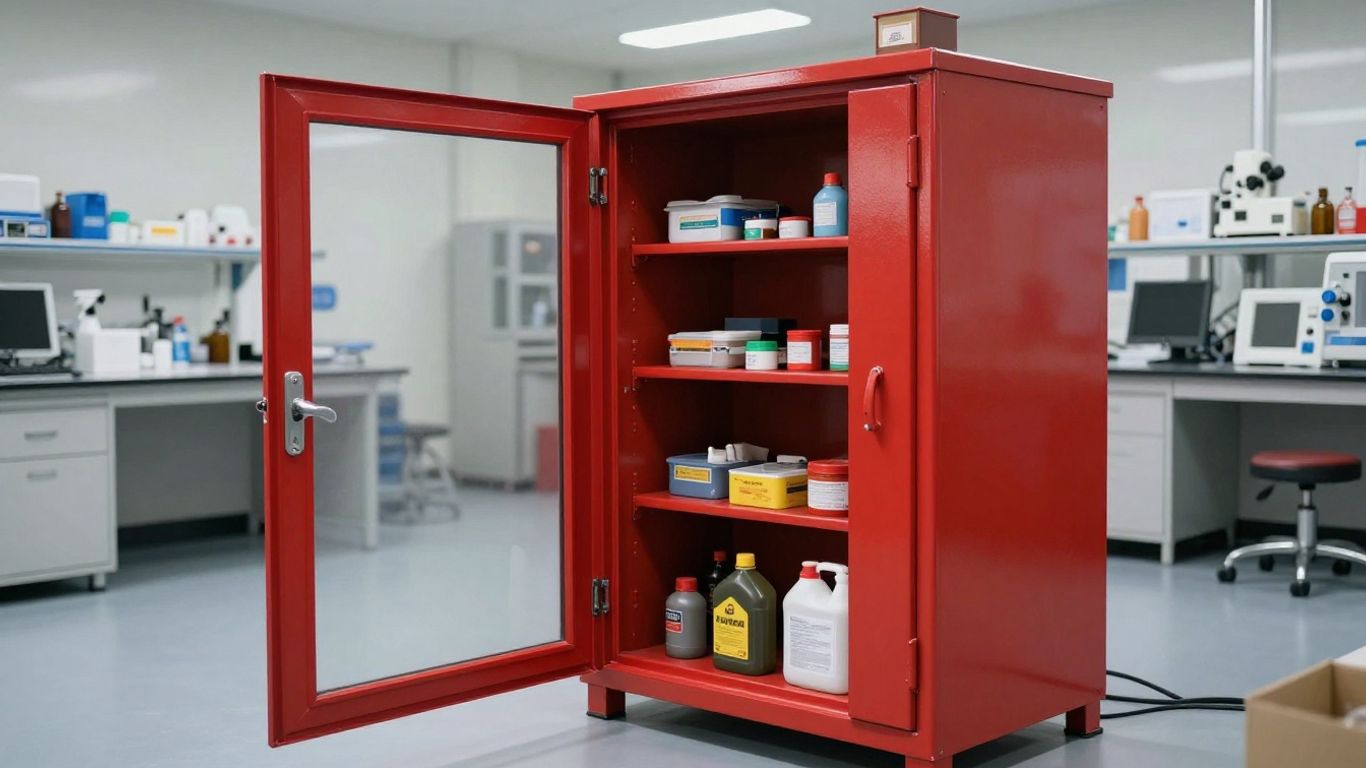
So, what makes a cabinet a fire cabinet? It’s all in the design and how it’s tested. These cabinets are built with double-walled steel, usually with an air gap in between, and sometimes filled with fire-resistant insulation. This construction is designed to keep the heat out for a certain amount of time. The goal is to prevent the internal temperature from reaching the flash point of the stored liquids during a fire, giving people time to escape and firefighters a chance to respond. They’re tested to withstand specific temperatures for a set duration. You’ll often see terms like UL listed or FM approved, which means they’ve been independently tested and certified to meet these safety benchmarks. This certification is super important for your SCDF submission because it proves the cabinet is up to snuff.
OSHA, NFPA, and SS 532 Requirements
Let’s break down what these standards generally look for:
- Construction: Typically made from at least 18-gauge steel, with double-walled construction and a minimum 1.5-inch air space between the walls. This provides that crucial fire resistance. Some standards might specify a 38mm air barrier filled with fireproof cotton for added protection.
- Doors: Cabinets usually have two self-closing doors that open outward. They need to latch securely, often with a three-point latching system, to keep them shut even in a fire. Some might have manual-close doors, but self-closing is generally preferred for maximum safety.
- Labeling: A clear warning label, usually in red letters on a contrasting background, stating "FLAMMABLE – KEEP FIRE AWAY" is a must. This is a simple but vital step.
- Capacity: There are limits on how much you can store in a single cabinet. For instance, a common limit is 120 gallons total, but this can vary based on the class of liquids. It’s important to check the specific limits for your materials.
- Ventilation: While some cabinets are designed to be sealed, others may have vents. If venting is present, it needs to be done in a way that doesn’t compromise the fire resistance. The idea is to allow some air circulation to prevent pressure buildup but not let flames in easily.
It’s not just about buying any old metal cabinet. The design features, like the double walls, self-closing doors, and specific construction materials, are all engineered to provide a barrier against fire. This is why certification and adherence to standards like NFPA 30 and SS 532 are so critical for your submission. They’re the proof that the cabinet is designed to perform when it matters most.
When you’re looking at cabinets, make sure they explicitly state compliance with these relevant standards. This is a key part of your SCDF submission documentation. It shows you’ve done your homework and are taking the storage of flammable materials seriously.
Building Plan and Documentation Essentials for SCDF Submission
Alright, so you’re getting ready to submit your plans to the Singapore Civil Defence Force (SCDF) for storing flammable materials, and you’re wondering what exactly they need to see. It’s not just about having a fire cabinet; it’s about showing them you’ve thought everything through. This part is all about the paperwork and the drawings – the stuff that proves your setup is safe and follows the rules.
Fire Safety Plan and Facility Layout Drawings
This is where you show them the big picture. Your fire safety plan needs to be super clear. It should map out everything important for fire prevention and response. Think about:
- Escape Routes: Clearly marked paths for people to get out safely if there’s an emergency.
- Fire Compartmentation: How the building is divided to slow down fire spread.
- Location of Firefighting Equipment: Where are the extinguishers, hoses, and alarms?
- Hazardous Material Storage Areas: Pinpointing exactly where those flammable materials will be kept, including the fire cabinets.
Facility layout drawings are basically the blueprints that show all of this. They need to be detailed, showing room layouts, dimensions, and how everything connects. It’s important that these plans are coordinated with your architectural and structural drawings so there are no surprises later on. Getting these plans right is a big step in the Building Plan / Fire Plan submission process.
Structural and Containment Design Documentation
Beyond just the layout, you need to prove that the physical structure and containment systems are up to snuff. This means providing documentation that covers:
- Structural Integrity: Calculations and drawings showing that the building and any storage structures (like supports for tanks or shelving) can handle the loads and potential stresses, especially during a fire.
- Secondary Containment: If you’re storing liquids, you’ll need detailed plans for bunds or other containment systems designed to catch spills. These need to meet specific volume requirements, often 110% of the largest tank’s capacity. The design needs to consider materials that can withstand the chemicals and prevent ground contamination.
- Fire Resistance: Documentation proving that the materials and construction methods used meet the required fire resistance ratings for walls, floors, and ceilings, especially around storage areas.
The SCDF wants to see that your facility is built to withstand potential incidents and contain any accidental releases. This documentation often needs to be endorsed by a Qualified Person (QP) or a professional engineer, depending on the specific requirement.
Required Endorsements and Certification
Submitting plans isn’t just about drawing them; it’s about getting the right people to sign off on them. This is where the Qualified Person (QP) comes in. They are registered professionals who take responsibility for the accuracy and completeness of your fire safety submissions. You’ll need:
- QP Endorsements: The QP for fire safety works, and potentially other QPs for structural or mechanical aspects, will need to review and endorse the plans and documentation. Their signature signifies that the design meets the relevant codes and standards.
- Certifications: Depending on the project, you might need various certifications to show that materials used are approved or that specific systems have been tested. This could include certifications for fire-rated doors, sealants, or even the fire cabinets themselves (like UL listing).
Essentially, these endorsements and certifications act as a stamp of approval from experts, assuring the SCDF that your plans are sound. It’s a critical part of the Fire Safety Submission process, ensuring everything is compliant before construction even begins.
SCDF Flammable Materials Submission Workflow and Review Process
So, you’ve got flammable materials to store and need to get them approved by the Singapore Civil Defence Force (SCDF). It might sound like a lot, but there’s a pretty clear path to follow. Think of it as a series of steps designed to make sure everything is safe and sound.
Step-by-Step Application Process
The whole thing usually kicks off with a bit of planning. You’ll need to figure out what you’re storing, how much, and where. Then, it’s time to get the right people involved. This usually means hiring a Qualified Person (QP) who knows the ins and outs of SCDF regulations. They’ll be the ones preparing the detailed plans and documents needed for submission. It’s a good idea to have an initial chat with the SCDF early on, especially if your project is a bit complex, just to make sure you’re on the right track.
Here’s a general rundown of how it typically goes:
- Pre-Application Consultation: A good first step is to talk with the SCDF. This helps clarify any initial questions about your project and what they expect.
- Appoint a Qualified Person (QP): You’ll need a registered QP to handle the technical aspects of your submission. They’re responsible for making sure the plans meet all the requirements.
- Design Development: Based on SCDF guidelines and relevant standards, your QP will develop the detailed designs for your storage setup.
- Plan Submission: All the necessary documents, including building plans and fire safety plans, are submitted. This is often done electronically.
- Construction and Testing: Once plans are approved, you can proceed with building or setting up your storage. After construction, all systems need to be tested.
- Inspection and Certification: A Registered Inspector (RI) will come to check that everything has been built according to the approved plans. They’ll then certify its compliance.
- License Issuance: After a successful inspection and review, the SCDF will issue your Petroleum & Flammable Material (P&FM) Storage License. You’ll usually apply for the actual license through the GoBusiness portal.
Technical Review and Approval Stages
Once you’ve submitted your application, it doesn’t just get rubber-stamped. The SCDF has a dedicated team that goes through everything with a fine-tooth comb. They’re looking at all the technical details to make sure your proposed storage solution is up to snuff. This review process is pretty thorough, covering everything from the structural integrity of your cabinets and storage areas to the fire safety systems in place.
They’ll check:
- Structural Integrity: Are the cabinets and any supporting structures sound and able to withstand potential stresses?
- Fire Safety Systems: Do you have the right fire detection, alarm, and suppression systems installed and functioning correctly?
- Material Classification: Have you correctly identified and classified the flammable materials you intend to store?
- Containment Measures: Is there adequate secondary containment to manage spills?
The SCDF’s review process is designed to be risk-based. This means that the level of scrutiny and the specific requirements will often depend on the types and quantities of flammable materials you plan to store. It’s all about matching the safety measures to the potential hazards.
If the reviewers have questions or find something that needs adjustment, they’ll let you know. You’ll likely get a request for clarification or a list of items that need to be corrected. It’s important to respond to these queries promptly and accurately to keep the process moving.
Submission Timelines and Key Milestones
Knowing the general timeline can help you plan your project effectively. While exact times can vary depending on the complexity of your submission and the current workload of the SCDF, there are some general expectations. A standard application review might take anywhere from 4 to 6 weeks, but more complicated projects could take longer. It’s always a good idea to factor in some buffer time for potential back-and-forth with the SCDF.
Key milestones to keep in mind include:
- Plan Submission: The initial submission of all required documents.
- SCDF Review Period: The time the SCDF takes to assess your submission.
- Approval/Rejection: The decision from the SCDF on your application.
- Inspection Scheduling: Arranging the physical inspection of your facility.
- License Issuance: The final step where your storage license is granted.
Missing deadlines or not providing complete information can lead to delays, so staying organized and proactive is key. Understanding this workflow helps you prepare better and makes the whole process of getting your P&FM storage license a bit less daunting.
Safe Storage Practices for Flammable Materials Using Fire Cabinets
So, you’ve got your flammable materials, and you’re using those fire cabinets. That’s a good start, but there’s more to it than just putting stuff inside. It’s about making sure you’re doing it right, every single time. Think of it like this: the cabinet is your first line of defense, but how you use it makes all the difference.
Segregation and Labeling of Chemicals
First things first, don’t just shove everything into one cabinet. You need to keep different types of chemicals separate. Flammable liquids and combustible materials shouldn’t be stored together. Flammables burn fast, combustibles burn slow – they need their own space. Proper segregation prevents dangerous reactions and makes sure fires don’t spread as quickly. Also, make sure every container is clearly labeled. If you can’t tell what’s inside, you can’t handle it safely. This is super important for knowing what you have and how to deal with it if something goes wrong. It helps firefighters identify things quickly too, which is a big plus in an emergency.
Proper Placement and Installation of Cabinets
Where you put these cabinets matters. They need to be on a flat, stable surface. If you have more than one cabinet, keep them at least 15 cm apart. And definitely keep them away from heat sources, open flames, or anything that could spark. You also want to make sure the cabinet itself is properly grounded to prevent static electricity buildup. It sounds a bit technical, but it’s really about avoiding accidental ignition. The cabinet latches should also work correctly, and ideally, they should be self-closing to add an extra layer of safety. You can find cabinets with different door styles, but they all need to meet safety standards like those from OSHA and NFPA 30.
Secondary Containment and Spill Management
Accidents happen, right? That’s where secondary containment comes in. This means having something like a spill tray or a bunded area around the cabinet to catch any leaks. It stops spills from spreading and causing more problems, especially if they could reach drains or the environment. You should also have a plan for what to do if a spill does occur. This includes having the right cleanup materials handy and knowing how to dispose of contaminated waste properly. Keeping things clean and tidy around the cabinets is also part of this. No clutter, no extra stuff piled up – just the materials that belong inside.
Always check your cabinets regularly for any signs of damage, rust, or corrosion. A damaged cabinet might not offer the protection you think it does. Also, make sure the shelves inside are strong enough for what you’re storing and that heavier items are placed on lower shelves for stability.
Operational Compliance for Licensed Flammable Materials Storage
So, you’ve got your license for storing flammable materials, which is a big step. But holding the license is just the beginning. The real work is keeping things safe and compliant every single day. The Singapore Civil Defence Force (SCDF) has a set of rules, and you really need to stick to them. It’s not just about avoiding penalties; it’s about making sure everyone stays safe and no fires break out.
Maintaining an Accurate Chemical Register
First things first, you need to know exactly what you have on hand. This means keeping a detailed list, or a chemical register, of all the petroleum and flammable materials stored at your facility. This isn’t just a simple count; it needs to include the quantities, where they came from, where they’re headed, and most importantly, their safety data sheets (SDS). Think of it as your facility’s inventory, but with a much bigger focus on safety. This register is your first line of defense in understanding your risks. It helps you track potential hazards and makes sure you’re not storing more than you’re allowed. Keeping this up-to-date is a key part of your ongoing compliance.
Routine Inspection and Maintenance Practices
Regular checks are super important. You can’t just set up your storage and forget about it. You need to be looking at your fire cabinets and the surrounding area regularly. Are the cabinets in good shape? Are the doors closing properly? Is there any damage? Also, check your fire suppression systems, alarms, and any other safety equipment. Making sure everything is in working order means it’ll actually work if you need it to. It’s about being proactive, not reactive.
Ensuring Cleanliness and Unobstructed Escape Routes
This one might seem obvious, right? Keep the exits clear. But it’s more than just not blocking the doors. All pathways, corridors, and emergency exits need to be completely free of any clutter or obstructions. This is critical for two main reasons: quick evacuation if something goes wrong, and easy access for firefighters and emergency responders. Imagine a fire starting, and people can’t get out because a stack of boxes is in the way. Or worse, the fire trucks can’t get close enough because equipment is blocking the access route. It’s a non-negotiable rule. Keeping your storage area tidy, free from waste, debris, or anything that could easily catch fire is also part of this. Think of it as keeping your workspace clean, but with much higher stakes.
Regular checks and a clean environment are not just about meeting SCDF requirements; they are fundamental to creating a safe workplace. Proactive maintenance and clear escape routes can make a significant difference in an emergency situation.
Here’s a quick rundown of what to look for during your checks:
- Flammable Storage Cabinets: Check for damage, ensure doors seal properly, and verify labels are clear and legible. Make sure they meet standards like those from Strong Hold.
- Storage Area: Keep floors clear of spills, debris, and unnecessary items. Ensure aisles and exits are completely unobstructed.
- Safety Equipment: Verify fire extinguishers, alarms, and emergency lighting are functional and accessible.
- Chemical Register: Confirm it’s up-to-date with current inventory, quantities, and SDS information.
Types and Classifications of Flammable Materials under SCDF Guidelines
Class 0, I, and II Petroleum Products
When we talk about flammable materials, the Singapore Civil Defence Force (SCDF) has a pretty clear way of categorizing them, especially when it comes to petroleum products. It’s all based on how easily they catch fire, which is measured by their flash point. This classification is super important because it dictates how much you can store and what kind of safety measures you need in place.
First up, we have Class 0 petroleum. These are the most volatile, with a flash point below 23°C. Think of things like most motor gasolines and some light solvents. Because they can create flammable vapors at pretty normal temperatures, they need the strictest controls. Storage limits for Class 0 are 5,000 liters above ground and 20,000 liters underground before you need a license. It’s a big deal to get this right.
Then there’s Class I petroleum. These have flash points between 23°C and 60°C. This category includes a lot of common stuff you might find in industrial settings, like certain solvents and kerosene. They’re not quite as eager to ignite as Class 0, but in Singapore’s warm climate, elevated temperatures can still make them a fire risk. The licensing thresholds here are higher: 20,000 liters above ground and 40,000 liters underground.
Moving on, we have Class II petroleum, with flash points between 60°C and 93°C. Diesel fuel and some heating oils fall into this group. They usually need a bit more help, like heating or being sprayed, to actually ignite. Still, they pose a real danger in industrial areas. For Class II, you’re looking at licensing triggers of 100,000 liters above ground and 200,000 liters underground.
It’s worth noting that Class III materials exist too, with flash points above 93°C, but the focus for immediate fire risk and cabinet storage often centers on Classes 0, I, and II. Understanding these distinctions is key to knowing your storage threshold and what kind of precautions are necessary.
Flammable Gases and Toxic Substances
Beyond petroleum products, the SCDF also categorizes flammable gases and, importantly, toxic substances. While flammable gases obviously pose an explosion risk, toxic substances are regulated due to their immediate danger to health, even in small quantities. The rules for these can be quite different and often more stringent than for liquids.
For flammable gases, the classification often relates to their mixture with air. For example, a gas that forms a flammable mixture with air at 13% or less by volume, or has a wide flammable range, is considered highly hazardous. The SCDF has specific rules about aggregate cylinder capacity. If you’re storing flammable gases, you’ll need a license if the total water capacity of your cylinders exceeds 1,000 liters. This is a significant amount, but it highlights the need for careful inventory management.
Toxic substances, on the other hand, have much lower thresholds. Their danger isn’t primarily fire or explosion, but immediate harm upon exposure. Because of this, the quantities that trigger licensing requirements are considerably smaller compared to flammable liquids or gases. The SCDF’s approach here is very much risk-based, meaning the higher the potential harm, the stricter the controls and the lower the quantity allowed before official oversight is needed. This ensures that facilities handling these dangerous materials have robust safety protocols and emergency plans in place.
Storage Thresholds and Licensing Triggers
So, when exactly do you need to start thinking about a SCDF storage license? It all comes down to the quantity of flammable or petroleum materials you have on-site. The SCDF has set specific limits, and exceeding these means you’ll need to go through the licensing process. It’s not just about one type of chemical either; the thresholds vary depending on the material’s classification, as we’ve discussed.
Here’s a quick rundown of some key thresholds:
- Class 0 Petroleum: Licensing kicks in at 5,000 liters for above-ground storage and 20,000 liters for underground storage.
- Class I Petroleum: The limits are 20,000 liters above-ground and 40,000 liters underground.
- Class II Petroleum: You’re looking at 100,000 liters above-ground and 200,000 liters underground.
- Flammable Gases: A license is required if the aggregate water capacity of cylinders exceeds 1,000 liters.
- Toxic Gases: These have much lower thresholds due to their inherent danger, though specific quantities can vary widely based on the substance.
It’s easy to get mixed up, especially if you’re storing a variety of materials. The SCDF’s rules often consider aggregate quantities, meaning the total amount of different flammable materials stored together. Knowing these limits is absolutely critical for compliance and avoiding penalties. If you’re unsure, it’s always best to consult the SCDF guidelines or a qualified professional to make sure you’re not accidentally exceeding any limits. This is a core part of P&FM licensing in Singapore.
Wrapping Up: Safety First
So, we’ve gone over a lot about storing flammable materials and why using a proper fire cabinet is super important. It’s not just about following rules, though that’s a big part of it. It’s really about keeping everyone safe and preventing accidents. Making sure you have the right cabinets, that they’re labeled correctly, and that you’re storing things properly inside them makes a huge difference. Plus, knowing the regulations from places like the SCDF means you’re doing things the right way. It might seem like a hassle sometimes, but taking these steps seriously is key to a safe workplace.
Frequently Asked Questions
What is the main goal of SCDF’s rules for storing flammable materials?
The main goal is to keep everyone safe and prevent fires or explosions. It’s all about managing the risks that come with storing things like gasoline, solvents, and other easily flammable stuff.
Do I always need a special license to store flammable materials?
Not always. It depends on how much you’re storing. There are specific amounts, called ‘threshold quantities,’ for different types of flammable materials. If you stay below these limits, you might not need a license. But if you go over, you definitely need to get one from the SCDF.
What is a ‘Qualified Person’ (QP) and why do I need one?
A Qualified Person is someone who is officially recognized by the SCDF to handle fire safety matters. They have the training and knowledge to prepare the necessary documents and plans for storing flammable materials. You need them to make sure your submission follows all the rules and has the best chance of being approved.
What are the basic rules for using a fire cabinet?
Fire cabinets are like mini-safe rooms for flammable liquids. You need to make sure they are approved and meet safety standards. Don’t overfill them, keep them labeled clearly, and make sure they are placed away from heat sources. Also, never store different types of chemicals together if they could react badly.
What kind of documents do I need to submit to the SCDF?
You’ll need to provide detailed plans of your facility, showing where everything is, especially the storage areas and escape routes. You also need documents that explain the design of your storage systems and proof that they meet safety codes. Think of it as showing the SCDF exactly how you plan to keep things safe.
Once I have the license, am I done?
No, having the license is just the start. You have to keep following the safety rules all the time. This means keeping your storage area clean, making sure exits aren’t blocked, keeping an up-to-date list of all the chemicals you have, and doing regular checks. It’s an ongoing job to stay safe and legal.