
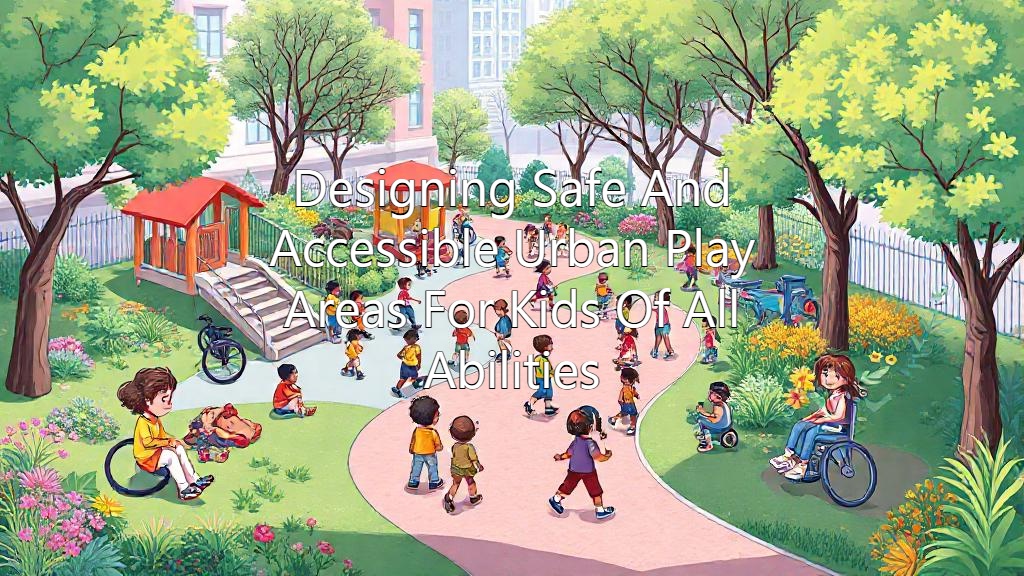
A city’s playgrounds are to its children, a canvas is to an artist – a vibrant space where creativity and imagination know no bounds, and every brushstroke of laughter and joy tells a unique story.
But what happens when a child’s ability to participate in this creative process is limited by the very space that’s meant to inspire them?
In Singapore, where urban planning is a cornerstone of the city-state’s development, designing safe and accessible urban play areas for kids of all abilities is not just a nicety, but a necessity.
Just as a master chef carefully balances flavours and textures to create a dish that’s enjoyable for all, urban planners and designers must strike a delicate balance among fun, safety, and inclusivity when crafting play areas that cater to children with diverse abilities.
By doing so, they can create a recipe for success that allows every child to savour the sweetness of childhood, regardless of their abilities.
Creating Inclusive Urban Playgrounds That Cater To The Diverse Needs Of Children
Inclusive urban playgrounds are designed to provide a welcoming environment for children of all abilities, fostering social interaction and physical activity.
These playgrounds incorporate features such as accessible ramps, sensory-friendly equipment, and adaptive swings, allowing children with disabilities to play alongside their peers.
By doing so, they promote a sense of belonging and community among children, regardless of their abilities.
As the sun sets on a bustling city, a child’s laughter echoes through an inclusive playground, where every child can play, learn, and thrive without limits.
- Inclusive playgrounds can boost social skills and confidence in children with disabilities.
- Sensory-friendly equipment, such as quiet areas and tactile panels, can help children with autism and sensory processing disorders.
- Adaptive equipment, like wheelchair-accessible merry-go-rounds, can provide equal opportunities for physical activity and fun.
Designing Accessible Play Areas With Compliance To ADA Standards And Regulations

As you plan to create a vibrant playground for your community, you might wonder how to ensure it’s enjoyable for all children, regardless of their abilities.
Imagine a play area where every kid can participate, laugh, and make friends without any barriers.
You envision a space that’s not only fun but also inclusive and safe.
To achieve this, it’s essential to understand and implement the Americans with Disabilities Act (ADA) standards and regulations, which provide guidelines for designing accessible play areas.
The ADA requirements cover various aspects, such as accessible routes, play equipment, and transfer stations, to name a few.
By incorporating these elements, you can create a play area that allows children of all abilities to engage in physical activity, socialise, and develop important skills.
You’re not alone in this endeavour, as many organisations and communities have successfully designed and built accessible play areas that comply with ADA standards.
Understanding The Importance Of Universal Design Principles In Playground Development
In Singapore, the Admiralty Park playground is a shining example of universal design in action, where children of all abilities can play and interact together seamlessly, fostering a sense of inclusivity and community.
This playground features a range of accessible equipment, including wheelchair-accessible swings and slides, as well as sensory-friendly areas for children with Autism Spectrum Disorder.
The park’s design ensures that all children can participate and have fun, regardless of their abilities.
By incorporating universal design principles, the playground promotes social interaction and understanding among children.
The benefits of universal design in playground development extend beyond accessibility, as it also enhances the overall play experience for all children.
By incorporating diverse play elements and activities, universal design encourages children to explore, learn, and develop important skills like problem-solving and critical thinking.
Building Playgrounds That Exceed ADA Requirements For Children Of All Abilities
Creating inclusive playgrounds that surpass ADA requirements is like crafting a masterpiece of accessibility, where every brushstroke of design and every note of functionality harmonise to produce a symphony of play, welcoming children of all abilities to participate and thrive.
These playgrounds are meticulously designed to provide a safe and enjoyable experience for all kids, regardless of their physical or cognitive abilities.
The play equipment is carefully selected to cater to different needs, such as wheelchair-accessible swings and merry-go-rounds, as well as sensory-rich elements like musical instruments and tactile surfaces.
Moreover, the playground’s layout is thoughtfully planned to ensure seamless navigation, with wide, smooth pathways and transfer stations, allowing children to move about with ease.
The incorporation of adaptive play elements, such as wheelchair-accessible climbing structures and inclusive seesaws, further enriches the play experience, providing a sense of freedom and joy.
As a result, these playgrounds become vibrant hubs of activity, where children of all abilities can play, learn, and grow together, fostering a sense of community and belonging.
The sound of laughter and playful chatter fills the air, creating a joyful melody that echoes through the playground, a testament to the power of inclusive design.
Incorporating Key Elements Of Inclusive Playgrounds, Such As Ramps And Sensory Activities
Inclusive playgrounds are designed to provide equal access to play for all children, regardless of their abilities.
One of the key elements of inclusive playgrounds is the incorporation of ramps, which allow children with mobility impairments to access elevated play structures.
Additionally, sensory activities such as sound gardens and tactile play areas can provide a stimulating and engaging experience for children with sensory processing disorders.
These elements can be incorporated into the playground design in a way that is both fun and accessible for all children.
Beyond that, inclusive playgrounds can also include elements such as transfer stations, which allow children to transfer from their wheelchairs to a play structure, and adaptive swings, which can accommodate children with mobility impairments.
Furthermore, playgrounds can incorporate natural elements such as plants and water features, which can provide a calming and soothing environment for children.
Moreover, inclusive playgrounds can also include social areas, such as group seating and picnic tables, which can facilitate social interaction and community building among children and families.
However, incorporating these elements into a playground requires careful planning and design to ensure that they are safe, accessible, and enjoyable for all children.
Funding Opportunities And Grants For Accessible And Inclusive Playground Construction
Creating inclusive playgrounds requires significant funding, but various opportunities exist to support this cause.
- Offer federal grants, such as those from the National Park Service, to support park development and accessibility projects.
- Provide private foundation grants, like the Tony Hawk Foundation, that focus on building skateparks and promoting youth development.
- Support corporate grants, such as those from the CVS Health Foundation, that aim to increase accessibility in community spaces.
- Fund community-based initiatives, like the KaBOOM! A grant program that helps build playgrounds in underserved areas.
- Develop public-private partnerships to leverage resources and expertise for inclusive playground construction.
By exploring these funding opportunities, communities can create accessible and inclusive playgrounds that promote social equity and fun for all, ultimately building a more playful and compassionate society.
Applying Universal Design Principles To Ensure Inclusivity For Children With Disabilities
Universal design principles can greatly benefit children with disabilities by providing equal access to education and recreational activities.
A well-designed environment — one that incorporates flexibility and adaptability — is essential for promoting inclusivity.
Incorporating universal design principles is crucial for creating a supportive and inclusive environment for all children.
Because when we design for children with disabilities, we end up creating a better environment for everyone.
The benefits of universal design are numerous: it can help reduce stigma and promote social inclusion, while also providing opportunities for children with disabilities to participate fully in all aspects of life.
In order to apply universal design principles effectively, it is necessary to consider the diverse needs and abilities of all children: this can involve conducting accessibility audits, consulting with experts and stakeholders, and providing ongoing training and support for educators and staff.
Designing Safe And Accessible Playground Equipment For Intergenerational Play And Socialisation
Contrary to popular belief, traditional playgrounds often exclude older adults and people with disabilities, limiting their potential for socialisation and physical activity.
This narrow approach to playground design can have negative consequences on community building and public health.
By neglecting the needs of diverse user groups, we risk creating isolated and exclusive spaces.
In contrast, many modern playgrounds are now being designed with inclusivity in mind, featuring equipment and amenities that cater to a wide range of ages and abilities.
Ensuring Regular Maintenance And Safety Inspections For Preserving Playground Functionality
To ensure the longevity and safety of playgrounds, regular maintenance and safety inspections are crucial, as they help identify potential hazards and prevent accidents, thereby preserving the functionality of the playground equipment and surrounding areas.
The maintenance process typically involves inspecting the equipment, surfaces, and fencing, as well as performing repairs and replacements as needed, and keeping records of the inspections and maintenance activities to track progress and identify areas for improvement.
Additionally, safety inspections can help prevent accidents and injuries by identifying potential hazards such as sharp edges, broken glass, or uneven surfaces, and taking corrective action to mitigate these risks.
By prioritising regular maintenance and safety inspections, playground owners and operators can help ensure that their facilities remain safe and functional for years to come.
Regular maintenance is key to safe playgrounds.
As we envision the future of urban play areas, we must prioritise inclusive spaces that nurture the growth and development of all children, regardless of their abilities.
The memories of laughter and excitement that fill these play areas will be etched in the minds of children and their families, fostering a sense of community and belonging.
With careful consideration and thoughtful design, we can build vibrant spaces that not only promote physical activity but also inspire imagination and creativity, ultimately shaping the next generation of active, curious, and compassionate individuals.
As the sun sets on another day in the city, the sound of children’s giggles and playful shouts will continue to echo through these accessible urban oases, a testament to the power of design in bringing people together and creating a brighter future for all.