

Building risk assessment explained clearly and applied correctly is one of the most consequential responsibilities a property professional or building owner carries. Many organizations treat it as a periodic inspection to satisfy a regulatory requirement and then file the report away until the next cycle. That misconception creates serious legal exposure and, more critically, places occupants at risk. A building risk assessment is a continuous safety discipline that must account for fire spread, structural failure, and evolving building conditions, and the legal framework underpinning it has grown substantially more demanding since the Building Safety Act 2022 came into force.
Table of Contents
- Key takeaways
- Building risk assessment explained: the core process
- Legal and regulatory framework for higher-risk buildings
- Integrating risk assessment into building management
- Safety versus security risk assessment
- What experience actually teaches about building risk assessment
- How Com supports building risk assessment compliance
- FAQ
Key takeaways
| Point | Details |
|---|---|
| Risk assessment is ongoing | Building safety assessments are continuous disciplines requiring review after building changes, incidents, or regulatory requests. |
| Five-step process applies | Hazard identification, risk evaluation, scoring, documentation, and review form the structured foundation of every compliant assessment. |
| Legal accountability is personal | The Principal Accountable Person faces criminal liability for non-compliance and must maintain the Golden Thread of building safety data. |
| Risk scores drive resource allocation | High, medium, and low risk classifications directly determine which remedial actions receive priority funding and scheduling. |
| Safety and security assessments differ | Safety assessments address accidental hazards using frequency-based methods; security assessments address intentional threats using scenario-based models. |
Building risk assessment explained: the core process
Understanding building risk starts with understanding its structure. A building risk assessment is not a single inspection. It is a systematic, repeatable analytical process that identifies hazards, evaluates their potential consequences, scores their severity, and documents findings to support both decision-making and regulatory compliance.
The five-step assessment framework followed in most compliant jurisdictions proceeds as follows:
- Hazard identification: Surveyors and engineers examine the building for conditions that could cause harm. This includes structural defects, fire compartmentation failures, compromised escape routes, and deficiencies in plant rooms or service risers.
- Risk evaluation: Each identified hazard is assessed based on the likelihood of occurrence and the severity of potential consequences. This step requires both technical expertise and knowledge of applicable regulatory thresholds.
- Risk scoring and prioritization: Findings are categorized into high, medium, or low risk. High risk findings indicate an immediate threat to life safety; medium risk requires planned remediation within a defined timeframe; low risk items are monitored without urgent intervention.
- Documentation: All findings, supporting evidence, photographs, and technical notes must be recorded in a format that supports audit and legal review. This documentation functions as a compliance record and a defense against liability claims.
- Review and update: The assessment must be revisited whenever significant building changes occur, after any safety incidents, or upon regulatory request. Treating it as a static document rather than a living record is among the most common failures observed in practice.
Areas typically assessed during an inspection
A thorough building risk assessment covers more than the main structure. Surveyors examine:
- Stairwells and protected corridors for compliance with fire separation requirements
- Façade materials and cladding systems, particularly on high-rise buildings where over 700,000 leaseholders are estimated to live in buildings with fire safety defects
- Fire compartmentation integrity between floors and units, which Com covers in detail through its work on fire compartmentation failures
- Escape routes and final exit points for obstruction, width, and signage
- Structural elements including load-bearing walls, columns, beams, and foundations
- Plant rooms, electrical risers, and mechanical systems for fire spread risk
Pro Tip: Document photographic evidence at every inspection point, not just where defects are found. Clean areas serve as baseline records that are invaluable if conditions deteriorate between assessments.
Legal and regulatory framework for higher-risk buildings
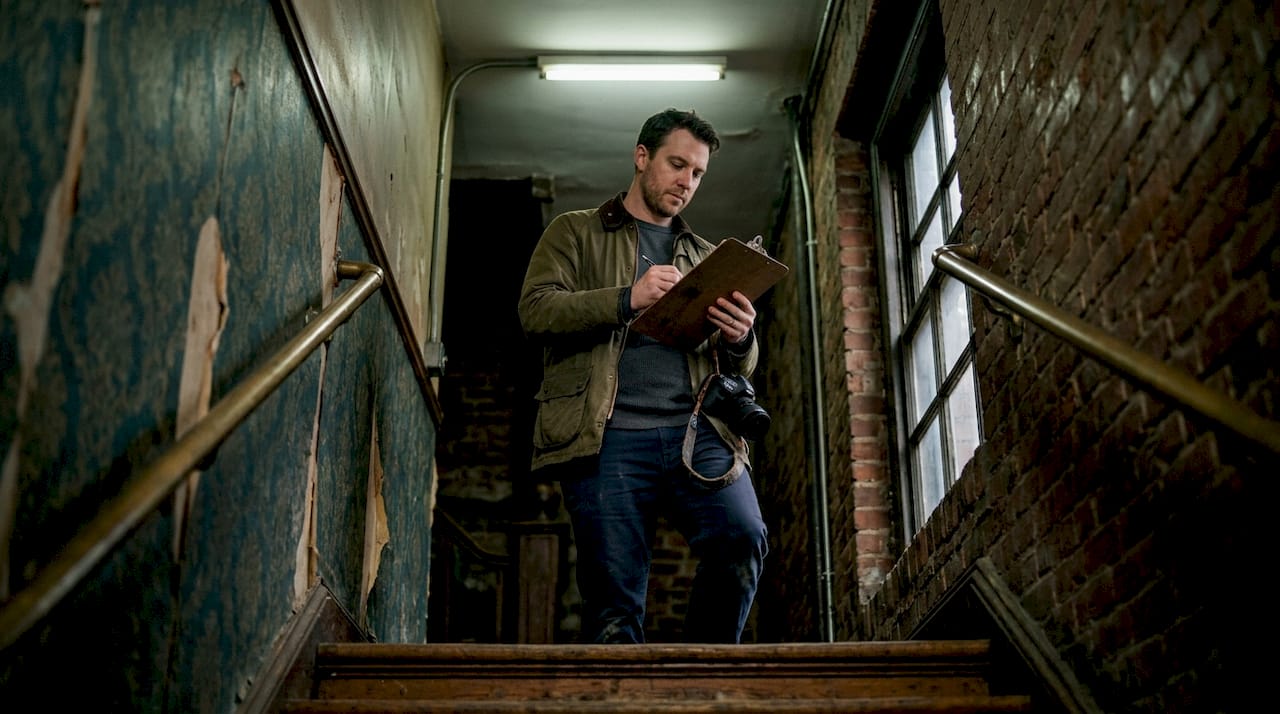
The Building Safety Act 2022 fundamentally changed the obligations attached to building risk assessments for higher-risk residential buildings in the United Kingdom. For property professionals managing these assets, understanding the legal structure is not optional.
Section 83 of the Building Safety Act mandates that risk assessments for higher-risk buildings must be:
- Evidence-based and specific to the building in question
- Ongoing rather than event-driven, with a structured review program in place
- Documented with sufficient detail to demonstrate compliance and the reasonable steps taken by the responsible party
- Focused specifically on fire spread and structural failure as the two principal risk categories
The Principal Accountable Person (PAP) holds primary legal responsibility for compliance with all building safety risk assessment duties under the Act. This individual faces criminal liability if non-compliance results in a risk of serious injury or death. The PAP must also maintain the Golden Thread, which is the complete and continuously updated digital record of building safety data, and must submit Safety Case Reports to the Building Safety Regulator demonstrating that all identifiable risks are under adequate control.
“The Building Safety Act’s due diligence defense underscores the value of documented, ongoing effort in risk assessment rather than a focus on perfection or one-time compliance.”
The implications for professionals are significant. Surveyors’ duty-of-care standards have extended under the Act, requiring precise scope definition and thorough documentation of all efforts undertaken. A professional who conducts a thorough assessment but fails to document it adequately has no credible defense if challenged. Conversely, a well-documented assessment that demonstrates continuous effort, even where defects remain under remediation, constitutes a strong due diligence record. The BCA Building Control Act updates in Singapore reflect a parallel tightening of legislative accountability that property professionals in the region should also monitor closely.
Integrating risk assessment into building management
A building risk assessment that produces a report but does not connect to operational decisions fails its purpose. The real value of the process emerges when risk scores directly inform management decisions across maintenance scheduling, budget allocation, and stakeholder communication.
| Risk Category | Required Response | Typical Timeframe |
|---|---|---|
| High | Immediate escalation, temporary controls, urgent remediation program | Within days |
| Medium | Planned remediation with defined completion milestone | Within 3 to 6 months |
| Low | Scheduled monitoring, no urgent intervention required | At next scheduled review |
Maintaining the Golden Thread in practice
The Golden Thread concept requires that all building safety information remains accessible, accurate, and current throughout the building’s operational life. In practice, this means using structured data management workflows that link inspection findings, risk scores, remedial actions, and completion records within a single auditable system. Digital platforms that integrate risk assessment registers provide the traceability required under the Building Safety Act and make recurring assessment cycles considerably more efficient.
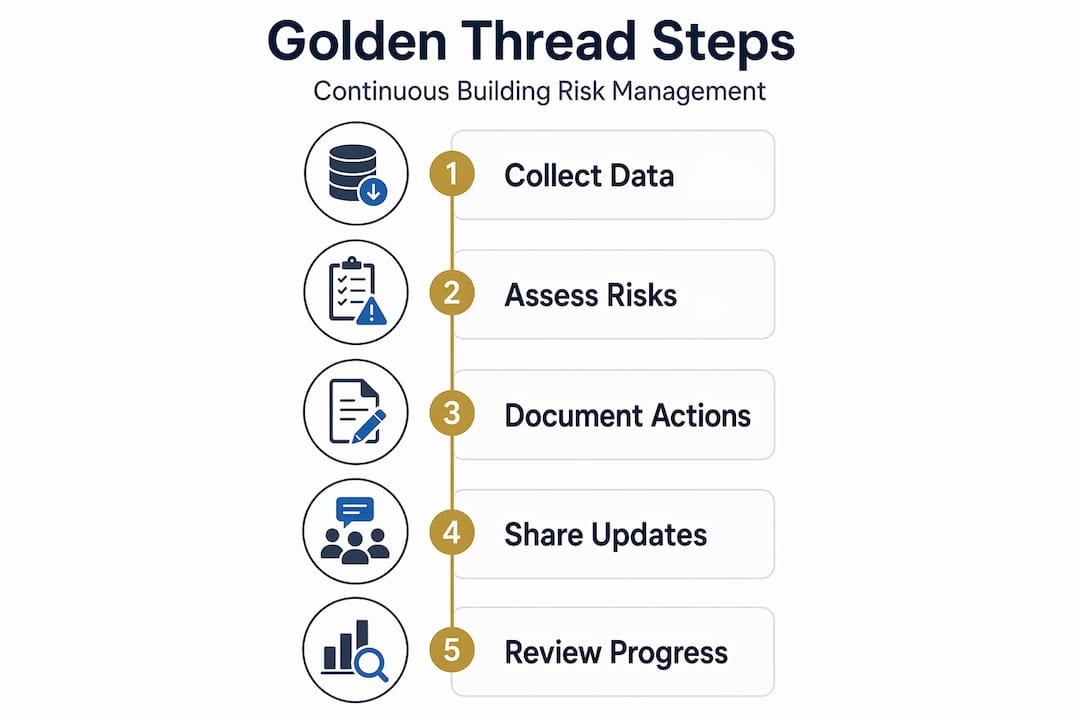
Properties that embed this level of continuous risk management into operations gain a tangible financial advantage in addition to the safety and compliance benefits. Risk-mature real estate portfolios have achieved insurance premium reductions of up to 50% in some markets, reflecting the lower loss exposure that insurers associate with proactive, documented risk management programs.
Communicating assessment outcomes to residents, insurers, and maintenance teams is an equally important component of building risk management strategies. Residents in higher-risk buildings have a statutory right to receive safety information. Providing clear, structured summaries of identified risks and the remediation program builds occupant trust and demonstrates regulatory compliance simultaneously.
Pro Tip: Assign a named individual responsibility for tracking each remedial action from identification through to completion. Unassigned actions are the primary reason remediation programs stall between assessment cycles.
Safety versus security risk assessment
Building professionals frequently conflate building safety risk assessment with security risk assessment, but the two disciplines address fundamentally different threat categories and employ distinct methodological approaches.
A building safety assessment focuses on accidental hazards: fire spread, structural failure, mechanical system failures, and environmental conditions that could harm occupants without any deliberate intent. The analytical methodology is predominantly frequency-based, using historical incident data and engineering standards to quantify likelihood and consequence.
A security risk assessment, by contrast, addresses intentional threats from adaptive adversaries. Because human threat actors alter their behavior in response to countermeasures, security assessments use scenario-based models such as the threat, vulnerability, and consequence (TVC) model, guided by standards including ISO 31000 and HB 167. Generic threat lists are analytically insufficient for security assessments. Each assessment must be site-specific, accounting for the particular characteristics of the building, its occupants, and its surrounding environment.
The following distinctions clarify the key methodological differences:
- Safety assessments rely on engineering data, regulatory thresholds, and inspection findings
- Security assessments require threat intelligence, vulnerability analysis, and adversary modeling
- Safety risk treatment follows the ALARP (as low as reasonably practicable) principle, with a three-zone risk classification covering unacceptable, tolerable, and broadly acceptable risk zones
- Security risk treatment applies the SFAIRP (so far as is reasonably practicable) principle, prioritizing avoidance and reduction before acceptance or transfer of residual risk
Both disciplines share a common risk treatment hierarchy that directs professionals to avoid or eliminate risk first, reduce its likelihood or consequence second, and only accept or transfer residual risk where elimination or reduction is not reasonably achievable. For buildings with complex occupancy profiles, such as mixed-use developments or critical infrastructure facilities, maintaining parallel safety and security assessment programs with coordinated review cycles represents the most defensible management approach.
What experience actually teaches about building risk assessment
In my experience working across complex construction and property portfolios, the single most persistent failure I observe is the treatment of building risk assessment as a documentation task rather than an analytical discipline. Teams invest effort in completing the form and far too little in the quality of the risk scoring itself.
Precise risk scoring matters because it is the mechanism by which findings translate into funded, scheduled action. I have seen buildings where a known fire compartmentation defect was logged as medium risk to avoid triggering urgent expenditure, only for the same defect to be cited in enforcement action two years later. The legal and financial consequences of that underscoring decision far exceeded what the remediation would have cost at the time of discovery.
The regulatory shift brought by the Building Safety Act has made documented, continuous effort the standard against which professionals are judged. In my view, this is a positive development. It removes the incentive to treat compliance as a single event and replaces it with a framework that rewards organizations that genuinely manage risk over time. The due diligence defense is only credible when the documentation trail is consistent and complete. Organizations that maintain structured, regularly updated risk registers and can demonstrate that every finding received an assigned remedial action and a completion timeline are in a fundamentally stronger position than those that produce occasional reports.
Balancing safety and security risk assessment within a single building management program remains underutilized. Most property managers run these as separate workstreams with separate reporting lines. Integrating them at the planning and scheduling level reduces duplication and produces a more complete picture of total building risk exposure.
— Aman
How Com supports building risk assessment compliance

Aman Engineering Consultancy (Com) provides structured building risk assessment consultancy services to property developers, building owners, and construction companies managing complex assets across Singapore and internationally. Com’s team of licensed engineers and inspectors conducts hazard identification, risk scoring, and documentation in full alignment with applicable regulatory frameworks, including BCA requirements and international standards.
Com’s services extend beyond the initial assessment to include recurring review programs, remediation tracking workflows, and Safety Case Report preparation. The firm’s capability in BIM modeling and digital engineering enables clients to maintain the complete, accessible building safety records required under modern compliance frameworks. For organizations seeking a professional partner to manage the full cycle of building risk assessment and regulatory compliance, Com’s engineering consultancy services provide the technical depth and regulatory familiarity required to operate with confidence.
FAQ
What is a building risk assessment?
A building risk assessment is a systematic process of identifying hazards, evaluating their likelihood and consequence, scoring risk severity, and documenting findings to protect occupant safety and demonstrate regulatory compliance. It applies to both occupied buildings and active construction projects.
How often must a building risk assessment be conducted?
Under the Building Safety Act 2022, assessments must be ongoing rather than periodic events, with formal reviews triggered by building changes, safety incidents, or regulatory requests. There is no single fixed interval that satisfies the legal requirement.
Who is legally responsible for building risk assessment compliance?
The Principal Accountable Person holds primary legal responsibility under the Building Safety Act 2022, including criminal liability for non-compliance that risks serious injury or death, and must maintain the Golden Thread of data and submit Safety Case Reports.
What is the difference between safety and security risk assessments?
Safety risk assessments address accidental hazards such as fire and structural failure using engineering data and frequency-based analysis. Security risk assessments address intentional threats using scenario-based models and site-specific threat intelligence, guided by standards such as ISO 31000.
What areas does a building risk assessment typically cover?
A standard building risk assessment covers structural elements, fire compartmentation, escape routes, façade systems, plant rooms, and mechanical installations, with periodic façade inspections forming a critical component for high-rise and complex buildings.
Recommended
- Real Estate Engineering Inspection – Aman Engineering Consultancy
- Structural Assessment in Singapore: A Compliance Guide
- Hacking Walls in HDBs: Why You Need a Professional Engineer – Aman Engineering Consultancy
- Inspection by Professional Engineer for your property transactions – Aman Engineering Consultancy