When Is a Risk Management Facilitator (RMF) Required for Lifting Operations in Factories?
Introduction
Understanding when is a risk management facilitator (RMF) required for lifting operations in factories in Singapore is critical for any facility owner, plant manager, or EHS professional responsible for cranes, hoists, and other lifting equipment in industrial environments. Singapore’s workplace safety and health framework imposes clear obligations on employers to conduct risk assessments, develop lifting plans, and appoint competent personnel-but the specific triggers for engaging an RMF are not always obvious.
This FAQ-style guide is written for factory owners, operations managers, safety officers, and EHS teams who manage overhead travelling cranes, gantry cranes, jib cranes, forklifts used as lifting devices, and related lifting equipment inside manufacturing plants, warehouses, and process facilities. While construction sites, ship repairing yards, and marine environments are regulated under overlapping but distinct provisions, this article focuses squarely on factory and industrial building contexts.
In Singapore factories, an RMF is required whenever lifting operations are complex, non-routine, or high-risk under the WSH (Risk Management) Regulations and WSH (Operation of Cranes) Regulations, or when mandated by internal corporate standards, insurer requirements, or client specifications. Risk management facilitators are not legally required for routine lifting operations in factories, but the functions they perform-structured risk assessment, lifting plan development, and competent oversight-are mandatory whenever risk profiles escalate.
By reading this guide, you will:
- Know the exact regulatory and risk-based triggers for appointing an RMF in factory lifting scenarios
- Understand how RMFs interface with lifting plans, risk assessments, safe work procedures (SWPs), and permit to work (PTW) systems
- Learn what to expect from an RMF before, during, and after critical lifts
- Discover practical steps to screen upcoming lifts and prepare documentation
- See how AMAN Engineering Consultancy can support your compliance and documentation needs
The article includes practical examples, checklists, visual suggestions, and an FAQ section tailored to the Singapore industrial context.
Understanding Risk Management and RMF in Factory Lifting Operations
Singapore’s workplace safety and health obligations require every employer and occupier to systematically manage risks arising from work activities. Inside factories, lifting operations-whether using overhead travelling cranes, gantry cranes, jib cranes, stacker cranes, or forklifts repurposed for lifting-represent some of the highest-consequence activities on any production floor. This section establishes the foundational concepts for safety committee members, plant engineers, and operations managers who may be encountering the RMF role for the first time.
What Is Workplace Risk Management in a Factory Setting?
Risk management in a factory setting is the systematic process of identifying, evaluating, and controlling hazards that could affect people, equipment, property, and operations. It is not a one-time exercise but a continuous risk management process embedded in how work is planned, executed, and reviewed.
The legal backbone for this process in Singapore is the Workplace Safety and Health (Risk Management) Regulations, which require all workplaces to conduct risk assessments for both routine and non-routine operations, evaluate and control those risks, communicate findings to all personnel involved, and review risk assessments at least every three years-or whenever there is a significant change, incident, or near-miss. The Code of Practice on WSH Risk Management provides further guidance on how to implement these requirements systematically.
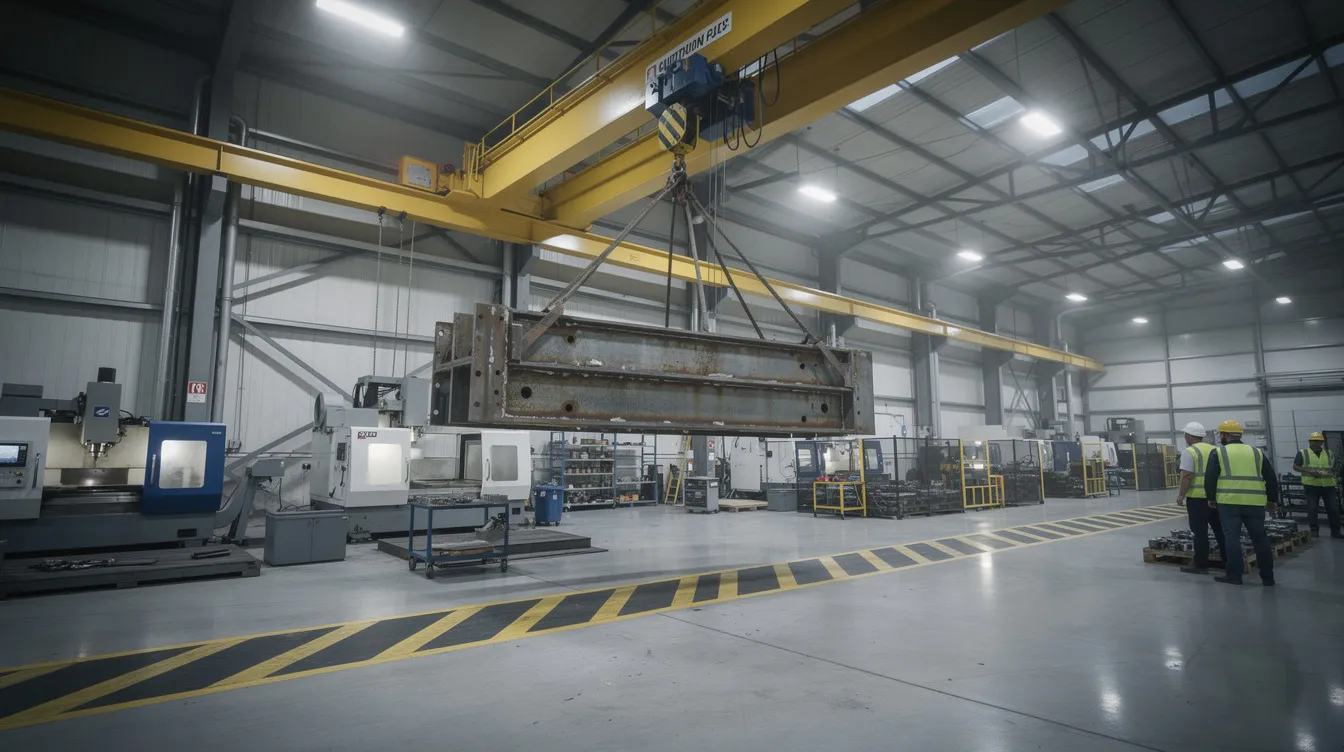
In factory environments, high-consequence hazards frequently arise from lifting operations. Typical lifting-related hazards on production floors, warehouses, and process halls include:
- Dropped loads causing serious injuries, equipment damage, or process disruption
- Crane collisions with overhead services, building structures, or adjacent equipment
- Structural overloads on runway beams, columns, or floor slabs
- Interactions between moving loads and live production lines, pressurised piping, or electrical systems
- Health hazards from working at height during rigging, signalling, or equipment preparation
- Uncontrolled load swing due to incorrect rigging method or shifting centre of gravity
Who Is a Risk Management Facilitator (RMF)?
A risk management facilitator is a trained, competent person who leads and documents formal risk assessments, particularly for complex or high-risk work such as non-routine lifting. The RMF is not simply a participant in the risk assessment team-they are the individual structuring the entire process, ensuring that the ALARP (As Low As Reasonably Practicable) principle is demonstrated, and integrating controls into actionable procedures.
Required competencies for an RMF include: completion of an MOM-recognised risk management course, thorough understanding of the WSH Regulations (especially the Risk Management Regulations and Operation of Cranes Regulations), and practical knowledge of lifting equipment, factory processes, and facility constraints. Risk assessments must cover the 5 M’s: Machine, Material, Medium, Man, and Method-and the RMF is the person ensuring that each dimension is systematically addressed.
Typical RMF outputs include:
- A comprehensive risk assessment register with evaluated and ranked hazards
- Bow-tie diagrams for high-consequence scenarios (e.g., dropped load over live process line)
- Critical control list identifying barriers that must not fail
- Updated safe work procedures and method statements tailored to the specific lift
- Inputs to the permit to work system, including pre-conditions and stop-work criteria
- Documentation of hold points, residual risk levels, and lessons-learned records
RMF vs Workplace Safety and Health Officer (WSHO) and Lifting Supervisor
A common source of confusion in factories is the overlap-and distinction-between the RMF, the Workplace Safety and Health Officer (WSHO), and the lifting supervisor. While all three roles contribute to safe lifting operations, they serve fundamentally different functions in the project lifecycle.
The RMF is a facilitation and design-of-controls role. Their focus is pre-job: leading thorough risk assessment workshops, designing barrier architectures, ensuring that lifting plans are technically sound and site-specific, and aligning documentation with regulatory requirements and industry standards. The RMF ensures compliance with regulations and codes before the lift begins.
The WSHO is primarily a compliance and inspection role-conducting site inspections, enforcing safe systems of work, investigating incidents, and liaising with regulatory authorities. The lifting supervisor, by contrast, is the operational commander on the day of the lift: directing the crew, confirming rigging, enforcing the lifting plan on the ground, and coordinating with the crane operator and signalmen.
- RMF – Pre-job risk assessment quality, barrier design, documentation integrity, alignment with regulations and codes
- WSHO – Site inspections, enforcement of safe systems of work, incident investigations, regulatory compliance oversight
- Lifting supervisor – Directing the lifting crew, enforcement of the lifting plan on the ground, real-time decision-making during execution
In high-risk factory lifting operations, all three roles may be present but serve distinct functions. Lifting supervisors coordinate the lifting team and oversee operations in real time, while the RMF’s value is primarily in the planning, documentation, and post-lift learning phases.
When Is a Risk Management Facilitator Required for Lifting Operations in Factories?
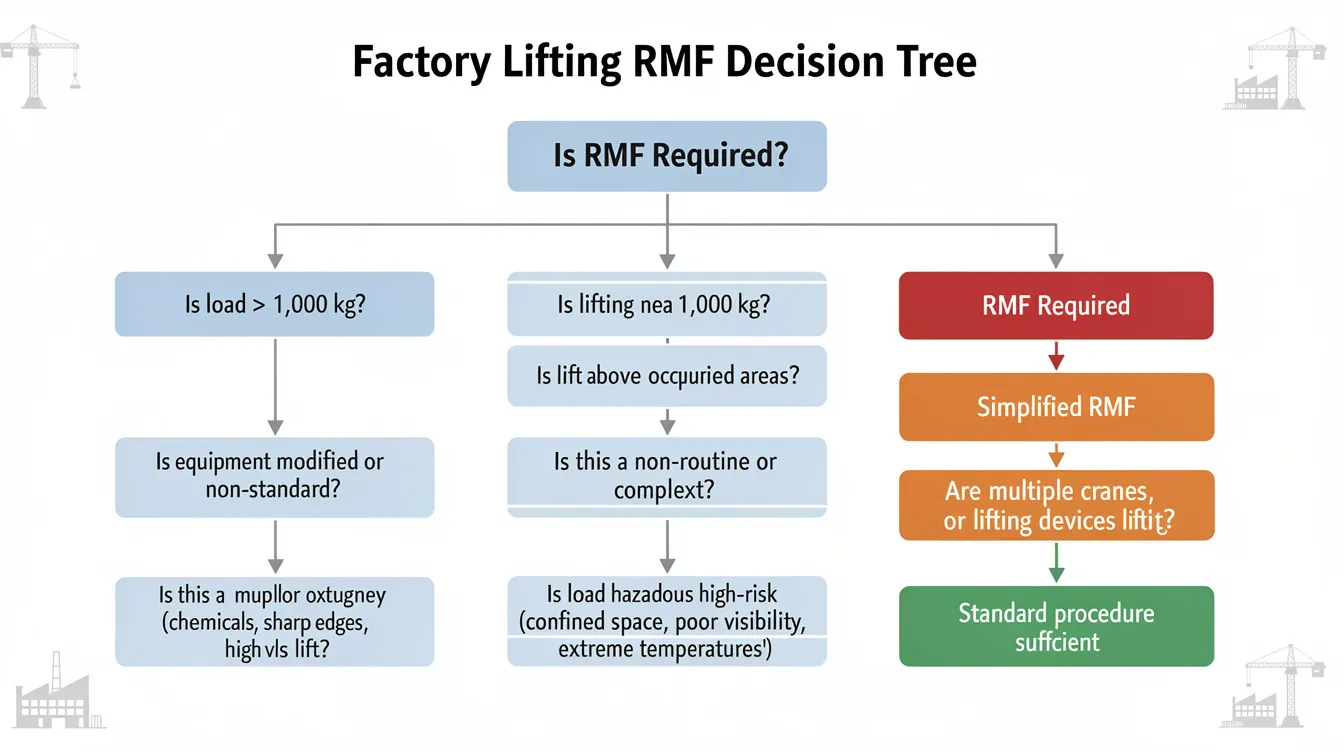
The core answer to “when is an RMF required?” can be stated in clear, “if–then” logic: an RMF (or equivalent structured facilitation) is required whenever regulatory triggers are activated, whenever risk-based criteria indicate complexity or high consequence, or whenever corporate, insurer, or client requirements demand documented, facilitated risk management. Legal requirements in Singapore are generally role-agnostic-the primary legislation for lifting operations is the WSHA, and the statutes do not always say “appoint an RMF” by title-but they effectively require a competent facilitator when risks become complex. Lifting operations must comply with the Workplace Safety and Health Act.
This section provides both “hard” triggers (law, codes, client specifications) and “soft” triggers (prudence based on risk profile and incident history).
Regulatory Triggers Under WSH and MOM Requirements
Under Singapore’s health framework for workplace safety, several regulatory instruments create direct triggers for RMF-type engagement:
The WSH Act mandates employers and occupiers to ensure that any equipment, process, or article used at work is safe, to conduct risk assessments, and to provide safe systems of work. The WSH (Risk Management) Regulations require documented risk assessments for all routine and non-routine operations, with the leader or facilitator possessing relevant training and competence. Records of risk assessments must be kept for at least every three years, and risk assessments must be reviewed when there’s an incident or near-miss.
The WSH (Operation of Cranes) Regulations 2011 (amended in 2024) are particularly significant. Regulation 4 mandates that the “responsible person” establish and implement a lifting plan before any lifting operation involving a crane. A lifting plan must be supported by a risk assessment, and lifting plans require a linked risk assessment and safe work procedures. The Regulations also require appointment of competent lifting supervisors, riggers, and signalmen-and certification of crane operators. Lifting operations require a permit-to-work (PTW) system for certain crane types and high-risk lifting tasks.
For factories registered under the Factories Act, MOM inspectors typically expect a structured, facilitated risk assessment for non-routine and high-risk lifts. For Major Hazard Installations (e.g., chemical plants) and facilities with hazardous substances, guidance from SCDF and NEA often leads to engaging RMFs for critical lifts over process equipment, tanks, or pipelines. Concrete examples of regulatory documents that can trigger RMF engagement include changes to lifting routes crossing escape paths, new overhead crane installations, and modifications requiring structural engineer or PE sign-off.
Contractors ensure compliance with safety regulations during lifting operations, and the legal obligations extend to principals who engage them.
Risk-Based Criteria: Complex and High-Risk Lifts Inside Factories
Beyond explicit regulatory triggers, practical risk-based criteria should guide when an RMF is appointed. Non-routine lifting operations are defined by unique challenges or high risks that standard procedures cannot adequately address. Factories should appoint an RMF when any of the following scenarios apply:
- Lifts above live production lines, energised switchboards, or pressurised piping where a dropped load could cause fire, explosion, or toxic release. Lifting operations near hazardous materials require increased precautions and assessments.
- Tandem lifts involving two or more cranes/hoists operating simultaneously on the same load. Complex lifting operations can require multiple cranes or specialised rigging arrangements, demanding advanced coordination and a detailed risk assessment.
- Lifts through building openings, mezzanines, or near fragile roofs/skylights where structural stability is critical and ground conditions or floor loading must be verified.
- Heavy lifting operations close to the rated capacity of the crane or runway beams, requiring structural verification by a structural engineer.
- Lifts in congested areas with simultaneous operations (SIMOPS), e.g., concurrent welding, scaffolding, and forklift traffic in the same lifting area.
- Non-routine or “one-off” lifts, such as installation of new machinery, relocation of transformers, or removal of large process vessels-where heavy objects must be moved through complex factory layouts.
Factories should adopt a simple internal risk matrix (load weight, complexity, environment, consequence) to decide when RMF appointment is compulsory. This matrix should challenge assumptions about what constitutes “routine” versus “high-risk.”
Corporate, Insurer and Client Requirements
Many multinational manufacturers, pharmaceutical facilities, data centres, and semiconductor fabs in Singapore impose stricter internal safety standards than minimum regulatory requirements. These corporate and client requirements frequently serve as independent triggers for RMF engagement.
Common triggers include:
- Lifts exceeding a defined weight threshold (e.g., >10 tonnes) inside buildings
- Lifts over critical assets where downtime cost is very high (e.g., cleanrooms, main production lines, server halls)
- Lifts during live operations where full plant shutdown is not feasible
- Supply chain dependencies where delayed equipment installation impacts project progression
Insurers may require documented, RMF-led risk assessments for coverage of high-value equipment relocation and for renewal of property damage and business interruption policies. The potential risks involved in a single major lifting incident-equipment damage, production downtime, liability claims-far outweigh the cost of structured facilitation.
At AMAN, we often support clients by aligning lifting RMF processes with bizSAFE Level 3+ expectations and corporate global safety standards, ensuring that documentation meets both local regulatory requirements and international audit expectations.
Signals That Your Factory Probably Needs an RMF (Even if Not Forced by Law)
Even when no specific regulation or client mandate explicitly requires an RMF, certain warning signs indicate that structured facilitation would materially improve safety, documentation, and audit readiness:
- Your lifting plans and risk assessments are copied from old jobs using a generic template, not tailored to current layouts and site conditions
- Near misses involving cranes or loads have been reported in the last 12–24 months
- Multiple contractors and vendors are involved in the same lifting work window
- Maintenance and production teams disagree on safe access routes or crane capacity margins
- MOM, SCDF, or insurers have previously flagged lifting documentation as inadequate during audits
- Your factory layout has changed (new racks, piping, mezzanines) since the last risk assessment was completed
- Personnel involved in lifting are not adequately trained on current procedures
These are practical cues that an RMF engagement is overdue. Ignoring them does not eliminate the potential hazards-it simply leaves them unmanaged.
How an RMF Supports Safe Lifting Operations Inside Factories
With triggers identified, the question becomes: what does an RMF actually do? This section details concrete RMF activities across the lifting lifecycle, emphasising factory-specific constraints such as low headroom, fixed overhead cranes, live production, limited laydown areas, and interaction with building structure and M&E systems.
Integrating RMF into Lifting Plan, Risk Assessment, SWP, and PTW
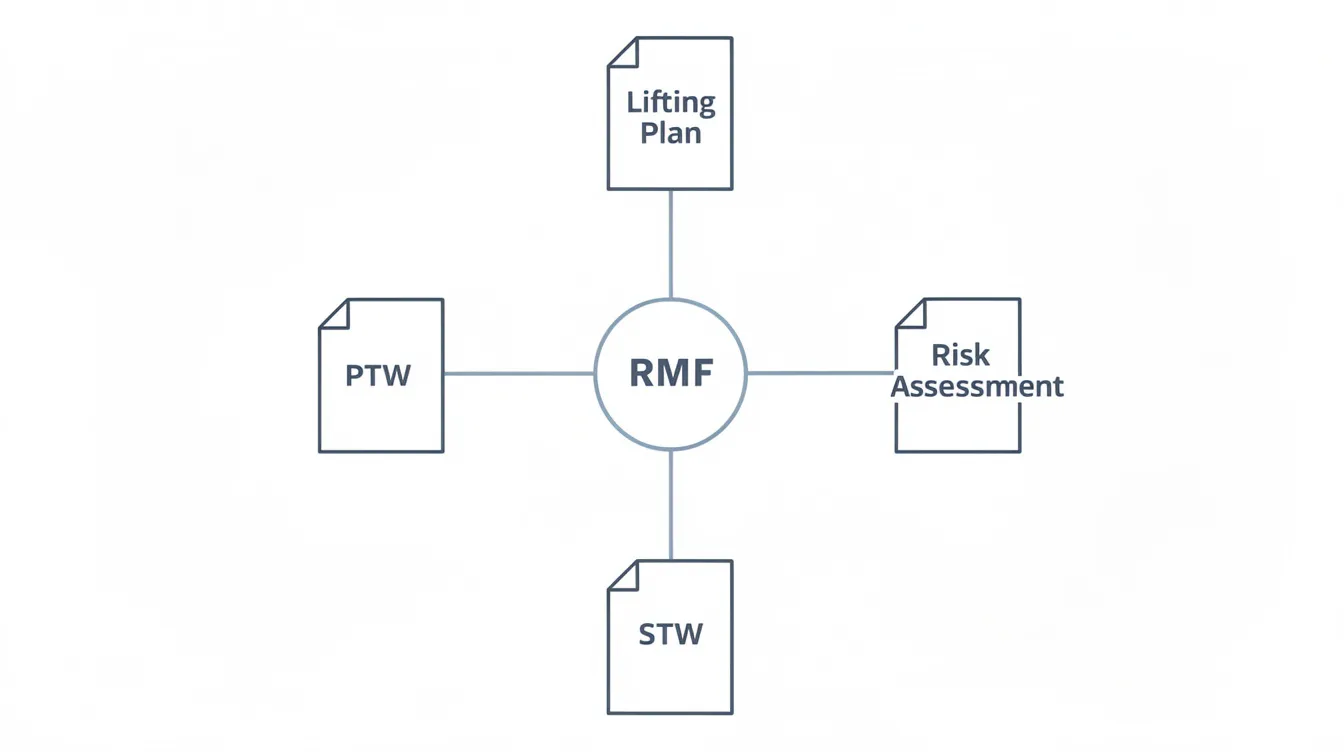
Four core documents govern safe lifting operations in a Singapore factory. Understanding how they fit together-and how the RMF connects them-is essential:
- Lifting Plan – “How the lift will be done”: load details and equipment specifications, configuration, path, crew positions, communication methods. A lifting plan must detail roles and responsibilities of crew members and include a linked risk assessment and safe work procedures. A lifting plan must detail communication methods among crew members.
- Risk Assessment – “What can go wrong and how we control it”: systematic hazard identification, evaluation of potential risks, and specification of control measures to reduce residual risk to ALARP. Risk assessments must identify potential hazards before lifting operations.
- Safe Work Procedure (SWP) – “Step-by-step detailed instructions for the crew”: translating controls into actionable sequences with hold points.
- Permit to Work (PTW) – “Formal authorisation step checking readiness and conditions”: verifying that all pre-conditions are met before the lift proceeds.
The RMF chairs risk assessment workshops focusing on lifting hazards in the specific factory layout, ensures RA outputs are translated into concrete steps in the lifting plan and SWP, and defines PTW pre-conditions and stop-work criteria relating to lifting risks. The RMF also ensures that emergency procedures are documented and communicated to all personnel involved.
RMF Activities Before, During, and After a Critical Lift
RMF involvement is most valuable when it spans planning, execution monitoring, and post-lift learning. Here is the three-stage breakdown:
Before the lift:
- Review structural drawings, crane certificates, and equipment data to verify capacities and clearances. Lifting equipment must have a valid Lifting Machine certificate.
- Lead HAZID / JSA sessions with maintenance, production, lifting crew, and safety representatives-forming a multidisciplinary team that covers all relevant perspectives. The RMF facilitates hazard identification sessions with multidisciplinary teams.
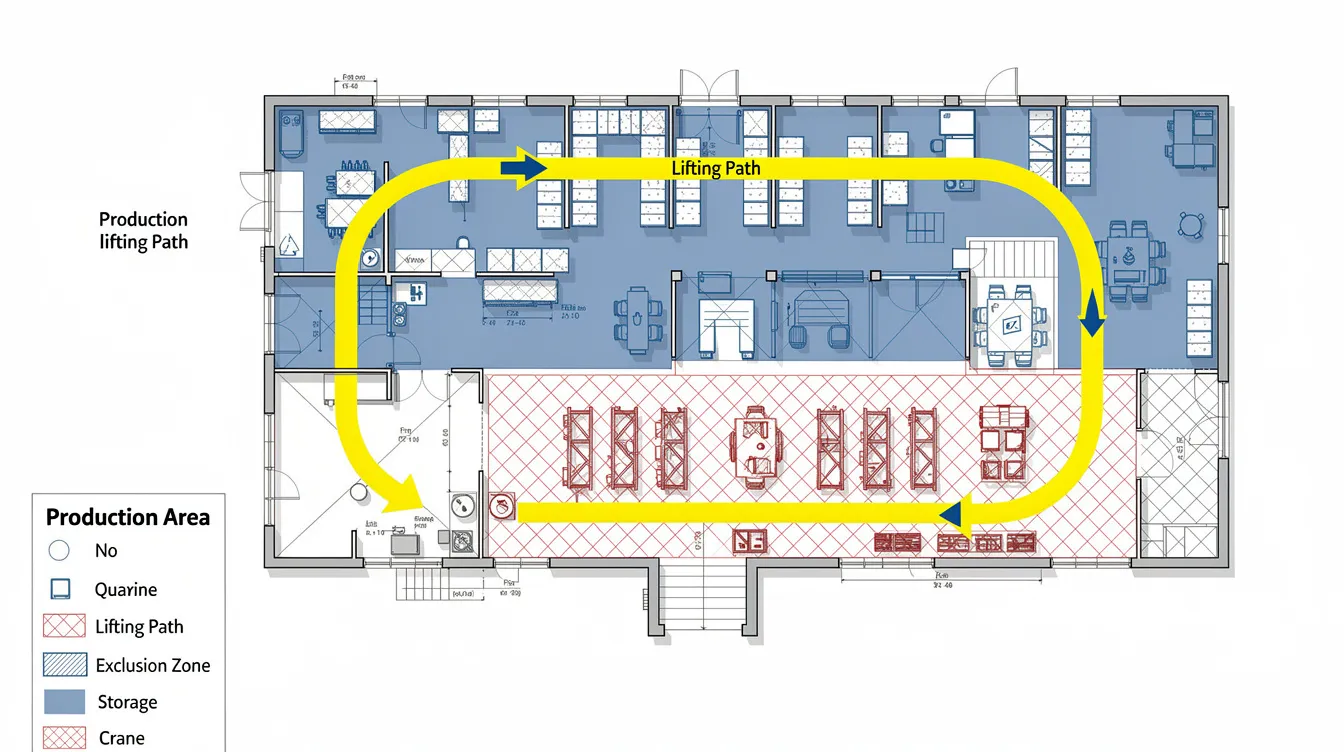
- Validate lifting paths against actual factory congestion, overhead services, fire protection systems, and evacuation routes through physical walk-downs
- Set measurable risk controls: exclusion zones, temporary shielding, production shutdown boundaries, and appropriate safety measures
- Conduct a quantitative risk assessment where consequence severity and likelihood demand it
- An RMF documents risk response strategies for shutdown schedules when lifts occur during planned outages
During the lift:
- Support the lifting supervisor and WSHO in monitoring adherence to the plan and PTW conditions
- Check that agreed hold points and stop-work criteria (e.g., vibration near sensitive equipment, interference with AGVs or forklifts) are observed
- Update the hazard register if conditions change and facilitate quick re-assessment
After the lift:
- Capture lessons learned, including near misses, mis-communication, or unexpected site constraints
- Refine generic factory lifting procedures and training content based on findings
- Archive RA, lifting plan, PTW, and photos for future audits and repeat jobs-records of risk assessments must be kept for at least three years
Risk Assessment Techniques Used by RMFs for Factory Lifts
RMFs deploy several structured techniques during risk management sessions for factory lifts:
- Task-based Job Safety Analysis (JSA) – Step-by-step analysis of each phase of the lifting sequence, identifying potential hazards at each stage
- HAZID workshops – Examining load path, crane travel, and SIMOPS interactions in the bay, with structured prompts to challenge assumptions about “normal” conditions
- Bow-tie diagrams – Visualising high-consequence scenarios (e.g., “dropped load onto live process line”) with preventive barriers on the left and recovery measures on the right
- Semi-quantitative risk matrices – Prioritising identified hazards and control measures, including structural verification requirements
At AMAN, we also use 3D BIM / Tekla models of plant, cranes, and structures to visualise interference and envelope clearances-particularly valuable in congested production environments where drawings alone cannot capture spatial complexity.
Common Challenges in Factory Lifting Risk Management – and How an RMF Helps
Many lifting incidents in factories do not arise from equipment failure but from planning gaps, communication issues, and unrecognised interactions with building and M&E systems. The WSH Advisory on lifting-related fatalities in 2H 2023 documented three fatal accidents in routine lifting operations-all involving insufficient planning or missing safety protocols. Each challenge below presents a realistic scenario and clear mitigation pathway.
Challenge 1: Outdated or “Copy-Paste” Lifting Plans
A common pattern in factories: old lifting plans are reused across jobs despite significant layout and process changes. New piping runs, relocated racks, additional mezzanines, or modified M&E services are not reflected in the plan. This creates dangerous blind spots during execution.
An RMF enforces current-state verification through physical walk-downs, review of latest as-built drawings, or BIM models. By comparing planned lifting paths against actual site conditions, the RMF identifies clashes and obstructions before the crane operator begins the lift-not after. This dramatically reduces last-minute permit rejections, work stoppages, and the potential risks of operating with inaccurate information.
Challenge 2: Underestimating Structural and Equipment Interactions
Consider a scenario: a factory needs to install a new 15-tonne press using an overhead crane originally designed for 10-tonne loads, or lift across service trenches and suspended platforms. Without structural verification, the consequences include overloaded runway beams, deflected columns, or cracked floor slabs.
An RMF works with structural engineers-including AMAN’s structural inspection and PE endorsement services-to confirm capacities and, where needed, design temporary supports or alternative rigging methods. The focus extends beyond crane SWL to runway beams, connections, floor slabs, and supporting frames. Warehouse loading assessment principles apply equally to factory floors receiving relocated heavy objects.
Challenge 3: SIMOPS and Conflicting Priorities with Production
Factories often attempt to keep production running during lifting, creating dangerous interactions between moving loads, forklifts, AGVs, pedestrians, and maintenance teams. Simultaneous operations multiply potential hazards exponentially.
An RMF facilitates coordination workshops to map out all simultaneous operations in space and time, set safe zones and time-windows, define exclusion zones, and establish clear communication channels between production and lifting teams. This ensures that preventing accidents is not left to ad-hoc decision-making on the factory floor.
Challenge 4: Weak Communication and Role Clarity During Lifts
Typical breakdowns include: unclear authority to order stop-work, confusion between the lifting supervisor, WSHO, and project manager, or multiple contractors following different procedures with no unified safety protocols.
An RMF uses pre-lift briefing templates, checklists, and visual aids (photos, 3D views) to align everyone on roles, signals, and stop-work triggers. Signalmen communicate with crane operators to ensure safe lifting, but only when roles are unambiguous and communication methods are pre-defined. Riggers prepare and secure loads for lifting operations according to approved rigging methods-and the RMF ensures that each person understands their specific duties before work begins.
A simple pre-lift checklist should cover: Who is in charge? What communication method is being used? What are the emergency actions? Who can authorise stop-work?
Practical Steps for Factories: Deciding and Preparing to Engage an RMF
Once your factory suspects an RMF may be needed for upcoming lifting work, acting early is essential. For major machinery moves or shutdown lifts, engage an RMF at least 2–8 weeks before execution. An RMF is needed for high-risk plant shutdowns, and for those complex scenarios, engage an RMF at least three to six months before shutdown to allow time for structured planning, engineering checks, and stakeholder coordination. An RMF leads structured risk management processes during shutdowns, coordinating across multiple trades and disciplines.
Step-by-Step: Internal Screening for RMF Requirement
Factories can use a simple four-step internal screening process to determine whether an RMF is required:
- Describe the lift – Document load details (load weight, dimensions, centre of gravity), path, location within the factory, timing, and crane type. Include whether the lift is a one-off or recurring operation.
- Apply risk thresholds – Check against a pre-defined matrix evaluating load, complexity, location over people or critical equipment, novelty, and presence of SIMOPS. Any single “high” rating should trigger RMF involvement.
- Review legal and client obligations – Check MOM regulations, SCDF requirements, corporate EHS standards, and insurance conditions. Verify whether the lift crosses thresholds in the Operation of Cranes Regulations or involves major hazards.
- Decide and document – Classify the lift as: RMF compulsory / strongly recommended / not required-with recorded justification. This ensures ensuring compliance is traceable and auditable.
This process can be formatted as a short internal SOP and applied consistently across all upcoming lifting activities.
What Information to Prepare Before Bringing in an RMF
Preparing the right documentation in advance makes RMF workshops efficient and reduces change orders. Assemble the following before engagement:
- Factory layout drawings and, if available, BIM models of the building and major equipment
- Crane and hoist certificates, test records, and load charts-lifting equipment must have a valid Lifting Machine certificate
- Details of load: weight, dimensions, centre of gravity, manufacturer information
- Photos of current site conditions, obstructions, and access routes
- Existing risk assessments, lifting plans, and standard SWPs already in use
- Production schedule and any constraints (e.g., zones that cannot be shut down, timing windows)
- Records of any recent incidents or near misses related to lifting
Having these ready eliminates delays and allows the RMF to focus on hazard identification and control design rather than data-gathering.
How AMAN Engineering Consultancy Pte Ltd Supports RMF for Factory Lifting
We provide RMF services for industrial factories and process plants across Singapore and the ASEAN region-not only for construction sites or infrastructure projects. Our approach combines RMF facilitation with structural engineering checks, facade and structural inspections, and PE endorsements where required for runway beams, platforms, and temporary supports.
Our BIM and Tekla 3D modelling capability allows us to simulate lifting envelopes, perform clash detection, and map safe access routes in congested production areas-capabilities that are increasingly valuable in modern factory environments. We integrate lifting RAs and SWPs with existing factory systems such as electronic PTW platforms, bizSAFE programmes, and ISO 45001 safety management frameworks.
We encourage factory owners and facility managers to engage early, especially when planning machinery relocation, factory retrofits, or major shutdown lifts where multiple contractors and trades must be coordinated.
Visual Aids and Picture Suggestions for the FAQ Page
Effective visuals simplify complex decisions and make the RMF role tangible for non-technical managers and supervisors. The following image and diagram concepts should be developed for this page:
- “RMF Decision Matrix” infographic – A grid showing when an RMF is required / recommended / optional based on load weight, complexity, and consequence severity
- Annotated photo of an actual factory lifting zone – Highlighting crane position, exclusion zones, overhead services, and critical equipment at risk
- Flowchart “From Lift Idea to Execution” – Steps from initial idea, RMF engagement, RA workshop, plan approval, PTW issuance, execution, to lessons learned
- BIM screenshot of a production hall with the lifting path plotted, demonstrating AMAN’s modelling capabilities for clash detection
- Role comparison graphic – RACI-style layout showing RMF, WSHO, Lifting Supervisor, and Factory Manager responsibilities across the project lifecycle
Place at least one strong visual near the “When is an RMF required” section to maintain reader engagement and provide a quick visual reference for decision-making.
FAQ: Quick Answers on RMF for Factory Lifting Operations
This section directly responds to the most common questions from factory owners, facility managers, and safety officers about the risk management facilitator role. Each answer is designed to be a standalone snippet.
Is an RMF legally mandatory for every lift inside a factory?
No. Singapore law requires risk assessment and competent planning for lifting operations, but the specific job title “RMF” is not always mandated by statute. However, in practice, whenever lifting work is non-routine, complex, or high-risk, regulatory authorities expect a level of structured facilitation equivalent to an RMF. Court cases such as the 2024 boom lift fatality (SGHC 132) and the 2026 Penta lorry crane case (SGDC-128) demonstrate that courts impose serious liability when documented risk assessments, lifting plans, and qualified personnel are absent.
Do small routine lifts with overhead cranes need an RMF?
Risk management facilitators are not legally required for routine lifting operations in factories where existing, validated RAs and SWPs adequately cover the work. However, an RMF should periodically review these generic documents-and must be involved whenever parameters change (load type, route, work environment). WSH advisories have emphasised that fatal incidents occur during routine lifts when controls become lax, so even “standard” operations benefit from periodic RMF oversight. Training programs enhance safety in lifting operations and help ensure personnel remain competent.
At what project stage should factories appoint an RMF for lifting?
Engage an RMF as soon as a major lift is first discussed-typically 2–8 weeks before execution, depending on complexity. For high-risk plant shutdowns involving multiple lifts and trades, engage an RMF at least three to six months before shutdown. This lead time allows for RA workshops, structural checks, method selection, and coordination with production planning. Early engagement is critical for project progression to remain on schedule.
How does RMF support differ from what my internal safety team already does?
An RMF brings specialist facilitation skills, cross-disciplinary knowledge of lifting equipment and factory systems, and an external perspective especially valuable for rare or first-time lifts. Internal WSH teams often appreciate RMF support for particularly sensitive, high-consequence operations because it strengthens documentation and audit resilience. The RMF can also challenge assumptions that internal teams may have normalised over time. The SSLO course trains lifting supervisors on safety regulations, and the PRST course teaches riggers and signalmen safe load handling-but the RMF role requires a broader skill set focused on the risk management process itself.
Can one RMF cover several lifts during a factory shutdown?
Yes. During scheduled shutdowns, an RMF can run consolidated RA and SIMOPS sessions covering multiple lifts across production lines and utility systems-this is, in fact, one of the most cost-effective engagement models. However, particularly complex or tandem lifts may still require dedicated, deeper analysis and tailored plans. Competency ensures personnel can perform lifting tasks safely, but each lift must be individually assessed against its unique risk profile.
How much does it typically cost to engage an RMF for factory lifting work?
Costs scale with complexity, number of site visits, engineering checks, and whether BIM modelling is required. A simple lift may need RMF involvement for planning and document review only; a complex lift may require on-site facilitation, structural engineering verification, 3D modelling, and multiple stakeholder coordination. The cost of RMF engagement is consistently far lower than the downtime, damage, or liability from a single major lifting incident. AMAN can propose tiered scopes-from document review to full on-site facilitation-matched to your factory’s risk profile and budget.
Conclusion and Next Steps
An RMF is not a paperwork luxury-it is a practical safeguard that directly addresses the planning gaps, communication failures, and unrecognised hazards that cause lifting incidents in factories. Training reduces risks associated with lifting operations, but structured facilitation by a qualified person ensures that all the elements-risk assessment, lifting plan, SWP, PTW, and emergency procedures-work together as an integrated safety management system.
The decision to appoint an RMF should be based on risk profile, regulatory expectations, and corporate standards. When in doubt, the cost of structured facilitation is trivial compared to the cost of a dropped load, a structural failure, or a fatal injury that could have been prevented by a thorough risk assessment.
Immediate actions for your factory:
- Map upcoming lifting activities for the next 6–12 months-machinery installations, relocations, shutdown works, and equipment maintenance campaigns
- Apply a simple internal trigger matrix to flag lifts that likely require RMF involvement based on load weight, complexity, location, and consequence
- Consolidate drawings, certificates, and photos for flagged lifts so that RMF workshops can proceed efficiently
- Contact AMAN Engineering Consultancy to review your triggers and scope a suitable RMF engagement-whether for a single critical lift or a comprehensive shutdown programme
Related topics you may wish to explore next include design for safety requirements for factory modifications, structural inspections for crane runway beams and supporting structures, BIM-based logistics planning for complex lifts, and integrating lifting risk management into broader WSH and ISO 45001 systems across your facility.