
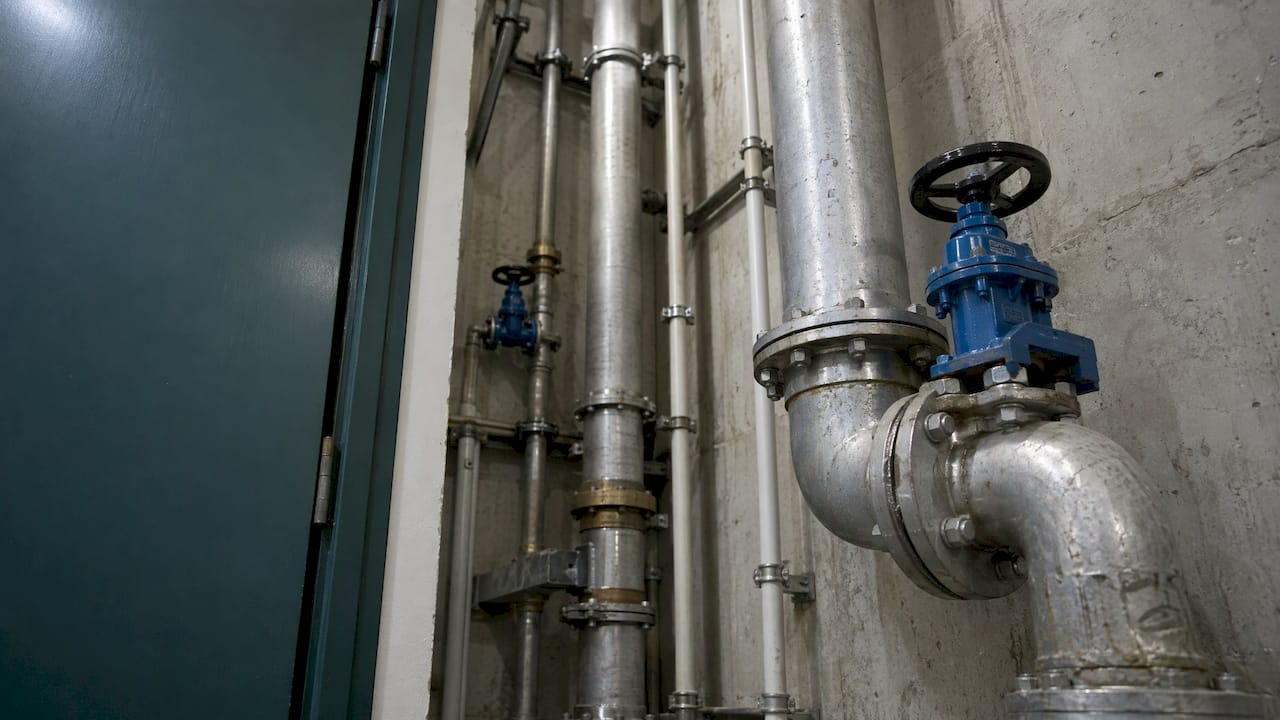
Water service approval in Singapore is the regulatory process by which PUB, the national water agency, is satisfied that the internal water piping of a building is designed, installed and tested in accordance with its requirements. For most in-premises installations, the process is a notification by a Professional Engineer (PE) or PUB Licensed Plumber (LP) before work begins, followed by a Certificate of Satisfactory Completion once the installation has been tested. It is separate from opening a utilities account, which is the administrative step that precedes meter installation and turn-on. This article sets out what the approval covers, who is permitted to submit, which technical standards apply and the sequence of steps for developers, building owners and contractors.
TL;DR
- Water service approval concerns the technical compliance of internal piping with PUB regulations. Activating the supply account with SP Services is a distinct administrative step.
- Under the simplified procedure, a PE or LP notifies PUB with site plans and schematic drawings before work starts and submits a Certificate of Satisfactory Completion afterward.
- Regulated work must be done by a PUB Licensed Plumber, and installations involving pumping equipment or a water tank require a PE to design and supervise.
- Designs must comply with the Public Utilities (Water Supply) Regulations and SS 636, including at least a 2-tick water efficiency rating for new fittings and appliances.
- Works inside the protection corridor of water mains of 300 mm diameter or greater require written PUB clearance before work starts.
Table of Contents
- What water service approval covers
- Works that require PUB involvement
- Who may submit and carry out the work
- Technical requirements and standards
- The submission process, step by step
- Common causes of delay
- Water service approval within the wider approvals programme
- Perspective
- How Aman Engineering Consultancy supports PUB-related submissions
- Preparing a submission: a checklist
- FAQ
- Sources
What water service approval covers
A water service installation (WSI) is the system of pipes, fittings and associated equipment that conveys potable water within premises, downstream of the point of connection to PUB’s network. According to PUB’s Handbook on Application for Water Supply, WSI works include constructing, installing, altering, repairing or replacing such an installation. A new building, an extension, an addition and alteration (A&A) project and a change in plumbing layout during renovation can each fall within this definition.
The approval process addresses technical compliance. It confirms that the design uses compliant fittings, that the installation has been carried out by qualified persons and that it has been tested as safe for operation. It does not, on its own, result in water being supplied. The supply depends on the account and meter steps described below.
Approval versus account activation
The two processes are frequently confused, and the confusion delays projects. The distinction is as follows.
| Aspect | Water service approval (PUB) | Supply account activation (SP Services) |
|---|---|---|
| Nature | Technical compliance of internal piping | Administrative request for water supply |
| Submitted by | PE or Licensed Plumber | Owner or developer |
| Primary output | Notification or approval of plans; Certificate of Satisfactory Completion | Utilities account, followed by meter installation |
| Timing | Before work starts and at completion | Before the meter is installed and supply turned on |
The handbook states that the account must be opened before the water meter is installed and the supply turned on. Owners should therefore open the account in parallel with the late stage of construction, and not after the installation is complete.
Works that require PUB involvement
The following categories of work are relevant to most commercial, industrial and residential projects.
- Water service installations inside premises. New installations, alterations, repairs and replacements fall under the notification or approval procedure.
- Installations with pumping equipment or a water tank. The handbook requires a Professional Engineer to design and supervise these installations.
- Works near water mains. Specified activities within the water-pipe protection corridor require PUB notification or approval, depending on pipe diameter. For construction works inside the protection corridor of water mains of 300 mm diameter or greater, PUB’s advisory note on preventing damage to watermains states that developers must obtain written clearance before starting, and gives a typical review time of 14 working days.
- Drainage and sewerage connections. These follow a related but separate PUB process. Developers dealing with diversion of existing sewers can refer to our note on the sewer diversion permit.
PUB’s Building Plan Unit is the stated contact for consultations and submissions regarding water supply, sewerage and drainage, at pub_bpu@pub.gov.sg, as published on PUB’s used water page.
Who may submit and carry out the work
Regulated water service work must be carried out by a PUB Licensed Plumber. A Professional Engineer must design and supervise any installation involving pumping equipment or a water tank. The owner or developer bears the duty of engaging the required professionals and of ensuring that the work complies with PUB requirements.

The practical consequence is that responsibility cannot be delegated to an unlicensed contractor. PUB’s page on water supply services addresses the obligations of professionals directly, and project teams should read it before appointing the plumbing contractor. Minor tasks such as replacing a tap are commonly treated differently from regulated installation work, but the classification of a given task should be confirmed with the Licensed Plumber or PUB before work commences.
On a multidisciplinary project, the PE responsible for water services must coordinate with architects, structural engineers and mechanical and electrical (M&E) consultants, because tank locations, pump rooms, riser positions and slab penetrations affect other disciplines. Our mechanical engineering consultancy practice handles this coordination for building projects.
Technical requirements and standards
Submissions must comply with the Public Utilities (Water Supply) Regulations, Singapore Standard SS 636 and other relevant statutory requirements, according to the PUB handbook. SS 636 is the code of practice for water services and records the accepted standard of good practice in plumbing work. All plumbing work should comply with it.
The following design requirements apply.
- Compliant fittings. Water fittings installed in a WSI must comply with standards prescribed or stipulated by PUB.
- No soldering. The handbook directs that soldering be avoided, with lead-free capillary-joint materials used.
- Water conservation measures. Designs are expected to adopt water-conservation measures.
- Water efficiency labelling. Amendment No. 1 to SS 636:2018 requires water fittings and appliances in new developments and in premises undergoing renovation to carry a water efficiency label of at least 2 ticks under the Mandatory Water Efficiency Labelling Scheme.
Procurement should therefore be checked against the label requirement before fittings are ordered. Substituting a lower-rated fixture late in a fit-out is a common source of rework. The same principle of verifying products against stated performance requirements, and of testing installations before handover, is discussed in this watertightness test guide for owners.
Larger consumers and ongoing obligations
Water efficiency obligations continue after handover for some premises. PUB’s mandatory water efficiency requirements include, for specified large users, submission of an annual Water Efficiency Management Plan by 30 June for at least three consecutive years and the appointment of a Water Efficiency Manager. Building owners should confirm with PUB whether their premises fall within the specified categories.

The submission process, step by step
The following sequence reflects the simplified procedure for water service installations within premises, as described in the PUB handbook.
- Appoint the qualified person. The owner or developer engages a PE or a PUB Licensed Plumber, depending on the scope. A PE is required where pumping equipment or a water tank is involved.
- Prepare the plans. The PE or LP prepares site plans and schematic drawings of the water service installation in conformity with SS 636 and the Water Supply Regulations.
- Notify PUB before work begins. Under the simplified procedure, the PE or LP notifies PUB with the plans before commencement. PUB’s page on water supply services indicates that PEs and LPs need not obtain PUB approval or apply for PUB inspection before turn-on under this procedure.
- Clear any protection corridor works. Where construction affects the corridor of mains of 300 mm or more, obtain written PUB clearance in advance. Allow the typical 14 working days stated in the advisory note, and more if the proposal requires revision.
- Carry out the installation. The work is performed by the Licensed Plumber, with PE supervision where required.
- Test and inspect. The PE or LP inspects the completed installation. The handbook states that the Certificate of Satisfactory Completion must certify that the installation and associated electrical devices and equipment have been tested and are safe and acceptable for operation.
- Submit the Certificate of Satisfactory Completion. This is submitted to PUB after completion.
- Open the SP Services account. The owner or developer opens the account.
- Arrange meter installation. After the account is opened, the PE or LP can arrange water-meter installation with PUB, following which supply is turned on. The handbook notes that connection fees may apply, and applicants should confirm the current charges with PUB.
For a step-by-step treatment of broader PUB submissions, see our guide to the PUB submission process.
Common causes of delay
The following issues recur on building projects and can be prevented at the planning stage.
- Late appointment of the PE. Where a water tank or pump is part of the design, the PE must be engaged early enough to coordinate room sizes and structural loads.
- Account opened too late. Because the meter cannot be installed until the SP Services account exists, a late application postpones turn-on even when the installation is complete.
- Unchecked fittings. Products lacking the required water efficiency label or conforming standard must be replaced before certification.
- Unidentified mains. Excavation, piling or heavy loading near a main of 300 mm or more proceeds without clearance because the corridor was not identified from the utility records at design stage.
- Incomplete test records. The certificate depends on documented testing. Pressure test results should be recorded as the work proceeds, and not reconstructed afterward.
Water service approval within the wider approvals programme
PUB is one of several authorities involved in a building project. The Building and Construction Authority (BCA), Urban Redevelopment Authority (URA), Singapore Civil Defence Force (SCDF), Housing and Development Board (HDB) and JTC may each require separate submissions, and the sequence of these affects when the water installation can be finalised. A fire-fighting water tank, for instance, involves both SCDF and PUB considerations. Our comparison of PUB with other Singapore regulatory agencies sets out how the requirements relate, and our guide to authority approvals for renovation covers alteration works in existing buildings.
Perspective
Water service approval is frequently treated as a late-stage formality, and in our experience this is the reason it becomes a late-stage problem. The technical content of the submission, namely tank and pump arrangements, riser routes, fitting specifications and test procedures, is determined during design. Where the PE is engaged only at the notification stage, discrepancies with other disciplines have already been built into the drawings.
We therefore coordinate water services with the architectural, structural and M&E design from the outset. Our multidisciplinary PE team and single-point statutory coordination are intended to ensure that PUB, BCA, SCDF and other submissions are consistent with one another, and that the sequencing of notification, testing, certification and account activation is planned against the construction programme.
For owners and developers, the benefit is a documented compliance trail and predictable handover. For contractors, it is clarity on which party holds which responsibility. We regard early engagement of a PE as the most reliable measure for protecting the programme.
Aman
How Aman Engineering Consultancy supports PUB-related submissions
Aman Engineering Consultancy provides statutory submissions, PE endorsements and authority approval coordination for property developers, construction firms and building owners in Singapore, together with mechanical engineering, project management and BIM coordination. Where water services form part of a new build, an A&A project or a rectification programme, our team can prepare and coordinate the submissions and the supporting engineering. Details of the engagement scope are available on our authority approvals page, and enquiries can be directed through the Aman Engineering Consultancy website.
Project teams that require coordinated drawings before submission may also consider 3D BIM and shop drawing production, which allows clashes between pipework, structure and services to be resolved before installation.
Preparing a submission: a checklist
| Item | Confirm before notification |
|---|---|
| Qualified person | PE or PUB Licensed Plumber engaged for the scope |
| Drawings | Site plan and schematic drawings consistent with SS 636 |
| Fittings | Compliant with PUB-stipulated standards; at least 2-tick water efficiency label |
| Joints | Lead-free capillary-joint materials; no soldering |
| Mains | Protection corridor checked; written clearance obtained for mains of 300 mm or more |
| Testing | Test procedure and recording method agreed |
| Account | SP Services account application scheduled before meter installation |
FAQ
Is water service approval the same as applying for a water supply account?
No. Approval concerns the technical compliance of the internal piping with PUB requirements, and the account with SP Services is the administrative request for supply. The account must be open before the meter is installed and the water turned on, so both processes must be completed.
Who is permitted to submit water service plans to PUB?
A Professional Engineer or a PUB Licensed Plumber submits under the simplified procedure. A PE is required to design and supervise installations that include pumping equipment or a water tank. The owner or developer is responsible for engaging them.
Is PUB inspection required before the water is turned on?
Under the simplified procedure, PEs and LPs notify PUB before work and submit a Certificate of Satisfactory Completion afterward. They need not obtain PUB approval or apply for PUB inspection before turn-on. The certificate must confirm that the installation has been tested and is safe for operation.
When is written PUB clearance needed before construction?
Clearance is required for construction works inside the protection corridor of water mains with a diameter of 300 mm or greater. PUB’s advisory note gives a typical review time of 14 working days, so the application should be made before site works are scheduled.
Sources
- PUB Handbook on Application for Water Supply (2022)
- PUB advisory note on prevention of damage to watermains (2021)
- PUB: Water Supply Services for professionals
- Amendment No. 1 to SS 636:2018, Singapore Standards eShop
- PUB: Used Water