1. Introduction: Why RMF Matters in Industrial Plant Shutdowns
Plant shutdowns, turnarounds, and major maintenance campaigns are among the highest-risk windows in the lifecycle of any refinery, chemical plant, power station, or pharmaceutical facility. During these periods, multiple systems go offline simultaneously, safety-critical protections may be temporarily impaired, and hundreds of workers from different trades converge on a single site under intense schedule pressure.
This article answers a question that plant owners, facility managers, and EPC contractors across Singapore and ASEAN routinely face: when is a risk management facilitator (RMF) required for plant shutdown and maintenance? We frame the answer as a practical FAQ, covering regulatory triggers, project complexity thresholds, and concrete decision criteria.
Shutdown risk management is the discipline of systematically identifying, evaluating, and controlling hazards that arise specifically because a plant is transitioning from normal operations to a maintenance state and back again. It sits within the broader fields of risk management, risk assessment, and safe work procedures. Without it, the consequences can range from serious injuries to catastrophic asset loss.
AMAN Engineering Consultancy Pte Ltd is a Singapore-based engineering and architectural consultancy with hands-on experience in risk management, structural inspections, authority submissions, and shutdown planning for industrial sites. The sections that follow will help you determine exactly when your project needs an independent RMF on board.
2. FAQ: Quick Answers on When an RMF Is Required
Is an RMF mandatory for every plant shutdown? No. A risk management facilitator is typically required for high-risk or complex shutdowns – for example, those involving confined space entry, hot work in flammable atmospheres, or simultaneous operations across multiple units. Routine equipment swaps that can be completed within a single shift under standard permits may not warrant a dedicated RMF.
At what project value or risk level should an RMF be appointed? The trigger is risk, not just dollar value. Appointment is recommended once work crosses a defined risk threshold: a multi-day total shutdown, major equipment change, significant process safety hazard, or any activity where high-pressure and high-temperature processes present significant hazards requiring facilitation.
How early before a shutdown should the RMF come on board? For a major turnaround, engage the RMF at least three to six months before the scheduled date. This allows time for proper risk assessment, project risk assessment checklist completion, contractor alignment, and safety case review.
Does a WSHO replace the need for an RMF? No. A Workplace Safety and Health Officer manages general site compliance and regulatory requirements. The RMF leads the structured risk management process – facilitating workshops, challenging assumptions, and designing risk response control strategies specific to shutdown phases.
Who typically appoints the RMF? Plant owners or main contractors appoint a competent, independent RMF, often sourced from a specialist consultancy such as AMAN Engineering Consultancy Pte Ltd.
3. Role of the Risk Management Facilitator in Shutdown Risk Management
A risk management facilitator in the industrial context is a qualified professional who leads and structures the risk management process for high-risk plant shutdowns. The RMF operates at the intersection of engineering and safety, bridging the gap between design intent, operational reality, and regulatory expectations. The role evolved significantly after the 2004 Nicoll Highway collapse in Singapore, which underscored the need for independent safety facilitation in complex engineering projects.
Plant shutdowns often involve a large influx of temporary contractors needing coordination. High-density labor during these windows requires a facilitator to manage various risk interactions – mechanical, electrical, instrumentation, and process teams all working in overlapping zones. The RMF facilitates hazard identification and risk management sessions with these multidisciplinary teams, ensuring no discipline’s concerns are overlooked.
The involvement of a risk management facilitator is critical for complex operations during shutdowns because the RMF is independent from line operations. This independence allows them to challenge assumptions and push back against “we’ve always done it this way” complacency. They bring a structured approach to evaluating every specific task on the shutdown work list.
Once hazards are identified and assessed, the RMF documents risk response control strategies and integrates them into shutdown schedules, method statements, and safe work procedures. This ensures that risk analysis outputs translate into real controls – not just paper exercises.
4. Regulatory and Standards Triggers for Appointing an RMF
Singapore’s regulatory framework provides several triggers that effectively require RMF-type roles, even where the exact title is not always named in law.
-
WSH Act and Risk Management Regulations: The Workplace Safety and Health Act requires employers to conduct risk assessment for both routine and non-routine work, which explicitly includes shutdowns and maintenance. Records must be kept for at least three years, and multidisciplinary teams must undertake the assessment. The RMF ensures compliance with the WSH Act and DfS Regulations by leading this process.
-
Major Hazard Installations (MHI) Regulations: Plants classified as MHIs under the WSH (Major Hazard Installations) Regulations must maintain a safety case and demonstrate ALARP. The safety case must be reviewed before major operational changes – including shutdowns that alter risk profiles. Quantitative Risk Assessment (QRA) is necessary for major hazards at these facilities. Safety case submissions to the Major Hazards Department are required at least six months before planned modifications.
-
SCDF and NEA requirements: For plants storing or handling hazardous substances above defined thresholds (e.g., 5,000 m³ of flammable or toxic liquids), QRA frameworks and fire safety compliance requirements drive the need for competent facilitation during shutdowns.
-
The PSR framework ensures safety is prioritized in project progression, requiring staged reviews that an RMF coordinates.
-
Corporate and insurer standards: Many multinational operators mandate a formal risk assessment led by a qualified facilitator for any outage impacting safety-critical systems – emergency shutdown (ESD) systems, firewater pumps, inerting systems, or any scenario involving temporary impairment of safeguards. Regulatory compliance may require independent risk assessments during these high-risk activities.
5. Risk-Based Criteria: How to Decide When an RMF Is Needed
Beyond strict legal triggers, companies should use a risk based approach to determine whether an RMF is needed. Risk tolerance – a company’s evaluated capability to absorb and respond to risks – varies between organizations, but several factors consistently signal that facilitation is required.
Qualitative criteria that indicate RMF appointment:
-
Multiple overlapping high-risk activities or simultaneous operations (SIMOPS)
-
Critical path work where the possible consequences of failure include extended production loss or environmental release
-
Work in aging facilities with uncertainty about integrity (corrosion, embrittlement, missing inspection data)
-
Inexperienced personnel on site – unfamiliar tasks increase the likelihood of delays and incidents during shutdowns
-
Over aggressive estimates or aggressive estimates in productivity planning, which can create serious bottlenecks when reality diverges from the project plan
A preliminary risk assessment should screen shutdown scopes early. If the worst possible scenario includes potential for fatality, major asset damage, or significant environmental release, an RMF should lead the detailed risk assessment.
Organizations with conservative risk tolerance may appoint an RMF for all major maintenance events. Others focus on shutdowns above defined consequence thresholds. Either way, adopting a simple decision matrix or checklist is recommended:
|
Criterion |
Threshold |
|---|---|
|
Shutdown duration |
> 72 hours |
|
Concurrent disciplines |
≥ 3 major trades |
|
Contractors on site |
> 3 separate contractors |
|
Safety-critical systems offline |
Any ESD, firewater, purge system impaired |
|
Hazardous inventory |
Above regulatory thresholds |
|
Potential impact |
Fatality, major release, or significant financial loss |
If any row triggers “yes,” appoint an RMF.
6. Shutdown Scenarios Where an RMF Is Strongly Recommended
The following scenarios illustrate concrete situations where an RMF adds the greatest potential value.
Full refinery turnaround (every 4–6 years): Column internals replacement, furnace re-tubing, and catalyst change-out across multiple units. Simultaneous operations increase the need for risk management facilitation to prevent accidents when hot work, confined space entry, and heavy lifts happen in adjacent zones. Risk management facilitators help mitigate conflicts during these simultaneous operations.
Power plant major outage: HRSG retubing and turbine rotor replacement involve high lifts, confined space work, and high-energy isolations. Critical path tasks in these outages can cause serious project delays, and tight schedules during operations can compromise safety and necessitate a risk facilitator.
Maintenance in explosive atmospheres: Work in Zone 1 or Zone 2 classified areas requiring combined hot work, purging, and temporary isolation of automatic protections. High-pressure and high-temperature processes present significant hazards requiring facilitation at every step.
Brownfield modification during partial shutdown: Live units operating adjacent to isolated equipment create complex tasks for structural integrity management. The risks involved multiply when live process fluids are separated from maintenance zones by a single isolation barrier.
Revenue-critical outages (e.g., LNG train): Shutdowns under extreme schedule or cost pressure, where revenue loss per day is substantial. Rarity of materials in the supply chain can cause major delays, and the potential impact of a likely delay is enormous. Project management biases toward over aggressive estimates can overshadow safety issues, making independent RMF support essential. Additionally, the additional cost of an RMF is dwarfed by the planned outlay for the turnaround itself.

7. What the RMF Actually Does During Each Stage of Plant Shutdown
The RMF’s involvement follows the project lifecycle – from early planning through restart – and maps directly onto a risk management framework of identify, assess, mitigate, implement controls, and continuous monitoring.
Pre-Shutdown Planning (3–6 Months Ahead)
-
Facilitating detailed risk assessment workshops using a specific methodology suited to the plant
-
Validating hazard identification against shutdown task lists and isolation philosophies
-
Challenging shutdown sequence for safety and resilience – the first step in preventing cascading failures
-
The RMF prepares critical safety submissions for project phases, including safety case revisions for MHI-registered plants
-
Reviewing contractor method statements and ensuring construction teams have adequate safe work procedures
During Shutdown Execution
-
Supporting risk response control through daily or weekly risk reviews
-
The RMF monitors and updates the Hazard Register during construction and execution, capturing new hazards as they emerge – because unexpected equipment issues discovered during shutdowns necessitate reassessment of risks
-
Advising on Management of Change (MOC) when scope variations arise; changes in maintenance scope require reassessment and possible facilitation
-
Coordinating security controls around temporary works, live-dead boundaries, and permit conditions
-
Maintaining oversight of the risk assessment register as conditions evolve
Post-Shutdown and Restart
-
Capturing lessons learned and debriefing cross-disciplinary teams
-
Updating plant risk assessments and refining safe work procedures based on observed performance
-
Validating that all safety-critical functions are restored before restart
-
Feeding findings into future shutdown planning so residual risk is progressively reduced
8. Core Risk Assessment Techniques Used by the RMF
The RMF’s toolkit includes qualitative, semi-quantitative, and quantitative methods – each selected based on the specific task and its consequences.
Qualitative techniques:
-
HAZID is used for hazard identification in projects, typically at the start of shutdown planning to capture broad categories of risk
-
Job safety analysis for individual high-risk tasks such as confined space entry or breaking containment
-
What-if reviews tailored to shutdown task lists and method statements
-
HAZOP, which is traditionally used for process deviations, is also adapted for tunneling systems in LTA projects and can be applied to shutdown scenarios involving process transitions
Semi-quantitative and quantitative methods:
-
Risk matrices for evaluating and ranking hazards by likelihood and consequence
-
LOPA (Layer of Protection Analysis) for critical tasks where high-consequence activities such as confined space entry require formal risk assessments
-
Fault tree analysis and event tree analysis for safety-critical system evaluations
-
High-hazard tasks necessitate a risk management facilitator for structured assessments using these tools
Bow-tie diagrams: These clarify preventive barriers (isolations, purging, lock-out/tag-out) and mitigative barriers (fire protection, gas detection, emergency response) during shutdown. They are particularly effective for communicating risk analysis results to non-specialist audiences.
An experienced RMF integrates these techniques into the plant’s existing risk management process rather than creating a parallel system. Risk assessments help ensure that hazards are systematically identified and managed across every phase.
9. Safe Work Procedures, Permits, and RMF Interface with Site Teams
RMF work must translate into actionable intelligence for site teams – not just paper studies sitting in a filing cabinet.
The RMF reviews and helps refine safe work procedures for high-risk tasks: confined space entry, hot work, lifting operations, breaking containment, and high-voltage isolation. Each procedure is stress-tested against the risk assessment outputs to confirm that controls match the identified hazards.
The interface between RMF and permit-to-work (PTW) systems is critical. Risk assessment outcomes become permit conditions and control checklists. For electronic PTW systems, the RMF may define mandatory hold points and approval gates tied to specific risk thresholds. This prevents the maintenance department from issuing permits for work that hasn’t been properly assessed.
Coordination extends to WSHOs, supervisors, and contractor safety staff. The RMF ensures that risk response control measures are clearly owned – every control has a name, a timeline, and a verification method. The team typically replies to emerging hazards through structured escalation rather than ad-hoc decisions.
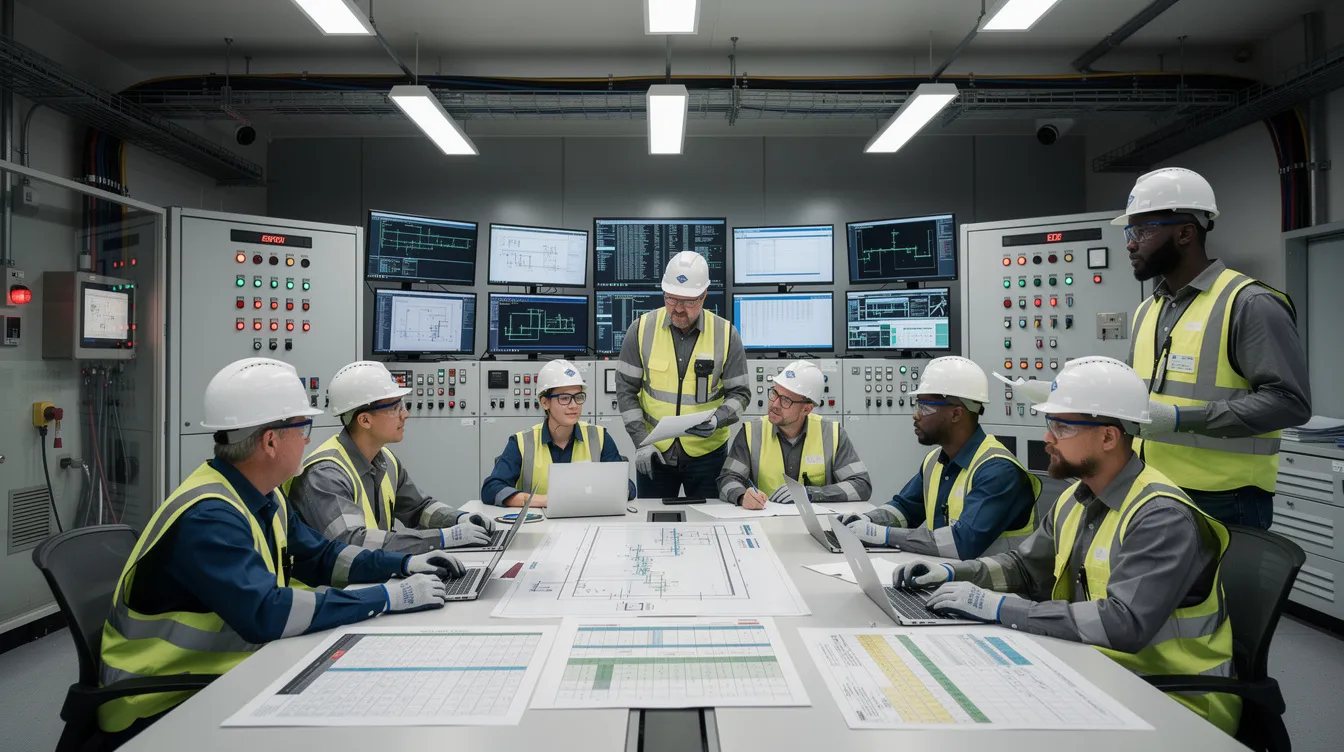
In complex shutdowns, the RMF may help design shutdown “control rooms” and visual dashboards supporting continuous monitoring of key risk indicators: number of simultaneous hot works, isolations pending clearance, gas test results, and crane lift status. These dashboards give management actionable intelligence and reduce encountering difficulty when site conditions change rapidly.
10. Benefits of Appointing an RMF for Shutdown and Maintenance
Many organizations that systematically use RMFs for major shutdowns report measurably better safety and reliability outcomes. The benefits span safety, operations, finances, and reputation.
Safety benefits:
-
Fewer incidents and near misses during critical maintenance windows
-
Better control of high-energy and process safety risks
-
Workplace safety culture strengthened through visible independent oversight
-
Reduced exposure to evolving threats from aging equipment and process changes
Operational benefits:
-
Improved schedule certainty – the RMF helps avoid delays caused by unplanned scope changes or rework
-
Faster recovery from emerging issues through structured contingency planning
-
Reduced lost productivity from stop-work orders or incident investigations
Financial benefits:
-
Lower total outage costs through fewer delays, reduced rework, and protection of high-value assets
-
Immediate expenses for the RMF are offset by avoided incident costs, which can be orders of magnitude larger
-
Lack of risk management can lead to lost customers and orders when production commitments are missed
Regulatory and reputational advantages:
-
Demonstrated due diligence satisfies regulators and aligns with the security posture expected by insurers and corporate governance
-
Easier audits and smoother interactions with federal agencies and national institute standards bodies
-
Stronger confidence from corporate HQ, outside resources, and joint venture partners that the risk management strategy is robust
11. How AMAN Engineering Consultancy Pte Ltd Supports Industrial Shutdown Risk Management
AMAN Engineering Consultancy Pte Ltd brings multidisciplinary expertise to industrial and infrastructure projects across Singapore and the ASEAN region. Our team understands that shutdowns are not just maintenance windows – they are high-risk transitions requiring technology, engineering judgment, and independent facilitation.
We provide experienced risk management facilitators for industrial plant shutdown and maintenance projects, integrating with client teams from early planning through restart. Our RMF acts as the independent voice that keeps the rmf process rigorous and aligned with both regulatory requirements and company risk tolerance.
Beyond facilitation, AMAN offers related capabilities that support holistic shutdown risk management:
-
Periodic structural inspections and façade inspections for aging plant structures
-
Impact assessments and fire safety certification
-
Mechanical and electrical endorsements under the prepare step for authority submissions
Our BIM and 3D modelling capabilities (including Tekla and plant models) allow us to visualize shutdown scopes, lifting paths, temporary works, and access constraints – feeding directly into hazard identification and risk mitigation planning.
If you are a plant owner, facility manager, or EPC contractor with an upcoming turnaround or high-risk maintenance campaign, consult AMAN to structure a robust shutdown risk management framework tailored to your site conditions and security programs.
12. Visual Aids and Picture Suggestions for the FAQ Page
Effective visuals make the RMF’s value tangible for plant managers and engineers who need to brief leadership or justify costs. Below are recommended visual aids for this FAQ page.
Shutdown risk management process flowchart: A simplified graphic showing the rmf steps: scope definition → preliminary risk assessment → RMF appointment decision → detailed risk assessment → execution monitoring → lessons learned. This makes the process intuitive and highlights where the dfs register and risk management strategy intersect.
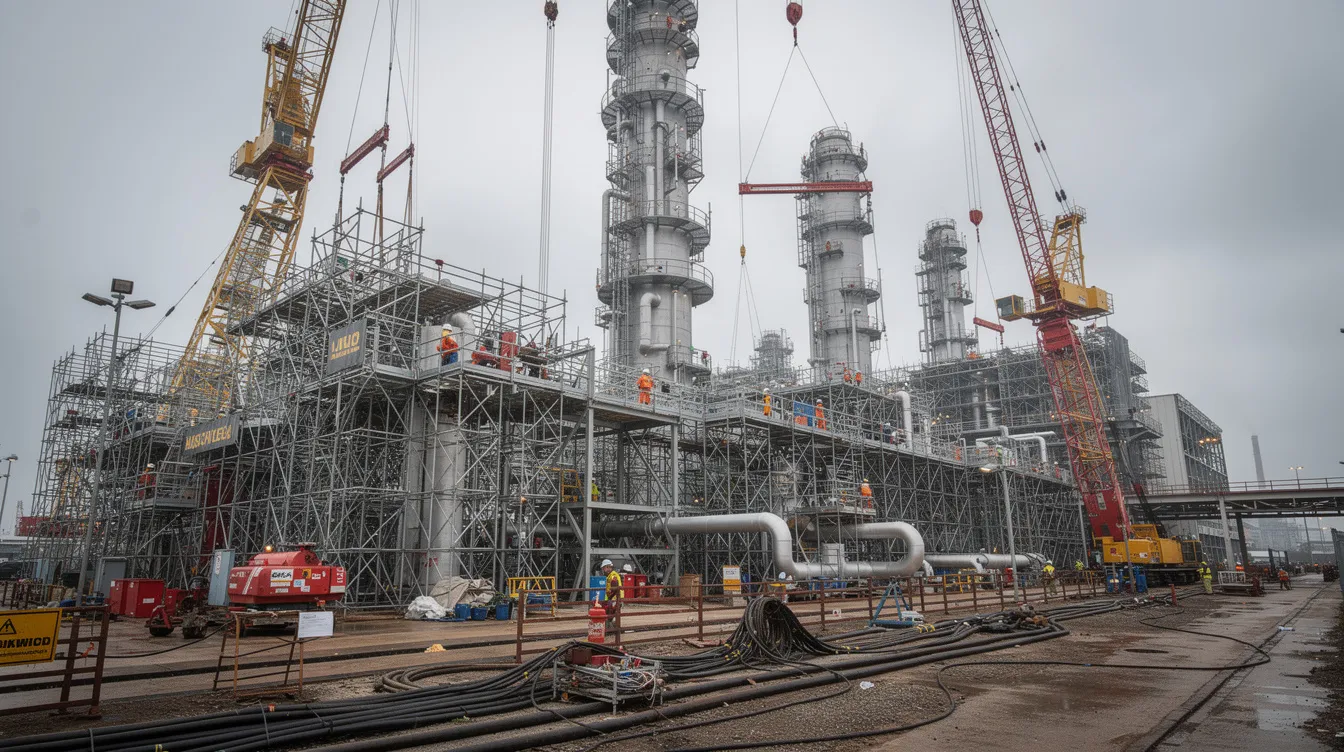
Annotated plant shutdown photograph: A photograph of a real industrial plant shutdown scene – for example, a scaffolded distillation column or turbine hall outage – with overlays labelling where the RMF influences work: risk workshops, permit control points, and SIMOPS coordination boards.
Bow-tie diagram: A visual depicting a typical shutdown hazard (e.g., hydrocarbon release during opening of equipment) with preventive and mitigative barriers clearly labelled. This reinforces the assessment and control logic discussed in Section 8.
Role comparison chart: A side-by-side table comparing RMF vs WSHO vs project manager responsibilities, helping non-specialist readers understand why one role does not replace another.
|
Responsibility |
RMF |
WSHO |
Project Manager |
|---|---|---|---|
|
Lead risk assessment workshops |
✔ |
||
|
Monitor regulatory compliance |
✔ |
||
|
Manage schedule and costs |
✔ |
||
|
Challenge shutdown sequence for safety |
✔ |
✔ |
|
|
Update risk registers during execution |
✔ |
||
|
Coordinate contractor safety |
✔ |
✔ |
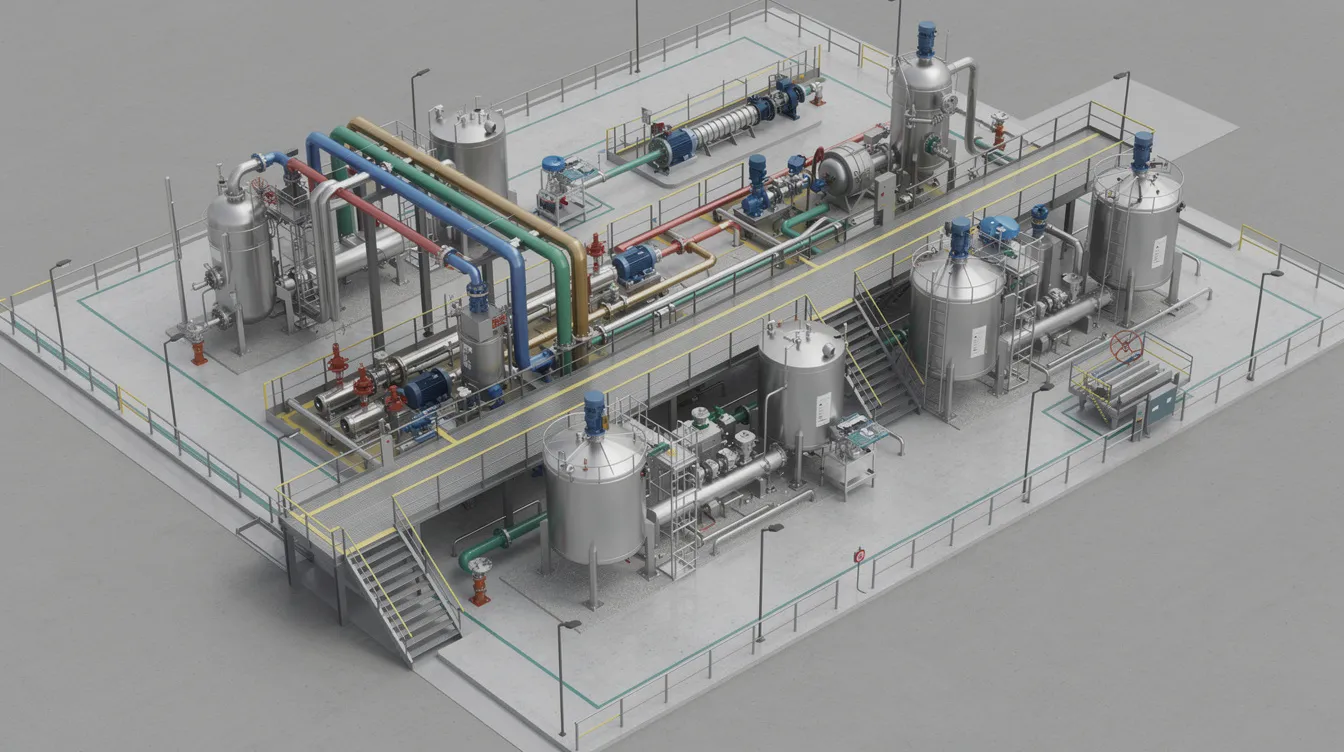
BIM model screenshots: Mock-ups or screenshots of 3D BIM models showing congested plant areas, crane swing radii, and temporary access routes. These illustrate how digital engineering supports hazard identification and risk mitigation planning, turning abstract risk into something teams can see and act on.
Appointing the right RMF early is one of the most cost-effective decisions a plant owner can make before a major shutdown. The facilitator pays for themselves many times over – in fewer incidents, tighter schedules, and confidence that every risk has been addressed with a structured approach.
Ready to plan your next turnaround with proper risk management? Contact AMAN Engineering Consultancy Pte Ltd to discuss how our experienced risk management facilitators can support your shutdown from planning through restart.