
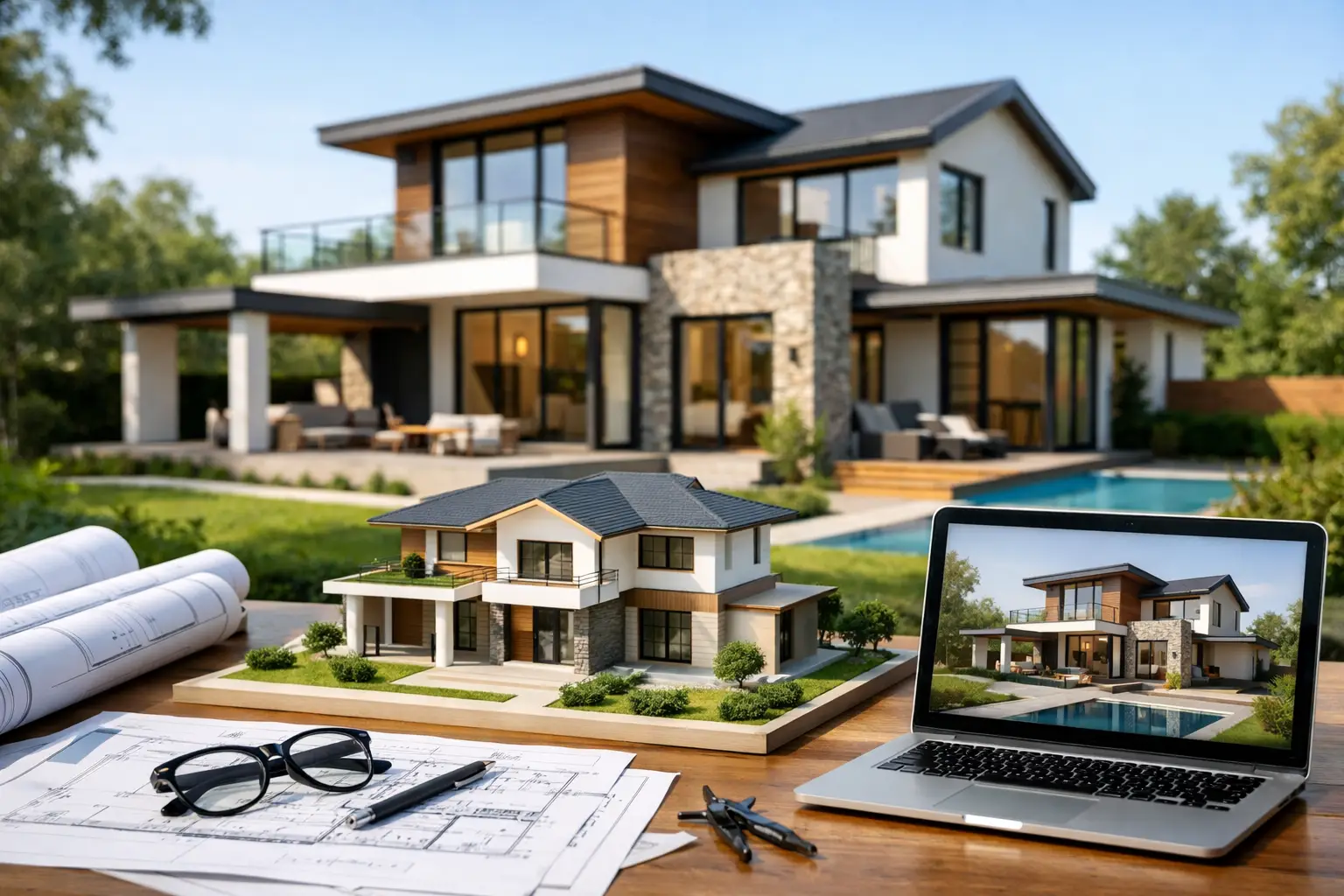
A landed house project rarely fails because of one big mistake. More often, it slows down through small decisions made too early, too late, or without the right technical input. That is why architectural design for landed house work needs more than a good-looking concept. It needs a design process that aligns space planning, structural feasibility, authority requirements, and construction practicality from the start.
For owners, this usually begins with a simple goal: a larger home, better natural light, more privacy, or a layout that fits modern family life. The challenge is that every design move affects something else. A higher ceiling may change structural loading. A larger window opening may affect facade detailing, heat gain, and approvals. A rear extension may seem straightforward until setback controls, drainage, or fire safety conditions come into play.
What architectural design for landed house projects really involves
At residential scale, architectural design is often misunderstood as facade styling or room arrangement. In practice, it is the coordination layer that turns owner requirements into a buildable, approvable scheme. That means balancing livability, budget, site conditions, and statutory controls at the same time.
For a landed house, the design team must study the existing plot, neighboring context, access, orientation, topography, and current built form before a proposal can be considered reliable. If the project is a rebuild, the design freedom may be wider, but so are the technical obligations. If it is an addition and alteration project, the constraints can be tighter because the new design must work with existing structural systems, services, and submission history.
This is where many homeowners underestimate risk. A sketch that appears reasonable on paper may still be non-compliant, structurally inefficient, or expensive to construct. Good design is not only about what fits on the site. It is about what can be approved, coordinated, and executed without repeated redesign.
Start with the site, not the style
Owners often come in with reference images and a preferred architectural language – modern tropical, minimalist, resort, or classic contemporary. That is useful, but style should not lead the process. The site should.
A narrow plot, corner lot, sloping terrain, or house with close side boundaries will each produce different planning responses. Sun path, wind direction, street exposure, and neighboring window positions all shape how openings, screens, and private zones should be placed. If the site is noise-exposed, a dramatic open frontage may look attractive but perform poorly in daily use.
The best landed house designs usually solve practical issues first and express style through those solutions. Deep overhangs, shaded voids, controlled glazing, and carefully placed courtyards can improve comfort while also giving the house a stronger architectural identity. When design starts from climate, privacy, and use patterns, the result tends to age better.
Layout planning is where value is created
For most owners, the real success of a house is felt in the plan rather than the elevation. A well-planned layout reduces wasted circulation, improves natural ventilation, separates noisy and quiet zones, and supports future family needs.
This is especially relevant for multigenerational households. Ground-floor bedrooms, wider passages, fewer level changes, and clear service access can make the home easier to use over time. Families with young children may prioritize sight lines between kitchen, living, and outdoor areas. Owners who entertain frequently may want stronger separation between private rooms and guest-facing spaces.
There is no universal ideal layout. Open-plan living can feel spacious, but it may reduce acoustic control and privacy. Double-volume spaces create impact, but they consume floor area and can increase cooling demand. Large windows improve daylight, but only when heat and glare are managed properly. Every gain comes with a trade-off, and good design makes those trade-offs visible early.
Compliance should shape the design early
One of the most expensive ways to run a landed house project is to treat authority compliance as a final checkpoint instead of a design input. Setbacks, buildable envelopes, height controls, floor area implications, fire safety provisions, drainage considerations, and utility coordination can all affect the scheme from the first round of planning.
In regulated environments, early submission strategy matters almost as much as design quality. A proposal that ignores approval pathways may need multiple revisions, creating delay for procurement, financing, and construction start. This is why the consultant team must understand not only design intent, but also the practical route through authority submissions and technical endorsements.
Where a project involves reconstruction, extension, retaining structures, significant facade changes, or service upgrades, coordination across disciplines becomes even more important. Architectural drawings need to align with structural design, M&E requirements, and any applicable fire safety or drainage submissions. When that coordination happens late, costs rise quickly.
For clients who want design certainty and regulatory control in one workflow, firms such as Aman Engineering Consultancy are often engaged because the project requires more than drawings – it requires approvals, technical coordination, and execution planning under one lead consultant structure.
Buildability matters as much as appearance
A house can look refined in rendered images and still be difficult to build well. Overly complicated roof forms, excessive cantilevers, awkward structural grids, and facade details with poor water management often create site problems that show up only during construction or after handover.
Buildable design does not mean plain design. It means the details are resolved to suit workmanship, weather exposure, maintenance access, and realistic construction tolerances. For example, recessed joints and hidden gutters may create a clean visual line, but they also need proper waterproofing strategy and maintenance consideration. Similarly, large-format cladding can look elegant, but the support system, movement joints, and long-term durability have to be addressed properly.
This is where multidisciplinary review adds value. Structural and civil input can prevent architectural decisions from becoming expensive engineering problems later. Facade awareness can reduce leakage risk. Project management input can identify sequencing issues before they affect the site program.
Renovation, A&A, or rebuild – the design approach changes
Not every landed house project should be treated as a full rebuild. Some properties have strong structural value and can be upgraded effectively through addition and alteration works. Others may look salvageable but become inefficient once structural rectification, service rerouting, and spatial limitations are fully assessed.
The right path depends on condition, budget, timeline, and desired outcome. If the owner needs a major layout transformation, additional stories, or large-span spaces, retaining the old structure may not always be cost-effective. On the other hand, if the house already has a workable frame and the goal is to modernize, reconfigure, and improve performance, an A&A approach may preserve value and reduce disruption.
That decision should be made only after technical review. Structural assessment, measured drawings, authority constraints, and utility implications all need to be understood before design direction is locked in. Guesswork at this stage usually leads to redesign later.
Designing for performance, not just handover
A landed house is a long-term asset. Architectural decisions should support not only approval and construction, but also daily comfort, maintenance, and resale resilience.
This includes practical matters such as cross-ventilation, daylight control, water drainage, facade cleaning access, and durable material selection. It also includes service coordination. Air-conditioning ledges, electrical distribution, plumbing routes, and rainwater management should be integrated into the design rather than hidden as afterthoughts.
Owners also benefit from planning for future flexibility. A study that can convert into a bedroom, provision for a lift, roof access strategy, or adaptable service zones can extend the functional life of the home. These are not always expensive additions if considered early. They become expensive when retrofit is required after construction.
What clients should ask before appointing a design team
Before moving forward, owners should ask how the consultant approaches code review, submission management, structural coordination, and construction-stage support. A strong concept is only part of the service. The real test is whether the team can carry the project through approvals, technical design development, and site execution without losing control of the original objectives.
It is also worth asking how risks are flagged. Good consultants do not wait for formal submission comments or site clashes to reveal issues. They identify planning limits, likely compliance constraints, and buildability concerns upfront, then advise on practical alternatives.
That is the standard landed house clients should expect. Good architecture should improve how the home looks and feels. Professional architectural design should also reduce approval risk, control avoidable redesign, and support a smoother path to construction. When those outcomes are treated as part of the design itself, the project starts on much stronger ground.
A landed house is too significant an investment to base on isolated drawings or aesthetic preferences alone. The better approach is disciplined design, early technical coordination, and a clear approval strategy that protects the project before concrete is ever poured.