
Designing Secondary Containment: Structural Requirements for Bund Walls in Chemical Storage Areas
Introduction to Chemical Containment
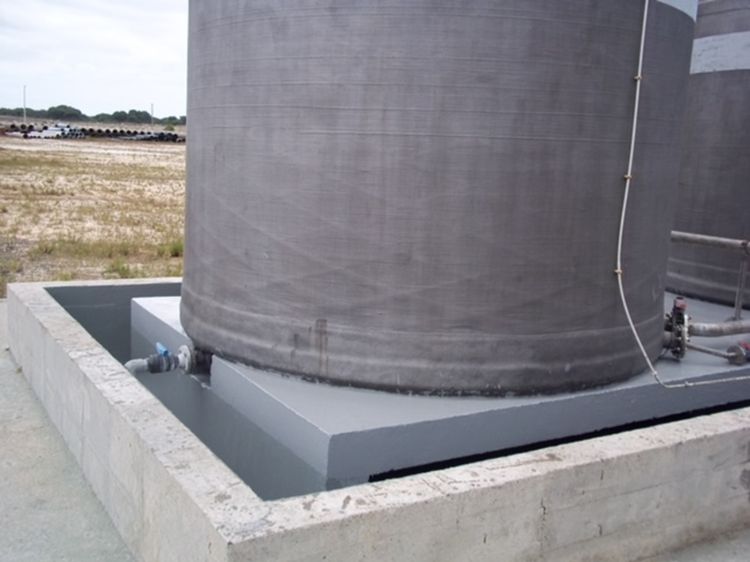
Secondary containment systems provide critical environmental protection. They prevent hazardous chemical spills from reaching local ecosystems. These systems act as a vital second line of defense. Primary containment involves the actual storage tanks or drums. Secondary containment intercepts leaks when these primary vessels fail.
Bund walls represent the most common secondary containment structures.1 Engineers must design these physical structures with extreme precision.
The structural integrity of a bund wall is absolutely paramount. A failed bund wall leads to catastrophic environmental damage. Consequently, regulatory bodies enforce strict design guidelines globally.
Chemical storage facilities must comply with these evolving standards. In 2026, regulations emphasize climate resilience and advanced monitoring. Furthermore, digital visibility is crucial for modern engineering firms.
Companies must communicate their containment expertise effectively online. Therefore, optimizing digital content requires advanced SEO strategies.
High search engine rankings generate valuable industry leads. This comprehensive report details the structural requirements for bund walls.
It thoroughly explains hydrostatic testing and chemical compatibility. It also outlines actionable SEO strategies for engineering professionals.
Regulatory Frameworks and 2026 Standards
Strict regulatory frameworks govern chemical storage containment. Several agencies dictate the design and maintenance of bunds.
Understanding these rules ensures complete legal compliance. Furthermore, non-compliance results in severe financial penalties.
Environmental Protection Agency (EPA) SPCC Rule
The EPA enforces the Spill Prevention, Control, and Countermeasure rule. This is widely known in the industry as the SPCC rule. It is documented under 40 CFR Part 112.2
The SPCC rule targets facilities storing significant oil quantities.
Facilities must prepare an extensive and detailed SPCC plan.3 Compliance requires adequate containment or diversionary structures.
Facilities must construct secondary containment for bulk storage installations.2 The containment must hold the largest single container’s capacity.
Additionally, it must provide sufficient freeboard to contain precipitation.2 In 2026, the EPA continues to update these essential requirements.
Recent amendments emphasize enhanced inspection and rigorous monitoring protocols.5 The EPA actively encourages the adoption of remote monitoring technologies.
Facilities must document their containment calculations thoroughly.6 Inspectors routinely review these calculations during standard site visits. Therefore, maintaining organized design documentation is a mandatory practice.
CIRIA C736 Containment Guidelines
The CIRIA C736 guideline represents the premier international standard. It details containment systems for reliable pollution prevention.7
CIRIA published this guide following the catastrophic Buncefield incident. This guide completely supersedes the older CIRIA R164 document.9
CIRIA C736 provides a sophisticated three-tier risk assessment methodology. It classifies construction requirements based on site-specific hazard risks.7
The standard applies directly to small commercial premises. However, it also governs large petrochemical storage sites.11
The guideline strictly emphasizes professional design and construction oversight.8 Recent 2026 updates address the management of existing facilities.
Upgrading older bunds requires careful structural evaluation and planning.8 Operators must definitively prove that retrofitted systems perform satisfactorily. Regulators scrutinize these upgrades to ensure continuous environmental safety.10
NFPA 30 and OSHA Requirements
The National Fire Protection Association publishes the NFPA 30 code. This established code regulates flammable and combustible liquids.13 OSHA enforces similar safety regulations under 29 CFR 1910.106.13
Secondary containment must withstand specific internal hydrostatic heads.15 NFPA 30 severely restricts piping inside enclosed diked areas.
Only piping directly connected to the enclosed tanks is permitted.15 Furthermore, drainage systems must prevent liquid accumulation under piping.
Grading must slope away from all critical infrastructure.15 Fire protection system controls must remain outside the bund.
Hose connections and foam valves require safe external access.15 Additionally, all structural supports within the bund must be noncombustible.15 Plastic pallets are explicitly prohibited because they melt during fires.13
Containment Capacity and Volume Calculations
Engineers must calculate containment volumes with absolute accuracy. Inadequate capacity guarantees disastrous environmental contamination during a spill. Regulatory rules dictate specific volume multipliers.
The 110% and 25% Rules
The most universal standard is the 110% rule. A bund must hold 110% of the largest tank’s capacity.1 Alternatively, it must hold 25% of the total stored volume. Engineers must design for whichever value is mathematically greater.16
For example, consider a facility with three large tanks. The tanks hold 5,000, 3,000, and 2,000 gallons. The largest tank requires a 5,500-gallon containment capacity. The total volume equals 10,000 gallons. Twenty-five percent of this total equals 2,500 gallons.
Therefore, the required capacity is strictly 5,500 gallons.16 Different jurisdictions sometimes utilize a 10% total volume rule. The EPA SPCC regulations frequently cite this 10% alternative.16 However, the 110% rule remains the most prevalent global standard.
Table 1 summarizes these volumetric regulatory thresholds.
| Regulatory Body | Primary Volume Requirement | Secondary Volume Alternative |
| UK EPA / CIRIA | 110% of largest tank 1 | 25% of total volume 18 |
| US EPA (SPCC) | 110% of largest tank 16 | 10% of total volume 16 |
| OSHA | 100% of largest tank 20 | 10% of total volume 20 |
| HSNO (New Zealand) | 110% of largest tank 21 | Intermediate threshold rules 21 |
Freeboard for Precipitation
Outdoor bund walls accumulate rainwater very rapidly. This precipitation significantly reduces the effective containment volume.22 Consequently, engineers must add freeboard to their volumetric calculations.16
The EPA recommends designing for a 25-year, 24-hour storm event.23 This specific storm metric provides a highly reliable safety margin. Engineers must calculate the localized rainfall depth for this event. They then multiply this depth by the bund’s surface area.
The resulting volume must be added to the 110% requirement.5 Without this extra capacity, standard rainfall causes overflow. If a tank fails during a storm, disaster strikes immediately.
Firewater and Foam Allowances
Fires in chemical storage areas require massive water volumes. Emergency responders also apply thick layers of firefighting foam. The bund must contain this additional fluid without overflowing.1
Standards dictate specific minimum firewater containment capacities. A compound must hold 20 minutes of active firefighting water.21 This is calculated at the facility’s maximum design application rate. This volume is completely additional to the primary spill capacity.21
Furthermore, some regulations recommend an extra 200 mm of freeboard. This specifically accommodates the expansion of firefighting foam.24 Properly sized walls prevent contaminated firewater from polluting nearby rivers.
Structural Engineering Design Principles
Bund walls function as highly specialized retaining walls. They must withstand immense lateral pressures during a catastrophic failure. Structural engineers employ rigorous mathematical models for design.
Hydrostatic Pressure and Load Calculations
When a tank ruptures, fluid floods the containment area. This fluid exerts severe hydrostatic pressure against the bund walls.25 Engineers calculate this pressure using established fluid mechanics principles.
The fundamental equation for hydrostatic pressure is precise. It is defined mathematically as:
Here, represents the stored fluid’s specific density. The variable represents standard gravitational acceleration. The variable represents the total depth of the fluid.25
The total force acts through the fluid’s center of pressure. For a vertical wall, this point is one-third from the base. The wall must behave structurally as a vertical cantilever.28 Engineers generate complex bending moment and shear force diagrams. They use these diagrams to determine necessary steel reinforcement.28
Sliding and Overturning Resistance
Gravity dams and bund walls face two primary failure modes. They can slide horizontally across the foundation base. Alternatively, they can tip over completely due to rotational forces.27 Engineers must ensure the structure’s self-weight prevents both scenarios.
To prevent sliding, the frictional resistance must exceed lateral forces. The limiting friction is the coefficient of friction multiplied by normal reaction.27 To prevent tipping, the resisting moment must exceed the overturning moment.
Engineers strictly calculate all moments around the base of the wall.27 The concrete wall thickness must satisfy both of these critical conditions. A massive, heavy wall provides excellent natural stability.
Eurocode 2 Part 3 and Crack Width Control
Modern liquid retaining structures follow strict international design codes. In Europe, Eurocode 2 Part 3 governs these exact designs.30 This modern standard replaced the older BS 8007 code of practice.29
Concrete naturally shrinks as it cures and dries. This early thermal movement generates severe tensile stresses within the wall.29 If these stresses exceed concrete’s tensile strength, vertical cracks appear. Bund walls must remain completely impermeable to aggressive chemical liquids.
Therefore, engineers must strictly control these microscopic crack widths. Eurocode 2 limits maximum crack widths based on environmental exposure classes. For highly aggressive chemicals, crack widths must remain minute.
Engineers use established formulas to calculate necessary anti-crack reinforcement 31:
Here, represents the maximum allowable crack spacing. The epsilon values represent calculated strains in the steel and concrete.31 Historically, BS 8007 required very high longitudinal reinforcement ratios.
Eurocode 2 generally requires between 0.25% and 0.40% reinforcement.17 This crucial steel must be distributed across both faces of the wall. Proper detailing prevents hazardous liquids from penetrating the concrete matrix.
Seismic Design Considerations
Chemical storage facilities operate in earthquake-prone regions globally. Seismic events trigger violent movement of stored heavy liquids. This aggressive movement is scientifically known as hydrodynamic sloshing.33
Bund walls must be designed for intense ground shaking. In fact, bunds require higher seismic resilience than the tanks.33 If a tank ruptures during an earthquake, the bund must survive.
Engineers must accurately calculate the impulsive and convective hydrodynamic loads. They incorporate these dynamic forces into the ultimate limit state design.33 Reinforcement must absorb high energy without suffering brittle failure.
Construction Materials and Cost Economics
Material selection dictates a bund wall’s longevity and reliability. Engineers evaluate multiple construction methods based on site requirements. Budget constraints often influence the final material choices.
Reinforced Concrete versus Blockwork
Reinforced concrete is the universally recommended material for bunds.17 It provides exceptional structural strength and seamless, monolithic construction.17 Furthermore, un-reinforced materials are strictly prohibited for these hazardous applications.22
Concrete blockwork (CMU) represents a significantly cheaper construction alternative. Builders stack blocks and fill the hollow cells with grout.35 However, blockwork contains numerous porous mortar joints. These joints are highly permeable and prone to chemical degradation.22
Therefore, environmental agencies generally discourage blockwork for primary bund walls.22 Solid brick walls present an even higher risk of chemical seepage. Over time, acidic materials dissolve the mortar entirely.
Table 2 compares the typical construction costs of these materials.
| Material Type | Cost per Square Foot | Structural Integrity | Porosity Risk |
| Poured Concrete | $15 – $60 36 | Extremely High | Very Low |
| Concrete Blockwork | $15 – $30 37 | Moderate | High |
| Solid Brick Wall | $17 – $45 37 | Moderate | Very High |
| Earthen Berm | $5 – $15 39 | Low | Extreme |
Labor costs constitute a significant portion of these estimates. Professional bricklaying ranges widely based on local union rates.38 Concrete formwork requires highly skilled carpentry labor before pouring.
Geosynthetic Liners and Earthen Berms
Earthen bunds consist of heavily compacted soil embankments. Regulations strongly discourage earthen bunds for highly hazardous chemicals.22 They are only acceptable when no other viable alternative exists.22
If earthen berms are used, they require fully impermeable linings. Geosynthetic Cementitious Composite Mats (GCCM) provide a modern engineering solution.40 Advanced products like Concrete Canvas harden rapidly upon hydration.
They form a thin, durable, waterproof concrete layer over the soil.40 High-density polyethylene (HDPE) geomembranes also provide effective soil lining.40 These liners require professional thermal welding to ensure absolute leak tightness.
Chemical Compatibility and Surface Protection
A bund wall must resist the specific chemicals it contains. Bare concrete degrades rapidly when exposed to harsh industrial chemicals. Spilled acids cause severe structural damage known as chemical attack.22
Chemical Resistant Coatings
Engineers specify advanced protective coatings for concrete surfaces.34 These coatings bridge fine cracks and provide an impermeable barrier.17 The chosen coating must withstand long-term chemical immersion.41
Epoxy novolac coatings offer excellent resistance to harsh solvents and alkalis. Vinyl ester linings excel in highly acidic and corrosive environments.41 Polyurethane coatings provide flexibility to accommodate structural movement and thermal shock.
Table 3 details the compatibility of common lining materials.
| Chemical Exposure | Epoxy Coating | Vinyl Ester | Polyurethane |
| Acetic Acid (Glacial) | Not Recommended 42 | Recommended 42 | Limited Service |
| Acetone (100%) | Limited Service 42 | Limited Service 42 | Not Recommended |
| Sodium Hydroxide | Highly Recommended | Recommended | Recommended |
| Hydrochloric Acid | Limited Service | Highly Recommended | Limited Service |
| Chloroform | Not Recommended 44 | Limited Service 44 | Not Recommended |
| Jet Fuel (JP-4) | Recommended | Recommended | Recommended |
Note: Always consult specific manufacturer technical data sheets before application.
Vinyl ester resins, like Derakane 411 and 8084, dominate harsh environments.43 They feature an elastomer-modified backbone for high impact resistance.43 Applying these coatings requires meticulous surface preparation and skilled labor.
Waterstops and Joint Sealants
Even monolithic concrete structures contain necessary construction joints. These joints represent the absolute weakest point in the containment system. Engineers must seal these gaps using chemical resistant waterstops.45
Traditional PVC waterstops fail rapidly when exposed to harsh solvents. Advanced applications require Thermoplastic Vulcanizate (TPV) or stainless steel waterstops.46 Earth Shield TPV waterstops provide broad-spectrum chemical resistance.47
They feature specific tear web designs for handling structural movements.48 Joint sealants must complement these embedded waterstops perfectly. Polyurethane and polysulfide sealants provide elastic, moisture-curing external barriers.49
However, sealant lifecycles are relatively short compared to concrete. They typically require replacement every three to five years.47 Regular sealant replacement prevents slow, invisible ground contamination.
Construction Method Statements (CMS)
Building a bund wall requires a detailed Construction Method Statement. This CMS outlines every sequential step of the building process. It ensures quality control and strict site safety.
Site Preparation and Formwork
The first step involves extensive site clearance and foundation excavation.50 Contractors remove unsuitable topsoil and compact the subgrade thoroughly. A blinding layer of lean concrete is poured to provide a clean workspace.
Next, steel fixers install the designed reinforcement mesh. They carefully position the chemical resistant waterstops at all construction joints.46 Carpenters then erect the wooden or steel formwork to shape the walls.30
The formwork must withstand the immense hydrostatic pressure of wet concrete. Heavy-duty bracing prevents the forms from blowing out during pouring.
Pouring, Curing, and Testing
Concrete is poured continuously to minimize cold joints. Workers use mechanical vibrators to eliminate trapped air pockets and honeycombing. Proper vibration ensures the concrete completely encapsulates the reinforcing steel.
The concrete must cure slowly to prevent early thermal cracking.29 Contractors cover the walls with wet burlap or specialized curing compounds. This retains moisture and moderates the hydration temperature peak.
Once cured, the formwork is carefully stripped away. The walls undergo visual inspection for any surface defects or exposed rebar. Finally, the protective chemical coatings are applied following the manufacturer’s strict guidelines.
Hydrostatic Testing Protocols
Newly constructed bund walls must undergo rigorous hydrostatic testing. This test proves the structure is completely watertight before active use. Testing procedures follow strict engineering standards.
Stabilization and Drop Rates
Historically, BS 8007 governed these testing procedures directly.32 Although superseded by Eurocode 2, its testing principles remain widely used.32 The bund is filled with water slowly.
The fill rate must not exceed 1.5 meters per 24 hours.51 This slow rate prevents sudden, dangerous structural shock. Once filled, a stabilization period allows the concrete to absorb water.
After stabilization, the official 7-day test period begins.32 Engineers measure the water level daily using highly precise instruments. They must account for natural evaporation and any incidental rainfall.
The total permissible drop in water level is strictly regulated. It must not exceed 1/500th of the average water depth, or 10mm.32 Whichever value is smaller dictates the pass or fail criteria.
Autogenous Healing
If minor leaks occur, the test may be extended. Concrete possesses a remarkable property known as autogenous healing.32 Small, microscopic cracks can self-heal over time.
Water reacts with unhydrated cement particles within the crack. This chemical reaction creates calcium carbonate crystals. These crystals slowly bridge and seal the narrow fissure completely.
However, autogenous healing only works for extremely fine cracks. Wider cracks require mechanical repair with specialized epoxy injection resins. A failed test necessitates draining, repairing, and re-testing the entire structure.
Operational Logistics and Maintenance Protocols
A perfectly designed bund fails if improperly maintained. Regular operational checks ensure the system remains ready for sudden emergencies. Facility managers must prioritize these routines.
Drainage and Sump Pump Configurations
Bund walls inevitably collect rainwater and localized facility washdown. This accumulated water reduces the bund’s critical secondary containment capacity.22 Therefore, operators must remove this water promptly and safely.
Containment floors should slope towards a designated collection sump.22 Facilities must never connect these sumps directly to municipal stormwater drains.22 Doing so guarantees widespread pollution during a chemical spill event.
Sump pumps must transfer the accumulated liquid into separate storage tanks.52 The EPA explicitly warns against using fully automatic sump pumps.53 Automatic pumps cannot differentiate between safe rainwater and spilled chemicals.
Consequently, they might automatically pump hazardous waste into the environment. Drain valves offer an alternative to mechanized sump pumps. However, regulations require these valves to remain locked and closed.18
Operators may only open them during actively supervised draining operations.18 The liquid must be characterized and chemically treated before disposal.53
Inspection Schedules and Checklists
Environmental compliance mandates rigorous inspection routines. Facilities must conduct visual inspections at least once a week.54 These checks identify obvious leaks, damaged valves, or structural cracks.
More thorough, documented inspections must occur monthly.54 Operators verify that bund tops are correctly seated and undamaged.56 They must also check that incompatible chemicals are properly segregated.57
Acids must never be stored in the same bund as strong bases. Annual comprehensive inspections require professional engineering oversight.54 Inspectors assess the overall condition of the concrete and joint sealants.
They document their findings meticulously to satisfy EPA SPCC requirements.3 Missing documentation results in severe regulatory fines during unannounced audits.
Lighting and Electrical Safety
Chemical storage areas often contain highly flammable vapors. Standard electrical fixtures pose a severe and constant ignition risk. A single spark can trigger a catastrophic vapor cloud explosion.58
Therefore, lighting within bunded areas must be explicitly explosion-proof.59 Fixtures must meet Class I, Division 1 or 2 hazardous location requirements.59 This rating applies to environments with persistent flammable gases or vapors.58
Additionally, ventilation and lighting should operate on a single external switch.60 The exhaust system must provide a complete air change six times per hour.60 This massive airflow prevents flammable vapors from reaching explosive concentrations.
Failure Modes and Catastrophic Incident Analysis
Analyzing historical failures improves future bund wall designs significantly. Catastrophic tank ruptures present unique hydrodynamic challenges to containment systems. We must learn from past engineering mistakes.
Catastrophic Surge Waves
When a storage tank unzips catastrophically, the entire volume escapes instantly. This sudden release generates a massive, high-velocity liquid surge wave.61 This wave races toward the secondary containment walls violently.
Historical evidence proves these waves easily overtop standard vertical bund walls.61 The immense dynamic force often destroys the retaining structure completely.62 Even if the wall survives the impact, the liquid simply jumps over it.61
Engineers now utilize advanced computational fluid dynamics (CFD) modeling. These models predict the overtopping fraction during a catastrophic failure accurately.63 To mitigate this risk, engineers increase wall heights and add splash deflectors.22
They also maximize the physical distance between the tank and the wall.64 A wider gap allows the wave’s kinetic energy to dissipate harmlessly.
The Buncefield Disaster: A Turning Point
The Buncefield oil terminal explosion in 2005 changed global regulations permanently.65 An unleaded gasoline tank overflowed for forty minutes uninterrupted.67 The primary containment safeguards failed completely and disastrously.
A massive vapor cloud formed and drifted across the entire site.67 The cloud reached an astonishing 250,000 cubic meters in size.67 It ignited, causing Europe’s largest peacetime explosion.67
The blast devastated the facility and shattered surrounding community buildings.67 Tragically, the secondary containment bunds failed almost immediately.65 Concrete walls cracked, and highly flammable liquid escaped through faulty joints.68
Even the tertiary containment drains and kerbs were completely overwhelmed.65 The incident exposed severe weaknesses in bund construction and maintenance. Regulators globally rewrote their standards to prevent a recurrence.69
The updated CIRIA C736 guidelines directly resulted from the Buncefield investigation.9 Facilities now require higher Safety Integrity Level (SIL) protection systems.67
The Barton Solvents Incident
Another notable failure occurred at the Barton Solvents facility. A static electric spark ignited a VM&P naphtha storage tank.70 The resulting explosion launched the entire tank 130 feet into the air.70
Thousands of gallons of burning liquid flooded the earthen containment area.70 The fire heated adjacent tanks, causing them to over-pressurize and rupture.70 Steel tank tops became deadly projectiles, striking nearby community buildings.70
A pressure valve hit a business nearly 400 feet away.70 This incident highlights the need for robust firewater and thermal protection.70 Earthen berms cannot withstand prolonged exposure to burning liquid hydrocarbons.
Modern Innovations and 2026 Trends
Engineering practices continually evolve to face modern industrial challenges. In 2026, climate change and artificial intelligence dominate the industrial landscape. Technologies evolve to predict rather than merely react.
Climate Adaptation and Flood Resilience
Global climate change increases the frequency of severe weather events significantly. Intense, unprecedented rainstorms easily overwhelm traditional secondary containment designs.71 Floodwaters can breach bund walls, mixing with stored toxic chemicals.
Coastal and riverside facilities face rising sea levels and violent storm surges.72 Consequently, regulators are rapidly revising minimum freeboard calculations globally.73 Municipalities are investing billions in climate resilience and infrastructure hardening.73
The Rebuild by Design initiative in New Jersey exemplifies this trend.73 Engineers must incorporate projected mid-century flood elevations into their containment models.72 A standard 25-year storm model from 1990 is no longer adequate.
AI-Powered Monitoring and Sensors
Artificial intelligence is transforming hazard detection inside chemical bunds.75 By 2026, facilities are rapidly abandoning manual, human-dependent inspection routines. They are deploying autonomous, self-learning digital defense ecosystems.75
Miniaturized smart sensors continuously monitor the interstitial spaces and bund floors.76 AI algorithms analyze sensor data to detect microscopic leaks instantly.77 These systems predict potential overfill risks using historical operational patterns.77
When a leak occurs, the AI triggers immediate autonomous safety responses. It can shut down transfer valves and alert emergency responders in real-time.75 This drastically reduces the window for environmental contamination to occur.
Digital Visibility and SEO Strategy for Engineers
Engineering firms must market their containment expertise effectively online. A technically perfect design methodology is useless without client visibility. Therefore, implementing a robust Search Engine Optimization (SEO) strategy is vital.
Firms must understand how search algorithms rank technical content. They must optimize their metadata, titles, and site architecture.
Moving Beyond Vanity Metrics
Many marketers chase keywords with massive monthly search volumes blindly. In environmental engineering, broad terms like “hydrochloric acid” attract 246,000 searches.78 However, these are known as deceptive vanity metrics.
They rarely convert into profitable engineering contracts or facility upgrades.79 Someone searching for “hydrochloric acid” might simply want a chemistry definition. They are absolutely not looking to hire a structural engineering firm.
Targeting these massive, short-tail keywords wastes marketing budgets and effort.81 In 2026, actionable metrics tie directly to revenue and client acquisition.80 Firms must prioritize high-quality traffic over sheer visitor volume.
The Power of Long-Tail Keywords
Long-tail keywords are specific, highly targeted multi-word phrases.81 They usually contain four or more specific words. While individual search volumes are lower, their cumulative impact is massive.83
More importantly, long-tail keywords reveal exceptionally high user intent.81 A user searching for “structural requirements for chemical bund walls” has a specific problem. They need professional engineering guidance or compliance consulting immediately.
Focusing on these niche phrases bypasses fierce industry competition easily.86 It connects firms directly with ready-to-buy, high-intent industrial clients.81 Examples of extremely valuable long-tail keywords include:
- “Secondary containment design standards NFPA 30”
- “Chemical storage bund wall material compatibility”
- “Secondary containment capacity calculations 110 rule”
- “Bund wall reinforcement design requirements Eurocode 2”
Firms should integrate these exact phrases naturally into their technical blogs.88
Secondary Keywords and Semantic Search
A single blog post should not target just one primary keyword. Obsessing over a primary keyword leads to unnatural, penalized keyword stuffing.89 Instead, writers must utilize secondary keywords to build semantic depth.88
Secondary keywords are related phrases that support the main topic strongly.85 For example, if the primary keyword is “secondary containment,” secondary keywords include:
- “Spill containment berms”
- “Hazardous waste storage regulations”
- “Concrete bund construction methods”
Search engines use semantic analysis to understand the meaning behind queries.88 By including diverse secondary keywords, a single page ranks for hundreds of variations.83 This strategy dramatically increases the total traffic potential of the content.83
Topic Clusters and Pillar Pages
The architecture of an engineering website profoundly impacts its SEO success. In 2026, the sophisticated topic cluster model dominates content strategy.90 This model organizes content into logical, highly interconnected hierarchies.91
A “Pillar Page” acts as the comprehensive hub for a broad topic.90 For instance, an ultimate 10,000-word guide to “Industrial Chemical Storage.” This page covers every aspect superficially but links to deeper, specialized articles.90
These deeper articles are appropriately called cluster pages. They target specific, highly technical long-tail questions. Examples include “How to apply vinyl ester linings” or “Calculating firewater runoff.” Internal links connect all cluster pages back to the main pillar.90
This structured network proves topical authority to advanced search engines.86 Google explicitly rewards sites that comprehensively cover a subject area.91 Consequently, all pages within the cluster experience a significant ranking boost.91
Generative Engine Optimization (GEO)
Artificial intelligence has fundamentally altered how users search for information. AI overviews and chatbots now summarize web content directly for users.87 Consequently, traditional SEO is rapidly evolving into Generative Engine Optimization (GEO).86
AI engines crave extreme specificity and authoritative technical detail.86 They bypass shallow content and favor deeply researched, long-form articles.84 Long-form content, exceeding 5,000 words, provides the necessary semantic depth.92
To optimize for AI, engineers must answer complex questions directly and clearly.87 Proper document formatting is critical for AI parsing. Use concise sentences, bold text, and structured data tables.91 AI models easily parse structured data to generate their conversational responses.84
User-Generated Content as a Keyword Source
Finding the exact language clients use is highly valuable for SEO. Keyword research tools provide estimates, but real customer language is far better. User-Generated Content (UGC) is a verified goldmine for long-tail keywords.86
Engineers should review client emails, support logs, and industry forum discussions.86 They should note the exact phrasing clients use to describe their problems.86 For example, a client might literally ask, “Does my 500-gallon kerosene tank need a berm?”.20
By turning that exact question into an article sub-heading, the firm captures highly targeted traffic.86 This psychological approach guarantees the content resonates with actual human pain points.
Conclusion
Designing secondary containment requires a highly rigorous multidisciplinary engineering approach. Facilities must safely store hazardous chemicals to prevent catastrophic ecological damage. Bund walls serve as the ultimate fail-safe against primary container ruptures.
Engineers must rigorously apply complex structural formulas to calculate hydrostatic loads. They must meticulously detail reinforcement to control concrete cracking under thermal stress. Strict adherence to modern standards like Eurocode 2 Part 3 ensures structural reliability.
Furthermore, designers must properly size the containment volume using the 110% rule. They must account for intense rainfall and necessary firefighting foam expansion. Material selection is equally critical to the system’s longevity and performance.
Concrete provides the structural backbone, but chemical resistant linings are absolutely essential. Epoxy and vinyl ester coatings protect the concrete from aggressive solvent attacks. Properly installed TPV waterstops ensure construction joints remain completely impermeable over time.
Catastrophic failures, such as the Buncefield explosion, offer grim but necessary lessons. They highlight the extreme dangers of inadequate freeboard and poor joint sealing. Consequently, regulations like the EPA SPCC rule and CIRIA C736 continually evolve.
In 2026, facilities must actively embrace AI-powered leak detection and climate-resilient designs. Simultaneously, engineering firms must master modern digital visibility strategies thoroughly. Crafting technically superior designs is insufficient if clients cannot find the firm.
Implementing advanced SEO tactics ensures a firm’s expertise reaches the right audience. Firms must abandon high-volume vanity keywords and focus on high-intent long-tail phrases. Building comprehensive pillar pages establishes unmatched topical authority in the eyes of search engines. By combining rigorous structural engineering with strategic digital marketing, firms ensure absolute industry dominance.
Works cited
- Secondary containment – HSE, accessed April 13, 2026, https://www.hse.gov.uk/comah/sragtech/techmeascontain.htm
- Secondary containment for each container under SPCC | US EPA, accessed April 13, 2026, https://www.epa.gov/oil-spills-prevention-and-preparedness-regulations/secondary-containment-each-container-under-spcc
- SPCC Plans: Requirements and Best Practices – O6 Environmental, accessed April 13, 2026, https://o6env.com/blog/spcc-plans-requirements-best-practices/
- Spill Prevention, Control, and Countermeasure (SPCC) for the Upstream (Oil Exploration and Production) Sector | US EPA, accessed April 13, 2026, https://www.epa.gov/oil-spills-prevention-and-preparedness-regulations/spill-prevention-control-and-countermeasure-19
- 2025 US EPA Secondary Containment Guide: Standards & Best Practices, accessed April 13, 2026, https://thecontainmentanswer.com/secondary-containment-2025-u-s-standards-best-practices-and-compliance-guide/
- Secondary containment calculations in SPCC Plan | US EPA, accessed April 13, 2026, https://www.epa.gov/oil-spills-prevention-and-preparedness-regulations/secondary-containment-calculations-spcc-plan
- Containment systems for the prevention of pollution (C736F) – CIRIA, accessed April 13, 2026, https://www.ciria.org/CIRIA/CIRIA/Item_Detail.aspx?iProductCode=C736F
- Containment systems for the prevention of pollution C736F – CIRIA, accessed April 13, 2026, https://www.ciria.org/CIRIA/Books/Free_publications/C736F.aspx
- Design of containment systems for the prevention of water pollution from industrial incidents (update to CIRIA R164), accessed April 13, 2026, https://www.ciria.org/CIRIA/Resources/Free_publications/containment_systems.aspx
- CIRIA C736 – At a Glance – Aquasentry, accessed April 13, 2026, https://aquasentry.uk/ciria-c736-at-a-glance/
- Containment systems for the prevention of pollution – County Drains …, accessed April 13, 2026, https://www.countydrains.co.uk/user_uploads/files/CIRIA%20C736-Containment%20systems%20%20for%20the%20prevention%20of%20%20pollution-s.pdf
- Quick Guide: CIRIA C736 | Adler & Allan, accessed April 13, 2026, https://www.adlerandallan.co.uk/knowledge/quick-guide/ciria-c736
- Secondary Containment for Flammable Liquids – Expert Advice – New Pig, accessed April 13, 2026, https://www.newpig.com/expertadvice/secondary-containment-for-flammable-liquids/
- Are above ground tanks acceptable…in place of diking. | Occupational Safety and Health Administration, accessed April 13, 2026, https://www.osha.gov/laws-regs/standardinterpretations/1993-05-27-0
- NFPA 30 – OPW, accessed April 13, 2026, https://www.opwglobal.com/docs/libraries/approvals/retail-fueling/a_nfpa30_flammable_and_combustible_liquids_code.pdf
- Secondary Containment Capacity Calculation Guide – Allan Chemical Corporation | allanchem.com, accessed April 13, 2026, https://allanchem.com/secondary-containment-capacity-calculation-guide/
- Design of Reinforced Concrete Bunds | PDF | Building Engineering …, accessed April 13, 2026, https://pt.scribd.com/document/476120384/Concrete-Society-Concrete-Advice-No-26-RC-Bund-Structures
- SECONDARY CONTAINMENT: BEST PRACTICES, accessed April 13, 2026, https://www.maillotenterprises.com/post/secondary-containment-best-practices
- 5 Essential Chemical Storage Bunding Requirements For Compliance – Spillcraft, accessed April 13, 2026, https://spillcraft.co.uk/essential-chemical-storage-bunding-requirements/
- Secondary Containment Hazardous Chemicals – Expert Advice – New Pig, accessed April 13, 2026, https://www.newpig.com/expertadvice/secondary-containment-for-hazardous-chemicals/
- Secondary Containment Systems APPROVED CODE OF … – WorkSafe, accessed April 13, 2026, https://www.worksafe.govt.nz/assets/dmsassets/2/2269WKS-1-hazardous-substances-ACOP-Secondary-containment-systems.pdf
- Bunding and spill management – EPA, accessed April 13, 2026, https://www.epa.sa.gov.au/files/47717_guide_bunding.pdf
- What are the specifications for bulk storage secondary containment systems? | US EPA, accessed April 13, 2026, https://www.epa.gov/oil-spills-prevention-and-preparedness-regulations/what-are-specifications-bulk-storage-secondary
- Developments in thinking about emergency liquid containment systems in the process and allied industries – IChemE, accessed April 13, 2026, https://www.icheme.org/media/16918/hazards-28-paper-12.pdf
- Hydrostatic Loads – A Beginner’s Guide to Structural Engineering, accessed April 13, 2026, https://www.bgstructuralengineering.com/BGASCE7/BGASCE7006/BGASCE70603.htm
- Hydro-static Pressure on Retaining Wall – YouTube, accessed April 13, 2026, https://www.youtube.com/watch?v=Njrc5VXUFw4
- Force on a dam wall – Royal Academy of Engineering, accessed April 13, 2026, https://raeng.org.uk/media/hyjiavu2/7-force-on-a-dam-wall.pdf
- Bund Wall Design Calculations for Oil Tank | PDF | Civil Engineering – Scribd, accessed April 13, 2026, https://www.scribd.com/document/267937884/RCC-Bund-Wall-Without-Shear-Key-Civilax-com
- Design of Liquid Retaining Concrete Structures (3rd Edition), accessed April 13, 2026, http://ndl.ethernet.edu.et/bitstream/123456789/48973/1/Forth%2C%20J.%20P._%20Martin%2C%20A.%20J-Design%20of%20liquid%20retaining%20concrete%20structures-Whittles%20Publishing%20%282014%29.pdf
- CONTROLLING CRACK WIDTHS IN WALLS RESTRAINED AT THEIR BASE AND ENDS – Spiral, accessed April 13, 2026, https://spiral.imperial.ac.uk/bitstreams/07f7d3eb-d352-4149-b49a-e01e7f83d570/download
- Crack Width Comparison between ACI 318, Eurocode 2 and GB 50010 for Flexural RC Members – Scirp.org., accessed April 13, 2026, https://www.scirp.org/pdf/ojce_2024032613532711.pdf
- SPECIFICATION AND STANDARDS INTEGRITY TESTING OF WATER RETAINING STRUCTURES BIOGAS INSTALLATIONS, IRELAND – Environmental Protection Agency, accessed April 13, 2026, https://leap.epa.ie/docs/5c7e2021-fcbd-464d-b986-22358adef8ac.pdf
- Seismic Design of Storage Tanks: 2009 – New Zealand Society for Earthquake Engineering, accessed April 13, 2026, https://www.nzsee.org.nz/wp-content/uploads/2019/05/2009-Final-including-Figures2.pdf
- How To Ensure your Chemical Bund Complies with Industry Standards – Hychem, accessed April 13, 2026, https://www.hychem.com.au/how-to-ensure-your-chemical-bund-complies-with-industry-standards-2/
- Poured Walls vs. Block Walls: Strength, Cost & Speed Compared – Seufert Construction, accessed April 13, 2026, https://seufertconstruction.com/company/blog/poured-vs-block-concrete-walls
- How Much Do Concrete Walls Cost? [2026 Data] | Angi, accessed April 13, 2026, https://www.angi.com/articles/how-much-does-it-cost-install-concrete-wall.htm
- How Much Does a Brick Wall Cost in 2026? – LawnStarter, accessed April 13, 2026, https://www.lawnstarter.com/blog/cost/brick-wall-price/
- How Much Does a Brick Wall Cost to Build? [2026 Data] | Angi, accessed April 13, 2026, https://www.angi.com/articles/brick-wall-cost.htm
- Construction Cost Estimate Phase I Landfill Cells 1 and 2 San Cristobal Landfill – EPA OSC Response, accessed April 13, 2026, https://response.epa.gov/site/download.ashx?counter=334173
- INSTALLATION GUIDE: BUND LINING, accessed April 13, 2026, https://titanenviro.com/wp-content/uploads/2022/08/1910-User-Guide-Bund-Lining-Installation2022.pdf
- Linings & Secondary Containment – High Performance Protective Coating Products | Tnemec – Tnemec Company, Inc., accessed April 13, 2026, https://tnemec.com/products/view/use/linings-secondary-containment/filter/
- Epoxy.com Chemical Resistant Chart of Popular Products, accessed April 13, 2026, https://news.epoxy.com/2012/12/06/epoxy-com-chemical-resistant-chart-of-popular-products/
- RESIN SELECTION GUIDE FOR CHEMICAL RESISTANCE, accessed April 13, 2026, https://www.ineos.com/globalassets/ineos-group/businesses/ineos-composites/markets/corrosion/derakane-resin-selection-guide.pdf
- Epoxy & Vinyl Ester Chemical Resistance Data – Flowcrete Australia, accessed April 13, 2026, https://www.flowcretepacific.com.au/media/17607/epoxy-and-vinyl-ester-chemical-resistance-chart.pdf
- Best Management Practices for Containing Critical Materials During …, accessed April 13, 2026, https://www2.deq.idaho.gov/admin/LEIA/api/document/download/4655
- Chemical Resistant Waterstop – Sika USA, accessed April 13, 2026, https://usa.sika.com/en/construction/concrete/concrete-accessories/waterstop-systems/chemical-resistant-waterstop.html
- Earth Shield® Chemical Resistant Waterstop Versus Joint Sealant – BuildSite, accessed April 13, 2026, https://www.buildsite.com/pdf/jpspecialties/JP-Specialties-Earth-Shield-Chemical-Resistant-Waterstop-Versus-Joint-Sealant-Technical-Notes-728352.pdf
- Waterstops for Chemical, Industrial, and Environmental Applications – JP Specialties, accessed April 13, 2026, https://www.jpspecialties.com/tpesweets.pdf
- A Complete Guide to Joint Sealants for Construction & Civil Engineering | We Are SDG, accessed April 13, 2026, https://wearesdg.com/resources/news/a-complete-guide-to-joint-sealants-for-construction-civil-engineering/
- Secondary Containment Construction Costs | PDF | Masonry | Architectural Design – Scribd, accessed April 13, 2026, https://www.scribd.com/document/401047046/BOQ-Secondary-Containment
- Technical Note, accessed April 13, 2026, https://leap.epa.ie/docs/41f86dc2-4085-482c-8cbe-00d04efc4625.pdf
- Chapter 2. Secondary Containment Facility – datcp, accessed April 13, 2026, https://datcp.wi.gov/Documents/CDSChapter2.pdf
- Secondary Containment Guidance – State of Michigan, accessed April 13, 2026, https://www.michigan.gov/egle/-/media/Project/Websites/egle/Documents/Programs/MMD/Hazardous-Waste/Secondary-Containment-Guidance.pdf
- Essential Secondary Containment System Maintenance Guide: Comprehensive Inspection and Repair Procedures for Environmental Spill Prevention, accessed April 13, 2026, https://thecontainmentanswer.com/essential-secondary-containment-system-maintenance-guide-comprehensive-inspection-and-repair-procedures-for-environmental-spill-prevention/
- Requirements for All Facilities and SPCC Plan Requirements | U.S. Fish & Wildlife Service, accessed April 13, 2026, https://www.fws.gov/policy-library/e1561fw17
- Chemical Storage Bund Inspection Checklist and Guide | Free Template – Safety Culture, accessed April 13, 2026, https://safetyculture.com/library/manufacturing/1-d-inspection-of-chemical-storage-bunds-caiiwykshq5xyhib
- Haz Mat Areas Inspection Checklist Using RSS INSPECT Software, accessed April 13, 2026, https://ehs.sfsu.edu/sites/default/files/documents/Hazmat%20Areas%20Inspection%20Checklist_0.pdf
- Hazardous Location Lighting, accessed April 13, 2026, https://www.agcled.com/blog/hazardous-location-lighting.html
- Lighting – U.S. Chemical Storage, accessed April 13, 2026, https://www.uschemicalstorage.com/chemical-storage-lighting/
- 1926.152 – Flammable liquids. | Occupational Safety and Health Administration, accessed April 13, 2026, https://www.osha.gov/laws-regs/regulations/standardnumber/1926/1926.152
- an empirical investigation of – LJMU Research Online, accessed April 13, 2026, https://researchonline.ljmu.ac.uk/id/eprint/5866/1/446356.pdf
- Failure of Above-ground Storage Tanks (AST): A New Methodology for Assessing Consequences – IChemE, accessed April 13, 2026, https://www.icheme.org/media/19386/hazards-29-paper-06.pdf
- New Developments in Detector and Bund Wall Standards to Mitigate the Risk of Hazardous Liquid Leaks – MDPI, accessed April 13, 2026, https://www.mdpi.com/2227-9717/11/11/3179
- Applicability of Design Methodology for the Remediation Bund of Flammable Dangerous Liquid Storage Tanks – MDPI, accessed April 13, 2026, https://www.mdpi.com/2571-6255/7/7/246
- Buncefield oil depot blast: 20 years on, key lessons | IOSH, accessed April 13, 2026, https://iosh.com/news-and-opinion/buncefield-blast-20-years-on
- Buncefield: Lessons learned on emergency preparedness – IChemE, accessed April 13, 2026, https://www.icheme.org/media/1274/lpb254pg23.pdf
- Fuel Storage at Ports and Harbours – UNECE, accessed April 13, 2026, https://unece.org/sites/default/files/2025-09/Buncefield%20accidents%20environmental%20impact%20and%20lessons%20learnt%20-%20Mr%20Richard%20Gowland%20-%20European%20Process%20and%20Safety%20Centre%2C%20EPSC.pdf
- The Buncefield Accident – OAKTrust, accessed April 13, 2026, https://oaktrust.library.tamu.edu/bitstreams/33df552a-4ece-4f63-a21a-67e9607f3a52/download
- The Buncefield Incident 11 December 2005: The final report of the Major Incident Investigation Board – FABIG, accessed April 13, 2026, https://www.fabig.com/media/tpuaseey/buncefield-incident-miib-final-report-volume-1-dec2008.pdf
- Barton Solvents Case Study – Chemical Safety Board, accessed April 13, 2026, https://www.csb.gov/assets/1/20/csb_study_barton_final.pdf
- Automated Transformer Bund Wall Drainage System to Mitigate Climate Change Risks | Request PDF – ResearchGate, accessed April 13, 2026, https://www.researchgate.net/publication/382700072_Automated_Transformer_Bund_Wall_Drainage_System_to_Mitigate_Climate_Change_Risks
- Climate-Resilient Planning and Design Guidance – Philadelphia Water Department, accessed April 13, 2026, https://water.phila.gov/pool/files/climate-resilient-guidance.pdf
- New Jersey (2026 Rollout) – Rebuild by Design, accessed April 13, 2026, https://rebuildbydesign.org/new-jersey-2026/
- Rebuild By Design Hudson River – NJDEP, accessed April 13, 2026, https://dep.nj.gov/floodresilience/rebuild-by-design-hudson-river/
- 2026: The Year AI Takes Over Threat Detection – Seceon Inc, accessed April 13, 2026, https://seceon.com/2026-the-year-ai-takes-over-threat-detection/
- New Portable AI Sensor System to Detect Pollutants – Environmental Protection, accessed April 13, 2026, https://eponline.com/articles/2026/03/27/new-portable-ai-sensor-system-to-detect-pollutants.aspx
- Technological Advances in Fuel Tank Overfill Protection Systems – Banlaw, accessed April 13, 2026, https://www.banlaw.com/technological-advances-in-fuel-tank-overfill-protection/
- Top Chemical Keywords | Free SEO Keyword List – KeySearch, accessed April 13, 2026, https://www.keysearch.co/top-keywords/chemical-keywords
- Choosing the Right Keywords for Your Chemical Company SEO Strategy, accessed April 13, 2026, https://www.hexnet.com/chemical-sales-marketing/blog/choosing-the-right-keywords-for-your-chemical-company-seo-strategy–9.aspx
- 10 SEO Goals for 2026 That Actually Drive Revenue (Not Just Traffic), accessed April 13, 2026, https://www.connectmediaagency.com/seo-goals-2026/
- Benefits of Long-Tail Keywords for Higher Ed SEO – EAB, accessed April 13, 2026, https://eab.com/resources/blog/enrollment-blog/if-youre-not-targeting-these-keywords-youre-missing-prospective-students/
- How to Find & Use Secondary Keywords (2025 SEO Guide), accessed April 13, 2026, https://rankai.ai/articles/secondary-keywords-what-they-are-how-to-use
- What Are Secondary Keywords? (And How to Use Them) – Ahrefs, accessed April 13, 2026, https://ahrefs.com/blog/secondary-keywords/
- Are long-tail keywords still worth targeting? : r/seogrowth – Reddit, accessed April 13, 2026, https://www.reddit.com/r/seogrowth/comments/1p6alth/are_longtail_keywords_still_worth_targeting/
- How We Use Secondary Keywords to Scale Growth – Embarque.io, accessed April 13, 2026, https://www.embarque.io/post/secondary-keywords
- Long-Tail Keywords: The Ultimate 2026 Guide – Yotpo, accessed April 13, 2026, https://www.yotpo.com/blog/long-tail-keywords-guide/
- Long-Tail Keywords: The Ultimate Guide for 2025 – Semrush, accessed April 13, 2026, https://www.semrush.com/blog/how-to-choose-long-tail-keywords/
- Secondary Keywords Explained | SEO Benefits & Usage Tips – Nuform Social, accessed April 13, 2026, https://www.nuformsocial.com/blog/secondary-keywords-explained-seo-benefits-usage-tips/
- What Are Secondary Keywords? Stopping the One Keyword Trap, accessed April 13, 2026, https://www.twinword.com/blog/what-are-secondary-keywords/
- The Ultimate Guide to SEO in 2026: Trends, Tools, and Strategies, accessed April 13, 2026, https://wf-creative.com/en/blog/the-ultimate-guide-to-seo-in-2026-trends-tools-and-strategies/
- Guide to Creating Pillar Pages That Rank in 2026 – In Motion Marketing, accessed April 13, 2026, https://inmotionmktg.com/blog/creating-pillar-pages-that-rank/
- Long-Form Content For SEO: How to Write Long Content – fastfwd, accessed April 13, 2026, https://www.fastfwd.com/long-form-content-for-seo/
Is long-form content still worth it in 2025 or are search engines and readers favoring shorter, AI-assisted posts now? : r/Blogging – Reddit, accessed April 13, 2026, https://www.reddit.com/r/Blogging/comments/1mbtdm1/is_longform_content_still_worth_it_in_2025_or_are/