
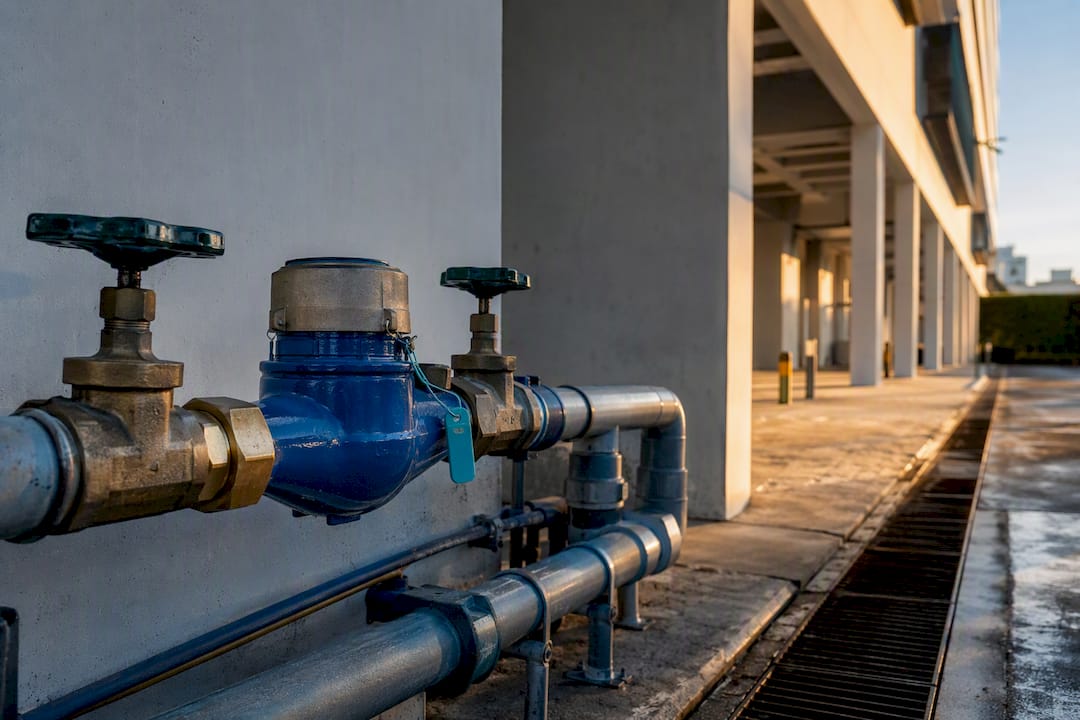
A Water Efficiency Management Plan (WEMP) is a mandatory, annual compliance and operational document for qualifying large water users in Singapore. If your site consumes 60,000 cubic meters of water or more a year, you must notify PUB, install private water meters at key usage points, appoint a Water Efficiency Manager, and submit your WEMP by the statutory deadline in mid-year.
TL;DR:
- Sites exceeding 60,000 cubic meters of annual water use must notify PUB, install private meters, appoint a Water Efficiency Manager, and submit a plan by June 30 each year.
- Accurate net consumption calculation, not gross billed volume, is critical to determine if a site meets the reporting threshold; common errors include neglecting water recycling.
- A Water Balance Chart must reconcile total input against all measurable outputs, with unaccounted-for water ideally under 10 percent to avoid signals of leaks or metering gaps.
- Proper meter placement, ongoing reconciliation, and referencing WELS-rated fixtures are essential for credible, effective water efficiency measures and reporting.
- Engaging technical professionals for meter audits, water balance reconciliations, and plan drafting improves compliance accuracy and saves facility teams time and resources.
Table of Contents
- What Does the Water Efficiency Management Plan Require?
- Does Your Site Meet the Water Efficiency Threshold?
- How Do You Prepare a Compliant WEMP?
- What Are the Best Practices for Private Water Metering?
- Where Can You Find Funding for Water Efficiency Upgrades?
- What’s the Compliance Checklist Before You Submit?
- Why Compliance Alone Misses the Point of a WEMP
- Get Professional Help Preparing Your WEMP
- Where to Find the Official WEMP Rules and Templates
- Sources
What Does the Water Efficiency Management Plan Require?
The obligation is set out under PUB’s mandatory water efficiency requirements and reinforced by the Public Utilities (Water Supply) Regulations, which anchor the Water Efficiency Manager role in statute rather than mere guidance. Once a site’s net water consumption hits 60,000 m³ or more in the preceding year, the building owner or operator falls within scope, and the obligations that follow are not optional recommendations. They are enforceable regulatory duties tied to specific calendar dates.
Net consumption, for this purpose, is your total metered water use minus any water that is recycled, reused, or otherwise does not draw fresh demand from PUB’s supply network. Facility managers sometimes miscalculate this by using gross billed volume instead, which can either wrongly trigger the threshold or mask a site that should have been reporting.
The compliance calendar runs on a tight, predictable rhythm:
- Notification window: sites that cross the threshold must notify PUB, typically flagged through consumption data PUB already holds, with confirmation expected in the March to April period following the qualifying year.
- Meter installation deadline: private water meters at key usage areas must be installed and commissioned by June 30.
- Water Efficiency Manager appointment: at least one WEM must be appointed by June 30, and this appointment needs to be documented, not just verbal.
- Annual WEMP submission: the completed plan is due to PUB by June 30, and qualifying sites must keep submitting for at least three consecutive years.
- Ongoing obligation: if consumption stays above threshold, the cycle repeats annually rather than closing out after one submission.
Enforcement sits with PUB, and the agency has statutory power to require corrective action where a site fails to notify, meter, appoint a WEM, or submit on time. The Ministry of Sustainability and the Environment confirms this obligation as a fixture of national water policy for large non-domestic users, not a discretionary best practice. Because regulatory text is amended from time to time, always check the current version of the Public Utilities (Water Supply) Regulations rather than relying on a cached PDF or a consultant’s summary from a prior year. The safest habit is to bookmark PUB’s own requirements page and revisit it each reporting cycle, since deadline windows and threshold definitions have shifted before and can shift again.
Does Your Site Meet the Water Efficiency Threshold?
Start by pulling twelve months of metered consumption data straight from your PUB bills, then subtract any recycled or reused water your site accounts for separately. If the resulting net figure sits at or above 60,000 m³, you are in scope, full stop. This calculation catches out more property teams than any other step in the process, mostly because gross billed volume and net consumption get treated as interchangeable when they are not.
Sectors that routinely land above the threshold include:
- Large commercial complexes and shopping malls, where cooling towers and sanitary fixtures across multiple tenants push volume up quickly.
- Manufacturing and process industries, especially semiconductor fabrication, food and beverage production, and chemical processing, where water is a direct production input.
- Hotels and integrated resorts, driven by laundry, kitchen operations, landscaping, and guest-facing amenities running around the clock.
- Healthcare campuses and hospitals, where sterilization, HVAC, and continuous occupancy combine to push consumption well past smaller commercial sites.
- Data centers and institutional campuses, where cooling load alone can carry a site over threshold even without heavy process water use.
Multi-site operators face a separate wrinkle. If you hold several properties under one corporate entity but each is metered and billed separately, PUB generally assesses each site against the threshold individually rather than aggregating your portfolio. But if multiple buildings share a single water account or a common meter, that account gets treated as one reporting unit, and combined consumption across those buildings counts toward the 60,000 m³ figure. Facility teams managing a portfolio should map their meter accounts against their corporate structure early, because misreading this rule either creates unnecessary reporting for sites that don’t qualify or, worse, misses a genuine obligation.
Notification typically happens through the channel PUB specifies once your account crosses threshold, and building owners should prepare basic site information, meter account numbers, and an initial estimate of net consumption before that notification is due.
How Do You Prepare a Compliant WEMP?
A WEMP is built in layers, and the sequence matters more than most facility teams expect. Rushing straight to writing the plan before your data is solid is the single most common reason a submission gets sent back for revision.
Start with baseline data, and start early. Meters need to be installed and commissioned three to six months before your planned submission date to capture representative consumption across seasonal swings, maintenance shutdowns, and occupancy changes. A facility manager who orders meters in April for a June 30 submission is working with, at best, a few weeks of readings. That is not baseline data. It’s a snapshot, and PUB’s evaluators can tell the difference immediately. A recurring practical failure is trying to install meters and finalize the WEMP at the same time, without enough historical data behind either.
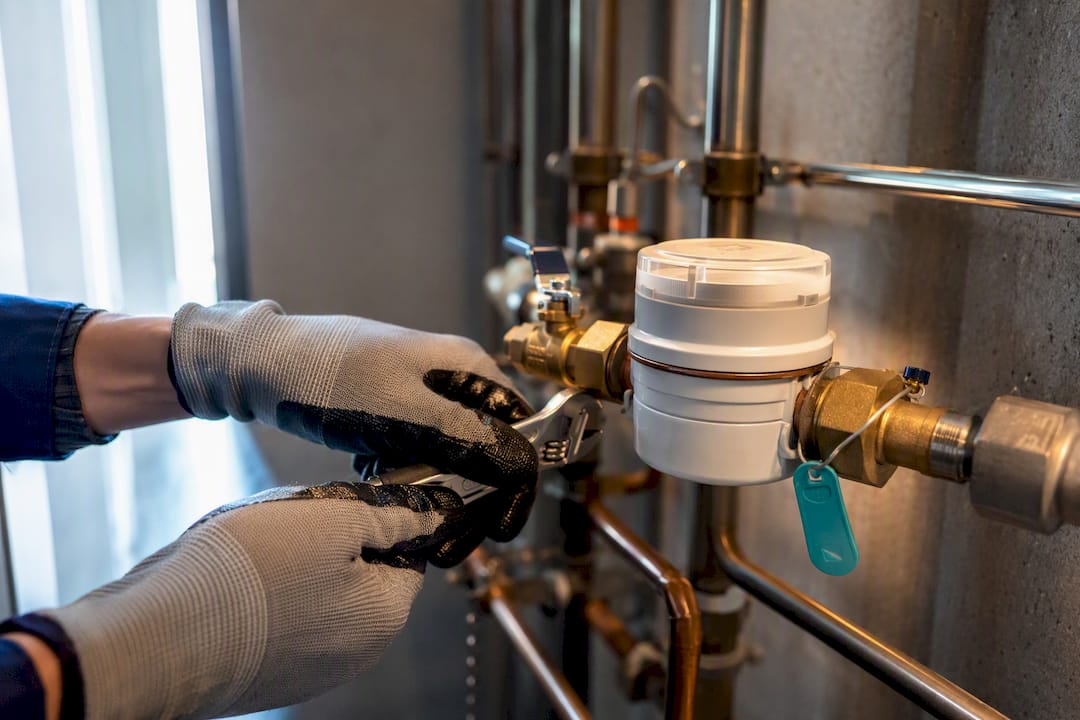
Build the Water Balance Chart next. This is the technical core of the plan: total water supplied in, matched against every measurable output, cooling tower makeup and bleed, process consumption, irrigation, sanitary use, and domestic demand, with a residual “unaccounted-for” figure that represents losses, leaks, or unmapped consumption points. A tight Water Balance Chart typically closes with unaccounted-for water under 10% of total input. Anything materially higher signals either a metering gap or a real leak somewhere in the distribution network, and both need to be run down before the chart goes into the submission.
Reconciling the chart usually surfaces at least one surprise. Unmapped sub-meters, abandoned pipe runs from a past renovation, or a cooling tower that was never separately metered can all throw off the balance. A short mechanical and electrical pipe-mapping audit, paired with a temporary spot-metering campaign at suspect points, is often the fastest way to close these gaps before finalizing the chart.
Once the balance reconciles, turn to identifying savings opportunities system by system:
- Cooling towers often carry the largest single opportunity, through conductivity-based bleed control, drift reduction, and makeup water metering.
- Process water in manufacturing settings benefits from reuse loops and closed-circuit rinsing where product quality allows it.
- Irrigation systems gain the most from converting to drip irrigation management with soil-moisture sensing, cutting overwatering that spray heads routinely cause.
- Sanitary fixtures are the easiest wins on paper, since WELS-rated taps, urinals, and flush systems deliver savings with minimal operational disruption.
Pro Tip: Rank your saving measures by simple payback period, not by the size of the projected saving alone. A $3,000 cooling tower bleed control retrofit that pays back in eight months will win capital approval faster than a $150,000 process water reuse system with a four-year payback, even though the second measure saves more water overall.
The action plan itself needs named owners, target completion dates, and a measurable savings figure attached to each line item. A plan that says “improve irrigation efficiency” with no owner and no date is functionally not an action plan. PUB’s downloadable WEMP template and guide sets out the expected structure, and following it closely reduces the back-and-forth during review.
What Are the Best Practices for Private Water Metering?
Sub-meter placement decisions made in year one tend to haunt facility teams for the life of the WEMP if they’re done carelessly. The right approach maps meters to each major consuming system separately, cooling towers, process lines, irrigation zones, and sanitary risers, rather than relying on a single bulk meter and back-calculating everything else by estimation.
Good metering practice generally includes:
- Dedicated sub-meters at cooling tower makeup lines, since this system usually represents the largest controllable load in commercial buildings.
- Separate metering for irrigation zones, particularly where drip irrigation management is in place, so seasonal watering patterns show up clearly in the data rather than getting buried in overall site consumption.
- AMR (automatic meter reading) integration with the building management system, which turns monthly manual readings into continuous data streams and catches leaks within days instead of at the next billing cycle.
- Monthly reconciliation, at minimum, between the sum of all sub-meters and the incoming bulk supply meter, flagging any drift before it compounds into a reporting problem.
Facilities running older BMS platforms sometimes find that AMR retrofits pay for themselves through leak detection alone within the first year, since a slow leak behind a wall or under a slab can run for months unnoticed on a manual quarterly read. Continuous monitoring closes that blind spot immediately.
On fixture selection, the WELS scheme rates taps, mixers, cisterns, and urinals by efficiency ticks, and checking PUB’s WELS database before specifying replacement fixtures ensures your WEMP’s sanitary measures are backed by verifiable, labeled products rather than a supplier’s unverified efficiency claim. This matters at review stage: a WEMP that cites specific WELS-rated models reads as more credible than one that says “low-flow fixtures” with no product reference attached.
NCCS guidance frames systematic metering and proactive leak detection as core to Singapore’s water resilience strategy, and that framing is worth keeping in mind when a metering upgrade competes for budget against other capital projects. It’s not a compliance line item. It’s infrastructure that pays for itself in leak avoidance alone.
Where Can You Find Funding for Water Efficiency Upgrades?
Capital-intensive measures, cooling tower retrofits, AMR system rollouts, process water reuse loops, rarely clear a budget committee on payback numbers alone. Building a funding-ready case means pairing your Water Balance Chart findings with a documented business case that a finance team can actually approve.
Start by checking PUB’s water efficiency pages and MSE’s water policy channels for current grant or technical assistance schemes tied to large-user efficiency upgrades, since eligibility criteria and available funding windows change periodically. A well-built case for internal or external funding typically includes:
- Metered baseline data from your Water Balance Chart, showing exactly where the water is going before the upgrade.
- A simple payback calculation for each proposed measure, not a blended average across the whole plan.
- A projected volume reduction figure tied to utility billing savings over a defined period, usually 12 to 36 months.
- Vendor quotations for equipment and installation, since funding bodies and internal finance teams both want firm numbers, not estimates.
Pilot programs are worth pursuing before a full capital commitment, particularly for unproven measures like process water reuse in a specific production line. A successful pilot generates real performance data that strengthens the case for scaling the measure sitewide, and it gives your WEM concrete evidence to bring back to the WEMP’s next annual update.
What’s the Compliance Checklist Before You Submit?
Run through this sequence before your WEMP goes to PUB, because each item corresponds to a genuine, recurring cause of rejected or delayed submissions:
- Confirm meters were installed with enough lead time. Three to six months of data, at minimum, and keep calibration records on file, since PUB reviewers may ask for them.
- Reconcile the Water Balance Chart to under roughly 10% unaccounted-for water. If it doesn’t close, run a pipe-mapping audit before finalizing anything.
- Document the Water Efficiency Manager’s role formally, including how the WEM is integrated into day-to-day facility operations, not just named on a cover page.
- Attach all required supporting documents, meter installation records, fixture specification sheets, and the action plan with named owners and dates.
- Work backward from June 30 to set internal milestones, data collection complete by March, chart reconciled by April, action plan drafted by May, leaving June for internal review before submission.
| Common pitfall | Why it happens | Mitigation |
|---|---|---|
| Water Balance Chart doesn’t reconcile | Unmapped sub-meters or legacy pipework | Run a short M&E pipe-mapping audit and spot-meter campaign |
| Insufficient baseline data | Meters installed too close to submission date | Commission meters 3 months ahead of the deadline |
| WEM appointment undocumented | Role treated as a formality rather than an operational position | Record WEM duties, authority, and reporting lines in writing |
| Action plan lacks measurable targets | Measures listed without owners or dates | Assign a named owner, date, and savings figure to every line item |
Appointing a Water Efficiency Manager with genuine operational authority, someone who can actually approve a bleed control retrofit or reroute a maintenance budget, makes a measurable difference in whether planned measures get implemented rather than filed and forgotten. Document that authority explicitly in the WEMP itself.
Why Compliance Alone Misses the Point of a WEMP
Most facility teams treat the WEMP as a paperwork obligation to clear by June 30 and forget about until next year. That’s a mistake, and it’s the wrong way to think about the exercise entirely.
A properly reconciled Water Balance Chart is a diagnostic tool, not a compliance artifact. When the numbers don’t add up cleanly, that gap almost always points to something real: a cooling tower bleeding more than it should, a pipe run nobody remembered existed, a sanitary riser feeding fixtures that were replaced years ago but never re-metered. Chasing down that unaccounted-for water tends to pay for the entire WEMP exercise within the first year, often before a single capital-intensive measure gets approved.
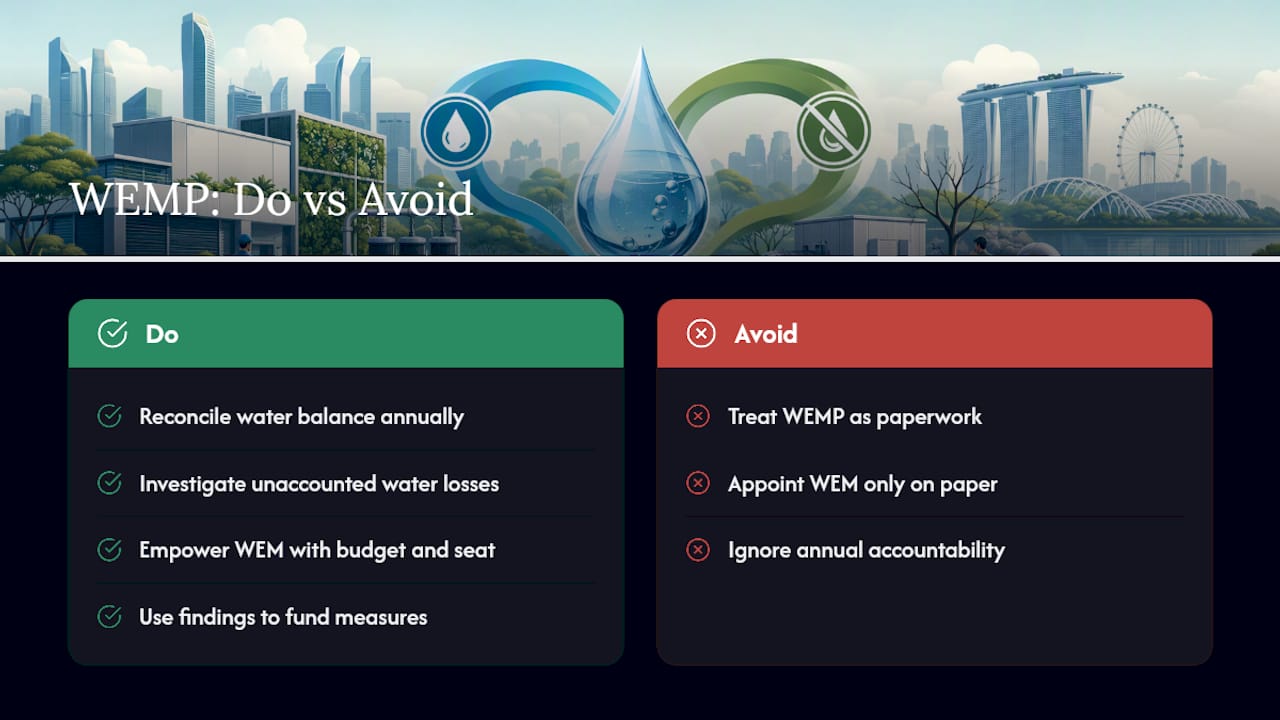
The other overlooked piece is the Water Efficiency Manager appointment. Too many organizations name a WEM on paper to satisfy the requirement, then give that person no budget authority and no seat at facilities planning meetings. A WEM who can actually move capital toward a retrofit is the difference between a plan that gets implemented and one that gets refiled with the same unmet targets next year. Building owners who treat this appointment seriously see far better follow-through on their action plans than those who treat it as a checkbox.
Singapore’s approach to large-user water regulation, distinct from the softer, more voluntary frameworks seen in some comparable overseas guidance, works because it forces annual accountability rather than a one-time audit. That rigor is worth respecting rather than resenting.
— Aman
Get Professional Help Preparing Your WEMP
Preparing a compliant WEMP from scratch, especially the metering audit and Water Balance Chart reconciliation, eats up engineering hours that most facility teams don’t have spare. Technical specialists can handle the technical side end to end: meter audits and sub-meter mapping, Water Balance Chart construction and reconciliation, WEMP drafting against PUB’s required structure, and direct statutory liaison with PUB through submission and beyond.
Experienced engineers familiar with PUB submission processes for building projects across Singapore can offer regulatory fluency that applies to WEMP compliance work. If your site is approaching the 60,000 m³ threshold, or your existing WEMP’s Water Balance Chart isn’t reconciling cleanly, get in touch through Aman Engineering Consultancy’s main site to scope a metering audit and submission timeline before your next June 30 deadline arrives.
Where to Find the Official WEMP Rules and Templates
Every figure and deadline in this article traces back to a small set of primary sources, and checking them directly before you finalize a submission is worth the ten minutes it takes.
- PUB’s mandatory water efficiency requirements page carries the downloadable WEMP template and current statutory guidance.
- The Public Utilities (Water Supply) Regulations on Singapore Statutes Online contain the full legal text defining the Water Efficiency Manager role.
- MSE’s water policy page sets out the national policy framework behind the mandatory WEMP requirement for large non-domestic users.
Sources
- Mandatory Water Efficiency Requirements | PUB, Singapore’s National Water Agency
- Public Utilities (Water Supply) Regulations – Singapore Statutes Online
- Water | Ministry of Sustainability and the Environment
- Water resource management | National Climate Change Secretariat