
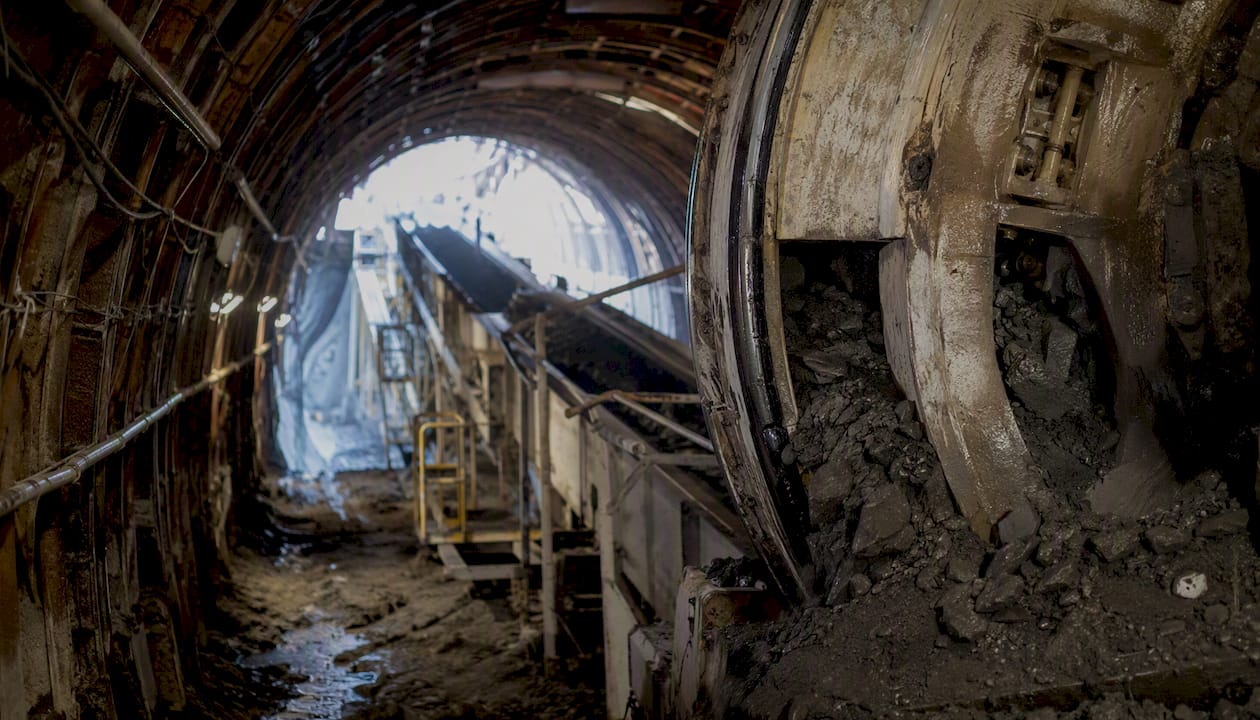
A tunneling engineer plans, designs, constructs, and rehabilitates underground infrastructure — from transit bores to highway tunnels — and the fastest U.S. entry path is a bachelor’s degree in civil or geotechnical engineering, followed immediately by construction-site internships and an early start on the Professional Engineer (PE) licensure track. The FHWA Technical Manual for Design and Construction of Road Tunnels defines the role’s core technical domains as constructability assessment, structural analysis, ground support design, and risk management — all of which require both classroom grounding and direct field exposure to develop competently.
A tunneling engineer who has never stood at the face of an excavation, read a TBM cutterhead report, or reviewed a Geotechnical Baseline Report on-site will struggle to translate design calculations into buildable solutions. Site experience is not supplementary — it is the credential employers actually screen for.
Immediate next actions:
- Enroll in a BS Civil Engineering program with a geotechnical or structural emphasis at an ABET-accredited institution.
- Secure a construction-site internship with a heavy civil contractor, DOT project, or transit agency during your second or third year.
- Pass the Fundamentals of Engineering (FE) exam before graduation to begin your Engineer-in-Training (EIT) period.
- Complete the ASCE Introduction to Tunnel Design and Construction on-demand course to demonstrate targeted training to employers.
- Familiarize yourself with the AASHTO LRFD Road Tunnel Design and Construction Guide Specifications as the primary U.S. design standard.
Table of Contents
- What does a tunneling engineer do day to day?
- Degrees, certifications, and licensure for tunnel construction engineers
- Core technical and soft skills every subsurface engineer needs
- Where tunneling engineers work and who hires them
- U.S. salary ranges and job outlook for tunneling engineers
- Main tunneling methods and when each is used
- Safety, regulation, and risk management in tunnel engineering
- Software, courses, and professional associations that keep you current
- What hiring managers actually look for in tunneling engineer candidates
- Key Takeaways
- Why constructability should come before calculation elegance
- Com supports subsurface projects with BIM, value engineering, and compliance expertise
- Authoritative sources and further reading for U.S. tunneling practice
What does a tunneling engineer do day to day?
Daily responsibilities differ substantially by career level, but the core work centers on ground investigation, design verification, construction supervision, and instrumentation monitoring. At any level, the deliverables are precise and consequential: a missed ground condition or an incorrect temporary works assumption can cause a collapse.
Entry-level (0–3 years): Field supervision of excavation and lining installation, drawing review against as-built conditions, logging of instrumentation readings, and support for senior engineers preparing method statements. Most of the working day is on-site rather than at a desk.
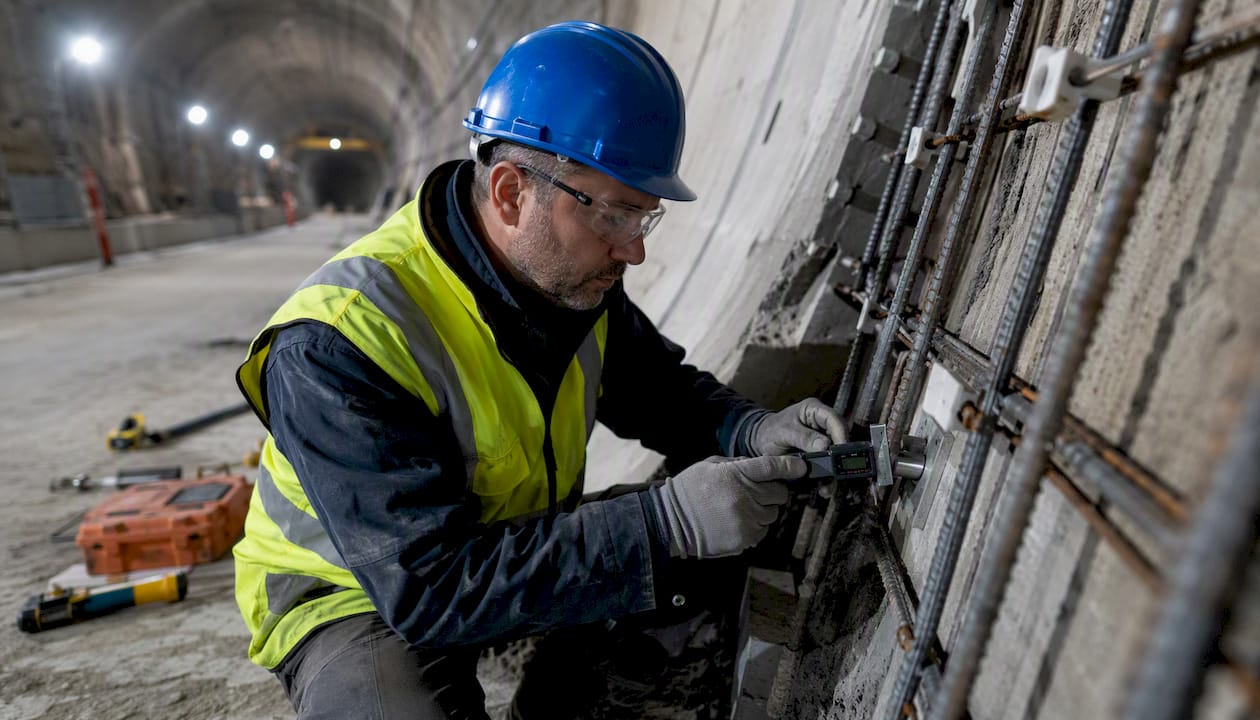
Mid-level (3–8 years): Design lead for specific tunnel packages, coordination with contractors on TBM performance and ground conditioning, preparation of Geotechnical Baseline Reports (GBRs), and review of TBM acceptance reports. The balance shifts toward office-based design work, though regular site visits remain standard.
Senior-level (8+ years): Contract management, risk allocation between owner and contractor, client-facing technical leadership, and oversight of multi-discipline teams. Senior engineers spend significant time on procurement documents, dispute resolution, and program-level risk registers.
Common deliverables across all levels include GBRs, method statements, TBM acceptance reports, instrumentation monitoring plans, and construction-stage design submissions. Travel and relocation are frequent: major tunnel projects are geographically concentrated, and engineers often follow the work to different states or regions. Shift work is common during TBM drives, which operate continuously.
Degrees, certifications, and licensure for tunnel construction engineers
The standard entry credential is a BS in Civil Engineering from an ABET-accredited program, with coursework in soil mechanics, structural analysis, and foundation engineering. A geotechnical emphasis is the most direct preparation; structural engineering is the second most relevant track. An MS in geotechnical or underground engineering strengthens candidacy for design-focused roles, though it is not universally required.
Standards to learn before your first interview:
- AASHTO LRFD Guide Specifications — the primary U.S. framework for load and resistance factor design of road tunnels, covering ground-structure interaction and lining design.
- FHWA Tunnel Manual — the federal reference for design and construction of road tunnels, covering all major tunnel types and construction methods.
- BTS Specification for Tunnelling (4th Edition) — an internationally recognized model contract specification; understanding its clause hierarchy (Particular Specification takes precedence over General clauses) is directly applicable to U.S. project contracts.
Licensure path:
- Pass the FE exam (administered by NCEES) — typically taken in the final year of your BS program.
- Accumulate four years of progressive engineering experience as an EIT under a licensed PE.
- Pass the PE exam in Civil Engineering (Geotechnical depth is the most relevant module for tunneling roles).
- State licensure rules vary; confirm requirements with your state’s engineering board.
Relevant short courses include ASCE tunneling courses, TBM operation familiarization programs offered by equipment manufacturers such as Herrenknecht and Robbins, and OSHA 30-hour construction safety certification.
Pro Tip: A single summer internship on an active tunnel construction site — even in a field technician role — carries more weight with hiring managers than an additional semester of coursework. Employers screen for site exposure first; academic credentials are assumed.
Core technical and soft skills every subsurface engineer needs
Technical competency in tunneling spans geotechnical interpretation, structural verification, and construction-method knowledge. The FHWA Tunnel Manual identifies ground-structure interaction as a primary engineering domain — meaning engineers must understand how soil and rock loads transfer to tunnel linings under varying groundwater conditions, not just how to run a structural calculation in isolation.
Technical skills:
- Geotechnical data interpretation: borehole logs, lab test results, in-situ testing (SPT, CPT, pressuremeter)
- Ground-structure interaction analysis and lining design
- Temporary works design: sheet piling, ground anchors, strutting systems
- TBM selection criteria and operational parameters
- Instrumentation and monitoring: settlement arrays, piezometers, convergence monitoring
Software and tools: PLAXIS or RS2 (Phase2) for geotechnical finite-element modeling; SAP2000 or ETABS for structural analysis; AutoCAD and Revit for drafting and BIM workflows; instrument data processing platforms for real-time monitoring dashboards.
Soft skills are equally weighted by employers. Construction communication — the ability to convey a design intent clearly to a contractor foreman under time pressure — is cited consistently in senior job descriptions. Contractor coordination, real-time problem solving when ground conditions deviate from the GBR, and structured risk communication to project owners are the three soft-skill areas that most directly affect career advancement.
On a resume or LinkedIn profile, hiring managers respond to quantified site experience: tunnel length supervised, TBM drives monitored, instrumentation datasets managed. Generic statements about “geotechnical experience” without project-specific context are consistently filtered out.
Where tunneling engineers work and who hires them
The U.S. tunneling market draws engineers into four distinct employer categories, each with different work-environment expectations.
State DOTs and transit agencies (e.g., Caltrans, NYCDOT, WMATA, BART) hire tunnel engineers for owner-side project management, design oversight, and construction management. These roles offer stability, defined hours, and deep exposure to procurement and contract administration. Field travel is moderate.
Design consultants (large multidisciplinary engineering firms) staff tunnel design teams that work across multiple projects simultaneously. Engineers in these roles develop broad technical skills quickly but may have limited construction-site time unless assigned to resident engineer positions.
Heavy civil and specialist tunneling contractors offer the highest site exposure and the steepest early-career learning curve. Shift work, relocation, and direct TBM operational experience are standard. Real-world job postings for senior tunnel construction engineer roles consistently emphasize TBM experience, construction management, and multi-discipline coordination as primary requirements.
International infrastructure firms operating in the U.S. market (on projects such as large transit expansions or highway tunnels) often bring international specifications and methods; familiarity with documents like the BTS Specification for Tunnelling becomes directly applicable.
Common job titles include Field Engineer, Tunnel Design Engineer, Geotechnical Engineer (Tunneling), TBM Engineer, and Resident Engineer. The title “Resident Engineer” specifically signals a construction-phase, site-based role with contractor interface responsibility.
U.S. salary ranges and job outlook for tunneling engineers
ZipRecruiter’s U.S. salary data for tunnel engineers provides a useful benchmarking baseline, though compensation varies significantly by region, employer type, and specialization. Entry-level tunnel engineers in the U.S. typically earn a moderate salary; mid-level engineers with TBM experience and PE licensure earn higher salaries; senior engineers and project leads at major contractors or transit agencies command the highest salaries, especially in major metropolitan markets.
Key pay drivers: PE licensure adds a measurable premium at the mid-level transition. TBM-specific experience commands a further premium because qualified TBM engineers are scarce relative to project demand. Supervisory experience — documented by project scale and team size — is the primary lever at the senior level.
The Infrastructure Report Card documents persistent national infrastructure deficits that translate directly into sustained demand for subsurface project work. Transit expansion programs, utility relocation projects driven by urban densification, and resilience-focused tunnel rehabilitation all contribute to a hiring environment that has remained active across multiple budget cycles. The BLS categorizes most tunneling roles under Civil Engineers (SOC 17-2051), a category with a projected employment outlook that reflects continued infrastructure investment.
| Experience Level | Typical U.S. Salary Range | Primary Pay Drivers |
|---|---|---|
| Entry (0–3 years) | — | Degree, FE exam, site internship |
| Mid-level (3–8 years) | — | PE licensure, TBM exposure, design lead |
| Senior (8+ years) | — | Contract management, supervisory scope |
For salary negotiation, the three most effective levers are PE licensure status, documented TBM drive experience (with tunnel diameter and length), and supervisory scope (number of engineers managed, contract value overseen).
Main tunneling methods and when each is used
The FHWA Tunnel Manual classifies tunnels by construction method, and method selection drives the engineering tasks, equipment requirements, and risk profile of every project.
| Method | Typical Use Case | Key Engineering Tasks | Primary Risk |
|---|---|---|---|
| TBM (bored) | Long urban transit or highway tunnels | Lining ring design, TBM acceptance, muck logistics | Groundwater ingress, face stability |
| NATM/SEM (mined) | Variable ground, complex cross-sections | Sequential excavation sequencing, shotcrete design | Ground-structure interaction, convergence |
| Drill-and-blast | Hard rock, remote locations | Blast design, rock support, ventilation | Overbreak, vibration control |
| Cut-and-cover | Shallow urban tunnels, stations | Excavation support, temporary works, traffic management | Settlement, utility conflict |
| Immersed tube | Underwater crossings, harbors | Buoyancy control, joint design, hydrostatic load | Hydrostatic pressure, joint watertightness |
Method choice is rarely purely technical. TBM drives require continuous operation and generate large volumes of muck that must be transported and disposed of efficiently — a logistics constraint that affects project cost as much as the structural design does. Cut-and-cover methods, while structurally simpler, create significant surface disruption and require close coordination with utility owners and traffic management authorities. The AASHTO LRFD Guide Specifications provide load and resistance factor design provisions calibrated to bored and mined tunnel types, making them the primary U.S. design reference for those methods.
Safety, regulation, and risk management in tunnel engineering
Tunneling carries a risk profile that is more severe than most surface construction, and U.S. employers expect engineers to demonstrate safety awareness from day one.
Primary hazards:
- Ground collapse and face instability, particularly in mixed-face or soft-ground conditions
- Groundwater ingress and hydrostatic pressure buildup in deep or below-water-table tunnels
- Hazardous atmospheres: methane, hydrogen sulfide, and oxygen-deficient air in urban and geological environments
- TBM mechanical hazards: rotating cutterheads, high-pressure hydraulic systems, and confined working spaces
- Noise, vibration, and dust exposure during extended drives
Key U.S. standards and guidance:
- FHWA Tunnel Manual: design and construction safety provisions for road tunnels
- OSHA 29 CFR 1926 Subpart S: construction safety standards for underground construction, including confined space entry, air monitoring, and emergency response
- AASHTO LRFD Guide Specifications: load factor calibration for tunnel structural safety
- State DOT and transit agency specifications: vary by jurisdiction and project type
Instrumentation and monitoring plans are standard contract requirements on all major U.S. tunnel projects. These plans define trigger levels for settlement, convergence, and groundwater drawdown, and specify the response protocol when readings exceed alert or action thresholds. Permitting and agency coordination requirements vary significantly by state; engineers working on federally funded projects must also navigate NEPA environmental review processes and coordinate with multiple agencies including FHWA, FTA, and state environmental regulators.
Software, courses, and professional associations that keep you current
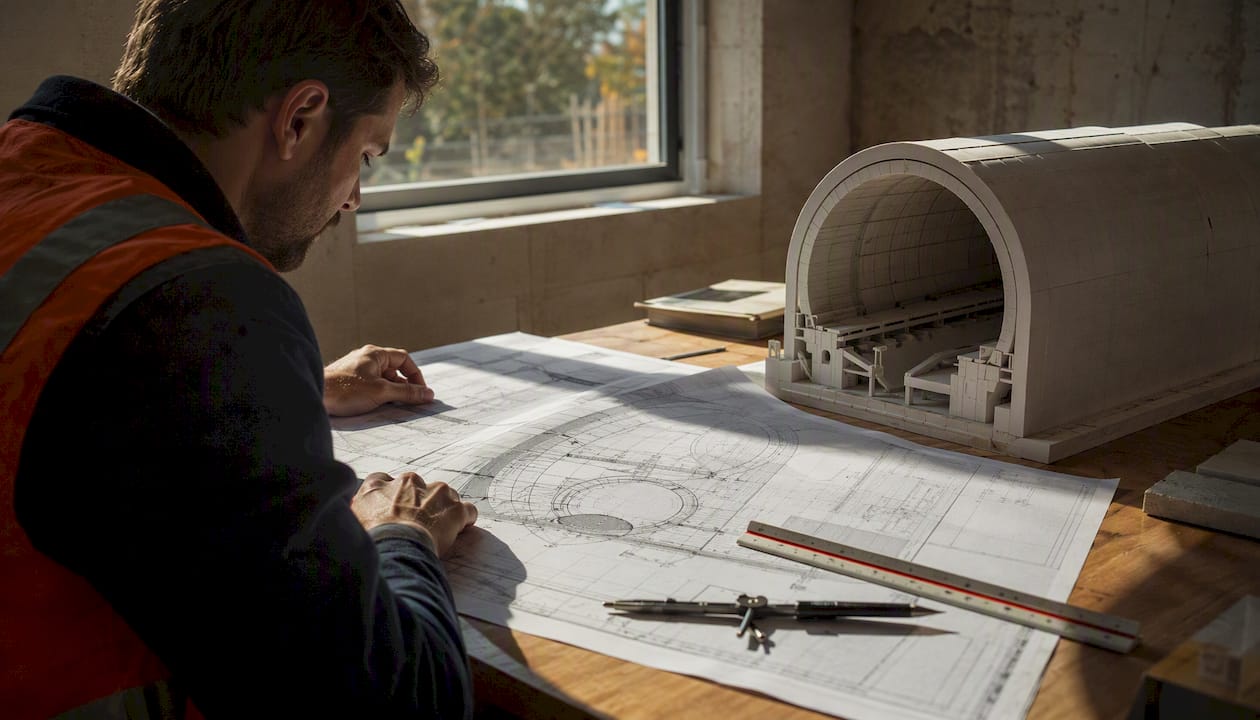
The technical toolkit for a practicing tunnel engineer spans geotechnical modeling, structural analysis, BIM, and instrumentation data management. Proficiency in PLAXIS or RS2 for finite-element ground modeling is expected at the mid-level; SAP2000 or ETABS for structural lining verification is standard at design firms. BIM workflows for tunnels — including clash detection and 4D construction sequencing — are increasingly required on major U.S. transit projects, and familiarity with BIM modeling practices is a differentiator for candidates entering design consultant roles.
For continuing education, the ASCE Introduction to Tunnel Design and Construction on-demand course is the most accessible employer-recognized option for engineers without a tunneling-specific degree. TBM manufacturers including Herrenknecht and The Robbins Company offer equipment familiarization training that provides practical operational context. OSHA 30-hour construction safety certification is a baseline expectation for any site-based role.
Professional associations worth joining early include the ASCE Tunneling Committee, which publishes technical guidance and hosts networking events, and the Underground Construction Association (UCA) of SME, which organizes the No-Dig Show and other industry conferences. State engineering societies provide PE exam study resources and local networking. Budget approximately 40 hours per year for continuing education in the early career years — enough to complete one substantive course and attend one industry event without disrupting project commitments.
What hiring managers actually look for in tunneling engineer candidates
Hiring decisions in tunneling are driven by a short list of verifiable criteria, and candidates who cannot demonstrate these directly are typically screened out before the interview stage.
Top hiring priorities:
- Documented site experience: tunnel length supervised, construction method, and role scope — not just “construction experience”
- TBM or method-specific exposure: even a single TBM drive as a field engineer is a strong differentiator
- PE progress: EIT status with a clear timeline to PE is acceptable at entry level; PE is expected by mid-level
- Instrumentation and monitoring familiarity: employers want engineers who have processed real monitoring data, not just read about it
- Safety awareness: OSHA 30, confined space entry training, and demonstrated knowledge of site emergency protocols
Common red flags hiring managers identify:
- No field exposure whatsoever — candidates whose entire experience is academic or office-based
- Inability to describe a specific ground condition problem and how it was resolved
- Weak familiarity with contract documents, particularly the GBR and method statement process
- No awareness of the specification hierarchy between General and Particular Specifications — a gap that causes costly errors during design-to-construction transitions
To position experience effectively, quantify everything: “Supervised installation of 450 m of precast segmental lining on a 6.2 m diameter TBM drive” is far more credible than “assisted with tunnel construction.” Seek secondments with contractors during the first five years. Volunteer for instrumentation assignments on every project. Target DOT and transit agency internships specifically, as these provide exposure to both design standards and construction oversight in a structured environment.
Key Takeaways
A tunneling engineer’s career is built on the combination of a civil or geotechnical engineering degree, documented construction-site experience, PE licensure, and working knowledge of U.S. design standards — with site exposure consistently weighted above academic credentials by employers.
| Point | Details |
|---|---|
| Degree and licensure path | BS Civil/Geotechnical Engineering → FE exam → EIT experience → PE licensure is the standard U.S. sequence. |
| Site experience is the primary filter | Employers screen for documented field exposure first; a single TBM drive or instrumentation assignment outweighs extra coursework. |
| Standards to master early | AASHTO LRFD Guide Specifications and the FHWA Tunnel Manual are the two non-negotiable U.S. design references. |
| Salary progression | Entry-level roles range from —; senior engineers with PE and TBM experience can exceed $160,000 in major markets. |
| Com’s role in subsurface projects | Com provides BIM, value engineering, and statutory compliance services that support constructability and regulatory coordination on underground projects. |
Why constructability should come before calculation elegance
The most persistent gap in early-career tunnel engineering is the assumption that a structurally correct design is automatically a buildable one. On active construction sites, the sequence of ground support installation, the physical constraints of TBM backup systems, and the logistics of muck removal frequently override what the design drawings assume. An engineer who has spent time at the face of an excavation understands, in a way that no textbook fully conveys, that muck transportation logistics and construction staging are as consequential to project cost and schedule as the lining thickness calculation.
The practical lesson for early-career engineers: treat every site visit as a design review. When a contractor proposes a deviation from the method statement, the question is not only whether the deviation is structurally acceptable — it is whether the proposed sequence can actually be executed with the equipment on-site, within the ground conditions documented in the GBR. That judgment, developed through repeated field exposure, is what distinguishes engineers who advance quickly from those who remain in support roles.
Contract documents compound this challenge. The Specification for Tunnelling warns explicitly that Particular Specifications take precedence over General clauses — a hierarchy that entry-level engineers routinely miss during design-to-construction transitions, sometimes with significant contractual consequences. Reading the contract as carefully as the design code is a professional discipline that separates competent practitioners from technically proficient but commercially naive ones.
Com supports subsurface projects with BIM, value engineering, and compliance expertise
Engineers working on underground infrastructure projects — whether transit bores, utility tunnels, or deep excavations — face a specific set of regulatory and constructability challenges that generic engineering consultancy rarely addresses with sufficient depth. Com provides statutory submissions, value engineering analysis, and BIM-integrated constructability reviews that directly address these challenges for project owners, developers, and contractors.
For subsurface and tunneling-adjacent projects, Com’s BIM capability supports clash detection, construction sequencing, and authority submission workflows — reducing the coordination friction that typically drives cost overruns in underground work. The firm’s value engineering service applies LRFD-informed design tradeoff analysis to identify buildable alternatives before construction commitments are made.
To discuss a specific project scope or request a capability statement, contact Aman Engineering Consultancy directly. An initial scoping call will establish whether the project’s statutory, BIM, or constructability review requirements align with the firm’s service offering.
Authoritative sources and further reading for U.S. tunneling practice
| Source | What It Covers | Priority for Early-Career Engineers |
|---|---|---|
| FHWA Tunnel Manual | Design and construction of road tunnels; all major methods; constructability and risk | Read first — the foundational U.S. reference |
| AASHTO LRFD Guide Specifications | LRFD design provisions for bored and mined tunnels; ground-structure interaction | Read second — required for any U.S. design role |
| BTS Specification for Tunnelling (4th Ed.) | Model contract specification; clause hierarchy; Particular vs. General Specifications | Read before your first contract review |
| ASCE Tunnel Design and Construction Course | Practical on-demand training; employer-recognized continuing education | Complete within first year of employment |
| Infrastructure Report Card | National infrastructure condition and investment needs; demand context for tunneling | Review annually for market context |
| ZipRecruiter Tunnel Engineer Salary | Current U.S. salary benchmarks for tunnel engineers | Consult before every compensation negotiation |
| Specification for Tunnelling (Emerald) | Deep analysis of contract specification issues and design-construction conflicts | Read at mid-level, before taking a lead role |
Recommended reading order for an early-career engineer: Start with the FHWA Tunnel Manual to establish a working knowledge of all tunnel types and construction methods. Move to the AASHTO LRFD Guide Specifications once you are in a design role and need to apply load factor methodology. Read the BTS Specification before your first contract review meeting. Complete the ASCE on-demand course in parallel with your first year of employment to reinforce site observations with structured technical content.