

Designing Compliant Fire Apparatus Access Roads: An Engineering Report
Introduction to Emergency Infrastructure
Urban fire protection relies heavily on proper infrastructure design. Firefighters require rapid access to building emergencies constantly.
Narrow streets hinder massive emergency vehicles severely. Therefore, designing compliant fire engine access ways is critical.
Planners must balance community livability with strict life safety. High-density developments often create severe spatial conflicts today. Consequently, this inherent tension drives the evolution of access standards.
Comprehensive design ensures rapid emergency response capabilities always. Poor access design inevitably delays critical life-saving interventions. Delayed responses compromise the protection of people and property.1
Engineers must incorporate fire access early in site development. Retrofitting existing urban environments proves exceptionally difficult and costly. Planners utilize performance-based design guides to navigate these challenges.2
These guides balance fire department needs with bicycle safety.2 They also protect natural resources and manage urban stormwater.3 Designs must be developed in accordance with established codes to prevent future operational failures.
Historical Evolution of Fire Codes and Automatic Sprinkler System Requirements
Ancient civilizations lacked formalized emergency access protocols entirely. Consequently, historic cities suffered catastrophic conflagrations frequently. The Great Fire of Rome prompted early urban planning.4
Emperor Nero subsequently mandated wider streets and stone construction.4 Similarly, the Great Chicago Fire transformed American building codes.5 Combustible wood construction gave way to robust masonry.5
Early firefighting efforts relied entirely on human bucket brigades. Eventually, engineers developed horse-drawn steam pumpers for efficiency.6 Motorized apparatus eventually replaced these highly limited mechanical systems.7
Today, fire engines are massive, highly specialized heavy vehicles. Aerial ladders reach incredible heights to combat high-rise fires. However, these massive trucks require immense spatial allowances. Consequently, modern fire codes dictate exact dimensional requirements strictly.
International Regulatory Frameworks
Global fire safety standards exhibit notable regional variations. Authorities mandate specific metrics for fire apparatus access roads. These codes guarantee operational space for life-saving equipment.
North American Standards
The International Fire Code (IFC) regulates North American jurisdictions. The National Fire Protection Association (NFPA) provides similar criteria. NFPA 1 and NFPA 1141 outline comprehensive baseline infrastructure requirements.8
These codes dictate road widths, clearances, and proximity parameters. Local authorities frequently amend these codes for unique topographies. Therefore, designers must consult specific municipal fire prevention bureaus.
United Kingdom Standards
The United Kingdom utilizes Approved Document B for regulations.9 This document mandates access facilities for the fire service. The London Fire Brigade publishes detailed supplementary guidance notes. These notes specify sweep circles and turning circles.10
Pumping appliances and turntable ladders have distinct geometric requirements.10 UK codes also dictate exact carrying capacities for routes.
Singapore Standards
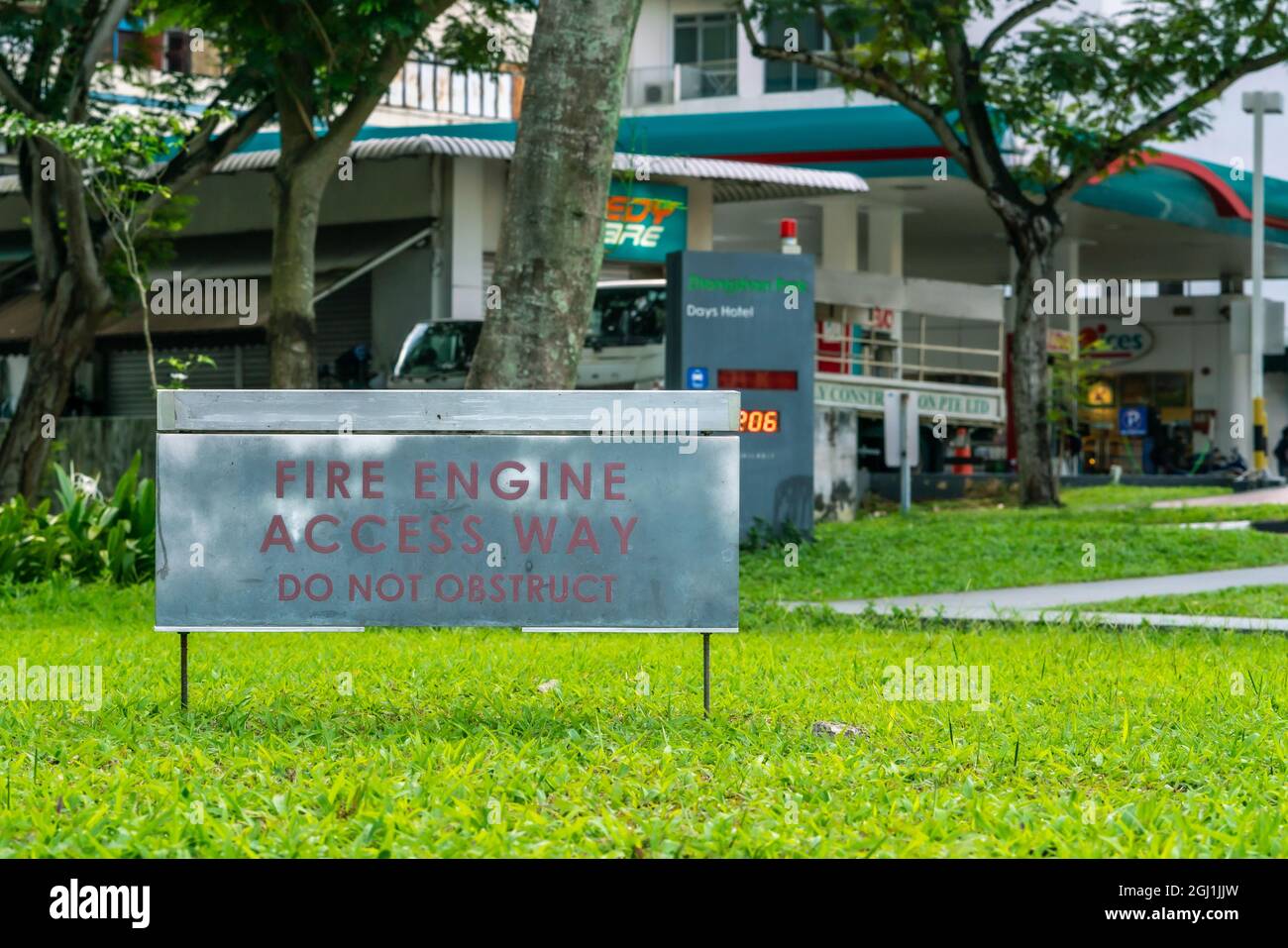
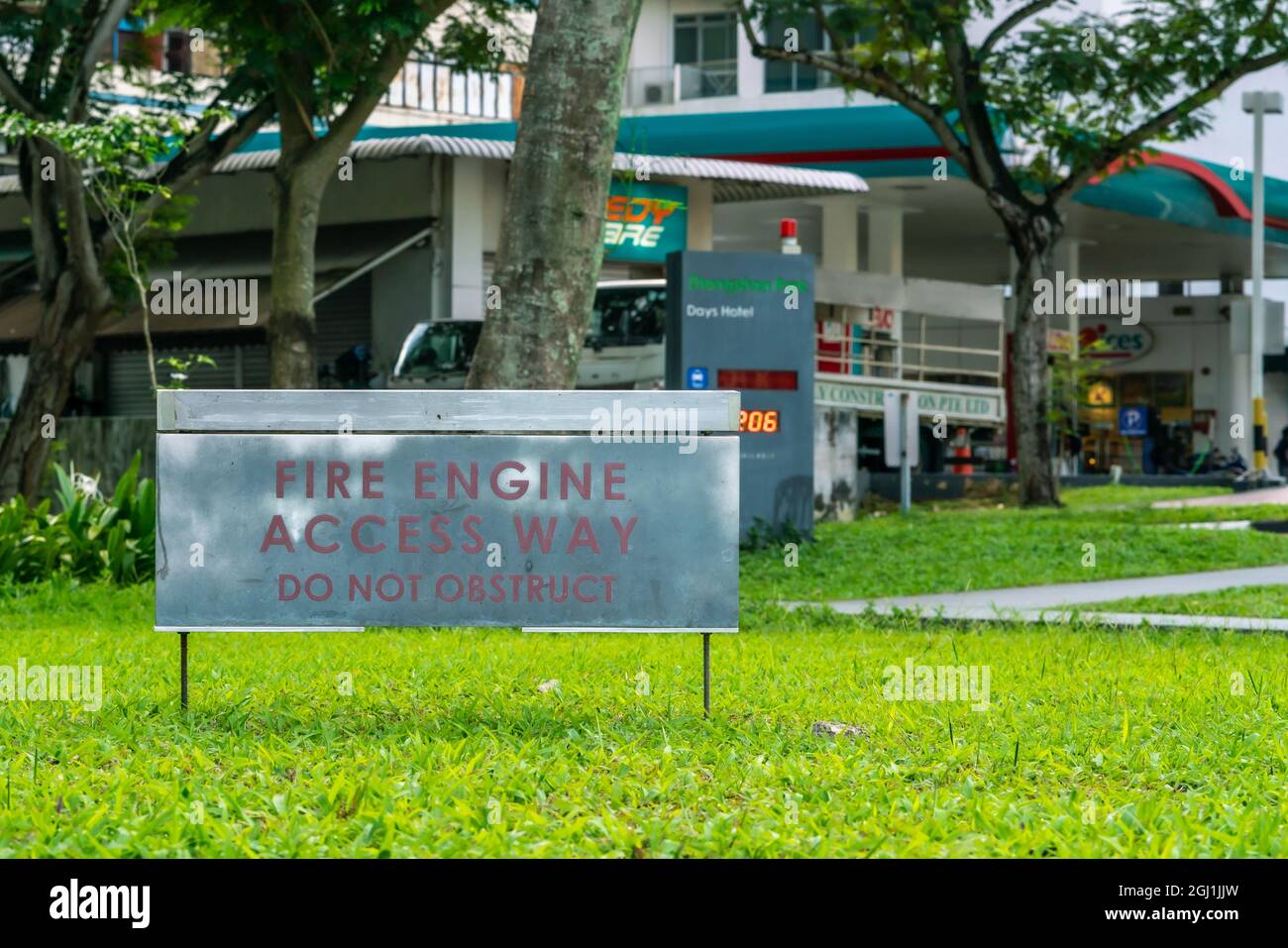
Singapore enforces the SCDF Fire Code meticulously and strictly.11 High-rise developments dominate this extremely dense island nation.
Therefore, the code specifies fire engine accessways with strict parameters. Accessways must support heavy 30-tonne firefighting appliances.12 The code links accessway length directly to habitable height.11 Access openings or doors must face these designated fire engine accessways.13
Australian Standards
Australia relies on AS 2419.1 for fire hydrant compliance.14 This standard dictates the hardstand areas required for brigades.
The National Construction Code mandates these vital access provisions.15 Planners use Austroads guidelines to ensure adequate road designs. These combined standards ensure reliable water supply and access.
Global Code Comparison Table
|
Jurisdiction |
Primary Code/Standard |
Minimum Width |
Minimum Load Capacity |
Max Dead End |
|
United States |
IFC 2021 / NFPA 1 |
20 ft (6.1 m) |
75,000 lbs |
150 ft (45.7 m) |
|
United Kingdom |
Approved Document B |
3.7 m (12.1 ft) |
16 to 32 tonnes |
20 m (65.6 ft) |
|
Singapore |
SCDF Fire Code 2023 |
6.0 m (19.7 ft) |
30 tonnes |
46 m (150.9 ft) |
|
Australia |
AS 2419.1 / NCC |
Varies locally |
Appliance specific |
Varies locally |
Dimensional Specifications and Geometric Design
Proper geometric design guarantees operational space for emergency vehicles. The IFC mandates a minimum unobstructed road width universally. Fire apparatus access roads must be exactly 20 feet wide.16
This width allows two-way traffic during active emergency operations. It permits one working apparatus and one passing vehicle.8
Near fire hydrants, the required width expands significantly. Hydrant locations demand a 26-foot minimum road width strictly.17 This extra space accommodates deployed hoses and active firefighters.
Aerial apparatus operations require similar 26-foot width allowances.17 Buildings taller than 30 feet trigger this specific requirement.17
Vertical Clearance Requirements
Vertical clearance is equally critical for towering aerial apparatus. Roads must provide 13.5 feet of unobstructed vertical clearance.16
Some local jurisdictions increase this minimum to 14 feet.18 This clearance prevents collisions with trees, bridges, or overhead power lines.
Designers must rigorously verify clearance beneath decorative catenary lighting. Building overhangs and balconies cannot encroach upon this space.19
Proximity to Structures for Fire Department Personnel Access
Roads must extend closely to structure entrances for efficiency. Apparatus must park within 150 feet of exterior walls.17
Firefighters must drag heavy hose lines across this distance. Buildings equipped with an automatic sprinkler system receive favorable distance extensions.
Sprinklered structures may allow up to 450 feet distances, with sprinkler-protected buildings permitted that increased distance.20 This exception heavily influences campus layouts and master plans.
Dead-End Access Roads
Dead-end roads present unique navigational hazards for heavy trucks. Reversing a massive fire engine is dangerous and slow.
Dead ends exceeding 150 feet require approved turnarounds unconditionally.17 Common turnaround designs include expansive cul-de-sacs and hammerheads.
The IFC Appendix D provides explicit dimensions for turnarounds.17
Security gates crossing access roads require approved emergency mechanisms. The following criteria typically govern fire apparatus access road gates. These automated gates must maintain a 20-foot minimum width and comply with applicable code requirements.21
ASTM F 2200 standards govern the safe operation of gates.17 Emergency opening means and approved methods must be provided. Strobe light sensors often trigger these gates for responders, and access boxes containing keys allow manual operation by fire department personnel.22 23 Gates should also be maintained in operable condition.
Swept Path Analysis and Vehicle Kinematics
Engineers must verify road functionality through meticulous swept analysis. This analytical process simulates the exact turning movements required.
Rear wheels trace a significantly tighter arc than fronts. Designers must meticulously account for this known tracking difference.24 Without analysis, fire trucks inevitably jump curbs or strike obstacles.
Software Simulation Tools
Software solutions like AutoTURN dominate this specific analytical space. These programs simulate complex 2D and 3D vehicle maneuvers.25
They evaluate steering lock angles, wheelbases, and bumper overhangs.26 Alternative software includes Vehicle Tracking and Kobi Swept Path.27 These tools integrate directly with modern civil engineering CAD platforms.
Analysts input exact fire apparatus specifications into the software. Key parameters include the inside cramp angle and track.29
The cramp angle dictates the maximum front tire turn.29 A typical steering angle ranges near 38 degrees generally.30 Wheelbases often stretch up to 256 inches on aerials.31
Turning Radius Dimensions
Codes typically demand a 25-foot minimum inside turning radius.32 The outside turning radius generally mandates 45 to 50 feet.32
However, the final required radius is determined by the fire code official.17 Aerial ladder trucks demand even larger turning envelopes consistently.
Tower ladders can require a 50-foot outside turning radius.19 Some massive vehicles produce an overall 100-foot turning circle.19
Apparatus Variations and Maneuverability
Apparatus design dictates maneuverability within tight urban corridors heavily. A standard pumper engine possesses a relatively short wheelbase.
Conversely, rear-mount aerial ladders require massive swinging clearances.33 Tractor-drawn aerials, known as tillers, offer surprisingly superior maneuverability.33
These tiller trucks feature independently steered rear trailer axles.33 Consequently, tillers navigate tight urban corners with exceptional agility.33
A tillerman sits in the rear cab steering the trailer. This articulation minimizes three-point turns and wide-swinging hazards.33 Tillers also provide significantly more storage for ground ladders.33
Apparatus Dimensional Comparison Table
|
Apparatus Type |
Typical Length |
Wheelbase |
Inside Turn Radius |
Outside Turn Radius |
|
Standard Pumper |
32 ft (9.7 m) |
201 inches |
24 ft 6 in |
35 ft 10 in |
|
Aerial Platform |
48 ft (14.6 m) |
256 inches |
44 ft 9 in |
49 ft 9 in |
|
Tiller Truck |
57 – 63 ft |
Variable |
10 ft 7 in |
27 ft 9 in |
|
Ambulance |
24 ft 6 in |
170 inches |
N/A |
24 ft 8 in |
Note: Data derived from generic municipal apparatus specifications.31
Topography: Gradient Limitations and Approach Angles
Topography heavily influences fire apparatus access road viability safely. Steep gradients severely compromise heavy vehicle braking and acceleration.
Furthermore, steep slopes drastically reduce aerial ladder operational safety. Rollover risks increase exponentially on improperly sloped driving surfaces.
Longitudinal Gradients
The IFC restricts access road longitudinal grades strictly universally. Generally, fire lane gradients must not exceed 10 percent.17 Some local jurisdictions may permit steeper temporary grades occasionally.35
A 14 percent grade might be allowed for short distances.35 However, this requires explicit, written approval from the official.17 Steeper grades strain massive diesel engines during emergency responses.
Cross Slopes and Camber
Cross slopes must remain incredibly minimal for vehicle stability. The cross slope must generally not exceed 5 percent.36
Excessive cross slopes increase the severe risk of rollovers. They also prevent outriggers from leveling the apparatus effectively.37 A tilted aerial truck cannot deploy its ladder safely. Modern trucks utilize sensors to detect dangerous incline angles.
Angles of Approach and Departure
Angles of approach and departure dictate critical undercarriage clearance. These angles prevent the massive apparatus from bottoming out. Typically, approach angles must not exceed 8 to 12 degrees.10
Alternatively, regulations specify a maximum 5 percent grade change.38 Proper gradient transitions ensure heavy trucks navigate dips smoothly. Failure to control these angles destroys expensive apparatus bumpers.
Structural Engineering and Load-Bearing Capacities
Fire apparatus exert tremendous weight on paved surfaces constantly. Structural pavement design must support these massive dynamic loads. A fully equipped fire engine weighs up to 75,000 pounds.39
Advanced aerial ladder trucks can weigh significantly more indeed. Bridges and elevated surfaces require rigorous engineering validation absolutely. They must carry the imposed load without catastrophic failure.40 Signage must clearly indicate bridge capacities at all entrances.40
Pavement design utilizes Equivalent Single Axle Loads for calculations.41 An 18,000-pound axle load represents one standard ESAL unit.42
Passenger cars have a microscopic vehicle load factor overall.42 Conversely, a fully loaded ladder truck possesses a factor near 10.42 Engineers design standard road bases to handle these weights.
Aerial Outrigger Point Loads
Aerial operations introduce severe, highly concentrated point loads always. Outriggers stabilize the truck when extending the massive ladder.
These hydraulic stabilizers deploy outward and press downward forcefully. The ground pressure from an active outrigger is immense.
NFPA 1901 dictates a maximum ground pressure limit safely. The limit is exactly 75 pounds per square inch.37 A standard 24-inch square outrigger pad bears 43,200 pounds.37
Pavement systems must absolutely resist rutting under these forces.42 Outriggers must not punch through the asphalt during operations.
Soil bearing capacity varies drastically based on geological conditions. Loose sand supports merely 1 to 2 psi effectively.43
Compacted gravel supports between 5 and 12 psi reliably.43 Hardened concrete can support over 100 psi without failure.43 Outrigger pads distribute the load to match soil capacities. Engineers must verify the subgrade strength prior to paving.
Subterranean Vaults and Plazas
Underground utility vaults and parking structures face collapse risks. Concrete slabs over underground spaces require specialized, heavy-duty reinforcement.44 Designers must account for 45,000-pound point loads over vaults.44 The load applies specifically over a tiny 2.25 square-foot area.44
Failure to provide a solid foundation causes catastrophic accidents.37 Outrigger settlement can completely tip the entire aerial apparatus.37
Firefighters constantly train to spot safe deployment zones. They identify solid concrete and avoid obvious septic tanks.37
Pavement Pressure Comparison Table
|
Surface Type |
Estimated Bearing Capacity |
Suitability for Outriggers |
|
Loose Sand |
0.5 – 2 PSI |
Extremely Poor |
|
Soft Clay |
1 – 2 PSI |
Extremely Poor |
|
Firm Soil |
2 – 4 PSI |
Poor |
|
Compacted Gravel |
5 – 12 PSI |
Marginal (Needs Large Pads) |
|
Asphalt / Concrete |
100+ PSI |
Excellent |
Data derived from standard soil bearing capacity charts.43
Pavement Materials: Impermeable vs. Permeable Systems
Modern civil engineering emphasizes sustainable, ecologically sound stormwater management. Traditional impermeable asphalt generates significant, environmentally damaging urban runoff.45
Consequently, permeable pavement systems have gained widespread adoption globally.46 These systems must uniquely balance permeability with immense strength.
Impermeable Pavements
Impermeable asphalt and concrete provide incredibly high initial strength. They resist the turning stresses of heavy vehicles effortlessly. However, they require extensive complementary drainage infrastructure and ponds.45
These drainage systems consume valuable, expensive urban real estate. An asphalt fire lane adds massive amounts of impervious surface.45 This requires costly mitigation measures under municipal stormwater ordinances.
Permeable Interlocking Concrete Pavements (PICP)
Permeable interlocking concrete pavements distribute loads exceptionally effectively.42 They utilize deep, open-graded aggregate base layers for transfer.42
A 10-inch crushed limestone subbase is frequently required.45 The pavers themselves boast a compressive strength of 8,000 psi.42
This strength easily withstands the 322 psi outrigger pressure.42 PICPs require meticulous construction oversight to prevent compaction errors.47 Contractors must not over-compact the subgrade during the installation.47
Porous asphalt offers another alternative, but may wear faster.48 Angular loads from turning fire engines stress porous structures.48
Cellular Confinement and Reinforced Turf
Grass pavers distribute point loads across a rootzone network.49 Systems like Grasscrete utilize a continuously reinforced monolithic slab.50
For heavy 40-tonne vehicles, Grasscrete requires specific structural parameters. It needs a 150mm concrete depth and A393 mesh.51 The concrete must reach a compressive strength of 35N/mm².51
Furthermore, a minimum 200mm sub-base is required for stability.51 Live load tests confirm their viability for 80,000-pound trucks.45 These grass systems count as zero percent impervious cover.45
They eliminate massive stormwater detention vault costs entirely.45 However, maintenance involves regular mowing and ensuring edge visibility.51 Edges must remain clearly marked for approaching fire crews.
Emerging Technologies: Electric Apparatus and Smart Sensors
The fire service is currently undergoing a massive technological shift. Electric fire engines offer profound environmental and operational benefits.
Vehicles like the Rosenbauer RTX and Pierce Volterra lead.52 These advanced apparatus change traditional vehicle dynamics and specifications.
Fully electric models reduce carbon emissions by over 98 percent.52 They utilize parallel-electric drivetrains for zero-emission daily operations.53 Internal combustion engines remain onboard for continuous pump power.53
Electric apparatus introduce entirely new weight distribution considerations today. Heavy battery packs alter the vehicle’s center of gravity. Engineers must reassess pavement loading models for these trucks.
Furthermore, these modern trucks often feature advanced all-wheel steering. This greatly enhances turning radii in incredibly dense settings.54 A tighter turning radius reduces the required road width.
Smart city sensors also continuously optimize emergency vehicle routing.55 Technologies like HAAS Alert directly notify drivers of engines.56 Automated access gates utilize specific strobe sensors for entry.22 This integrated routing helps fire departments respond effectively during a major event while minimizing response times.
Legal Liability and Risk Management
Architects and civil engineers face severe liability for non-compliance. Providing inadequate fire access routes exposes professionals to litigation. Historically, engineers enjoyed protection under strict privity of contract.57
They were only liable to the direct property owner. This limited third-party lawsuits regarding construction defects and safety.
However, modern case law expands this liability scope significantly. The Beacon Residential case demonstrates this legal shift perfectly.58 The Supreme Court of California held principal architects liable.58 They owed a duty of care to future homeowners.58
This duty applied despite a complete lack of privity.58 Designing a non-compliant fire lane could trigger this liability. If firefighters cannot reach a burning building, damages escalate.
Furthermore, municipalities face liability regarding emergency response failures occasionally. The Dini rule historically addressed landowner liability for firefighters.59
Conversely, the public duty doctrine protects departments from negligence.60 The Washington Supreme Court ruled this doctrine applies statutorily.60
Regardless of immunity, proper access design remains ethically imperative. Professionals must document all code modifications approved by officials.
Digital Visibility: SEO Strategies for Engineering Firms
Engineering firms must ensure immense digital visibility for services. High SEO ranking is absolutely critical for securing contracts.
Prospects frequently search for “fire access road design” natively. Implementing robust digital marketing strategies establishes undeniable technical authority.61 Visibility directly translates into increased project leads and revenue.
Strategic Keyword Integration
Strategic keyword integration drives highly targeted organic search traffic.62 Firms should prioritize high-volume, low-competition long-tail keywords aggressively.63
Examples include “civil engineering fire lane design 2026”.64 Additionally, “building code compliance tools” attracts highly relevant queries.65
Programmatic SEO helps build extensive, location-based service landing pages.66 Targeting exact phrases matches the specific search intent perfectly. Short-tail keywords like “contractor” are too broad generally.64
Instead, utilizing focused phrases yields much higher conversion rates.62 AI tools assist in generating these vast keyword clusters.67
Content Architecture and EEAT
A focus on organic revenue outpaces superficial traffic metrics.68 Quality content must align strictly with Google’s EEAT framework.69
EEAT stands for Experience, Expertise, Authoritativeness, and Trustworthiness.69 Creating exhaustive case studies demonstrates proven, real-world project success.70
White papers on structural load-bearing requirements attract top-tier clients.71 Providing downloadable compliance checklists adds massive value for users.72
Blogs explaining turning radius calculations showcase deep engineering knowledge.32 Content must answer exact questions posed by real developers.
Technical SEO Execution
Properly structured metadata and title tags increase click-through rates. Transition words improve readability and keep users engaged longer.
Sites must load quickly to satisfy modern search algorithms. Local SEO tactics capture searches for local protection engineers.63
Managing Google Business Profiles ensures visibility in local maps.70 Clean directory citations build essential trust signals for engines.70
Link-building strategies should focus on industry partnerships and associations.70 Ultimately, strong SEO bridges the massive gap between engineering disciplines.
Top Engineering SEO Keywords Table
|
Keyword Phrase |
Search Intent |
Competitiveness |
|
Fire access road design |
Informational / Commercial |
Medium |
|
Fire lane load bearing requirements |
Informational |
Low |
|
AutoTURN swept path analysis |
Commercial |
Medium |
|
Permeable fire lane pavers |
Commercial |
Low |
|
Building code compliance 2026 |
Informational |
High |
Fire Lane Maintenance and Enforcement
Designing the perfect fire lane is only the first step. Long-term maintenance and strict enforcement ensure continuous operational readiness. Property owners hold the primary responsibility for ongoing maintenance.
Fire lanes must remain free of gates, other obstructions, and similar barriers that could block response.73 Dumpsters, parked cars, and overgrown vegetation block access severely.73 Clear routes are essential for reaching building occupants.
Signage and Striping
The IFC requires meticulous signage and pavement striping protocols. Curbs must feature a prominent red stripe universally painted.21
White stenciled letters must read “NO PARKING – FIRE LANE”.21 These stencils must appear every fifty feet along curbs.21
Where striping is impractical, permanent metal signs are required.21 Signs must measure 12 inches wide by 18 inches high.17
They require red lettering on a highly reflective white background.17 These signs must be posted securely on stationary posts.74
Enforcement Challenges
Enforcing parking restrictions in fire lanes presents significant challenges. High-density residential areas often face severe street parking shortages.
Residents illegally park in fire lanes out of convenience. Homeowner associations sometimes fail to enforce these critical rules.8
Municipalities authorize towing companies to remove obstructing vehicles immediately.75 Laws protect these towing services from vehicle damage liability.75
Fire marshals conduct routine inspections to verify lane clearance and that access roads remain accessible. Fines for blocking fire apparatus access roads are substantial. Public education campaigns help communities understand the life-safety stakes, including how blocked lanes delay response to the affected portion of a building.
Conclusion
Designing compliant fire engine access ways requires uncompromising coordination. Planners must navigate complex international codes like the IFC.
Exacting geometric requirements dictate precise road widths and radii. Swept path analysis software prevents costly operational failures during emergencies. Engineers must meticulously simulate every single truck turning movement.
Furthermore, structural engineers must account for extreme outrigger loads. Permeable pavement systems offer innovative, sustainable solutions to runoff. However, these systems demand rigorous sub-base design for support. A 75,000-pound truck destroys improperly engineered asphalt pavements rapidly. As electric fire apparatus evolve, infrastructure must adapt accordingly.
Ultimately, flawless fire access design protects both lives and property. It also shields architects and engineers from severe legal liability.
Firms that master these technical complexities must communicate effectively. Leveraging targeted SEO strategies ensures these vital services reach developers. Meticulous engineering, combined with digital visibility, drives the industry. Safe communities rely entirely on robust, compliant emergency infrastructure.
Works cited
-
The Challenges of Firefighters’ Interventions in Old Urban Centres: A Case Study – MDPI, accessed April 12, 2026, https://www.mdpi.com/2413-8851/9/5/170
-
Fire Department Access Performance-Based Design Guide – Montgomery Planning Board, accessed April 12, 2026, https://montgomeryplanningboard.org/wp-content/uploads/2019/11/Fire-Department-Access-Performance-Based-Design-Guide_Staff-Report.pdf
-
Fire Department Access Performance-Based Design Guide – Montgomery Planning, accessed April 12, 2026, https://montgomeryplanning.org/planning/countywide/fire-department-access-performance-based-design-guide/
-
History of Fire and Fire Codes, accessed April 12, 2026, https://www.leg.state.nv.us/Session/79th2017/Exhibits/Senate/GA/SGA468G.pdf
-
Origins and Impacts of Fire Protection Laws and Regulations – Andrew Goodwin Designs, accessed April 12, 2026, https://www.andrewgoodwin.us/post/origins-and-impacts-of-fire-protection-laws-and-regulations
-
The History of Fire Engines: From Primitive Pumps to Advanced Technology, accessed April 12, 2026, https://www.bmefire.com/history-of-fire-engines/
-
A Brief History of Fire Trucks | Jaws of Life Tool, accessed April 12, 2026, https://www.fentonfire.com/blog/fire-truck-history/
-
Fire Apparatus Access Roads – NFPA, accessed April 12, 2026, https://www.nfpa.org/news-blogs-and-articles/blogs/2021/01/08/fire-apparatus-access-roads
-
Fire safety: Approved Document B – GOV.UK, accessed April 12, 2026, https://www.gov.uk/government/publications/fire-safety-approved-document-b
-
Access for Fire Appliances – London Fire Brigade, accessed April 12, 2026, https://www.london-fire.gov.uk/media/x3bia2g3/gn_29_lf_format.pdf
-
Clause 4.2 Provision for External Access to Building for Firefighting and Accessibility of Site to Firefighting Appliances – SCDF, accessed April 12, 2026, https://www.scdf.gov.sg/fire-safety-services-listing/fire-code-2023/table-of-content/chapter-4-site-planning-external-firefighting-provision/clause-4.2-provision-for-external-access-to-building-for-firefighting-and-accessibility-of-site-to-firefighting-appliances
-
Fire Engine Access Requirements Singapore | PDF – Scribd, accessed April 12, 2026, https://www.scribd.com/document/298094984/FSSD
-
Fire Fighting Accessway Requirements | PDF | Fire Engine | Fire Sprinkler System – Scribd, accessed April 12, 2026, https://www.scribd.com/document/489034042/FAP-Requirement
-
Fire Hydrant and Vehicle Access Guidelines for Residential, Commercial and Industrial Lots, accessed April 12, 2026, https://www.fire.qld.gov.au/sites/default/files/2021-04/BFS-FireHydrant.pdf
-
Fire Truck Access Requirements Australia: The 2026 Developer’s Guide to Compliance, accessed April 12, 2026, https://www.mltraffic.com.au/articles/fire-truck-access-requirements-australia-the-2026-developers-guide-to-compliance/
-
30.53A.512 Fire apparatus access roads – replaced | Snohomish County Code, accessed April 12, 2026, https://snohomish.county.codes/SCC/30.53A.512
-
2021 International Fire Code Access Road Requirements – City of Mobile, accessed April 12, 2026, https://www.cityofmobile.org/fire/uploads/access-road-requirements.pdf
-
2021 International Fire Code (PDF), accessed April 12, 2026, https://content.civicplus.com/api/assets/tx-plano/6778e46c-a530-4085-94f4-48479ef5a82e?cache=1800
-
Fire Department Access, Part 1: Roadway Dimensions – Code Red Consultants, accessed April 12, 2026, https://coderedconsultants.com/insights/fire-department-access-part-1-roadway-dimensions/
-
Access Roads – CODE INFORMATION SHEET, accessed April 12, 2026, https://www.barrecity.org/client_media/files/DPS/Apr%2022%20DPS%20Code%20Sheets/dfs_code_sheet_access_roads%20.pdf
-
Fire Apparatus Access Roads – Tupelo, MS, accessed April 12, 2026, https://www.tupeloms.gov/wp-content/uploads/2023/12/19.-Fire_Compliance_Guide_IBC2018.pdf
-
DoorKing Emergency Access – Reliable Entry for First Responders, accessed April 12, 2026, https://www.doorking.com/safety/emergency-access/
-
How To Maintain Building and Equipment Access for the Responding Fire Department, accessed April 12, 2026, https://www.nfpa.org/news-blogs-and-articles/blogs/2022/12/19/how-to-maintain-building-and-equipment-access-for-the-responding-fire-department
-
What is Swept Path Analysis – Transoft Solutions Blog, accessed April 12, 2026, https://www.transoftsolutions.com/civil-and-transportation/resources/blog/what-is-swept-path-analysis/
-
Top 10 Best Swept Path Analysis Software of 2026 – WifiTalents, accessed April 12, 2026, https://wifitalents.com/best/swept-path-analysis-software/
-
AutoTURN Online | Vehicle Swept Path Analysis Online Tool, accessed April 12, 2026, https://autoturnonline.com/
-
Vehicle tracking vs AutoTurn – Forums, Autodesk, accessed April 12, 2026, https://forums.autodesk.com/t5/vehicle-tracking-forum/vehicle-tracking-vs-autoturn/td-p/5755683
-
Kobi Swept Path | KobiLabs, accessed April 12, 2026, https://kobilabs.com/swept-path/
-
CITY OF NAPA LADDER TRUCK TURN DIMENSIONS, accessed April 12, 2026, https://www.cityofnapa.org/DocumentCenter/View/1492/Fire-Apparatus-Turn-Information-PDF
-
Fire Apparatus Turn-Around Specifications – Livermore Fire Department, accessed April 12, 2026, https://www.lpfire.org/about-us/fire-prevention-division/standards-and-handouts/fire-apparatus-specifications
-
Apparatus Dimensions The following table lists the dimensions for fire apparatus by class. The Department has four pumpers, one – AmherstMA.gov, accessed April 12, 2026, https://www.amherstma.gov/documentcenter/view/24390
-
Minimum Width and Turning Radius Requirements – InterNACHI Inspection Narrative Library, accessed April 12, 2026, https://hinarratives.com/minimum-width-and-turning-radius-requirements-for-fire-access-roads/
-
A Complete Guide to Tractor Drawn Aerial Fire Trucks – Pierce Manufacturing, accessed April 12, 2026, https://www.piercemfg.com/pierce/blog/tractor-drawn-aerial
-
Tiller Turning Radius, accessed April 12, 2026, https://johnscreekga.b-cdn.net/app/uploads/2024/02/tiller-turning-radius.pdf
-
BURNEY FIRE PROTECTION DISTRICT FIRE PREVENTION STANDARD FIRE APPARATUS ACCESS ROAD DESIGN, CONSTRUCTION AND MAINTENANCE, accessed April 12, 2026, https://www.burneyfire.org/files/ea2f121e1/BFPD-STANDARD-A-1-FIRE-APPARATUS-ACCESS-ROAD-DESIGN-CONSTRUCTION-AND-MAINTENANCE-12-4-2024.pdf
-
Fire Department Access Fire Lanes/Fire Apparatus Access Roads – Flagstaff.AZ.gov, accessed April 12, 2026, https://www.flagstaff.az.gov/DocumentCenter/View/82893
-
Foundations for Aerial Jacks – Fire Engineering, accessed April 12, 2026, https://www.fireengineering.com/fire-apparatus/aerial-apparatus/foundations-for-aerial-jacks/
-
Fire Department Access – Fire Lanes/Fire Apparatus Access Roads – Everett, WA, accessed April 12, 2026, https://www.everettwa.gov/DocumentCenter/View/33090/A-1-Fire-Department-Access—Fire-Lanes-Fire-Apparatus-Access-Roads
-
STANDARD DETAILS & SPECIFICATIONS SUBJECT: Fire Department Apparatus Access SCOPE Applicable to Fire Department apparatus ac, accessed April 12, 2026, https://www.sccfd.org/wp-content/uploads/documents/fire_prevention/standards/SD&S%20Second%20round%20Standards-2/A1-%20Fire%20Department%20Apparatus%20Access%2005.12.2021.pdf
-
CHAPTER 5 FIRE OPERATIONS FEATURES SECTION FC 501 GENERAL 501.1 Scope. This chapter shall govern the design, installation, opera – NYC.gov, accessed April 12, 2026, https://www.nyc.gov/assets/fdny/downloads/pdf/about/Chapter-05.pdf
-
Fire Lane/Truck PSI Information – Earth Stone & Rock, accessed April 12, 2026, https://www.earthstonerock.com/v/vspfiles/files/earthstonerockPDF/GraniteCrete_FireLane_PSI_Info.pdf
-
DESIGN CONSIDERATIONS FOR CONCRETE PAVERS SUBJECTED TO FIRE TRUCK LOADING – Belgard Commercial, accessed April 12, 2026, https://www.belgardcommercial.com/wp-content/uploads/2023/10/BELCOMM24-D-254450-FireTruckLoadingConsiderationsForPavers-TechnicalNote.pdf
-
Understanding Ground Bearing Capacity for Safe Equipment Operations, accessed April 12, 2026, https://outriggerpads.com/understanding-ground-bearing-capacity-for-safe-equipment-operations/
-
Outrigger Vehicle Loading Requirements – Issaquah, WA, accessed April 12, 2026, https://www.issaquahwa.gov/DocumentCenter/View/7183/Outrigger-Vehicle-Loading-Requirements?bidId=
-
Grass Paver Grids for Fire Lanes: Load-Bearing Permeable Solutions, accessed April 12, 2026, https://aquarainwater.com/grass-paver-grid-fire-lane/
-
TechNote 11 Permeable Pavement – Whole Building Design Guide, accessed April 12, 2026, https://www.wbdg.org/FFC/ARMYCOE/TECHNOTE/technote11.pdf
-
C-5. Permeable Pavement | NCDEQ Stormwater Design Manual – NC.gov, accessed April 12, 2026, https://files.nc.gov/ncdeq/Energy%20Mineral%20and%20Land%20Resources/Stormwater/BMP%20Manual/C-5%20%20Permeable%20Pavement%2004-06-17.pdf
-
The Benefits of Using Porous Asphalt Pavement in Comparison with Other Forms of Pervious Pavements – Illinois Asphalt Pavement Association, accessed April 12, 2026, https://www.il-asphalt.org/files/3715/4896/1291/Luke_Zanoni_2018_UIUCgo.pdf
-
Turf Reinforcement Technology – Stabilizer Solutions, accessed April 12, 2026, https://www.stabilizersolutions.com/technologies/turf-reinforcement-technology/
-
SUGGESTED GRASSCRETE® SPECIFICATIONS – Progressive Hardscapes, accessed April 12, 2026, https://progressivehardscapes.com/wp-content/uploads/2020/08/Grasscrete-Specifications-2020-08-11.doc
-
Grasscrete, accessed April 12, 2026, https://grasscrete.com/wp-content/uploads/2022/06/DesignGuide.pdf
-
COMPARATIVE ANALYSIS OF EFFICIENCY OF FIRE TRUCKS WITH TRADITIONAL, HYBRID AND ELECTRIC POWER UNITS – ResearchGate, accessed April 12, 2026, https://www.researchgate.net/publication/398282009_COMPARATIVE_ANALYSIS_OF_EFFICIENCY_OF_FIRE_TRUCKS_WITH_TRADITIONAL_HYBRID_AND_ELECTRIC_POWER_UNITS
-
Electric Fire Truck | Reference Guide | Pierce Mfg, accessed April 12, 2026, https://www.piercemfg.com/electric-fire-truck-reference-guide
-
Electric fire truck, interesting. : r/Firefighting – Reddit, accessed April 12, 2026, https://www.reddit.com/r/Firefighting/comments/136yhlt/electric_fire_truck_interesting/
-
Integrated Fleet Technology for Smart Cities – Safe Fleet, accessed April 12, 2026, https://www.safefleet.net/safety-solutions/smart-cities/
-
HAAS Alert Safety Cloud® | Digital Alerting for Connected Roads, accessed April 12, 2026, https://www.haasalert.com/
-
BALFOUR BEATTY INFRASTRUCTURE INC v. RUMMEL KLEPPER KAHL LLP (2016), accessed April 12, 2026, https://caselaw.findlaw.com/court/md-court-of-special-appeals/1731787.html
-
California Supreme Court Expands Liability of Design Professionals Architect Without Privity of Contract Properly Named in CD Action – Wood Smith Henning & Berman LLP, accessed April 12, 2026, https://www.wshblaw.com/experience-liability-expansion-of-design-professionals
-
Landowners’ Liability to Injured Firefighters in Illinois – Washington v. Atlantic Richfield Co. – Digital Commons@DePaul, accessed April 12, 2026, https://via.library.depaul.edu/cgi/viewcontent.cgi?referer=&httpsredir=1&article=2518&context=law-review
-
Washington Supreme Court Concludes Public Duty Doctrine Limited to Statutory Duties, accessed April 12, 2026, https://firelawblog.com/2023/01/12/washington-supreme-court-concludes-public-duty-doctrine-limited-to-statutory-duties/
-
Internet Marketing For Fire Protection Companies – South Street & Co., accessed April 12, 2026, https://southstreetmarketing.com/internet-marketing-for-fire-protection-companies/
-
5 SEO Strategies Every Fire Protection Service Provider Should Know | ServiceTrade, accessed April 12, 2026, https://servicetrade.com/resources/guides/fire-protection-seo/
-
SEO for Construction Companies: A Complete 2026 Guide – Digital Byteteck, accessed April 12, 2026, https://www.digitalbyteteck.com/seo-for-construction-companies/
-
Top 100 Best Contractor Keywords in 2026 – SERPWARS Agency, accessed April 12, 2026, https://serpwars.com/contractor-keywords/
-
Top 10 Best Building Code Compliance & Research Tools 2026, accessed April 12, 2026, https://costtoconstruct.com/blog/best-building-code-compliance-tools-2025
-
Building Long-Tail Keyword Lists for Programmatic SEO – Mack Grenfell, accessed April 12, 2026, https://mackgrenfell.com/blog/building-long-tail-keyword-lists-for-programmatic-seo
-
Easily Find Low Competition High Traffic Keywords (2024) – YouTube, accessed April 12, 2026, https://www.youtube.com/watch?v=Nw_WxRHKIfE
-
The Future of SEO: Trends For 2024 | Fire&Spark, accessed April 12, 2026, https://www.fireandspark.com/blog/the-future-of-seo-2024-and-beyond/
-
Fire Protection & Life Safety Marketing | SEO + Web Design | LRM, accessed April 12, 2026, https://www.lanternroommarketing.com/industries/fire-protection-life-safety-marketing
-
SEO for Contractors (2026): Rank in Maps & Get More Calls – LeadAdvisors, accessed April 12, 2026, https://leadadvisors.com/blog/seo-for-contractors/
-
SEO Services for Civil Engineering Firms – First Page Sage, accessed April 12, 2026, https://firstpagesage.com/seo-services-for-civil-engineering-firms/
-
CIVIL SITE PLAN REVIEW – Marietta, GA, accessed April 12, 2026, https://www.mariettaga.gov/DocumentCenter/View/2888/Site-Development-Plan-Review-Checklist
-
FIRE DEPARTMENT ACCESS INFORMATION PACKET – MiramarFL.gov, accessed April 12, 2026, https://www.miramarfl.gov/files/assets/public/v/1/buildingplanningzoning/documents/fire-department-access-packet-6-14-r2_gbicphdcce.pdf
-
HARRIS COUNTY FIRE CODE, accessed April 12, 2026, http://www.hcfmo.net/portals/15/Documents/HCFIRECODE_AMEND_12.15.2020.pdf
Fire Apparatus Access Roads (Fire Lanes) – DALLAS FIRE-RESCUE DEPARTMENT, accessed April 12, 2026, https://dallascityhall.com/departments/fire-rescue/Fire%20Code%20Information%20Sheets/Fire%20Apparatus%20Access%20Roads%20(Fire%20Lanes).pdf
PE Endorsement for Building Plans Explained
Registered Inspector (RI) Process: SCDF Final Site Inspection Guide