
Nov 1, 2026: What Singapore QPs Must Do for the BCA Accessibility Code

From Nov 1, 2025, Singapore submissions must comply with BCA Accessibility Code 2025. Practical steps for QPs and developers to avoid Notices and speed…
Retaining Wall PE Submission Requirements
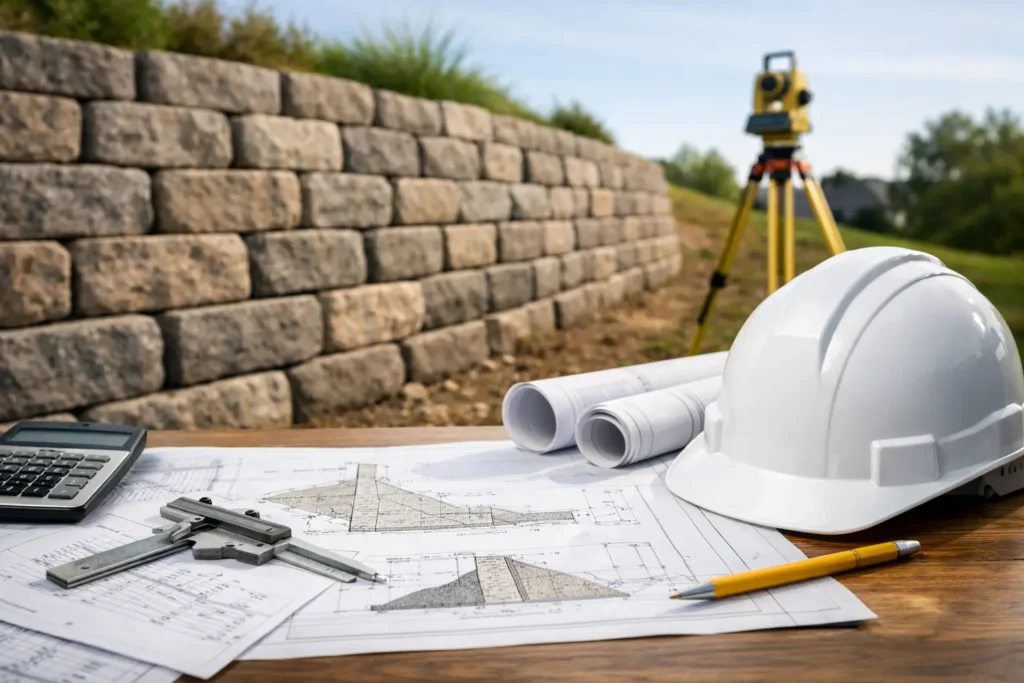
Plan a retaining wall PE submission with the right site data, structural design, drainage details, and authority coordination to reduce approval delay.
Avoid $500 Fees on URA Change of Use in Singapore

Practical URA change of use playbook for Singapore property owners. Check URA SPACE, pick lodgment when eligible, and avoid the $500 application fee and…
Singapore BIM Execution Plan That Clears CORENET X and NBIMS Checks

Standards aligned BIM execution plan for Singapore projects: six core sections, CDE and clash rules, drafting steps, and how to meet CORENET X and NBIMS.
Construction Cost Planning for Better Project Control

Construction cost planning helps owners set realistic budgets, control scope, coordinate approvals, and manage risk from concept design through handover.
12 Month Window to Claim Free Repairs in Singapore’s DLP

Protect your right to free repairs during Singapore’s 12 month defects liability period. Learn engineer signed checks, room by room documentation, and…
Pass SCDF First Time: 6 ACH, 3 m/s for Singapore Car Park Ventilation

Map SCDF and BCA clauses to targets: 6 ACH, 3 m/s, 1.5 m clearance. Includes an Aman Engineering checklist to speed approvals and avoid resubmissions.
Core Drilling vs. Non-Destructive Methods: Finding the Balance in Structural Audits
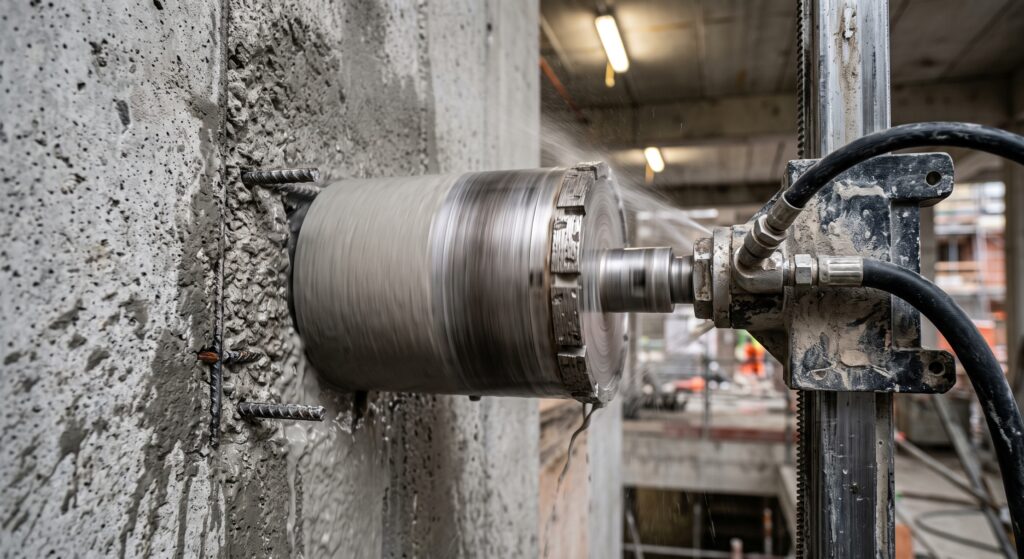
The Paramount Importance of Comprehensive Structural Audits Navigating the incredibly complex landscape of modern structural engineering requires a profoundly nuanced understanding of exactly how environmental degradation, continuous mechanical loading, and subtle chemical alterations progressively compromise the long-term integrity of aging reinforced concrete structures1. Across the rapidly developing global landscape, structural engineers, regulatory authorities, and extensive […]
Diagnostic Frameworks for Rebar Mapping and Subsurface Anomaly Detection
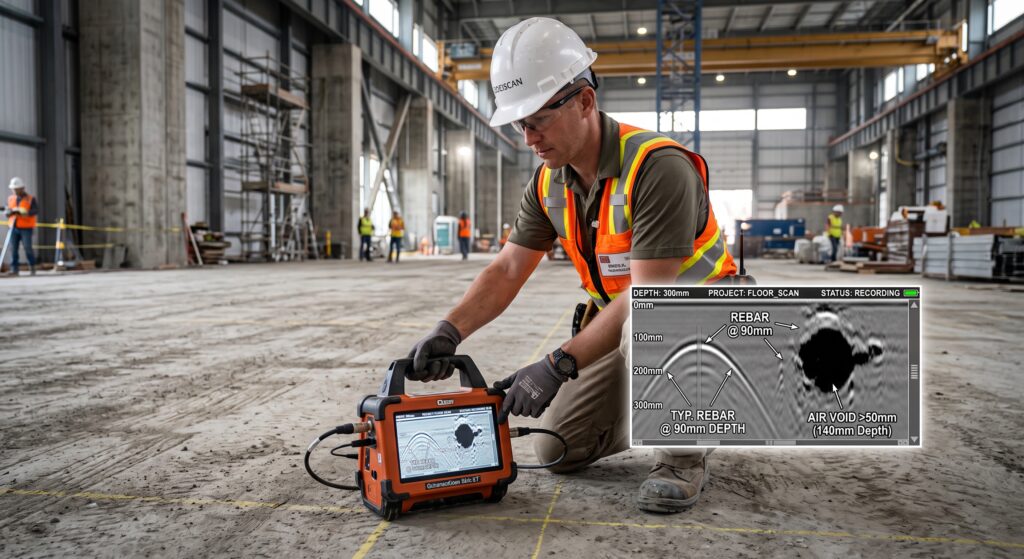
The Imperative of Advanced Non-Destructive Testing in Complex Modern Infrastructure Ground Penetrating Radar (GPR) has unequivocally established itself as an absolutely indispensable non-destructive testing methodology utilized heavily by structural engineers and geophysical technicians across the globe for the meticulous evaluation of aging concrete infrastructure prior to the commencement of invasive coring, cutting, or anchoring operations1. […]
Concrete Diagnostics : UPV vs. Rebound Hammer Testing
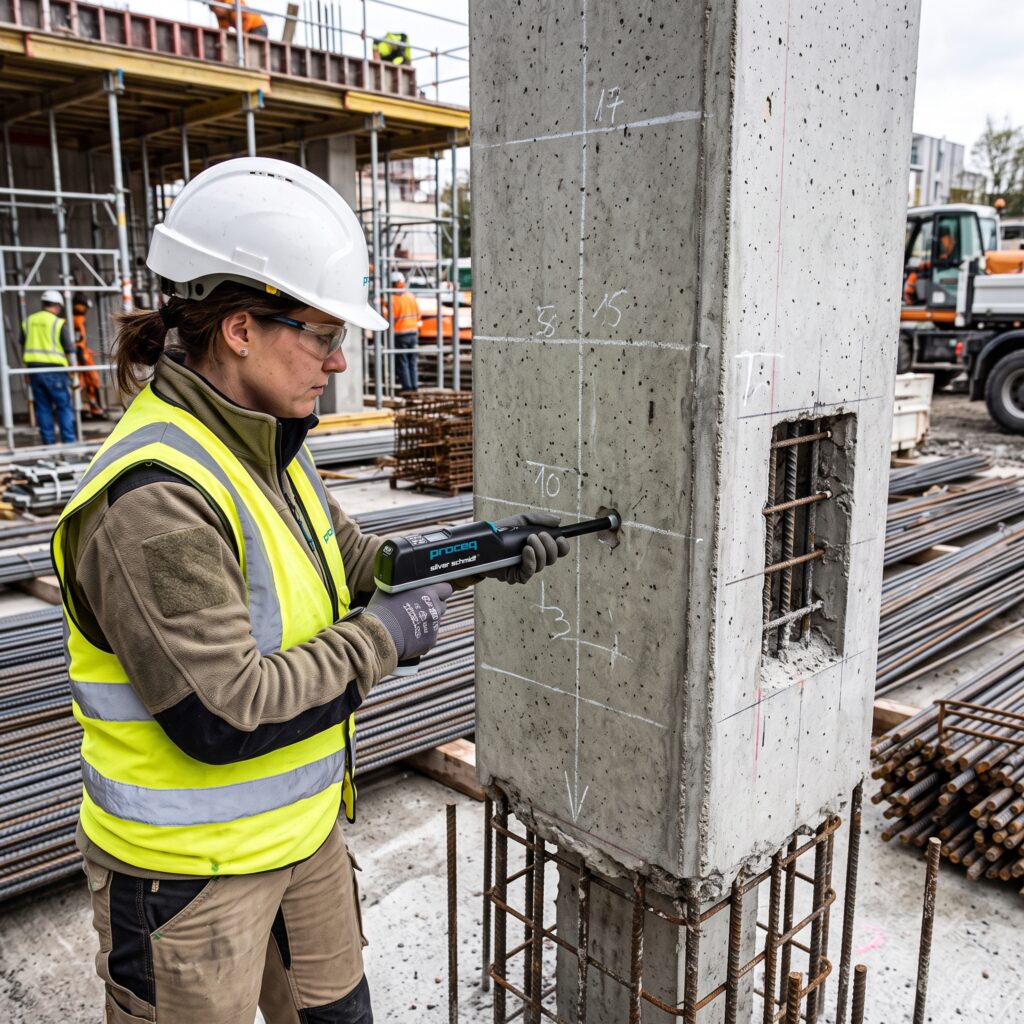
The Fundamentals of Structural Health and Non-Destructive Testing The built environment is the foundation of modern economic and societal operation, heavily reliant on the structural integrity, durability, and longevity of reinforced concrete. Despite its historical reputation as a highly durable and relatively maintenance-free material, concrete is fundamentally porous and continuously subjected to a barrage of […]