Structural Strengthening and Repair for Corroded Steel Members: Value Engineering Opportunities That Cut Cost
Introduction
Structural strengthening and repair for corroded steel members is one of the most consequential – and cost-sensitive – decisions facing owners of aging industrial facilities across Singapore and ASEAN. Value engineering, when applied systematically by a Professional Engineer at the right project stage, routinely delivers 10–30% reductions in direct strengthening costs and even larger savings on indirect costs such as plant downtime, temporary works, and regulatory re-submissions.
This article provides a comprehensive overview for stakeholders managing industrial buildings and plants – warehouses, process plants, logistics hubs, and manufacturing facilities – many of which were built between 1980 and 2010 and are now exhibiting advanced corrosion damage. The main cause is a convergence of factors: aging steel structures subjected to aggressive tropical and coastal environments (marine salt spray in areas like Jurong, Tuas, and Pulau Batam), chemical vapours from industrial processes, deferred maintenance, and original design assumptions that did not fully account for these exposures. Deferred maintenance alone can increase repair costs by over 30%, compounding the financial burden on asset owners who delay action.
The scope here covers inspection, capacity assessment, strengthening and repair methods, and specific value engineering strategies for corroded structural members. It does not present detailed design formulas but instead guides decisions and discussions with professional engineers and consultancies. The target audience includes real estate developers, plant owners, facility and asset managers, industrial architects, civil engineers, and contractors handling brownfield upgrades in Singapore and ASEAN.
By reading this article, you will:
- Understand common corrosion patterns in industrial steel structures and their risk implications for load bearing capacity and safety.
- Learn the cost drivers in conventional strengthening and repair schemes – from steel tonnage to scaffolding and shutdown duration.
- Discover practical value engineering levers that reduce material quantities, minimise shutdown time, and cut temporary works.
- See how digital tools such as BIM and Tekla 3D modelling, combined with staged works, can de-risk and de-cost projects.
- Know when to engage a consultancy like AMAN Engineering Consultancy Pte Ltd and what information to prepare.
Understanding Corrosion and Structural Weakening in Industrial Steel Members
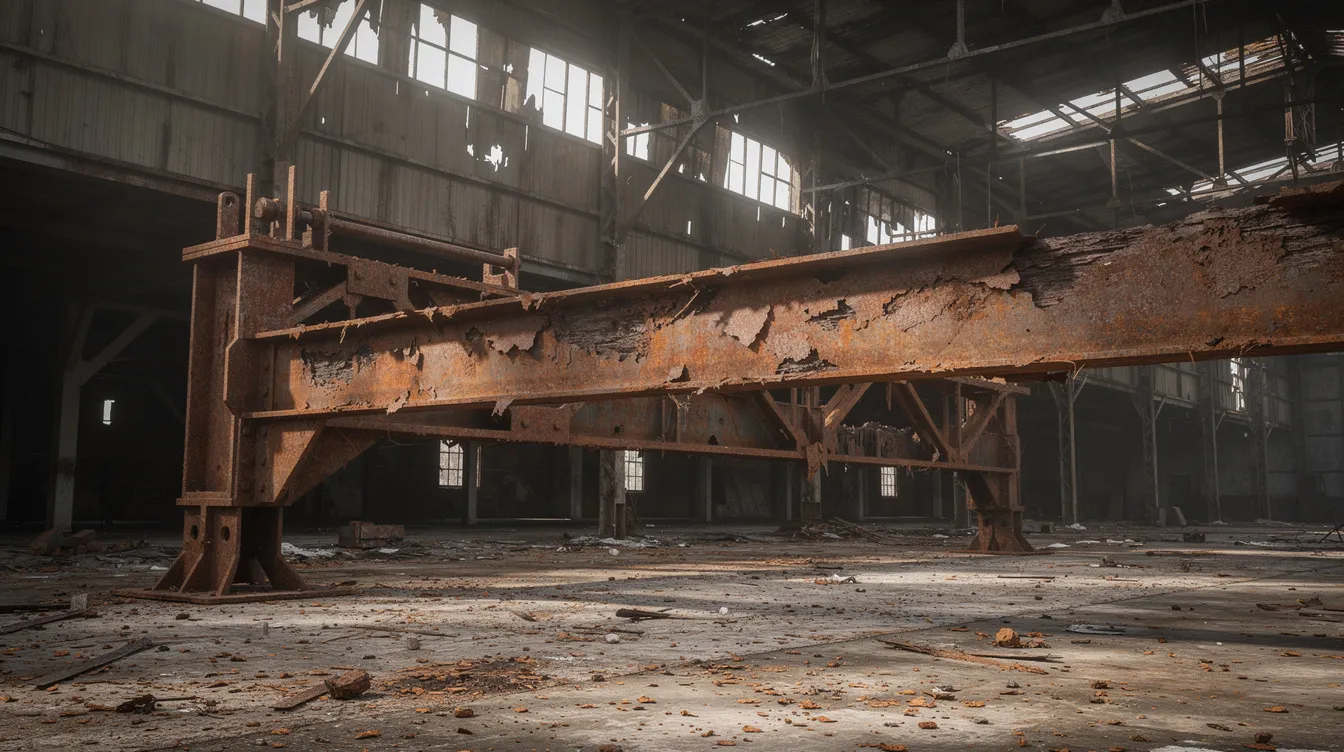
Corrosion is the electrochemical deterioration of steel when exposed to moisture, oxygen, chlorides, and acidic gases. In industrial environments, this process is accelerated by high humidity, chemical exposure, and poor drainage. Corrosion reduces steel’s cross-sectional area, affecting structural capacity – leading to decreased stiffness, increased deflections, vibration concerns, and in severe cases the possibility of structural failure. For factories, petrochemical plants, shipyards, data centres, and logistics warehouses in coastal and high-humidity locations, understanding these mechanisms is not academic – it directly determines the cost and scope of any rehabilitation programme.
Sound value engineering starts with an accurate understanding of the deterioration mechanisms at play, not simply the presence of surface rust. The difference between uniform thinning and aggressive localised pitting can mean the difference between a protective coating touch-up and a full member replacement – and that distinction is worth tens or hundreds of thousands of dollars on a typical project.
Types of Corrosion Affecting Industrial Steel Structures
Different corrosion patterns create different levels of structural risk and demand different repair methods:
- Uniform surface corrosion is the gradual, relatively even thinning of flanges, webs, and truss components on exposed roof structures and purlins. It is the most predictable pattern and typically the easiest to address if caught early.
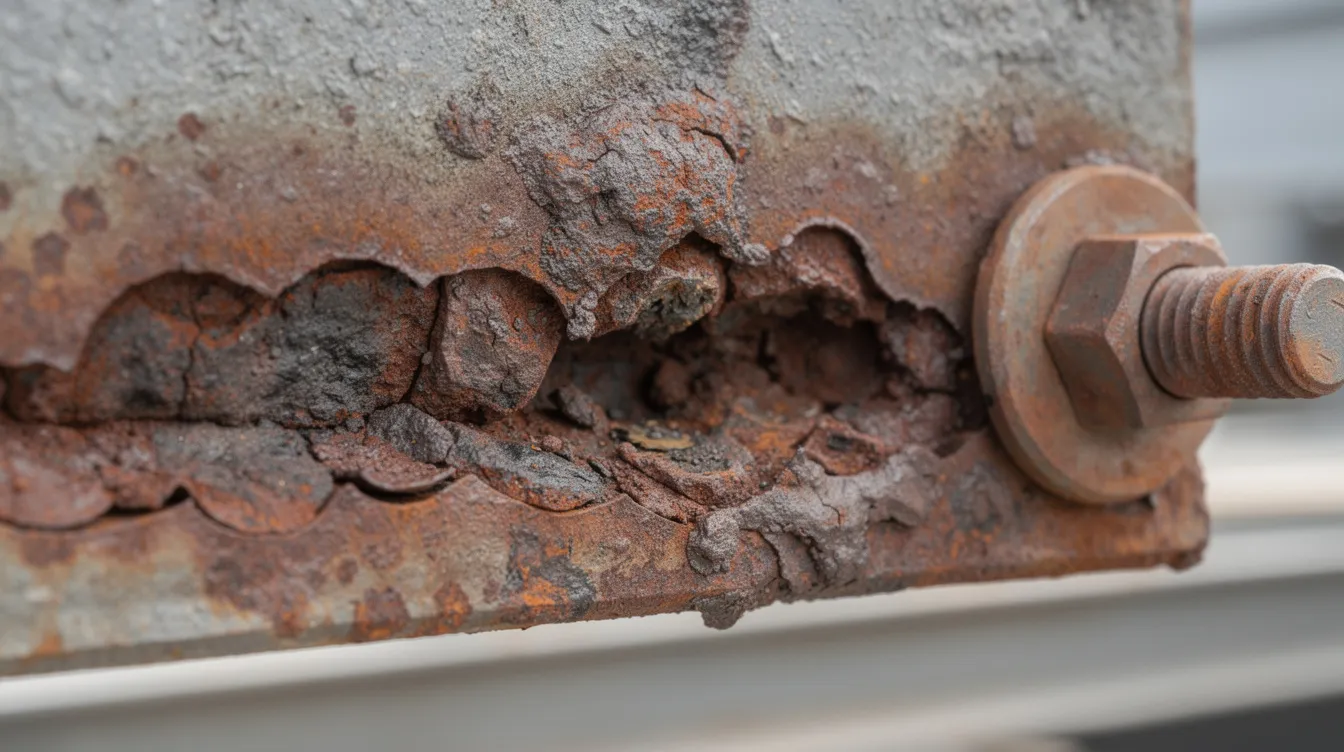
- Pitting corrosion is concentrated at bolted connections, splice plates, and weld toes. These deep, localised penetrations are often not observed during routine visual checks but can drastically reduce strength and fatigue life at critical joints.
- Crevice corrosion occurs under base plates, at cladding interfaces, beneath bolt heads, and within decking overlaps – anywhere moisture becomes trapped. It is frequently hidden until deterioration is advanced, making it a common cause of unexpected structural deficiency.
- Galvanic corrosion develops where dissimilar metals meet, such as stainless steel fittings on carbon steel beams, accelerating the deterioration of the less noble metal.
Typical industrial triggers include marine salt spray, chemical vapours (fertiliser dust, process fumes), water leaks from roof membranes or process lines, condensation in poorly ventilated spaces, and inadequate drainage at base plates. Each corrosion type leads to different strengthening or repair strategies – a critical distinction for the value engineering process that follows.
From Corrosion to Structural Failure Risk: How Capacity is Lost
Understanding how corrosion translates to structural risk is essential for anyone commissioning or approving strengthening works:
- Loss of flange thickness in beams reduces bending capacity and lateral-torsional buckling resistance. Even moderate thinning of a compression flange can significantly lower a beam’s safe load.
- Loss of web thickness affects shear capacity and increases the risk of local buckling, vibration, and fatigue under dynamic loads such as crane operations or heavy forklift traffic.
- Corroded connection plates and bolts impact load paths and redundancy. If a corroded splice plate can no longer transfer full design forces, the entire framing system may be compromised.
A laboratory study of corroded steel angle members with weight loss ranging from 21% to 47% demonstrated capacity reductions between 10% and 70%, depending on where corrosion was concentrated. Critically, standard code predictions (using CAN/CSA S16-09, ASCE 10-97, or AISC methods) often underpredicted the capacity loss when corrosion was nonuniform – reinforcing the importance of detailed structural analysis over conservative blanket assumptions.
In Singapore, structural steel design is governed by SS EN 1993 (Eurocode 3) with Singapore National Annexes. For older plants originally designed to BS 5950, re-assessment under the current Eurocode framework may reveal different capacity margins. The key takeaway for asset owners: not all visible corrosion requires heavy strengthening. Many structural members still have significant reserve capacity when correctly assessed – and that assessment is the bridge to value engineering.
Inspection, Structural Analysis, and Diagnosis as the Foundation for Value Engineering
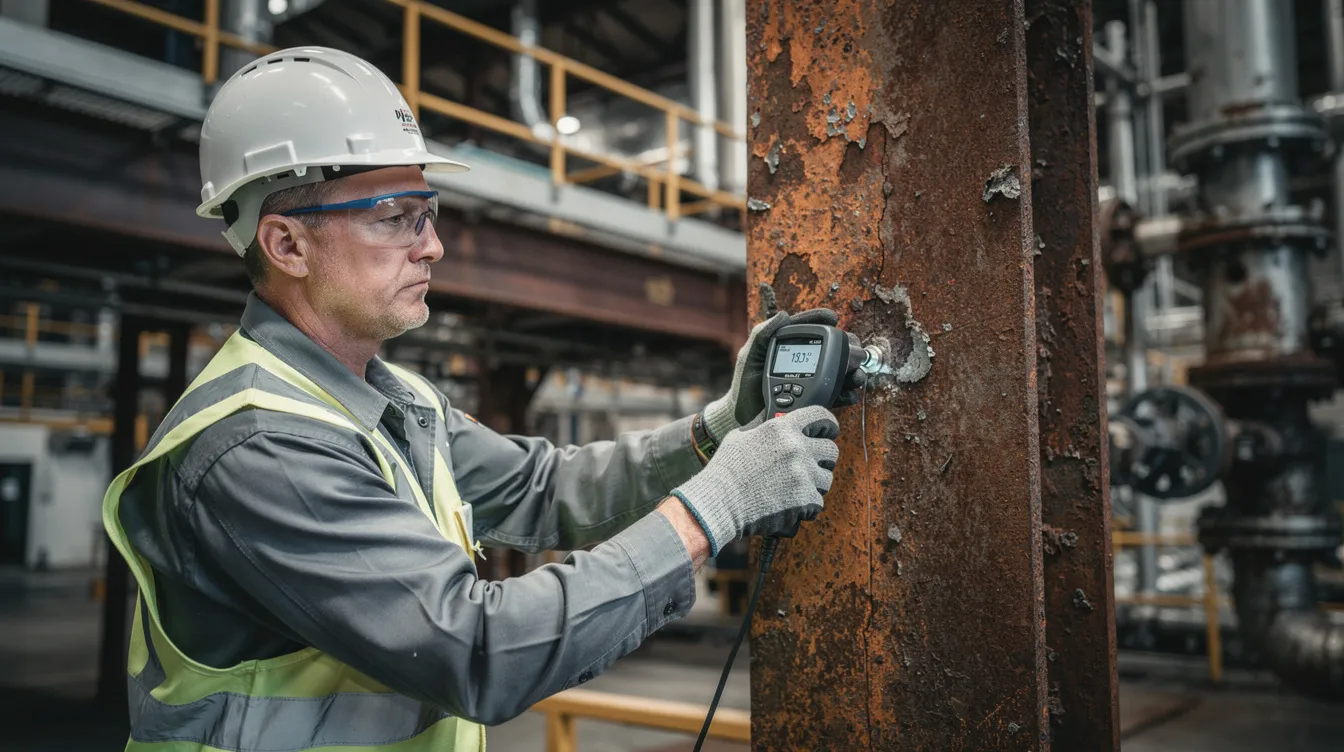
Accurate diagnosis is the single most important step in controlling repair costs. Information gathering involves assessing section loss through testing – without it, engineers must apply conservative assumptions that lead to over-design and unnecessary expenditure.
A structured inspection regime under a Professional Engineer typically includes:
- Preliminary visual survey to identify critical zones – crane beams, mezzanines, pipe racks, transfer girders, roof trusses, and base plates – focusing on areas exposed to water ingress, coastal spray, or chemical fumes.
- Detailed ultrasonic thickness (UT) gauging of webs, flanges, and connection components to quantify actual section loss rather than relying on visual estimates.
- Non-destructive testing (NDT) including magnetic particle and dye penetrant inspection at highly stressed welds and bolted connections. Structural inspections can identify issues like cracks and corrosion before they lead to severe consequences such as collapse.
- Coating condition mapping to document where protective systems have failed and prioritise recoating or corrosion protection measures.
- Digital capture using laser scanning, photogrammetry, or drone surveys – feeding into BIM/Tekla models that document the as-built condition and support subsequent analysis.
BIM and Tekla 3D modelling are crucial in construction consultancy for this type of work: they allow engineers to map corrosion damage zone by zone, check altered load paths, and produce accurate quantities for repair works – eliminating the guesswork that inflates costs.
Good diagnostics enable selective strengthening – a major cost saver compared to blanket upgrading. Once condition and capacity are quantified, owners can explore specific strengthening and repair strategies, and then apply value engineering to each.
Strengthening and Repair Options for Corroded Steel Members
The intervention spectrum for corroded steel members ranges from do-nothing/monitor (where remaining capacity is adequate) through repair-in-kind, partial strengthening, to full member replacement. Selecting a repair method for corroded steel members depends on section loss and accessibility – and cost-effective methods depend on whether damage is localized or widespread.
For industrial facilities, choices are strongly influenced by shutdown windows, access constraints within live plants, and regulatory approvals from agencies such as BCA, JTC, and SCDF for fire safety implications. Each option carries a different capital cost, operational impact, and future maintenance profile – and it is these differences that create the value engineering opportunities explored in the next section.
Conventional Steel Strengthening Techniques
Conventional strengthening techniques remain the most widely used methods on industrial buildings in Singapore and ASEAN:
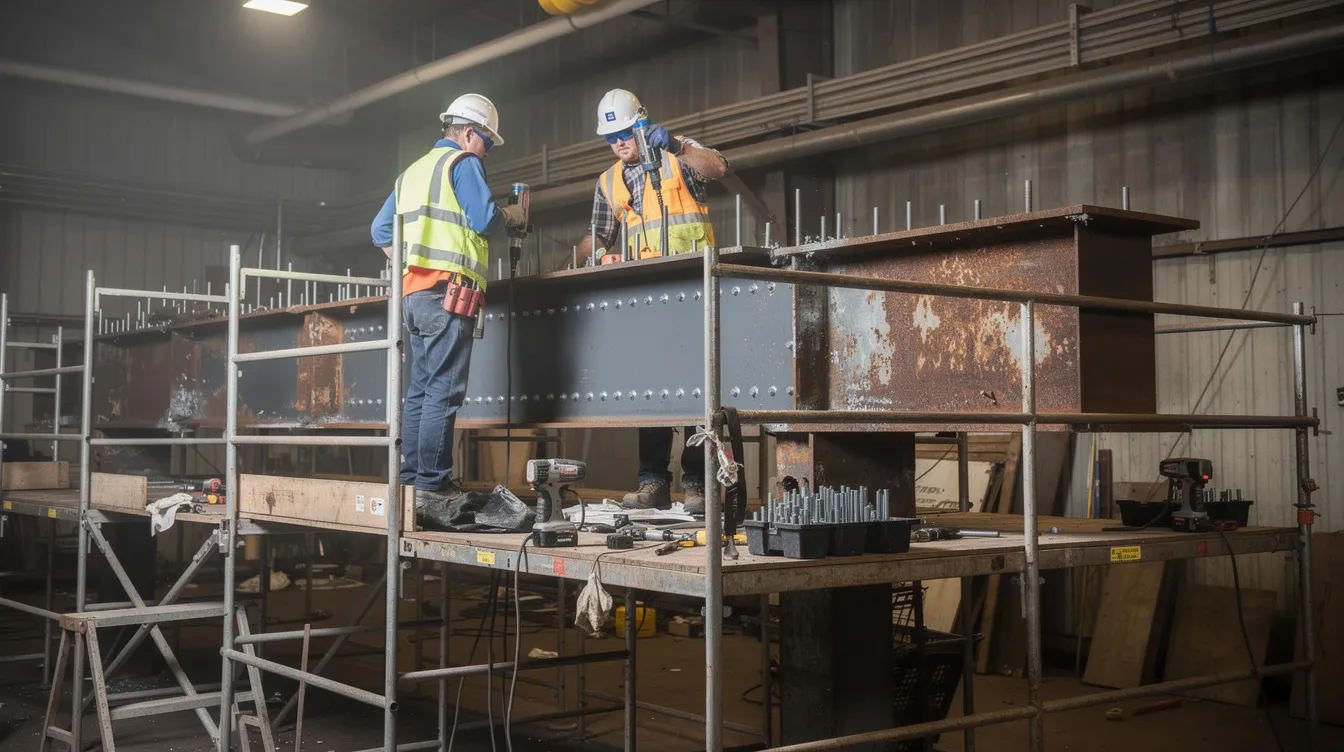
- Welded or bolted cover plates added to flanges and webs to restore or increase cross-sectional area. Welded or bolted steel plate reinforcement works effectively for localized section loss.
- Web stiffeners that restore resistance to local buckling and shear forces in beams and columns where web thickness has been reduced.
- Steel angle or channel reinforcement that improves stiffness and load capacity – for example, bolted side channels on corroded columns or additional brackets to shorten unsupported spans.
- Secondary beams or bypass framing to redistribute loads away from the most heavily corroded members.
Advantages: Familiar to local contractors, design is straightforward under Eurocode 3, steel sections are readily available, and construction engineering teams can mobilise quickly.
Disadvantages: Hot work (welding) requires fire permits and creates significant risk in live industrial environments with flammable materials or processes. Welding can also cause thermal distortion in existing members. Scaffolding and access costs for roof trusses and elevated pipe racks can be substantial – in some projects, scaffolding alone accounts for 25–35% of the total repair cost. Additionally, conventional schemes are often over-conservative: plate sizes specified thicker than necessary, bolt patterns more extensive than required, or worst-case corrosion assumed everywhere when detailed UT shows only partial loss.
Advanced Methods: Composite and FRP-Based Strengthening
Modern alternatives are increasingly relevant to industrial retrofitting in Singapore:
- Carbon fibre reinforced polymer (CFRP) plates or wraps bonded to steel beams and columns offer significant performance gains with minimal added self-weight and no welding. CFRP strengthening can enhance ultimate capacity by 50% and improve stiffness by 25%, based on results obtained in controlled studies. Bonded FRP fabrics are suitable for flat or round surfaces with minor stiffness demands, while pre-formed CFRP plates handle higher structural loads.
- Hybrid steel-concrete solutions such as concrete jacketing with shear connectors on corroded RC columns in basements or other wet zones. Depending on the design brief, the jacket may use high performance concrete, and any polymer-modified repair mortar used with the system is typically water-cured before being allowed to cure in air. Concrete-filled FRP jackets are used specifically for corrosion in wet environments, combining structural restoration with enhanced protection for concrete structures and steel alike.
- High-performance coatings and metallisation (zinc or aluminium thermal spray) integrated with the strengthening strategy to provide long-term corrosion protection.
The benefits are compelling for industrial applications: reduced added self-weight (critical for structures where foundations cannot take additional loads), minimal welding, faster installation during short shutdown windows, and in some cases better long-term corrosion resistance. For example, in a school upgrading project in Singapore, 70 reinforced concrete columns were strengthened with FRP wrapping in approximately half the time of conventional steel jacketing.
Constraints include the importance of surface preparation (blast cleaning to SA2½ profile is typically required for bonded systems), the need for skilled applicators, bond durability under tropical humidity cycles, and authority/insurer acceptance. While FRP strengthening is increasingly accepted in Singapore when designed by a qualified PE and accompanied by fire safety data, it may require additional fire protection layers depending on the building’s fire rating requirements.
Repair and Protection of Severely Corroded Members
Where members are badly deteriorated – perforated, with section loss exceeding approximately 40–50% – more aggressive interventions are necessary:
- Localised doubler plates or splice inserts: Cutting out the perforated or heavily wasted section and welding or bolting new plate material in its place. Localized steel plate reinforcement is effective for localized section loss where access permits.
- Partial or full member replacement: Often the most cost-effective approach for secondary components like purlins, bracings, and platform beams where fabrication and access are straightforward.
- Load redistribution strategies: Adding new framing to bypass the most deteriorated members, installing temporary shoring, or creating alternative load paths so that severely affected members can be offloaded during repair.
Critically, structural repair must be integrated with durability enhancement. Without addressing the root causes, corrosion damage will recur within 5–10 years. Corrosion protection measures should include sealing vulnerable interfaces, while protective coatings are best for surface rust with zero section loss. A comprehensive protection strategy includes:
- Blast cleaning to SA2 or SA2½ profile, followed by zinc-rich primers, epoxy intermediate coats, and polyurethane top coats for aggressive environments.
- Galvanising or thermal spray for external pipe racks and jetty structures.
- Drainage improvements and detailing changes that prevent water trapping – eliminating crevices where moisture can accumulate.
- Preventing root causes of corrosion is important for long-term durability: fixing roof leaks, improving ventilation, redirecting process water, and maintaining coating systems on a scheduled cycle.
Effective repair must combine structural restoration with durability enhancement to avoid repeating costs. These technical options set the toolbox – value engineering decides which tools, how much, and when to deploy for the lowest total cost.
Applying Value Engineering to Steel Strengthening and Repair
Value engineering in this context is a structured, PE-led process to optimise the cost, safety, operability, and maintainability of strengthening schemes for corroded steel structures. Function analysis separates primary and secondary functions of structural members – distinguishing between elements that are critical to load bearing capacity and those serving secondary roles – to focus investment where it matters most.
AMAN Engineering Consultancy often enters projects at the feasibility or pre-tender stage to unlock savings before solutions are locked in. The focus is on quantifiable reductions: less steel tonnage, fewer access works, shorter plant shutdowns, and lower lifecycle maintenance costs. Value engineering can reduce repair costs by 30% when applied systematically and early.
Step-by-Step Value Engineering Process for Corroded Steel Members
The value engineering process for industrial steel repair follows a structured sequence:
- Data collection and digital capture: Collate inspection reports, original design drawings, load histories (cranes, equipment, storage), and production constraints. Create a BIM/Tekla model of the affected zones to document current geometry and condition accurately.
- Structural re-assessment: Re-check actual loads, load combinations, and utilisation ratios using updated codes (SS EN 1993 with Singapore National Annexes). This step often uncovers reserve capacity – for example, crane loads or storage loads that are lower than the original design maximum, or parts of the structure that are no longer in active use.
- Option generation: Develop multiple strengthening concepts for each key member or zone – plating, FRP wrapping, partial replacement, load path modification – to create a menu of possibilities. Selecting the most economical repair involves assessing remaining capacity against required performance.
- Cost and constructability review: Prepare detailed cost estimates covering materials, fabrication, welding, labour, access scaffolding, temporary works, and shutdown impacts. Cost analysis considers initial and life-cycle costs for repairs, including future maintenance and recoating cycles.
- Multi-criteria evaluation: Assess options not only on cost but on safety, code compliance, downtime duration, maintainability, future expansion flexibility, and inspection access. This ensures the chosen solution does not trade short-term savings for long-term risk.
- Optimisation and phasing: Combine quick-win repairs (e.g. coating restoration, minor plating) with medium-term upgrades (e.g. FRP strengthening of critical beams) to spread cost and downtime across multiple budget periods.
- Documentation for authority submission: Prepare calculation packages referencing SS EN standards and Singapore National Annexes, detailed drawings, method statements, fire protection specifications, and duration estimates for submission to BCA, JTC, SCDF, and insurers.
Comparing Strengthening Options Through a Value Lens
A structured comparison helps owners and facility managers move beyond default assumptions. The table below summarises key criteria across the three most common intervention categories:
| Criterion | Conventional Steel Plating | CFRP Strengthening | Partial Member Replacement |
|---|---|---|---|
| Material & fabrication cost | Moderate to high; steel plate, welding consumables, large section components | Higher material unit cost, but less total weight and no welding consumables | High per member; new steel, transport, foundation tie-in |
| Scaffolding & access | Heavy scaffolding; hot-work access platforms; higher temporary works cost | Lighter scaffolding; surface work; sometimes prefabricated wrap segments | Access similar to replacement; may require temporary shoring |
| Hot work / fire permits | Required; significant risk in live industrial environments | Avoided; adhesive bonding and bolted fixings reduce fire risk | Required for welding new connections |
| Shutdown duration | Typically longer; sequential, member-by-member work | Shorter; segmental application, adhesive curing, less disturbance | Variable; complete shutdown of affected zone often needed |
| Authority & fire protection | Conventional; standard coating or intumescent fire protection | Must demonstrate fire rating compliance; increasingly accepted by BCA | Full code compliance for new steel; straightforward submission |
| Expected service life | 10–20 years with coating maintenance; monitoring required | 15–25+ years if UV and moisture protected; more frequent early inspection | Fresh member life; depends on coating and environment management |
Synthesis: Although CFRP carries a higher material unit cost, the total project cost – including labour, scaffolding, shutdown time, and indirect production losses – is frequently lower than conventional plating for beam and column strengthening in live industrial environments. Patch repair alone improves stiffness by approximately 5%, while CFRP strengthening improves stiffness by 25% and capacity by 50% – making it the more effective option where performance gains are needed. Owners can use this type of multi-criteria comparison to justify non-traditional but more economical solutions to boards, insurers, and regulatory authorities.
Where the Biggest Cost Savings Typically Come From
The highest-impact value engineering levers in industrial steel strengthening projects are:
- Reassessing live loads, crane loads, and equipment layouts: Many structures were designed conservatively for maximum possible loads. In practice, actual utilisation is often well below design maximums. Accurate load assessment – checking SS EN 1991-3 for crane and machinery actions – can reduce or eliminate the need for strengthening in rarely used areas, saving substantial steel tonnage.
- Phasing works to align with existing shutdowns: Aligning structural repair with planned maintenance shutdowns or off-peak operations avoids overtime premiums, night-shift costs, and extended temporary works. This single strategy can deliver 20–40% reduction in indirect costs.
- Optimising member selection and detailing: Reducing custom fabrication and minimising site welding through prefabricated segments, standardised plate sizes, and bolted connections speeds installation and reduces labour cost.
- Using BIM/Tekla models to detect clashes early: In congested pipe racks and mezzanines, digital clash detection resolves access, material delivery, and service conflicts during the design stage – avoiding expensive re-work on site. BIM and Tekla 3D modelling are crucial in construction consultancy for precisely this reason.
- Integrating corrosion protection upgrades with strengthening: When strengthening work is already under way, simultaneously fixing leaks, improving drainage, and upgrading protective coatings ensures that future maintenance is limited to inspection and minor touch-ups – avoiding the cycle of repeat deterioration and re-repair.
Projects typically save 10–20% of direct strengthening cost and 20–40% of indirect downtime cost when value engineering is implemented early. Singapore’s BC1 Design Guide (2023) also provides a material cost lever: alternative structural steels with Manufacturer Test Certificates (MTC) or CE marking can be accepted when they meet BC1 performance and QA requirements, potentially reducing procurement costs without compromising safety.
Even with sound engineering, owners face recurring practical challenges that must be managed to realise these savings.
Common Challenges in Industrial Steel Strengthening Projects and How to Overcome Them
Industrial retrofits are inherently more complex than new builds. Live operations, confined spaces, legacy documentation gaps, and multi-agency regulatory requirements all create friction. However, proactive planning with an experienced consultancy can convert many of these challenges into value engineering opportunities.
Challenge 1: Limited Access and Working Space
Roof beams above live production lines, corroded pipe racks over busy yards, and mezzanines packed with M&E services are typical scenarios. Openings for access are constrained, and heavy lifting may be impractical.
Solutions:
- Use 3D/BIM coordination to design strengthening components that can be prefabricated in smaller segments and assembled on site with minimal lifting.
- Adopt bolted solutions or FRP systems that reduce site welding and heavy equipment requirements.
- Plan modular scaffolding and mobile platforms shared across multiple work fronts to reduce set-up and dismantling time.
Challenge 2: Minimising Plant Shutdown and Production Loss
In refineries, wafer fabs, and logistics hubs, lost production cost often dwarfs the direct strengthening expenditure. Effective repair strategies minimize risk of structural failure while keeping operations running.
Strategies:
- Schedule night or weekend works with pre-assembled modules to minimise on-site installation time.
- Install temporary shoring or alternative load paths that allow partial operations to continue while repair proceeds zone by zone.
- Combine strengthening with planned maintenance shutdowns to consolidate downtime and avoid multiple mobilisation costs.
- Engage operations teams early to quantify production impact and identify the cheapest windows for intervention.
Challenge 3: Incomplete As-Built Information and Hidden Defects
Many industrial buildings constructed between 1980 and 2000 have missing or outdated drawings. Original design documents may not reflect subsequent modifications, equipment additions, or previous ad-hoc repairs.
Solutions:
- Use laser scanning and drone surveys to create accurate as-built BIM models, capturing actual member sizes, connection details, and spatial relationships.
- Apply targeted NDT and selective opening-up works at critical nodes rather than random sampling – focusing resources where structural analysis indicates highest risk.
- Adopt conservative but not excessive assumptions, documented clearly in PE calculations for authorities and insurers. Inspection methods include Non-Destructive Testing (NDT) techniques that can reveal hidden defects in welds, bolt holes, and concealed connections.
Challenge 4: Authority and Insurer Requirements
Strengthening schemes in Singapore industrial projects typically require coordination with multiple parties:
- BCA for structural submissions and permits under SS EN standards.
- JTC or other landlords for lease compliance and technical requirements.
- SCDF for fire protection implications of new steel, coatings, or FRP systems.
- Insurers for risk assessment and coverage continuity.
Solutions:
- Involve a consultancy like AMAN Engineering early to plan the submission strategy and align design with local codes, landlord criteria, and insurer expectations, then visit the company website for project information or to arrange the next step.
- Prepare clear structural reports, load assessments, and method statements that streamline approvals and reduce queries.
- Use digital models and standardised details to minimise redesign cycles and demonstrate compliance transparently.
With these challenges managed, owners can move confidently from study to implementation.
Conclusion and Practical Next Steps
Corroded steel members in industrial facilities do not automatically require full replacement. In many cases, members still retain significant reserve capacity once properly assessed – and blanket replacement wastes capital that could be better deployed elsewhere. The stiffness of corrosion-damaged beams decreases with corrosion levels, but the reduction is often less severe than conservative assumptions suggest.
Combining accurate assessment, smart strengthening methods, and structured value engineering consistently cuts cost and downtime while enhancing safety and extending building life. The importance of early engagement cannot be overstated: the earlier value engineering enters the project, the greater the savings – not just on materials and labour, but on the indirect costs that dominate industrial retrofit budgets.
What to do next:
- Commission a targeted structural and corrosion condition survey for high-risk zones – roof trusses, pipe racks, loading bays, crane beams, and base plates. A periodic structural inspection is the starting point.
- Develop a digital model (2D/3D/BIM) of affected structures to support analysis, quantity take-off, and planning.
- Engage a PE-led consultancy to re-assess capacity using current codes and generate alternative strengthening schemes tailored to your operational constraints.
- Run a value engineering workshop with key stakeholders – owner, operator, contractor, and insurer – to evaluate options on cost, safety, downtime, and lifecycle performance.
- Plan phased implementation and authority submissions, aligning works with maintenance shutdowns and consolidating approvals.
AMAN Engineering Consultancy Pte Ltd supports each of these steps: from inspections and forensic assessments, through BIM/Tekla modelling and structural analysis, to detailed design, authority submissions, and value engineering facilitation.
Related topics worth exploring next include façade and roof inspections for industrial buildings, fire resistant coatings for steel structures, and digital asset management via BIM for ongoing monitoring and sustainability of industrial portfolios.
Additional Civil Engineering Resources and Illustrative Materials
Checklist: Information to Prepare Before Engaging a Consultant
- Original structural drawings and any modification records
- Previous inspection or condition assessment reports
- Current building usage, equipment layouts, and crane/load specifications
- Production schedules and planned maintenance shutdown dates
- Photographs of visible corrosion, leaks, or structural distress
- Insurance and regulatory correspondence relating to the structure
Indicative Timeline for a Medium-Size Industrial Strengthening Project
| Phase | Typical Duration |
|---|---|
| Initial survey and condition assessment | 2–4 weeks |
| Structural re-assessment and option study | 4–6 weeks |
| Value engineering workshop and scheme selection | 2–3 weeks |
| Detailed design and authority submissions | 6–10 weeks |
| Procurement and fabrication | 4–8 weeks |
| Site installation and protection works | 4–12 weeks |
| Total (survey to completion) | 6–12 months |
Relevant Singapore Standards and Guidelines
- SS EN 1993 (Design of Steel Structures) with Singapore National Annexes
- SS EN 1991-3 (Actions induced by cranes and machinery)
- BCA Design Guide BC1:2023 (Alternative structural steel materials)
- BCA Approved Document under Regulation 27 of Building Control Regulations
Case Snapshots
- Industrial warehouse, Jurong Port: Fertiliser dust and high humidity caused extensive corrosion on roof trusses and purlins. High-pressure water blasting and a protective coatings system (with crevice sealing on flanges and bolts) deferred further section loss and avoided the cost of full steel replacement – a significantly lower-cost intervention than member-by-member replacement.
- Pipe rack rehabilitation, Jurong Island (anonymised): Value engineering at feasibility stage – reassessing crane loads and phasing works during a planned turnaround – delivered approximately 22% capex reduction and 35% downtime reduction compared to the original conventional plating scheme.
The world has seen stark reminders of what happens when corrosion is neglected: in 2018, a bridge collapsed due to corrosion of steel reinforcement – a catastrophic example of how deferred monitoring and maintenance of reinforced concrete beams and steel reinforcement in critical structures can lead to collapse. Structural inspections help prevent such severe consequences by catching deterioration early, whether in a bridge, a building, or an industrial plant.
Frequently Asked Questions on Value Engineering for Corroded Steel Members
How do I know if my corroded steel members need immediate strengthening or just monitoring? A Professional Engineer’s assessment – combining visual inspection, UT thickness gauging, and structural analysis – determines whether remaining capacity is adequate for current loads. Members with minor surface rust and negligible section loss may only need protective coatings and periodic monitoring, while those with significant reduction require prompt intervention.
What typical cost range should I expect for strengthening an industrial steel frame? Costs vary widely depending on access, corrosion severity, and chosen method. As a general guide, conventional steel plating ranges from moderate to high per tonne of added steel; FRP systems have higher material unit costs but often lower total installed costs due to shorter shutdowns. Value engineering can reduce repair costs by 30% when applied early.
Can value engineering compromise safety or regulatory compliance? No. Value engineering is a process led by a qualified PE that optimises solutions within code requirements (SS EN 1993 with Singapore NAs). It reduces waste and over-design – it does not reduce safety factors or bypass regulatory standards.
How early in the project should I bring in a value engineering consultant? At the feasibility or pre-tender stage, before strengthening solutions are fixed. The earlier value engineering is implemented, the greater the cost and schedule savings – changes become progressively more expensive once fabrication or site works begin.
Is FRP strengthening widely accepted by local authorities and insurers in Singapore? Increasingly, yes. FRP strengthening is accepted when designed by a certified PE, supported by testing data, and accompanied by appropriate fire protection. The effectiveness of FRP has been demonstrated in multiple local projects and is gaining broader acceptance from BCA and insurers.
How often should industrial steel structures be inspected for corrosion under Singapore’s regulatory framework? Building regulations require periodic structural inspections (PSI) at intervals specified by BCA – typically every five years for industrial buildings, though structures in aggressive environments (coastal, chemical exposure) may warrant more frequent monitoring cycles.
If you are managing an industrial facility with aging steel structures and want to understand your options, contact AMAN Engineering Consultancy Pte Ltd for a preliminary review. You can also visit the AMAN Engineering website for more information before reaching out. Sharing existing drawings, previous inspection reports, and photographs of areas of concern will help the team provide an informed initial assessment.