
Introduction: Why Multi-Storey Car Park PSI Compliance Matters in 2026
BCA periodic structural inspection is mandatory for multi-storey car parks in Singapore. Under the Building Control Act and the Building Control (Periodic Inspection of Buildings and Building Façades) Regulations 2021, building owners of these structures must engage a structural engineer to assess the condition of the car park at fixed intervals. Multi-storey car parks are classified as non residential buildings, which places them on a 5-year inspection cycle from their 13th year of occupation onward.
Car parks present higher structural risk than most building types. Vehicles generate repeated dynamic loads on slabs and ramps. Exhaust fumes accelerate concrete carbonation. Roof decks and basements are exposed to water ingress and, in coastal areas, chloride penetration. These factors make periodic structural inspection not a formality but a practical necessity for public safety.
The legal responsibility for compliance rests with the building owner. That category includes MCSTs for strata-titled developments, town councils for HDB car parks, JTC lessees for industrial estate car parks, and private commercial property owners. Non compliance exposes owners to enforcement action, fines up to SGD 20,000, and potential closure of unsafe decks or ramps.
AMAN Engineering Consultancy Pte Ltd is a Singapore-based engineering and architectural consultancy that supports building owners through the full PSI process for multi-storey car parks and other infrastructure. This guide sets out the regulatory framework, owner duties, technical scope, enforcement consequences, and practical steps to stay compliant.
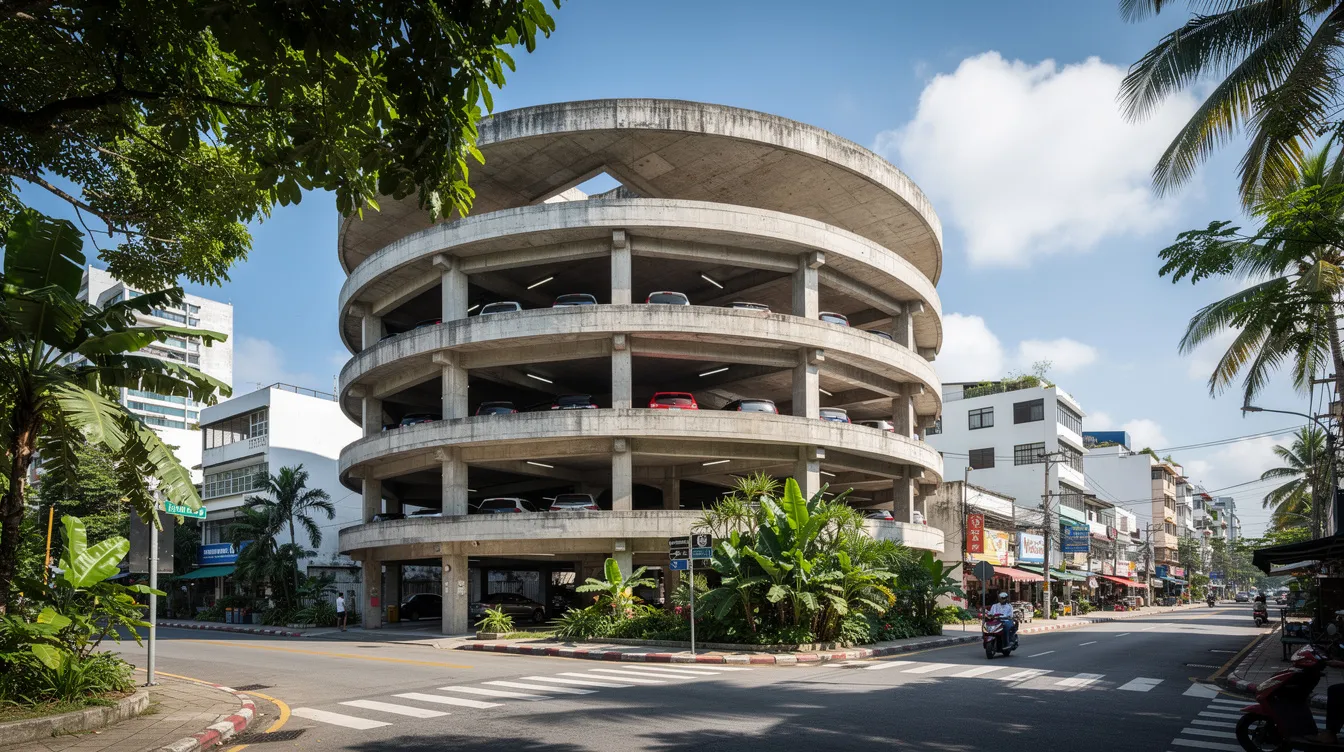
Regulatory Framework for PSI in Multi-Storey Car Parks
Periodic structural inspection PSI is governed by Section 28 of the Building Control Act (Cap. 29) and the Building Control (Periodic Inspection of Buildings and Building Façades) Regulations 2021 (SL 785/2021), as amended by S 594/2025. The Building and Construction Authority administers this regime.
Key statutory references:
-
Section 28, Building Control Act: Grants the Commissioner of Building Control authority to issue written notices requiring structural inspections to verify structural integrity.
-
Regulations SL 785/2021 (amended 2025): Prescribe inspection frequency, qualifications for inspectors, report formats, and deadlines.
-
BCA Circulars and FAQs (updated September 2024): Clarify which buildings are covered, how owners should respond, and what forms to use.
Car parks attached to malls, industrial complexes, or HDB estates are treated as non residential buildings for PSI frequency purposes, placing them on the 5-year cycle. BCA’s building control regime keeps periodic structural inspections separate from façade inspections (PFI) and from systems-based inspections such as fire safety and lift checks. Temporary car parks and simple surface lots fall outside the PSI regime. The focus is on multi-storey reinforced concrete or steel-framed car park structures that qualify as permanent buildings under the Act.
Which Multi-Storey Car Parks Must Undergo PSI: Scope & Frequency
PSI is mandatory for buildings 13 years or older, measured from the date of the first Temporary Occupation Permit or Certificate of Statutory Completion, whichever comes earlier. After that threshold, the inspection follows a fixed cycle based on building classification.
Multi-storey car parks in Singapore require periodic structural inspection every 5 years because they are classified as non residential buildings. Non-residential buildings require PSI every 5 years. Residential buildings require PSI every 10 years. Condominiums must undergo PSI every 10 years from first occupation, while shophouses require PSI every 5 years from their 13th year.
Structures that fall under the car park PSI regime include:
-
Standalone multi-storey car parks serving industrial buildings and estates
-
Podium car parks below commercial towers
-
Integrated car parks in mixed-use developments
-
Multi-storey HDB or town council car parks
If more than 90% of gross floor area of a connected building is residential, BCA’s classification may still keep the car park structure on a 5-year regime because of its non-residential loading profile and exposure conditions.
Typical exclusions: landed houses are generally exempt from PSI requirements. This includes detached, semi detached, and terraced houses used solely for residential purposes. Low-rise car porches, small ancillary open-deck parking structures, and temporary steel-decked car parks with explicit BCA exemptions also fall outside the PSI regime.
BCA may require earlier or more frequent periodic structural inspections if there are known structural issues, change of use such as heavier vehicles, or reports of spalling concrete and cracking.
Key Roles: Building Owner, MCST and Structural Engineers
Four parties carry defined responsibilities in the PSI process: the building owner, the structural engineer, facility managers, and contractors.
“Building owner” for PSI purposes includes private title holders, JTC lessees, commercial landlords, and management corporation strata title entities for strata-titled complexes with car parks. MCSTs act as building owners for strata-titled developments. For HDB car parks, the relevant town council or management corporation is the responsible party. Where a local or foreign company owns the property, the entity registered as owner bears the obligation. Property owners with multiple car park assets across sites must track each structure’s PSI cycle individually.
The structural engineer must be a registered professional engineer with the Professional Engineers Board (PEB), holding a valid practising certificate in Civil or Structural engineering. The appointed engineer conducts the inspection independently, certifies findings, and submits reports. The PE should not have conflicting commercial interests; for example, serving as the main contractor performing remedial works without proper disclosure.
Facility and car park managers support logistical arrangements: traffic diversion, access to ramps, basements, plant rooms, and structural elements hidden above false ceilings. Contractors execute remedial works under the PE’s supervision following the inspection.
Legal Duties of Multi-Storey Car Park Owners Under the PSI Regime
Under building control requirements, legal duties for periodic structural inspection compliance rest with the building owner or MCST. Statutory PSI obligations are not advisory; they carry the force of Singapore law.
The owner’s concrete obligations after receiving a formal PSI notice:
-
Appoint a structural engineer within 2 months of receiving the PSI notice. Building owners must appoint a structural engineer within 2 months; the appointment must be a PEB-registered PE in Civil/Structural discipline.
-
Notify BCA of the appointment using the prescribed Form D2 or equivalent CORENET-X submission. Owners must lodge required documents within the timeline stated in the BCA notice.
-
Submit the completed inspection report to BCA on time, within the deadline stated in the notice itself (typically 6 to 12 months from the date of notice).
-
Provide the appointed engineer with historical property data and plans: as-built structural drawings, previous PSI reports, maintenance records, and any records of alteration or addition works.
-
Provide access for the structural engineer’s inspection. This includes ramps, columns, beams, slabs, basement elements, and roof decks. If elements are hidden behind false ceilings or cladding, these must be removed if the PE requires it.
-
Implement recommended repairs within specified timeframes. Where structural integrity is compromised, rectification is not optional. Owners must carry out the required documents and works, then provide closure documentation certified by the PE.
These obligations apply regardless of whether the owner is an individual, a management corporation, or a corporate entity. The due date for each action is defined in the PSI notice and must be met to avoid enforcement action.
Owner Obligations to Facilitate the PSI Process
Beyond appointing an engineer, building owners have operational duties that determine whether the inspection process runs smoothly or stalls.
Owners must provide access for the structural engineer’s inspection across the entire building. For multi-storey car parks, this means:
-
Arranging traffic diversions and reserving bays for inspection equipment during off-peak hours
-
Providing access equipment such as mobile elevated work platforms, ladders, and keys to locked plant rooms or roof decks
-
Coordinating with security and car park operators to temporarily close ramps, restrict heavy vehicle entry during testing, and manage signage
-
Ensuring cooperation from tenants occupying part of the car park structure, such as auto workshops or logistics operators
A car park that operates 24 hours with high occupancy presents scheduling challenges. Owners who plan these logistics early, before the PE arrives on site, avoid delays that push the inspection toward the reporting deadline.
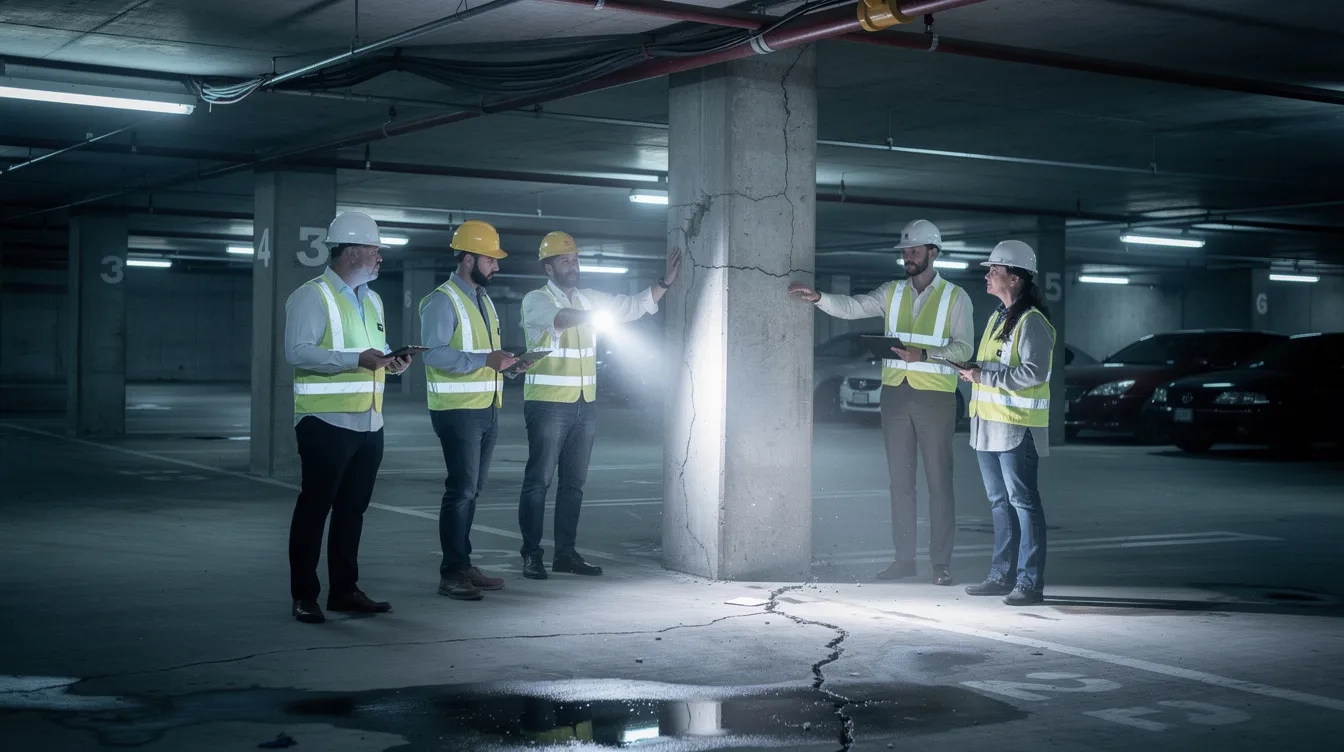
The PSI Process for Multi-Storey Car Parks: Step-by-Step
The PSI process follows a defined sequence from BCA notice to final clearance.
Step 1: Receipt of BCA notice. The owner receives a formal PSI notice stating the building’s classification, inspection due date, and submission deadline.
Step 2: Classification confirmation. The owner confirms the building is classified correctly (non-residential for car parks) and verifies the PSI cycle.
Step 3: Appointment of structural engineer. The owner selects and appoints a PEB-registered PE, then notifies BCA via Form D2 or CORENET-X.
Step 4: Pre-inspection data collection. The appointed engineer reviews as-built drawings, structural calculations from original design, past inspection reports, and maintenance logs.
Step 5: Stage 1 visual inspection. Stage 1 involves a visual inspection of accessible structural elements. The PE walks the entire car park, documenting structural defects, cracking patterns, spalling, water staining, deflection, and damage to barriers.
Step 6: Stage 2 structural investigation (if triggered). Stage 2 is triggered if Stage 1 identifies structural defects that cannot be assessed visually alone. This may involve concrete core sampling, rebar exposure, carbonation depth testing, or load testing.
Step 7: Report preparation and submission. The PSI report must be submitted to BCA within a specified deadline. The report includes defect mapping, severity classification, remedial recommendations, and photographic evidence.
Step 8: Rectification. The owner carries out repairs as recommended. Closure documentation is submitted to BCA.
AMAN Engineering Consultancy breaks PSI inspections into clear milestones with indicative dates and internal checklists for owners. The PSI process should include periodic progress meetings so the building owner understands emerging risks and budget implications before the final report.
For large, multi-basement car parks, early mobilisation (6 to 9 months before the reporting deadline) is essential given the complexity of access and circulation.
What Structural Engineers Inspect in Multi-Storey Car Parks
Multi-storey car parks have specific structural risk zones. Ramps carry concentrated cyclic loads from braking and turning vehicles. Cantilevers and transfer beams supporting the car park above other uses bear combined dead and live loads. Roof decks face direct weather exposure.
Structural elements inspected across the entire building include:
-
Reinforced concrete floor slabs, beams, and columns
-
Retaining walls and boundary walls in basement levels
-
Ramp structures and their connections to the main structural system
-
Transfer beams and roof structures
-
Movement joints and expansion joints
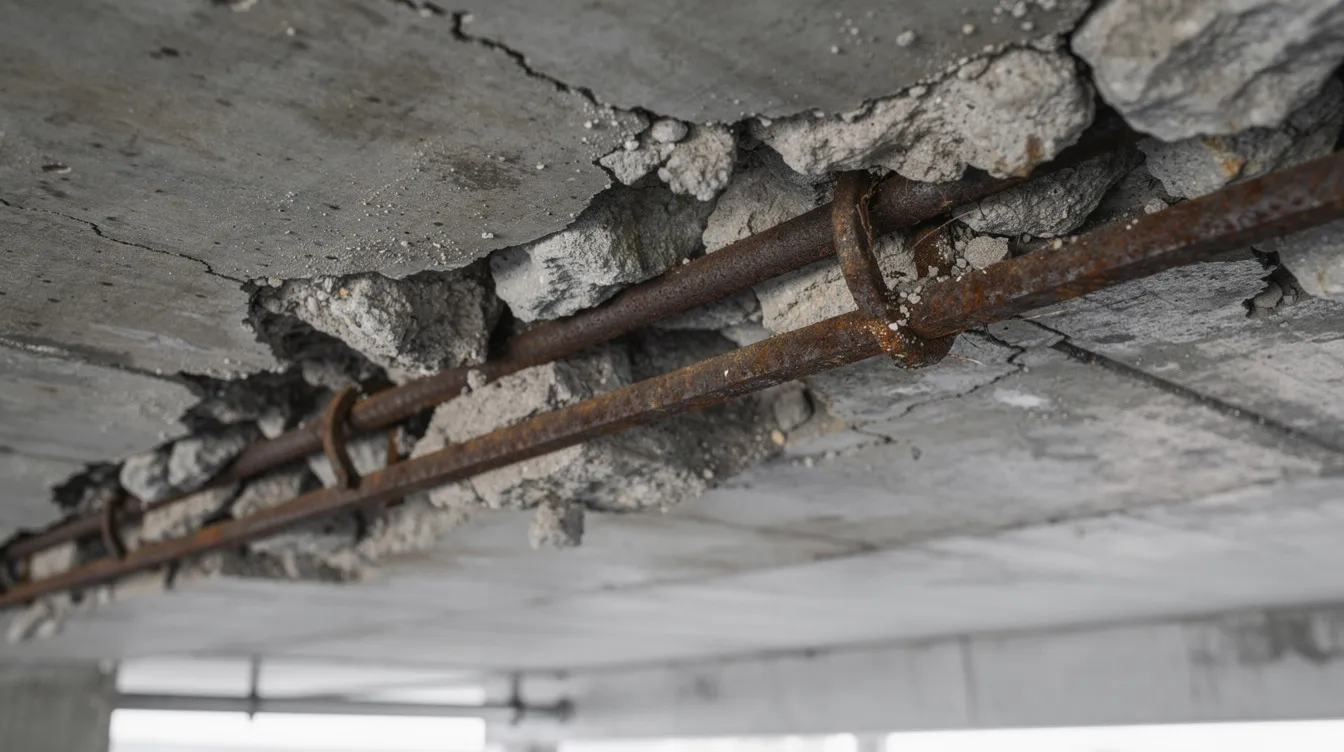
Deterioration modes the PE looks for include concrete spalling from corroded reinforcement, longitudinal cracking in beams, shear cracks near column supports, water ingress from failed waterproofing, and corrosion of steel connectors or barrier posts. AEC Technical Advisory data indicates concrete carbonation rates in Singapore commonly range from 5.5 mm to 8.6 mm per year, which illustrates how concrete cover loss accelerates in heavy-load environments like car park decks.
Engineers also review potential overloading from unauthorised storage, installation of EV chargers, rooftop solar arrays, and changes in traffic patterns. Basement levels in contact with groundwater, marine environments, or chemicals receive special attention because these conditions accelerate reinforcement corrosion. Where original structural calculations are available, the PE cross-references current loading against design capacity.
Structural Integrity Risks Unique to Multi-Storey Car Parks
Multi-storey car parks are susceptible to high dynamic loads and moisture-related issues that set them apart from typical commercial or residential buildings. Vehicles generate repeated impact forces through braking, reversing, and turning. Carbon dioxide from exhaust fumes combines with Singapore’s high humidity to accelerate concrete carbonation. Water ponding on roof decks and leakage from planter boxes worsen corrosion risk.
Typical risk factors include:
-
Aggressive carbonation leading to spalling concrete on soffits and beam faces
-
Chronic leaks from roof decks and adjacent landscaping
-
Corrosion of steel edge beams and crash barriers
-
Impact damage to columns from vehicles, particularly at corners and ramp entries
Structural failures in car parks can manifest as localised slab punching near column heads or collapse of cantilevered ramp sections. PSI is designed to catch early warning signs of these failure modes through early detection of deterioration patterns. Structural concerns flagged during one cycle inform monitoring priorities for the next.
Misused spaces present a separate category of risk. Converting car park bays to storage of heavy pallets, industrial equipment, or machinery can exceed design live loads. These conditions should be flagged during inspection and reported to the owner for immediate action.
Owners should maintain a simple risk register for the car park, tracking recurring defects, water ingress points, and areas with high previous repair frequency. This register feeds directly into each PSI cycle and reduces inspection time.
Documentation, Records and Compliance Tracking
Building owners benefit from treating PSI reporting with the same discipline applied to corporate compliance obligations. Just as companies must file an annual return as a separate statutory filing and prepare financial statements on schedule, car park owners must maintain a rolling record of structural condition and statutory submissions. The parallel is useful: a company secretary tracks filing obligations and deadlines at the company’s registered office; a facility manager or MCST council should track PSI, PFI, and other building inspections separately from corporate deadlines with the same rigour, aligned to the financial year end or a fixed compliance calendar.
Documents that every car park owner should maintain:
-
Original structural drawings and approved addition and alteration plans
-
All past periodic structural inspection reports and rectification completion records
-
Warranty documents for waterproofing, protective coatings, and structural repairs
-
Photographic records of defect progression between cycles
A central digital archive, whether BIM models, Tekla 3D structural models, or cloud folders, allows future PEs to access records without delay. AMAN Engineering Consultancy assists with creating BIM-based asset records that support both PSI and long-term maintenance planning.
For context on professional fees, PSI costs vary by building type and size. PSI fees for small condos range from SGD 3,500 to 5,500. Medium condos of 100 to 300 units cost SGD 5,500 to 9,000 for PSI. Large condos of 300 to 600 units incur fees of SGD 9,000 to 15,000. Shophouse PSI costs range from SGD 1,800 to 4,500. Factory PSI fees vary from SGD 1,800 to 25,000 depending on size. Commercial building PSI fees range from SGD 2,000 to 25,000 or more. Multi-storey car parks typically fall within the commercial or industrial range depending on their scale and complexity.
Timelines, Late Filing and BCA Enforcement Action
PSI has strict deadlines. BCA issues a formal PSI notice with a stated deadline for structural inspection completion and report submission. Before escalation, BCA may send advisory letters or an estimated notice reminding the owner of the approaching due date.
Late filing of PSI reports, or non filing altogether, triggers a graduated enforcement response. BCA evaluates each case on its own merits, but common steps include:
-
Advisory or warning letter about four weeks after the deadline passes
-
Composition fine for late or non filing
-
Enforcement notice requiring immediate appointment of a PE and completion of inspection
-
Prosecution for repeated late filings or where public safety is at risk
BCA can issue enforcement notices requiring immediate action, including prohibiting use of certain decks or ramps until the structural inspection is completed and defects are resolved. Enforcement action is not theoretical; BCA maintains an active inspection and compliance team.
Owners who realise a filing deadline will be missed should engage a structural engineer quickly, communicate with BCA, and document their mitigation steps. These records support any subsequent effort to avoid prosecution or reduce penalties. Acting before the deadline passes, even if the full report cannot be completed, demonstrates good faith.
Penalties and Legal Consequences of PSI Non-Compliance
Failure to comply with BCA’s periodic structural inspection requirements is a criminal offence under the Building Control Act. Under Section 28(9), an owner who fails to appoint a structural engineer as required by a PSI notice faces, on conviction, a fine of up to SGD 20,000 or imprisonment of up to 12 months or both.
Non-compliance can lead to fines up to SGD 20,000 for the initial offence. A composition sum for less severe breaches typically ranges from SGD 5,000 to SGD 50,000 depending on building type, scale, and severity. If a person obstructs or hinders a PE performing inspection duties, the penalty is a fine of up to SGD 5,000, with an additional SGD 500 per day if the obstruction continues.
Enforcement action can escalate from warning letters to composition fines, to prosecution of the company’s representative or officers, and in extreme cases, closure of unsafe parts of the car park. Where a company fails to meet its obligations, directors may face personal liability. Just as unpaid tax under the Income Tax Act can lead to penalties, interest, and prosecution, and just as companies struck from the register face a final gazette notification for non filing of their tax return, building owners face structured escalation for PSI breaches. If prosecuted, the owner or company’s representative must attend court on the assigned court date. The analogy to tax unpaid obligations is direct: the state treats structural safety with the same seriousness as fiscal compliance.
Beyond legal penalties, non compliance creates practical consequences. Insurance complications may arise from non-compliance with PSI; some insurers treat unresolved structural defects as material non-disclosure. Property sales may face complications without a valid PSI report, as buyers’ solicitors and lenders require evidence of structural compliance during due diligence. Asset valuations may be discounted if an outstanding BCA notice appears on record. Owners should treat PSI obligations with the same urgency as their financial year obligations; the director’s home address and personal details can appear on prosecution records.
From Defects to Repairs: Interpreting PSI Findings and Prioritising Works
The PSI inspection report classifies defects based on severity and assigns recommended timeframes for rectification. Structural defects identified require immediate rectification by owners under legal obligation where safety is at risk.
A practical three-tier prioritisation applies:
|
Priority |
Description |
Typical Timeframe |
|---|---|---|
|
Tier 1: Immediate |
Safety-critical issues requiring temporary closures, load restrictions, or propping |
Days to weeks |
|
Tier 2: Medium-term |
Deterioration such as concrete spalling, active corrosion, and water leakage |
Within 3 to 6 months |
|
Tier 3: Monitoring |
Minor cosmetic issues, hairline cracks, surface staining |
Logged for next cycle |
Where preliminary findings suggest deeper structural concerns, the PE may recommend a full structural investigation. Examples include cracking in ramp supports that suggests shear distress, or unexplained differential settlement in basement columns.
Owners should integrate PSI recommendations into a multi-year maintenance plan, aligning with capital budgeting and sinking fund forecasts. AMAN Engineering Consultancy supports owners with value engineering of repair methods, sequencing works alongside ongoing car park operations so that structural integrity is restored with minimal disruption to users.
Integrating PSI with Long-Term Asset & Car Park Operations Management
PSI is more than a compliance checkbox. For income-generating car parks, periodic structural data feeds into 10- to 15-year capital planning: slab resurfacing, waterproofing replacement, ramp strengthening, EV-charging infrastructure, and rooftop reconfiguration. Building owners must maintain structural safety through routine inspections between PSI cycles; waiting five years between assessments without any interim monitoring invites preventable deterioration.
Using BIM and 3D structural models to map defects, repairs, and risk zones across car park levels enables future PSI inspections to be faster and more targeted. Coordinated scheduling of PSI, façade inspections, and other maintenance such as repainting, re-lining, and M&E upgrades minimises downtime and reduces lifecycle cost.
For infrastructure-scale car parks near MRT stations or bus interchanges, owners should maintain a rolling programme of condition assessment rather than waiting for the next formal periodic structural inspection. This approach converts PSI from a reactive obligation into a proactive asset management tool.
Common PSI Compliance Pitfalls for Car Park Owners and How to Avoid Them
Recurring issues that AMAN Engineering Consultancy encounters when assisting owners of multi-storey car parks:
1. Underestimating lead time. PEB-registered structural engineers are in high demand during peak compliance periods. Owners who wait until the last month to engage a PE risk missing their submission deadline. Start 6 to 12 months before the reporting due date.
2. Missing or incomplete drawings. Older car parks built in the 1970s and 1980s often lack retrievable as-built drawings. The appointed engineer must then spend additional time and cost on site measurements, point-cloud scans, or opening-up works to establish baseline conditions.
3. Inadequate budget allocation. Owners of three or more companies or properties sometimes spread compliance budgets too thin. PSI fees for commercial car parks can reach SGD 25,000 or more; Stage 2 investigations and rectification add to that figure.
4. Ignoring water ingress before cosmetic repairs. Applying a coat of paint over active leaks does not address the underlying waterproofing failure. The next cycle will reveal the same defect in a worse state.
5. Delaying ramp or entrance closures. The operational challenge of closing a busy entrance or ramp leads some owners to postpone inspection and repair, sliding toward non compliance. Phased closures with clear user communication resolve this.
6. PSI compliance tracking gaps. Owners should maintain a simple register listing all notices, deadlines, inspection reports, and completed repairs for each multi-storey car park they own. Without this, deadlines slip and enforcement action follows.
How AMAN Engineering Consultancy Supports Car Park Owners with PSI
AMAN Engineering Consultancy Pte Ltd is a B2B engineering and architectural consultancy in Singapore specialising in authority submissions, structural inspections (PSI, PFI), and infrastructure projects.
For multi-storey car parks, the firm provides:
-
End-to-end PSI management from BCA notice to clearance
-
Stage 1 and Stage 2 structural investigation, including concrete core sampling and rebar assessment
-
BIM and Tekla 3D modelling for defect mapping and asset records
-
Forensic assessment of recurring structural defects
-
Value engineering of remedial schemes to reduce cost and disruption
The firm has experience across non residential buildings including industrial podium car parks, mall car parks, transport hub car parks, and large multi-basement facilities. AMAN coordinates with BCA, prepares CORENET-X submissions, manages inspection logistics, and delivers clear, practical reporting for building owners and facility managers.
Owners should contact a qualified structural engineer or consultancy as soon as they receive a PSI notice. Photographs, drawings, and defect logs provided by the owner at the start of the engagement reduce inspection time and improve report quality.
Conclusion: Treat PSI as Essential Safety Governance for Car Parks
BCA’s periodic structural inspection regime is a core component of Singapore’s building control system. For multi-storey car parks, which absorb repeated vehicle loads, moisture exposure, and chemical attack, regular structural inspection is the mechanism that prevents localised deterioration from becoming a safety incident.
The main owner duties are clear: appoint a structural engineer on time, facilitate access and provide records, carry out recommended repairs, and submit PSI reports before the deadline. Structural integrity protects users, preserves asset value, and reduces long-term repair costs.
Immediate next steps for building owners reading this guide:
-
Review the age and PSI status of every multi-storey car park you own or manage
-
Check for outstanding BCA notices or approaching due dates
-
Set up a compliance calendar covering PSI, PFI, fire safety, and lift inspections
-
Engage professional support if gaps are identified or deadlines are approaching
Integrating PSI with digital tools such as BIM-based records and proactive maintenance programmes will keep multi-storey car parks safe, compliant, and operationally efficient in the years ahead. Owners who treat PSI as routine governance rather than a last-minute scramble will spend less, repair less, and face no enforcement surprises.