
Introduction: PFI Compliance for Singapore Shopping Malls
Since 1 January 2022, the periodic façade inspection PFI regime has been mandatory for a wide range of commercial buildings in Singapore, including shopping malls. Enacted through the Building Control (Periodic Inspection of Buildings and Building Façades) Regulations 2021 under the Building Control Act, this regime requires building owners to systematically inspect, classify, and report on the condition of their building façades and exterior features. The Building and Construction Authority enforces the periodic façade inspection regime across the island, and shopping malls are considered commercial buildings subject to PFI regulations.
Updated requirements that took effect on 1 October 2025 have further tightened rules on the appointment of façade inspectors, conflict-of-interest safeguards, inspection methodology, and BCA submission quality. For mall owners, these changes are not academic-they carry real operational and legal weight.
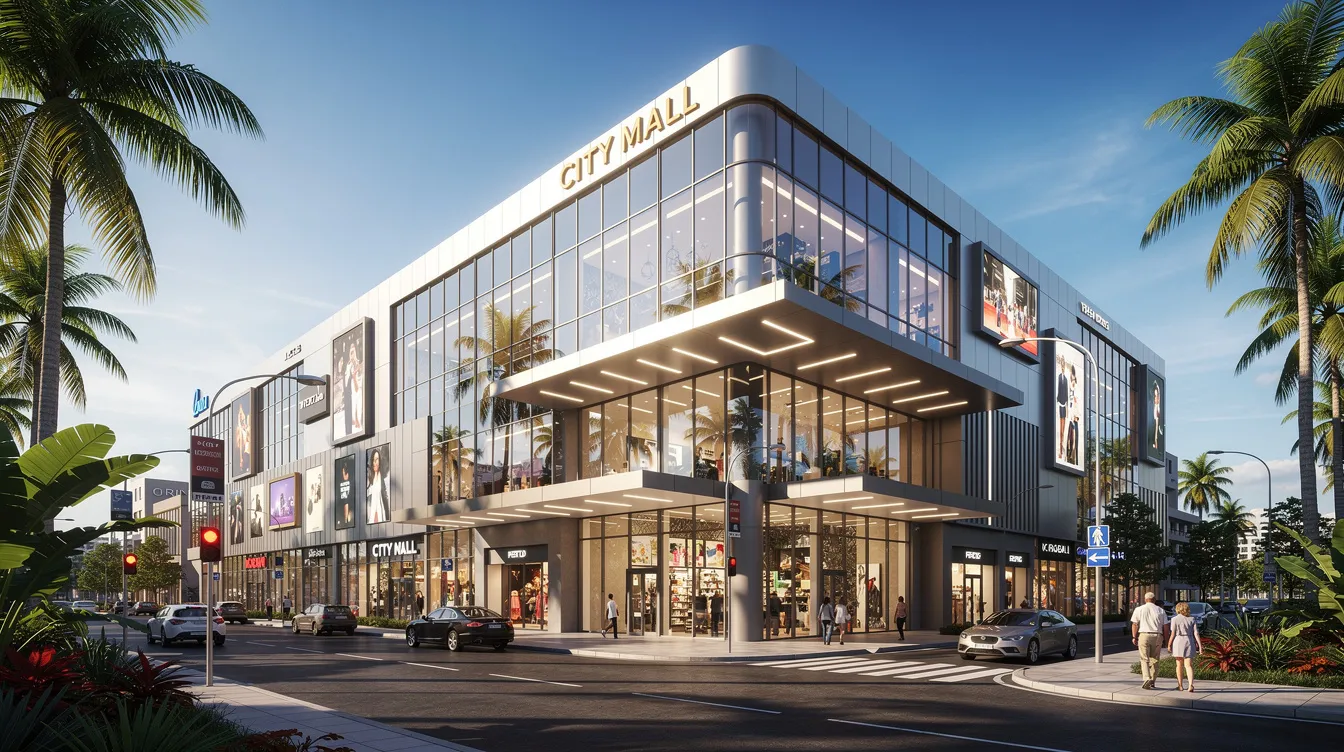
Multi-storey shopping centres and retail podiums present particularly high risk. Heavy public footfall across entrance plazas, drop-off points, outdoor dining terraces, and MRT-linked connections means that any falling façade elements can endanger hundreds of people within minutes. Frequent tenant fit-outs and renovation works compound the challenge by introducing signage penetrations, cladding modifications, and anchorage changes that may not appear in original as-built drawings. Public safety is a critical factor in the inspection process for shopping malls.
This article gives mall owners, REITs, MCSTs, and facility managers a practical compliance roadmap covering eligibility, inspection methods, statutory roles, reporting expectations, and how AMAN Engineering Consultancy Pte Ltd supports end-to-end PFI for commercial retail assets.
Regulatory Framework: How PFI Applies to Shopping Malls
The legal basis for periodic façade inspection sits within the Building Control Act and its subsidiary legislation. The key instruments are:
-
Building Control (Periodic Inspection of Buildings and Building Façades) Regulations 2021 (S 785/2021) – effective 1 January 2022.
-
Meaning of Exterior Features Regulations 2021 – defines what façade materials, exterior features, and façade elements fall in scope.
-
Amendment Regulations 2025 (S 594/2025) – effective 1 October 2025, introducing stricter conflict-of-interest rules for façade inspectors and sharpened duties for competent persons.
-
Building Control (Reportable Matters) Regulations 2025 (S 615/2025) – effective 1 October 2025, mandating incident and risk reporting for fallen or at-risk exterior features within defined timeframes.
PFI is separate from periodic structural inspection, fire safety checks, and routine maintenance. However, coordinated planning across these regimes is strongly recommended for malls that may simultaneously face PSI and PFI cycles. You can read more about how PSI works for commercial buildings in our companion guide.
The focus of PFI is specifically on façades and exterior features that may pose falling-object risks over public walkways, taxi bays, outdoor terraces, bus interchanges, and pedestrian mall connections. BCA publishes technical circulars and PFI guidelines that define full visual inspection, close range inspection, façade investigation, and report content requirements.
Which Shopping Malls Must Undergo Periodic Façade Inspection?
Periodic façade inspection applies to buildings over 20 years old and taller than 13 metres. Building age is measured from the date of the temporary occupation permit or, where no TOP exists, from the certificate of statutory completion. Once a building enters the regime, it must undergo PFI every seven years. Buildings taller than 13 meters are subject to PFI regulations regardless of building use.
Here is how the thresholds play out for typical retail properties:
In PFI regime:
-
A 6-storey suburban mall, 24 m tall, that obtained TOP in 2000. This building entered PFI around 2022 and is due for its next inspection cycle around 2029.
-
A mixed-use development with a 4-storey retail podium and 20-storey office tower, where the highest point exceeds 13 m and the complex is over 20 years old.
Likely exempt:
-
A 3-storey neighbourhood mall standing approximately 10 m tall. Even if it is 25 years old, it falls below the height threshold. However, façade monitoring remains best practice.
-
Temporary buildings and residential buildings used solely as detached, semi-detached, or terraced housing are also exempt.
BCA issues a PFI notice for buildings over 20 years old that meet the criteria. However, building owners should not wait passively for a notice. Understanding whether your mall meets the thresholds-and preparing accordingly-prevents scrambling when the BCA notice arrives.
Statutory Roles: Competent Person, Façade Inspector, and Mall Owner
Competent Person (CP)
A competent person CP for façade inspection must be a registered professional engineer (civil or structural) or a registered architect who holds BCA’s Certificate in Façade Inspection-often earned through a recognised façade inspection course. A competent person must be BCA-certified. The appointed competent person is legally responsible for planning the inspection methodology, supervising all on-site work, classifying defects, and certifying the final inspection report.
Façade Inspector (FI)
Accredited facade inspectors assist the CP with on-site work, close-range checks, and documentation. Façade inspectors conduct inspections under the CP’s supervision and must inform the CP immediately of any loose elements discovered over traffic areas or high-footfall zones. Starting from 1 October 2025, a facade inspector must be free from conflicts of interest-meaning they cannot be an employee, officer, or associate of the building owner, the building’s façade contractor, or anyone involved in the same rectification works they are certifying.
Mall Owner / REIT / MCST
PFI building owners carry specific statutory duties: appoint a competent person within two months of receiving a BCA notice, facilitate safe access to all façade elevations, implement safety measures advised by the CP, fund rectification works, and ensure timely BCA submission.
Here is the typical compliance flow:
-
BCA issues PFI notice to building owner → Owner appoints CP within two months → CP forms the façade inspection team and appoints accredited facade inspectors → Inspection and reporting → Rectification of defects → CP certifies completion → Final report submitted to BCA.
For more on what building owners need from façade inspection, see our detailed guide.
Scope of PFI for Shopping Centres: What Must Be Inspected?
The scope of the inspection covers all exterior elements of the building facade that could fall onto people or vehicles. For shopping malls, this is an extensive list. Below are the principal façade components, organised by their typical risk profile:
-
Glass curtain walls – risk of glass breakage and fallout, especially at upper levels above pedestrian plazas.
-
Stone, tile, and precast cladding – risk of debonding, spalling concrete, and panel detachment over walkways.
-
Aluminium composite panels (ACM) – risk of delamination and loosening at fasteners exposed to weather.
-
Entrance canopies and soffits – directly above drop-off lanes and taxi stands; high consequence if elements fall.
-
Signage structures and LED screens – heavy, often retrofitted with non-original anchorages; corrosion risk at brackets.
-
Glass balustrades and parapets – found on rooftop terraces and sky dining areas overlooking public spaces.
-
Skylights and atrium roof glazing – weather-exposed framing that may drip debris into occupied internal spaces.
-
Link-bridges and external escalator enclosures – connecting malls to MRT stations or car parks.
-
Façade-mounted wayfinding signs and decorative features – frequently modified during retail shopfront renovations.
PFI also considers the interface between the façade system and the structural frame-anchorages, brackets, and cast-in inserts-even where hidden behind panels, because failure at these structural elements can cause entire panels or glass units to detach.
Inspection Methods: Visual, Close-Range and Technology-Assisted PFI
PFI for malls combines two mandatory tiers of inspection, supplemented by technology:
Full Visual Inspection
A 100% full visual inspection must cover all façade elevations and exterior features. The visual survey is conducted from ground level, roof vantage points, and-where permitted-via unmanned aircraft systems. Drones are approved for visual façade inspections in Singapore, and their use follows TR78:2020 technical references for operator accreditation, data handling, and privacy. Drones can be used for visual façade inspections in Singapore but the CP or a supervised FI must be present during all flights.
Close-Range Inspection
A minimum of 10% close range inspection is required per elevation. This involves hands-on access using rope access, BMU or gondola, or mobile elevating work platforms. Close-range inspections detect defects beneath the surface that a visual survey alone would miss-such as hollow tiles, corroded hidden anchorages, or degraded sealant behind panels.
Inspection Tools
Inspection tools include tapping rods for tiles and render, borescopes for viewing anchor holes and internal cavities, moisture meters near areas of suspected water ingress, crack gauges, and thermal cameras for detecting hidden leaks or delamination patterns. Non-destructive testing such as pull-off tests may be used where the CP suspects weakened adhesion.
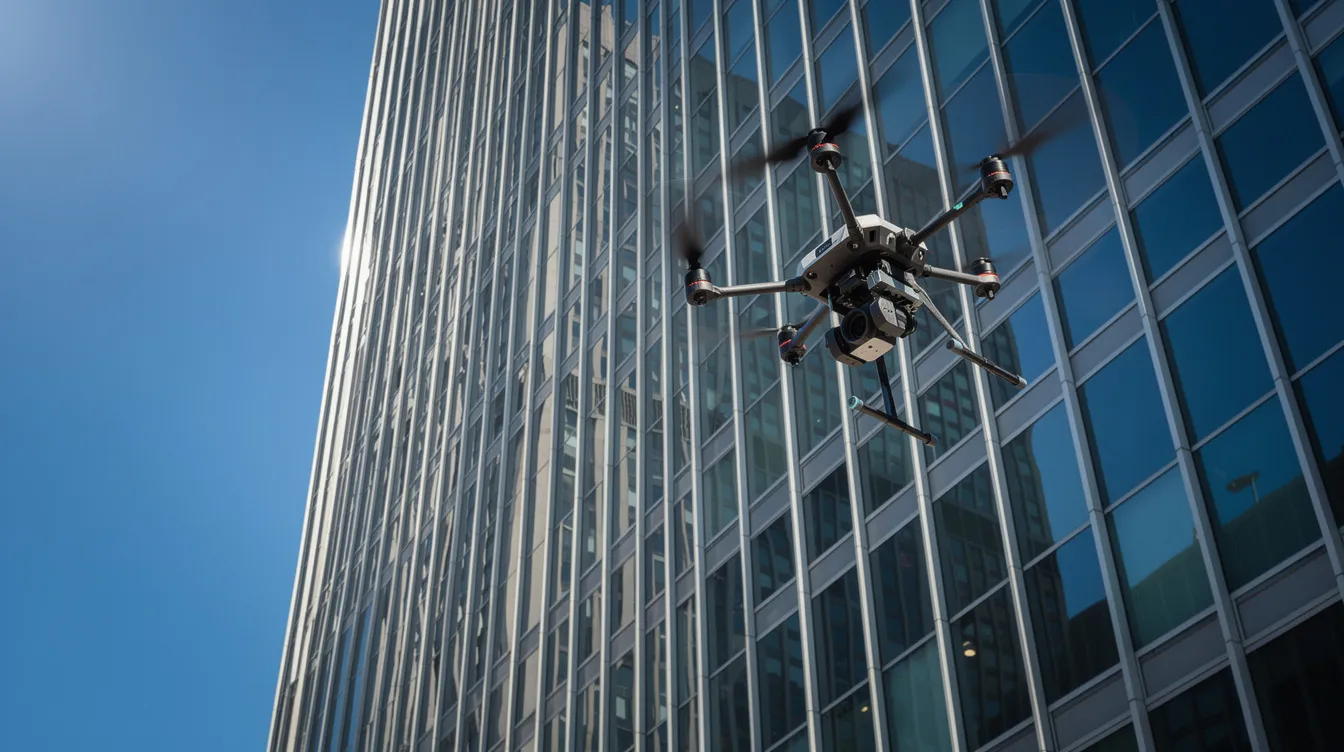
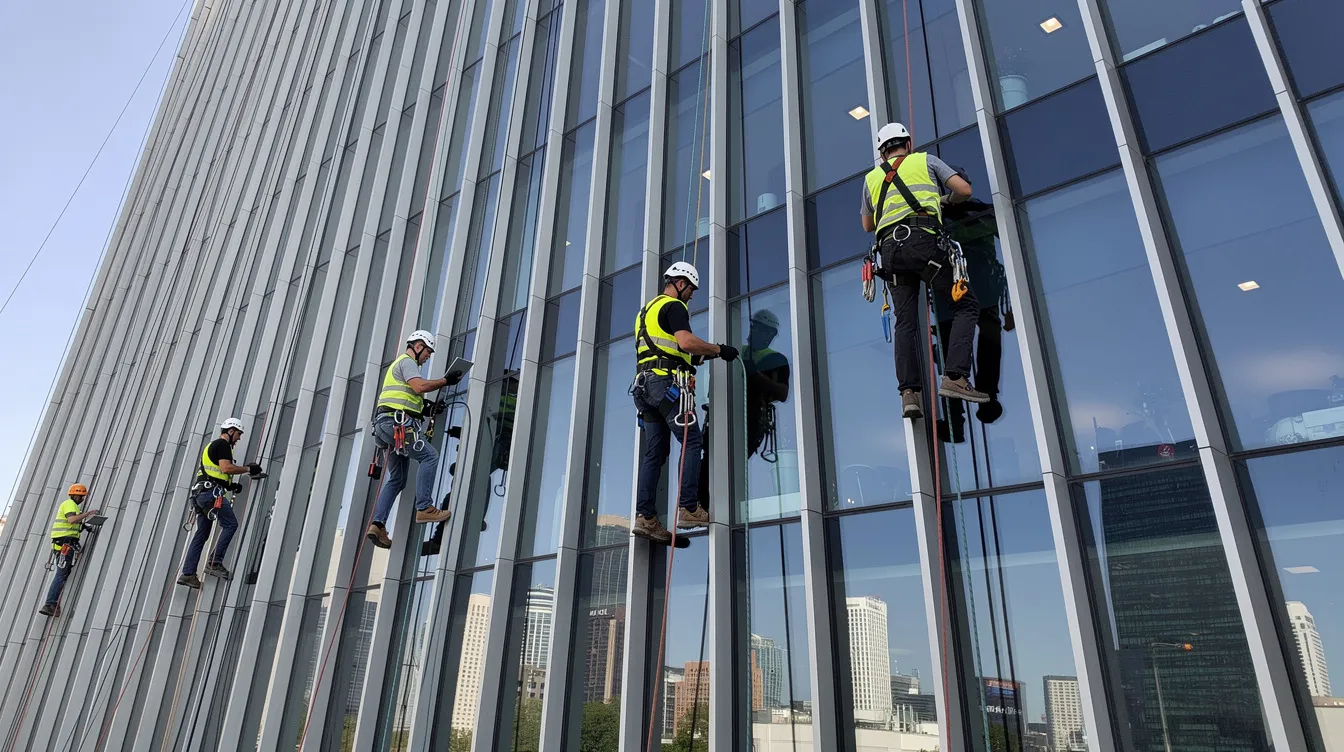
Technology supports evidence capture and early detection, but drones and AI-supported image analytics do not replace the CP’s professional assessment or the statutory close-range checks.
Typical Façade Defects in Shopping Malls and Why Early Detection Matters
Shopping mall façades are exposed to a unique combination of tropical weathering, intensive mechanical loading from HVAC systems, and frequent physical modification from tenant works. Common defects include:
-
Glass sealant failure – causing water ingress into retail units and structural corrosion of mullion frames.
-
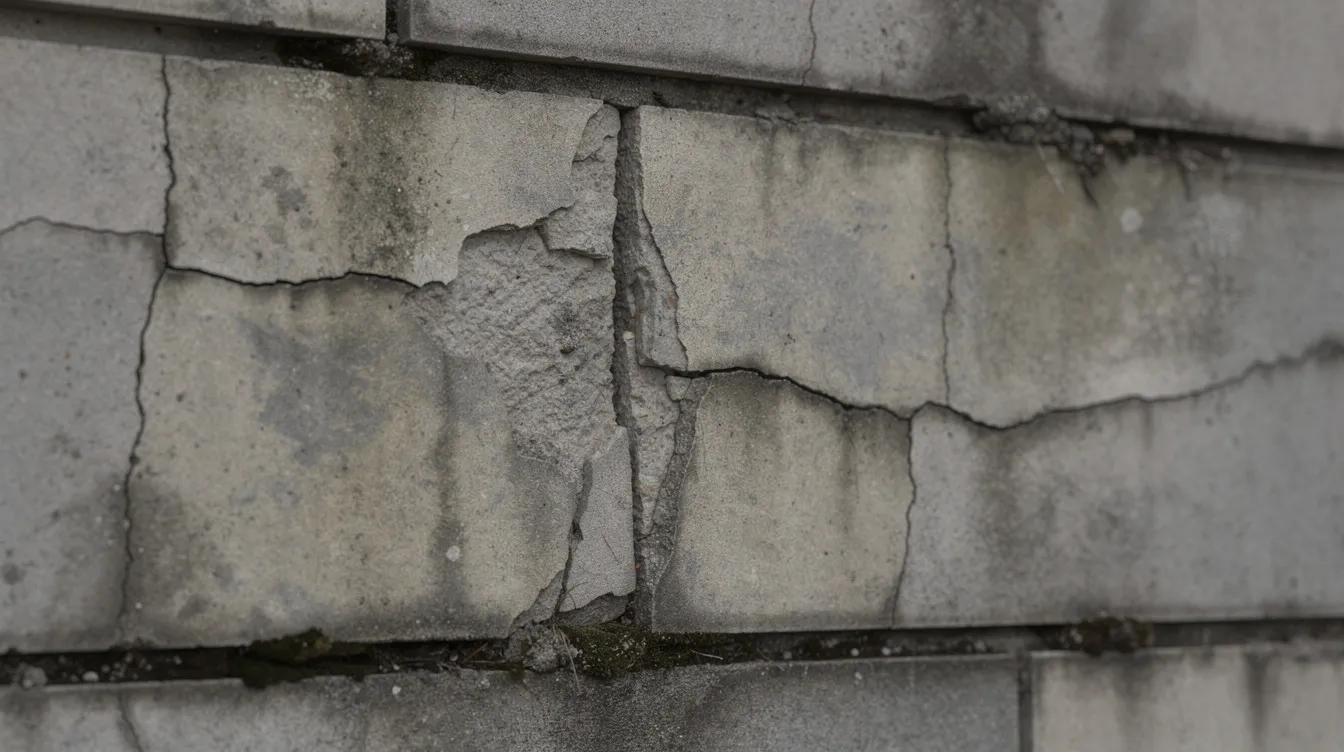
Debonded stone or tile panels – especially at colonnades along main shopping streets, where foot traffic below is highest.
-
Corrosion of signage supports – large LED screens and brand signs mounted on brackets that have not been inspected since installation.
-
Spalling concrete at parapets, soffits, and exposed beam edges along external corridors.
-
Loose aluminium composite panels – fastener corrosion or delamination at panel edges above driveway canopies.
-
Deteriorated expansion joints – allowing water penetration that accelerates hidden corrosion of structural connections.
Frequent shopfront upgrades, drilling for signage, and past retrofits can damage original façade anchorages and weatherproofing. These modifications often go unrecorded in maintenance records, making the CP’s review of renovation history essential.
Façade deterioration left unchecked leads to serious risk outcomes: falling tiles or panels onto drop-off lanes, glass breakage near weekend crowds, or corrosion-induced bracket failure for heavy decorative features. Early detection-identifying issues during routine facility walks or at the start of a periodic inspection cycle-allows planned maintenance instead of emergency closures, rush rectification, or legal liability.
Step-by-Step PFI Workflow for a Shopping Mall
Phase 1: Notice and Preparation
-
Receive the BCA PFI notice specifying the deadline and statutory references.
-
Confirm building eligibility-verify height, building age, usage, and whether multiple blocks or podium-tower configurations are covered under a single notice.
-
Appoint a competent person with façade inspection credentials and experience with large-scale commercial façades. Owners must appoint a competent person within two months of notice.
-
CP reviews as-built drawings, past defect records, previous PSI and PFI reports, and the mall’s renovation history. Building owners must provide as-built drawings and maintenance logs.
Phase 2: On-Site Inspection
-
Plan the access strategy for full visual inspection and close-range checks, coordinating with mall operating hours, tenant peak periods, and security teams.
-
Conduct on-site inspection: full visual survey of all elevations (including drone flights where used), followed by targeted close-range checks on at least 10% of each elevation.
-
The CP and the façade inspection team map visible defects, classify severity (Safe, Require Repair, Unsafe), and recommend safety measures and rectification actions.
Phase 3: Rectification and Reporting
-
The mall owner or MCST implements immediate safety measures for any unsafe façade defects-cordoning walkways, installing protective netting, or closing sections of canopy.
-
Rectification works are designed with detailed repair specifications and supervised. Upon completion, the CP reinspects and verifies completed repairs.
-
The CP finalises the façade inspection report and submits it to BCA via CORENET e-forms within stipulated timelines. Repair records are documented for future inspection cycles.
Throughout this workflow, coordination with tenants, mall operators, and security teams is essential-particularly for scheduling night inspections at busy entrances and managing crowd flow during daytime close-range work.
Classification of Findings: Safe, Require Repair, Unsafe
Inspection reports must classify conditions as Safe, Require Repair, or Unsafe. CPs classify defects using this three-tier framework, and the classification directly drives repair priorities, budgeting, and scheduling for the mall over the next several years.
Safe
The façade system is currently sound. No immediate repairs are needed-only routine monitoring and maintenance. Example: minor hairline cracks in sheltered locations with no movement and no corrosion.
Require Repair
Defects are present that are not immediately dangerous but must be rectified within a reasonable timeframe to prevent escalation. Examples: debonded tiles on upper-level cladding, early-stage corrosion on canopy steel plates, or failed silicone joints causing water leaks.
Unsafe
Conditions present an imminent risk of falling façade elements or serious injury. CPs must report unsafe façade defects immediately to the Commissioner of Building Control and advise implement safety measures such as barricades, exclusion zones, or emergency removals. Examples: loose stone cladding above a busy entrance, an unstable signage frame over the driveway, or a cracked glass panel with risk of fallout.
BCA may escalate to a full façade investigation where the CP suspects excessive erosion, corrosion, wear, fatigue, or any other condition likely to cause collapse. This investigation may require design checks, material testing, and structural calculations beyond standard PFI scope.
PFI Reporting Requirements and BCA Submission for Shopping Malls
Report Contents
A BCA-compliant periodic façade inspection report for a mall must include:
-
Building identification details: address, TOP or CSC year, use (retail or mixed-use), height, and responsible owner, MCST, or REIT.
-
Description of all façade systems and exterior features-glazing types, façade materials, cladding specifications, signage structures, and canopy details.
-
Inspection dates, personnel (CP and facade inspector names and credentials), inspection methods used, and extent of full visual and close-range inspection for each elevation.
Evidence and Documentation
-
Defect maps overlaid on mall elevations or simple grid references, with each defect tagged to a location code.
-
Photo documentation is required for overall elevations and defects-ranging from wide elevation shots to close-up defect images.
-
A clear link between each defect, its location, classification (Safe, Require Repair, Unsafe), and recommended repair or monitoring action.
-
The inspection report must document findings of defects and recommendations for repairs. The report must include inspection dates and areas checked.
BCA Submission
The CP uses BCA templates and e-forms for BCA submission, including PFI report forms and declarations. The report must be certified by a competent person. The owner ensures submission before the statutory deadline, responds to any BCA queries, and keeps the final approved report along with all inspection data and inspection records for at least the next PFI cycle.
What distinguishes a good report from a poor one? A strong report pairs every photograph with a location reference, classification, and actionable recommendation. A poor report-one with photos dumped without context, no defect classification, insufficient close-range coverage, or missing professional assessment-will not satisfy BCA and may trigger follow-up queries or enforcement. For more guidance, see our compliance guide for aging buildings.
Non-compliance can lead to fines up to S$20,000 for building owners. Failure to adhere to PFI requirements can result in penalties, and ignoring PFI notices may result in prosecution. Failure to rectify defects can lead to stop-work orders on related building works.
Safety Measures During and After PFI for Shopping Malls
During Inspection
-
Barricades and warning signage around active inspection zones, especially below rope-access or MEWP areas.
-
Night or off-peak inspections for high-traffic entrances, main plazas, and weekend-heavy food courts.
-
Coordination with mall security and operations to redirect crowd flow-for instance, closing one entrance lane of a suburban mall on a Saturday morning while close-range checks are conducted on the entrance canopy above.
When Unsafe Defects Are Found
-
Temporary closure of affected entrances or drop-off lanes until the hazard is resolved.
-
Installation of safety netting or overhead protection at risk zones to catch any dislodged façade elements.
-
Emergency removal of loose panels, tiles, or signage components under CP supervision.
Incident Reporting
Under the Reportable Matters Regulations 2025, any safety incident involving an exterior feature-such as a piece of cladding falling onto a walkway-must be reported to the Commissioner of Building Control within six hours of the owner becoming aware. Safety risks relating to building products used in exterior features must be reported within 72 hours. These obligations exist alongside and in addition to normal PFI duties.
Cost, Timeline, and Operational Planning for Mall PFIs
Key Cost Drivers
-
Number and complexity of elevations-a mall with four simple rendered façades costs less to inspect than one with multi-system glass, stone, and ACM façades across 12 elevations.
-
Extent of close-range access required: rope access for recessed zones, BMU rental for towers, boom lifts for podium edges.
-
Need for night work, traffic management at service roads and drop-offs, and drone operator accreditation.
-
Whether a full façade investigation is triggered by inspection findings.
Typical Timeline
-
1–2 months for CP appointment and inspection planning after the PFI notice.
-
Several weeks for on-site full visual inspection and close-range checks, depending on weather windows and access coordination.
-
Additional months for rectification of Require Repair and Unsafe items-extensive cladding replacement on a regional mall can stretch considerably.
Budgeting Advice
Separate your budgets for inspection and reporting versus rectification works. Inspection and reporting for a mid-sized mall typically falls in the range of tens to low hundreds of thousands of dollars, while major façade remediation-full re-cladding, anchor replacement, or large-scale panel works-can reach into the millions. Start planning access and budget as soon as the BCA notice arrives. For large regional malls nearing 20 years, begin enquiries even before the first notice.
How AMAN Engineering Supports PFI for Shopping Malls
AMAN Engineering Consultancy Pte Ltd is a Singapore-based engineering and architectural consultancy with deep expertise in authority compliance, façade and structural inspection, BIM modelling, and full-service BCA submissions for commercial buildings.
For shopping malls, AMAN Engineering provides:
-
Appointment as competent person for BCA periodic façade inspection and periodic structural inspection, with dedicated façade inspection teams experienced in large commercial façades, interior atria, and complex access constraints.
-
Coordinated visual inspection, drone surveys, and close-range works planned around mall operating hours to minimise disruption to shoppers and tenants.
-
BIM and 3D façade models to map defects, track inspection findings across future inspection cycles, and plan phased rectification aligned with capital expenditure schedules.
-
Integrated authority submission services-BCA, SCDF, URA, LTA-where mall upgrades or façade retrofits trigger additional regulatory processes.
-
Advisory on value engineering for façade retrofits, energy-efficiency improvements, and alignment with long-term asset strategy.
If your mall is approaching its first or next PFI cycle, engage AMAN Engineering early for end-to-end planning, inspection, and reporting.
Practical Preparation Checklist for Mall Owners Before PFI
Before the inspection team arrives on-site, gather the following:
Statutory and Design Documents
-
Latest BCA PFI notice and any correspondence confirming deadlines.
-
As-built drawings and façade elevations, including past addition-and-alteration works and any re-cladding details.
-
Previous inspection reports (PFI, PSI), water leakage investigations, and rectification or repair records.
-
Maintenance records covering façade cleaning, sealant replacement, painting, and anchor remediation.
Operational Data
-
Records of known façade issues reported by tenants-leaks, falling tiles, condensation, cracked glass.
-
Mall operating hours, major event schedules, and peak crowd periods so the inspection team can schedule work during off-peak windows.
-
Access constraints: availability of BMUs, boom lift staging areas, drone flight restrictions in dense urban zones or near helipads and flight paths.
High-Risk Area Pre-Identification
-
Flag large entrance canopies, sky terraces, link-bridges to MRT stations, and any areas where heavy signage was retrofitted.
-
Discuss these with the CP during the initial planning meeting so inspection methodologies required tools and safety measures can be tailored before fieldwork begins.
This checklist can be printed and used internally by your facility management team as a pre-PFI readiness tool.
Conclusion: Maintaining Safe, Compliant, and Attractive Mall Façades
For Singapore shopping malls over 13 m and more than 20 years old, periodic façade inspection PFI is both a statutory obligation under the Building Control Act and a core part of protecting public safety and asset value. With BCA receiving nearly 30 reports a year of falling facade elements prior to the PFI regime, the rationale for rigorous inspection is clear.
Robust full visual inspection, systematic close-range checks, timely rectification, and high-quality reporting are what BCA expects-and what your shoppers, tenants, and insurers depend on. The inspection cycle is not just a compliance exercise; it is an opportunity for early detection of façade defects that, left unaddressed, can lead to emergency closures, injury, or costly litigation.
Proactive periodic inspection and maintenance planning-even before formal BCA notices arrive-positions mall owners to manage costs, minimise disruption, and extend the service life of their façade systems. AMAN Engineering Consultancy Pte Ltd stands ready to act as your competent person and façade inspection partner, providing integrated engineering, inspection, safety measures advice, and streamlined BCA submission for Singapore shopping malls. Contact us to start your PFI planning today.