
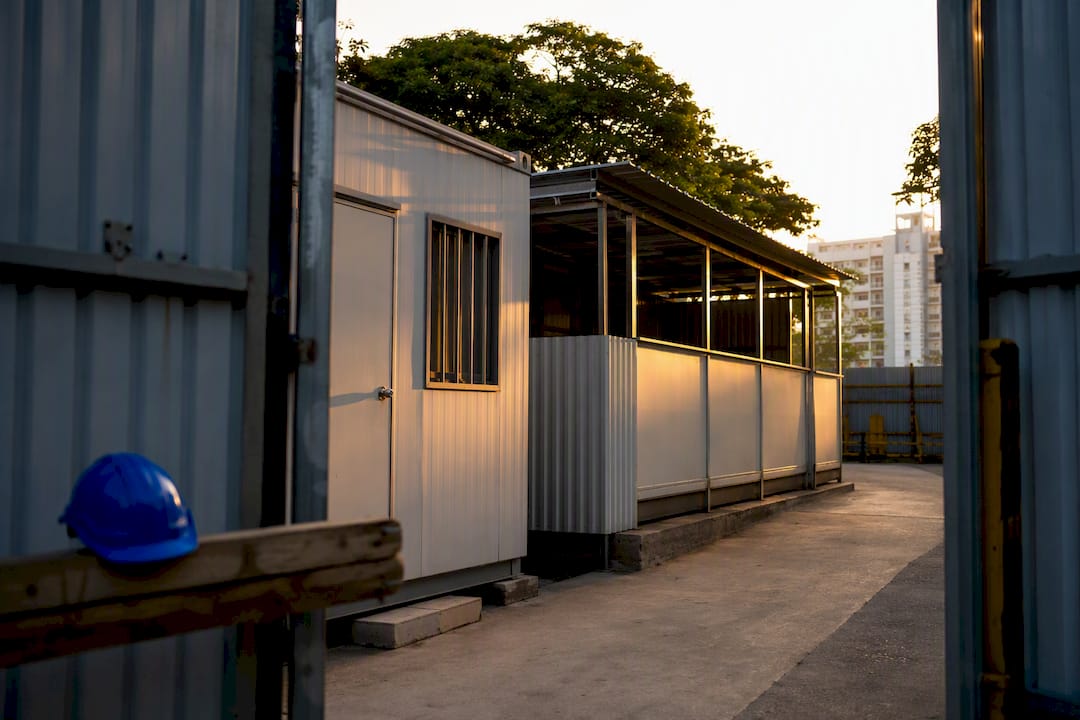
A temporary building permit, known officially as a Permit to Use (PTU), is required for short-lived structures generally capped at 2 storeys and 36 months. Owners must engage a qualified Professional Engineer and submit the application through CORENET with sufficient lead time before construction begins. The Building and Construction Authority (BCA) is the issuing authority.
TL;DR:
- Submitting a CORENET package with complete, correctly labeled documents, including PE signatures and URA permission, significantly speeds up approval times.
- The two-stage PTU process requires a design review before erection and a final compliance check afterward; skipping stages increases rejection risks.
- The permit is valid for up to 36 months, with owners responsible for demolition and notifying BCA at expiry to avoid enforcement actions.
- Reusing previously approved designs can shorten approval but still requires full supervision documentation and adherence to existing compliance standards.
- Most delays stem from procedural errors like missing approvals, incomplete submissions, or failure to demolish structures after expiry, not from the application fee itself.
Table of Contents
- What Legally Counts as a Temporary Building in Singapore
- Who Must Apply and What Owners Are Responsible For
- How the Two-Stage PTU Application Process Works
- Document Checklist and CORENET e-Submission Essentials
- Fees, Validity, and Demolition Requirements
- Who Does What: PE, Builder, and the Commissioner of Building Control
- The Simplified PTU Route for Previously Approved Designs
- Common Pitfalls That Trigger Rejections or Stop-Work Orders
- What Actually Slows Down a PTU Application
- Get Statutory Support for Your PTU Application
- Sources
What Legally Counts as a Temporary Building in Singapore
The Building Control (Temporary Buildings) Regulations 2018 set the statutory boundaries: a temporary building is generally no more than 2 storeys, built from short-lived materials, and intended for use not exceeding 36 months. Site offices, workers’ quarters, show flats, temporary sheds, and container offices all fall under this definition when erected in connection with construction works.
These structures are treated differently from permanent works precisely because they are disposable by design. That distinction drives every requirement that follows, from the shortened approval track to the mandatory demolition clause. Full definitions and BCA’s own guidance sit on the Temporary Building Application page, which owners should treat as the primary reference before drafting scope with their engineer. A container office intended to stay put for four years, for instance, no longer qualifies as temporary and needs a different regulatory path entirely.
Who Must Apply and What Owners Are Responsible For
The building owner holds the statutory obligation to apply for the PTU and to keep the structure compliant throughout its validity period. That responsibility does not end once the permit is issued.
Owners carry several duties simultaneously, and delegating the paperwork to a contractor does not transfer the legal accountability:
- Engage a qualified Professional Engineer (PE) to design, endorse, and supervise the temporary structure.
- Appoint a builder capable of executing the PE’s specifications, including any electrical or lightning protection work.
- Notify BCA of key milestones as required and keep supervision certificates on file.
- Demolish the structure on or before permit expiry and inform BCA within the prescribed timeframe.
- Respond immediately to any BCA enforcement notice, since unresolved noncompliance can trigger a stop-work order on the wider project.
Skipping any of these steps puts the entire site at risk, not just the temporary structure. BCA has the authority to halt works until the outstanding issue is resolved, which on an active construction program can cost far more than the permit fee itself.
How the Two-Stage PTU Application Process Works
Singapore’s temporary building approval runs in two distinct stages, and skipping ahead rarely works. BCA reviews the design intent before anything gets built, then verifies the finished structure before anyone occupies it.
- Preliminary approval. The PE prepares structural calculations, drawings, and a location plan, then submits them for BCA’s review of design compliance. Reviewers check that the structure meets the height and duration caps, that materials suit a short-lived building, and that the PE’s endorsement is properly signed. This stage should begin well before site mobilization, since BCA guidance recommends submitting at least three weeks before construction starts.
- Erection and supervision. Once preliminary approval is granted, the builder erects the structure under the PE’s ongoing supervision. The PE documents this oversight as construction proceeds rather than signing off after the fact.
- Permit to Use application. After erection, the PE submits the certificate of supervision along with final as-built documents. BCA reviews these against the approved preliminary design before issuing the PTU that permits occupation.
Each checkpoint exists to catch a different risk: design flaws at Stage 1, construction deviations at Stage 3. Owners who treat the PTU as a single filing rather than a two-stage process are the ones most likely to see their applications bounced back for missing supervision records. The GoBusiness licensing directory offers a useful secondary reference on eligibility and expected processing windows for both stages.
Document Checklist and CORENET e-Submission Essentials
A complete CORENET package moves through review far faster than one that arrives piecemeal. Gather these items before opening the submission portal:
- Location plan showing the temporary structure relative to the main works and site boundary.
- PE-stamped structural drawings and calculations covering the entire structure.
- Certificate of supervision, commonly filed on Form BCA-CSC-CTSTBW, confirming the PE oversaw construction as designed.
- Lightning protection certificate, where the structure’s height or use requires it.
- Written Urban Redevelopment Authority (URA) permission, where the site’s planning status calls for it.
CORENET e-Submission has its own formatting demands, and BCA’s technical documentation spells out accepted file types and naming conventions. Mislabeled files and missing PE digital signatures are among the most common reasons submissions get kicked back for correction, adding days or weeks to an otherwise straightforward filing.
Pro Tip: Confirm URA planning permission before you touch the BCA submission. A returned application over an unresolved planning issue costs more time than sequencing the two checks properly from the start.
Fees, Validity, and Demolition Requirements
BCA calculates PTU processing fees on a straightforward basis, though the numbers on the official fee schedule should always be confirmed before budgeting, since schedules are revised periodically.
Statistic: BCA’s published fee guidance uses a fee of about $200 per 100 square meters of floor area, or $200 per building when area isn’t measurable, as the calculation basis for temporary building applications.
Beyond the fee itself, owners need to track two other clocks:
- Validity period. The PTU runs for a defined term tied to the project’s construction timeline, generally capped at 36 months from issuance.
- Expiry and demolition. The structure must be demolished on or before expiry, and BCA must be notified within the timeframe required by regulation after demolition is complete.
- Extensions. Where works genuinely run long, owners should raise an extension request with BCA well ahead of expiry rather than after the clock has already run out.
Letting a PTU lapse without demolishing the structure is one of the more avoidable compliance failures on a live site, and it draws enforcement attention that a timely extension request would have prevented entirely.
Who Does What: PE, Builder, and the Commissioner of Building Control
Three parties carry distinct obligations across the life of a temporary building, and confusion about who owns which task is a frequent source of delay.
- The Professional Engineer designs the structure, certifies compliance with the Regulations, supervises erection on site, keeps material and inspection records, and submits the certificate of supervision within the required period.
- The builder executes the PE’s design faithfully, including electrical work and any required lightning protection, and flags deviations to the PE rather than improvising fixes on site.
- The Commissioner of Building Control (CBC), acting through BCA, holds oversight authority over the entire framework, reviews submissions, and enforces the Regulations when a structure or its documentation falls short.
A PE who signs a certificate of supervision without having actually overseen erection exposes both the project and their own professional standing. BCA treats that certificate as the guarantee of structural safety, not a formality.
The Simplified PTU Route for Previously Approved Designs
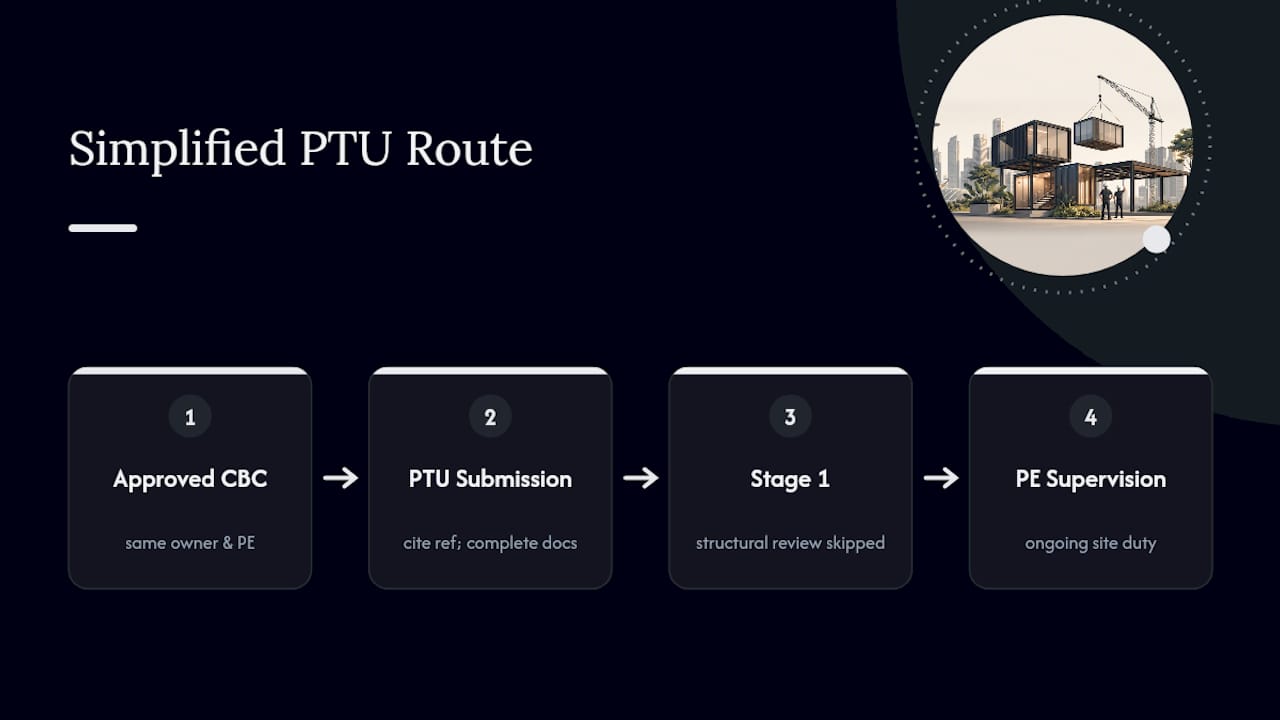
Owners reusing a design that already cleared CBC approval can access a faster PTU track, provided the same owner and the same PE are involved and the earlier approval reference number is cited in the new submission. This shortcut exists because BCA’s guidance recognizes that a design already vetted once shouldn’t need a full re-review from scratch.
The PE still carries the same ongoing supervision duty on the new site, and BCA still expects a complete document package at the PTU stage. The time saved comes from skipping a fresh structural review at Stage 1, not from skipping paperwork altogether. Owners planning repeat installations, such as a developer erecting similar show flats across several projects, benefit most from building this reference into their standard workflow from day one.
Common Pitfalls That Trigger Rejections or Stop-Work Orders
Most PTU delays trace back to a handful of recurring mistakes rather than genuinely difficult regulatory questions.
- Missing or unresolved URA permission. Submitting to BCA before planning status is confirmed almost guarantees a return for correction.
- Incomplete CORENET packages. Absent PE signatures, outdated form versions, or misnamed files stall review before an assessor even reaches the technical content.
- Skipping demolition or notification at expiry. Leaving a structure standing past its validity, or failing to inform BCA after demolition, invites direct enforcement action.
Running through a short pre-submission checklist against these three points before filing catches most of what would otherwise bounce back.
What Actually Slows Down a PTU Application
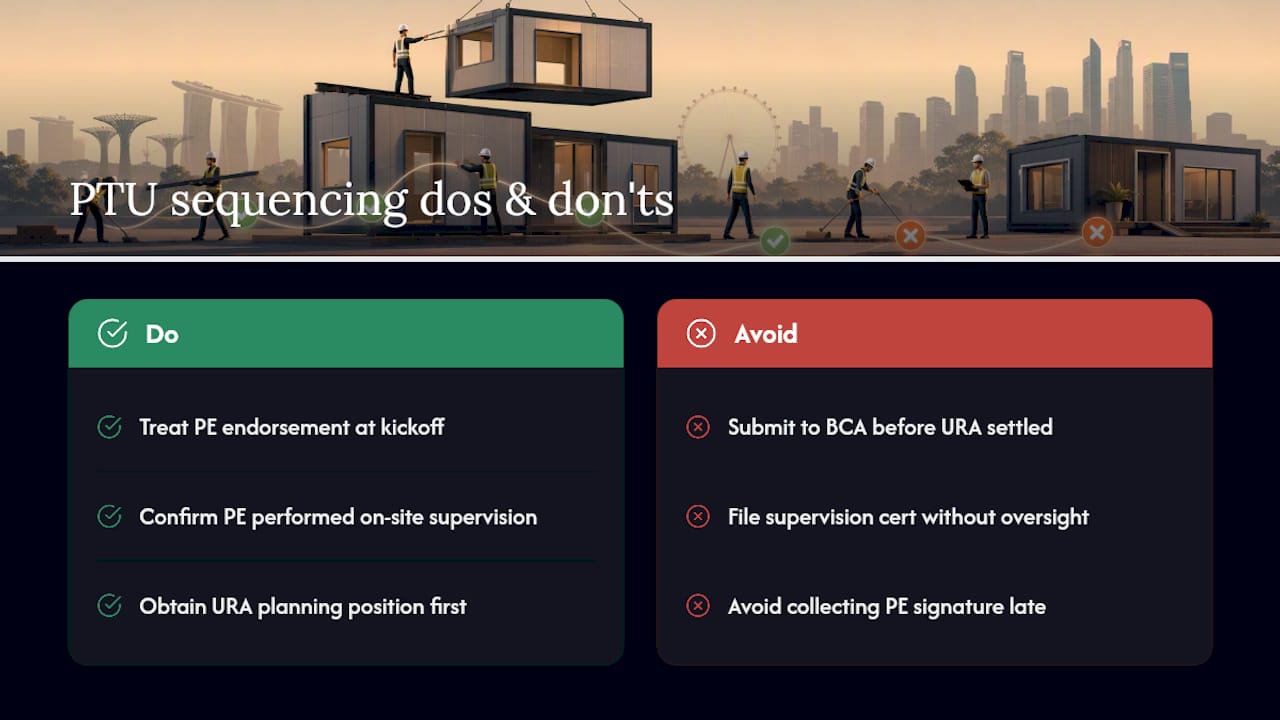
Most articles on this topic treat the PTU as a paperwork exercise. It isn’t. The real bottleneck, in our experience advising owners through this process, is almost never the fee schedule or the form itself. It’s the sequencing: submitting to BCA before URA’s planning position is settled, or filing a certificate of supervision that documents oversight the PE never actually performed on site.
Owners who get PTU approvals fastest treat the PE’s endorsement as a design decision made at project kickoff, not a signature collected the week before submission. That single shift in sequencing does more to prevent rejection than any checklist can.
— Aman
Get Statutory Support for Your PTU Application
Some engineering consultancies work through the full PTU sequence rather than handling isolated pieces of it. That means feasibility checks before committing to a design, PE-stamped structural calculations, the CORENET filing itself, and coordination across BCA, URA, and other agencies where a project touches more than one authority.

Compared with piecing together a PE, a draftsperson, and a submissions consultant separately, one coordinated team catches the URA-BCA sequencing issues and documentation gaps before they cause a rejection. Owners typically start with a feasibility review, move into design and calculations, then hand off to Aman for the CORENET package and PE supervision through to PTU closeout. If you’re preparing a temporary structure for an upcoming project, reach out through Aman Engineering Consultancy to scope your submission timeline against BCA’s three-week filing window.
Sources
- Temporary Building Application – Building and Construction Authority
- Building Control (Temporary Buildings) Regulations 2018
- Permit to Erect Temporary Building | Licence & Accreditation
- CORENET e-Submission documentation