
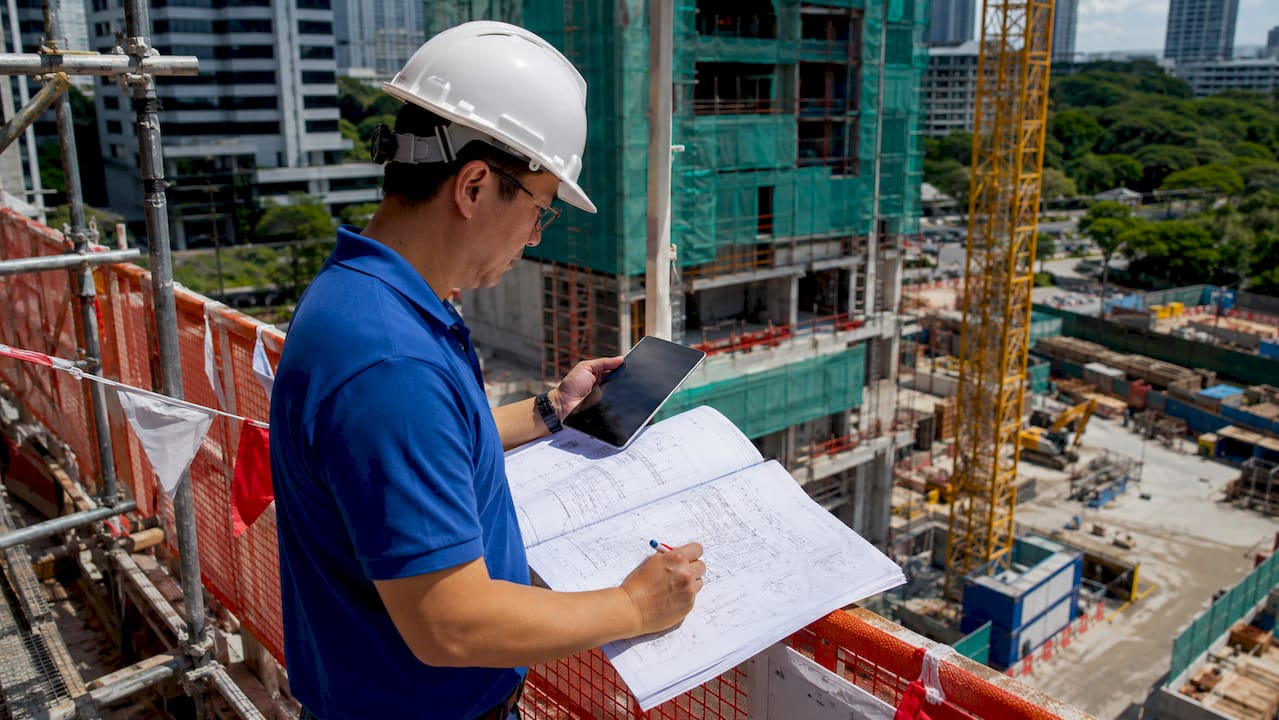
Structural inspection, formally defined as the systematic assessment of a building’s load-bearing elements and overall integrity, is the primary mechanism by which Singapore’s property developers, contractors, and building owners meet regulatory obligations and prevent catastrophic failure. The structural inspection tips for 2026 presented here address the full inspection lifecycle: from identifying critical failure points and deploying AI-assisted detection tools like YOLO and Mask R-CNN, to satisfying mandated timelines enforced under current building codes. Singapore’s regulatory environment, governed by agencies including BCA and HDB, demands that inspections are not only thorough but also precisely documented and executed by licensed professionals such as Professional Engineers (PEs) or Structural Engineers (SEs).
1. Prioritize critical structural areas during every inspection
Effective structural inspections begin with a defined scope. Ten critical inspection elements appear in virtually every site visit: foundation, basement walls, crawl spaces, floor systems, load-bearing walls, beams, columns, roof structures, building envelope, and site drainage conditions. Treating all areas as equally urgent wastes time and misses the highest-risk zones.
The following components demand priority attention during every site visit:
- Foundation and basement walls: Look for differential settlement, horizontal cracking, and moisture intrusion. Horizontal cracks in basement walls indicate lateral soil pressure and are structurally more serious than vertical shrinkage cracks.
- Load-bearing walls, beams, and columns: Check for diagonal cracking at corners, spalling concrete, exposed rebar, and visible deflection. These elements carry gravity and lateral loads directly.
- Roof structures and connections: Inspect for corrosion at steel connections, rot in timber members, and displacement of roof-to-wall ties, particularly after heavy rainfall events common in Singapore.
- Crawl spaces and subfloor systems: Moisture accumulation in these zones accelerates timber decay and corrosion of steel hangers, often invisible until structural capacity is already compromised.
Pro Tip: Map every defect to a specific grid reference on the building plan during the site visit. This practice eliminates ambiguity in reports and allows direct comparison across inspection cycles, which is critical when tracking crack progression over time.
Recognizing the difference between cosmetic and structural defects is a core skill. A hairline crack in plaster is rarely significant. A stair-step crack running through masonry joints at a corner, however, signals foundation movement and requires immediate engineering assessment.
2. Leverage advanced technologies for inspection accuracy
AI-driven inspection tools have moved from experimental to operationally viable for Singapore’s construction sector. Deep learning models like YOLO and Mask R-CNN provide high accuracy for automated surface-level damage detection, including crack mapping, spalling identification, and rebar exposure classification. These models process image data faster than manual review and produce consistent, repeatable outputs that support regulatory documentation.
Sensor networks extend this capability to continuous monitoring. Hybrid architectures combining LoRaWAN with high-frequency 5G capture both low-rate ambient data and high-resolution dynamic responses, with sensors updating data every 5 to 15 minutes. This architecture suits Singapore’s dense urban environment, where buildings are subject to vibration from adjacent construction, MRT tunneling, and traffic loads simultaneously.
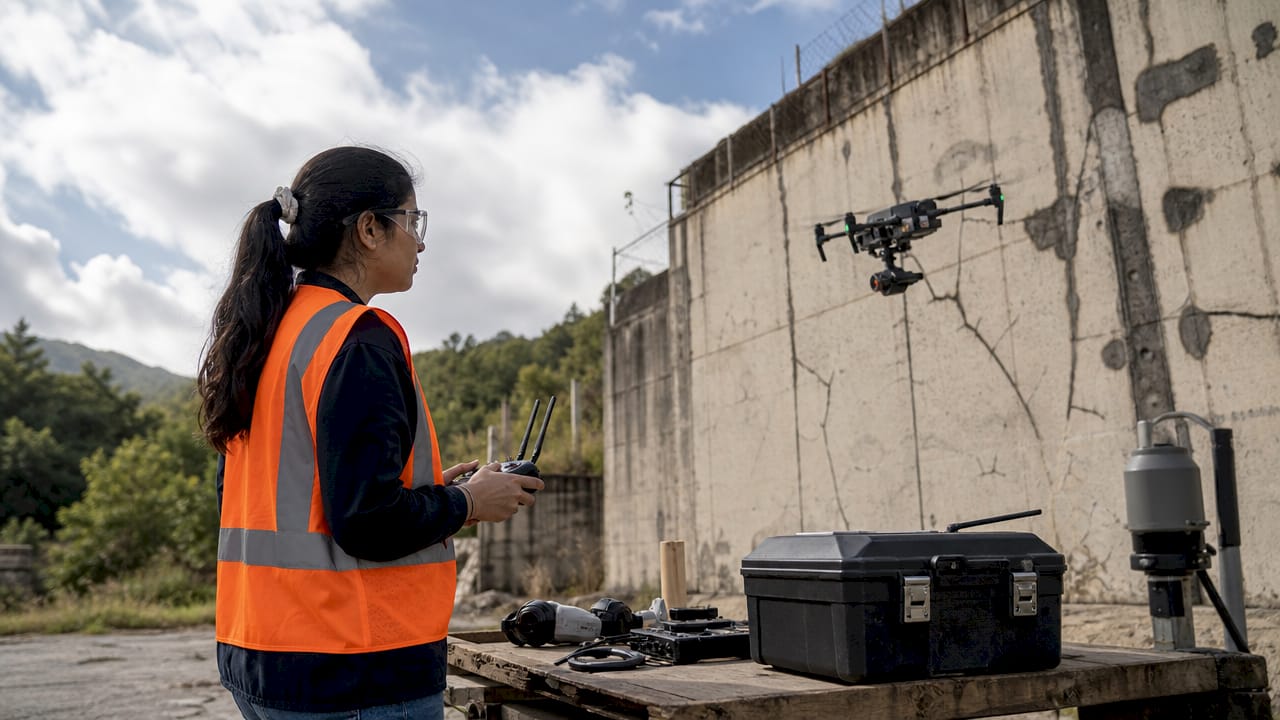
Unmanned aerial vehicles (UAVs) address a persistent challenge in Singapore’s high-rise stock: safe access to facades and roof structures. Multi-sensor data fusion combining RGB cameras, LiDAR, and infrared thermography on a single UAV platform reduces false positives and improves crack detection stability on complex surfaces. The thermal channel is particularly valuable for detecting delamination behind tiled facades, a common defect in Singapore’s aging residential towers.
CNN and LSTM networks demonstrate damage detection accuracies over 97% in real-world bridge and building implementations. This level of accuracy reduces the risk of missed defects during routine inspections, though it does not eliminate the need for qualified engineering interpretation of results.
Pro Tip: AI models trained on datasets from temperate climates may underperform on Singapore’s tropical concrete, which weathers differently due to high humidity and UV exposure. Validate model outputs against local reference datasets before relying on them for compliance reporting.
3. Understand 2026 regulatory timelines and compliance requirements
Singapore’s 2026 building inspection guidelines impose specific, non-negotiable timelines that property owners and contractors must schedule around. Emergency structural hazards require investigation and make-safe actions within 24 hours of identification. Non-emergency hazards must be investigated within 10 working days, with a summary report submitted within 3 days of completing the investigation and remediation work commencing within 5 days of report acceptance.
The table below summarizes the mandated response sequence:
| Hazard Classification | Investigation Deadline | Report Submission | Remediation Start |
|---|---|---|---|
| Emergency structural hazard | 24 hours | Within 3 days of investigation | Immediately upon make-safe |
| Non-emergency structural hazard | 10 working days | Within 3 days of investigation | Within 5 days of report acceptance |
These timelines align with international frameworks including the International Building Code (IBC) and ASCE 7 standards, which Singapore’s BCA incorporates by reference for structural load calculations and inspection protocols. Inspections must be conducted or supervised by a PE or SE with the relevant practicing certificate. Failure to meet these deadlines exposes building owners to enforcement action, stop-work orders, and potential liability for consequential damage.
The practical implication for property developers managing multiple assets is that a standing inspection protocol, pre-agreed with a licensed engineering firm, is more reliable than reactive engagement after a defect is reported. Scheduling periodic inspections aligned with the PSI compliance framework reduces the risk of timeline breaches when defects are discovered unexpectedly.
4. Apply best practices for documentation and reporting
A high-quality structural inspection report is the primary deliverable that determines whether an inspection satisfies regulatory requirements. Reports must include photographs keyed to building plans, clear distinctions between life-safety issues and routine maintenance items, prioritized remediation recommendations with estimated scopes and costs, and a PE or SE stamp confirming professional responsibility for the findings.
The following documentation practices are non-negotiable for 2026 compliance:
- Photograph every defect with a scale reference and record the grid reference, elevation, and date. Photos without context are inadmissible for regulatory purposes.
- Separate life-safety findings from maintenance observations in a clearly labeled section of the report. Regulators and building owners need to act on safety items immediately; conflating them with cosmetic issues delays response.
- Assign a remediation priority level (immediate, short-term, or long-term) to each finding, with a brief rationale. This allows contractors to sequence work efficiently and gives building owners a defensible record of their decision-making process.
- Retain all field notes, sketches, and sensor data logs as supporting documentation. These records substantiate the report’s conclusions if findings are disputed.
Systematic documentation and expert engineering judgment remain indispensable for reliable inspection outcomes and compliance. Common failures in documentation include incomplete field observations, missing reference photographs, and reports that do not distinguish between structural and non-structural defects. Each of these omissions creates regulatory exposure.
Pro Tip: Use a standardized digital field form linked to a building information model (BIM) during site visits. This approach automatically associates defect records with the correct structural element and generates a draft report structure before the inspector leaves the site.
5. Compare manual inspections with structural health monitoring systems
Manual inspections and structural health monitoring (SHM) systems serve different but complementary functions. Understanding when to deploy each method, and how to combine them, is one of the most consequential decisions in a 2026 inspection program.
| Criterion | Manual inspection | SHM system |
|---|---|---|
| Detection type | Visual, tactile, and instrument-based at a point in time | Continuous sensor-based data over time |
| Accessibility | Limited by physical access and safety constraints | Covers inaccessible or high-risk zones continuously |
| Response speed | Reactive, scheduled, or triggered by reported defects | Real-time alerts when thresholds are exceeded |
| Data output | Inspection report with photographs and engineer’s assessment | Time-series data requiring engineering interpretation |
| Cost profile | Higher per-visit cost, lower ongoing cost | Higher installation cost, lower per-data-point cost |
| Regulatory acceptance | Universally accepted for compliance reporting | Accepted as supplementary evidence; PE review still required |
Sensor placement is the most critical decision in any SHM deployment. Sensors positioned at non-representative locations generate data that cannot be extrapolated to the structure’s actual condition. For Singapore’s reinforced concrete frames, accelerometers at mid-span of critical beams and strain gauges at column bases provide the most diagnostic value.
A hybrid approach combining sensor data with targeted non-destructive testing offers the highest reliability in condition assessment. In practice, this means using SHM alerts to trigger focused manual inspections rather than waiting for scheduled visits. This model reduces total inspection costs while improving detection rates for early-stage damage.
Key takeaways
Effective structural inspections in 2026 require systematic prioritization of critical elements, validated AI-assisted detection tools, strict adherence to regulatory timelines, and PE-certified documentation to satisfy Singapore’s compliance framework.
| Point | Details |
|---|---|
| Prioritize high-risk elements | Focus on foundations, load-bearing walls, columns, and roof connections before secondary elements. |
| Deploy AI with local validation | Models like YOLO and Mask R-CNN must be validated against Singapore’s tropical concrete conditions before use in compliance reporting. |
| Meet mandated timelines | Emergency hazards require investigation within 24 hours; non-emergency hazards within 10 working days. |
| Document to PE/SE standard | Every report must include photographs keyed to plans, prioritized remediation items, and a professional engineer’s stamp. |
| Combine SHM with manual review | Use sensor alerts to trigger targeted inspections rather than relying on either method alone. |
What I’ve learned about technology and engineering judgment in 2026 inspections
After working across Singapore’s construction and infrastructure sector, the pattern I observe most consistently is this: organizations that invest in sensor networks and AI tools without investing equally in engineering interpretation capacity end up with more data and less clarity. Technology accelerates detection. It does not replace the judgment required to determine whether a detected anomaly is a structural threat or an artifact of sensor drift.
The AI and drone-assisted inspections that are transforming structural health monitoring are genuinely powerful. I have seen UAV-based facade surveys identify delamination patterns that would have taken weeks of manual access to document. But the same survey, interpreted without knowledge of the building’s construction history, produced a remediation recommendation that was both over-specified and targeted at the wrong cause. The technology was accurate. The engineering context was missing.
The second lesson is about documentation discipline. Regulatory timelines are tighter in 2026 than they were five years ago. A 24-hour investigation window for emergency hazards is not a target. It is a deadline with legal consequences. The firms that meet it consistently are the ones that have pre-agreed inspection protocols, standing relationships with licensed PEs, and digital field documentation systems that generate report drafts in real time. Firms that treat inspection as a reactive exercise will continue to find themselves in breach.
My recommendation: treat the engineering compliance workflow as a standing operational procedure, not a project-by-project decision. The cost of building that system is a fraction of the cost of a single enforcement action or structural failure.
— Aman
How Aman Engineering Consultancy supports your 2026 inspection needs
Property developers, contractors, and building owners operating in Singapore’s regulated environment need more than a checklist. They need a licensed engineering partner with direct experience across BCA, HDB, JTC, and URA submissions.

Aman Engineering Consultancy delivers structural inspection and compliance services covering the full inspection lifecycle: from initial site assessment and AI-assisted defect detection to PE-certified reporting and remediation oversight. The firm’s licensed professionals apply the best structural inspection techniques validated for Singapore’s tropical building stock, producing reports that satisfy 2026 regulatory requirements without revision cycles. For projects requiring civil and structural design alongside inspection, Aman Engineering provides integrated support from concept through certification.
FAQ
What are the key structural inspection tips for 2026 in Singapore?
The most critical tips are to prioritize foundation, load-bearing walls, and roof connections; deploy AI-assisted detection tools validated for local conditions; and meet BCA-mandated investigation timelines of 24 hours for emergency hazards and 10 working days for non-emergency hazards.
How do AI models improve structural inspections?
Models like YOLO and Mask R-CNN automate crack, spalling, and rebar exposure detection with accuracies exceeding 97% in real-world implementations, reducing missed defects during routine inspections while still requiring qualified engineering interpretation.
When is a structural health monitoring system better than a manual inspection?
SHM systems are preferable for continuous surveillance of inaccessible or high-risk zones, while manual inspections remain the standard for regulatory compliance reporting. A hybrid approach, where sensor alerts trigger targeted manual reviews, delivers the highest detection reliability.
What must a compliant structural inspection report include?
A compliant report must include photographs keyed to building plans, a clear separation of life-safety findings from maintenance items, prioritized remediation recommendations with cost estimates, and a PE or SE stamp as required under Singapore’s inspection reporting standards.
How often should structural inspections be conducted in Singapore?
Inspection frequency depends on building type, age, and occupancy classification under BCA’s Periodic Structural Inspection framework. Most commercial and residential buildings above a defined height threshold require inspections at prescribed intervals, with additional inspections triggered by reported defects or adjacent construction activity.
Recommended
- Periodic Structural Inspection (PSI) Singapore 2026: Comprehensive Compliance, Defect Diagnosis & Rectification Guide – Aman Engineering Consultancy
- Streamline building inspections in Singapore for compliance
- Structural Assessment in Singapore: A Compliance Guide
- Structural engineering checklist: Ensure compliance and smooth approvals